Achaeus japonicus
Shaggy, orange, and easy to miss: find Orang Utang Crab on muck dives in Sulawesi and Sabah year-round in warm 26-31C water.
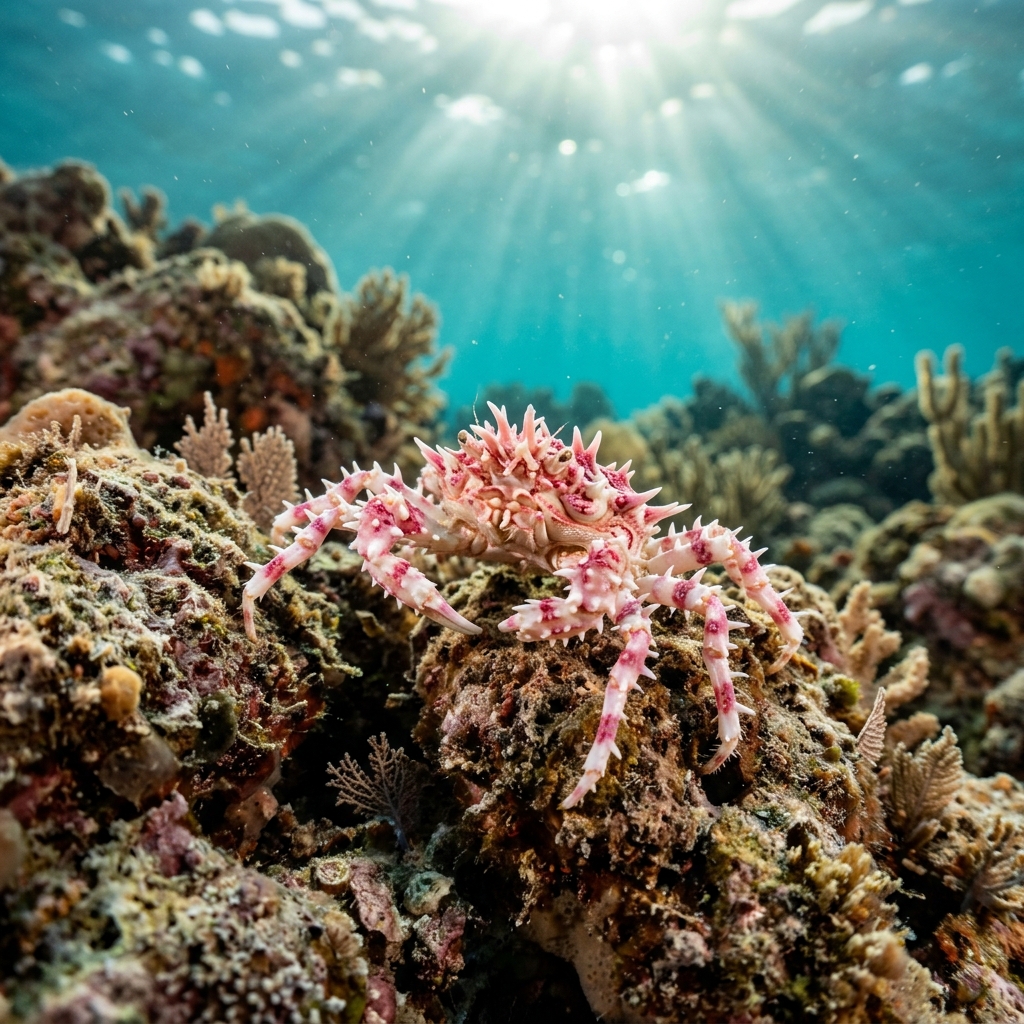
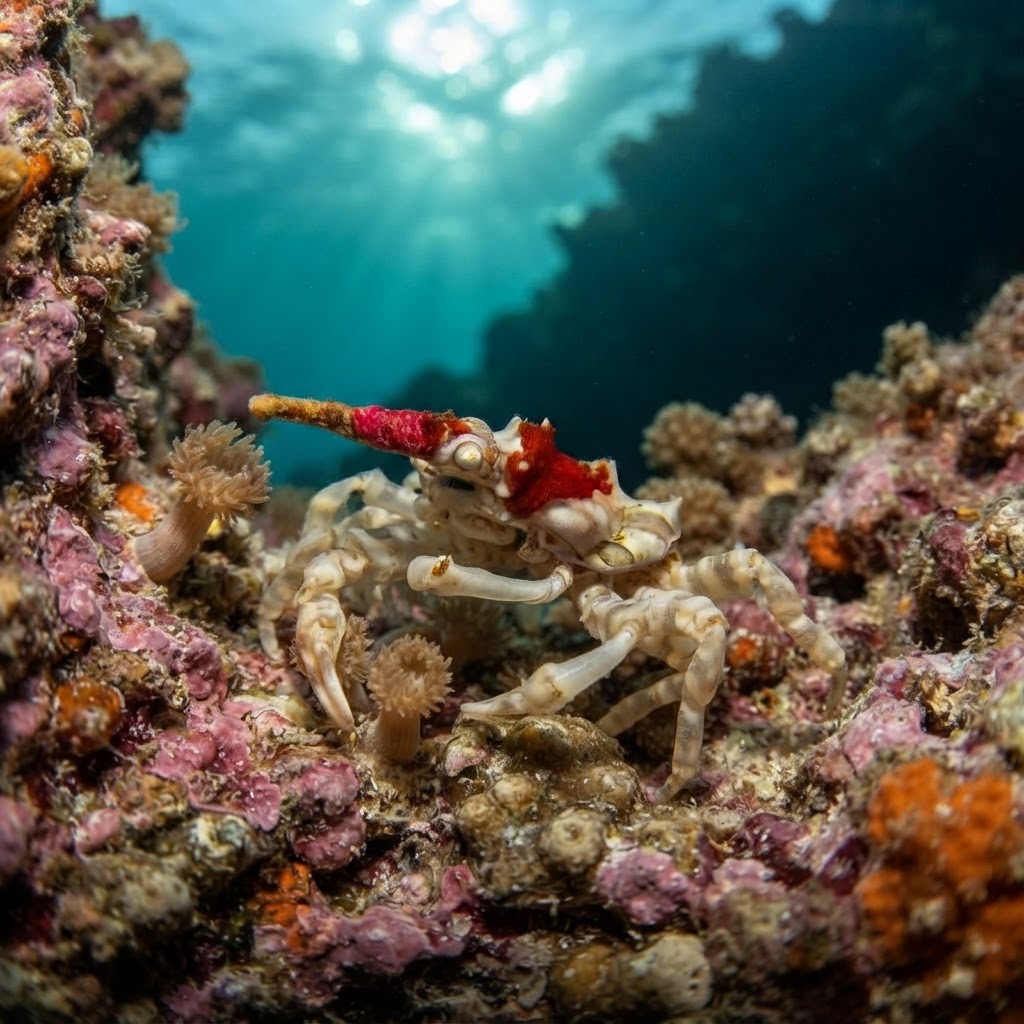
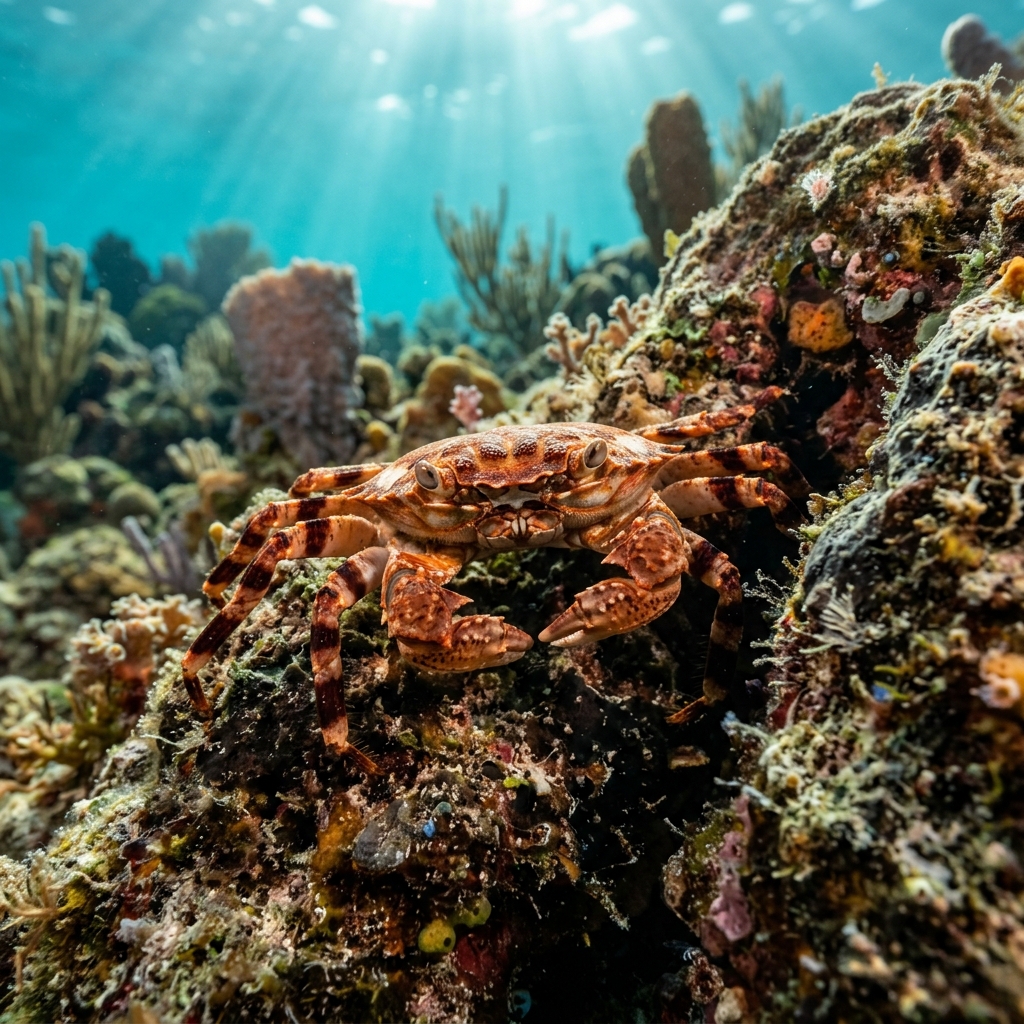
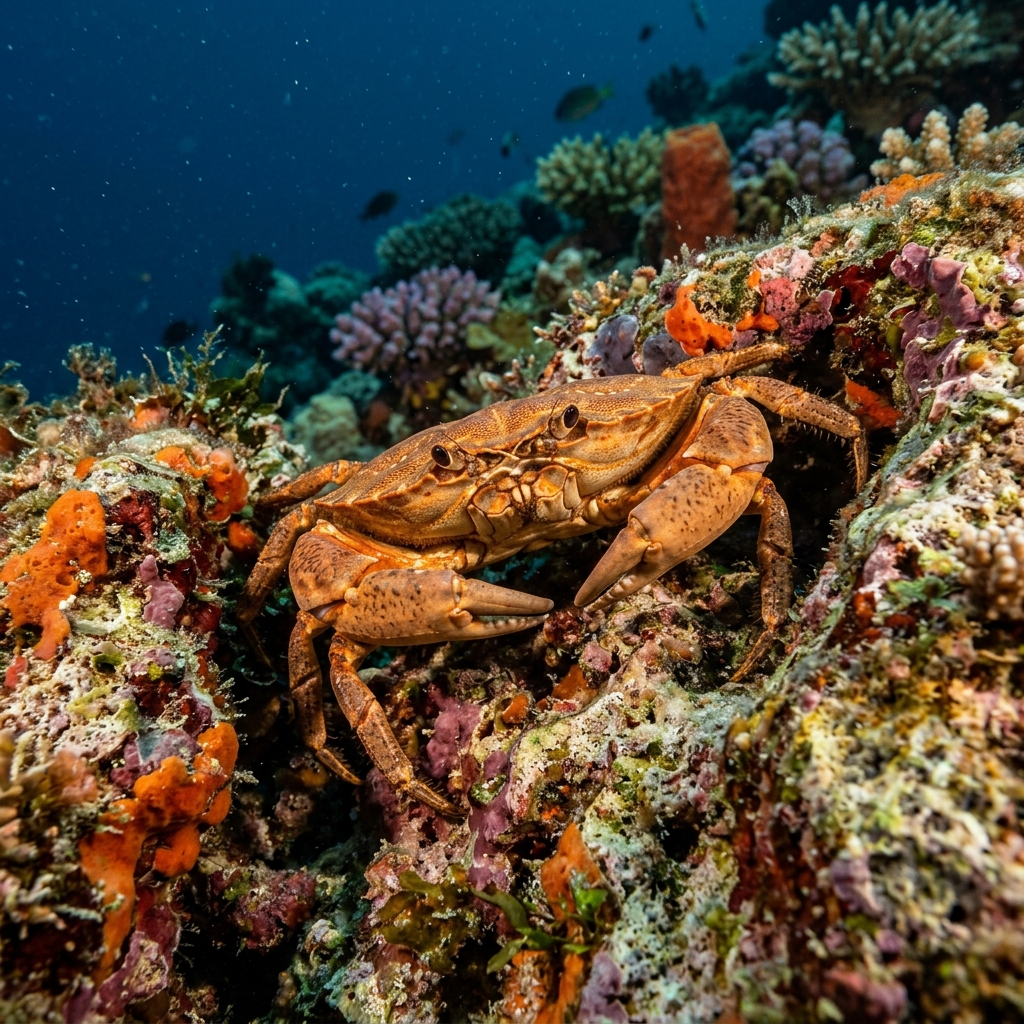
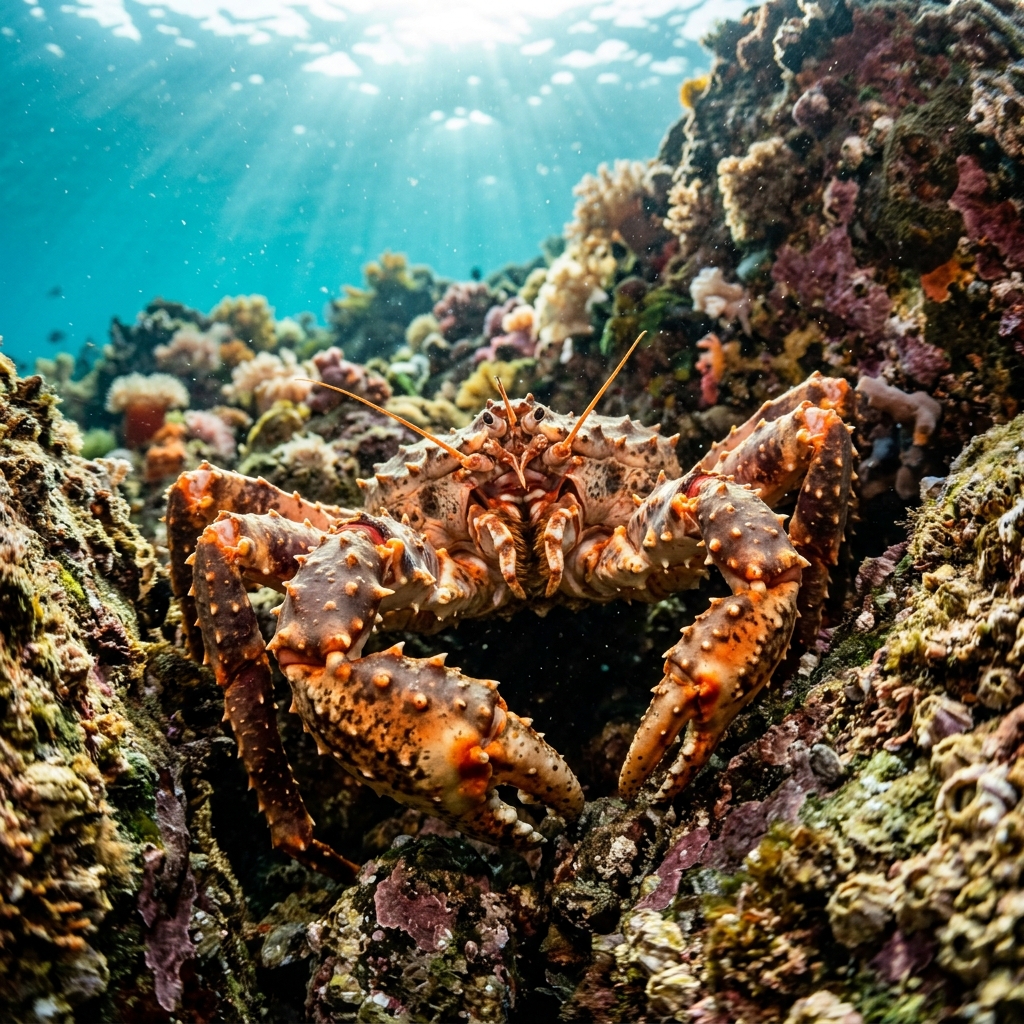
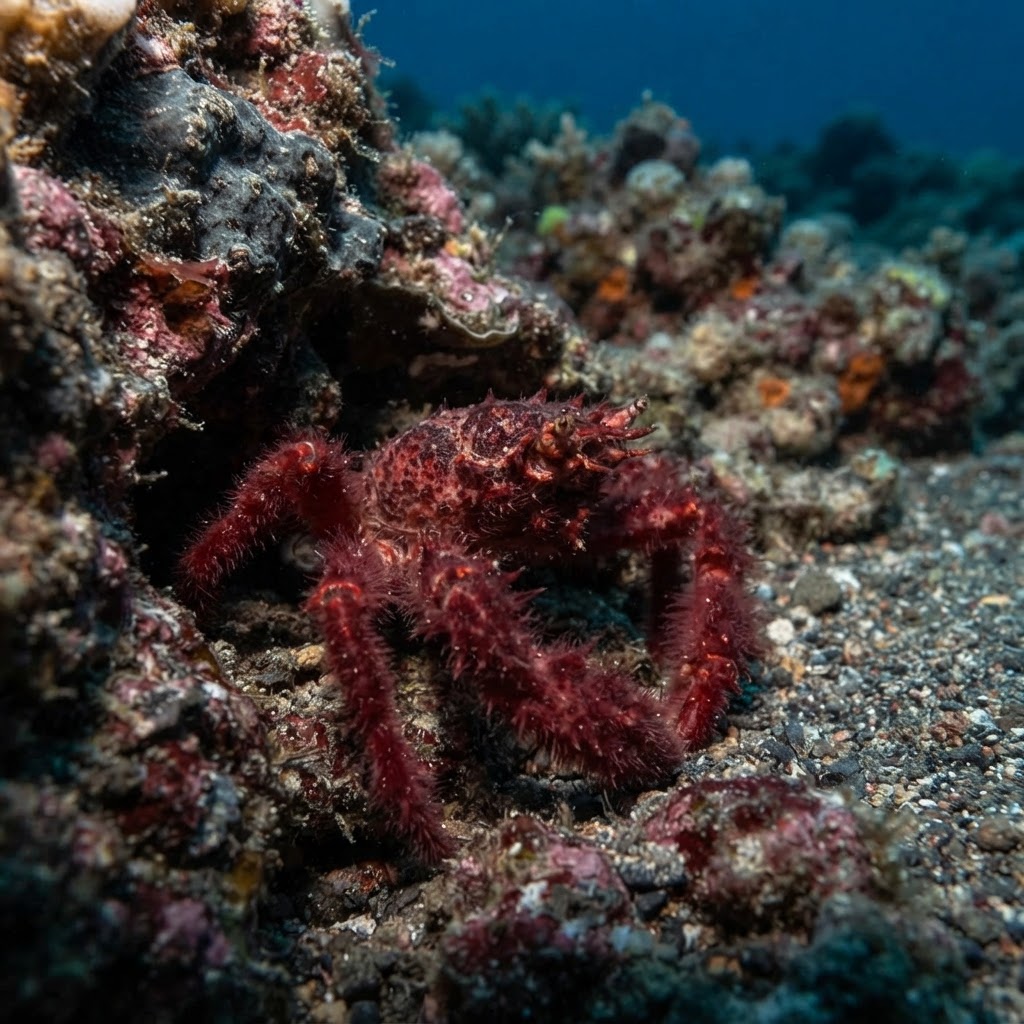
A small, spider-like crab covered in long hair-like fibres that range from orange-red to golden, giving it a shaggy, unkempt look. Its body is barely a couple of centimetres across, with long thin legs that make it look bigger than it is. The hairs usually trap bits of algae and debris, so it often looks fuzzier and duller than a fresh, clean specimen. Look for it clinging to soft coral or bubble coral branches, where its colour and hairy texture blend in until it moves.
Spend most dives sitting motionless on soft coral or bubble coral, using its hairy body as camouflage rather than making any effort to hide from divers. It moves slowly and deliberately when disturbed, more likely to shuffle a few centimetres than dart away, which makes it a favourite subject for macro photographers. Best found on slow, careful muck and reef dives where guides scan coral heads rather than open water.
Those hair-like fibres on its shell often trap algae and silt, turning the crab into a tiny walking camouflage patch that matches whatever coral it happens to be sitting on.
No clear seasonal pattern shows up in the data, and with a comfortable range of 25.6 to 31.6C it stays active on tropical reefs all year round. Plan around good muck-diving conditions and a sharp-eyed guide rather than a particular month.
Reef neighbours a diver could mistake it for. Use the identification notes above to tell them apart.
Most reliably logged across Indonesia and Malaysia, with strong numbers in Sulawesi and Bali on the Indonesian side and Sabah on the Malaysian side. The Philippines is also a solid bet, especially in the Visayas and Luzon, and it turns up less frequently in Timor-Leste's Atauro Island and New Caledonia's Île des Pins.
Mapping where Orang Utang Crab is logged…
Best odds are in Indonesia, especially Sulawesi and Bali, and in Sabah, Malaysia. The Visayas and Luzon in the Philippines are also reliable, with occasional sightings in Timor-Leste and New Caledonia.
There is no strong season in the sightings data, and warm water between 25.6 and 31.6C keeps it present year-round on tropical reefs. Any time you can dive Sulawesi, Sabah, or the Visayas should work.
Look for a tiny, hairy crab, often orange or rust-coloured, clinging still to soft coral or bubble coral. The long fibre-like hairs covering its body are the giveaway, though they often collect algae and debris that dull the colour.
They stay small, typically just a centimetre or two across the body, with long thin legs that make them look larger in photos than they really are.
No. They are harmless, slow-moving crabs that rely on camouflage rather than defence, and pose no risk to divers who look but do not touch.
Site and sighting data is aggregated from diver logs, iNaturalist and GBIF. For taxonomy and conservation status:
European Green Crab
2,469 sites