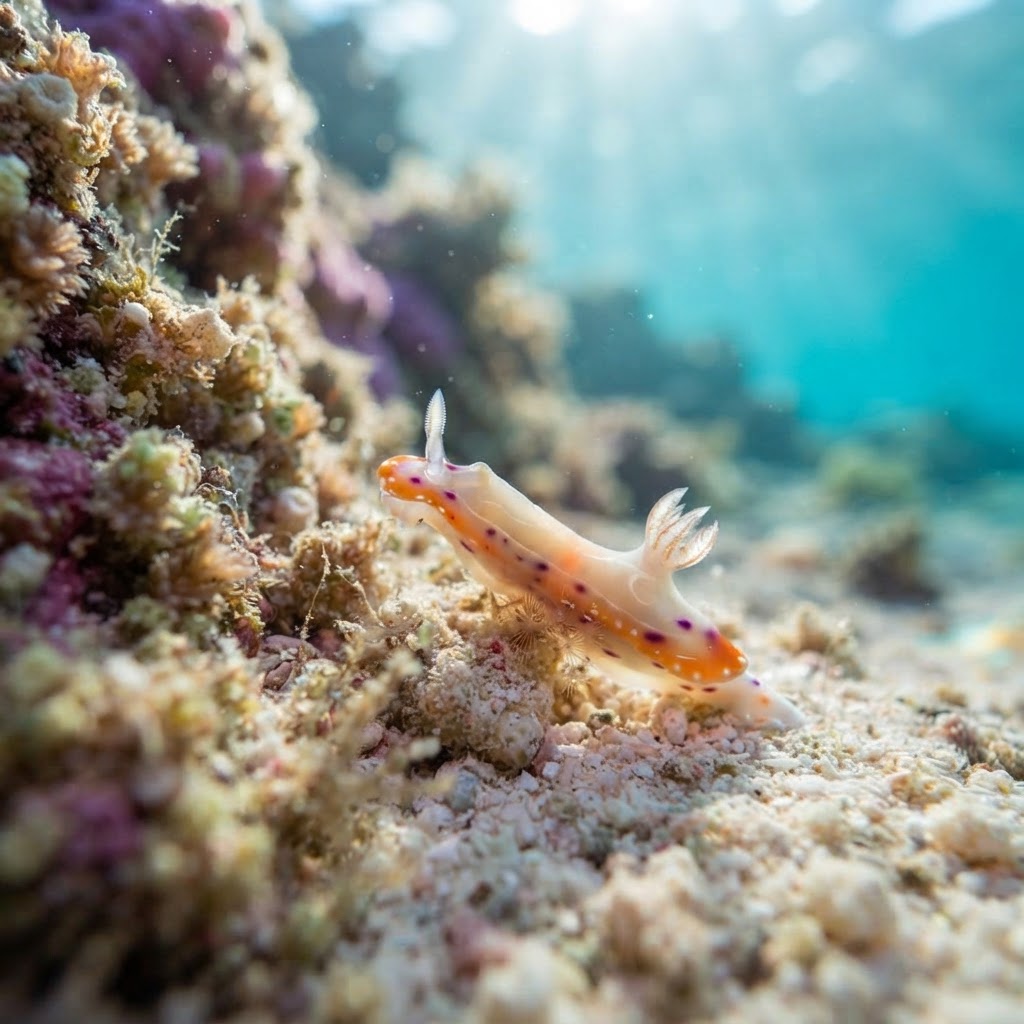
Goniobranchus decorus
A tiny white-and-orange nudibranch turning up on reefs in Hawaii and Kwajalein Atoll, year-round in warm water.
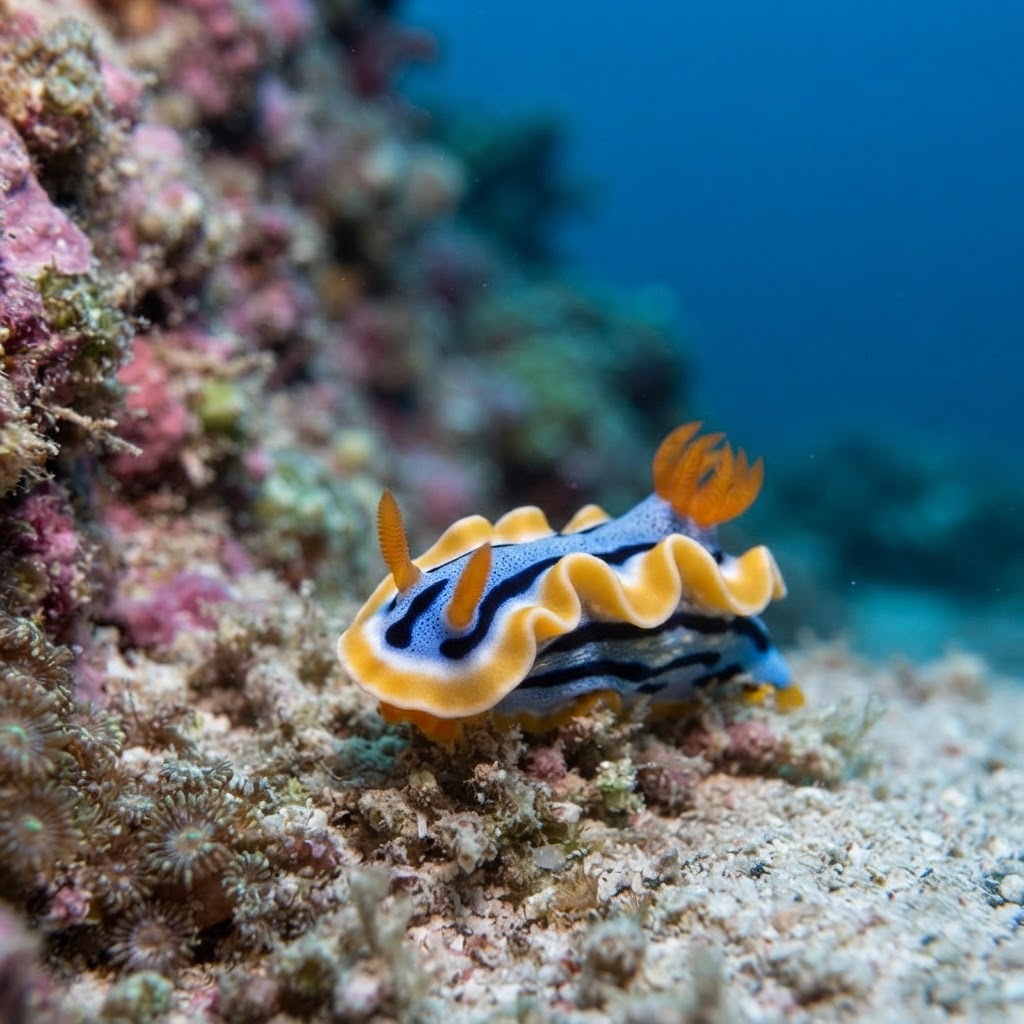
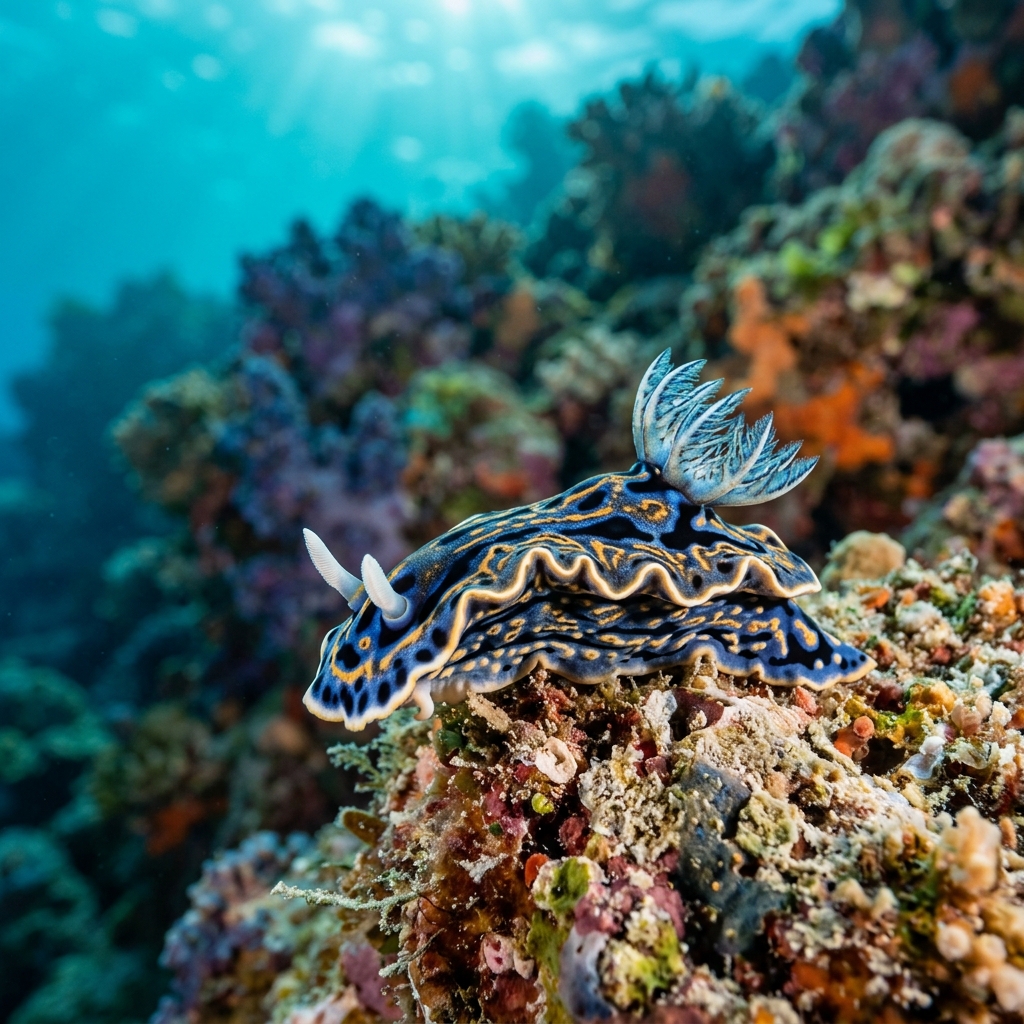
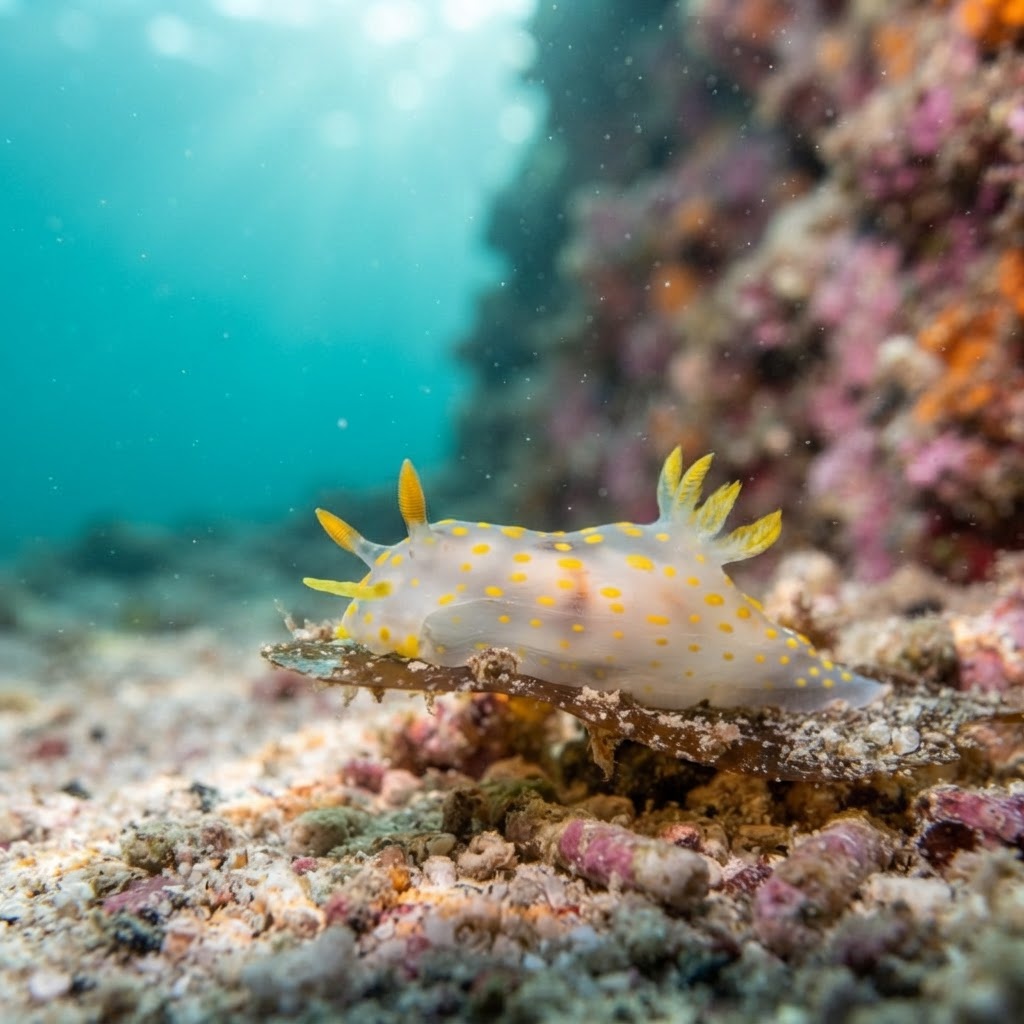
A tiny nudibranch, only about 1 cm long, with a white body edged in orange or yellow along the mantle margin. Look closely and you'll spot dark spots or blotches scattered across the back, with the feathery gill tuft and rhinophores (the paired sensory horns on the head) set toward the rear. At this size it's easy to swim straight past, so slow down and scan bare rock and rubble patches rather than open sand.
Found grazing slowly over rock and rubble, usually tucked into crevices or low-light spots on the reef rather than out in open sand. It pays no attention to divers and won't move away or react if you get close, so a torch and a macro lens (or sharp eyes) are your best tools for spotting one. Most logged sightings describe it as uncommon rather than easy to find, so treat any encounter as a bit of a bonus.
Like other chromodorid nudibranchs, it likely gets its colours and any toxins from the sponges it feeds on, wearing the warning pattern as a signal to potential predators rather than for camouflage.
No clear seasonal pattern shows up in the sightings, and it's found in water from about 23 to 29 C, which covers Hawaii and Kwajalein year-round. Treat it as a possible find on any dive in these regions rather than a seasonal target.
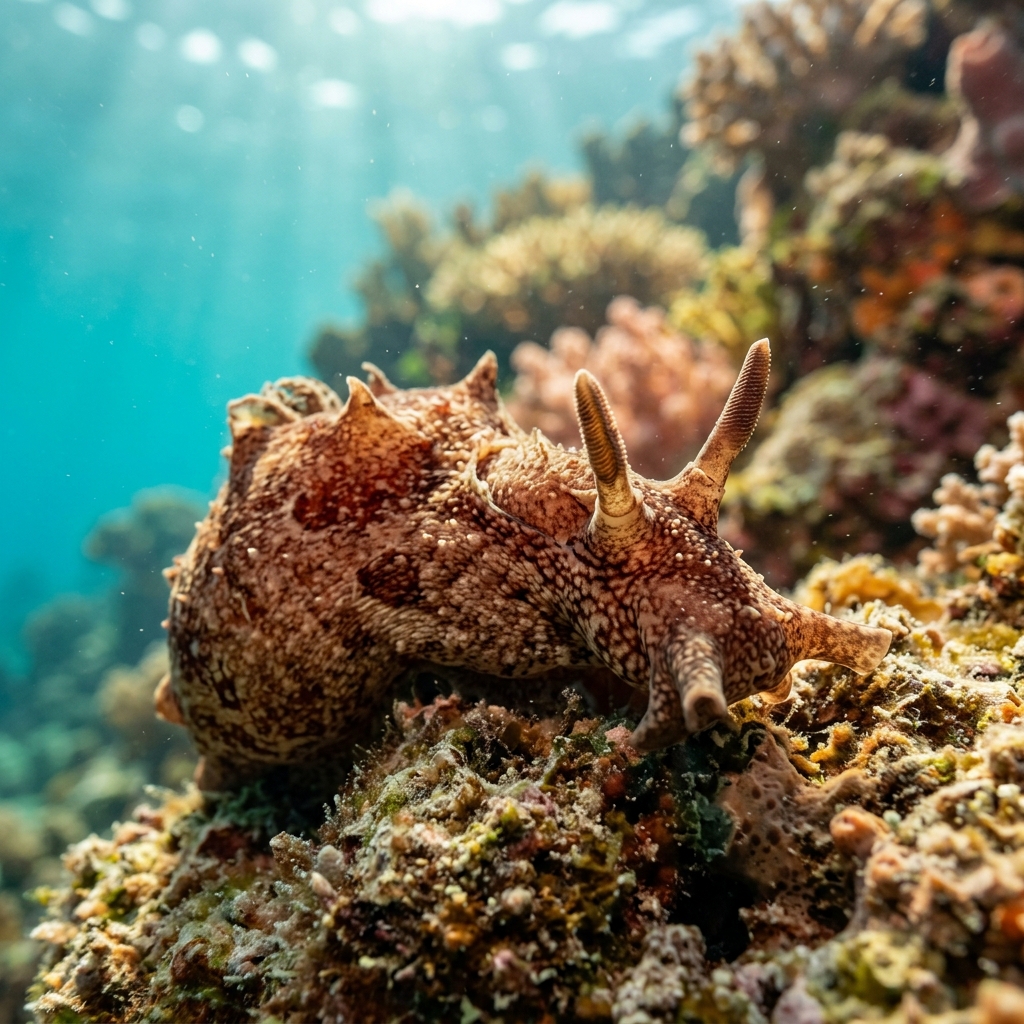
Reef neighbours a diver could mistake it for. Use the identification notes above to tell them apart.
Most commonly logged on reefs around Hawaii in the United States, with a second reliable population on Kwajalein Atoll in the Marshall Islands. Sightings elsewhere are sparse, so these two Pacific regions are the surest bet for tracking one down.
Mapping where Decorated Chromodoris is logged…
It's most reliably spotted around Hawaii in the United States, with another solid population on Kwajalein Atoll in the Marshall Islands. Outside these two regions, confirmed sightings are scarce.
There's no strong seasonal pattern in the sightings, and it lives in water between about 23 and 29 C, which stays warm year-round in Hawaii and the Marshall Islands. So any time of year is fair game.
Look for a tiny white nudibranch, about 1 cm long, with an orange or yellow-edged mantle and dark spots across its back. The feathery gills and sensory horns sit toward the rear of the body, and it's usually found grazing slowly on rock or rubble.
They're small, topping out around 1 cm in length, so most divers spot them only when actively searching rubble and rocky crevices at close range.
No, it poses no threat to divers. It's harmless to approach and simply carries on grazing when you get close for a photo.
Site and sighting data is aggregated from diver logs, iNaturalist and GBIF. For taxonomy and conservation status:
Light-spotted Aegires
3,168 sites