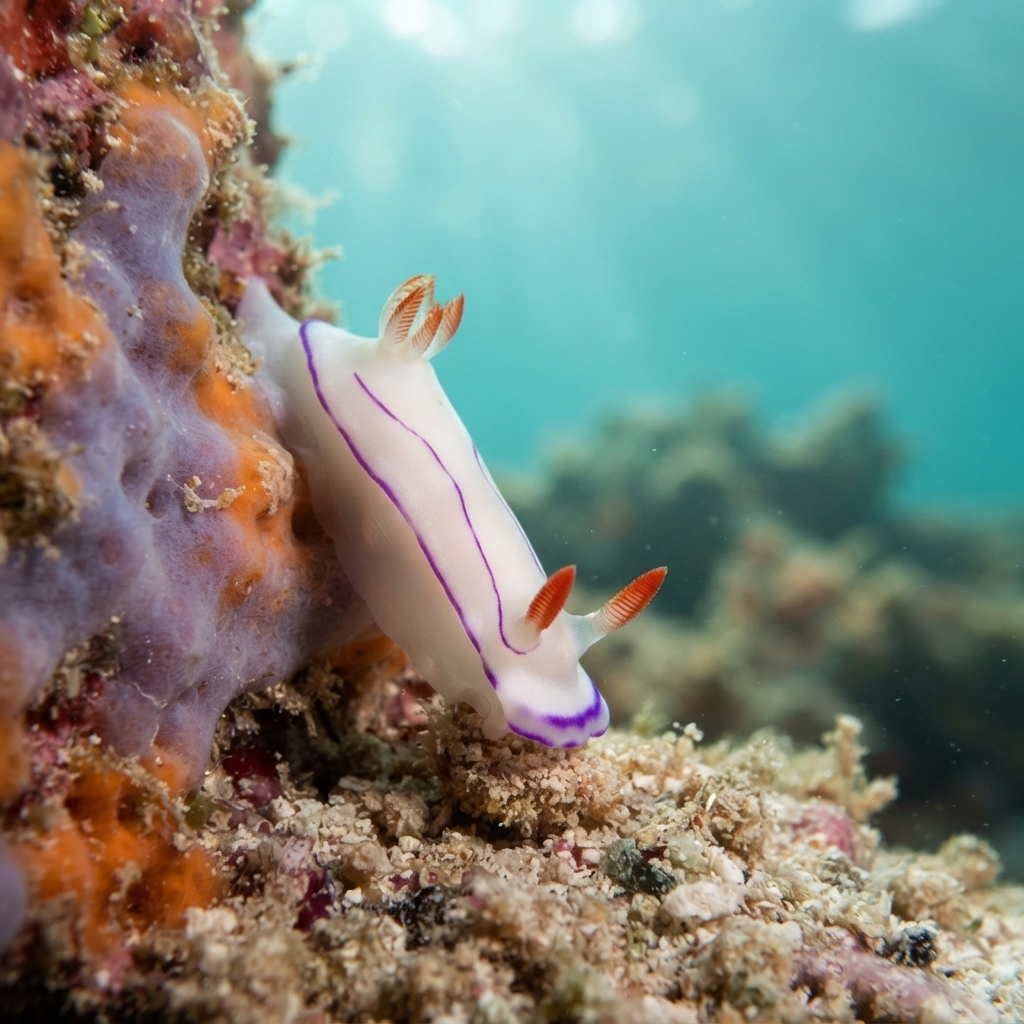
Thorunna daniellae
A small chromodorid most reliably spotted on Hawaii's reefs, with steady sightings in Nha Trang and Mindanao year-round.
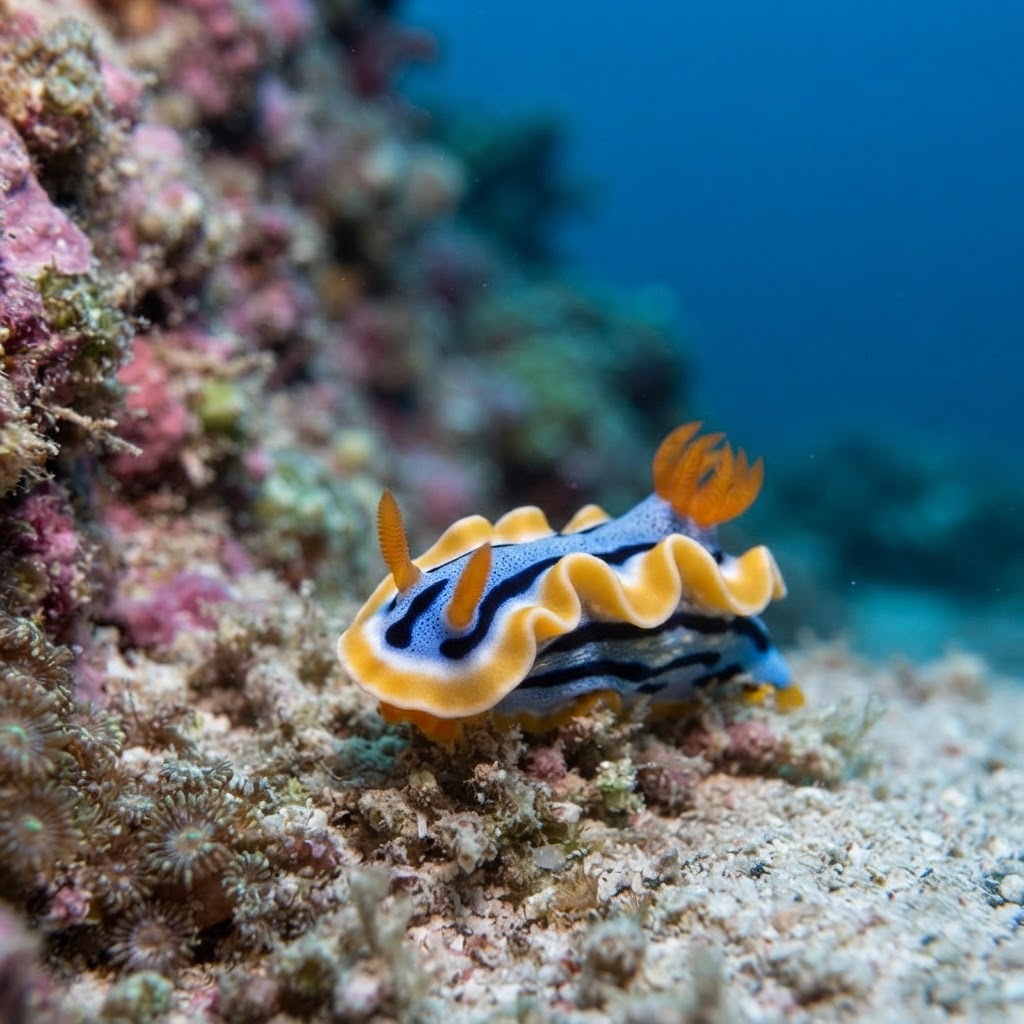
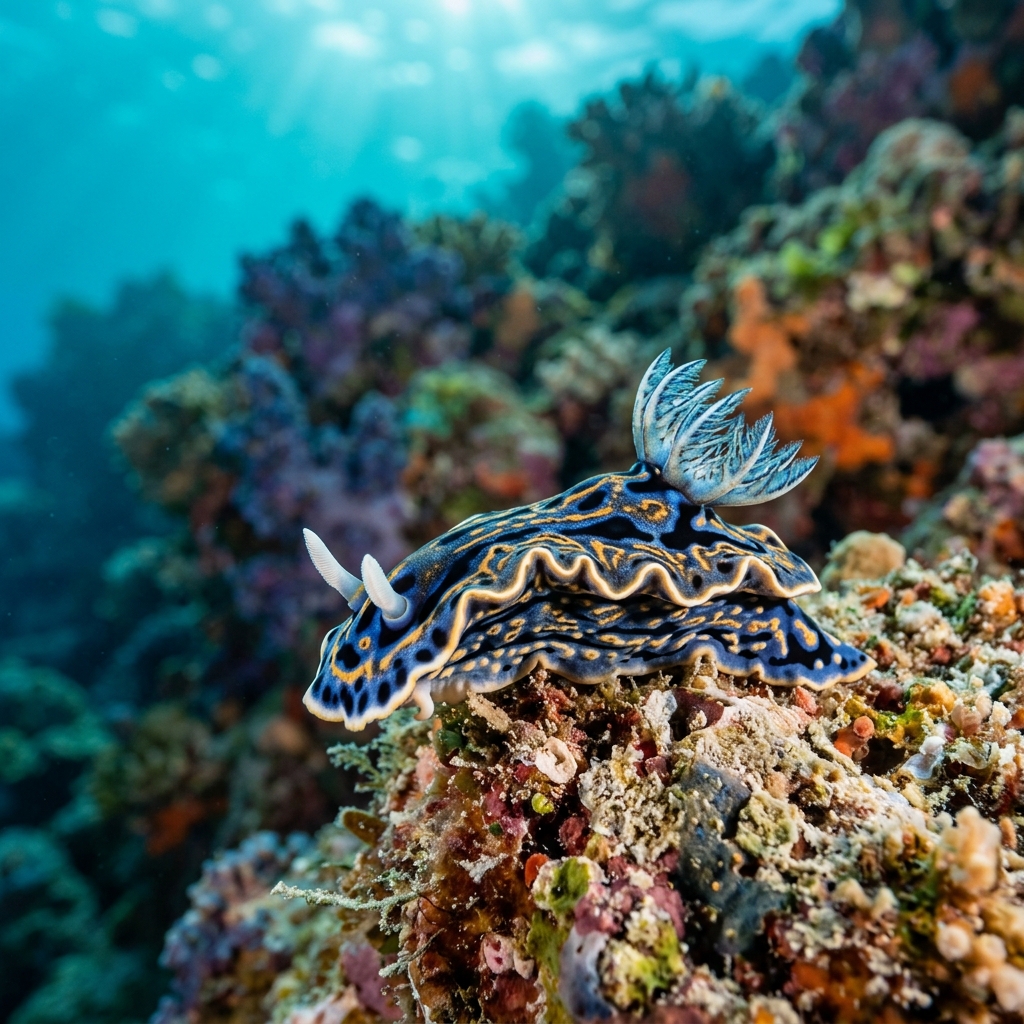
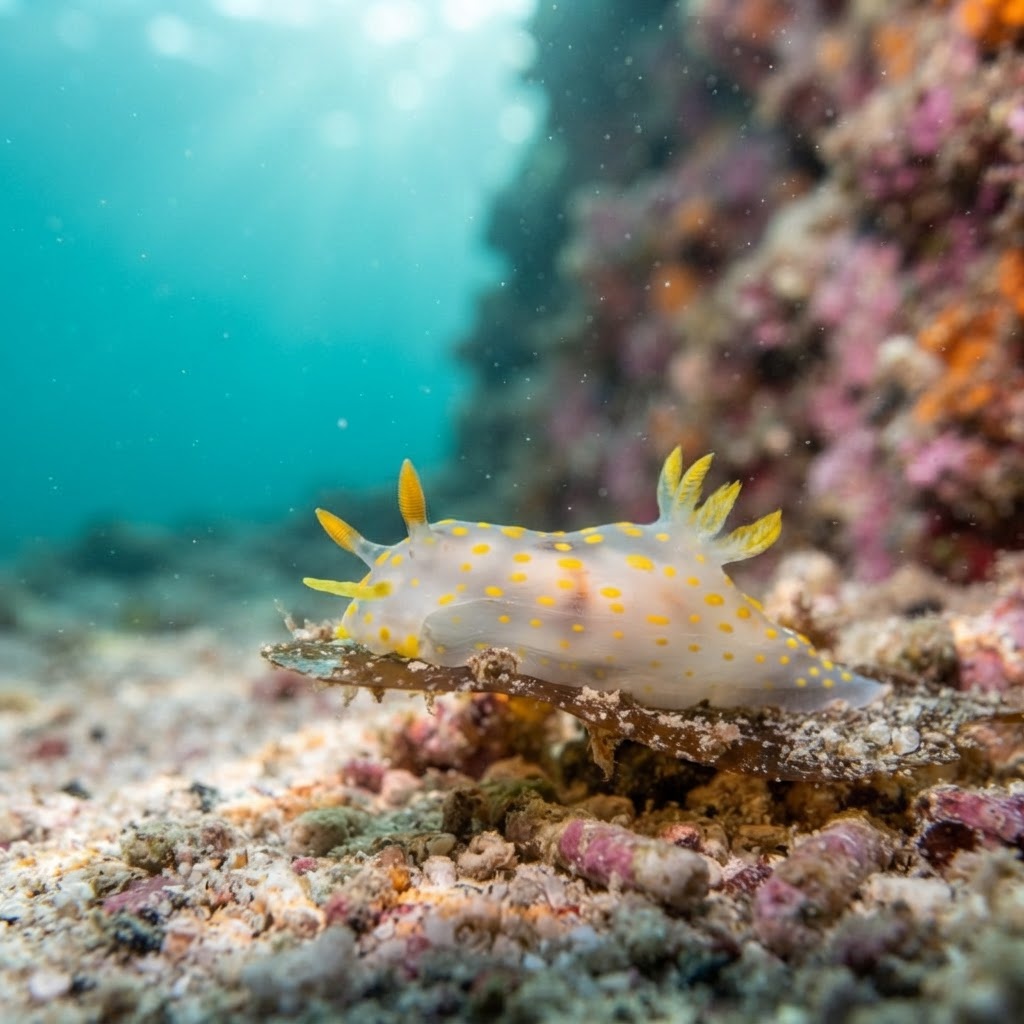
A small, elongated dorid nudibranch with a smooth, often pink-to-purple mantle edged in a paler band, and translucent rhinophores (the paired sensory horns on its head) that stand up as it crawls. Look closely at the mantle margin and gill cluster at the rear for the colour contrast divers use to tell it apart from similar chromodorids sharing the same rubble and reef slopes. Size in the water reads as small, easy to swim past if you are not scanning the substrate closely.
Found crawling slowly over reef substrate and rubble, usually in the open rather than tucked into crevices, which is why divers moving slowly along the bottom tend to spot it. It shows no reaction to divers beyond its usual unhurried pace, since nudibranchs have no need to flee predators the way fish do. Most logs come from daytime reef and muck dives rather than night dives.
Like other chromodorid nudibranchs, it likely feeds on sponges and stores or repurposes their chemical defences in its own tissue, which is part of why its colours read as a warning rather than camouflage.
Sightings show no clear seasonal pattern, and it turns up year-round on the reefs where it is found. Its recorded temperature range of 21.8 to 29.5C covers typical tropical and subtropical reef conditions across all four seasons, so there is no need to time a trip around it.
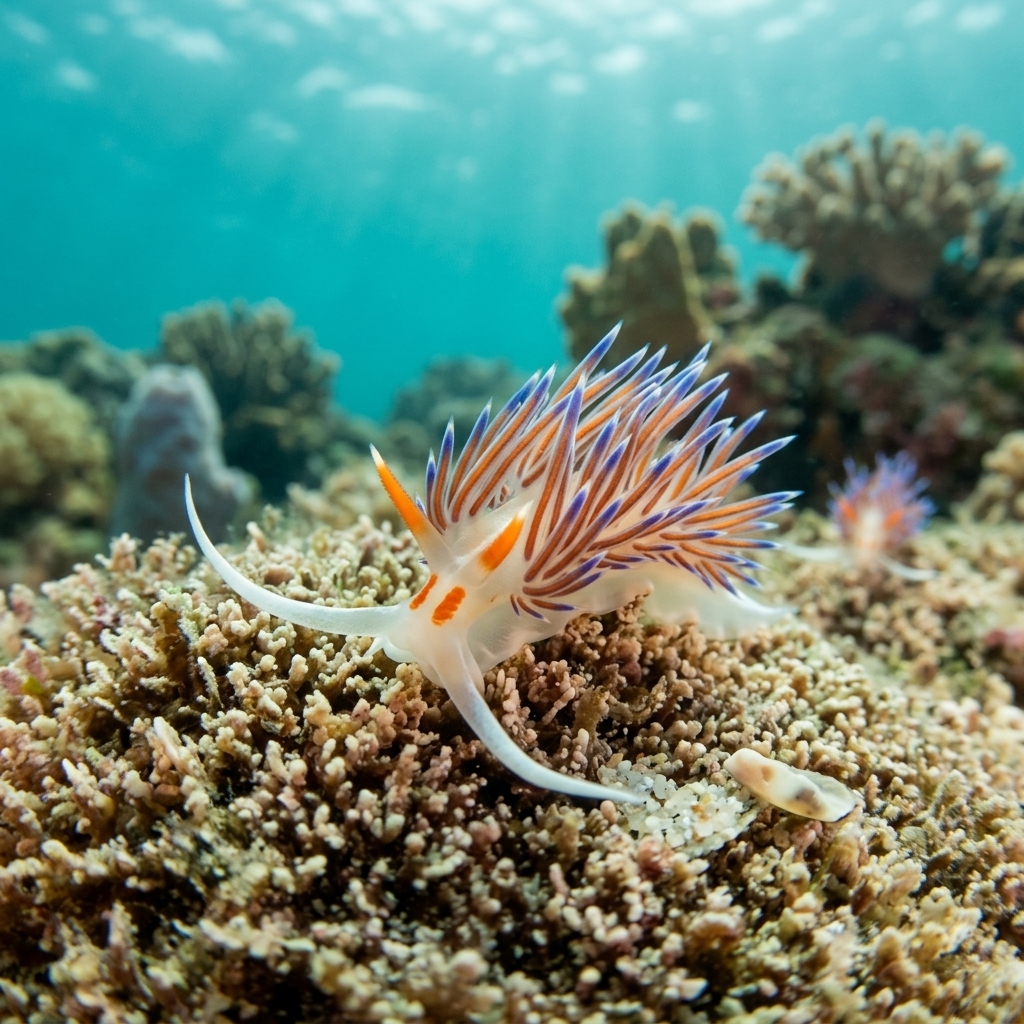
Reef neighbours a diver could mistake it for. Use the identification notes above to tell them apart.
Most reliably logged around Hawaii, which accounts for the bulk of recorded sightings, with a further reliable presence around Nha Trang in Vietnam and Mindanao and Luzon in the Philippines. Smaller numbers turn up around Bali, Indonesia, so divers working Indo-Pacific muck and reef sites have a real shot at this one too.
Mapping where Danielle's Nudibranch is logged…
Hawaii has the strongest and most consistent sightings. Nha Trang in Vietnam and Mindanao and Luzon in the Philippines are also reliable spots, with occasional finds around Bali, Indonesia.
There is no strong seasonal pattern in the sighting data, so it is considered a year-round find on the reefs where it lives. Its comfortable temperature range, roughly 22 to 29.5C, spans all four seasons on tropical reefs.
Look for a small, smooth-bodied dorid nudibranch with a pink-to-purple mantle edged in a paler band, translucent rhinophores held upright, and a gill cluster at the rear. It moves slowly over open reef substrate rather than hiding.
Exact size data is not established for this species, but in the water it reads as small, in line with other Thorunna and Chromodoris nudibranchs that divers commonly spot on close reef scans.
No. It poses no danger to divers and has no means of harming anyone who gets close for a photo.
Site and sighting data is aggregated from diver logs, iNaturalist and GBIF. For taxonomy and conservation status:
Nudibranch
3,168 sites