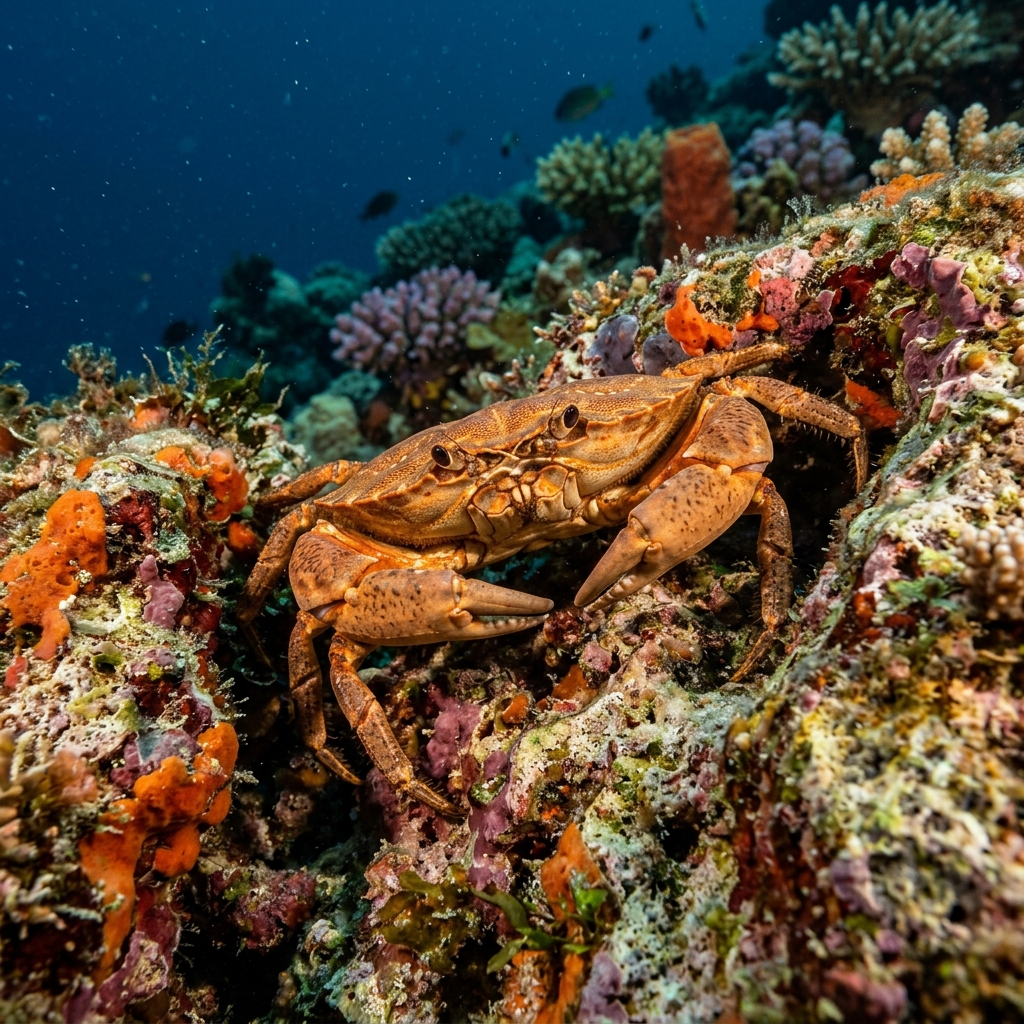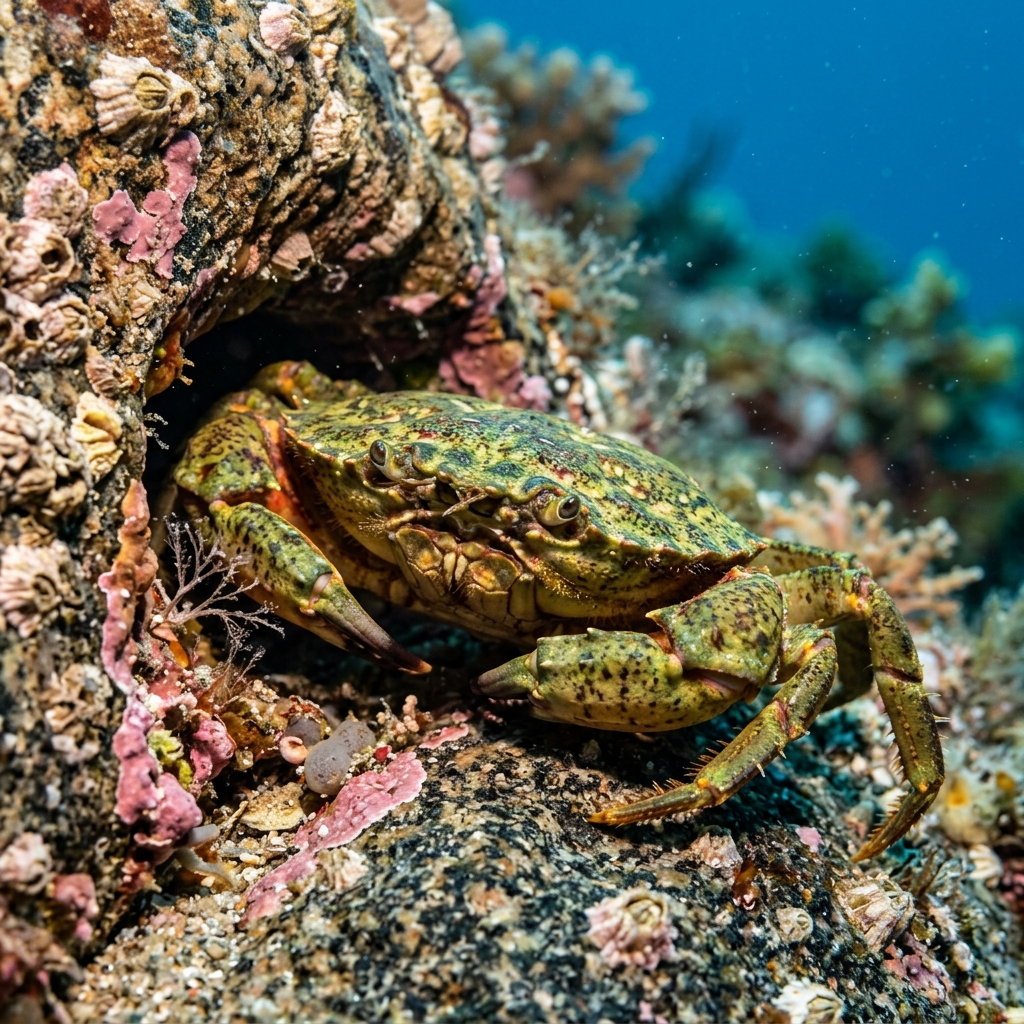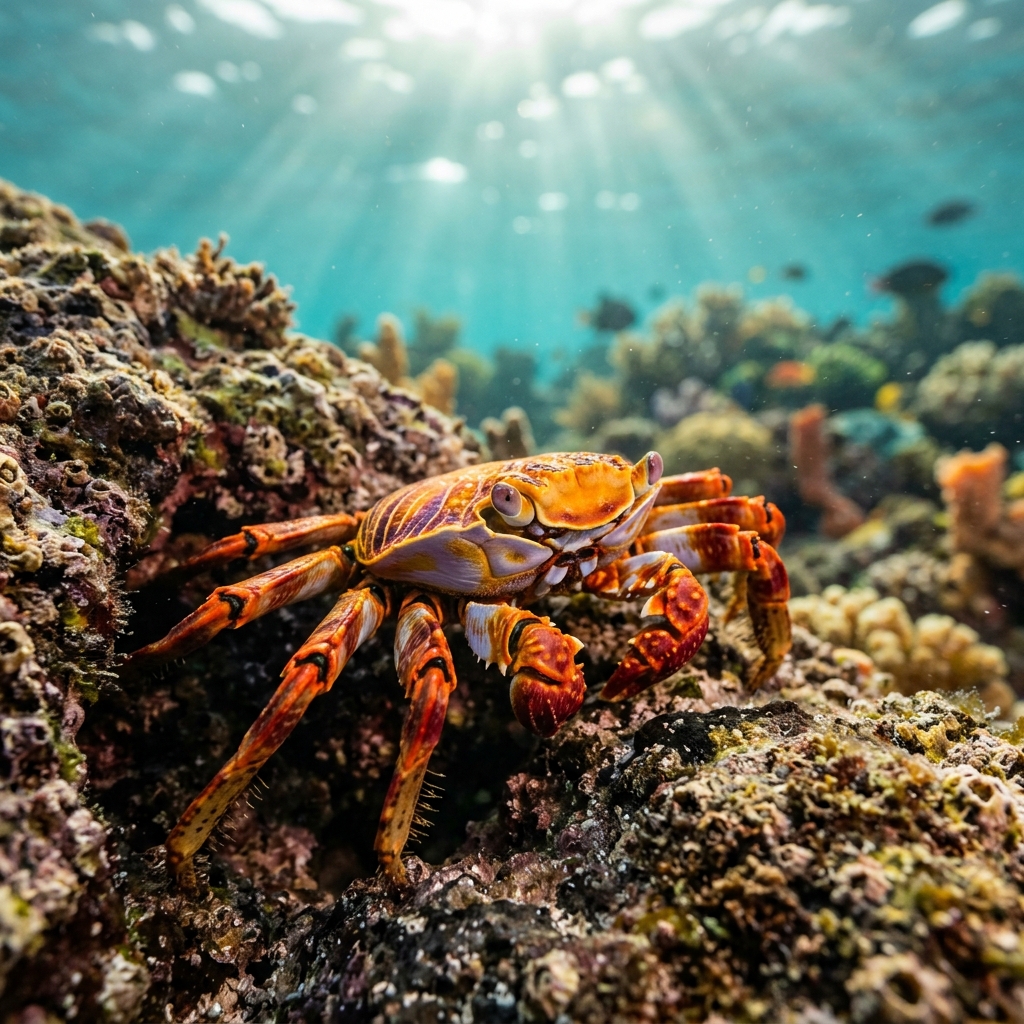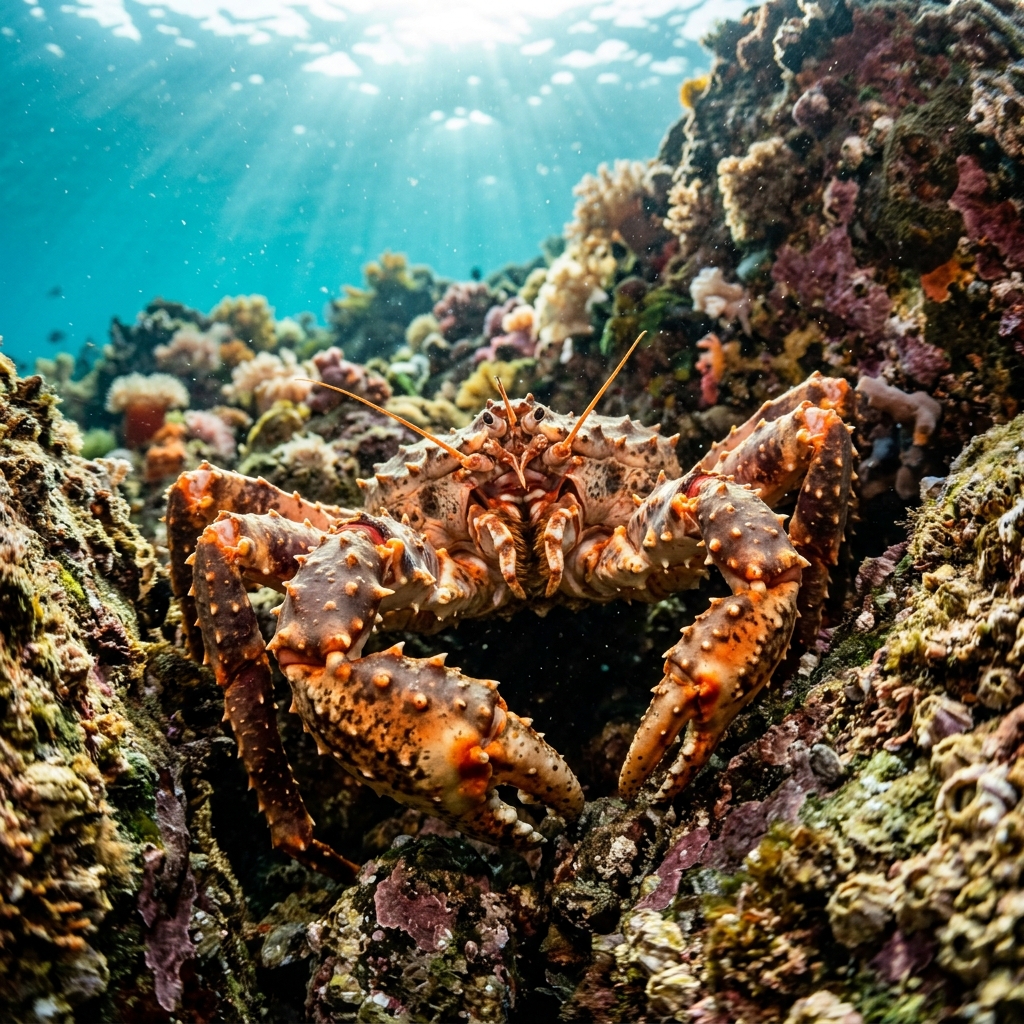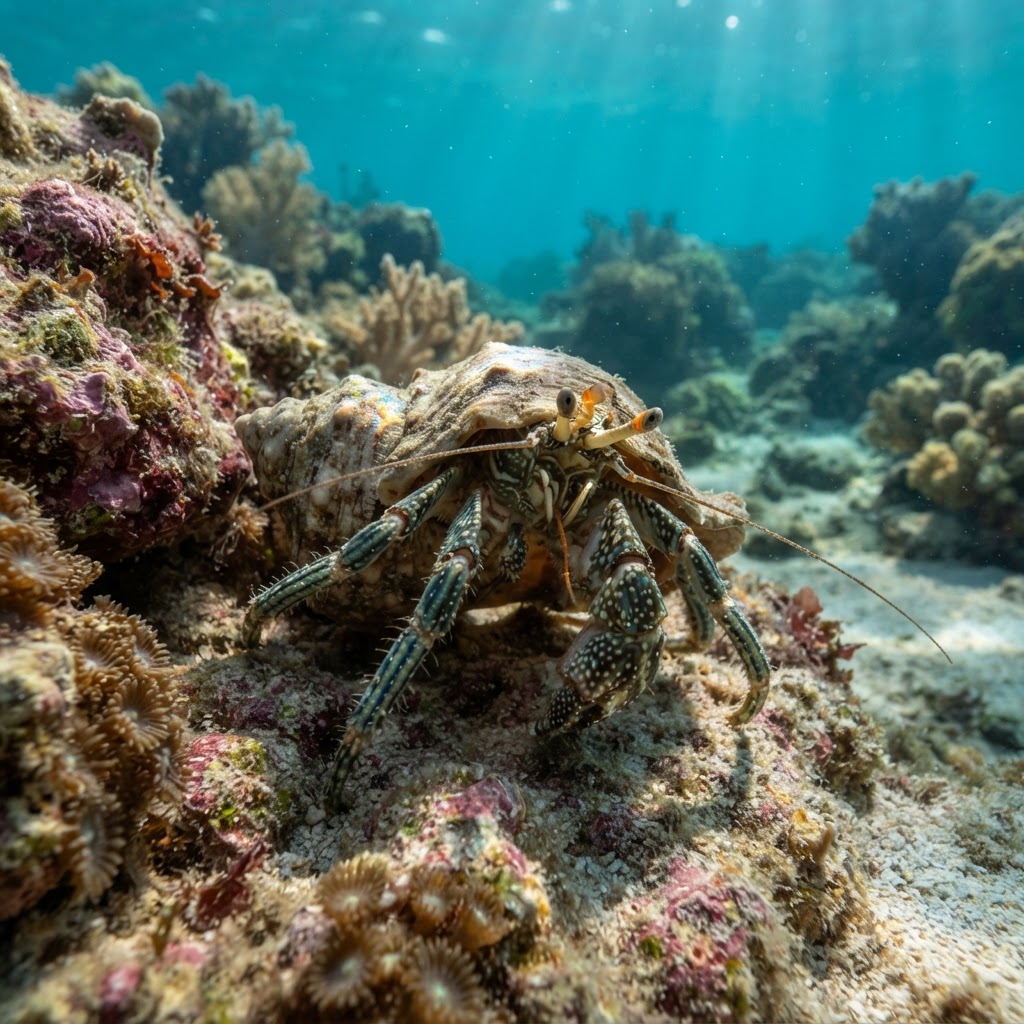
Clibanarius striolatus
Uncommon reef find in Bali, Fiji and the Andaman Islands, comfortable year-round in warm 24 to 30C water.
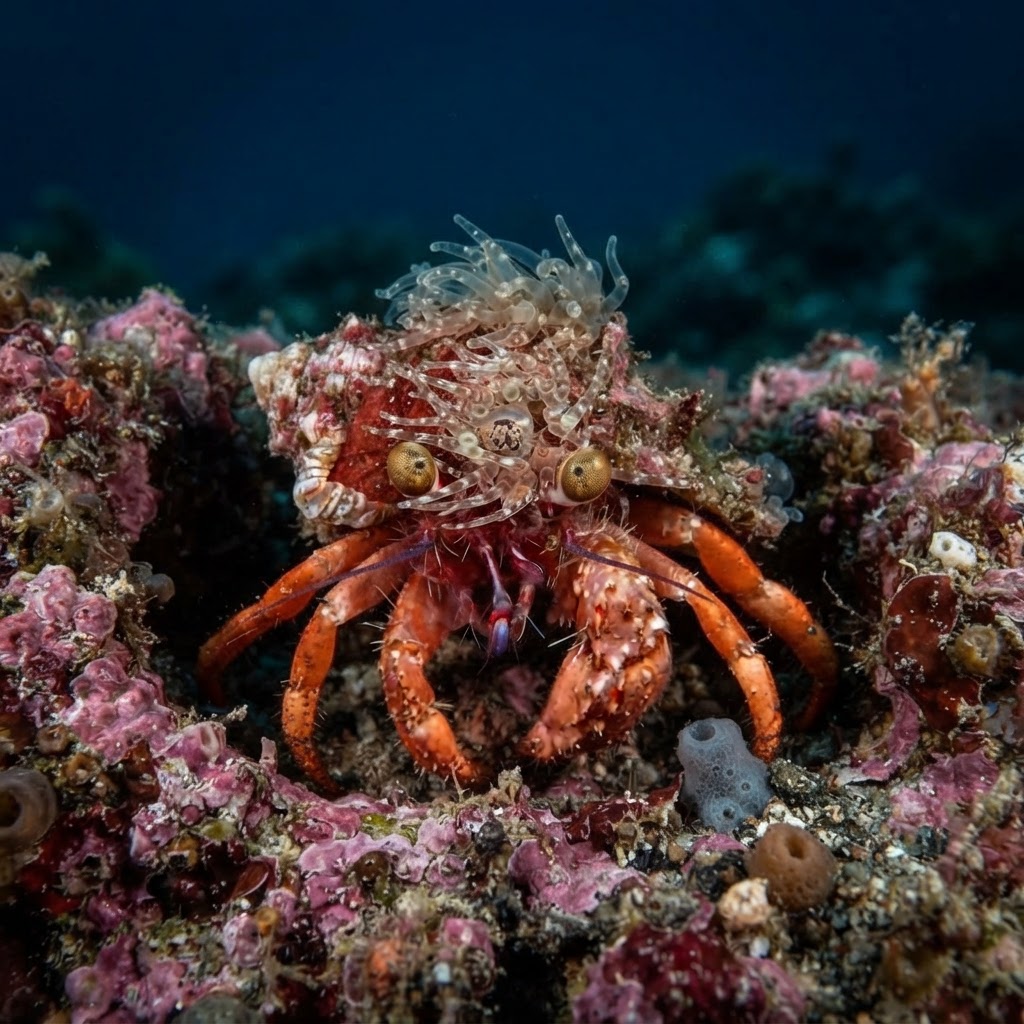
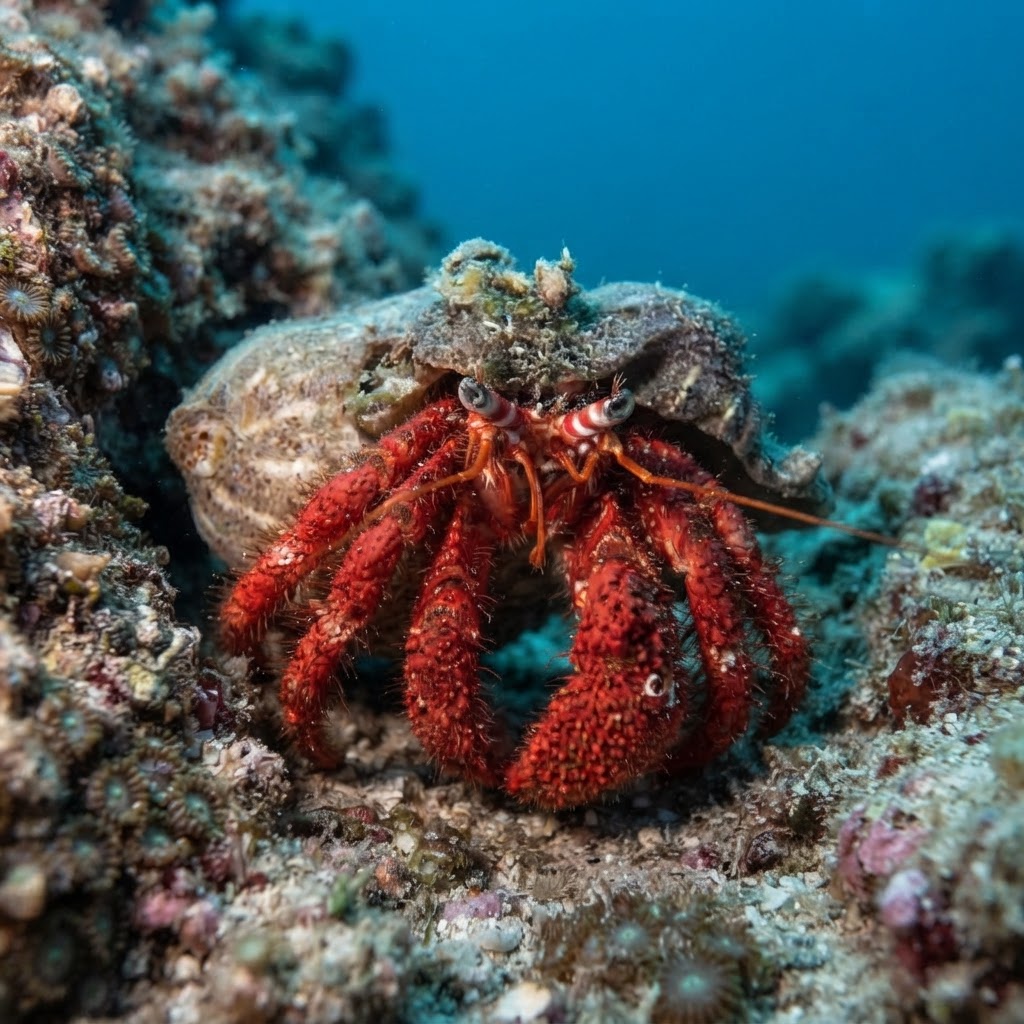
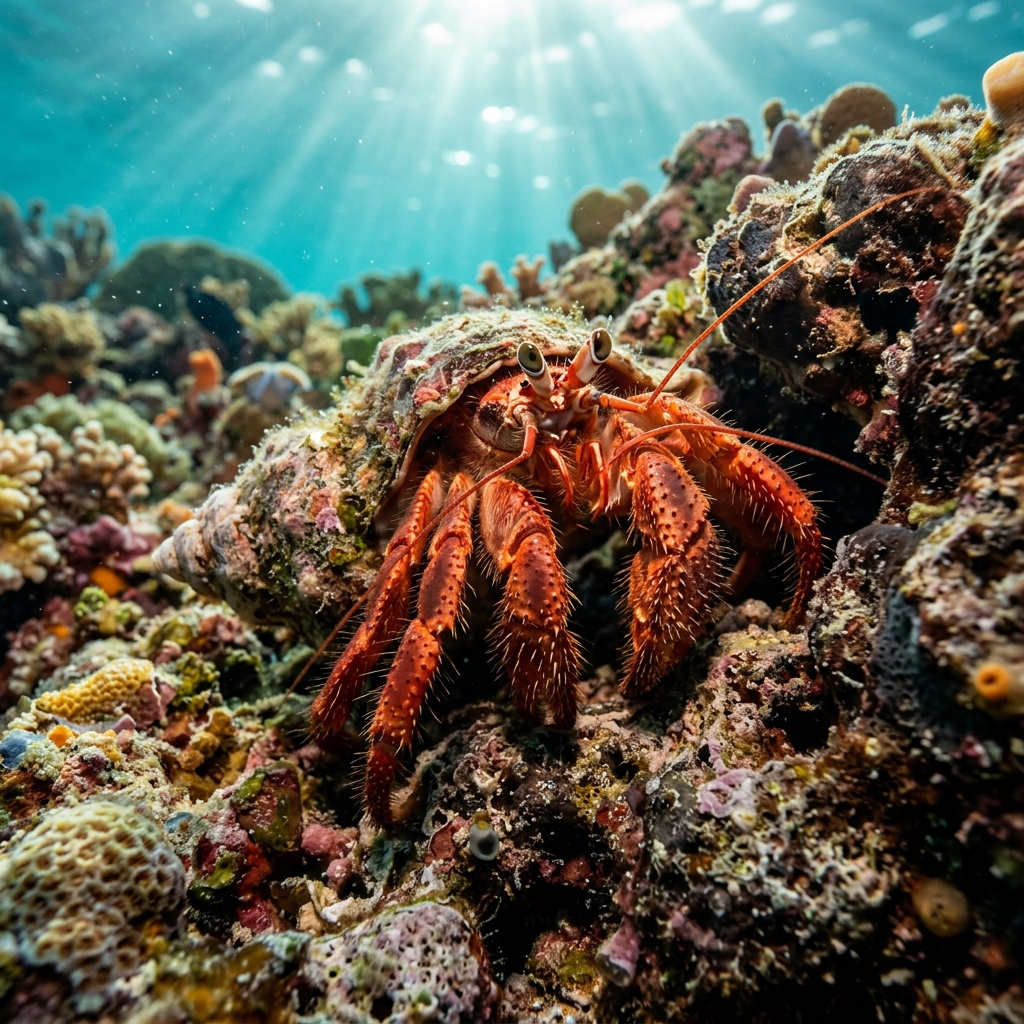
A small hermit crab recognised by the fine pale stripes running along its walking legs, tucked into a scavenged snail shell rather than growing its own. Look for it moving slowly across rubble and sand patches rather than on open coral, with its striped legs the main giveaway against the plainer legs of other hermit crabs sharing the same reef. Size in the water reads small, easy to miss unless you're scanning the substrate closely.
Divers typically spot it shuffling across sand, rubble or reef debris rather than perched on corals, going about its business unhurried by passing divers. It's a slow mover that tends to withdraw into its borrowed shell if disturbed rather than flee, so a patient, close look at reef substrate is usually how it gets found.
Like all hermit crabs, it doesn't grow its own shell but recycles an empty gastropod one, trading up to a bigger shell as it grows.
No clear seasonal pattern shows up in the data, and it sits comfortably in water from 23.6 to 29.6C, so it's a year-round find on the tropical reefs where it's logged.
Reef neighbours a diver could mistake it for. Use the identification notes above to tell them apart.
Most reliably logged in Indonesia, especially around Bali, and in Fiji's Viti Levu, with a strong secondary population in Okinawa and the Ryukyu Islands of Japan. It also turns up in India's Andaman Islands and in smaller numbers off Nosy Be in Madagascar.
Mapping where Danas Hermit Crab is logged…
It's most commonly logged in Bali, Indonesia and around Viti Levu in Fiji, with good numbers also reported in Okinawa, Japan and the Andaman Islands of India. Smaller populations are logged off Nosy Be, Madagascar.
There's no strong seasonal signal in sightings, so it's considered a year-round species on the warm tropical reefs it inhabits, comfortable in water from roughly 24 to 30C.
Check the walking legs for fine pale stripes, and look for it tucked into a scavenged shell moving slowly over sand or rubble rather than sitting on coral. It's small and easy to overlook unless you're scanning the substrate closely.
No, it poses no danger to divers. It's a small, slow-moving scavenger that will retreat into its shell if approached rather than react defensively.
Its conservation status hasn't been formally assessed, so there's no listing indicating it's at risk. There's nothing in current data suggesting divers need to be concerned about its population status.
Site and sighting data is aggregated from diver logs, iNaturalist and GBIF. For taxonomy and conservation status:
European Green Crab
2,469 sites