Goniobranchus conchyliatus
A pink and orange nudibranch logged mainly on Goa's reefs in India, uncommon but present year-round in warm water.
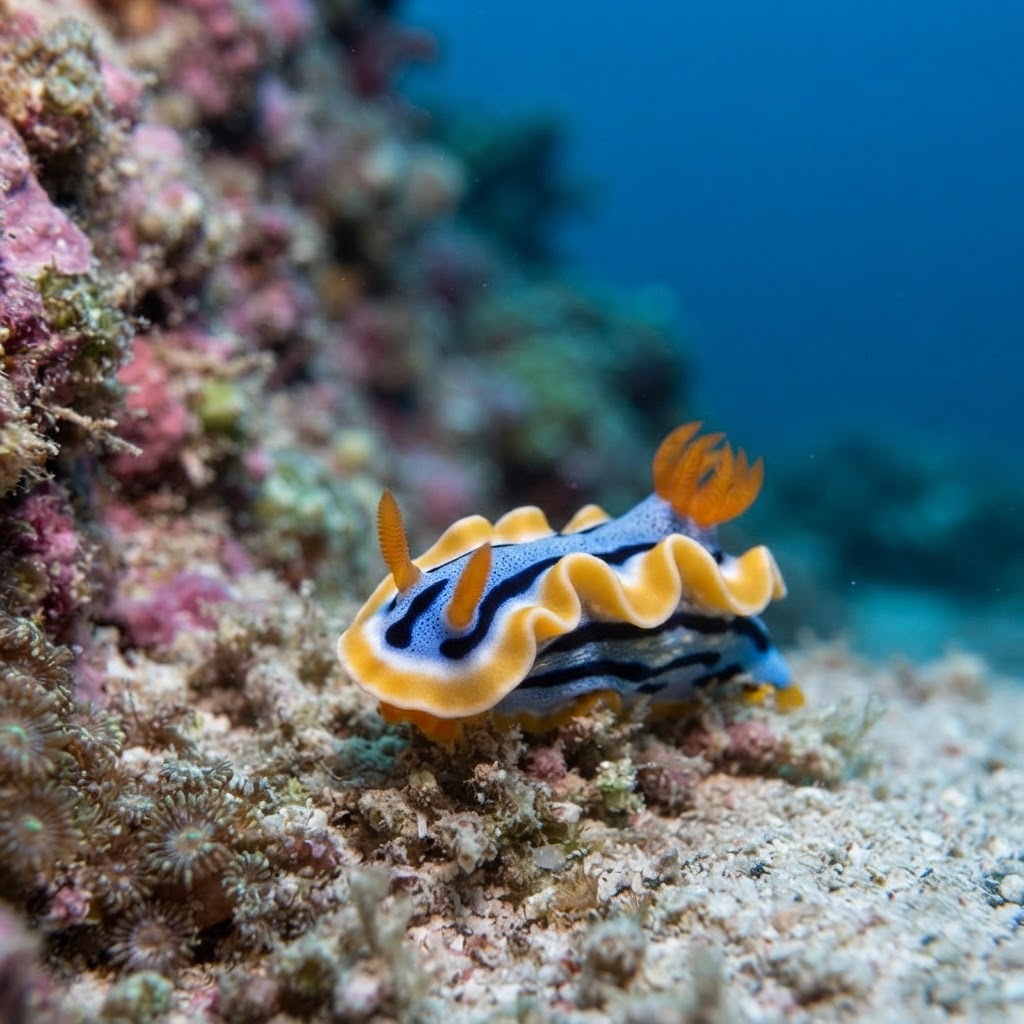
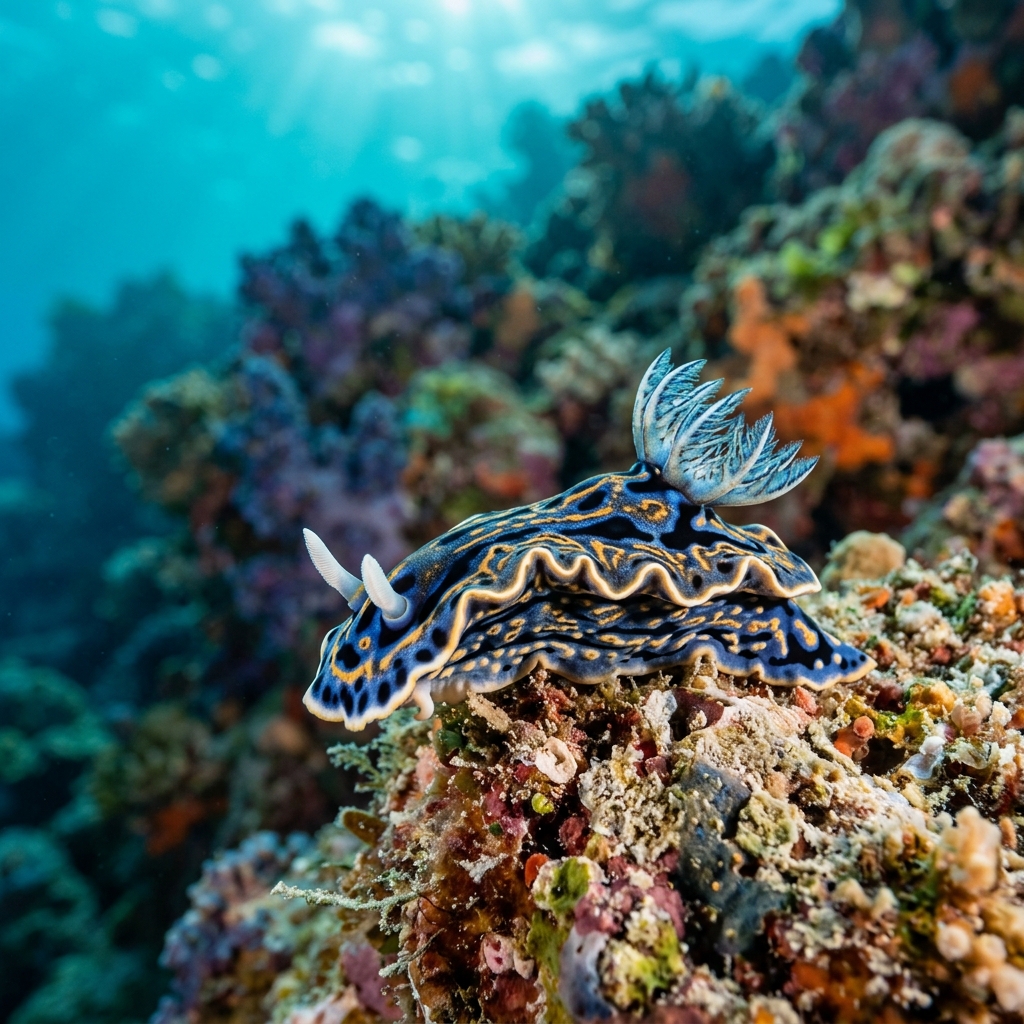
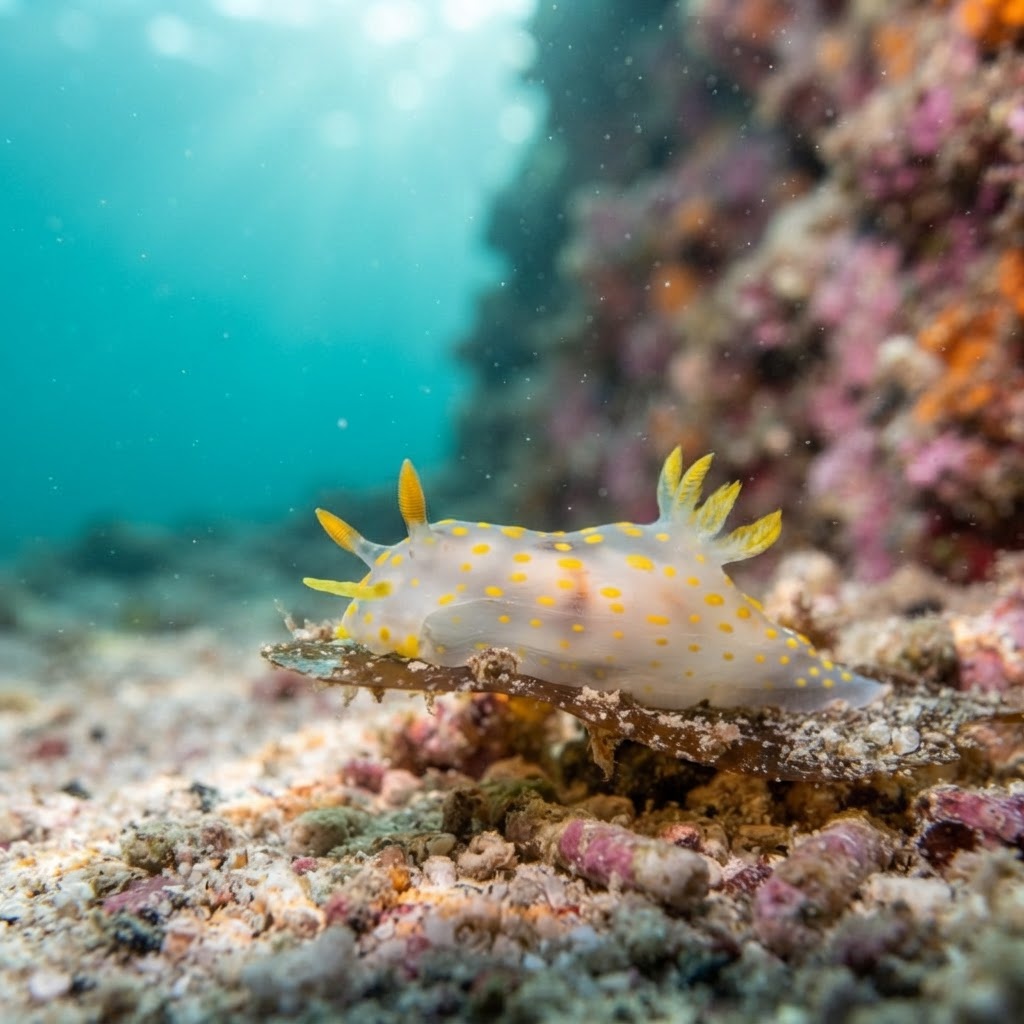
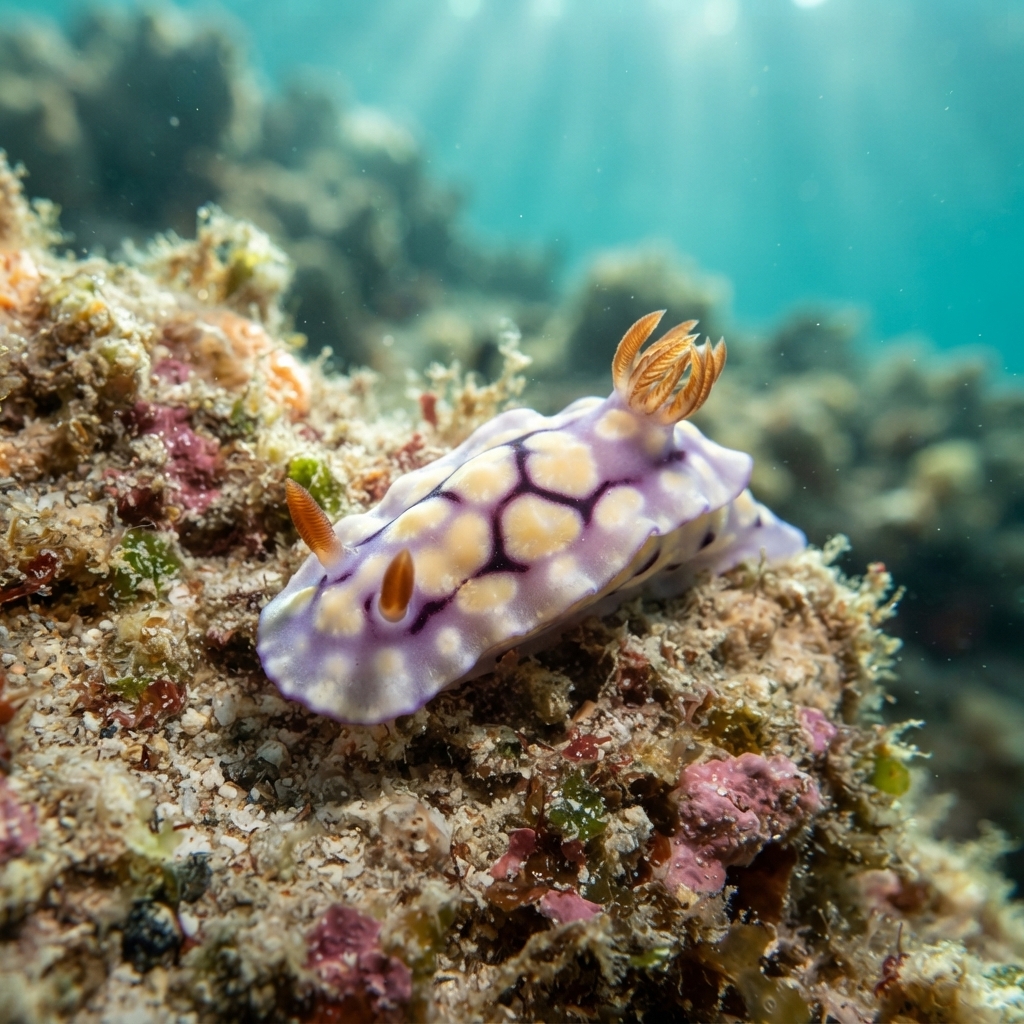
A small, oval-bodied nudibranch with a pink to violet mantle bordered by an orange or yellow line running the full edge. Look for the pair of yellow-tipped rhinophores (the sensory tentacles on the head) and the contrasting orange gill cluster at the rear. It moves slowly across rock and rubble, staying low and close to the substrate where its colours can blend with encrusting sponges until you look closely.
Divers log this one moving slowly over rock, rubble and sponge-covered surfaces, grazing rather than swimming, so a careful eye during a slow bottom section is more useful than chasing it down. It shows no real reaction to divers beyond retracting its rhinophores briefly if touched or disturbed by fin wash. Given how uncommon it is at the sites where it does appear, most sightings come from divers specifically scanning rubble patches and rock crevices rather than spotting it in open view.
Like other chromodorid nudibranchs, it likely feeds on sponges and stores compounds from that diet in its skin as a chemical defence, which is part of why its colours stay so bright and exposed rather than needing camouflage.
No clear seasonal pattern shows up in the sightings, and the water it has been logged in ranges from 25.4 to 31.4C, comfortably within year-round tropical conditions. Treat it as a possible find on any dive in Goa rather than a species tied to a particular month.
Reef neighbours a diver could mistake it for. Use the identification notes above to tell them apart.
Goa, India is by far the strongest area for this species in the data, with sightings spread across numerous sites there. A single record also comes from Inhambane in Mozambique, so while it turns up outside India, Goa is where divers actually find it with any regularity.
Mapping where Dainty Rainbow Dorid is logged…
Goa, India is the most reliable place to look, with sightings spread across many sites there. A single sighting also comes from Inhambane, Mozambique, but Goa is where it is actually logged with any consistency.
There is no detected season in the sightings data, and it has been observed across a wide warm-water range from 25.4 to 31.4C. That points to a species present on Goa's reefs throughout the year rather than one tied to a particular month.
Check for a pink to violet mantle with an orange or yellow border, plus yellow-tipped rhinophores and an orange gill tuft at the rear. It moves slowly across rock and rubble rather than swimming, which helps separate it from faster-moving reef life nearby.
No, it poses no danger to divers. It has no sting or bite of concern and simply grazes slowly over rock and rubble.
It is logged as uncommon even at the sites where it does turn up, so spotting one usually takes a deliberate, slow search of rubble and rock crevices rather than a casual glance across the reef.
Site and sighting data is aggregated from diver logs, iNaturalist and GBIF. For taxonomy and conservation status:
Light-spotted Aegires
3,168 sites