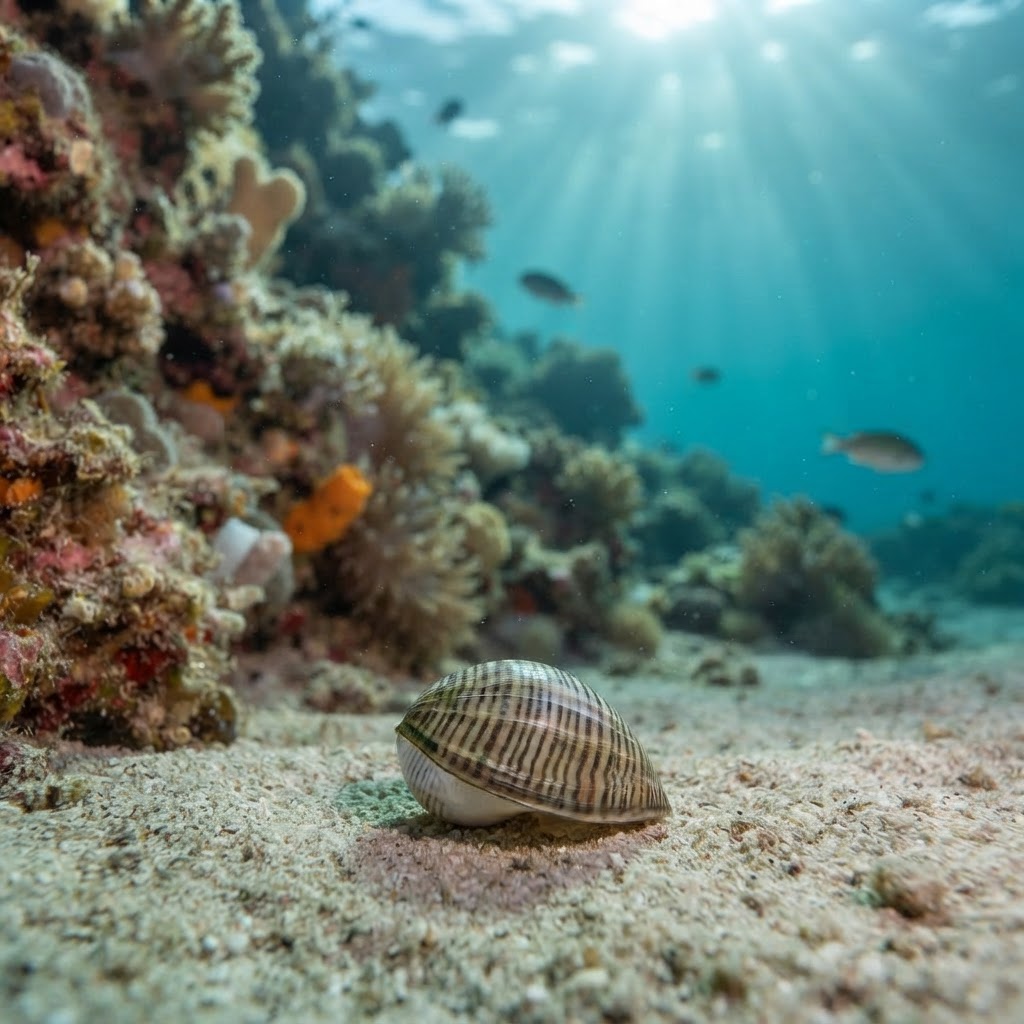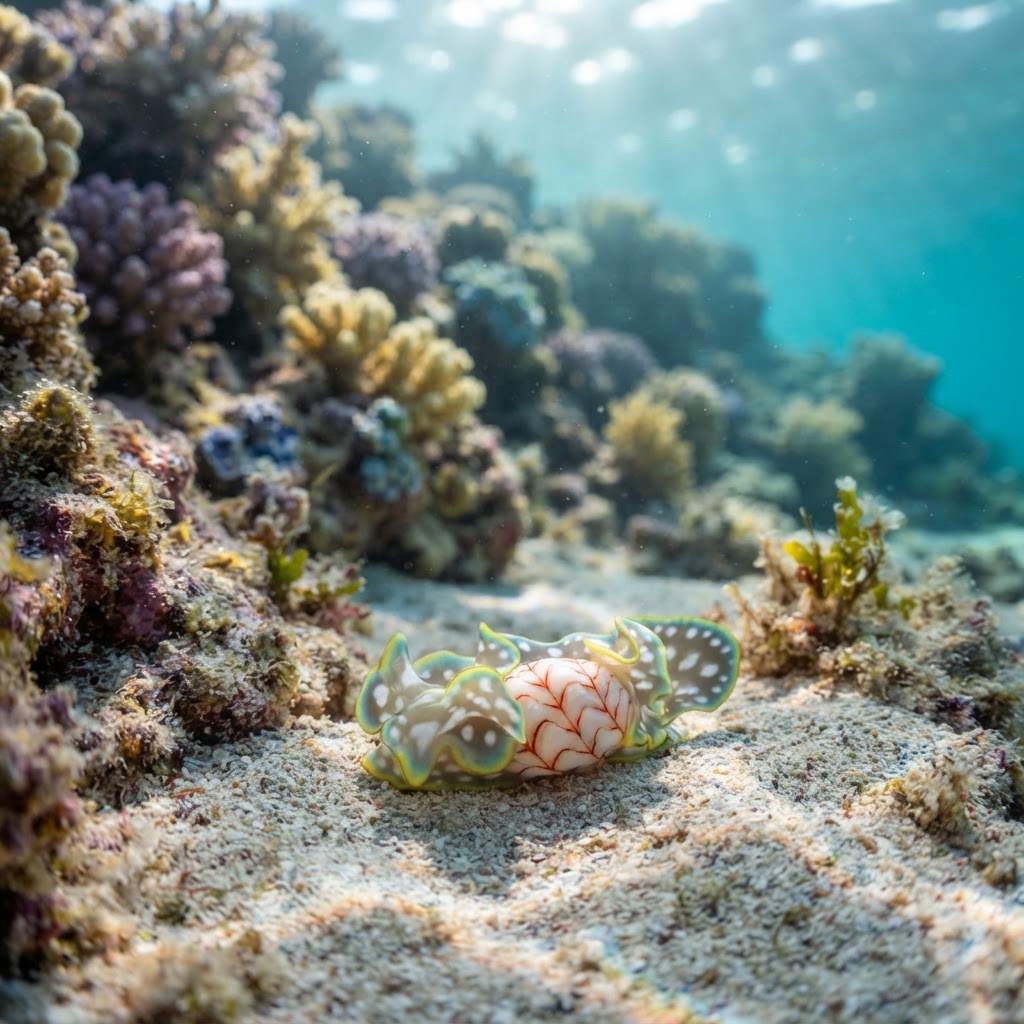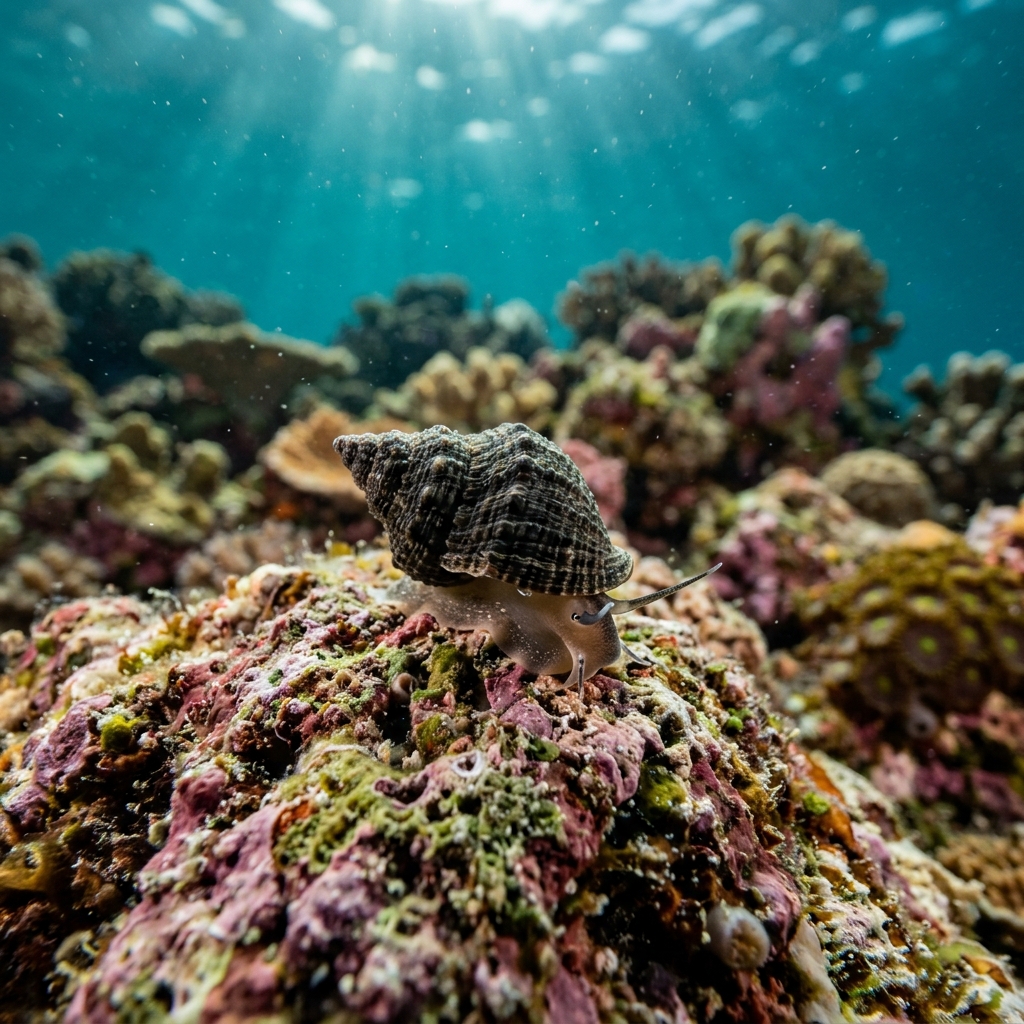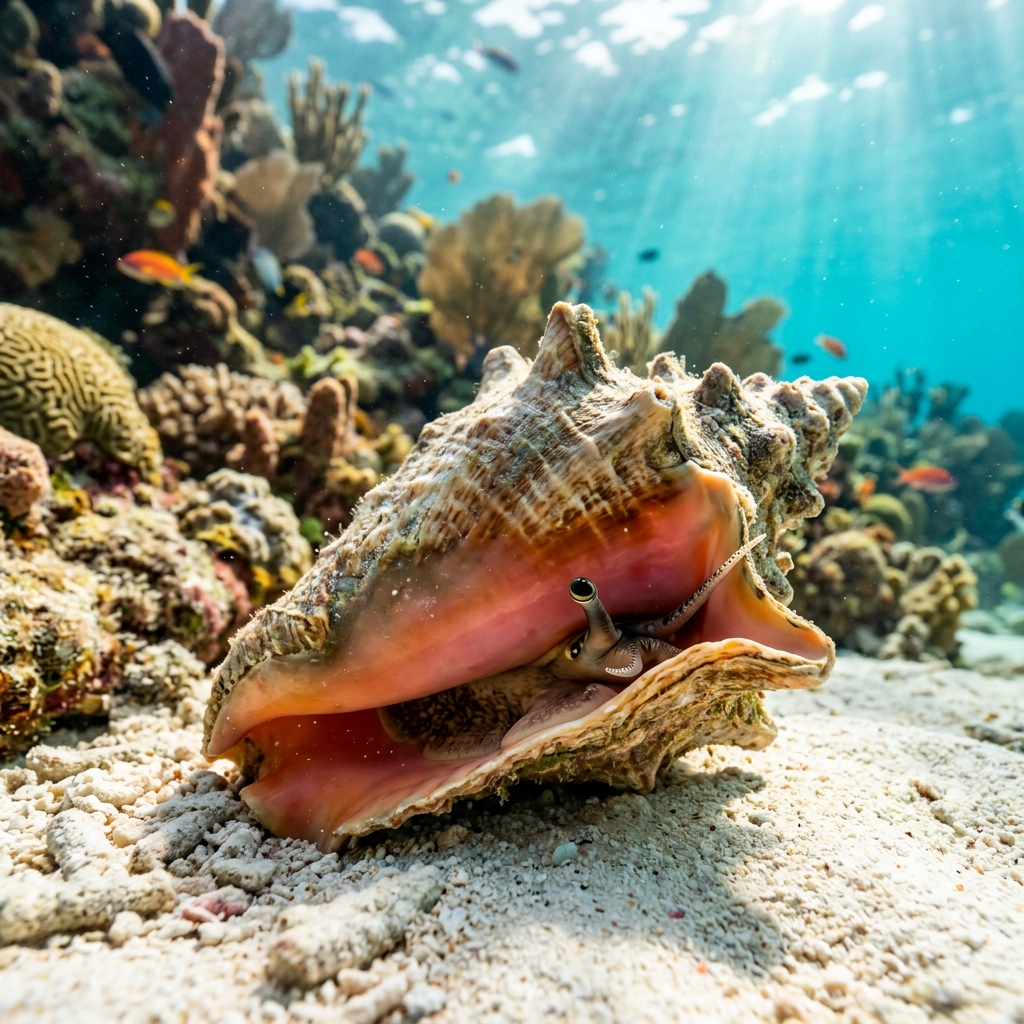
Aliculastrum cylindricum
An uncommon find in Milne Bay and Luzon muck sites, spotted on warm reef sand between 25 and 31C.
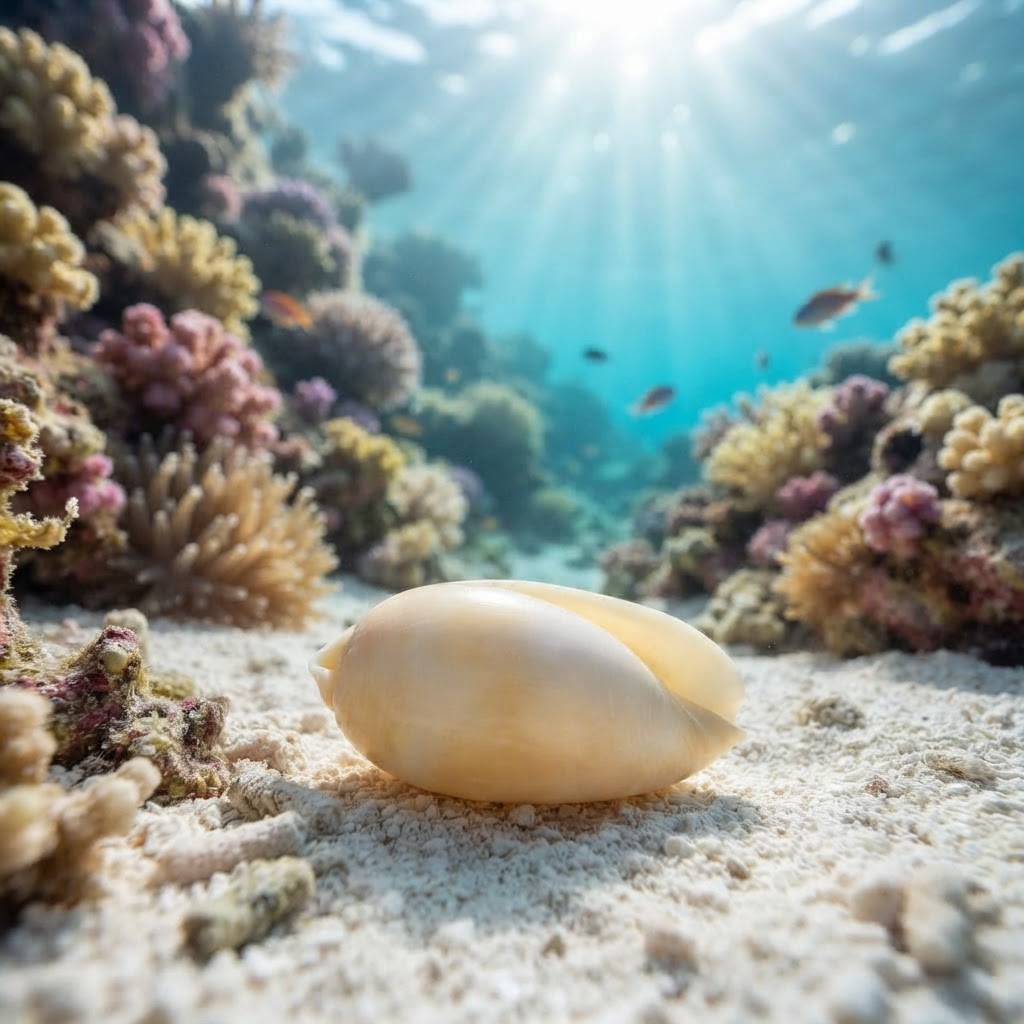
A small, smooth-bodied sea slug with an elongated cylindrical shape that gives it its name, rather than a coiled or flattened profile. The body is soft and semi-translucent, usually pale to sandy in tone, letting it blend into the substrate it crawls across. Look for the reduced external shell partly enclosed by the mantle rather than sitting exposed on top, a key trait of headshield slugs in this family.
Divers typically find it moving slowly across sand or rubble, often half-buried or tucked against the substrate where its pale colouring makes it easy to miss. It shows no reaction to divers beyond retracting slightly if disturbed, and it is usually spotted on daytime dives by those specifically scanning sandy patches rather than swimming past open water.
Like other headshield slugs, it likely uses its broad, shield-like head to plough through sand while hunting, a feeding style that keeps it low-profile and easy to overlook on a reef.
Sightings show no detectable seasonal pattern, and the observed temperature range of 25.4 to 31.4C spans typical tropical reef conditions year-round, so any month works in these regions.
Reef neighbours a diver could mistake it for. Use the identification notes above to tell them apart.
Most reliably logged around Milne Bay in Papua New Guinea and across Luzon in the Philippines, with an additional site recorded in Queensland, Australia. These are muck-diving and sandy-reef strongholds, so search sheltered sandy patches and rubble areas in those regions rather than open coral wall.
Mapping where Cylinder Bubble is logged…
It is most often logged in Milne Bay, Papua New Guinea and across Luzon in the Philippines, with a further sighting in Queensland, Australia. It favours sandy or rubble patches rather than open coral reef.
There is no strong seasonal pattern in the data, and it is found across a wide warm-water range of 25.4 to 31.4C, so it can turn up on any dive through the year in these regions.
Look for a small, smooth, elongated body without a prominent external shell, usually pale or sandy coloured and found crawling slowly across sand or rubble. Its cylindrical shape sets it apart from more coiled or ribbon-like sea slugs nearby.
Exact size data is not available, but like most species in this family it is a small, easily overlooked slug best spotted by scanning sandy substrate closely rather than looking for a large animal.
No, it poses no danger to divers. It is a slow-moving, harmless sand-dweller that will retract slightly if touched but has no sting or venom of concern.
It belongs to the headshield slug group, named for the broad shield-shaped head used to plough through sand while feeding, which keeps it hidden and hard to spot on a dive.
Site and sighting data is aggregated from diver logs, iNaturalist and GBIF. For taxonomy and conservation status:
Triton Shell
2,297 sites