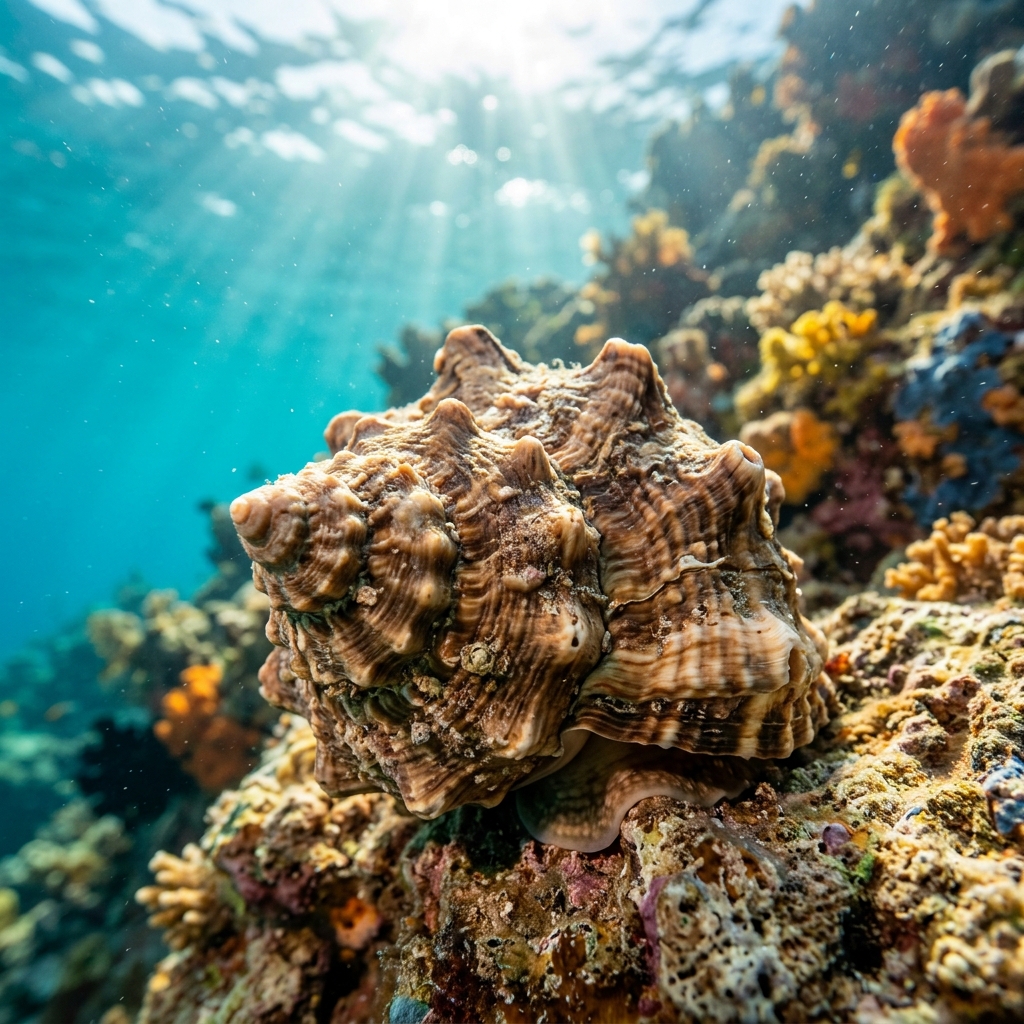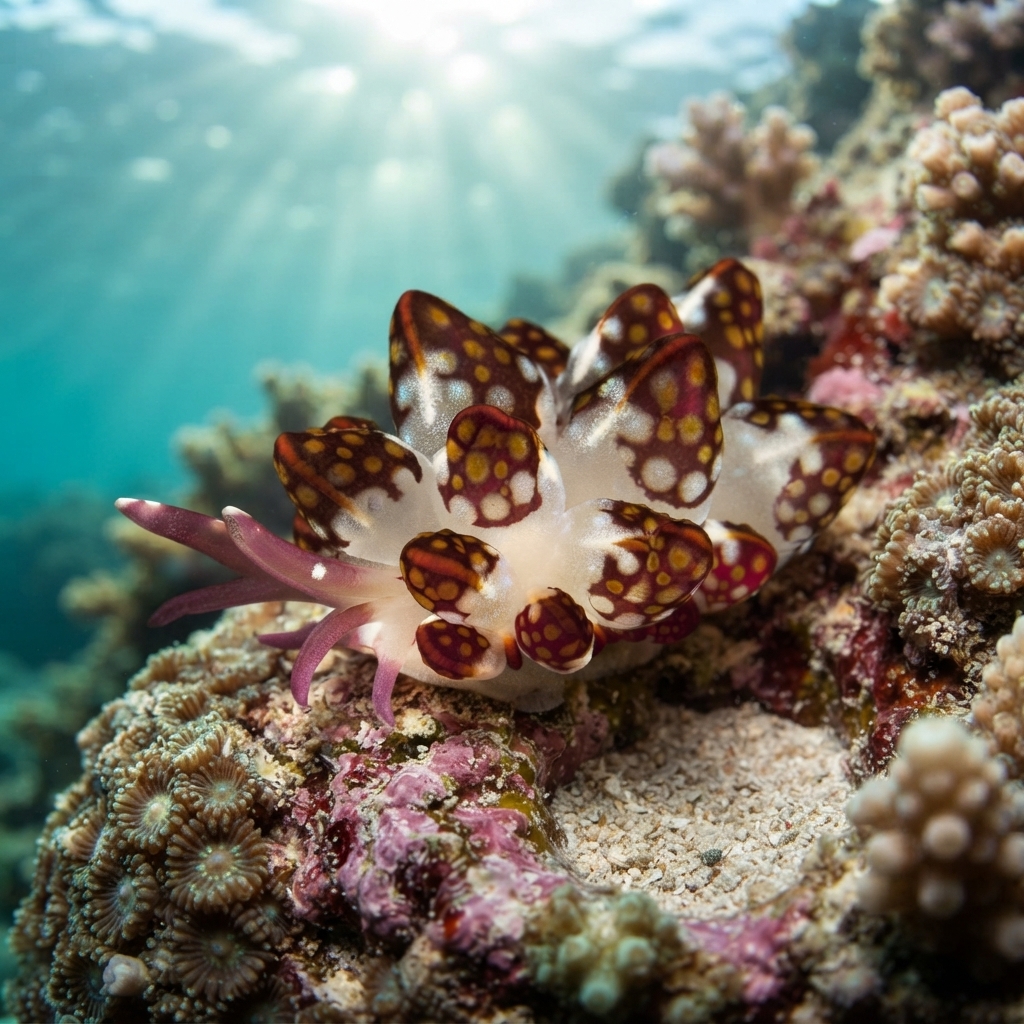
Cyerce kikutarobabai
A rare sea slug find in Xiaoliuqiu, Taiwan and Bali, Indonesia, on warm reefs between 25.5 and 31.5 C.
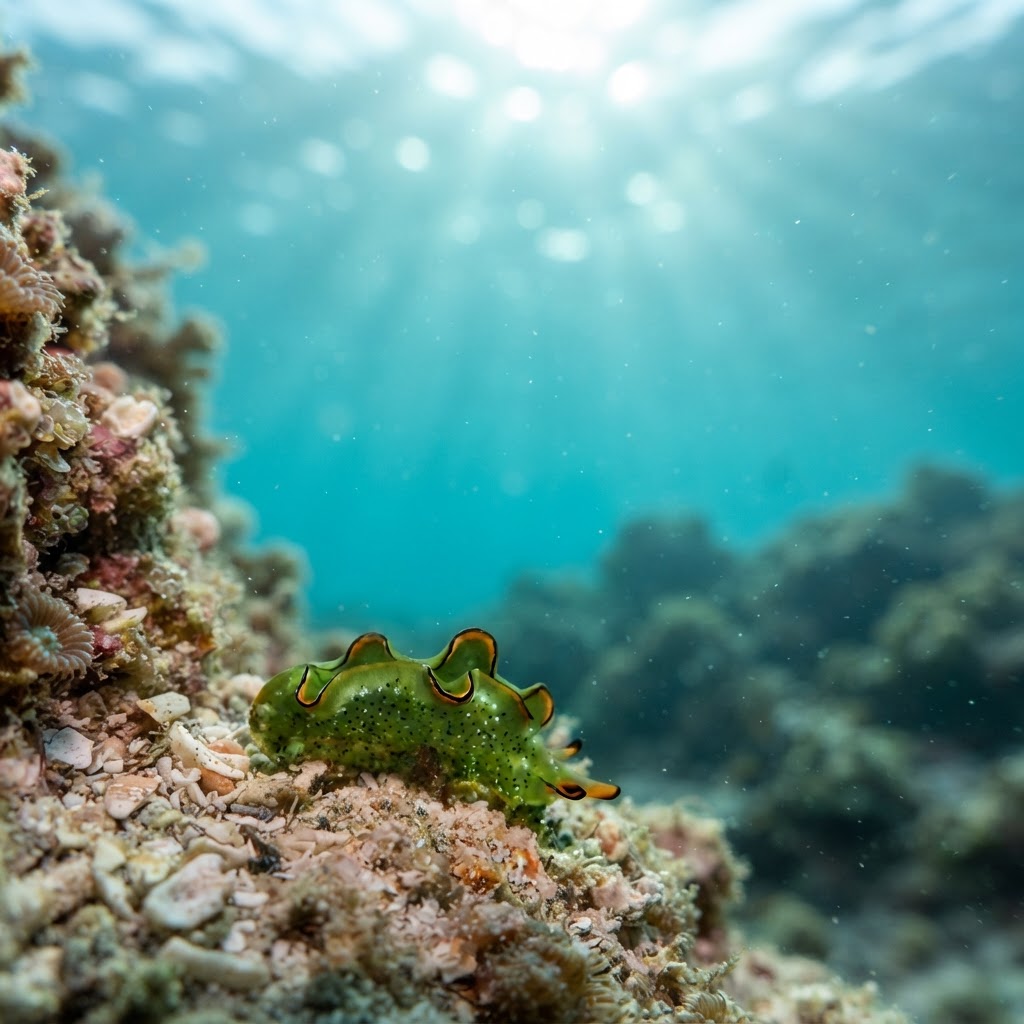
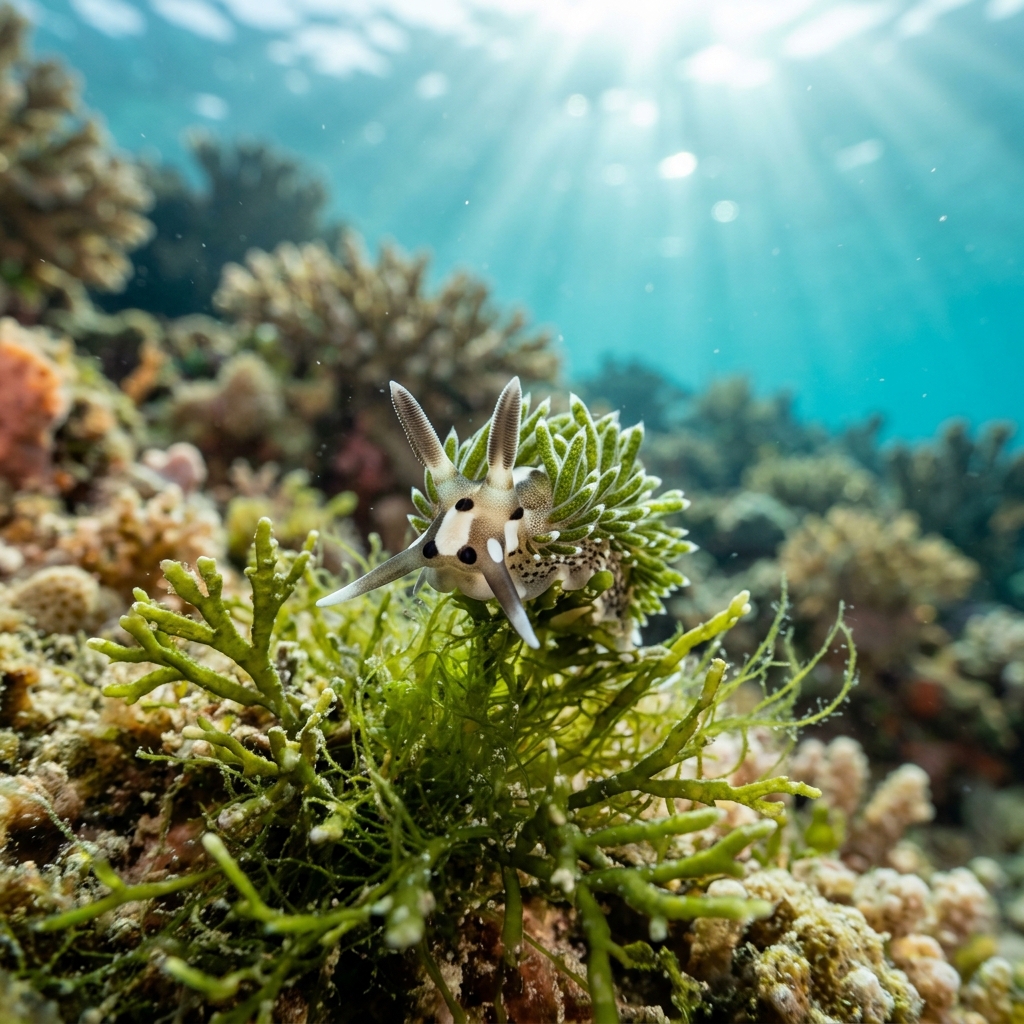
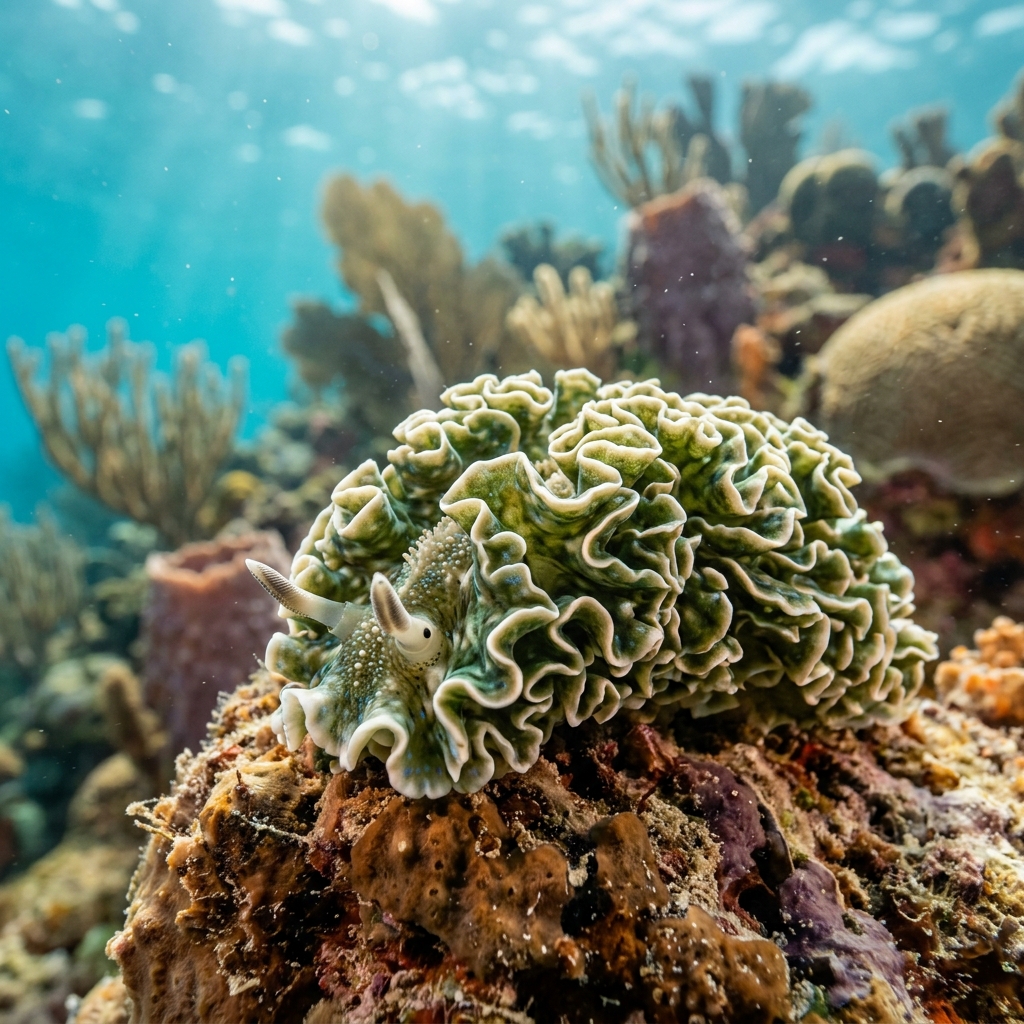
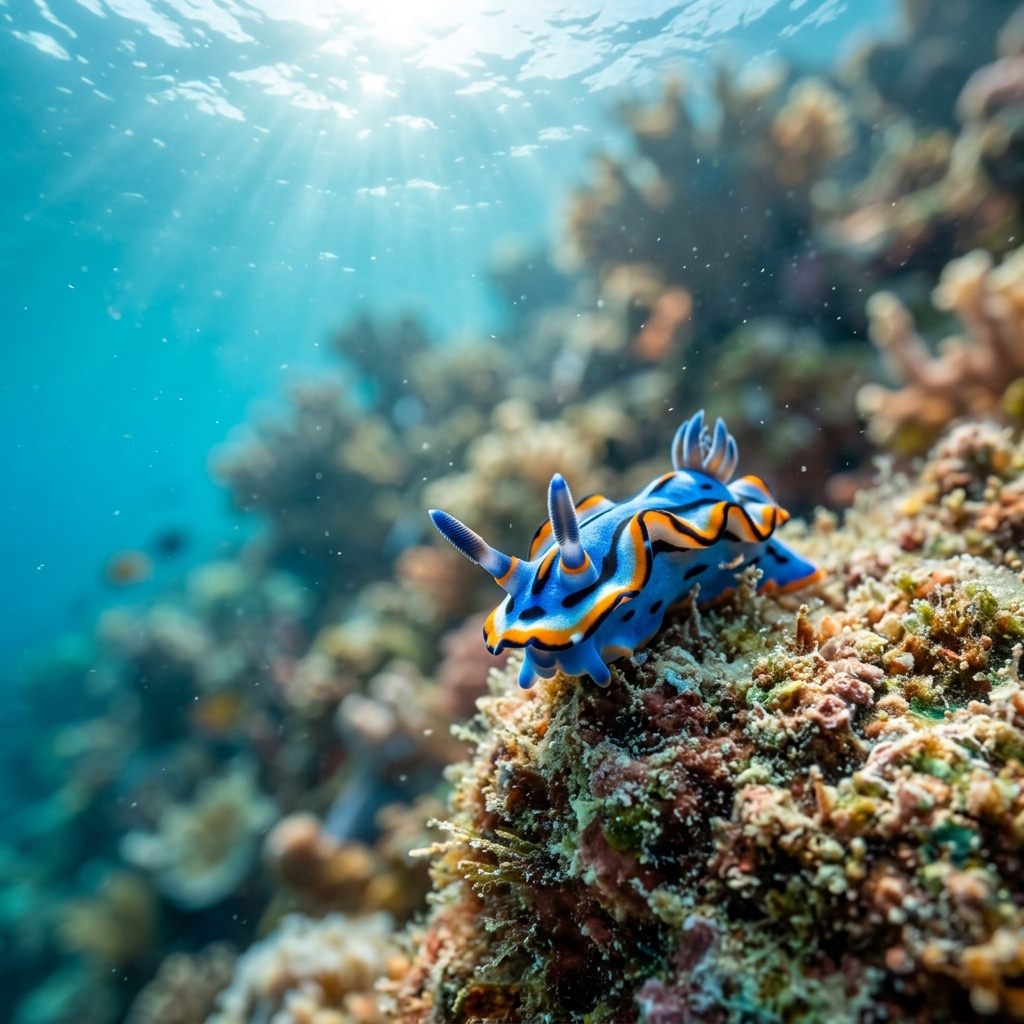
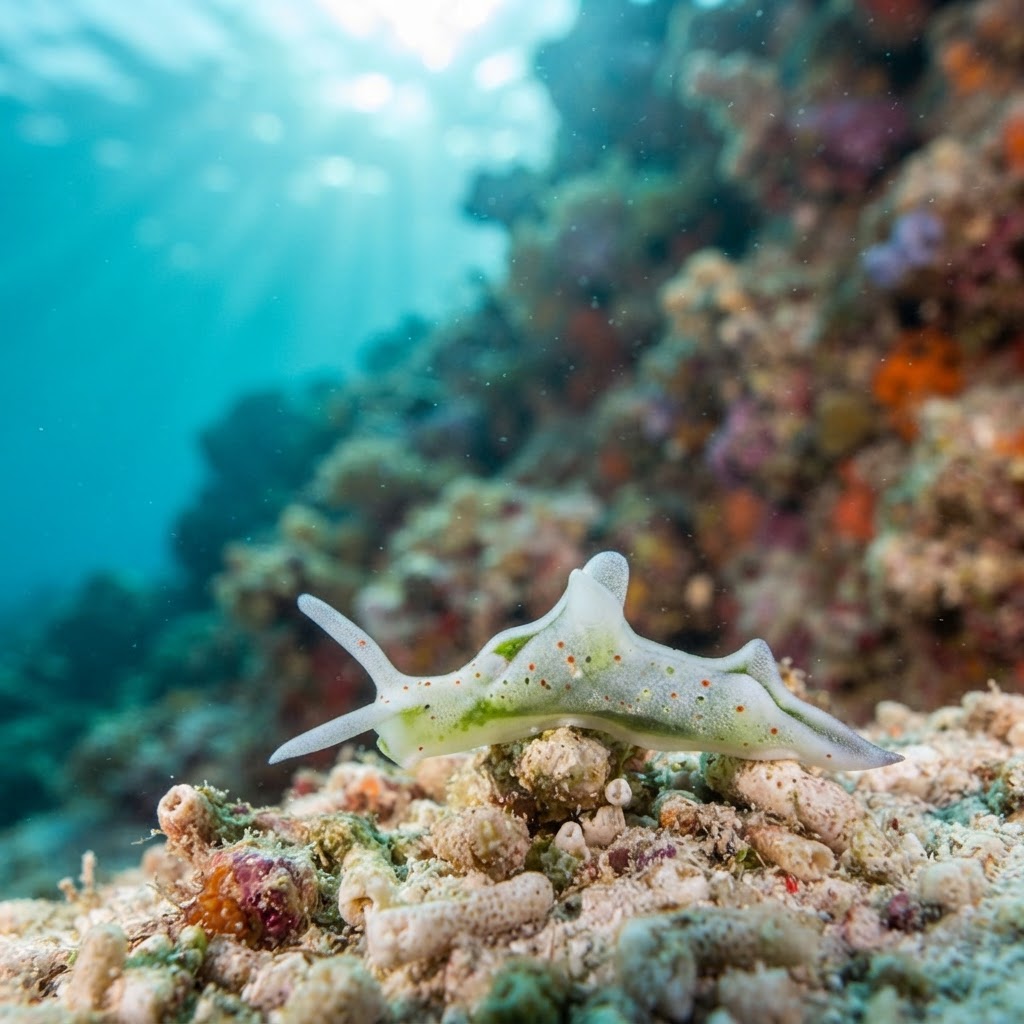
Recognisable by the rows of flattened, leaf-shaped appendages (cerata) along its back, giving it a frilly, almost lettuce-like silhouette typical of the caliphyllidae family. It moves slowly across the substrate and reef rubble, rarely more than a few centimetres long. Colour patterning on the cerata is the main feature divers zero in on with a torch or macro lens, since the body itself is soft and easily overlooked against similarly textured algae or debris.
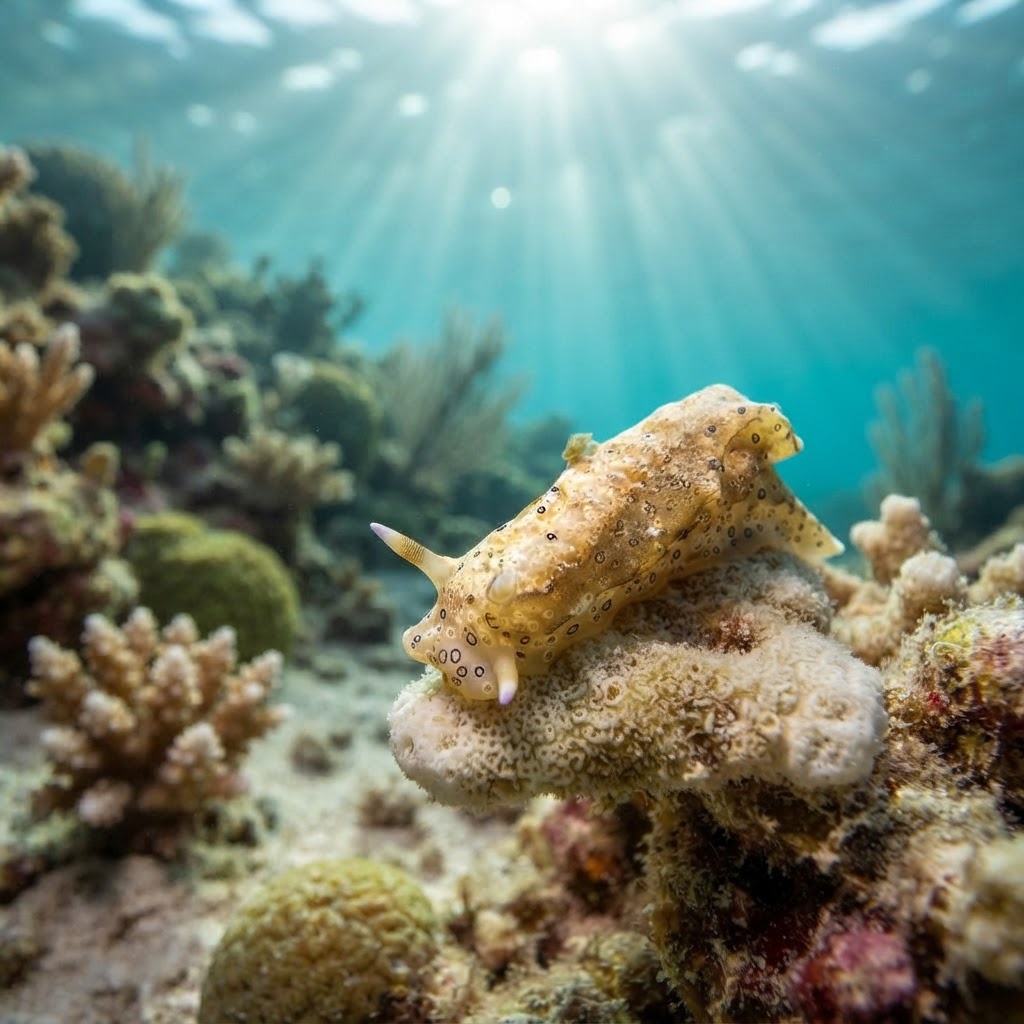
Divers find it grazing slowly over algae-covered rock and rubble, doing what caliphyllid slugs do best: browsing at a snail's pace and relying on camouflage rather than flight when a diver's light passes over. It shows no reaction to divers beyond staying still, making it an easy subject once spotted, though at uncommon frequency the real challenge is finding one in the first place.
Like other caliphyllidae, the leaf-shaped cerata on its back likely function similarly to relatives that store stolen algal chloroplasts or pigments from their food, letting the animal blend into the very substrate it feeds on.
Sightings so far don't show a clear season, and the observed water temperature range of 25.5 to 31.5 C sits comfortably within the warm, stable conditions typical of Xiaoliuqiu and Bali year-round, so there's no obvious best month to target.
Reef neighbours a diver could mistake it for. Use the identification notes above to tell them apart.
Logged from just two spots so far: Xiaoliuqiu in Taiwan and Bali in Indonesia. Both are established macro-diving destinations, so this is one for divers already scanning reef rubble and algae patches on muck and reef dives in those regions rather than a species you'd plan a trip around outright.
Mapping where Cyerce Kikutarobabai is logged…
The only confirmed sightings so far are at Xiaoliuqiu in Taiwan and in Bali, Indonesia. Both are macro-focused dive regions where careful reef and rubble scanning turns up small, camouflaged slugs like this one.
There isn't enough data to point to a specific season. It has been recorded in water from 25.5 to 31.5 C, a range that holds year-round at its known sites in Taiwan and Indonesia.
Look for a small, slow-moving sea slug with rows of flattened, leaf-like cerata covering its back, a hallmark of the caliphyllidae family. It is easiest to spot with a torch scanning reef rubble and algae rather than open sand.
Exact size data isn't available for this species, but relatives in the caliphyllidae family are typically small macro subjects, usually a few centimetres or less, so expect to search closely rather than spot one from a distance.
It's logged as uncommon even at the two sites where it has been recorded, in Xiaoliuqiu and Bali, so finding one takes a dedicated macro search rather than a chance encounter.
Site and sighting data is aggregated from diver logs, iNaturalist and GBIF. For taxonomy and conservation status:
Elysia Timida
573 sites