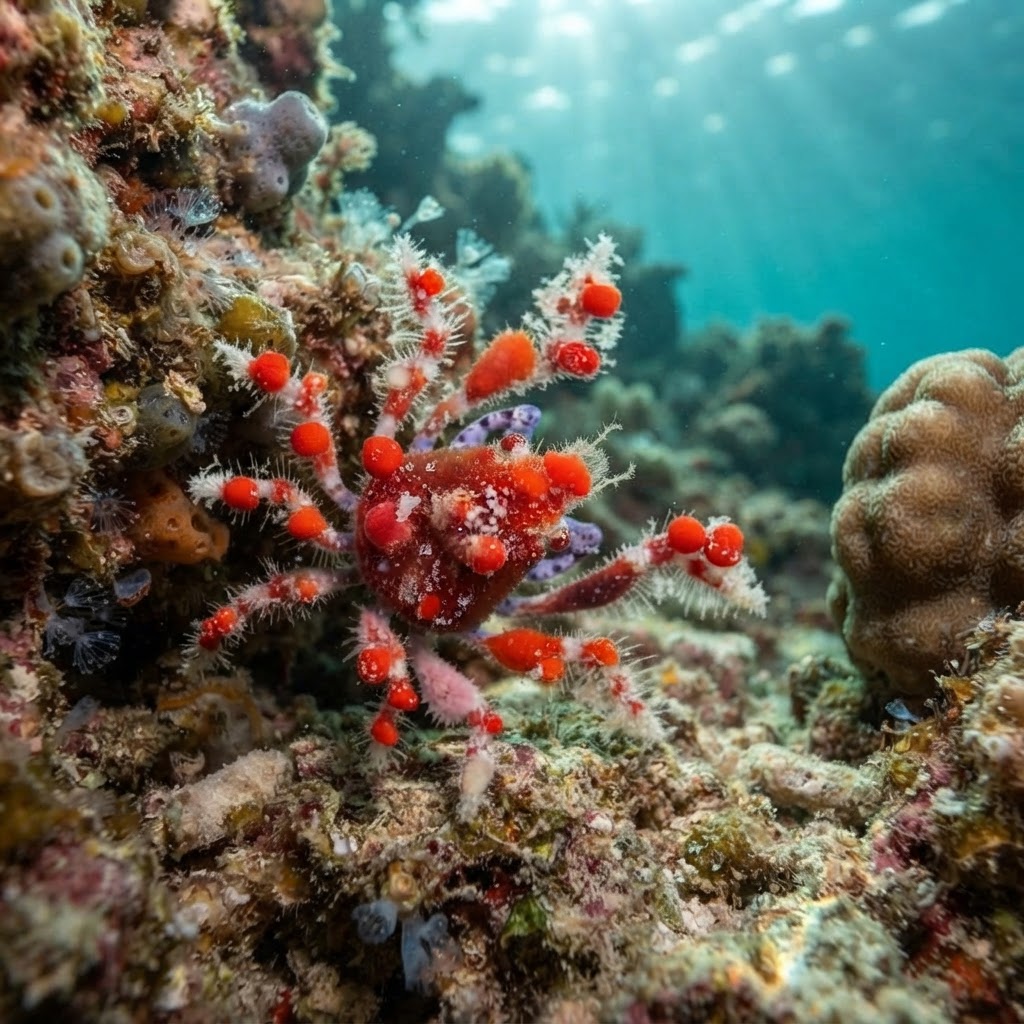
Pelia mutica
Look close in the Grenadines or Tortola's reefs: this tiny decorated crab hides in plain sight in 25-31C Caribbean water year-round.
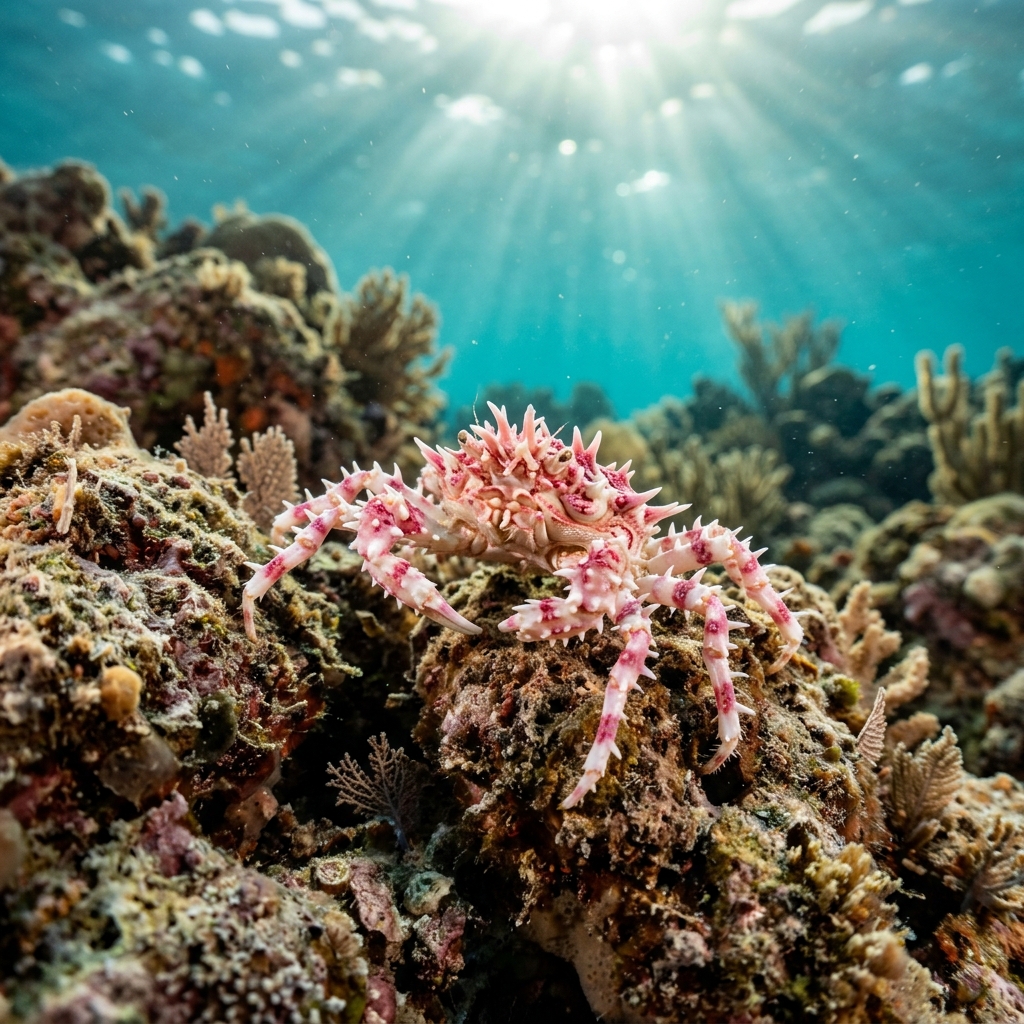
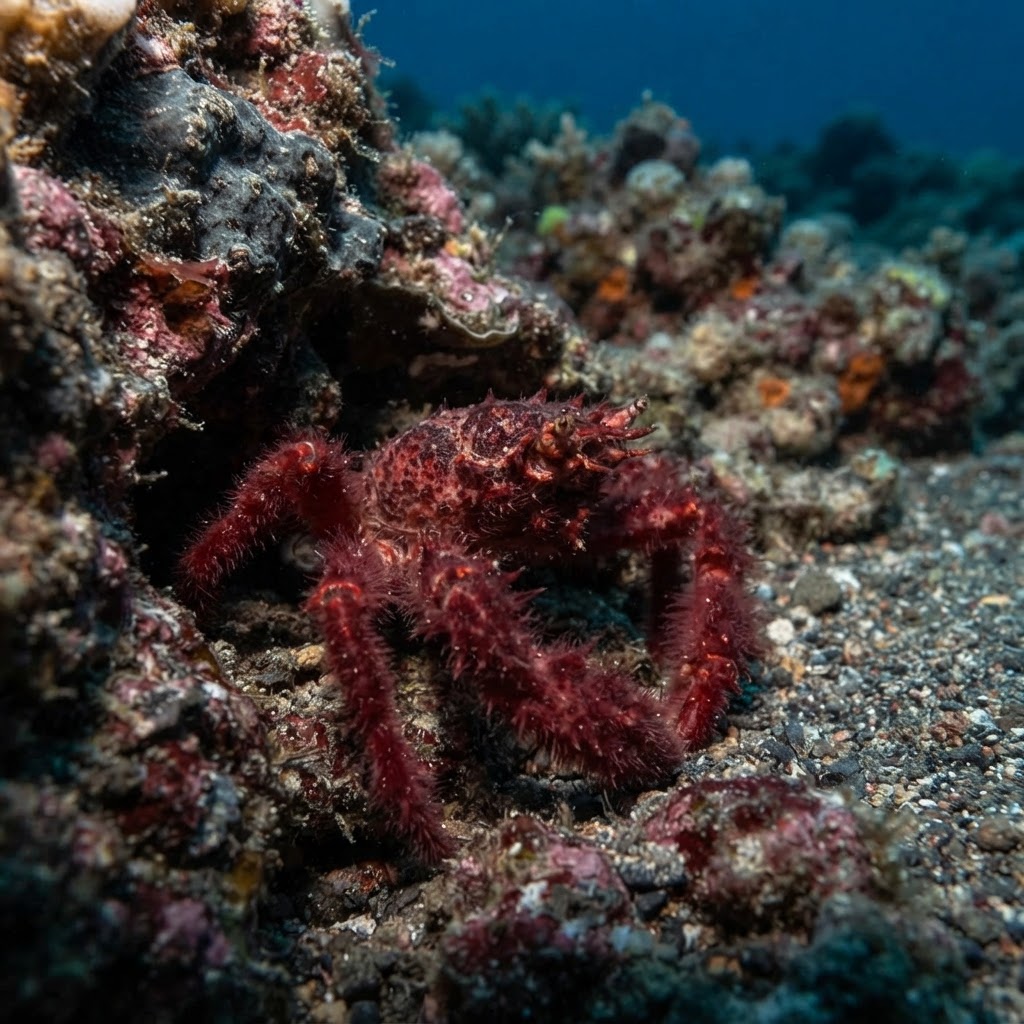
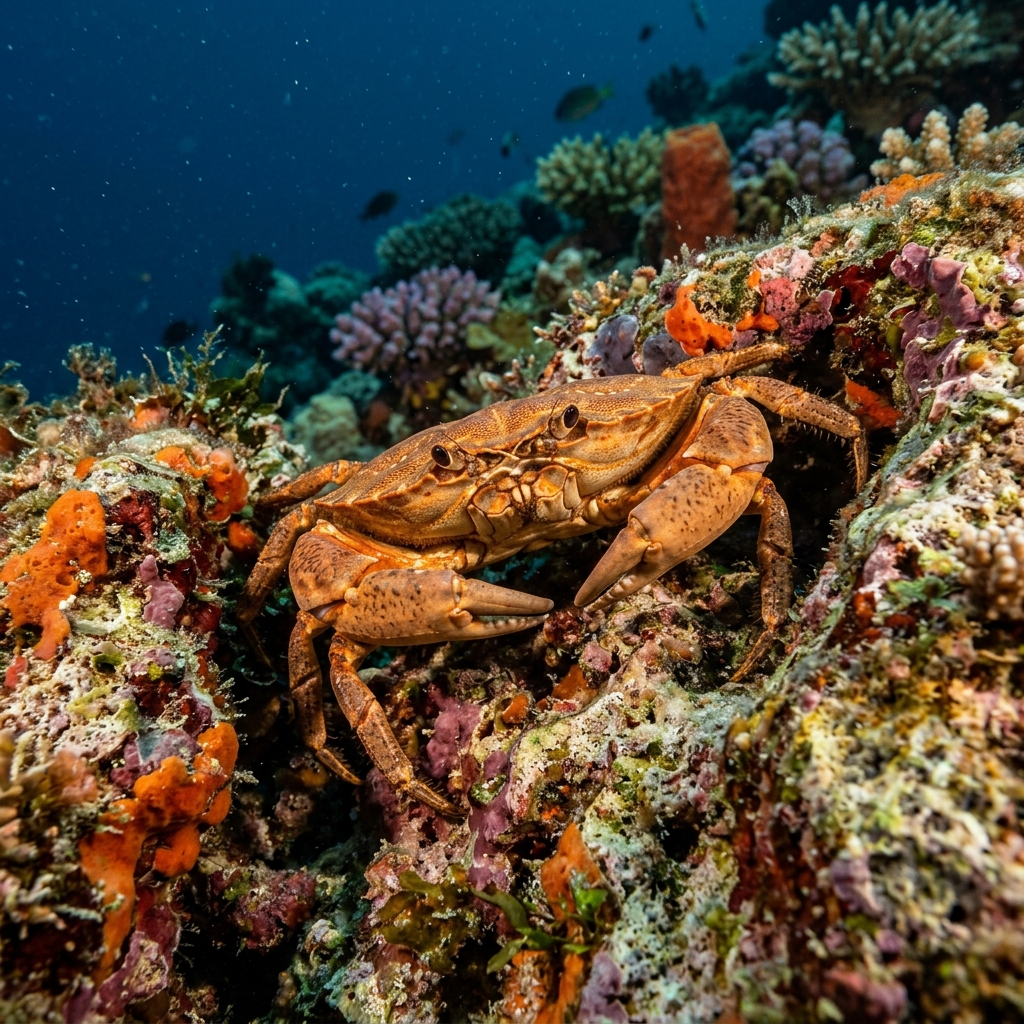
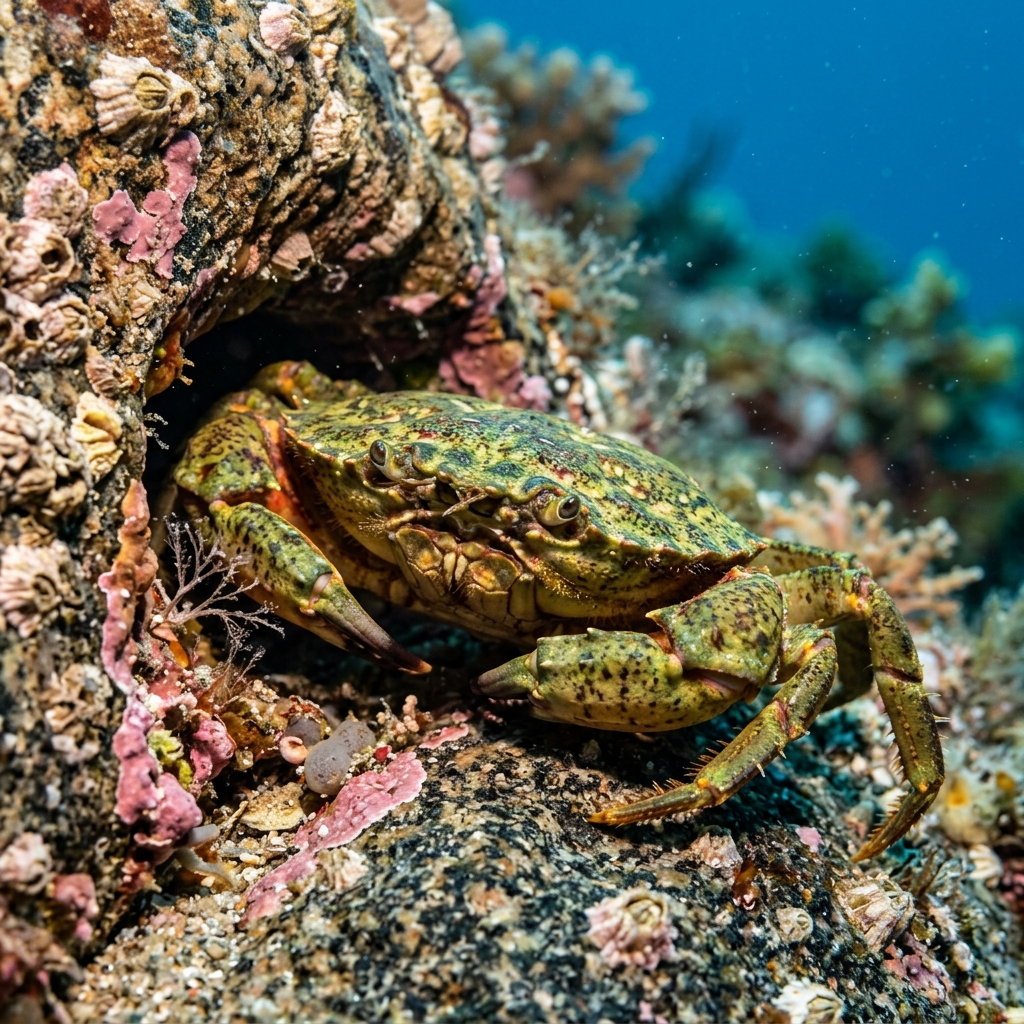
A small, teardrop-shaped crab that relies entirely on camouflage, its shell usually crusted with algae, sponge, or bits of debris that make it disappear against the reef. Look for the tapered, pear-like body outline rather than any bright colour, since it typically matches whatever substrate it is sitting on. Legs are thin and often angled close to the body, so it reads as a lump of growth until it moves.
Divers usually spot it sitting motionless on sponge, algae, or rubble, holding still rather than fleeing since its main defence is simply not being noticed. It tends to stay put through a slow pass, so a careful look with a torch across encrusted surfaces is more productive than searching open coral. Most logs describe it as an uncommon find rather than something seen on every dive, so patience at the right sites pays off.
Like other decorator crabs in its family, it actively attaches living algae and bits of debris to hooked bristles on its shell, building a personal camouflage kit that grows and changes with its surroundings.
No clear seasonal pattern shows up in the sightings, and with a comfortable range of roughly 25 to 31C this is a year-round find on Caribbean reefs rather than a seasonal target.
Reef neighbours a diver could mistake it for. Use the identification notes above to tell them apart.
Most reliably found on reefs in the British Virgin Islands, especially around Tortola and the Southern Islands, and in Honduras's Bay Islands. It also turns up consistently in the Grenadines of Saint Vincent and the Grenadines, with smaller but steady numbers at Saba's Tent Reef and Bonaire's Leeward Coast.
Mapping where Cryptic Teardrop Crab is logged…
Best odds are in the British Virgin Islands around Tortola and the Southern Islands, and in Honduras's Bay Islands. It is also a steady find in the Grenadines and at Saba's Tent Reef.
There is no strong season in the sighting data, and it sits comfortably in water from about 25 to 31C, so it is a year-round possibility on Caribbean reefs.
Look for a small, teardrop-shaped crab covered in algae or debris rather than any distinct colour pattern. It sits still on encrusted surfaces and is easy to mistake for a lump of growth until you spot the tapered body shape.
No, it poses no danger to divers. It is a small, slow-moving crab that relies on camouflage rather than defence, and it will not react to a diver unless directly disturbed.
It is a decorator crab, meaning it deliberately attaches living algae, sponge, and debris to hooked bristles on its shell to build a camouflage coat that shifts with its habitat.
Site and sighting data is aggregated from diver logs, iNaturalist and GBIF. For taxonomy and conservation status:
European Green Crab
2,469 sites