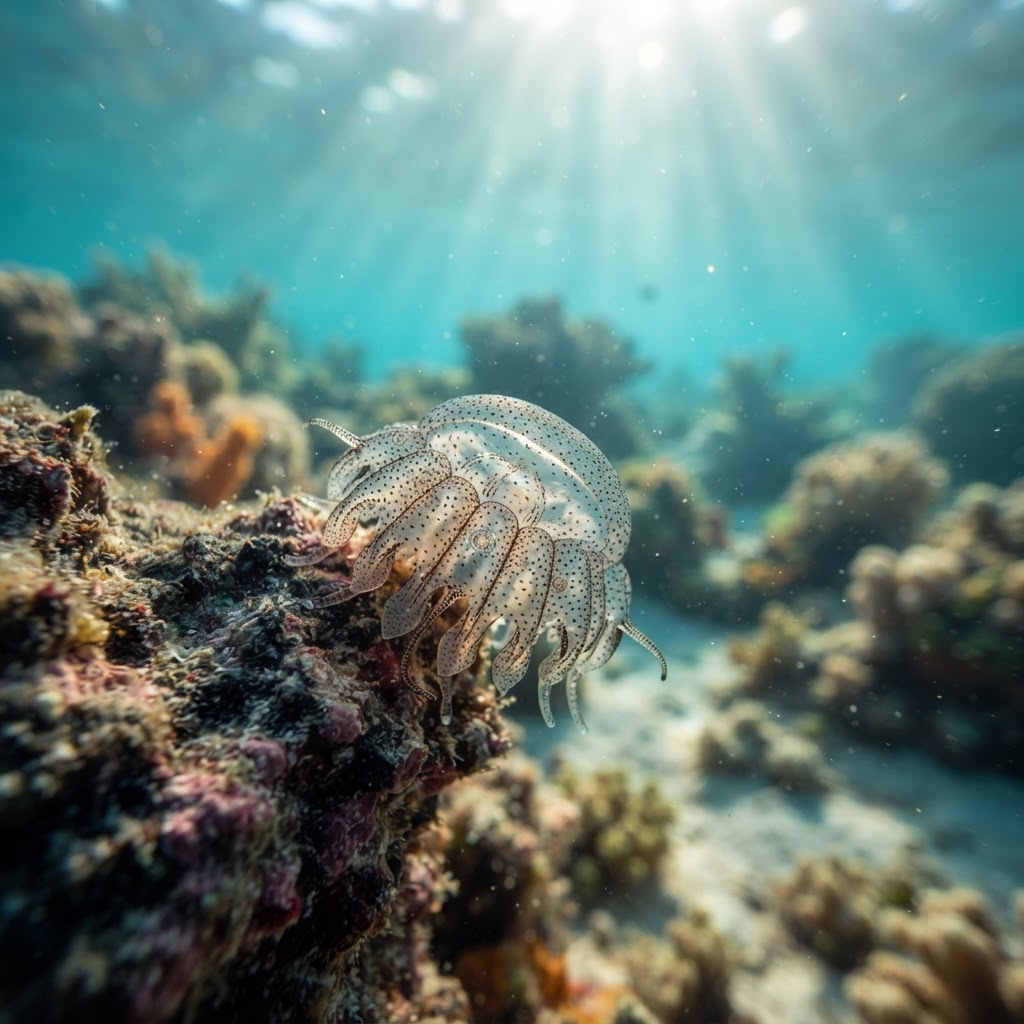
Nausithoe punctata
A pinhead-sized jellyfish with a spotted bell, seen in waters from 15.8 to 21.8 C. Here's how to recognise Nausithoe punctata underwater.
Safety warning
This species can sting on contact with its tentacles, which may trail well beyond the body and can still sting after the animal is dead or washed up. Look but do not touch, and give it a wide berth.
If you're stung
Stinging tentaclesGeneral first-aid guidance, not a substitute for professional medical care. In an emergency, call your local emergency number.
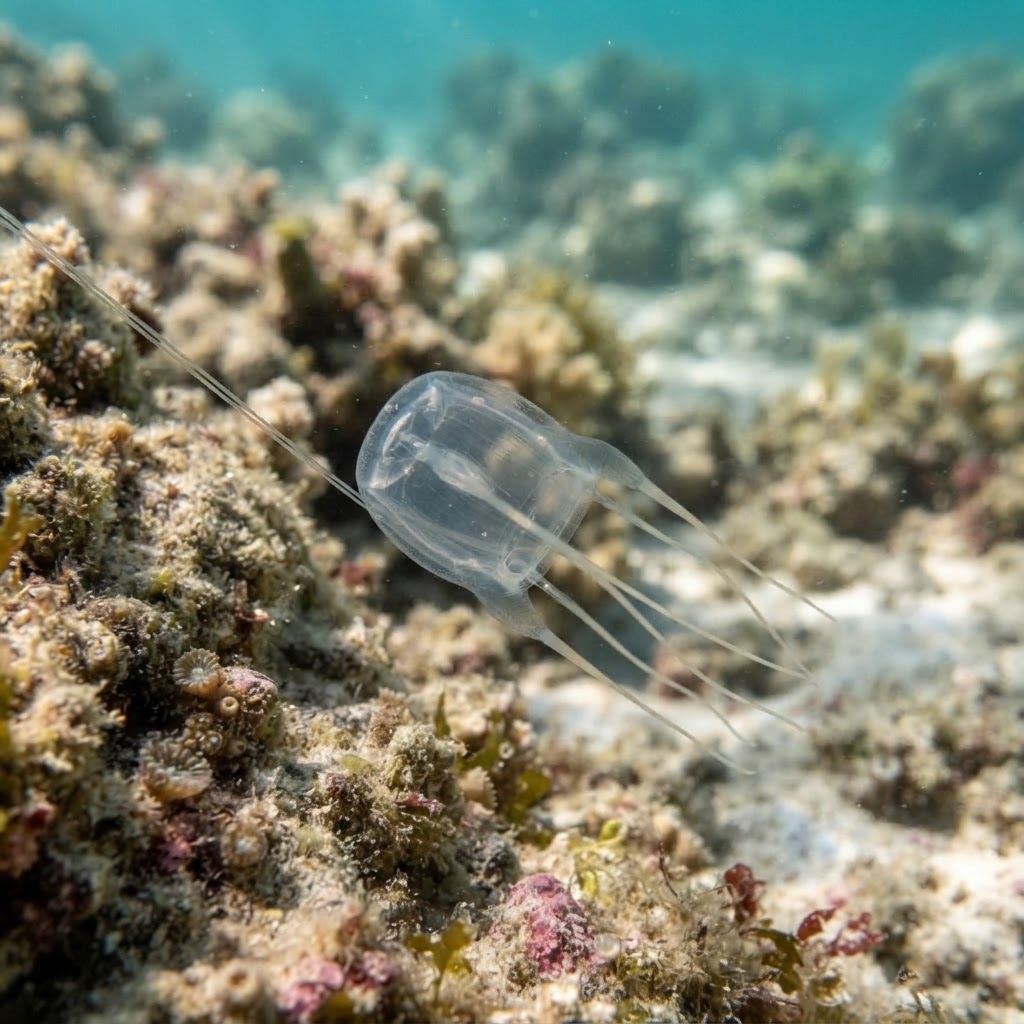
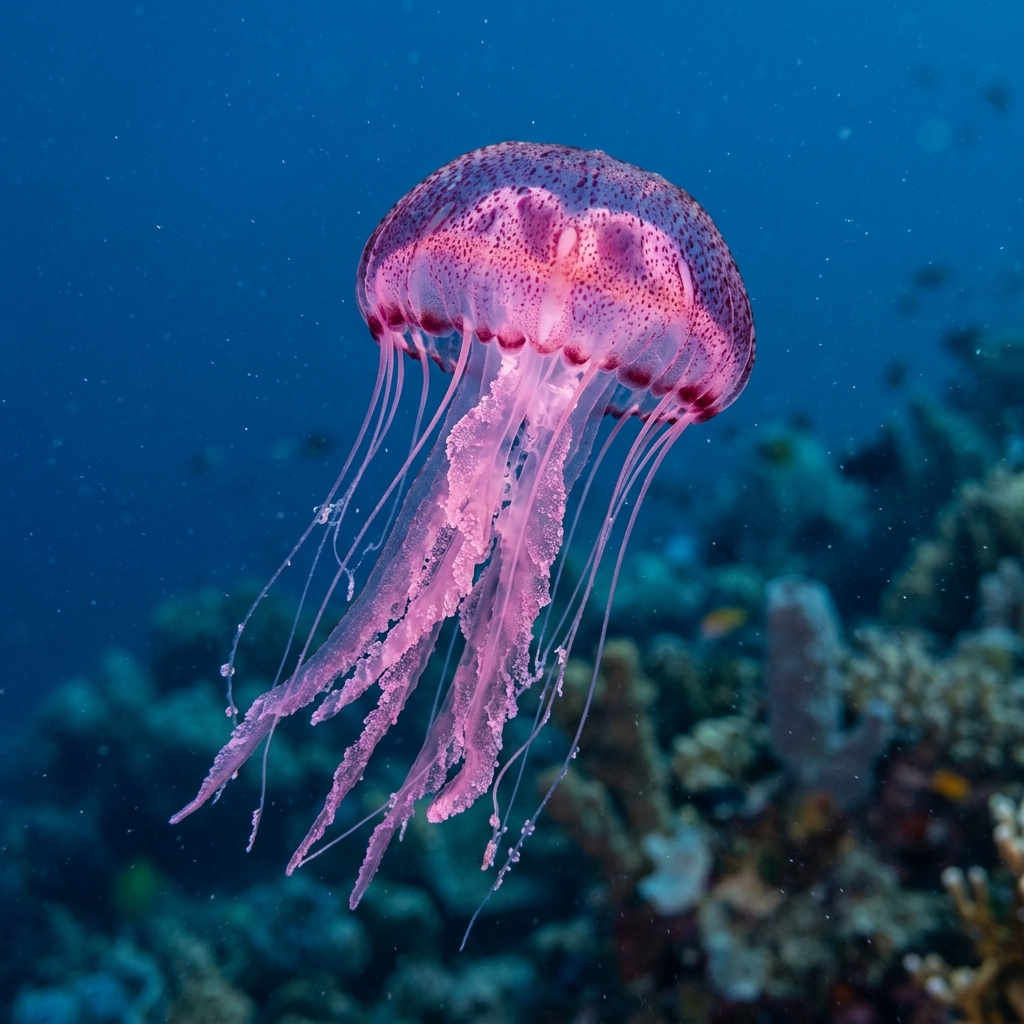
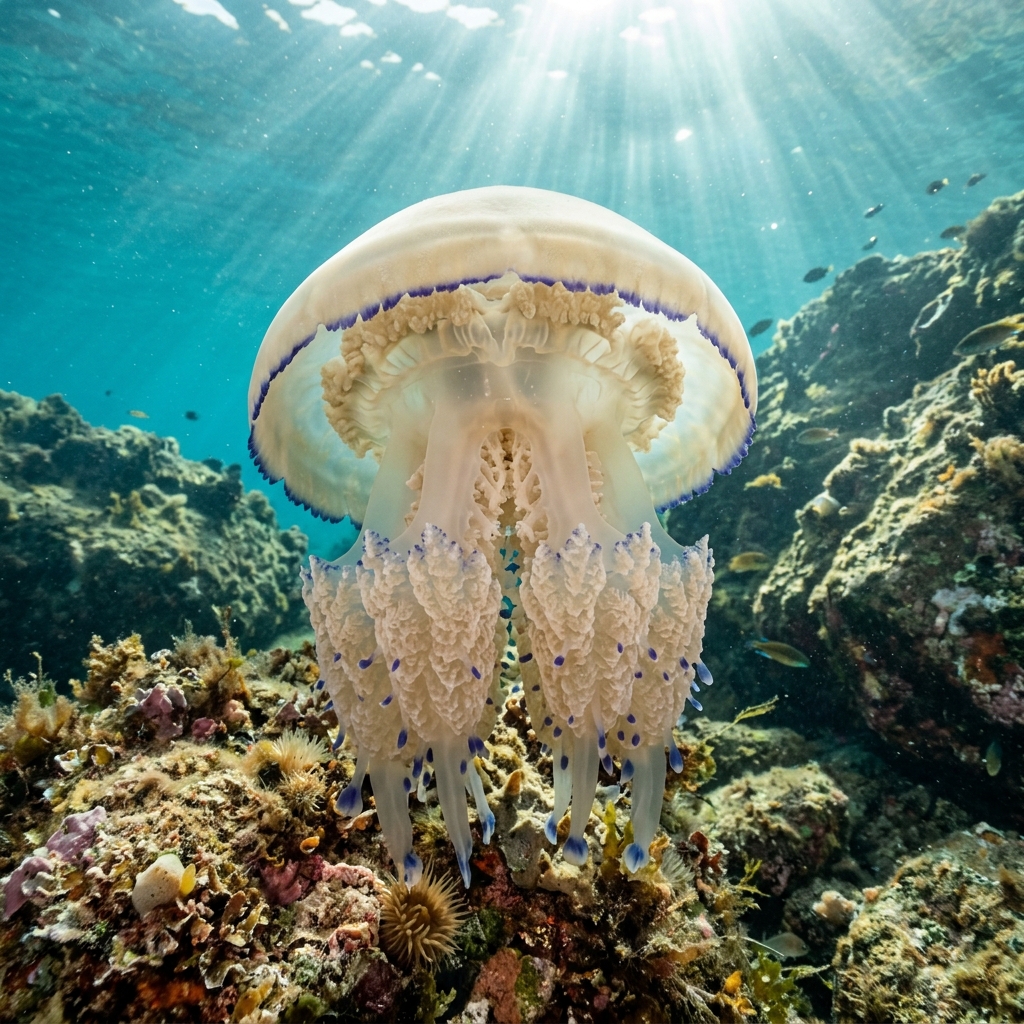
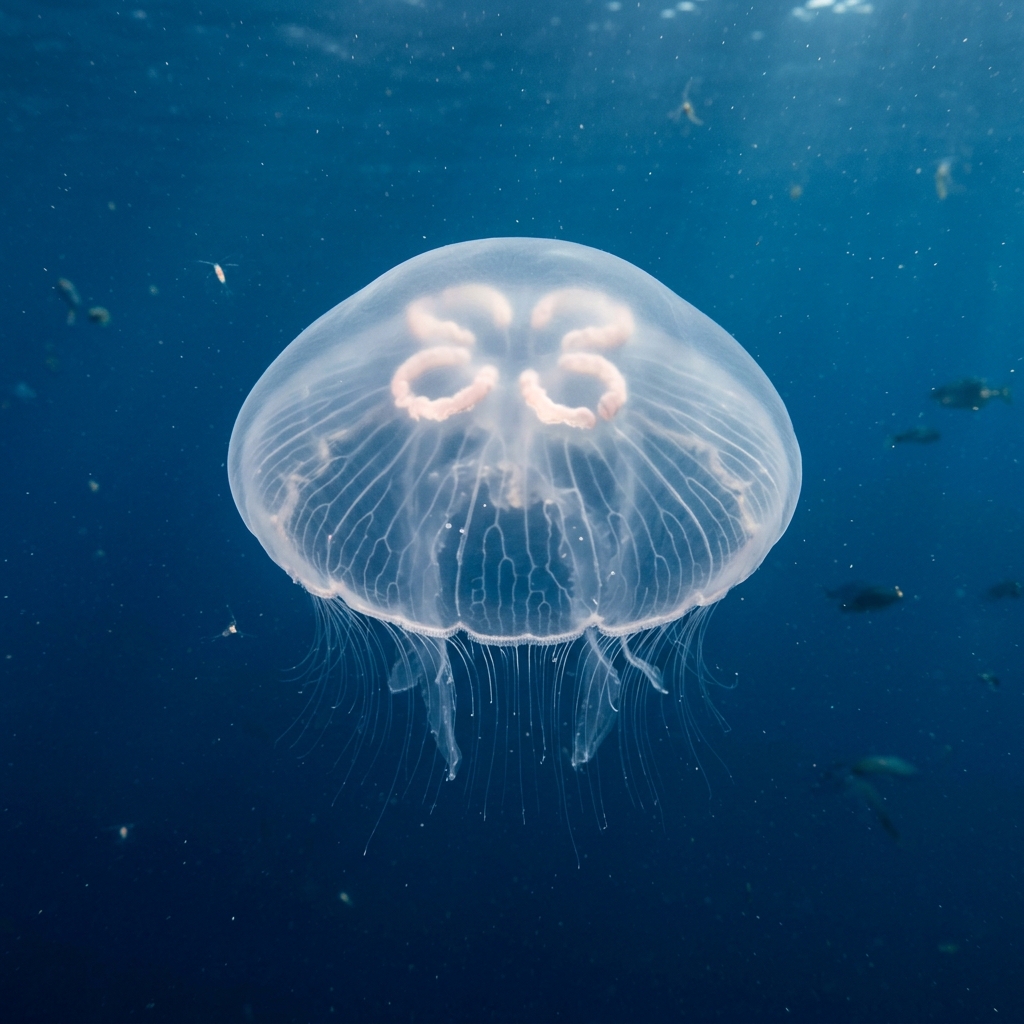
Barely a centimetre across, this jellyfish has a translucent, flattened bell dotted with small brown or reddish pigment spots arranged in a ring pattern, which is where the crown name comes from. Fine tentacles trail from the bell margin, and the whole animal is easy to miss unless you are looking closely in open water or near the surface. There is no dramatic colour to key on, so divers usually spot it by the spotted ring pattern and its small drifting silhouette rather than any bright marking.
Expect to see it drifting passively in open water rather than attached to structure, moving with current more than under its own steam. It shows no reaction to divers beyond the usual jellyfish drift, and its small size means most sightings happen by chance during a safety stop or blue-water section of a dive rather than a targeted search.
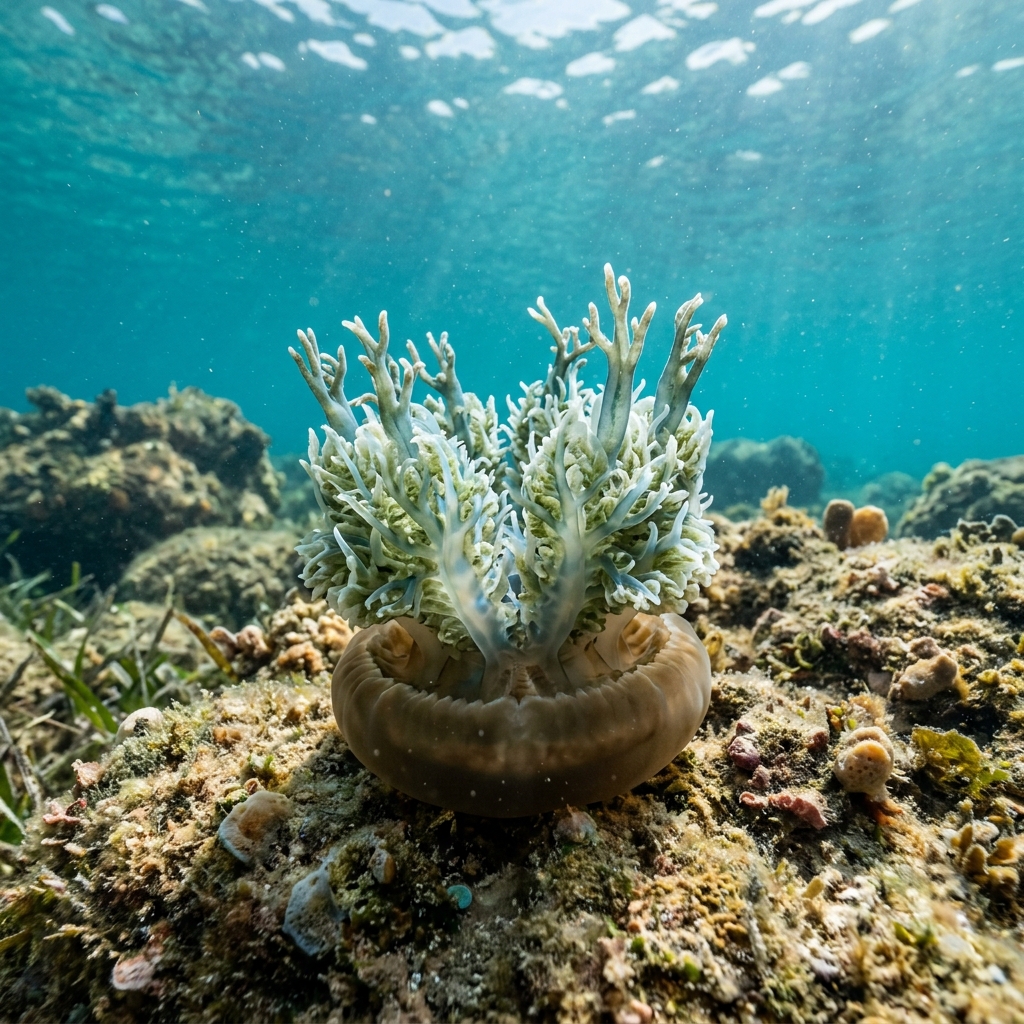
Unlike most jellyfish you notice on a dive, this species has a tiny polyp stage that lives attached to hard surfaces like coral rubble or shells before budding off the free-swimming jellyfish form you see drifting.
There isn't enough logged data to pin down a season, so treat sightings as year-round and opportunistic. Its temperature niche of 15.8 to 21.8 C hints it turns up in cooler water rather than peak summer warmth.
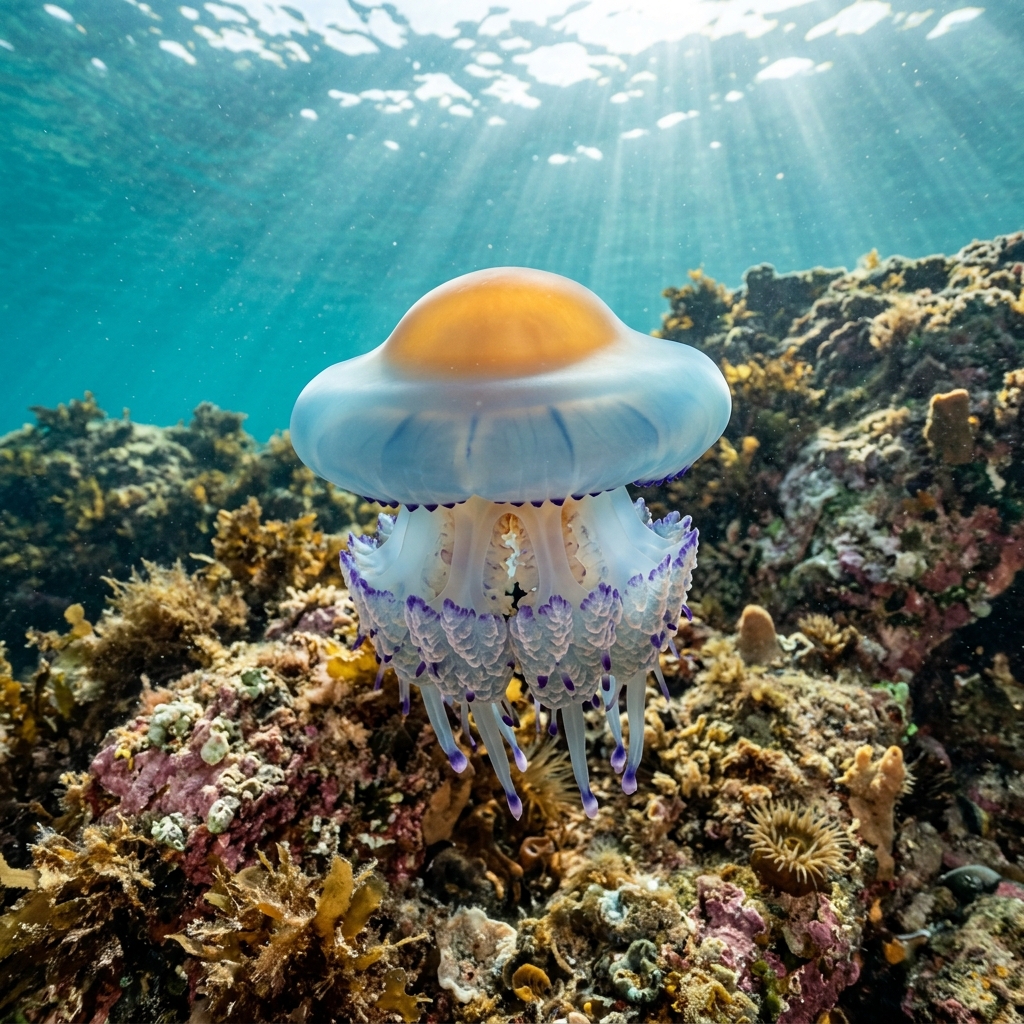
Reef neighbours a diver could mistake it for. Use the identification notes above to tell them apart.
Logged sightings are too sparse to point to specific dive sites or countries right now, so treat any encounter as a bonus rather than a planned target. Its recorded temperature range, 15.8 to 21.8 C, suggests temperate to cool-water sites rather than warm tropical reefs.
Mapping where Crown Jellyfish is logged…
Look for a tiny, translucent bell about a centimetre across with a ring of small brown or reddish spots near the margin. Fine trailing tentacles and its pinhead size in open water are the main clues.
They stay tiny, with a bell around 1 centimetre across, making them one of the smallest jellyfish a diver is likely to notice in open water.
No, they are not considered dangerous to divers. Their small size and mild sting, if any, make them a non-issue on a dive.
There is not enough logged data to identify a clear season, so sightings are best treated as year-round and a matter of chance rather than timed to a particular month.
They have a two-stage life cycle: a small polyp attached to hard surfaces buds off the free-swimming jellyfish form divers occasionally spot drifting in open water.
Site and sighting data is aggregated from diver logs, iNaturalist and GBIF. For taxonomy and conservation status:
Moon Jellyfish
1,766 sites