Pyura spinifera
Find sea tulips diving in New South Wales and South Australia, active Oct, Jun in 17-23 °C water. Learn how to spot this vivid colonial ascidian.
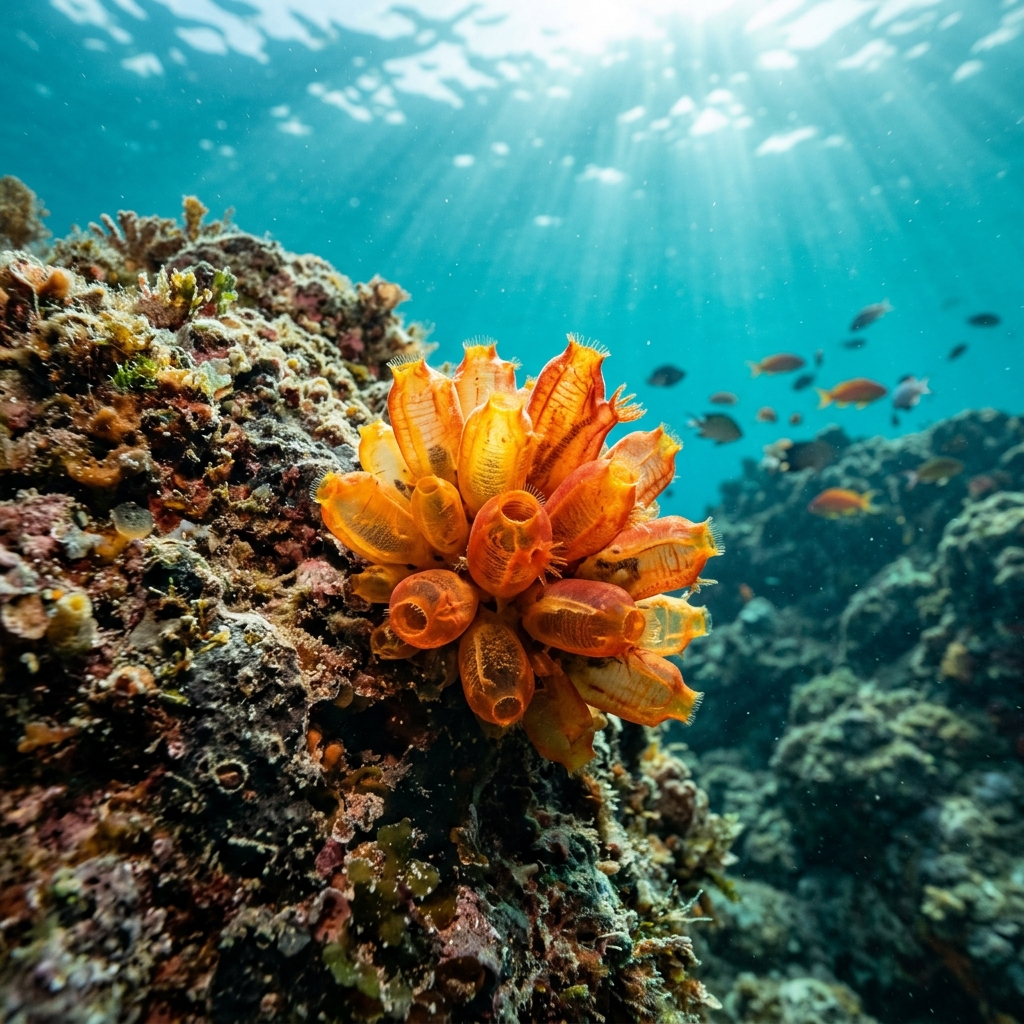
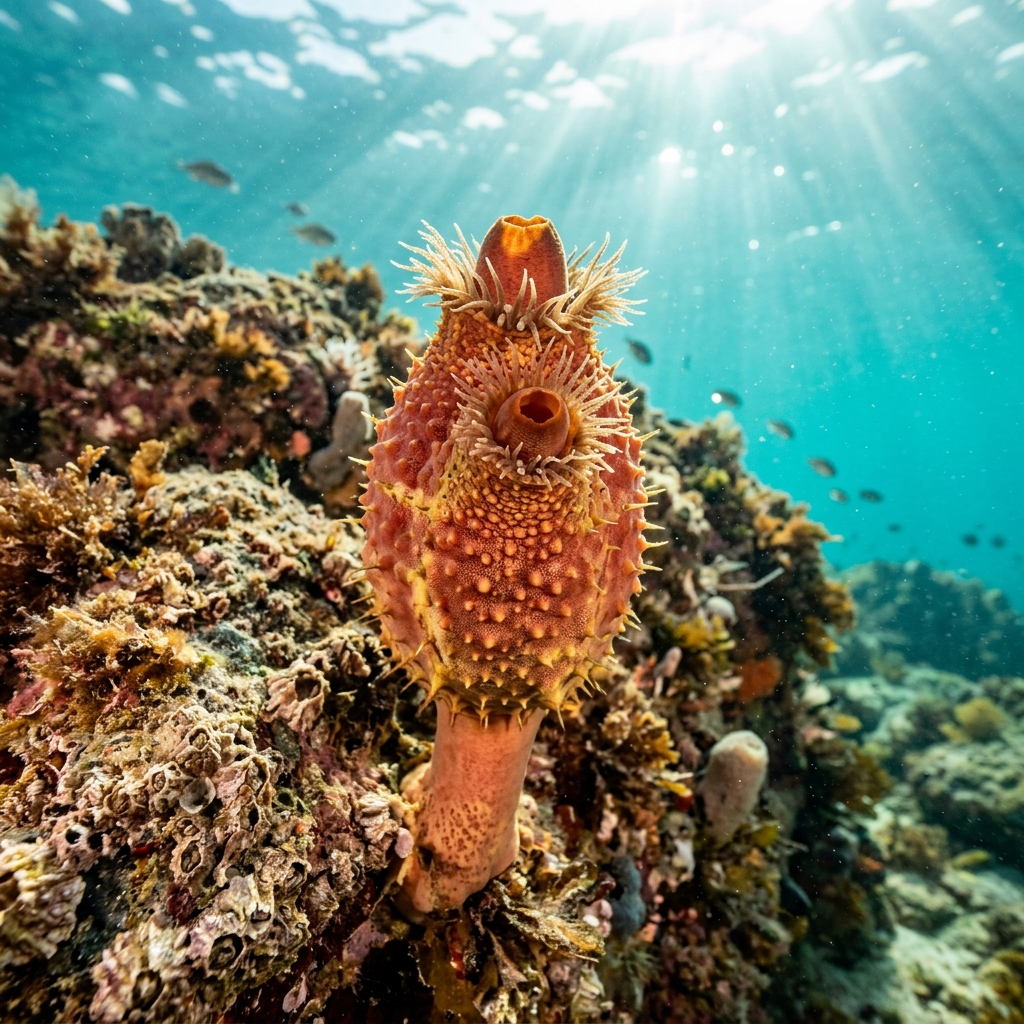
Look for a fleshy, tulip-shaped body perched on a rubbery stalk anchored to hard reef or rubble, the silhouette really does resemble a flower on a stem. The body is typically vivid pink, red, or orange, with two short siphon openings (the tubes through which water is drawn in and expelled) visible at the top. Colonies often grow in clusters, which makes them easier to spot once your eye is tuned. The spiny surface texture on the outer tunic is a reliable close-up clue that separates this species from smoother ascidians sharing the same rock.
Sea tulips are completely sessile (permanently fixed in place), so what you observe is the animal doing its filter-feeding work: rhythmically pulsing its siphons to draw in plankton-laden water. They do not react to divers at all unless physically disturbed, at which point the siphons contract. Look for them on current-exposed rock faces, pier pylons, and reef walls where water flow delivers a steady supply of food.
Sea tulips are technically solitary ascidians, close relatives of vertebrates, meaning each individual animal is more closely related to you than it is to a coral or sponge. The stalk can reach surprisingly long lengths, holding the feeding body up into the water column to catch better flow.
Based on diver sightings, the most active window runs from October through June, essentially the Austral spring, summer, and early autumn. This aligns with sea temperatures sitting in the 17-23 °C range that characterises the species' preferred conditions.
Almost all records come from Australia, with New South Wales holding by far the strongest representation across a wide stretch of sites from Sydney southward. South Australia and Western Australia also have solid populations, and smaller clusters of sightings appear in Queensland and Victoria. If you are specifically targeting sea tulips, temperate New South Wales reefs are your best starting point.
Mapping where Sea Tulip is logged…
Sea tulips are almost exclusively an Australian sighting. New South Wales has the greatest spread of sites, making it the go-to destination. South Australia and Western Australia also have reliable populations, with additional records from Queensland and Victoria.
Diver sightings concentrate between October and June, covering Austral spring through early autumn. This period coincides with water temperatures in the 17-23 °C range that the species favours along temperate Australian coasts.
Look for a vivid pink, red, or orange body mounted on a rubbery stalk, attached firmly to rock or a pylon. The two siphon openings at the top and the distinctly spiny outer surface are the clearest ID features. Smooth-bodied colonial ascidians nearby can look similar, but lack the prominent individual stalk and spiny tunic.
No. Sea tulips pose no risk to divers whatsoever. They are fixed in place, have no venom or sting, and simply contract their siphons if disturbed.
Despite looking like a plant or a sponge, sea tulips are chordates, members of the same phylum as fish, birds, and humans. As ascidians, they are more closely related to vertebrates than to the corals and sponges they live alongside on the reef.
Site and sighting data is aggregated from diver logs, iNaturalist and GBIF. For taxonomy and conservation status: