Carybdea rastonii
A small, sting-capable box jellyfish logged off South Australia in 16-22C water. Here's how to spot a Jimble and stay clear of its tentacles.
Safety warning
Its sting is a real hazard despite the tiny size, causing painful welts on contact, so it's worth checking with local dive shops about box jellyfish activity before entering South Australian water without a wetsuit or stinger protection. Avoid handling any small transparent jellyfish in these waters, and rinse and seek first aid promptly if stung.
If you're stung
Box jelly stingGeneral first-aid guidance, not a substitute for professional medical care. In an emergency, call your local emergency number.
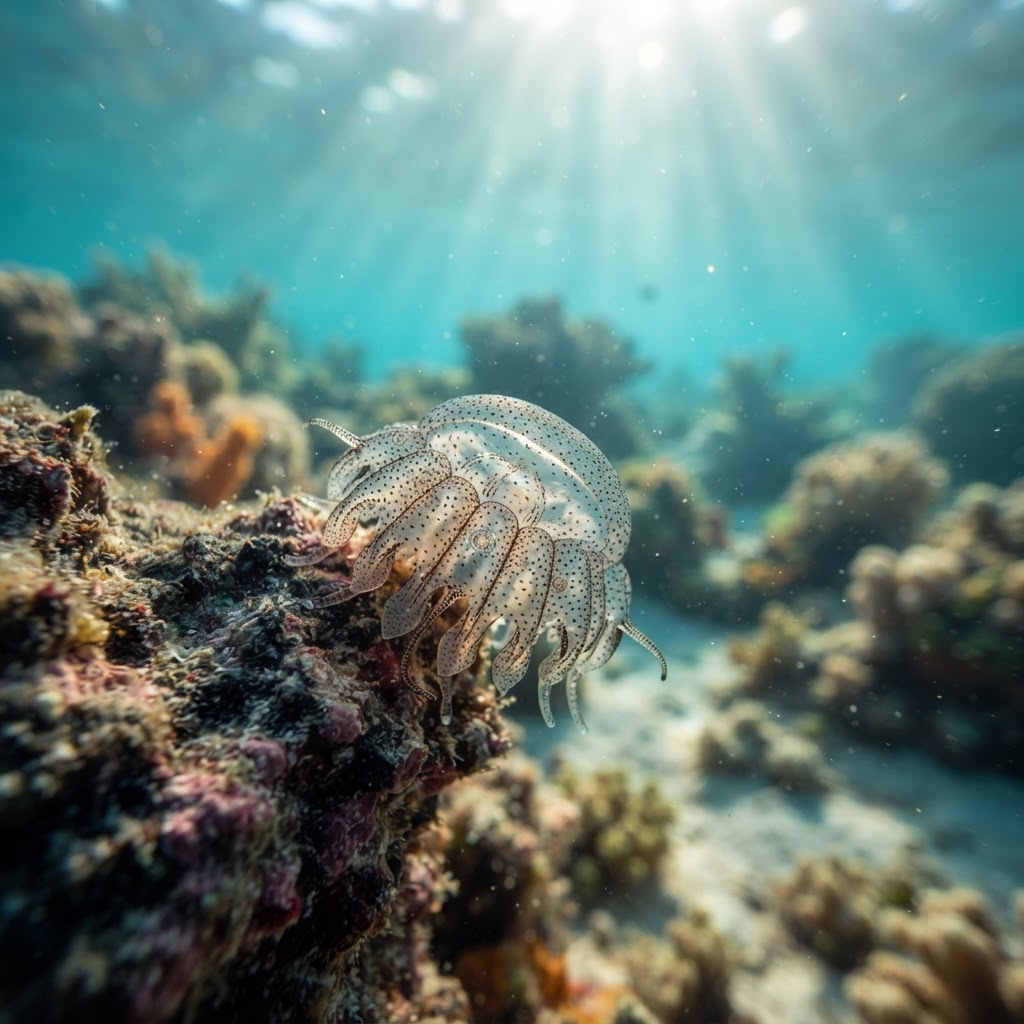
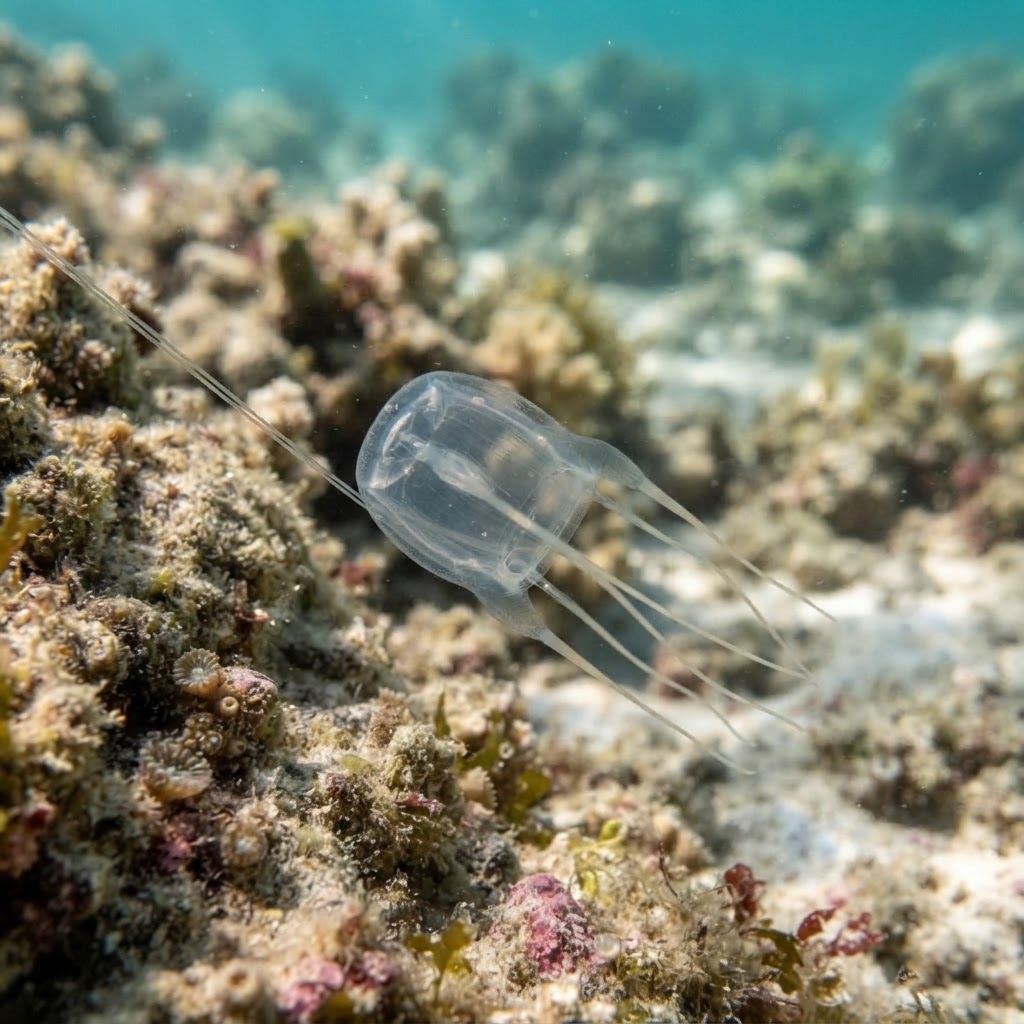
A cube-shaped, almost transparent bell no bigger than a golf ball, with four short tentacle bundles trailing from each corner rather than a fringe of many fine tentacles. The body has a faint bluish or greenish tint that can make it nearly invisible against open water. Its boxy outline and small size are the main tell against the region's other soft-bodied drifters.
Divers and swimmers encounter this one drifting in the water column rather than resting on the seabed, pulsing along with slow, steady bell contractions. It shows no interest in divers and gives no warning before contact, so most encounters are accidental brushes rather than close-up observation. Sightings are logged as rare even at the one site where it's known, so it's more of a swim-through hazard than a reliable subject to photograph.
Box jellyfish like this one have clusters of eyes on each side of the bell, giving them limited but real vision to help steer around obstacles, unlike most jellyfish that drift blind.
Observed water temperatures sit between 16 and 22C, a temperate range rather than a narrow warm-water window, and there isn't enough monthly data to pin down a season, so treat sightings as possible year-round in South Australian waters.
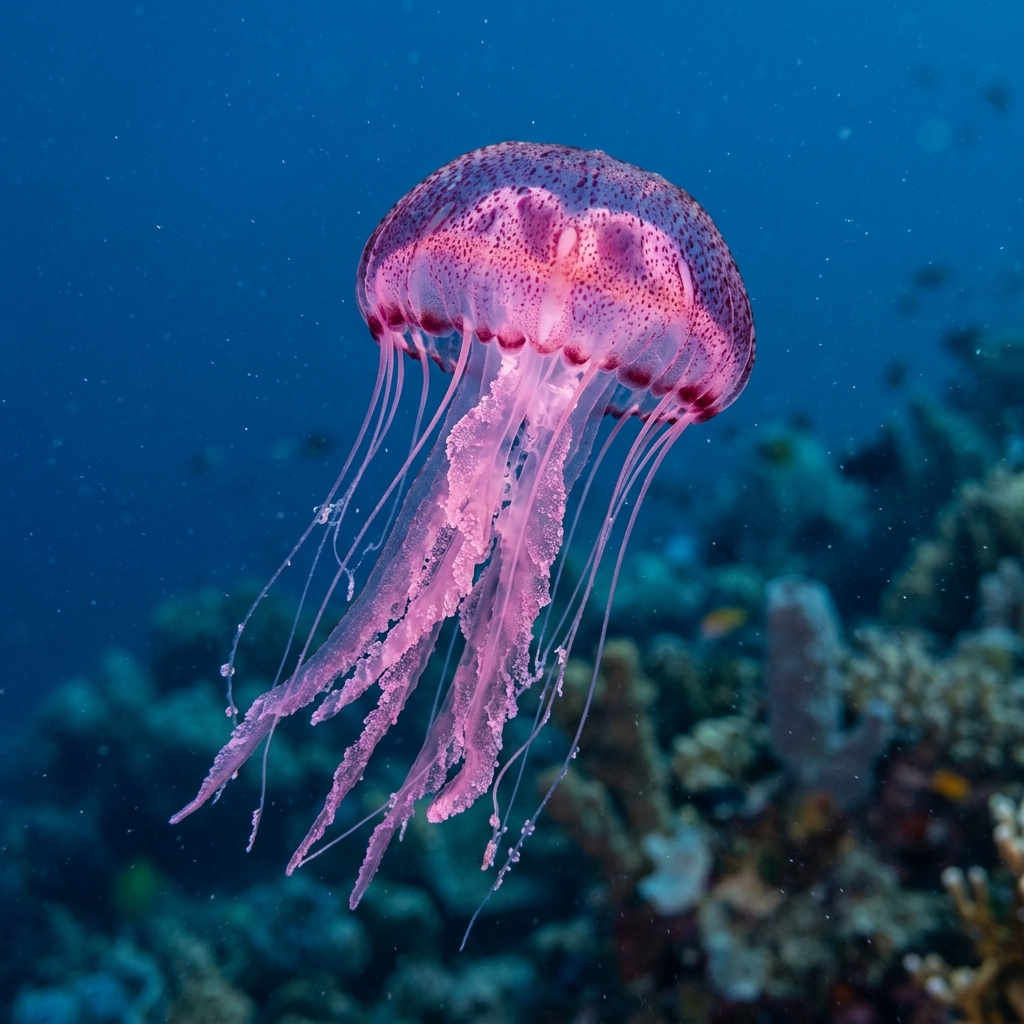
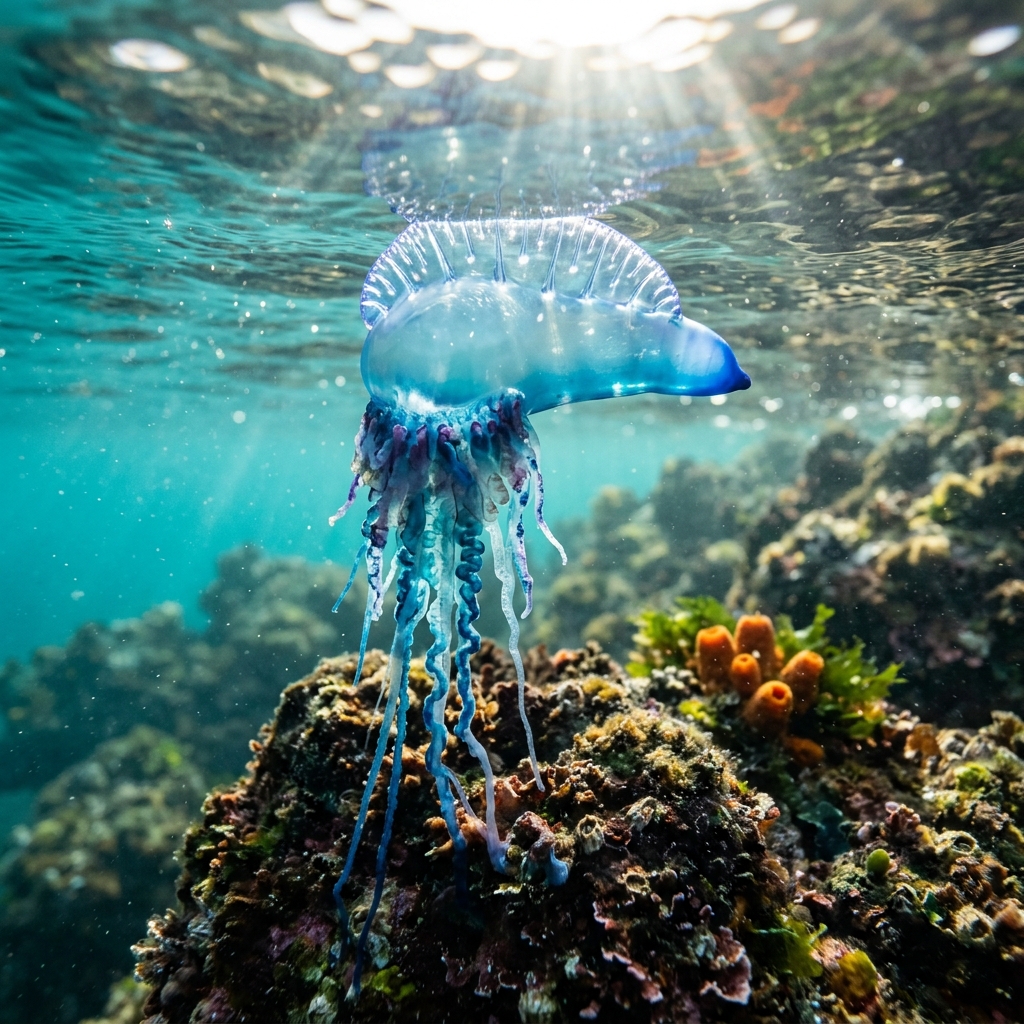
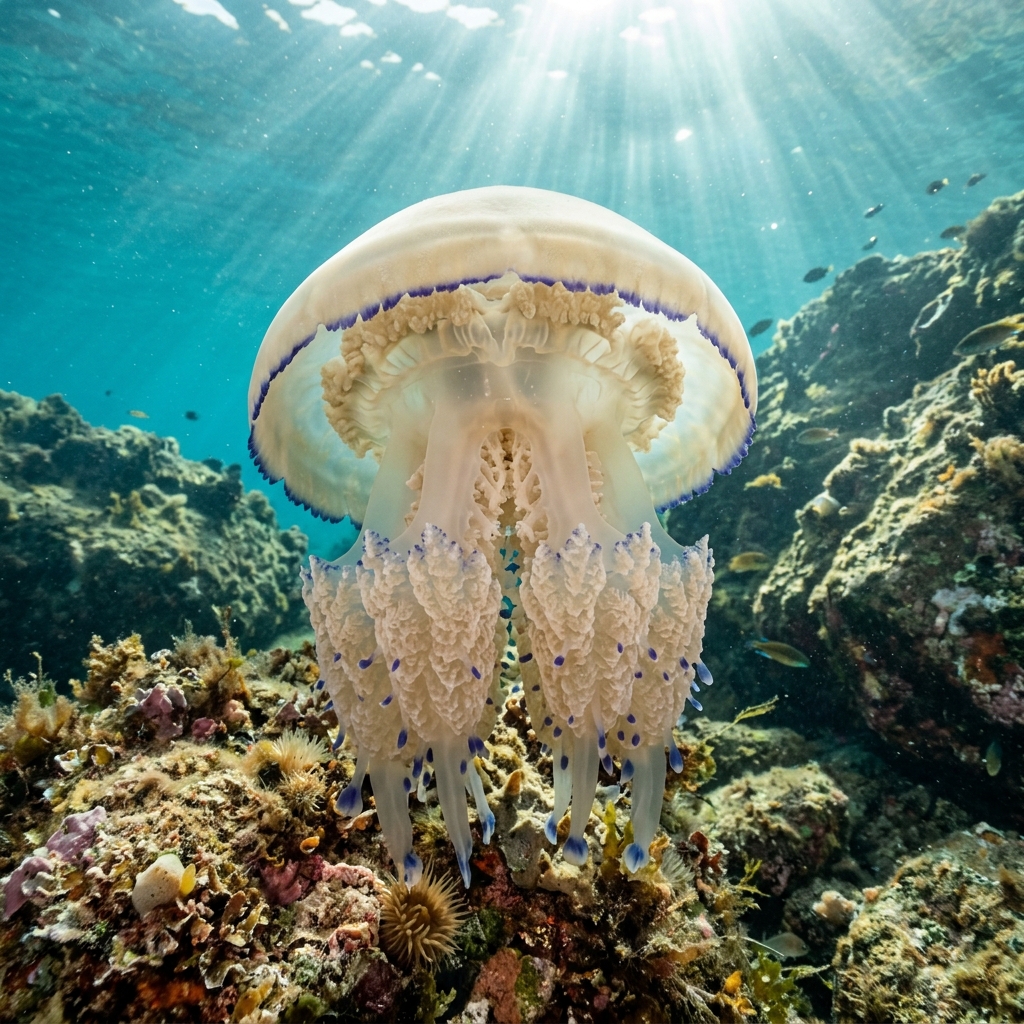
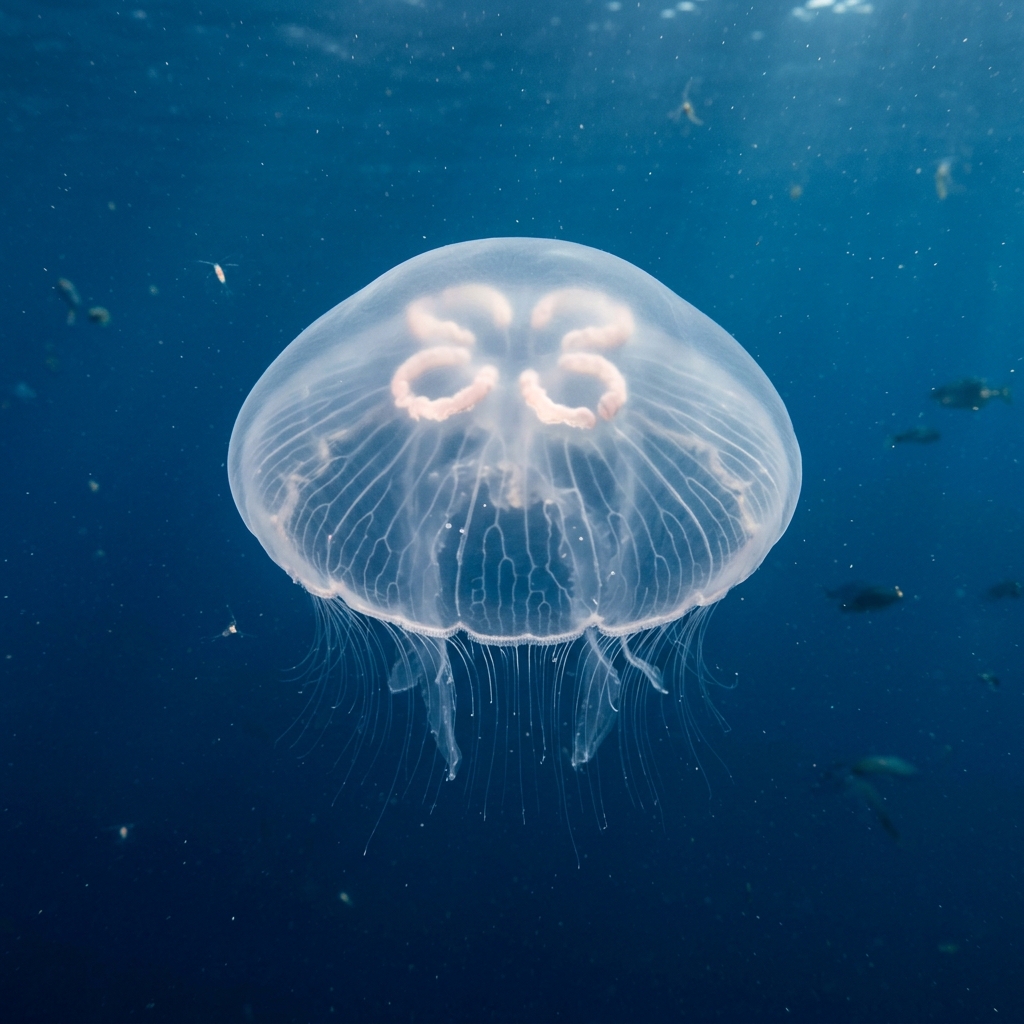
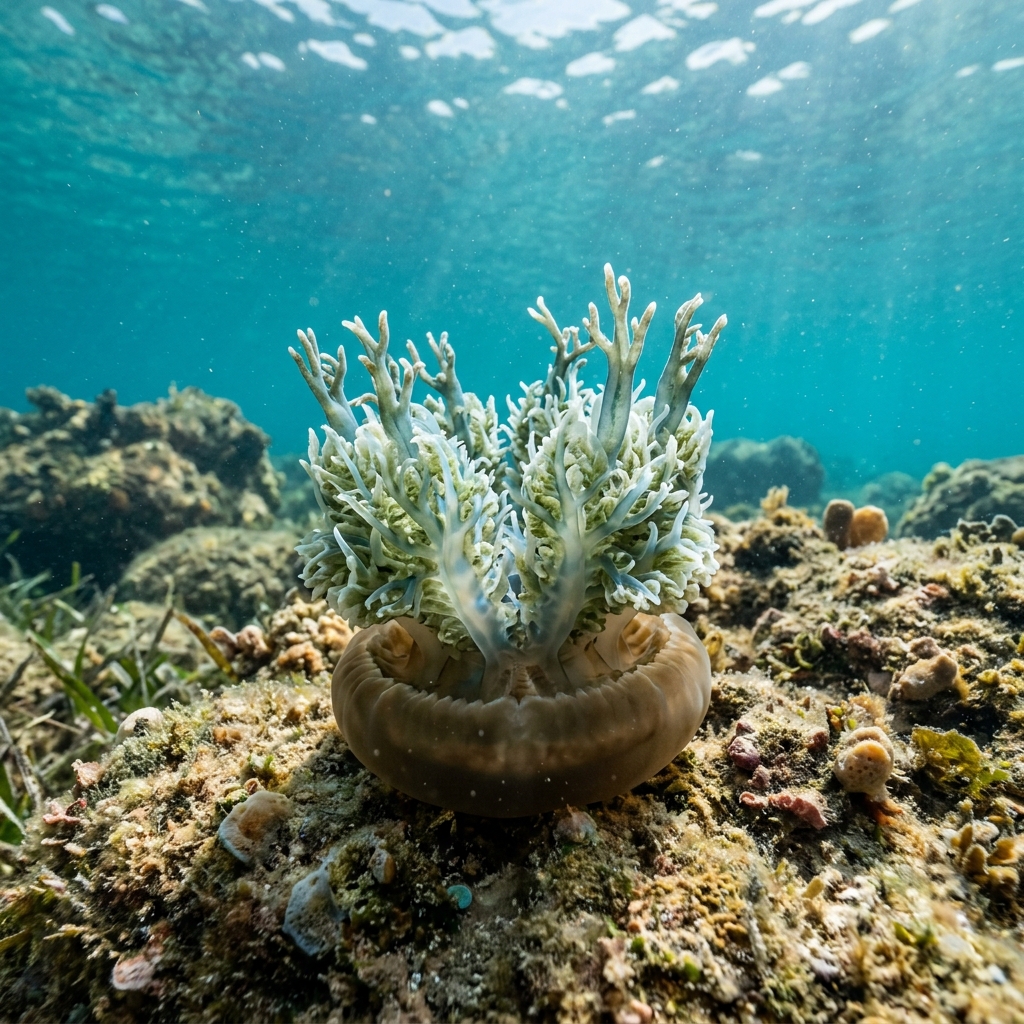
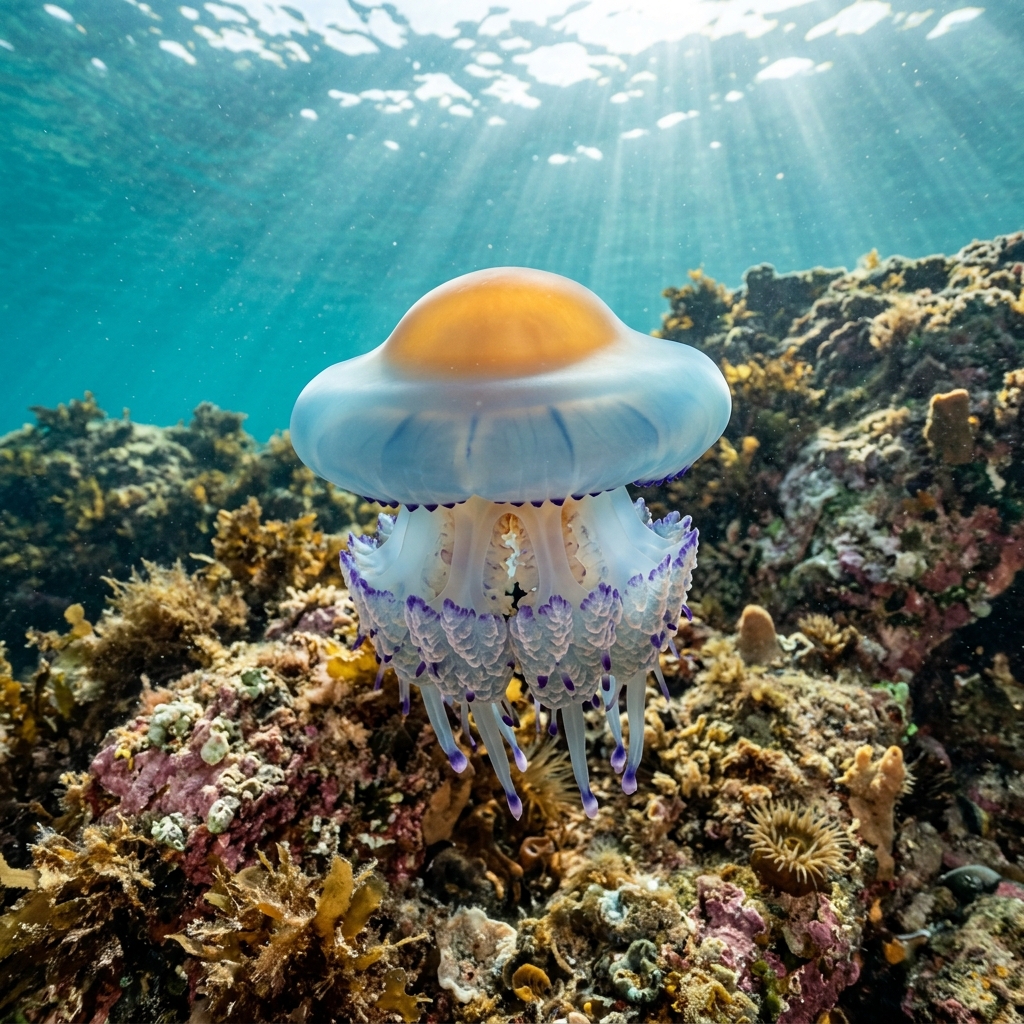
Reef neighbours a diver could mistake it for. Use the identification notes above to tell them apart.
Logged sightings for this species come from South Australia, which is the only confirmed spot in the current diver record. It has a wider range along temperate Australian coastlines, but South Australia is the one place divers and snorkellers have actually reported it.
Mapping where Jimble is logged…
The only confirmed diver sightings are from South Australia, where it turns up occasionally in coastal water. It isn't a species you'd plan a trip around, more one to be aware of if you're already diving or swimming there.
There isn't a clear season in the sighting data, and it's been recorded in water from 16 to 22C, so it can turn up across the year in South Australia rather than during one particular month.
Yes. Despite being only about 2cm across, its sting causes painful welts, and it drifts unseen in open water, so contact is usually accidental. Stinger protection or a wetsuit reduces risk in areas where it's known to occur.
Look for a small, cube-shaped, near-transparent bell with short tentacle bundles at each corner, rarely bigger than a golf ball. Its boxy shape sets it apart from the rounder bells of most other jellyfish sharing the same water.
Around 2cm, making it one of the smaller box jellyfish species divers might encounter. Its size and transparency mean it's easy to miss until you're already close to it.
Like other box jellyfish, it has clusters of eyes along its bell that give it a basic sense of light and obstacles, a level of vision most jellyfish species lack entirely.
Site and sighting data is aggregated from diver logs, iNaturalist and GBIF. For taxonomy and conservation status:
Moon Jellyfish
1,766 sites