Caranx hippos
Blunt-headed, deep-bodied jack most reliably logged in Florida and Carlisle Bay, Barbados, in water from 16.5 to 27.9 C year-round.
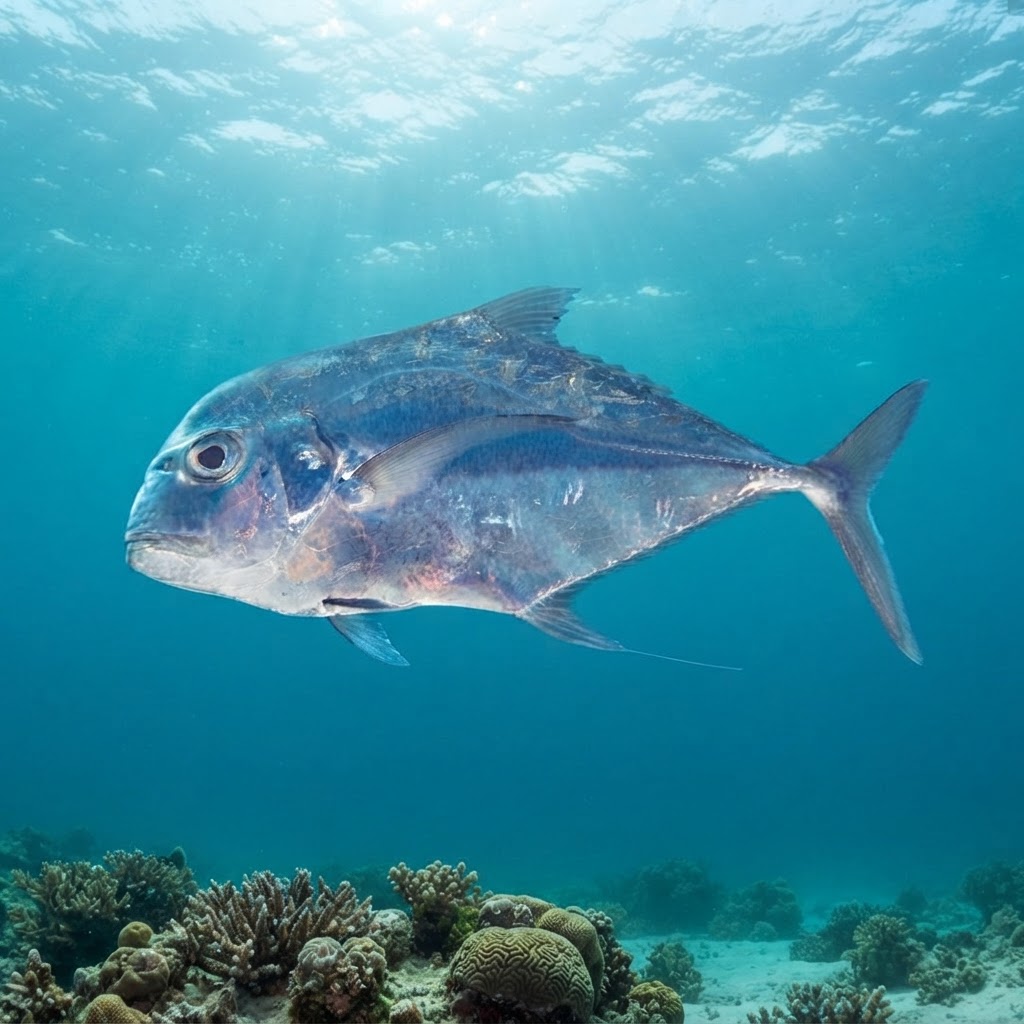
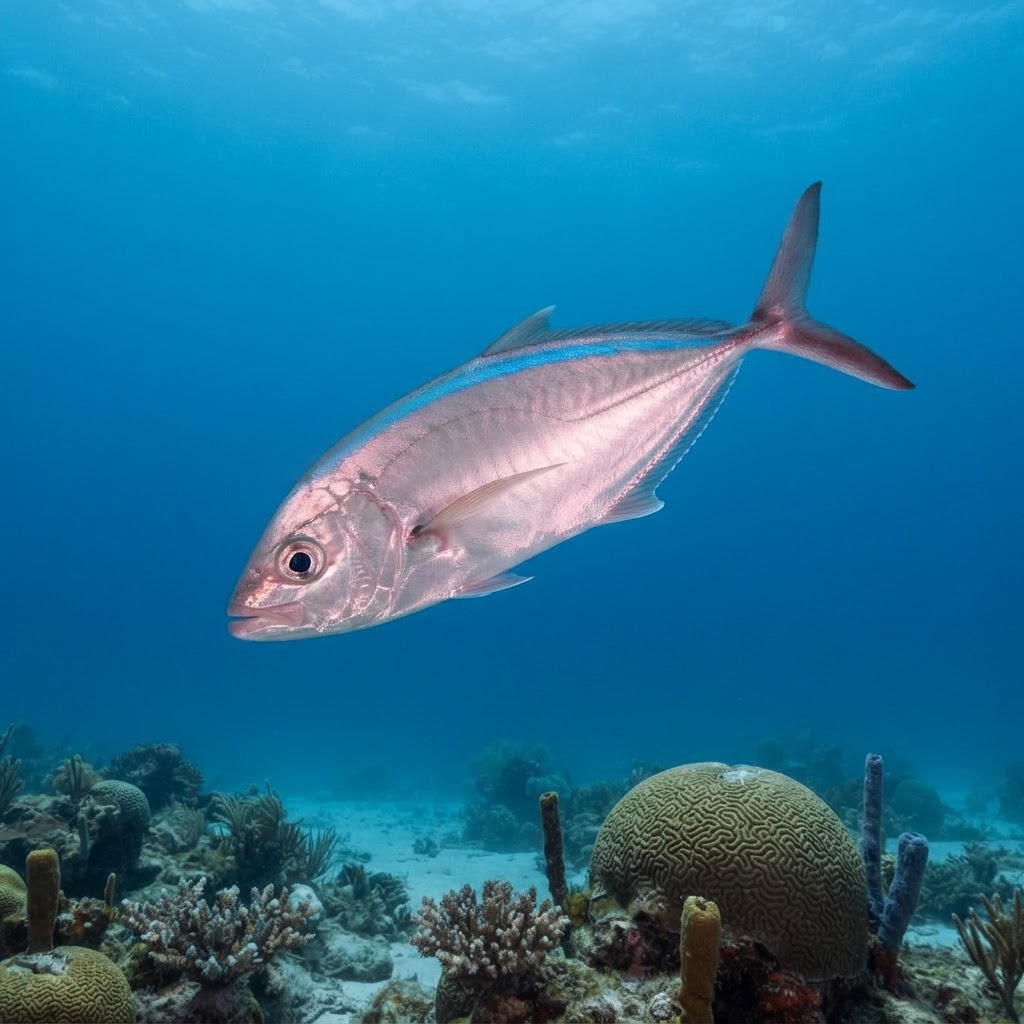
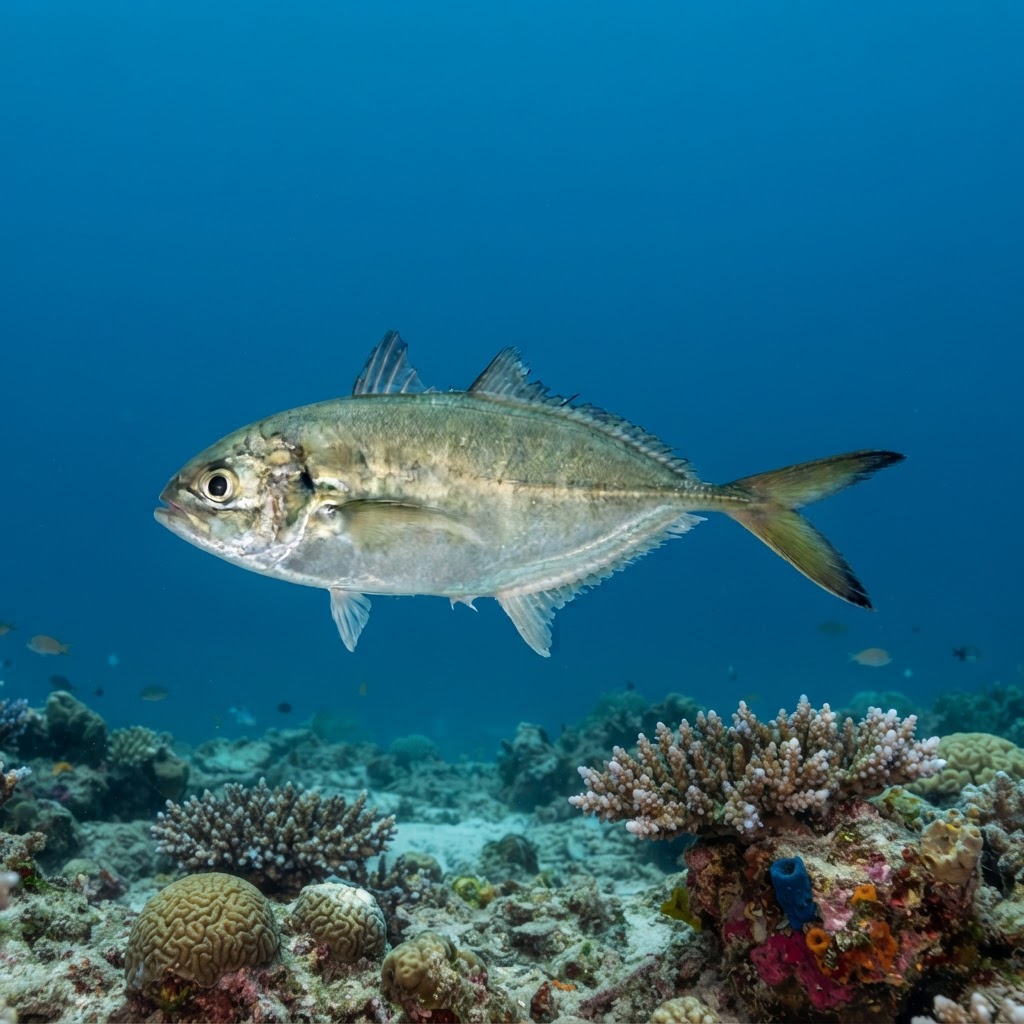
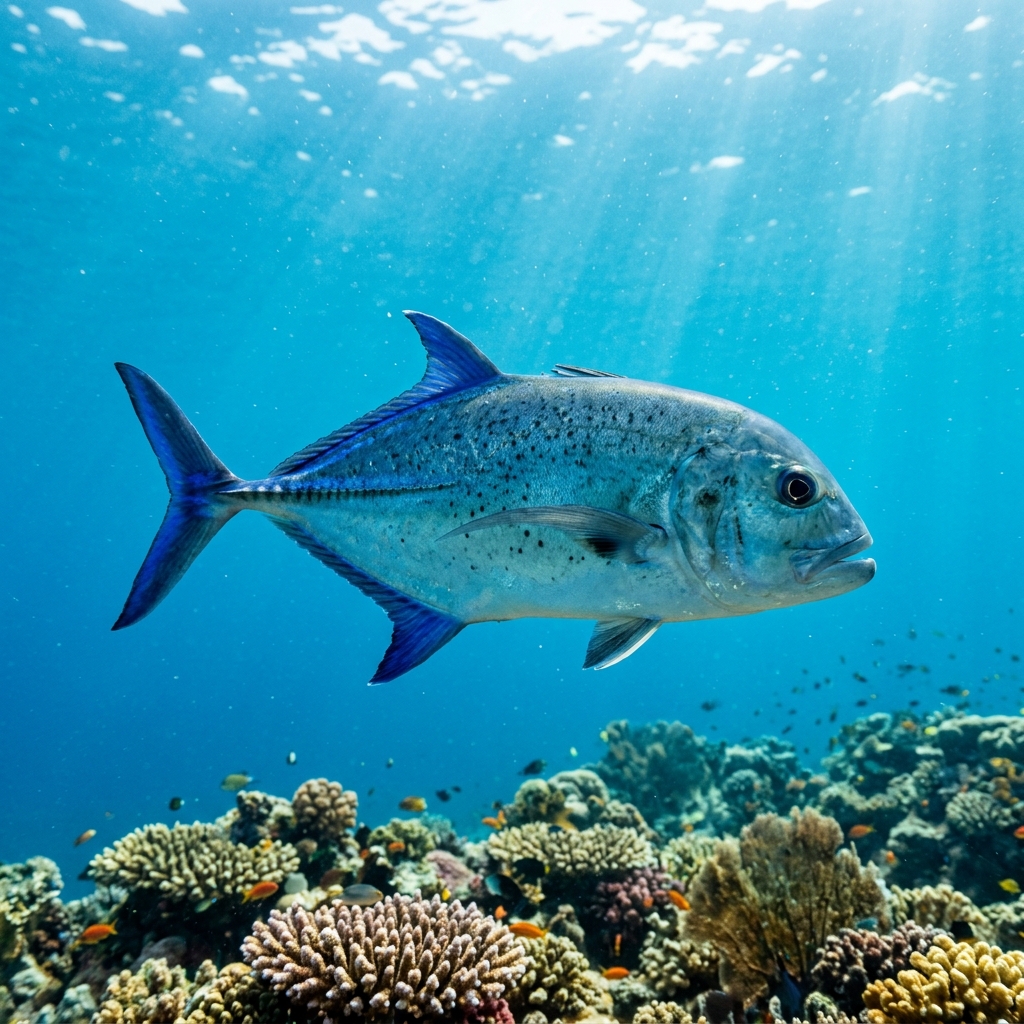
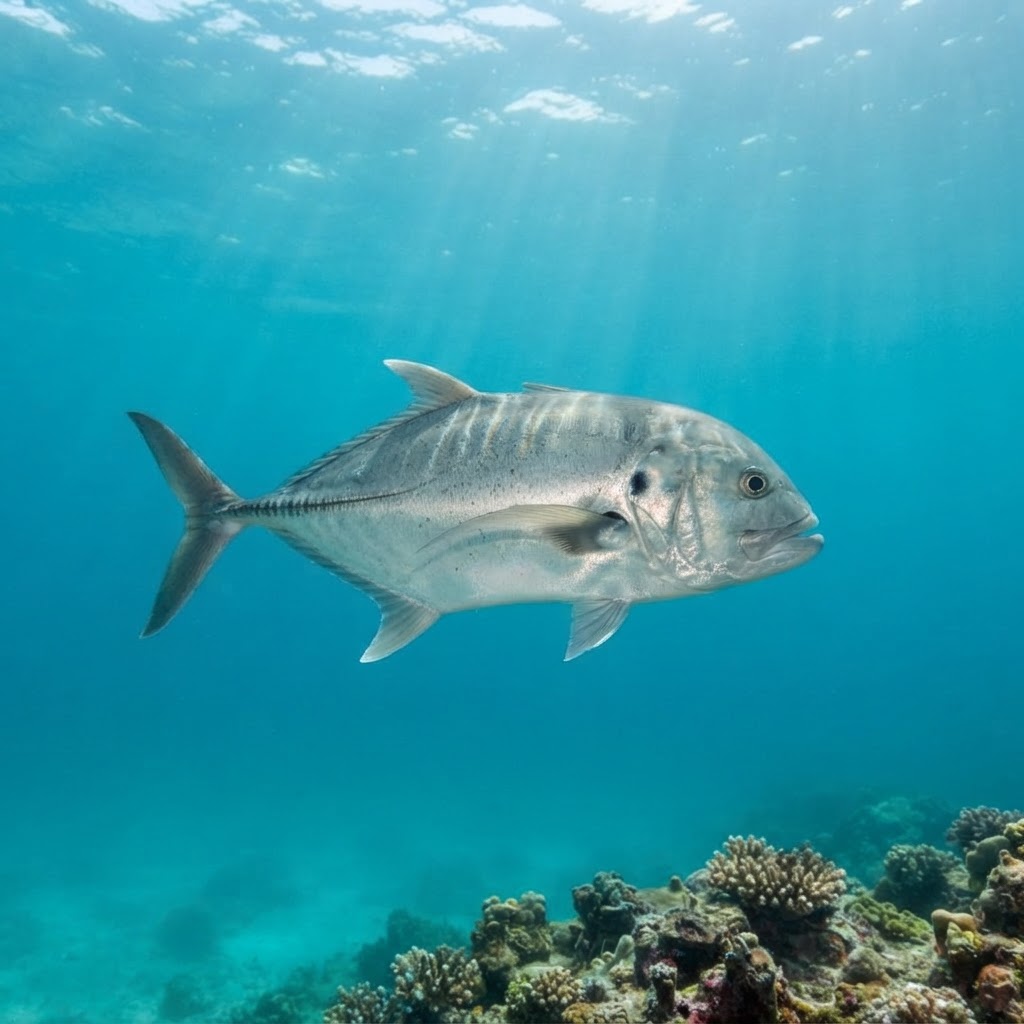
Look for a deep, steeply sloped forehead that gives it an almost boxy head profile, unusual among jacks. Body is silvery to blue-green above with a yellowish belly, and a black spot sits on the upper edge of the gill cover with a matching dark smudge at the base of the pectoral fin. It typically shows in the water at well under a metre, and swims with the stiff, powerful strokes typical of the jack family. A row of enlarged scales (scutes) runs along the rear half of the lateral line, visible as a faint pale ridge if you get close.
Divers most often find it cruising alone or in loose small groups over sand flats, around wrecks and along jetty pilings rather than deep on coral reef. It tends to hold a cautious distance, circling past for a look before peeling off, though it can turn curious around boats and baitfish activity. Sightings skew toward the uncommon-to-rare end almost everywhere it is logged, so a clear look is more of a highlight than a given.
It hunts using sudden bursts of speed to run down baitfish, and schools of juveniles are known to shadow larger predators or even mimic the swimming patterns of unrelated fish to avoid being singled out.
No clear seasonal pattern shows up in the data, so treat this as a year-round sighting on the sites where it occurs. Its comfort range of roughly 16.5 to 27.9 C covers both warm tropical water and cooler temperate stretches, which helps explain the lack of a tight season.
Reef neighbours a diver could mistake it for. Use the identification notes above to tell them apart.
Most consistently logged along Florida, especially around wrecks, jetties and nearshore reefs, and a reliable sighting in Carlisle Bay, Barbados. Smaller numbers turn up in the Northeast and Texas coasts of the United States and off Mexico's Yucatán Peninsula.
Mapping where Crevalle Jack is logged…
Florida is the strongest area for sightings, particularly around wrecks and nearshore structure, with Carlisle Bay in Barbados also a reliable spot. Smaller numbers are logged along the US Northeast, Texas, and Mexico's Yucatán Peninsula.
There is no strong season in the sighting data, so it is effectively a year-round encounter at the sites where it occurs. It tolerates a wide temperature range, from about 16.5 to 27.9 C, which keeps it around through cooler and warmer months alike.
Check for a steep, almost blunt forehead, silvery-blue body with a yellow-tinged belly, and a dark spot on the gill cover paired with a dark mark at the pectoral fin base. It swims with the stiff-bodied cruising style typical of jacks, usually solo or in small loose groups.
They typically reach around 87 cm in length, making them one of the larger jacks divers encounter on temperate and subtropical sites.
Juveniles are known to school alongside larger fish or copy the swimming style of other species as a form of camouflage against predators, a behaviour unusual even among jacks.
Site and sighting data is aggregated from diver logs, iNaturalist and GBIF. For taxonomy and conservation status:
Bigeye Trevally
2,591 sites