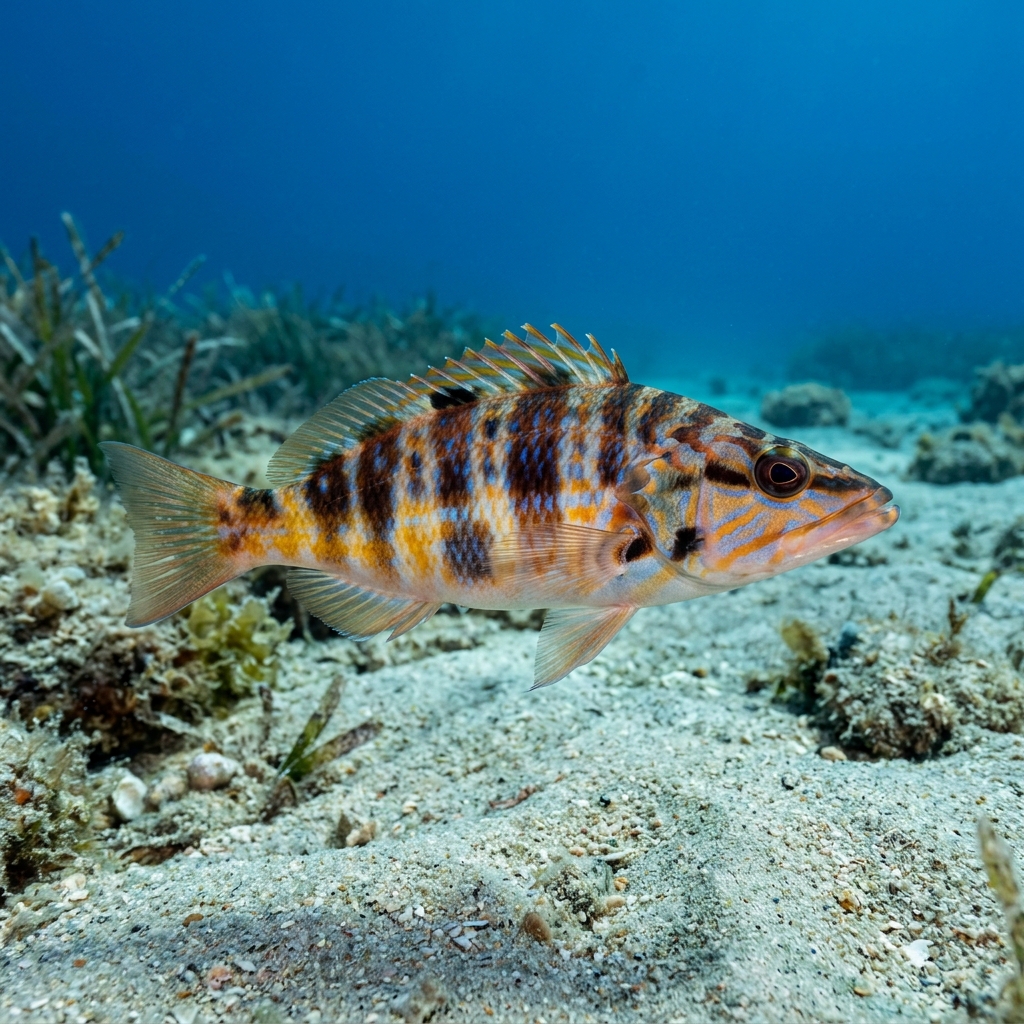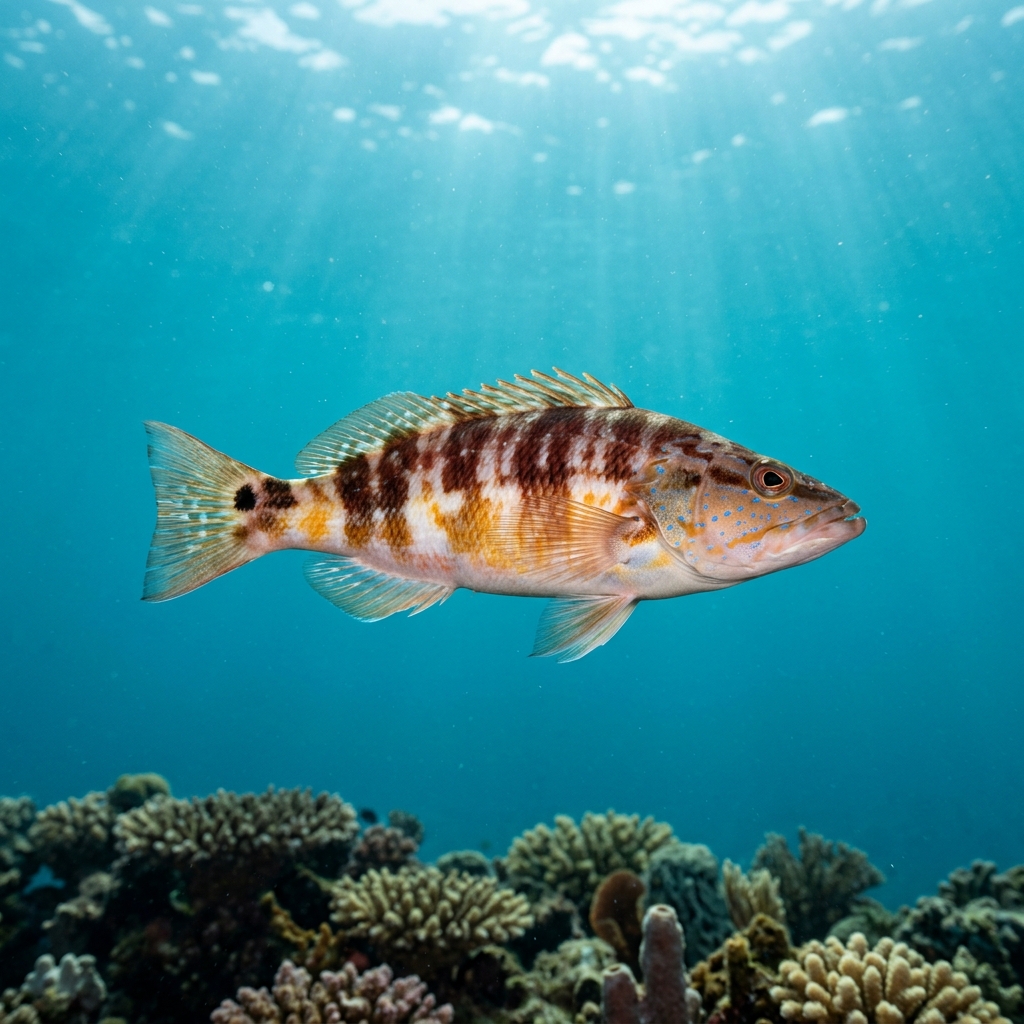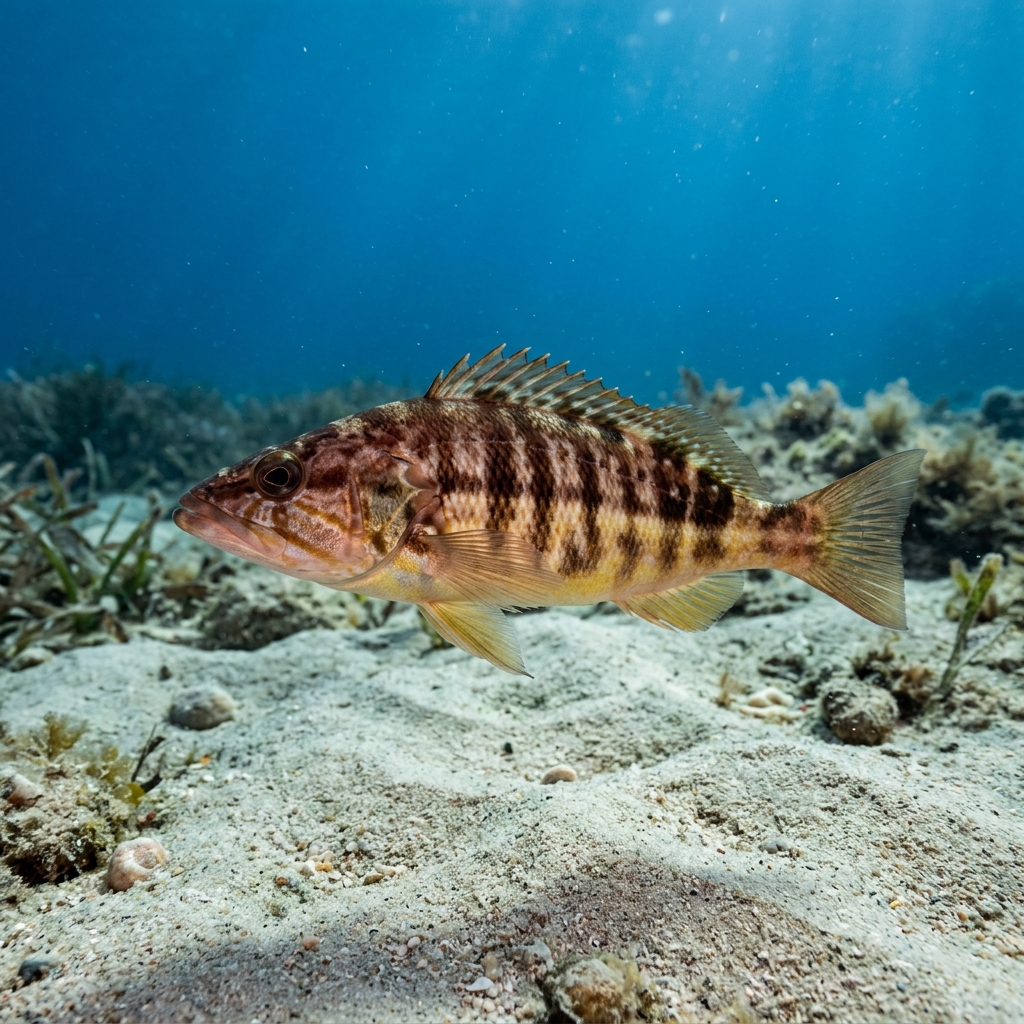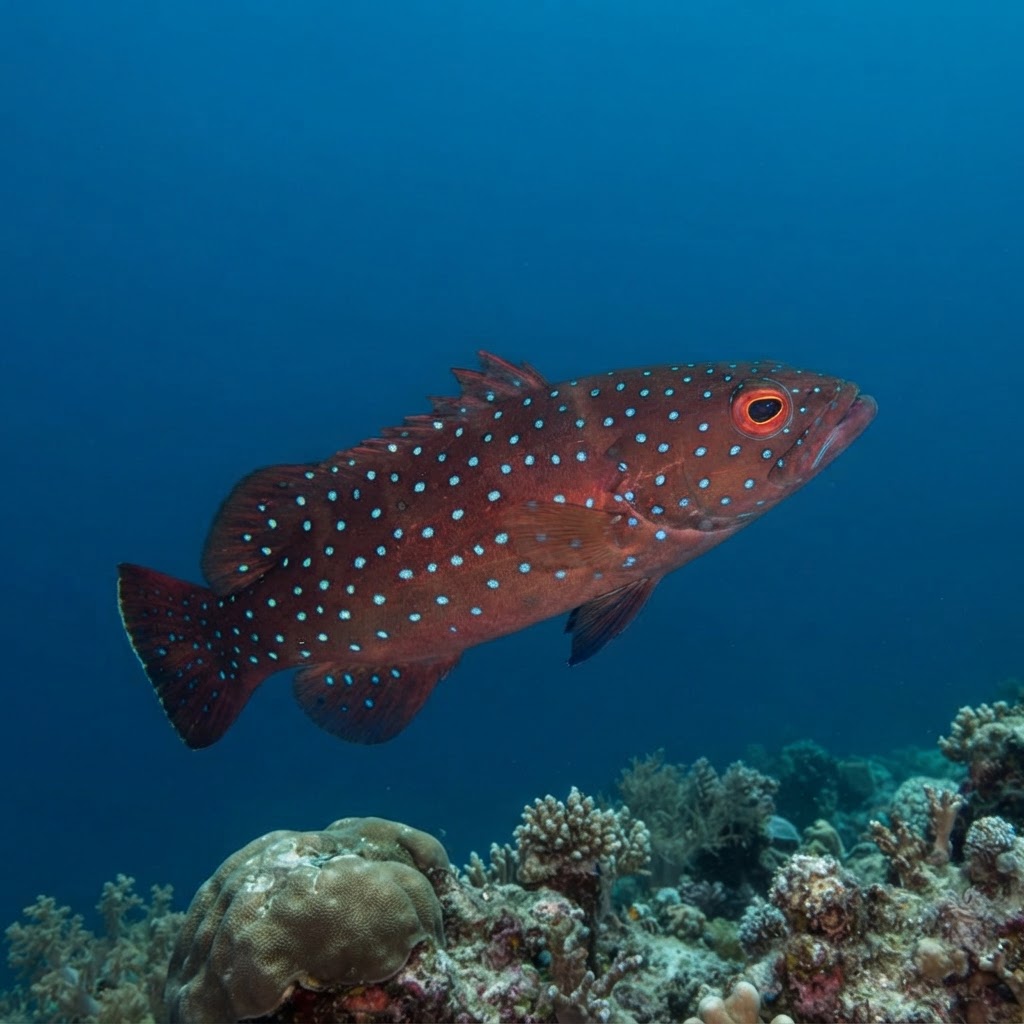
Plectropomus maculatus
Reddish-brown and blue-spotted, coral trout turn up on reefs from Malaysia's east coast to Queensland year-round in 26-29 C water.
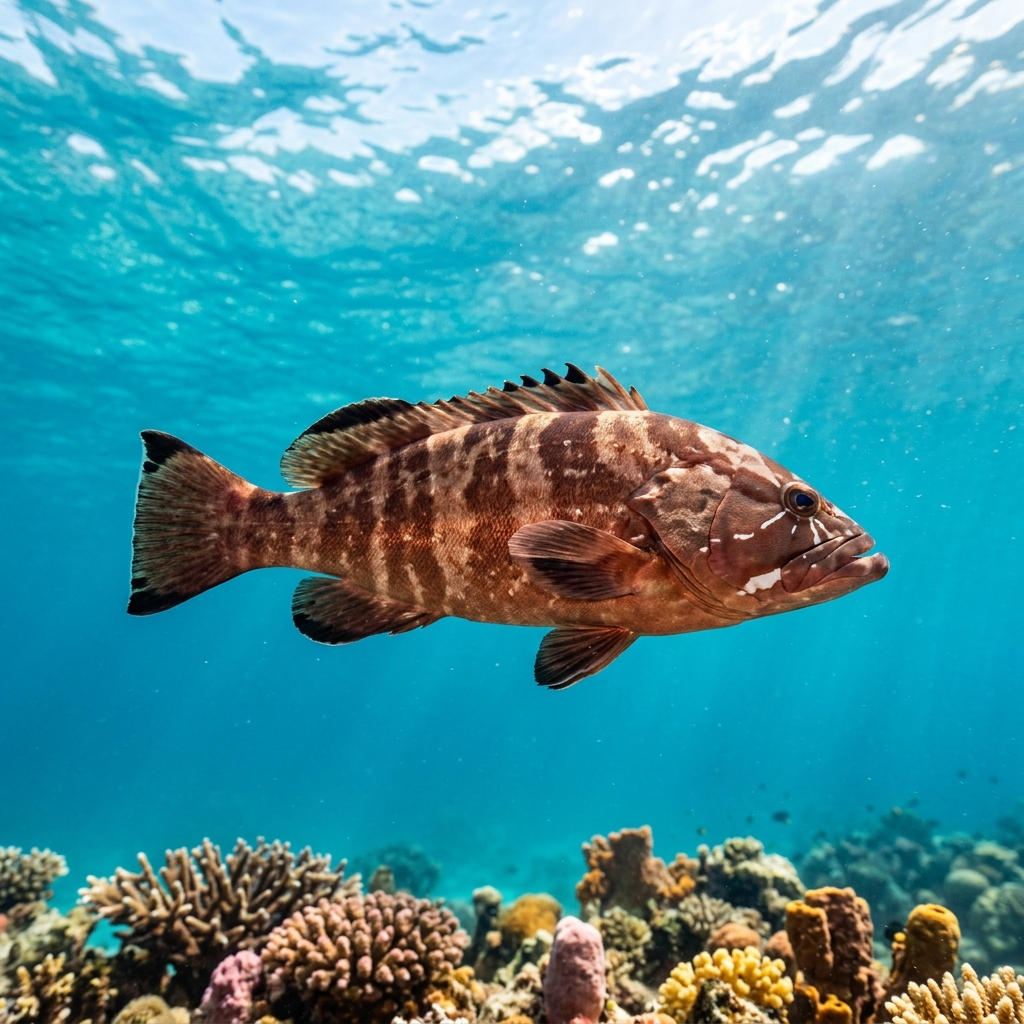
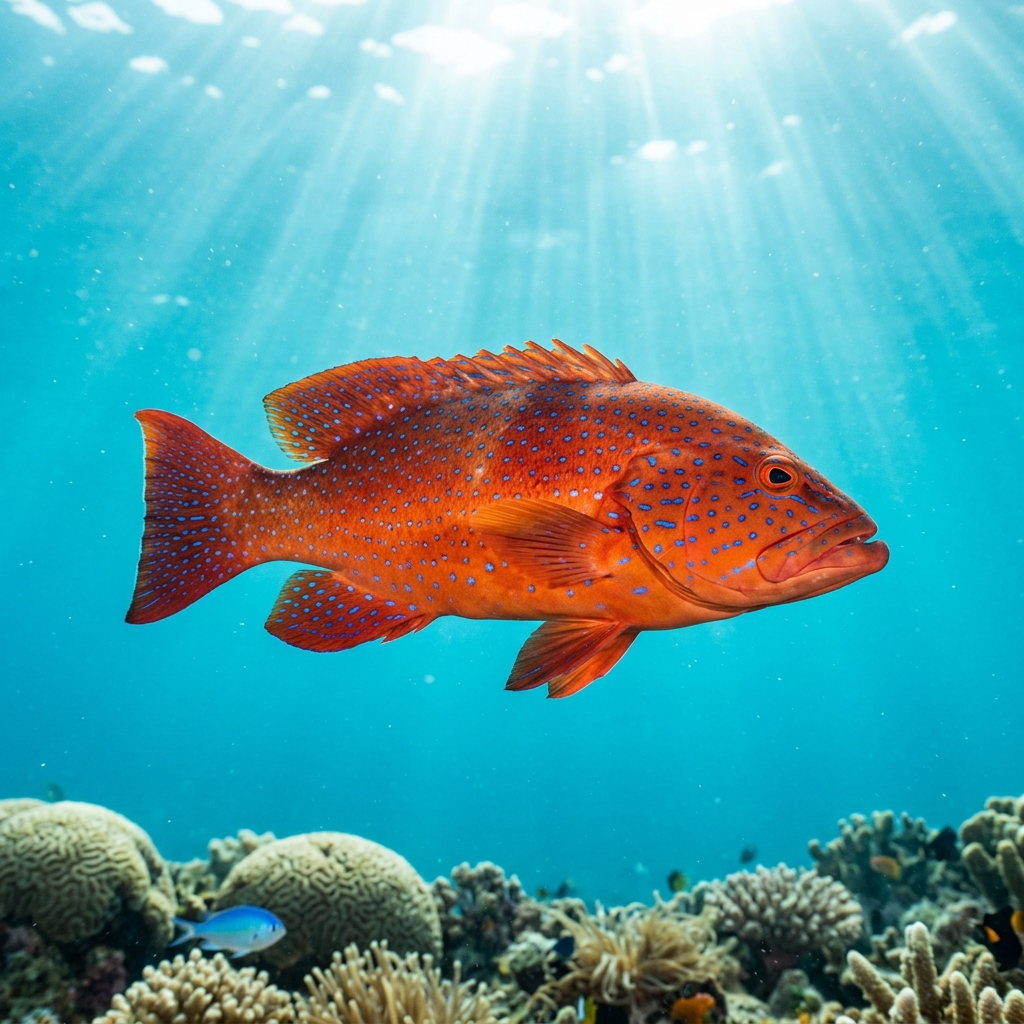
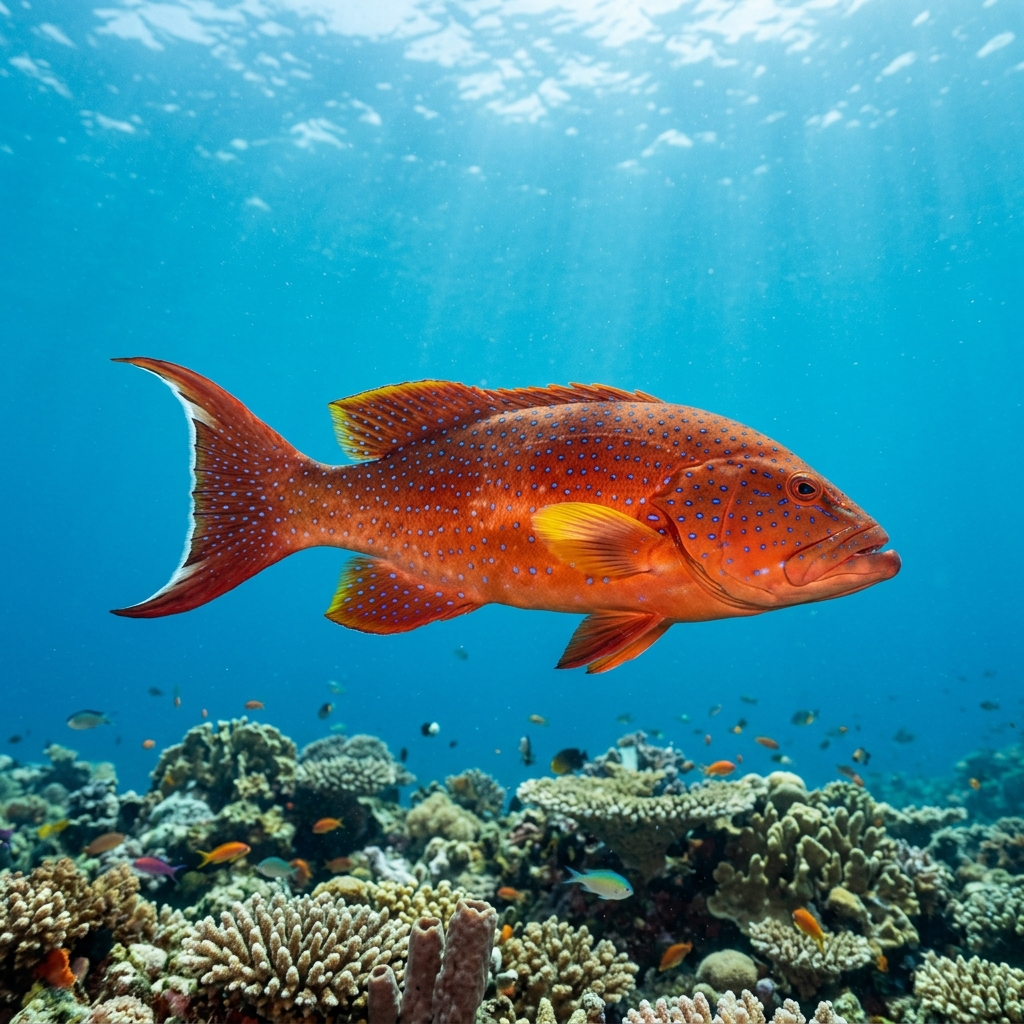
Reddish-brown to olive body scattered with small blue-ringed spots gives this grouper away underwater, along with a stocky, torpedo-shaped body that can reach nearly a metre. It often hangs motionless near a coral head or ledge, pectoral fins fanned out, watching rather than swimming. The rounded tail and heavy-lipped face help separate it from slimmer reef fish sharing the same colour palette.
Divers most often find it parked near a coral bommie or wedged into a reef ledge, using ambush rather than chase to catch prey. It tends to hold its ground as divers approach, watching warily rather than bolting, though it will retreat into cover if pressed. Most sightings are single fish rather than groups, consistent with a solitary, territorial habit on the reef.
Like other Plectropomus groupers, coral trout are protogynous hermaphrodites, meaning many individuals start life as females and some later change sex to male as they grow.
Sightings are spread across the year with no clear season, which fits a fish comfortable in the 26 to 29 C range typical of these tropical reefs year-round. Plan your trip around the destination's general dive conditions rather than a coral trout season.
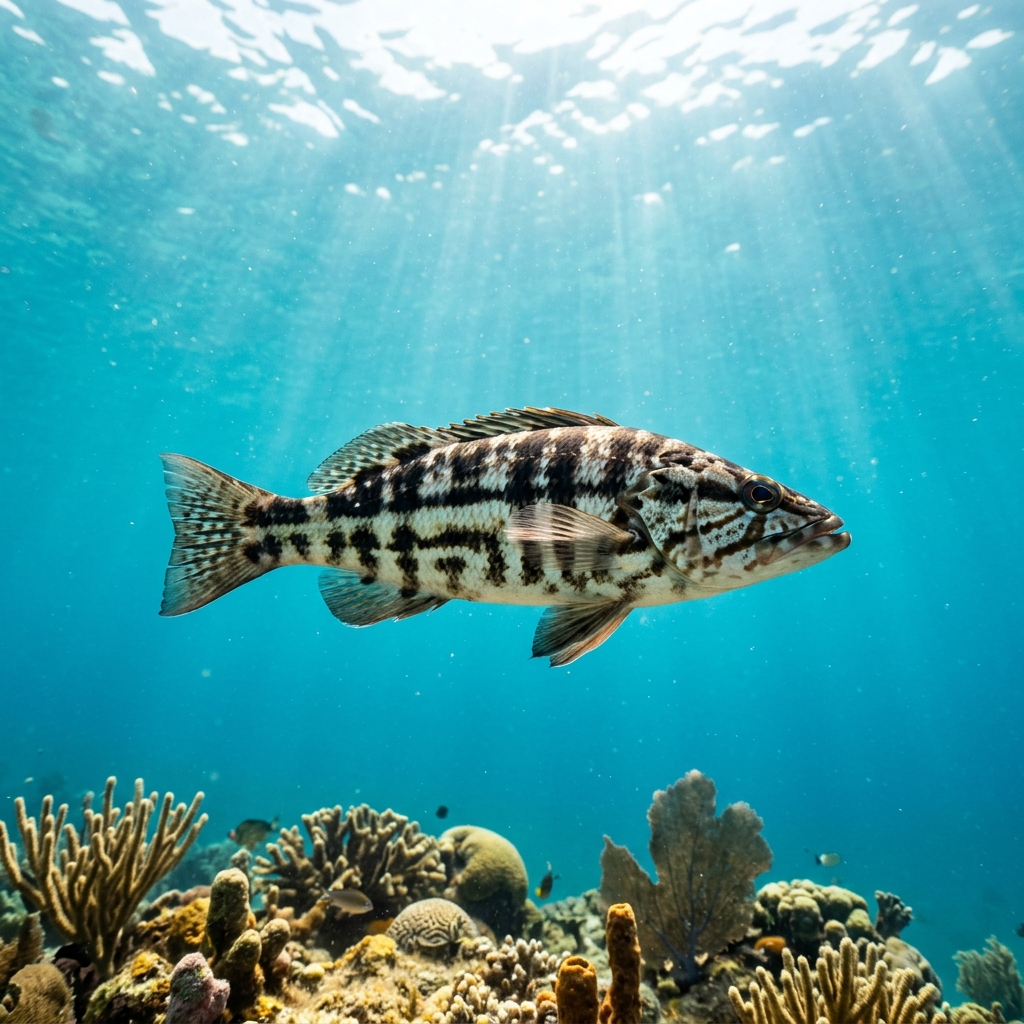
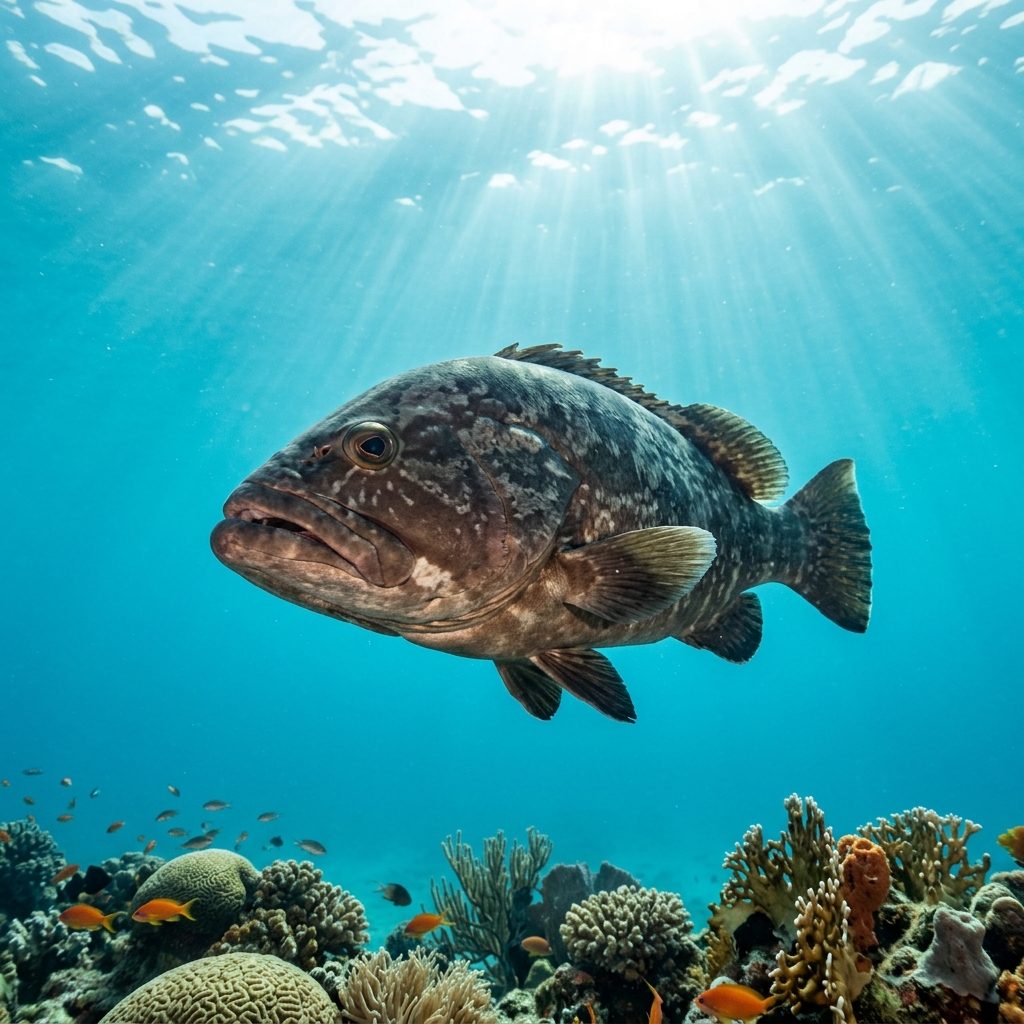
Reef neighbours a diver could mistake it for. Use the identification notes above to tell them apart.
Most reliably logged on Malaysia's Peninsular East Coast, which accounts for the bulk of sightings, followed by Queensland's reefs in Australia. Smaller but steady numbers turn up in Thailand around Koh Chang and Koh Tao, in West Papua, Indonesia, and around India's Andaman Islands.
Mapping where Spotted Coral Grouper is logged…
Peninsular Malaysia's east coast and Queensland, Australia are the strongest areas for sightings, with additional reliable spots in Thailand around Koh Chang and Koh Tao, West Papua in Indonesia, and India's Andaman Islands.
There is no strong seasonal pattern, sightings happen year-round on the warm reefs it favours, typically in water between 26 and 29 C.
Look for a stocky, reddish-brown to olive body covered in small blue-ringed spots, usually seen resting still near coral rather than swimming in open water. It can grow to around 87 cm, making it one of the larger fish loitering near a bommie.
They typically reach about 87 cm in length, making them a solidly sized presence on the reef compared to smaller reef fish sharing the same habitat.
No, they pose no threat to divers and will typically just hold their position near cover or retreat into the reef if approached too closely.
Site and sighting data is aggregated from diver logs, iNaturalist and GBIF. For taxonomy and conservation status:
Blacktip Grouper
2,726 sites