Plectropomus spp.
Spot coral trout across Malaysian and Australian reefs in water from 22-28 °C. Most logged around Perhentian & Redang and Queensland.
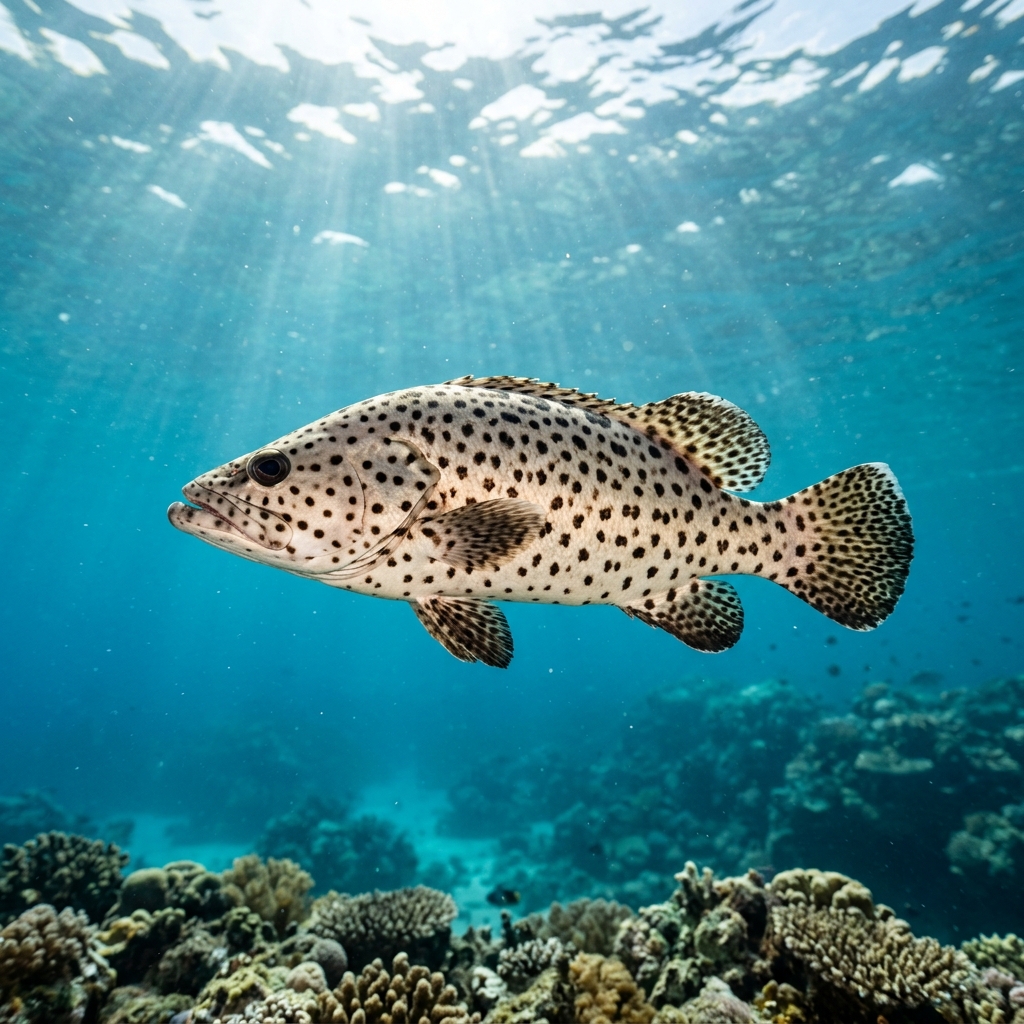
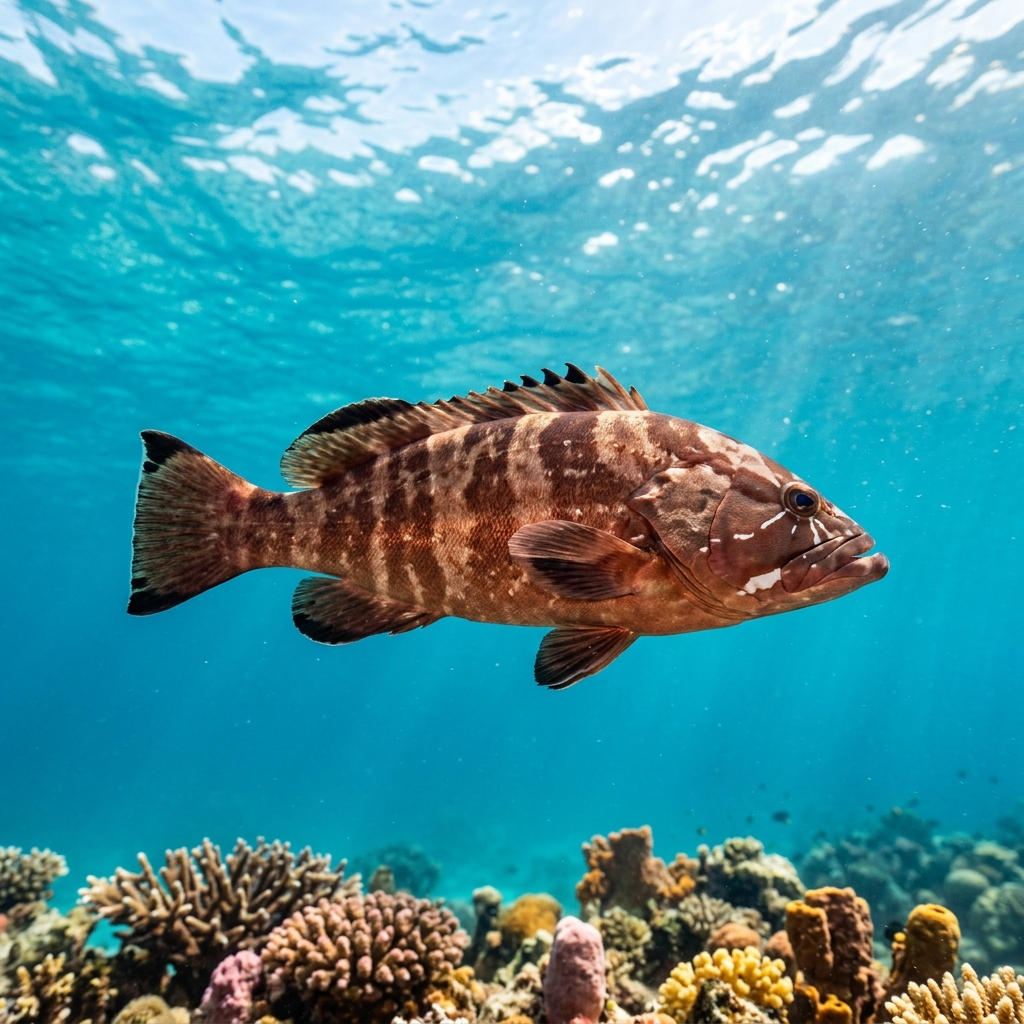
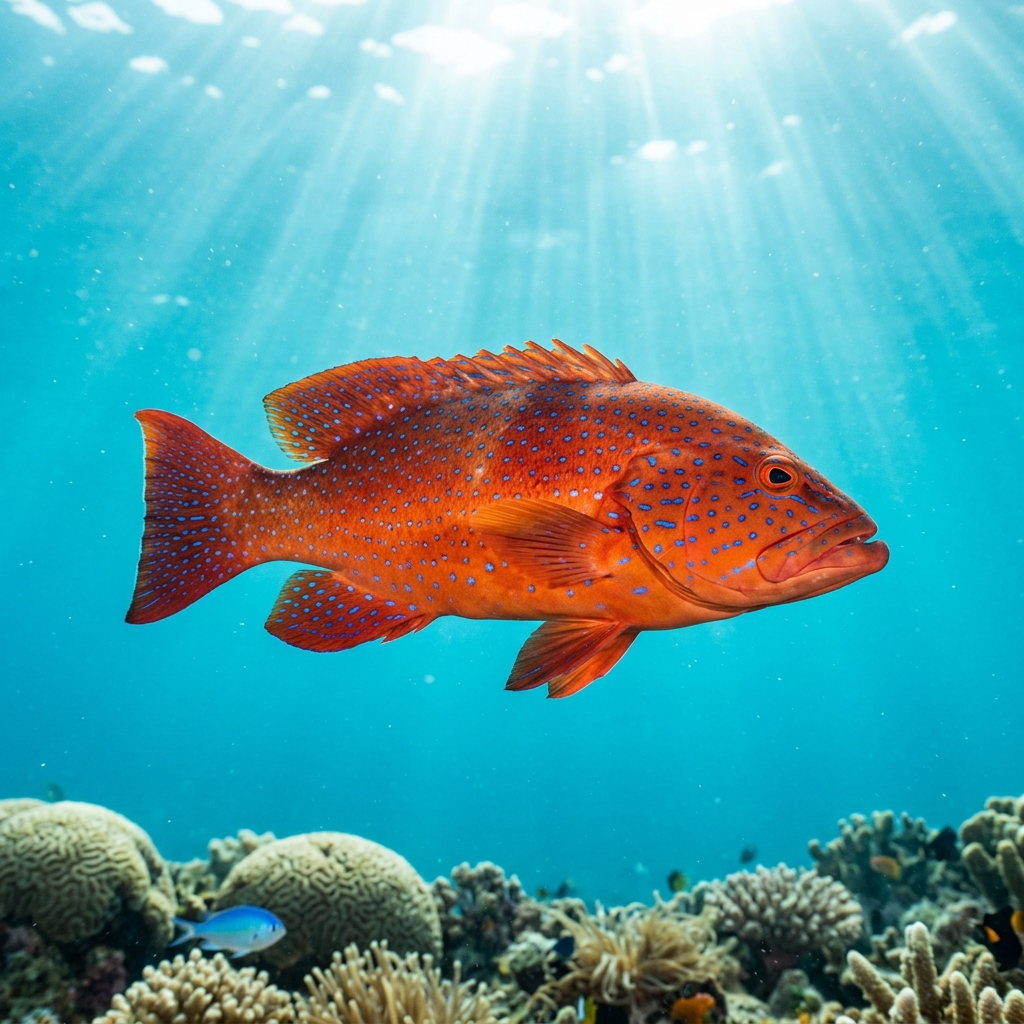
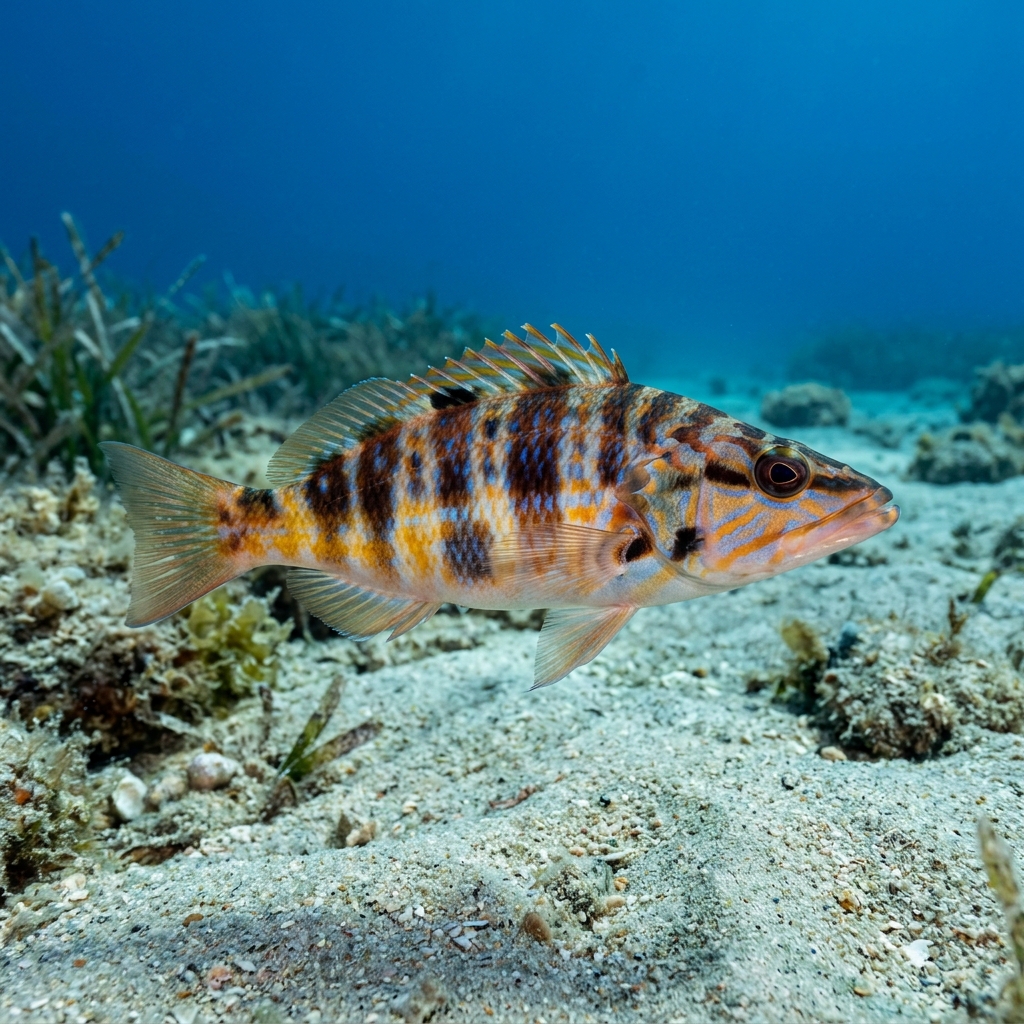
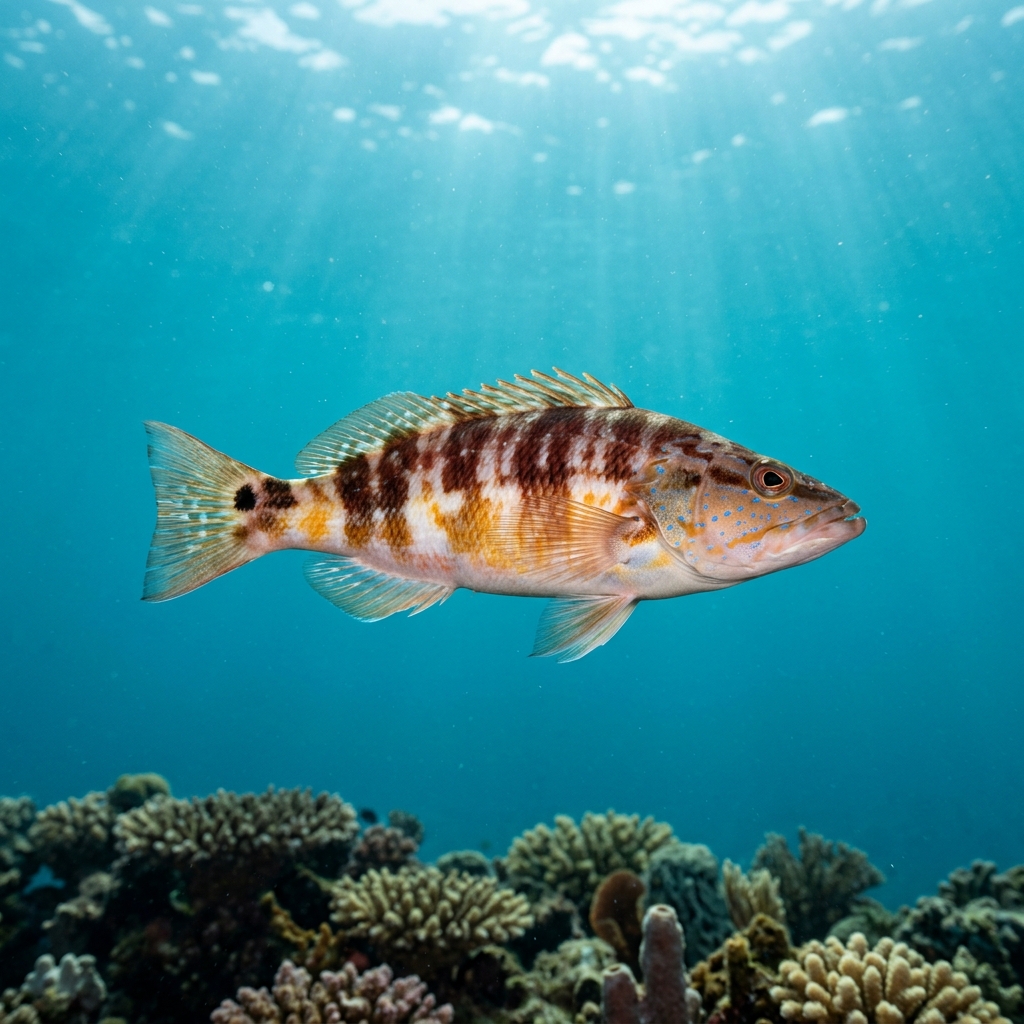
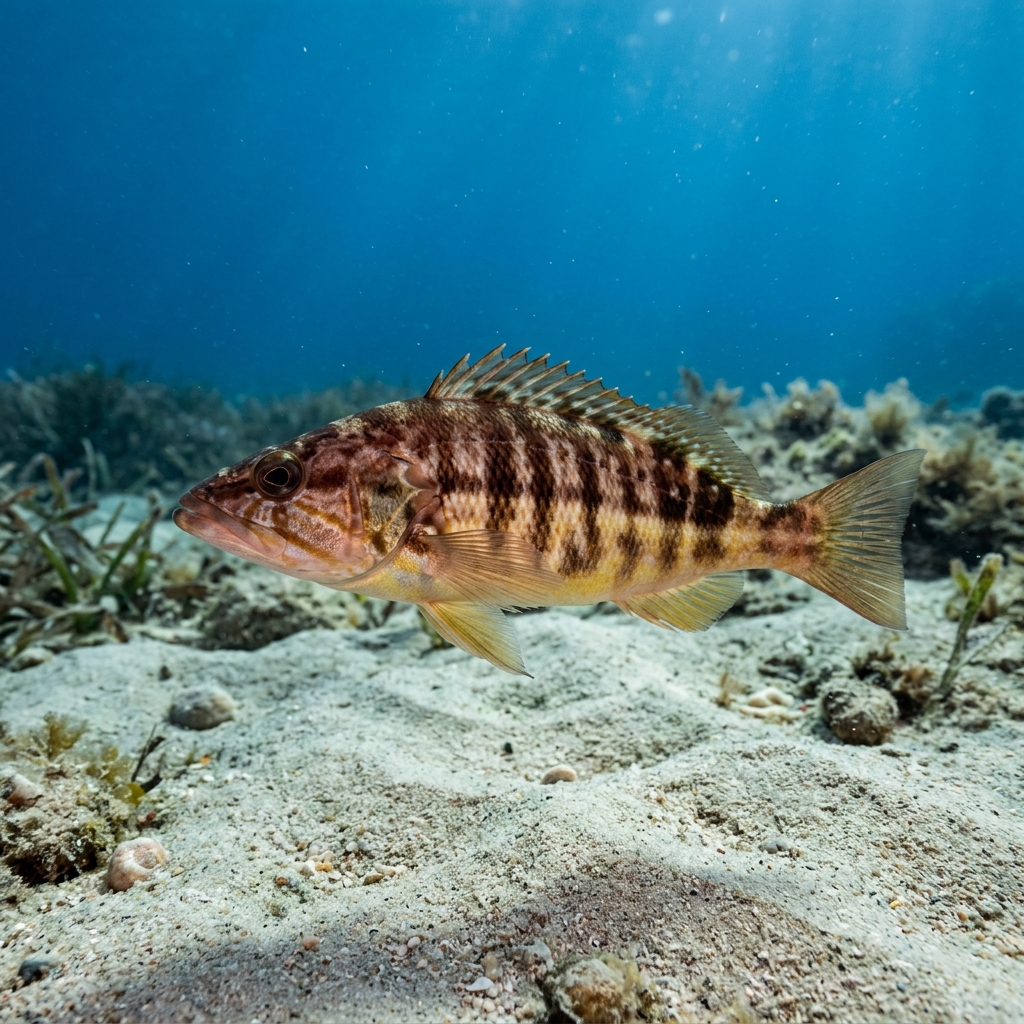
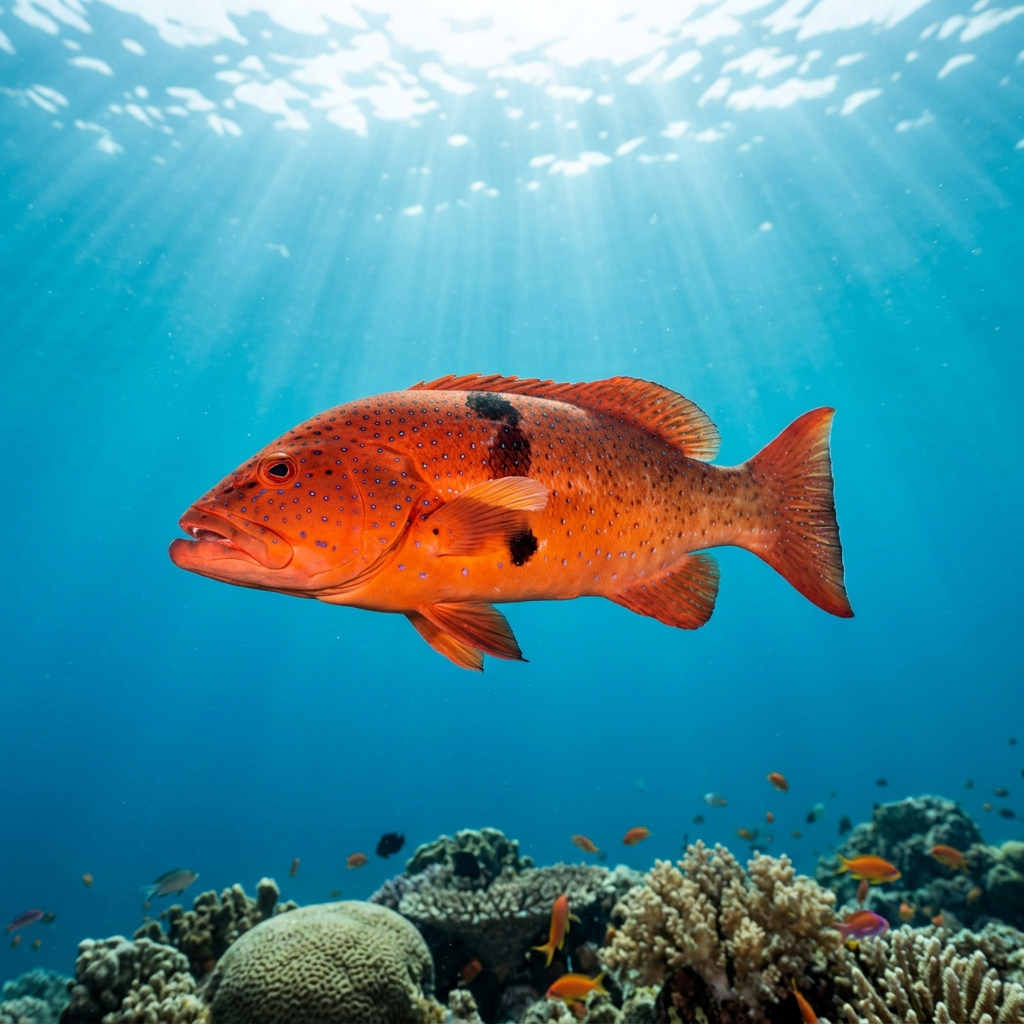
Coral trout are stocky, elongated groupers most recognisable by their bold red-orange to brownish-red body scattered with small, bright blue or turquoise spots across the head, flanks, and fins. That spotted pattern is the key field mark underwater and separates them from most other groupers at a glance. They typically rest motionless near coral heads or ledges, which makes getting a good look relatively easy. Members of the Plectropomus group share this general look, with colour intensity and spot density varying between species.
Coral trout are ambush predators (hunters that wait rather than chase) and are most often spotted holding position near coral heads, overhangs, or reef edges, scanning for prey. They tend to tolerate calm divers at close range before retreating slowly into the reef structure. Early morning dives can be productive, as they are often more active and visible before settling into daytime resting spots.
Coral trout are protogynous hermaphrodites, meaning individuals start life as females and some later transition into males. This switch is triggered by social dynamics within the local population, so removing large individuals disproportionately affects breeding.
In the Southern Hemisphere, sightings concentrate between March and November. Across tropical sites more broadly, the species sits comfortably in water from 22 to 28 °C, so year-round diving is viable on most Indo-Pacific reef systems within that temperature band.
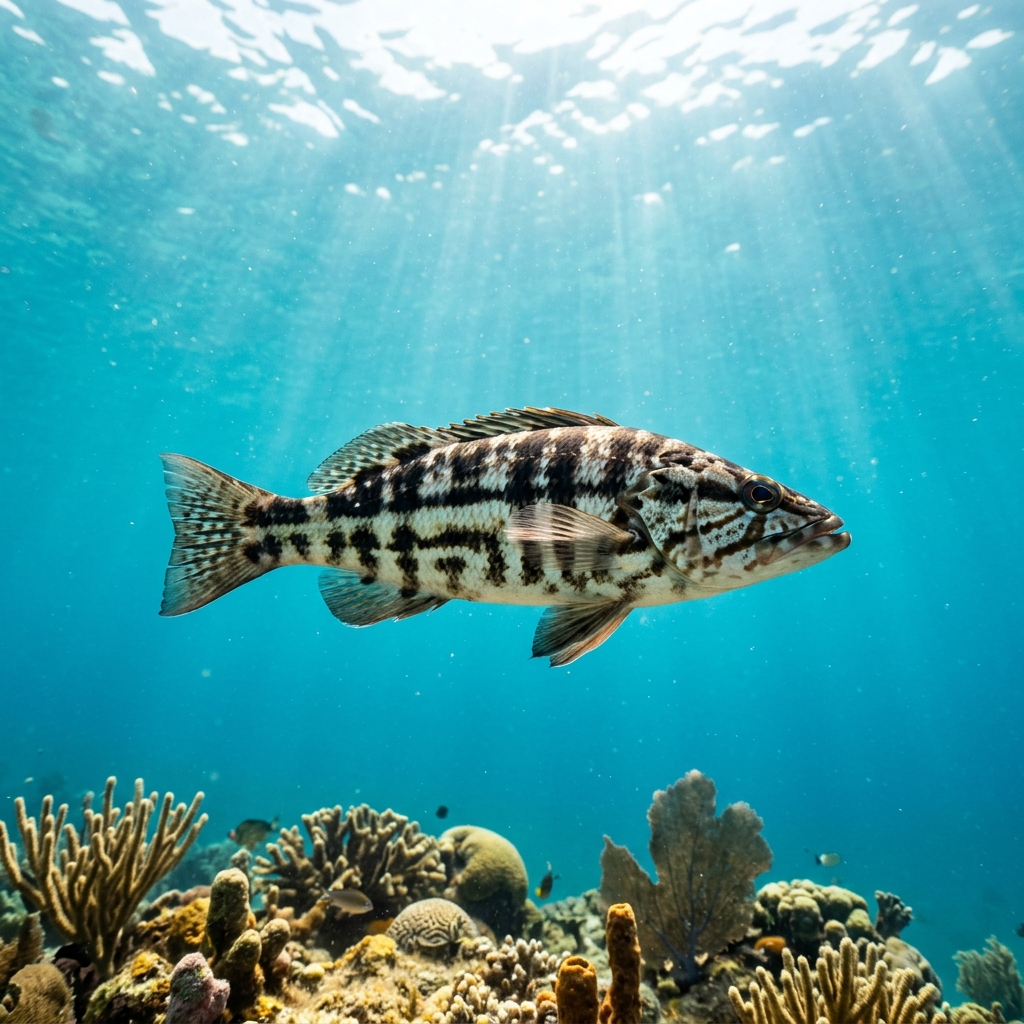
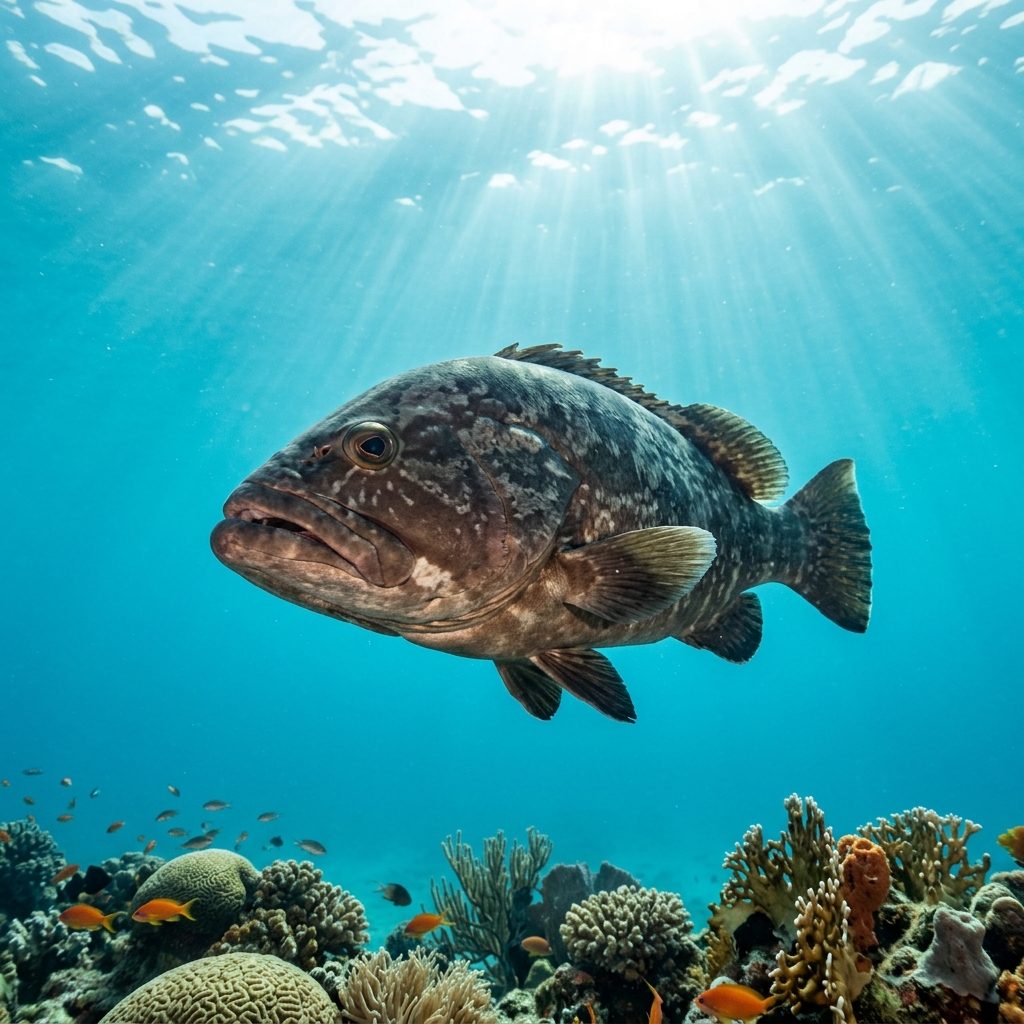
Reef neighbours a diver could mistake it for. Use the identification notes above to tell them apart.
Most logged in Malaysia, particularly around Perhentian & Redang and Pulau Tioman, where sightings come from a large number of sites. Australia's Queensland reefs and South Africa's Durban & North Coast are also strong areas, alongside Egyptian Red Sea sites around Sharm el-Sheikh and Safaga, and Gulf of Thailand reefs in southern Thailand.
Mapping where Coral Trout is logged…
Coral trout are most commonly logged in Malaysia, especially around Perhentian & Redang and Pulau Tioman. Australia's Queensland reefs, South Africa's Durban & North Coast, the Egyptian Red Sea around Sharm el-Sheikh and Safaga, and Thailand's Gulf of Thailand sites all have solid records too.
On tropical reefs they can be found year-round in water between 22 and 28 °C. In Southern Hemisphere locations, sightings concentrate between March and November, so that window offers the most reliable encounters in those regions.
Look for a robust, medium-to-large grouper body covered in small blue or turquoise spots on a red-orange to brownish-red background. That spotted pattern is distinctive. They often rest still near coral structure, which gives you time to check the spots before they move off.
Most divers should expect a rare to uncommon encounter. Across logged sites they are marked rare at the majority and uncommon at most of the rest, with only a handful of sites recording them as common. Patience and slow reef diving improve your odds significantly.
No. Coral trout pose no threat to divers. They may retreat if approached too quickly, but they are not aggressive. Standard calm, non-intrusive dive behaviour is all that is needed.
Site and sighting data is aggregated from diver logs, iNaturalist and GBIF. For taxonomy and conservation status:
Blacktip Grouper
2,726 sites