Elysia coodgeensis
Found on shallow reefs from New South Wales to Western Australia, this sea slug turns up uncommonly in waters as cool as 14.7C.
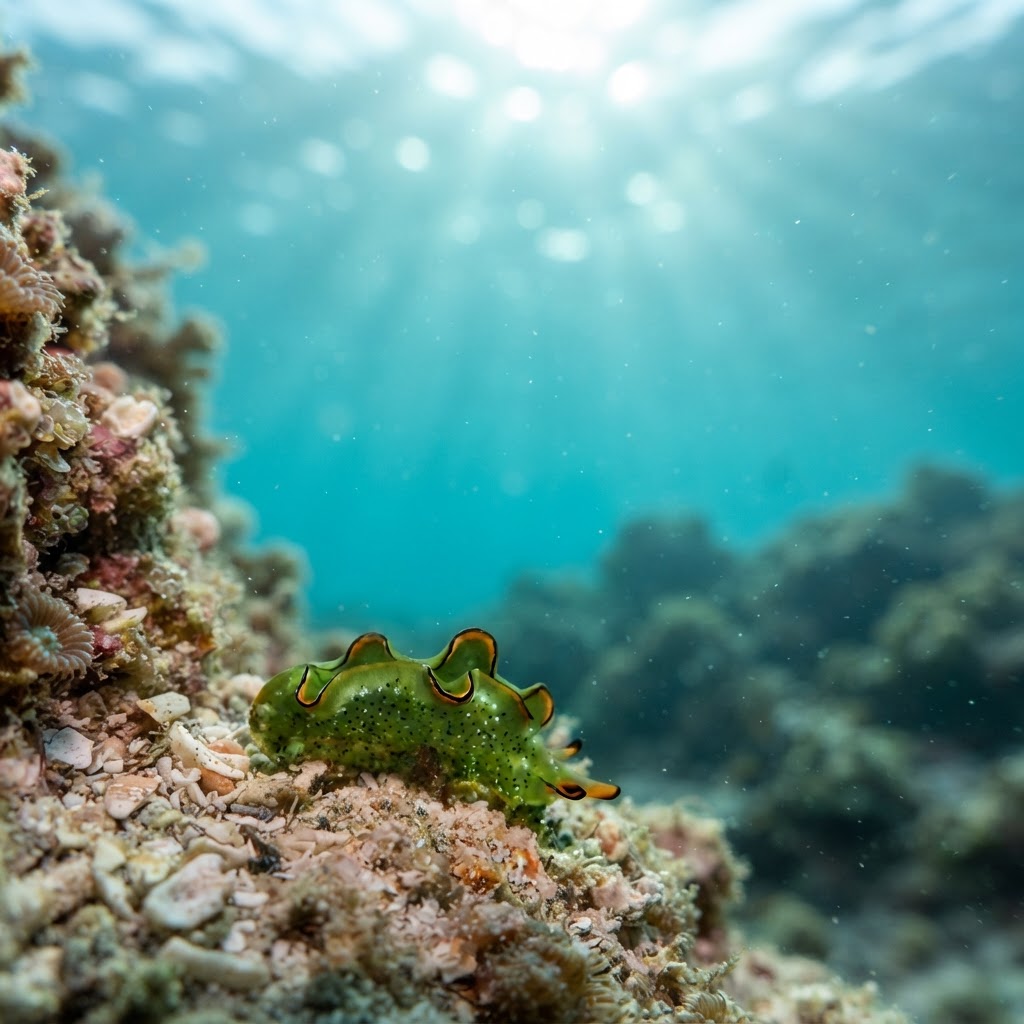
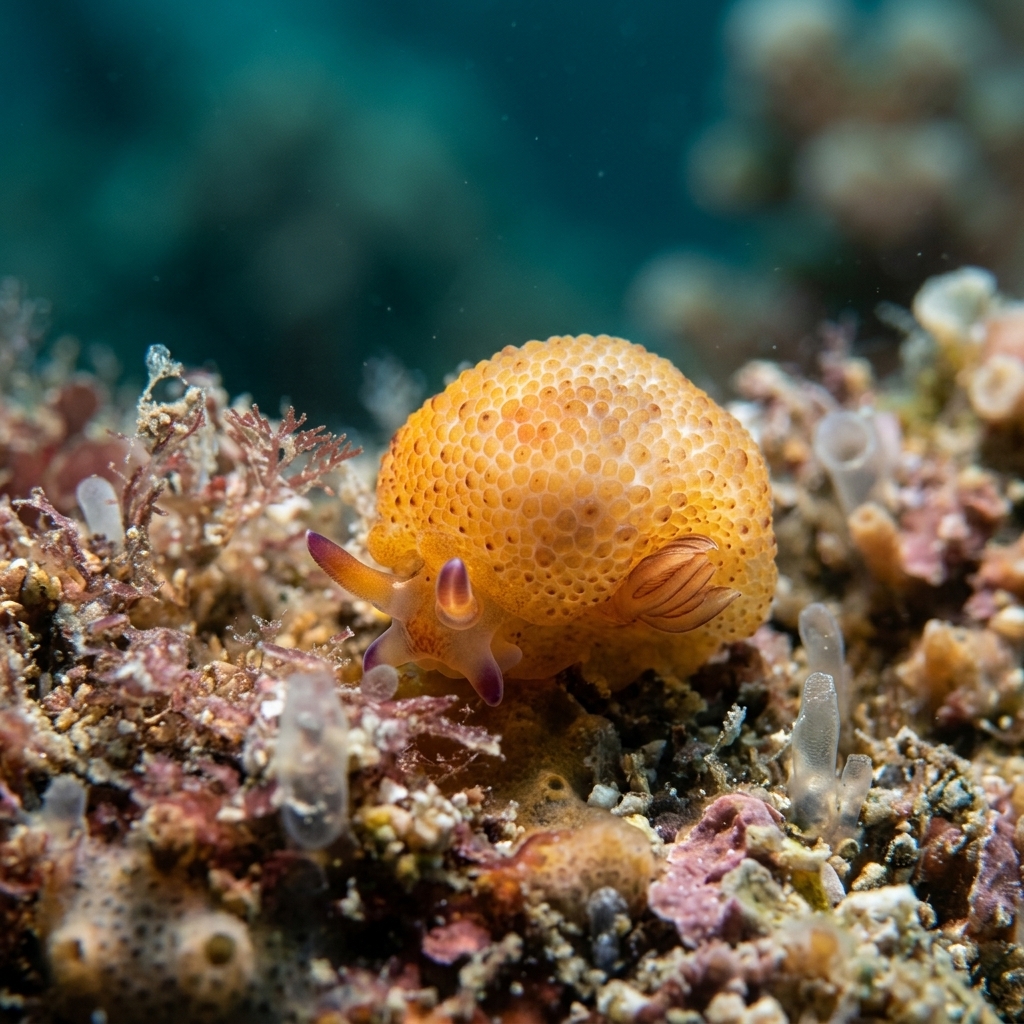
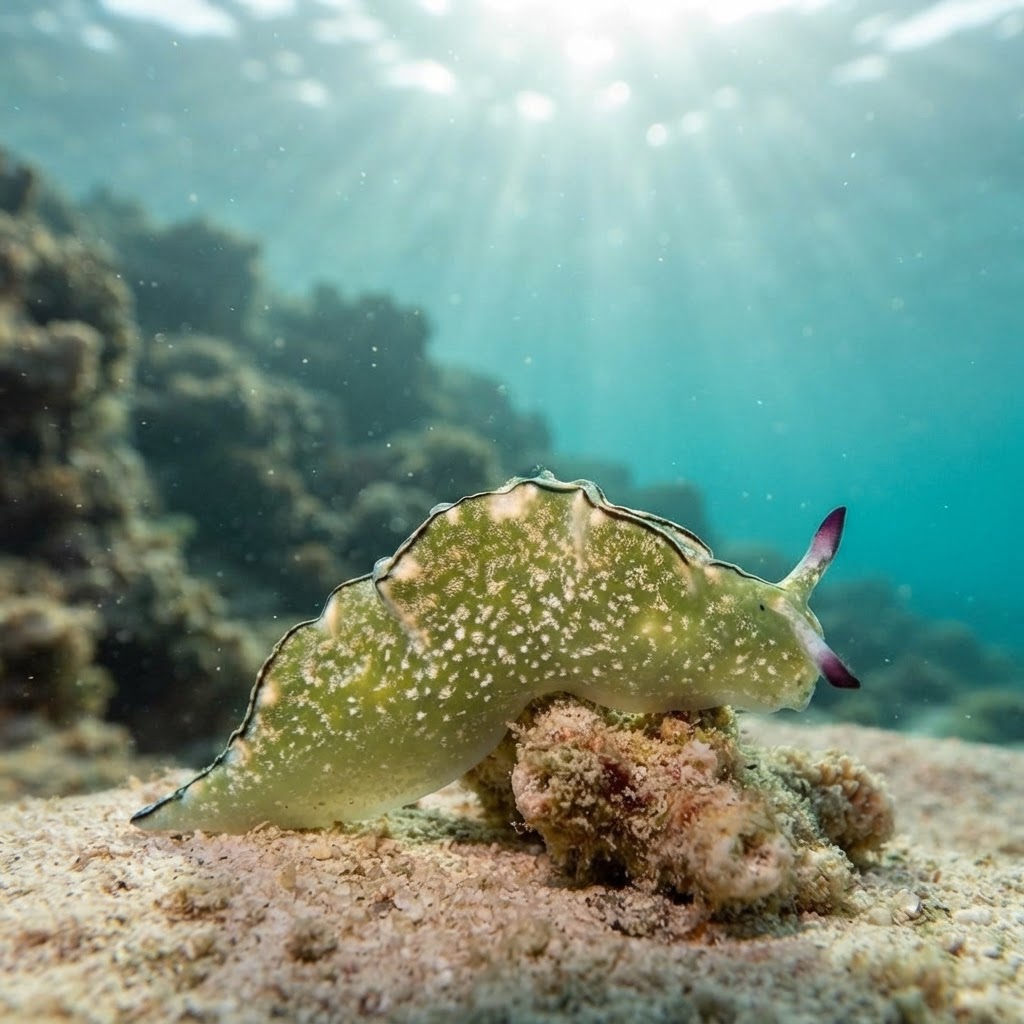
A small, flattened sea slug with a leaf-like body formed by two wing-like flaps (parapodia) that fold up along its back, giving it a lettuce-leaf silhouette. Colour runs through mottled greens, sometimes with fine speckling, letting it blend into the algae it sits on. There's no dramatic pattern to key on, so divers usually spot it by shape and posture rather than colour alone.
Look for it grazing slowly over algae-covered rock and rubble in very shallow water, often within snorkelling depth rather than deep on a wall. It moves at a typical sea slug pace, unbothered by divers, and tends to stay put long enough for a close look and a photo if you spot it against the algae.
Like other members of its family, it likely feeds on algae and retains functioning chloroplasts from its food in its tissue, effectively running on a bit of borrowed photosynthesis alongside normal grazing.
Sightings don't show a clear seasonal pattern, so treat it as a year-round find. It's been logged across a wide temperature range from 14.7 to 24.7C, meaning it tolerates the cooler southern Australian winters as well as warmer summer conditions.
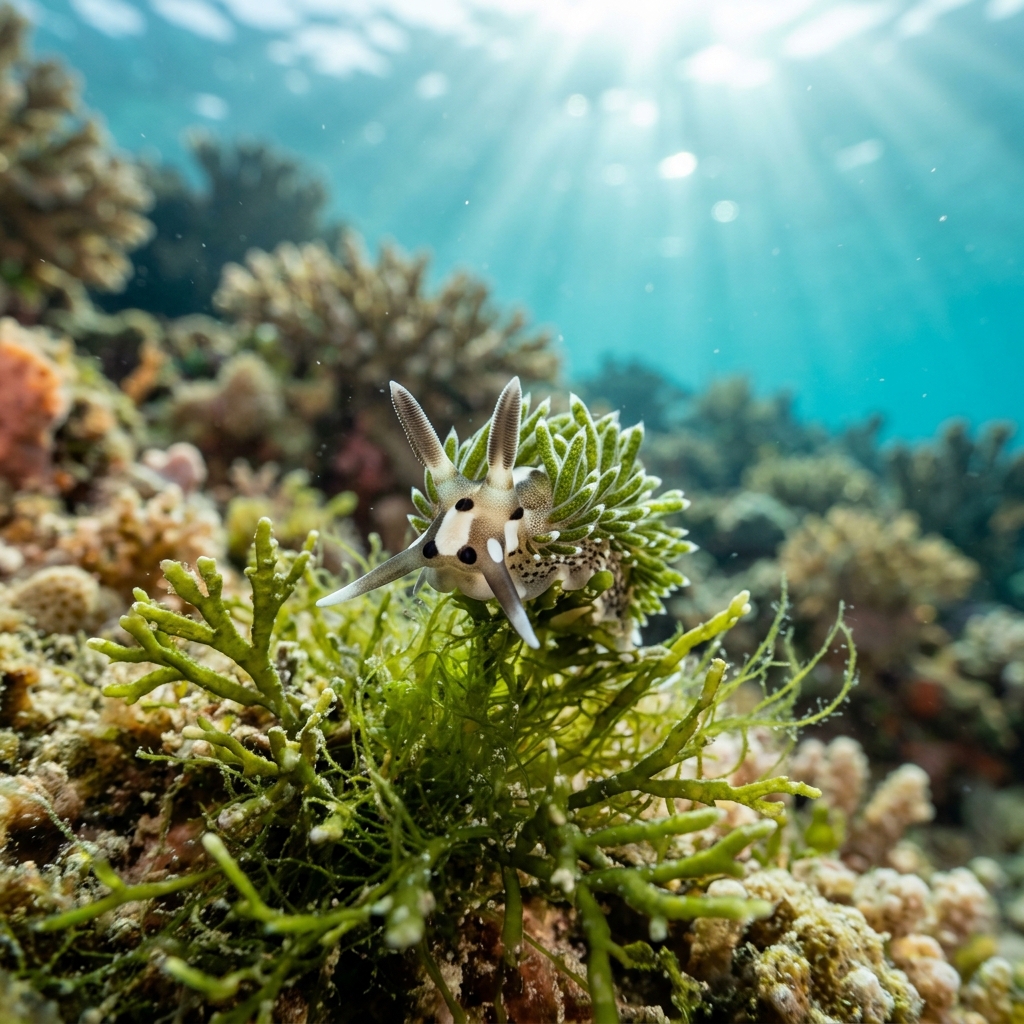
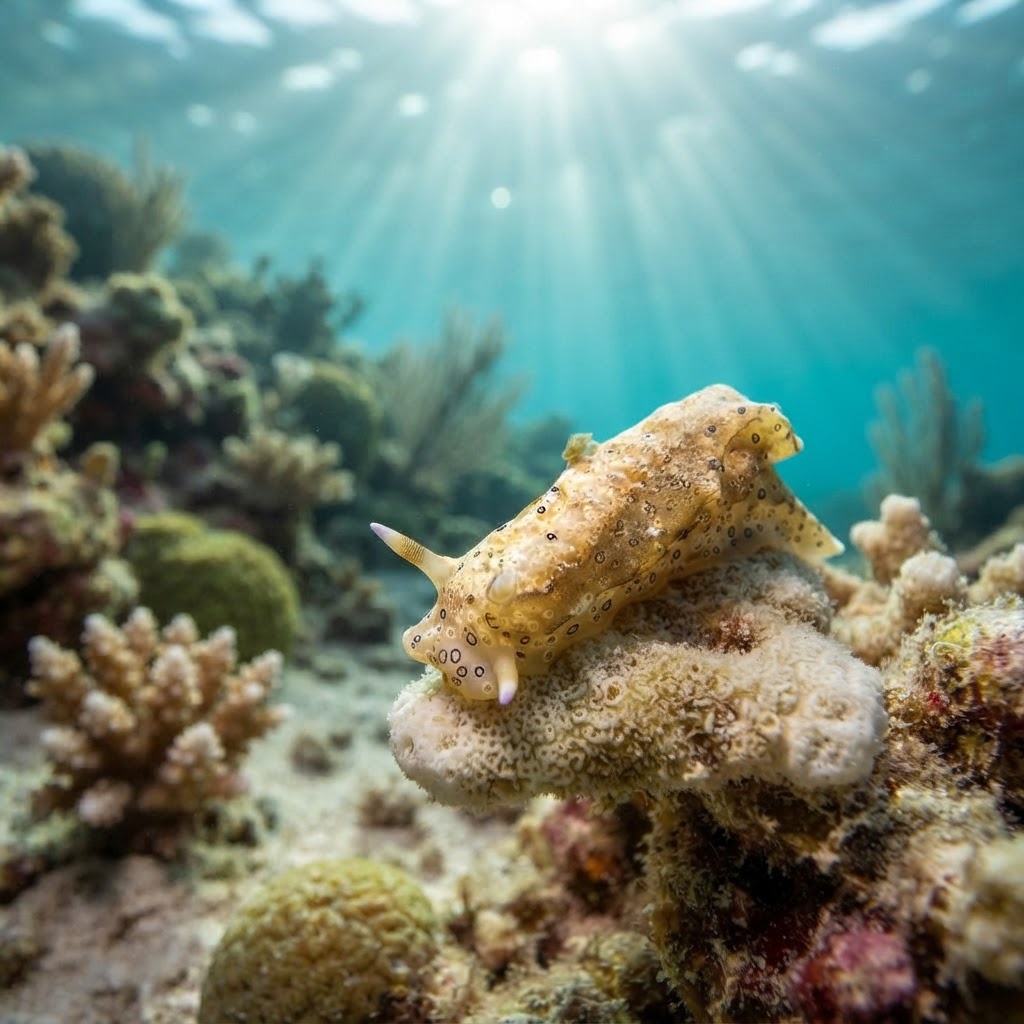
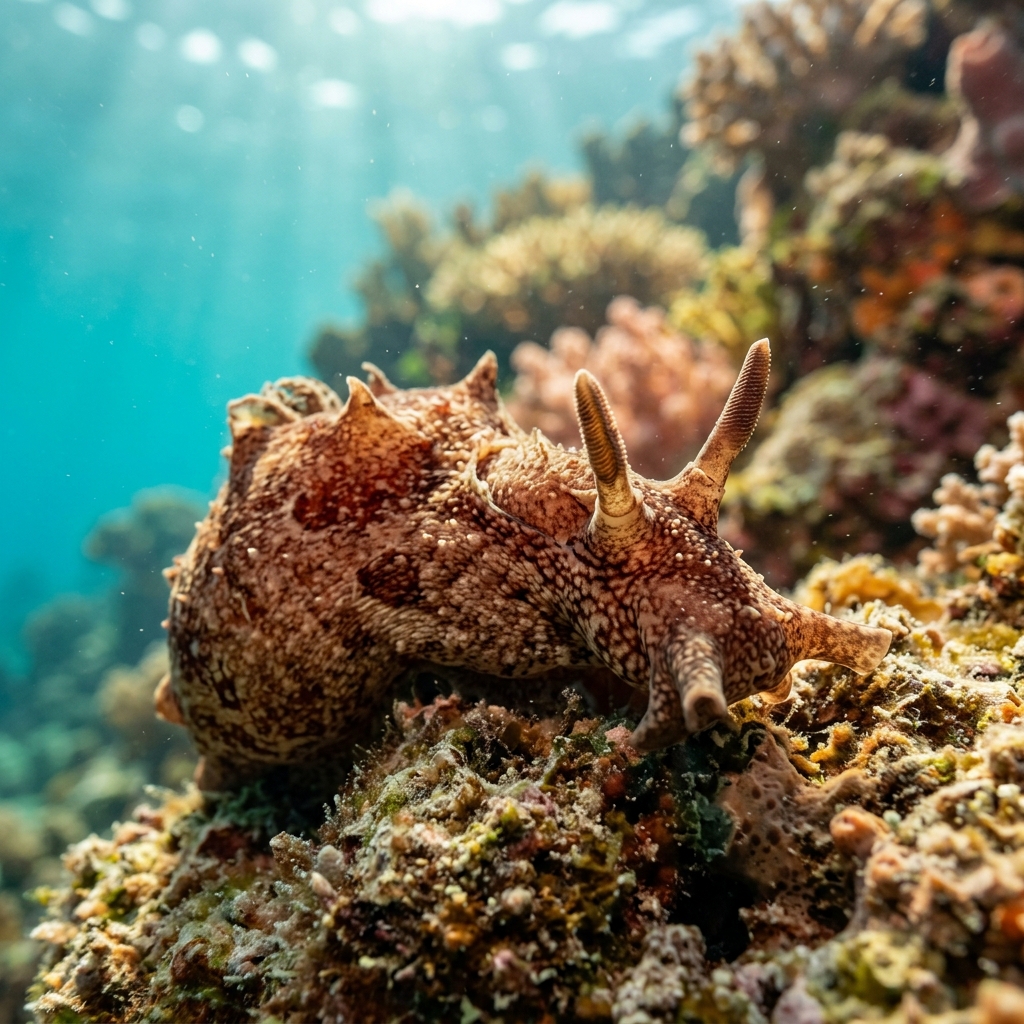
Reef neighbours a diver could mistake it for. Use the identification notes above to tell them apart.
This one is very much an Australian speciality, most reliably logged in New South Wales and Victoria, with a smaller but steady presence in Queensland and Western Australia. Shallow rocky reefs and sheltered bays across these states are your best bet rather than any single famous site.
Mapping where Coodgee Elysia is logged…
It's an Australian species, most often found in New South Wales and Victoria, with fewer sightings reported from Queensland and Western Australia. Look on shallow, algae-covered rock and rubble rather than deeper reef.
There's no strong season in the sighting data, so it's considered a year-round find. It has been recorded across a wide range from cool 14.7C water up to 24.7C, so it isn't fussy about season.
Look for a small, flattened sea slug with leaf-like body flaps folded along its back, giving it a lettuce-leaf shape. Its mottled green tones help it disappear against algae, so it's often spotted by shape rather than colour.
No. It's a harmless, slow-moving grazer with no sting or bite risk to divers, and it won't react defensively if approached calmly.
Like relatives in its family, it likely holds onto chloroplasts from the algae it eats, keeping them active in its own tissue for a time. That gives it a kind of borrowed solar power on top of its normal grazing diet.
Site and sighting data is aggregated from diver logs, iNaturalist and GBIF. For taxonomy and conservation status:
Light-spotted Aegires
3,168 sites