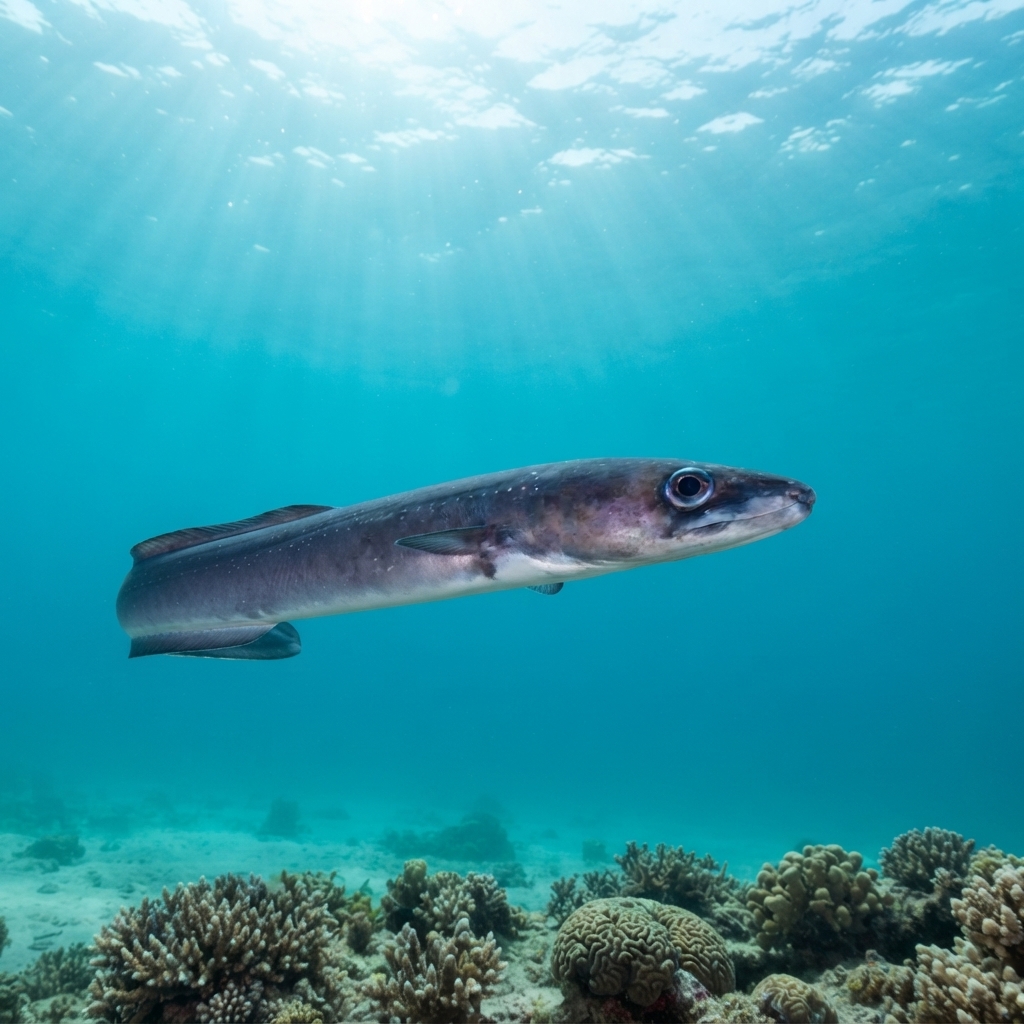
Conger wilsoni
Uncommon but reliable in Western Australia's rocky reefs, this conger eel favours 15.5 to 26.6 C water year-round.
Safety warning
Its bite is the real hazard, not aggression: congers have strong jaws and sharp teeth and can bite hard if a diver puts a hand into a crevice or tries to touch or feed one. Give it space, never reach into holes you can't see into, and admire it from a body length or two away.
If you're bitten
BiteGeneral first-aid guidance, not a substitute for professional medical care. In an emergency, call your local emergency number.
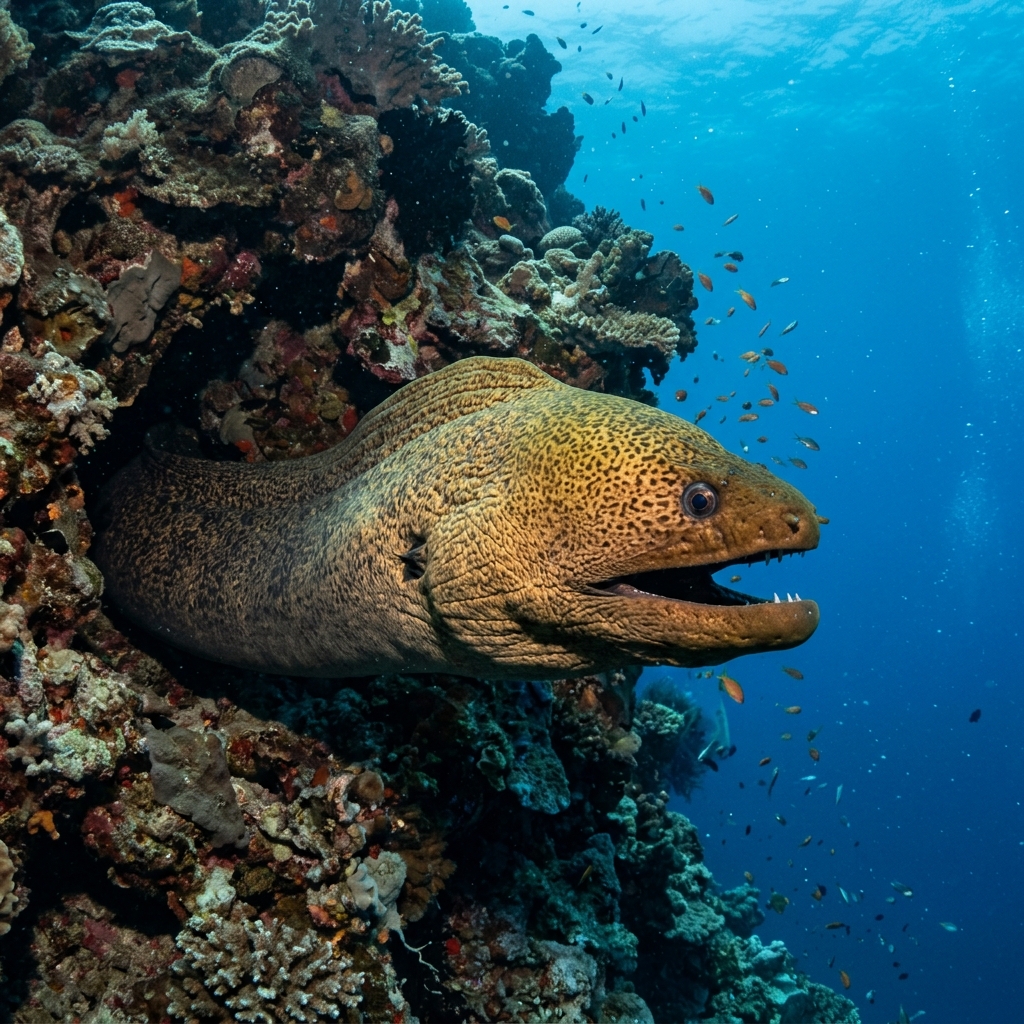
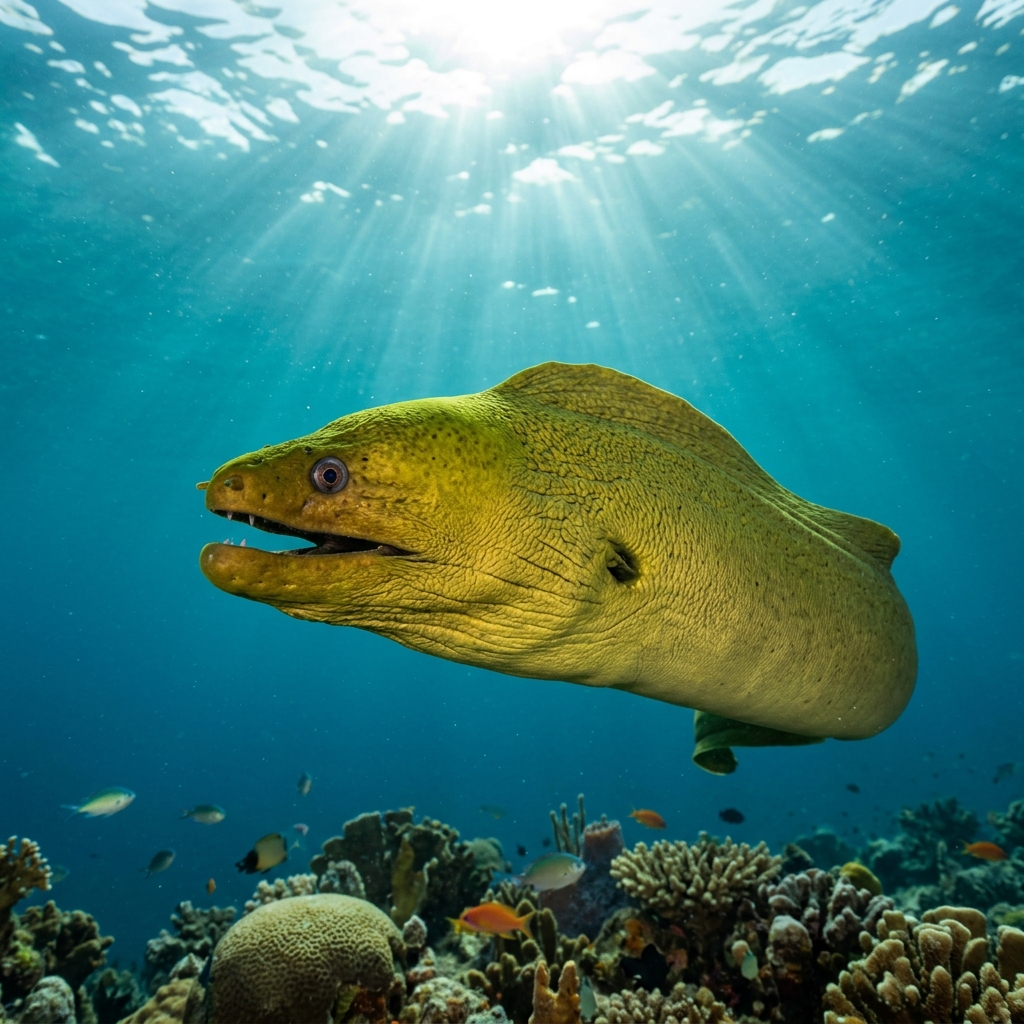
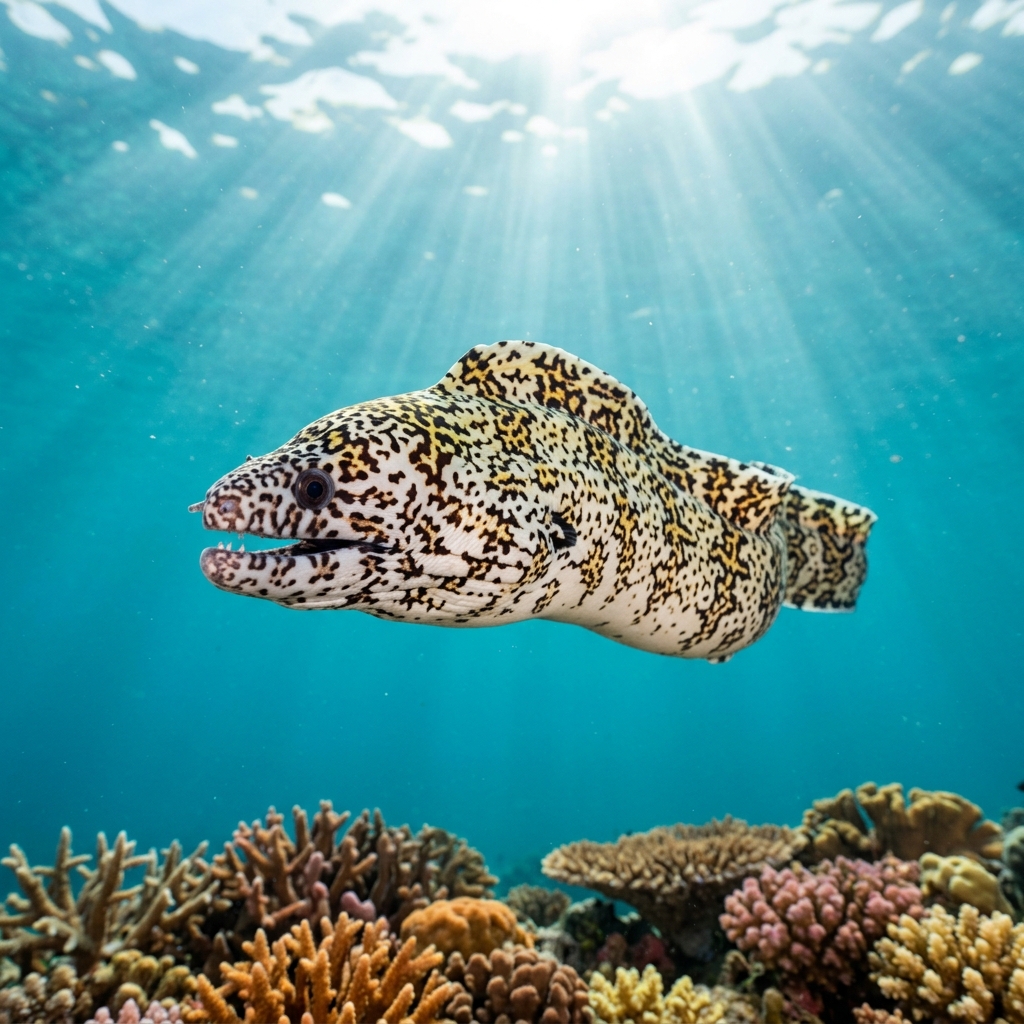
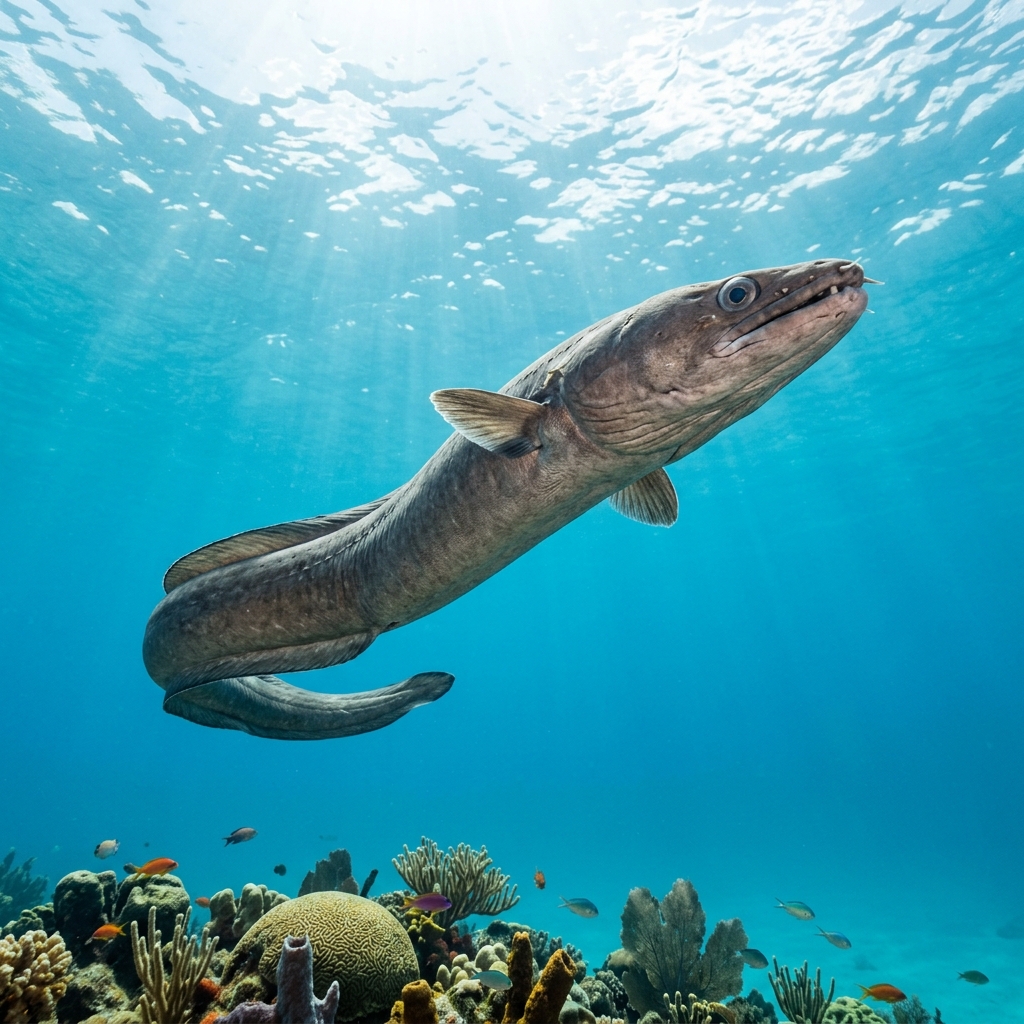
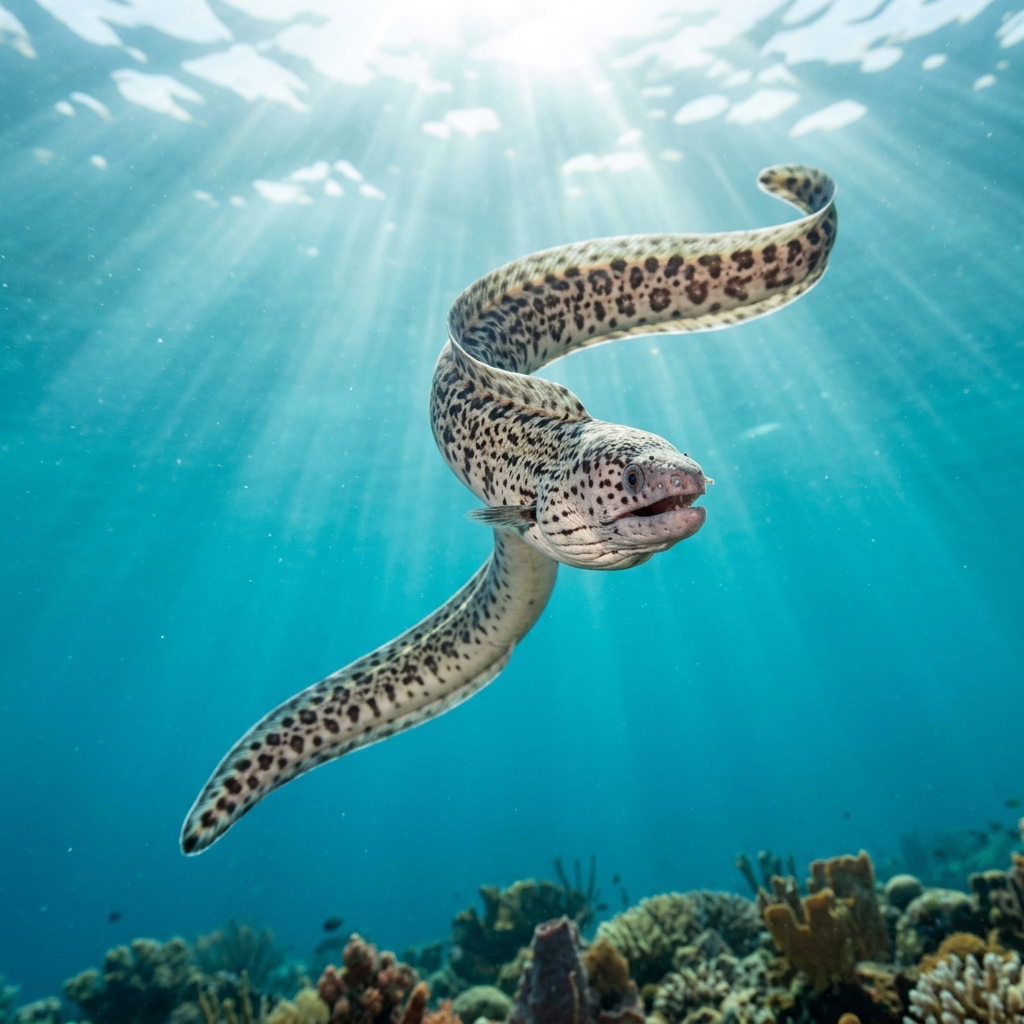
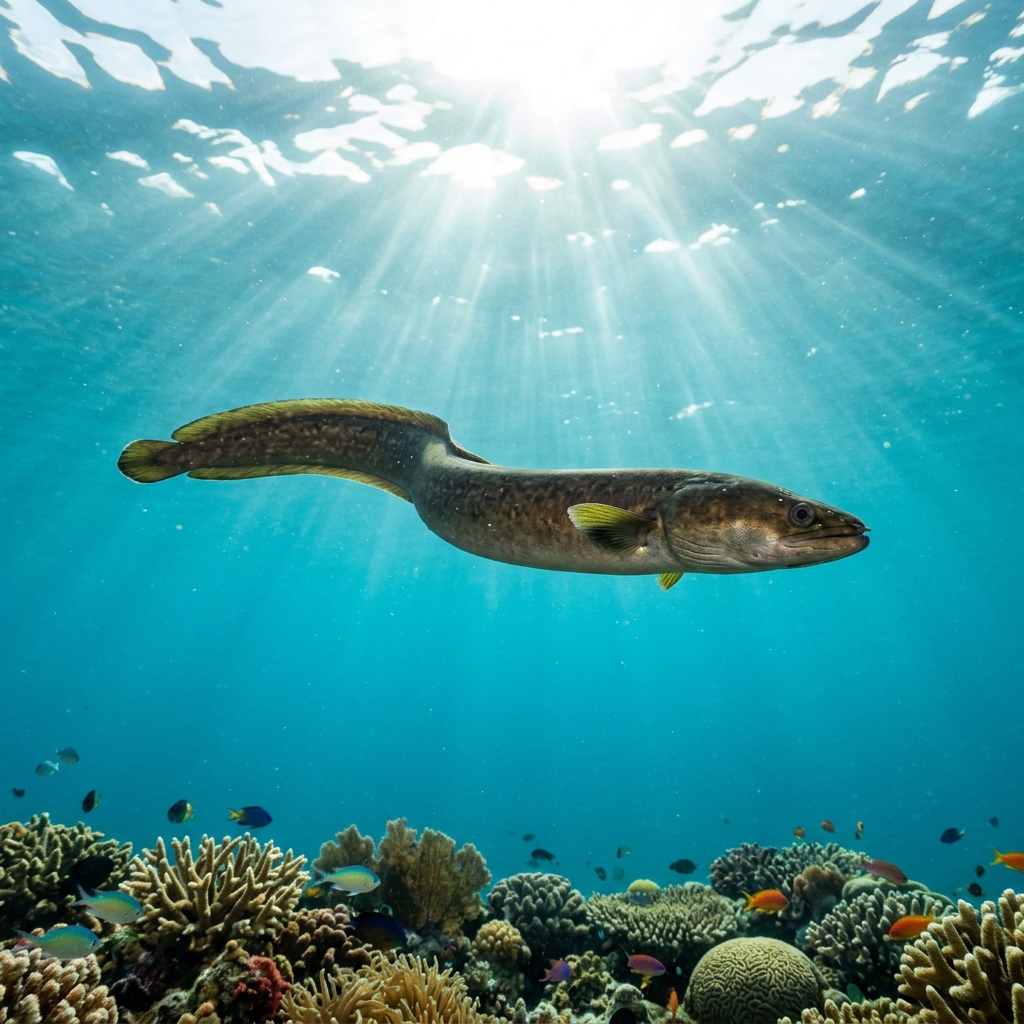
A long, muscular, snake-like body reaching over a metre, coloured grey-brown to olive with a paler belly and no obvious scale pattern. Look for the continuous fin that runs along most of the lower body and tail, a large mouth, and a blunt, rounded snout rather than the pointed head of a moray. It usually shows only its head and forebody from a crevice, with the rest of the body coiled back into the rock.
Typically found wedged into a crevice, ledge, or under a rocky overhang with just the head poking out, watching the reef rather than actively swimming past divers. Most sightings are during the day when it is resting up, since congers are more active hunters after dark. It tends to hold its position when approached calmly, retreating deeper into the hole only if divers get too close or shine lights directly at it.
Conger eels lack the scales most fish have, and their skin is covered in a thick mucus layer that helps them slide in and out of tight rocky crevices without injury.
Sightings don't show a clear season, and the wide temperature range it tolerates (15.5 to 26.6 C) means it is present through the WA diving calendar rather than tied to one window. Treat it as a year-round find at the sites where divers already log it.
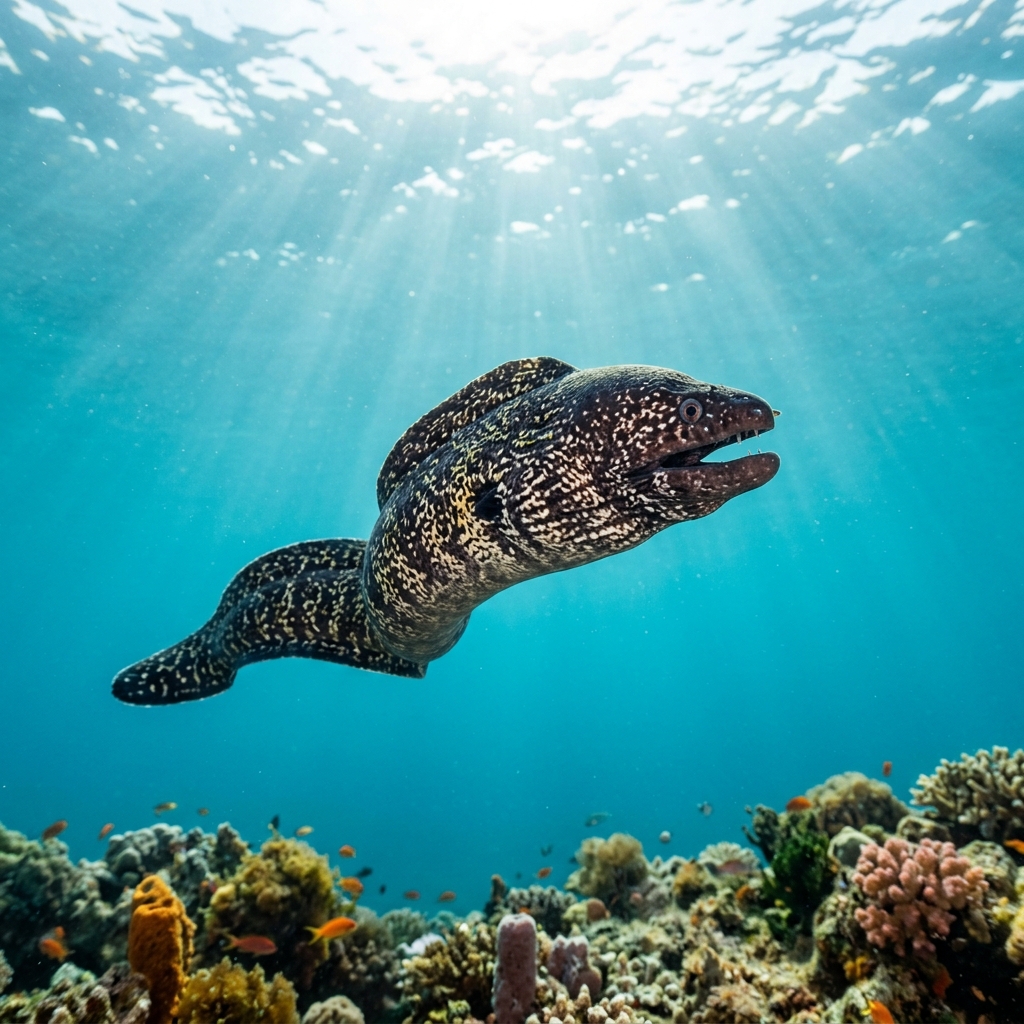
Reef neighbours a diver could mistake it for. Use the identification notes above to tell them apart.
Logged consistently in Western Australia, which is currently the only region divers are reporting it from in the data. It shows up on rocky reef sites there rather than tropical coral reef, so target temperate reef and boulder-strewn sites along the WA coast.
Mapping where Cape Conger is logged…
The most consistent sightings logged by divers are in Western Australia, on rocky reef sites rather than tropical coral reef. It's currently the main region where this species is being reported.
There's no strong seasonal pattern in the sighting data, and it tolerates a wide temperature range from about 15.5 to 26.6 C. That points to a year-round presence at the sites where it's already known to occur.
They aren't aggressive toward divers, but they can deliver a painful bite if provoked or if a hand is put into their crevice. Keep your distance, avoid reaching into holes, and don't attempt to touch or feed it.
Look for a long grey-brown, scaleless body over a metre long, a blunt rounded snout, and a fin running along most of the lower body and tail. Usually only the head and forebody are visible, poking out from a rocky crevice.
This species typically reaches around 105 cm in length, making it one of the larger eels divers encounter on temperate rocky reefs.
Site and sighting data is aggregated from diver logs, iNaturalist and GBIF. For taxonomy and conservation status:
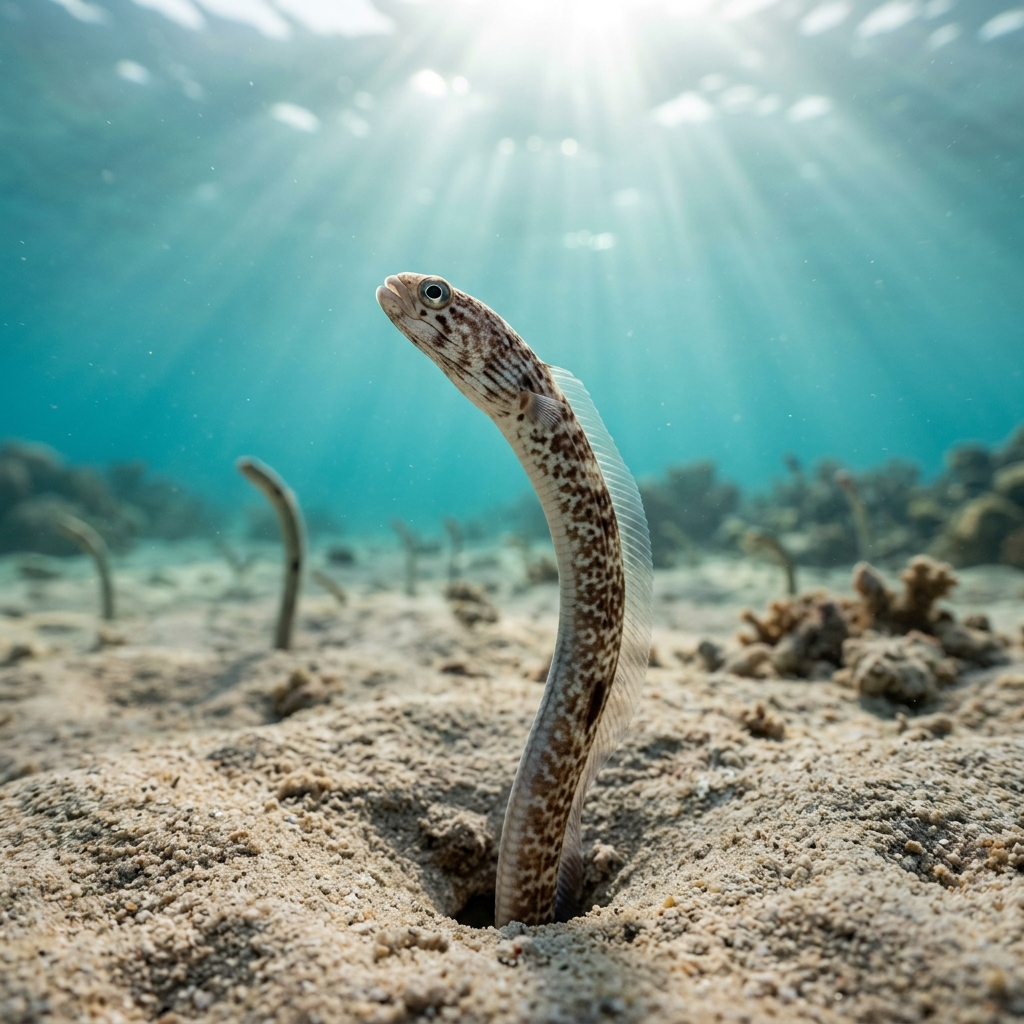
Garden Eel
2,448 sites