Charonia tritonis
A 35cm predatory sea snail with a mottled, flame-patterned shell, most reliably found on reefs in Queensland, Sulawesi and the Philippines.
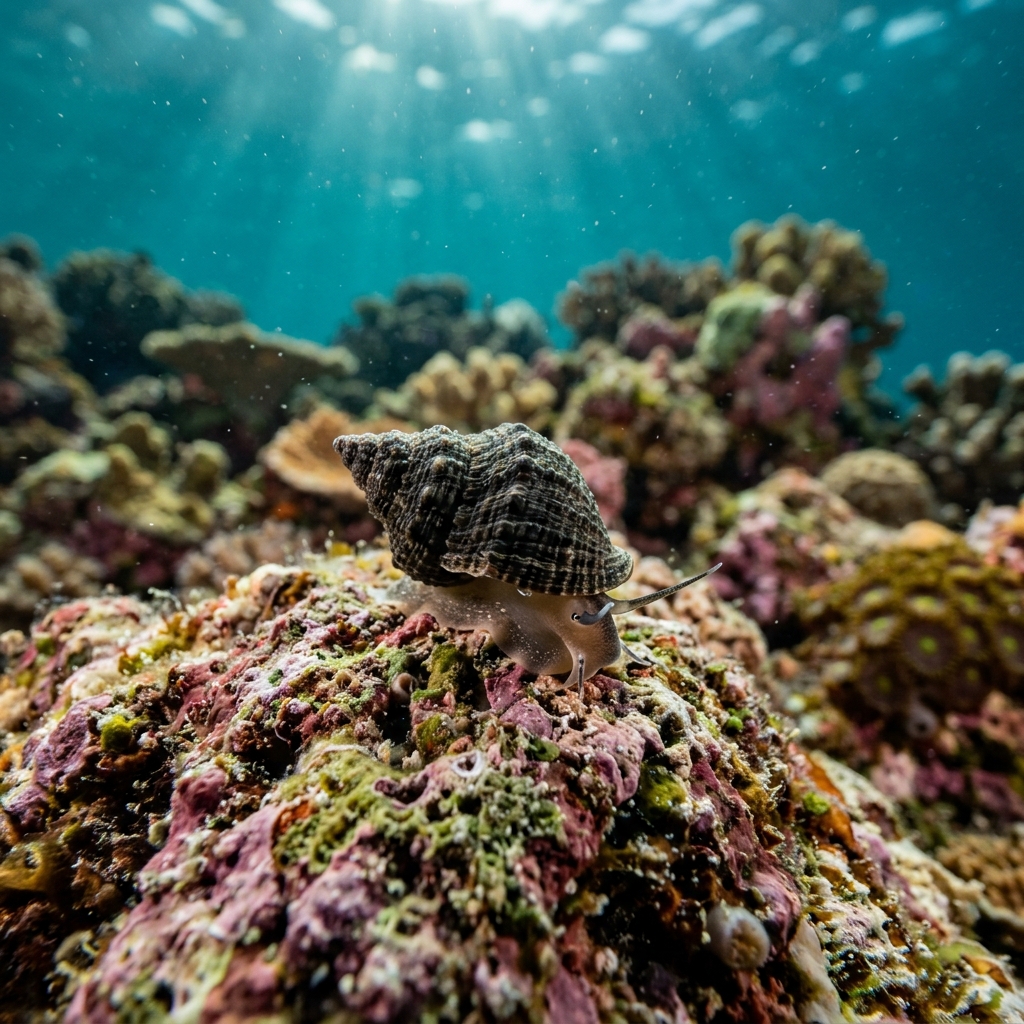
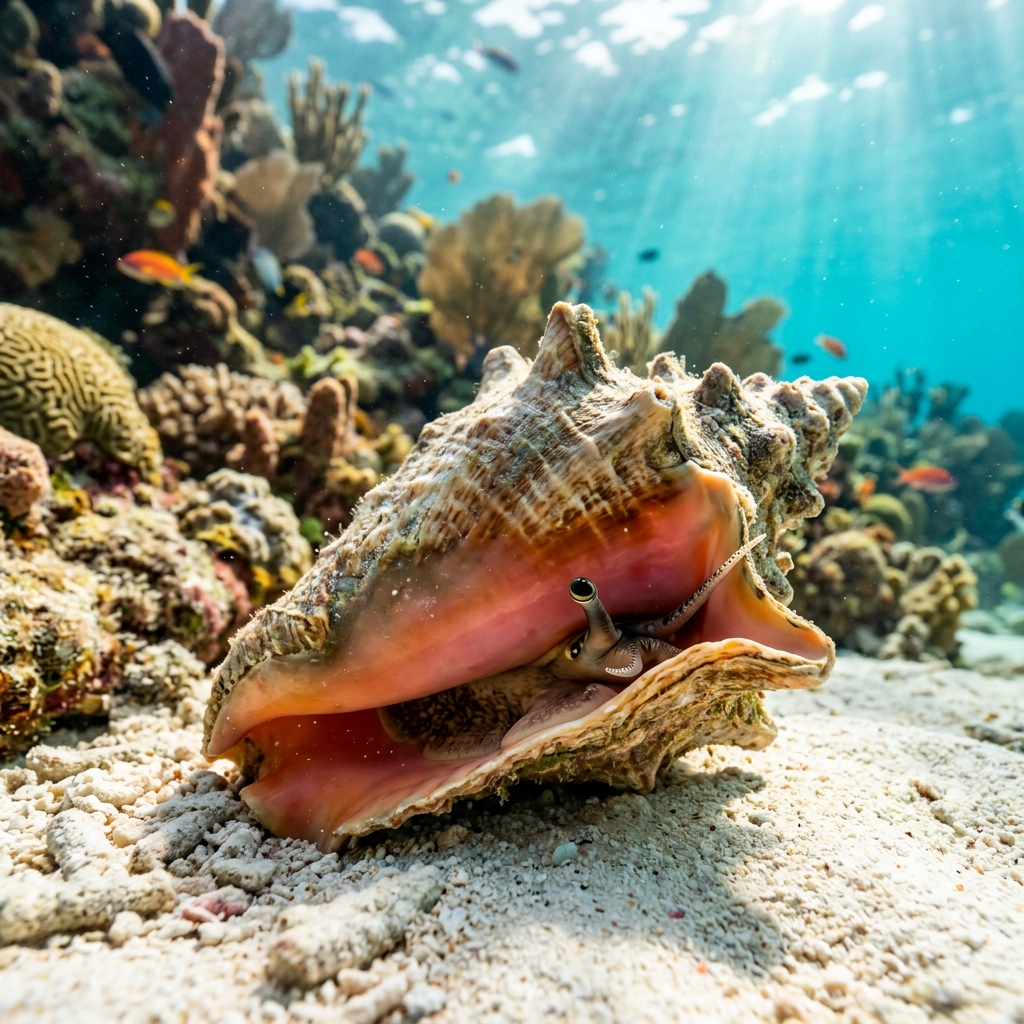
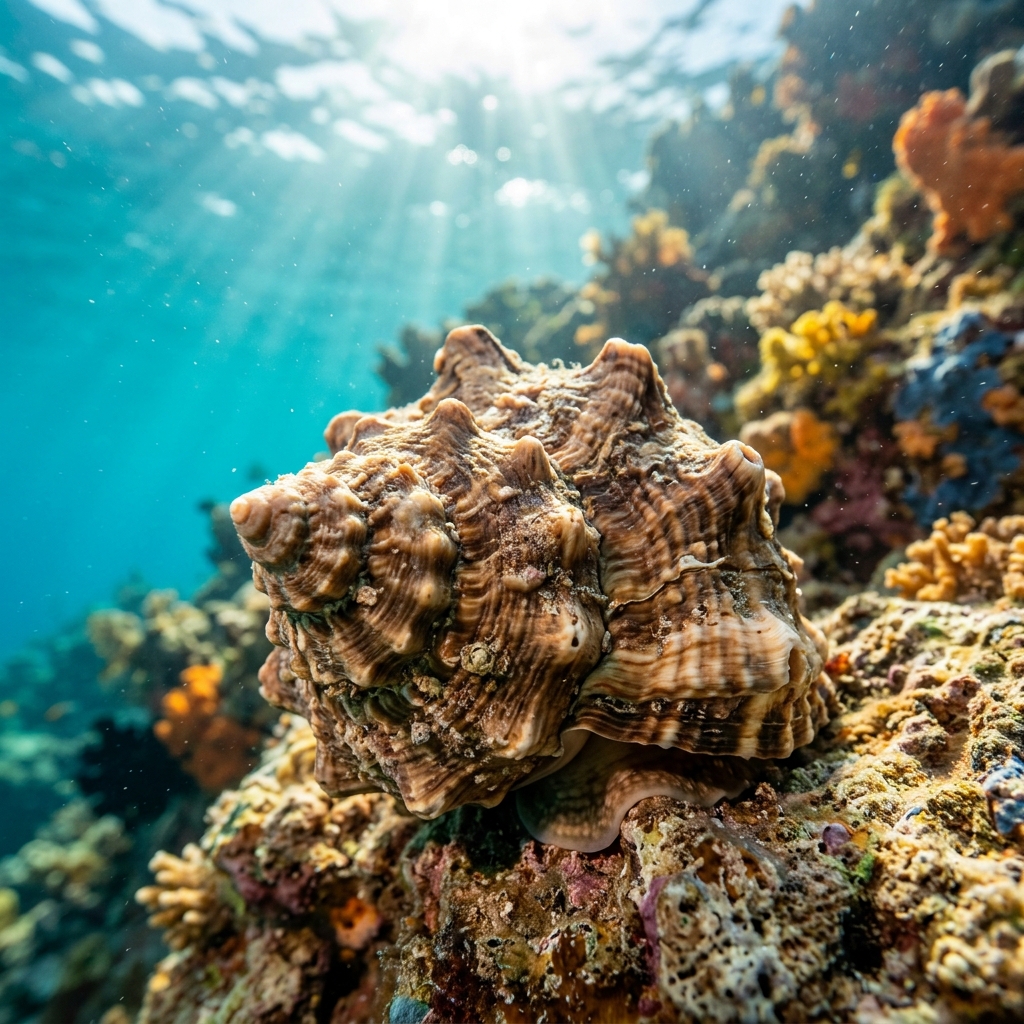
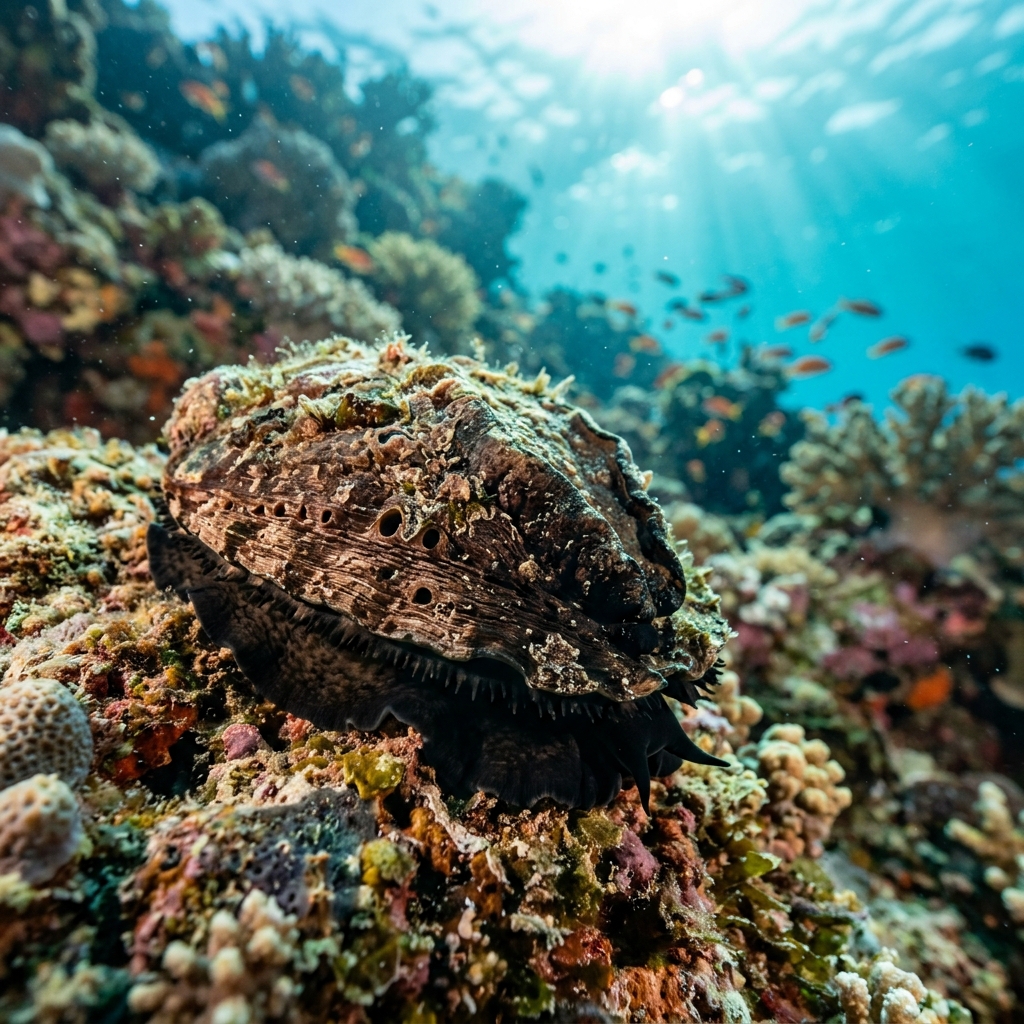
Look for a heavy, spiral shell up to 35 cm long with a mottled pattern of orange-brown flame markings on a cream background, the largest sea snail shell you're likely to see on a reef. The shell's aperture (opening) flares outward and often shows a glossy orange-red interior when the animal is active. It moves slowly across the substrate on a broad foot, sometimes with the shell partly buried in sand or wedged into reef crevices, so divers often spot the shell before the snail itself.
Divers usually find it moving slowly across sand, rubble or reef flats, often at night or tucked into a crevice by day, since it's a nocturnal hunter. It shows no real reaction to divers beyond retracting into its shell if disturbed, and logged sightings mark it as uncommon even where it occurs, so spotting one feels like a real find rather than a routine sighting.
One of the few natural predators of the crown-of-thorns starfish, using a barbed, harpoon-like feeding structure to pry into its prey, which gives it an outsized role in keeping coral-eating starfish populations in check.
No clear seasonal pattern shows in the sighting data, and its comfort range of roughly 24 to 29°C spans tropical reefs year-round, so any month is fair game. Treat it as a chance encounter on any dive rather than a species tied to a season.
Most reliably logged on reefs across the Philippines and Indonesia, with Queensland in Australia also a strong region, plus regular sightings in Japan, Malaysia, Micronesia, French Polynesia and Fiji. Within those countries, Sulawesi, Luzon, Palawan, Mindanao and the Visayas turn it up most often, alongside Okinawa and the Ryukyu Islands and Sabah.
Mapping where Triton's Trumpet is logged…
The strongest sightings come from the Philippines and Indonesia, especially Sulawesi, Luzon, Palawan, Mindanao and the Visayas, with Queensland in Australia also a reliable region, and further records from Japan's Okinawa and Ryukyu Islands.
There's no detected seasonal pattern, and its warm-water niche of roughly 24 to 29°C is present on tropical reefs all year, so sightings can happen on any dive in any month.
Look for a large, heavy spiral shell up to 35 cm with mottled orange-brown flame markings on cream, and a flared aperture often showing a glossy orange interior. It moves slowly on sand, rubble or reef edges, frequently at night.
Shells reach around 35 cm in length, making it one of the largest sea snails divers can encounter on a reef.
It's a specialist predator of the crown-of-thorns starfish, piercing it with a barbed feeding structure, which makes it an important natural check on outbreaks that can otherwise damage coral reefs.
No, it poses no threat to divers. It's a slow-moving, carnivorous snail that only reacts to disturbance by withdrawing into its shell.
Site and sighting data is aggregated from diver logs, iNaturalist and GBIF. For taxonomy and conservation status:
Triton Shell
2,297 sites