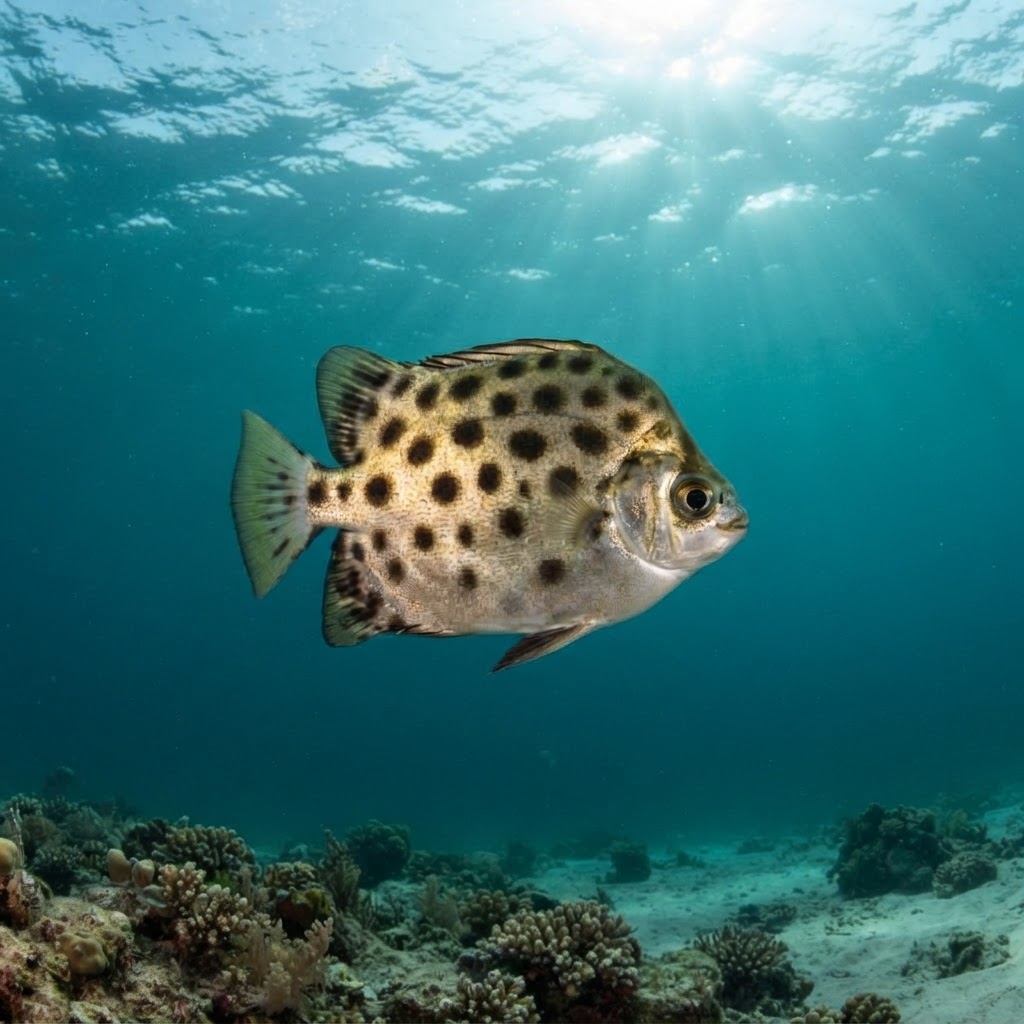
Scatophagus argus
Silver, spotted and boldly patterned, common scats turn up uncommonly around Northern Territory and Goa in warm 25-29C water.
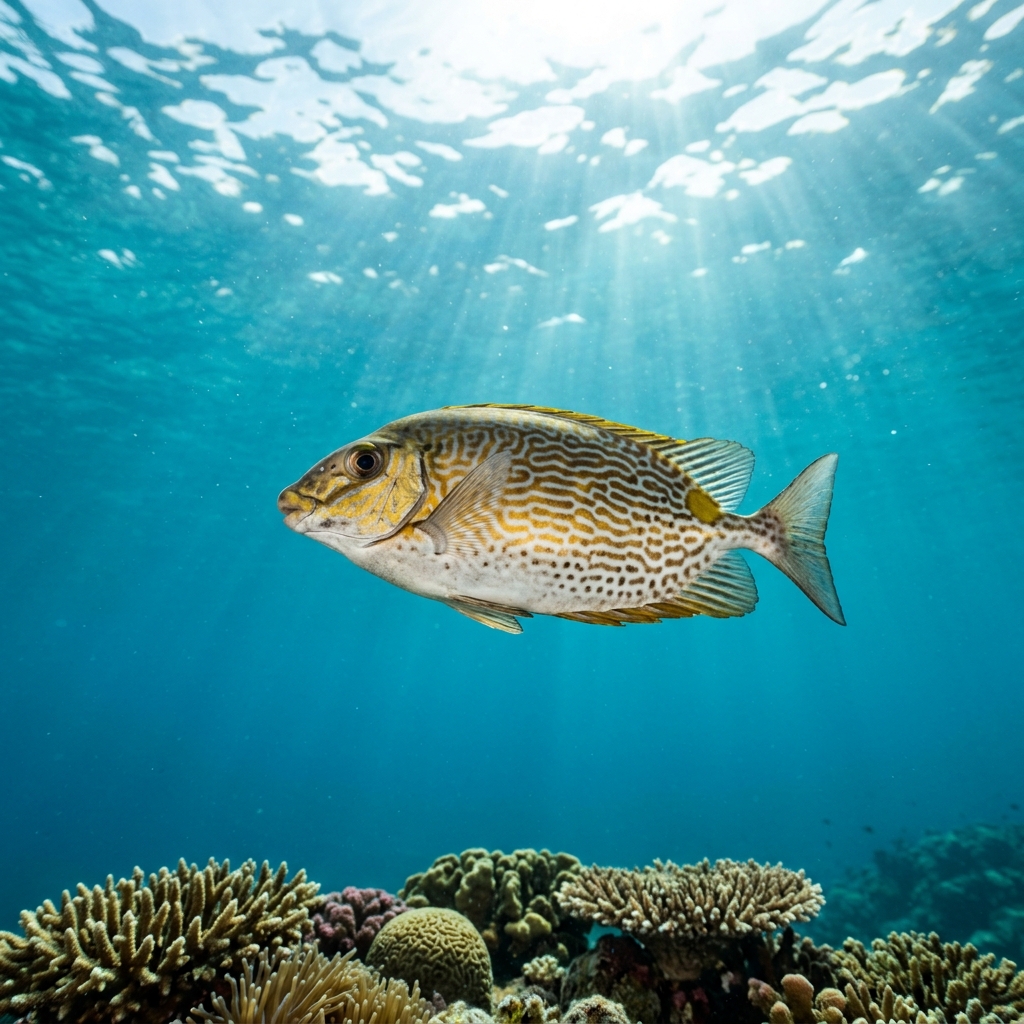
Deep, disc-shaped body covered in bold dark spots over a silvery to olive base, giving it a look closer to a butterflyfish than most other coastal fish. Grows to around 31 cm, with a steep forehead and a small mouth set low on the face. The spot pattern is the giveaway underwater: irregular, blotchy dark circles scattered across the flanks rather than the neat bands or eyespots seen on true butterflyfish.
Usually seen hovering or slowly cruising near structure such as pilings, rocky edges or turbid inshore reef, often alone or in small loose groups rather than tight schools. It tends to hold a fairly relaxed distance from divers rather than bolting, but at most sites it is logged as uncommon, so sightings feel more like a good spot than a guarantee. Reports skew toward murkier, nutrient-rich inshore water rather than clear offshore reef.
Its raised, spiny dorsal fin gives the family its scientific name and is thought to deter predators, a handy defence for a fish that spends so much time in exposed, silty inshore water.
No clear seasonal pattern shows up in the sightings, and the observed water temperature range of 25.4 to 29.3 C sits within a comfortable year-round band for tropical and subtropical coasts, so divers report it across the calendar rather than in one particular window.
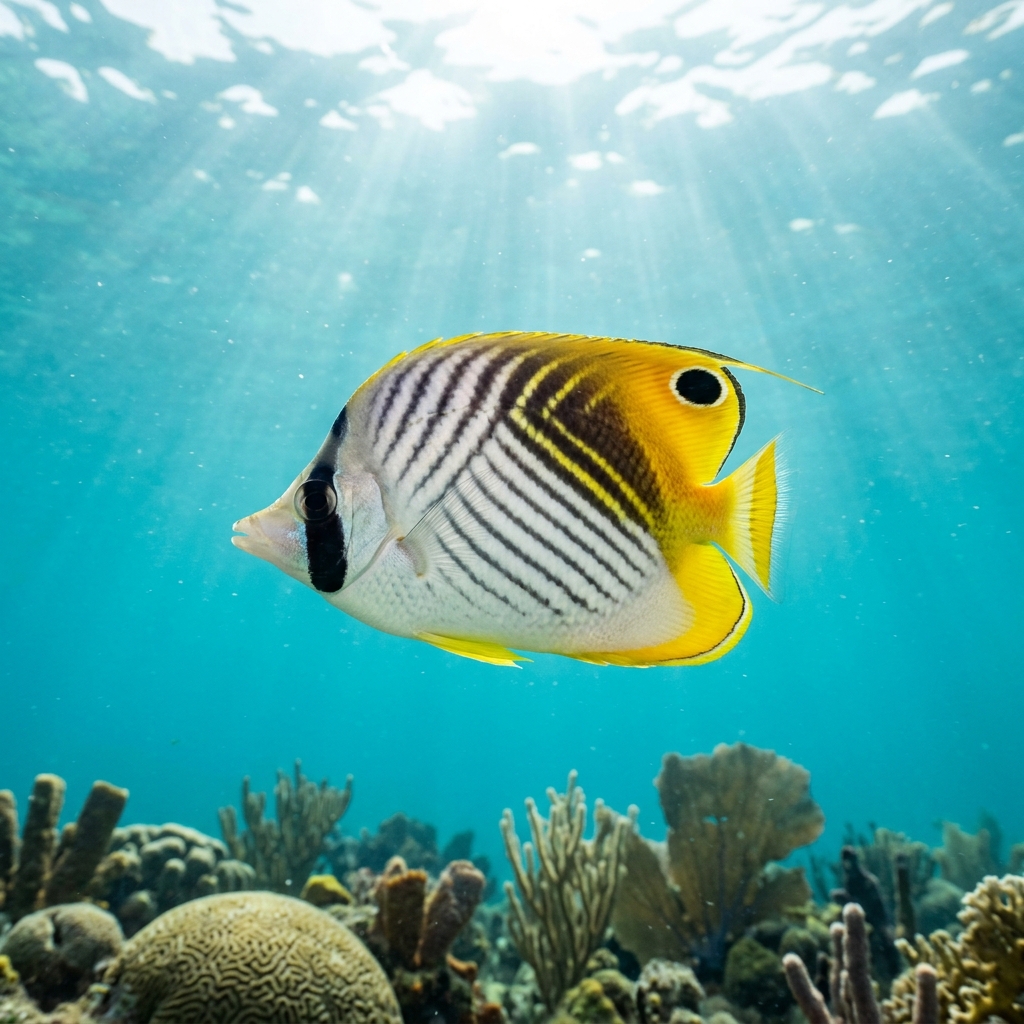
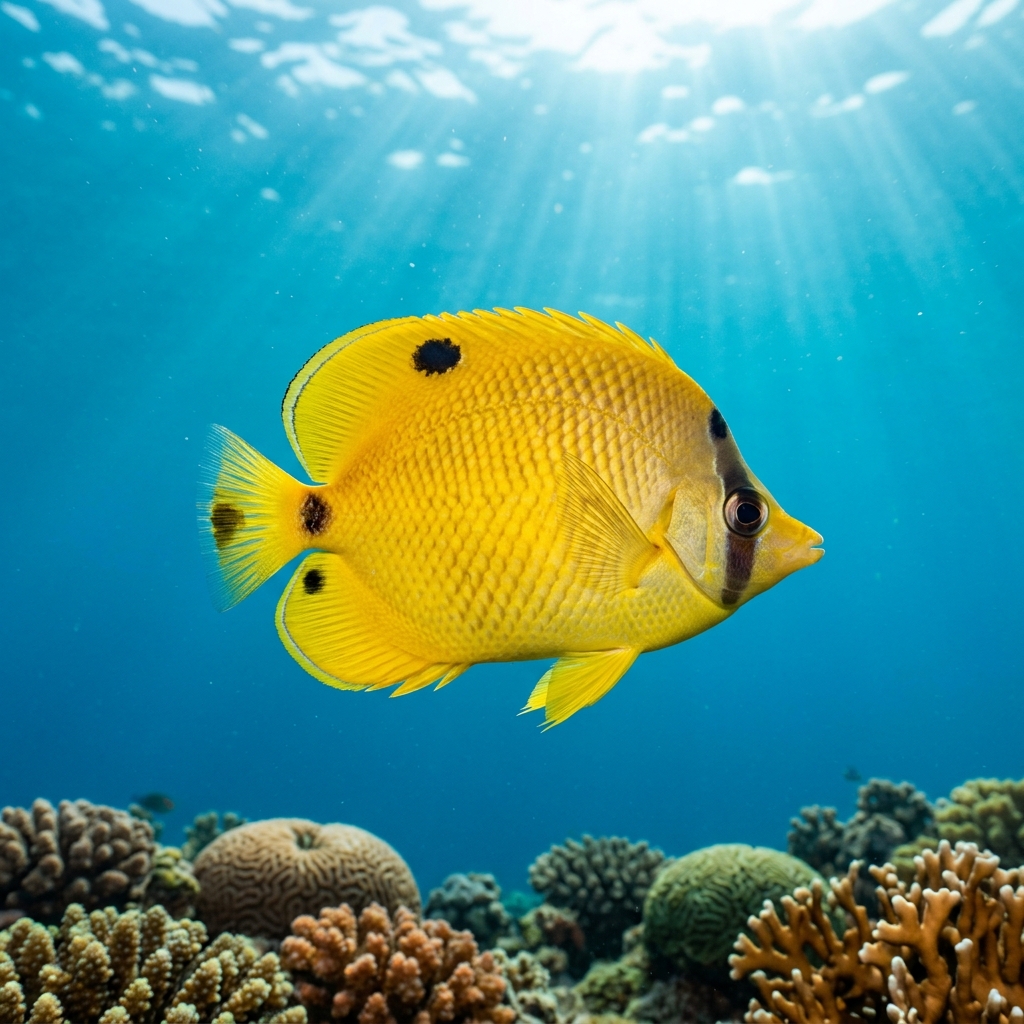
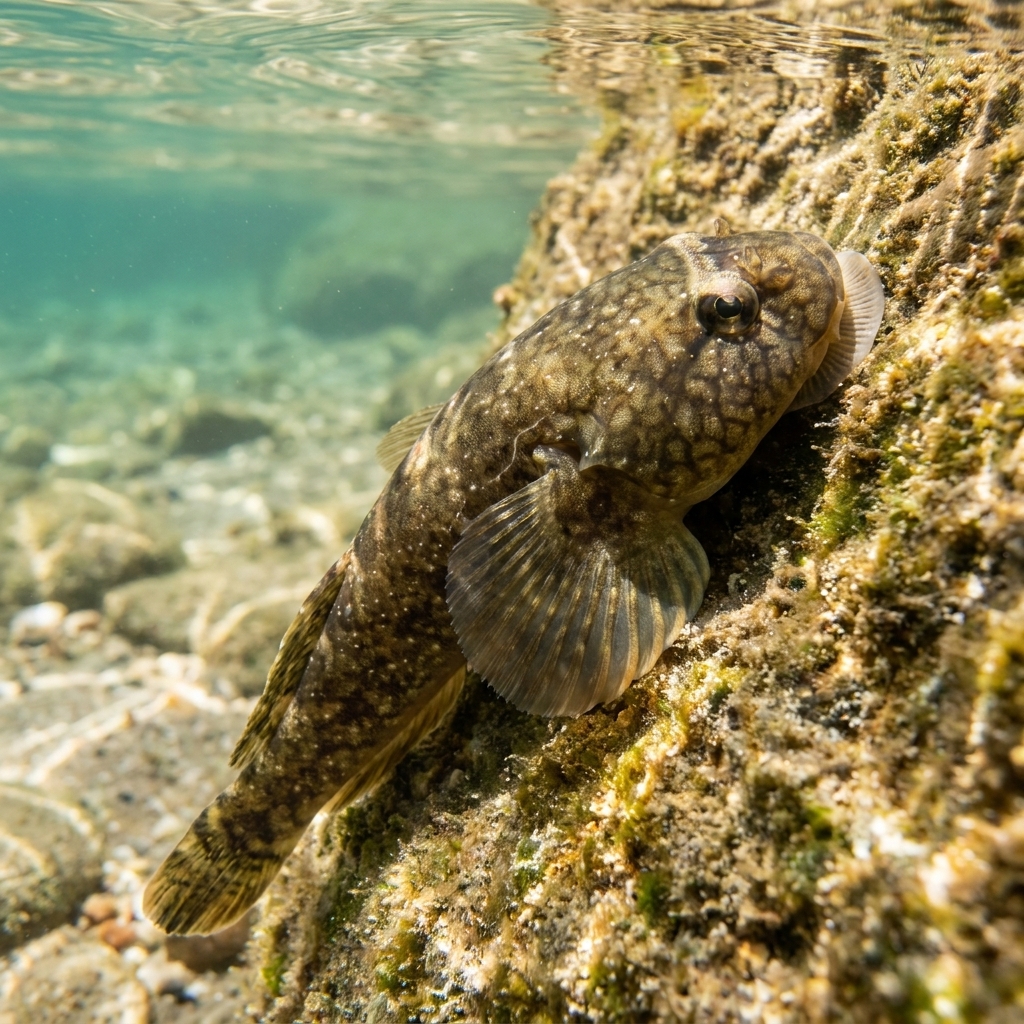
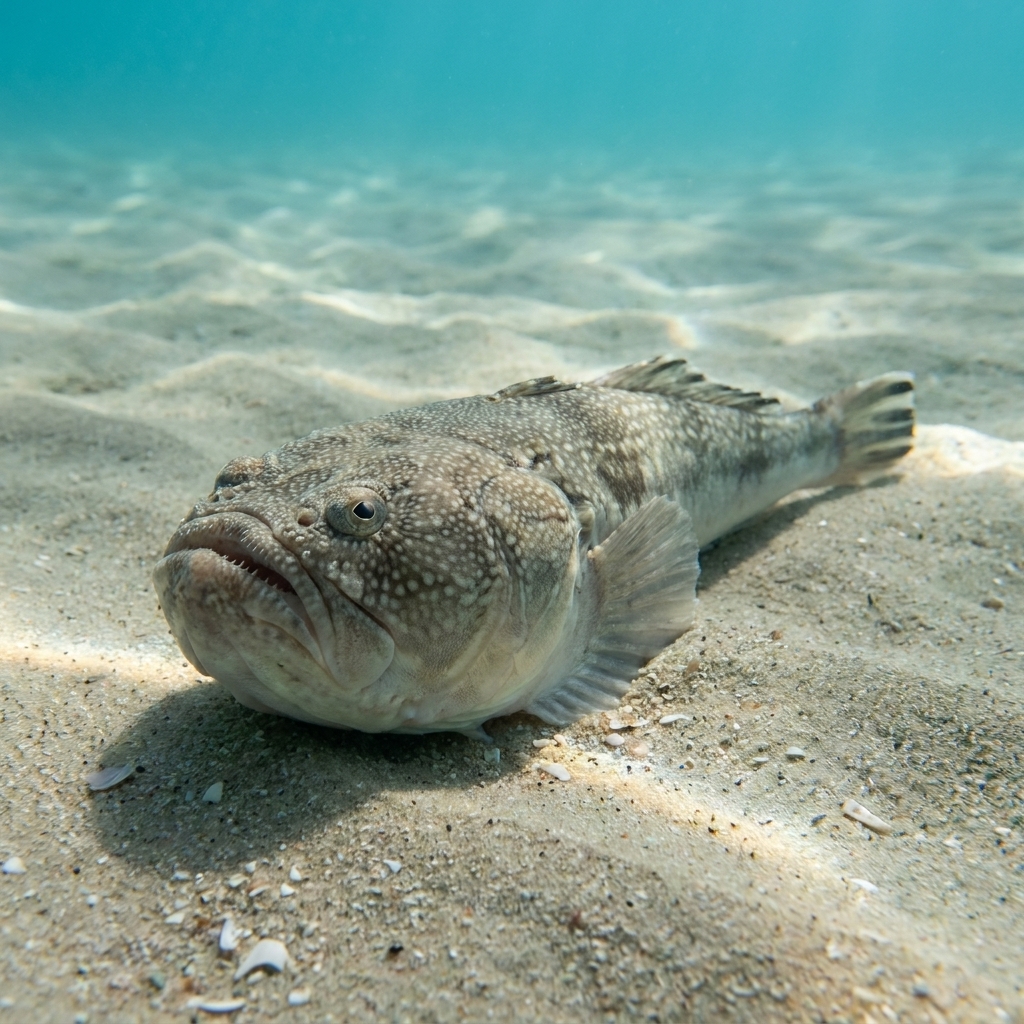
Reef neighbours a diver could mistake it for. Use the identification notes above to tell them apart.
Most consistently logged in Australia, especially around the Northern Territory and Queensland, with a smaller but reliable presence in Goa, India. These sightings skew toward estuarine and inshore reef habitat rather than open blue-water dive sites, so it is more a coastal and harbour find than an offshore one.
Mapping where Common Scat is logged…
The strongest sightings come from Australia, particularly the Northern Territory and Queensland, with a smaller cluster of records from Goa, India. Look in coastal and estuarine habitat rather than open reef.
There is no strong season in the sighting data, and the species is recorded in water from about 25 to 29 C, so it is realistic to look for it year-round on the coasts where it turns up.
Look for a deep, disc-like silver to olive body scattered with irregular dark spots, a steep forehead and a small low mouth. The blotchy, uneven spotting sets it apart from the cleaner bands of true butterflyfish.
They typically reach around 31 cm, a solid mid-size reef fish, noticeably deeper-bodied than most fish of similar length.
No, they are not considered a risk to divers and generally keep a relaxed distance rather than showing any defensive behaviour toward people.
They carry a spiny dorsal fin, the trait behind the family name Scatophagidae, believed to help ward off predators in the shallow, murky inshore water they favour.
Site and sighting data is aggregated from diver logs, iNaturalist and GBIF. For taxonomy and conservation status:
Soldierfish
3,612 sites