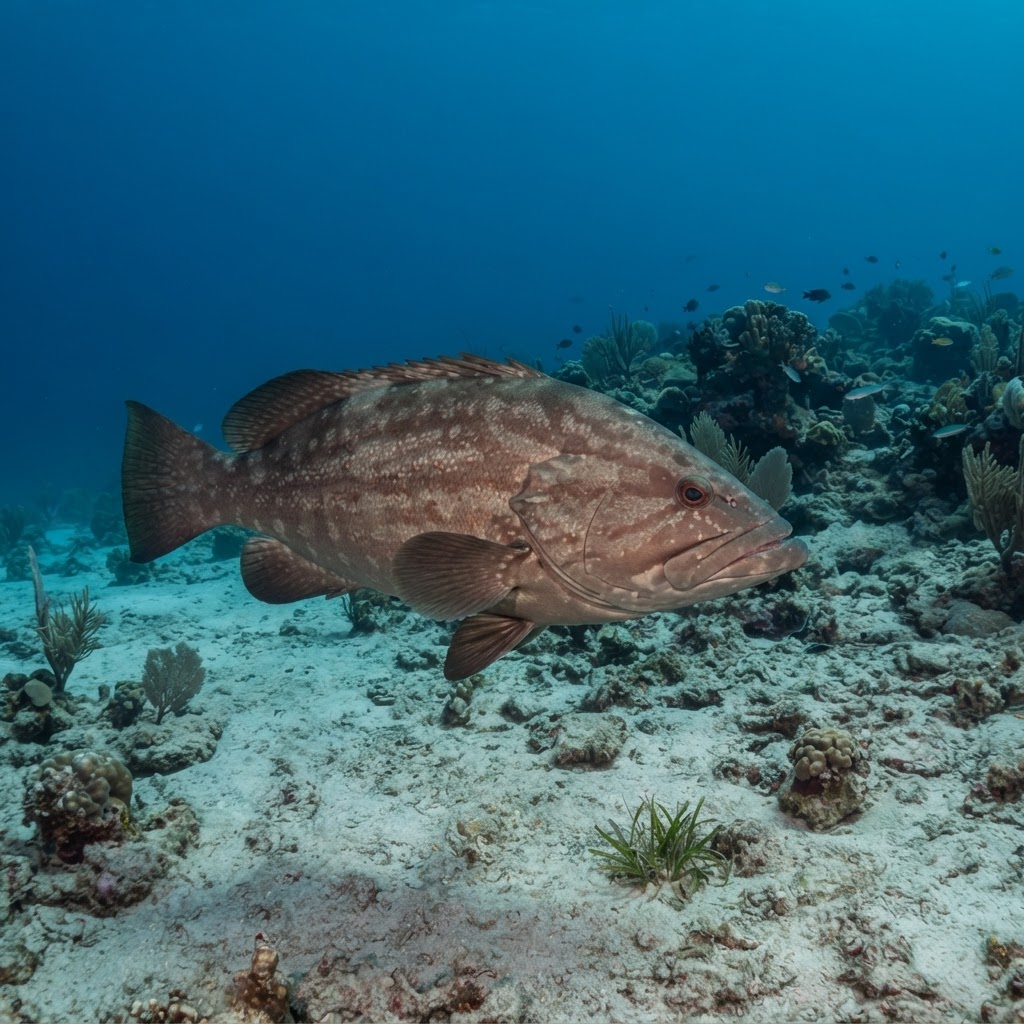
Mycteroperca rubra
Spot Comb Grouper in Murcia and the Balearics, mottled reef ambushers logged year-round in 15 to 27 C water.
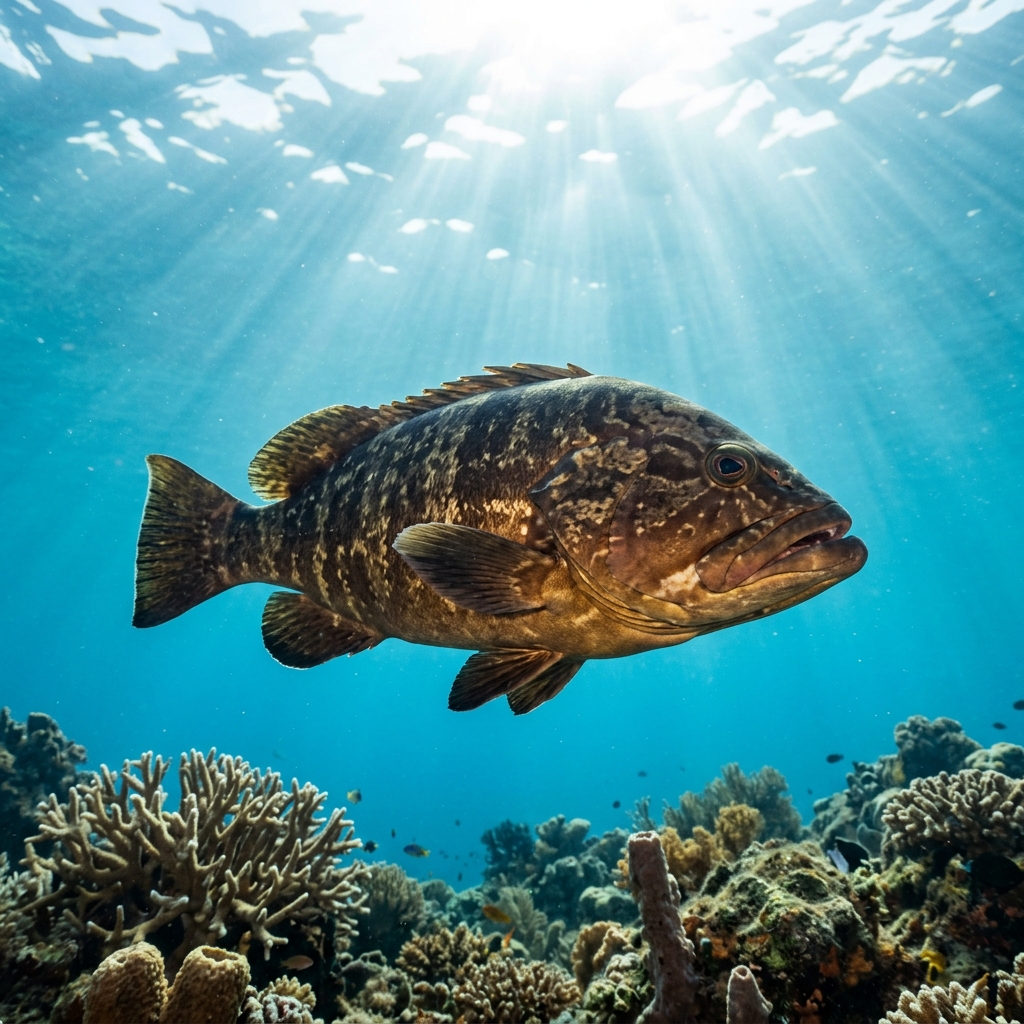
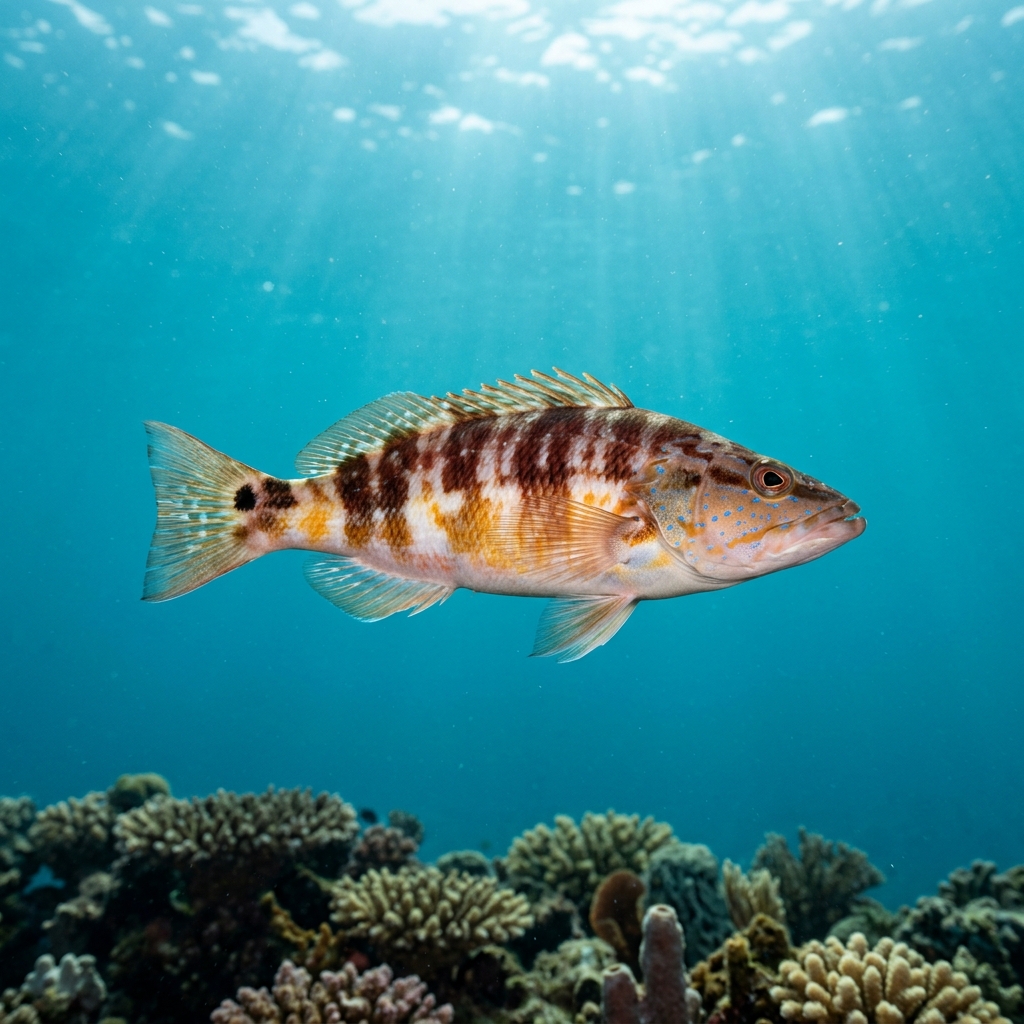
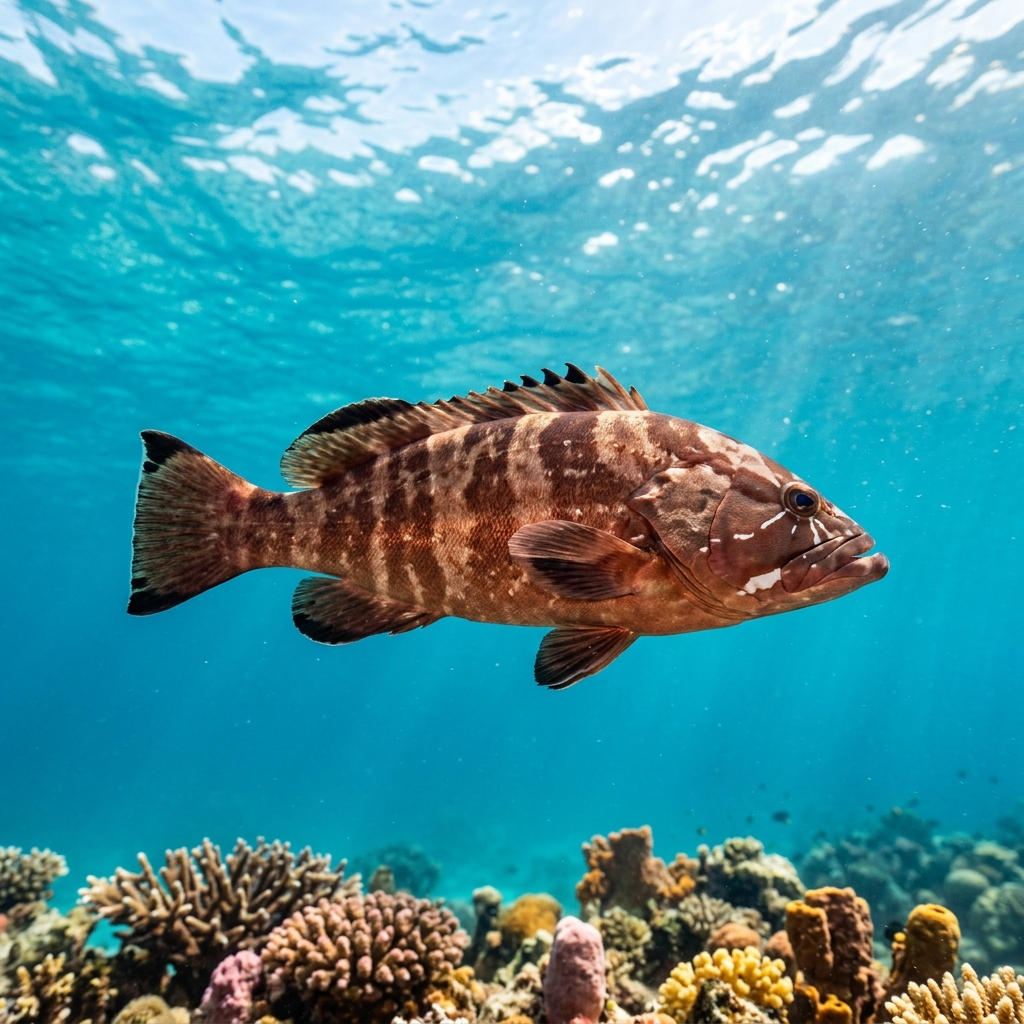
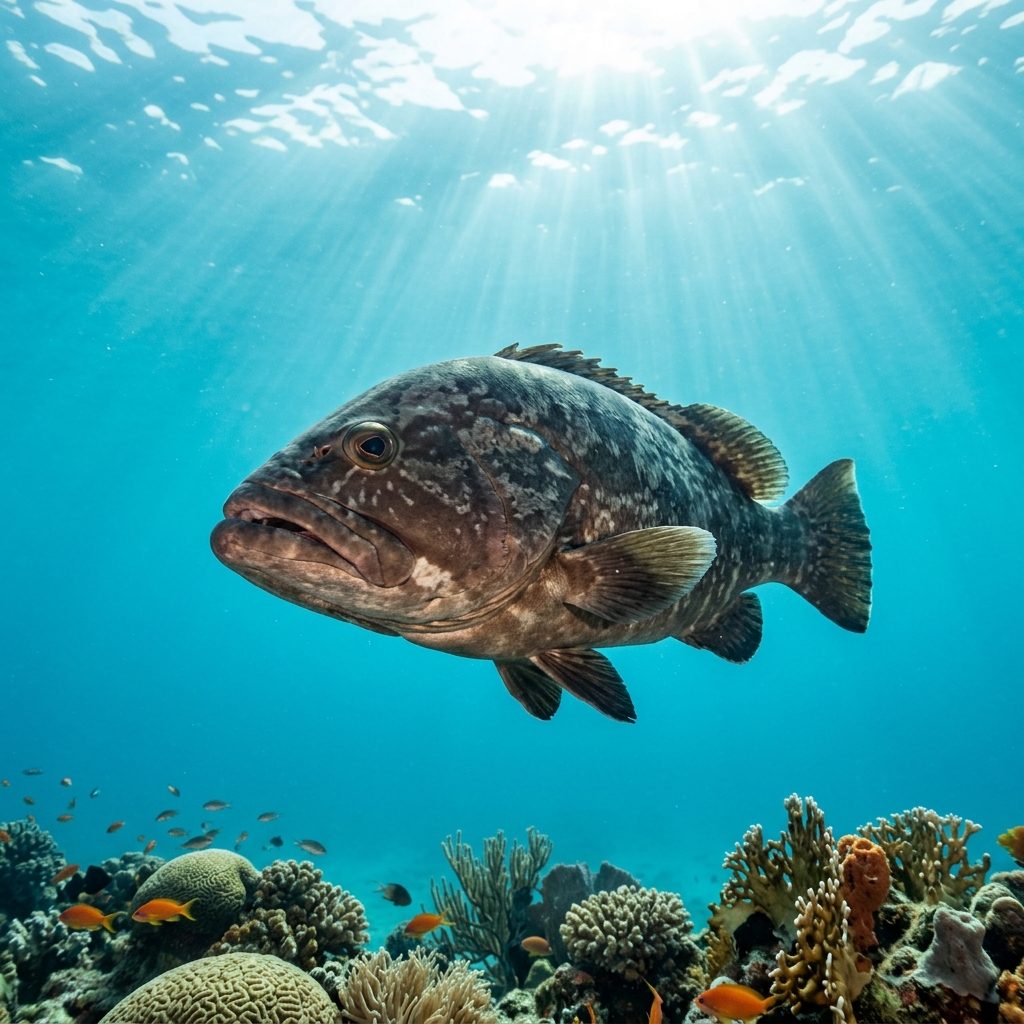
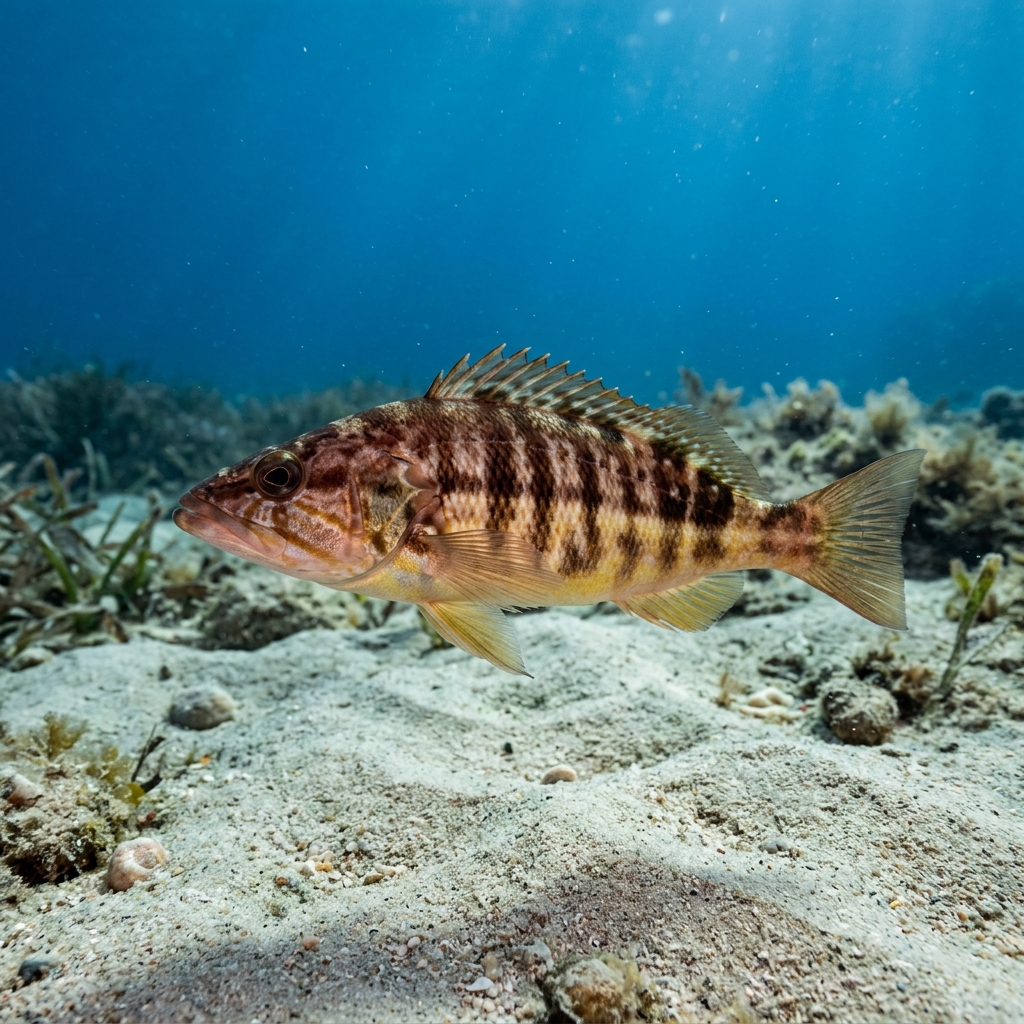
Look for a heavy-bodied grouper up to a metre long with a mottled brown-to-olive body covered in pale, honeycomb-like blotches, which is where the common name comes from. The head is broad with a slightly concave profile, the tail is squared off rather than rounded, and the fins carry the same blotched pattern as the flanks. It usually sits still against rock or reef structure rather than swimming in open water, relying on its camouflage to blend into the substrate.
Expect to find it holding station near rocky overhangs, crevices, or wreck structure rather than cruising the open reef, using its mottled pattern to disappear against the background until you are close. It tends to be wary but not flighty, often letting a slow, non-threatening diver approach before easing off into cover. Most sightings come from depths well within recreational range, with the species also known to range much deeper into the 100 to 200 m zone where divers rarely go.
Like many groupers in the family Epinephelidae, Comb Grouper is a protogynous hermaphrodite, meaning individuals typically start life as females and some later transition to males as they grow and age.
There is no clear seasonal peak in the data, and its wide temperature tolerance of roughly 15 to 27 C means it can be encountered on Mediterranean reefs at any time of year. Divers should expect uncommon-to-rare sightings on any given dive regardless of month, so persistence and good reef cover matter more than timing.
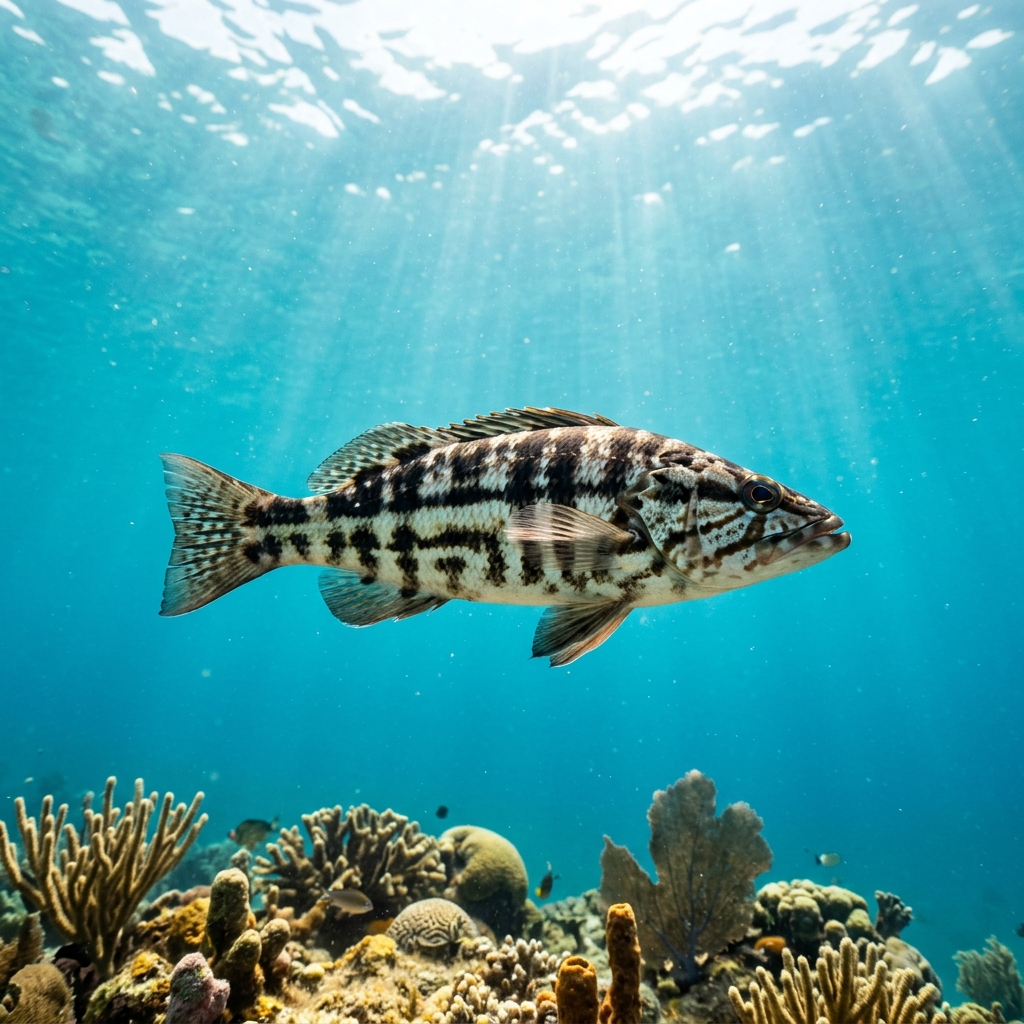
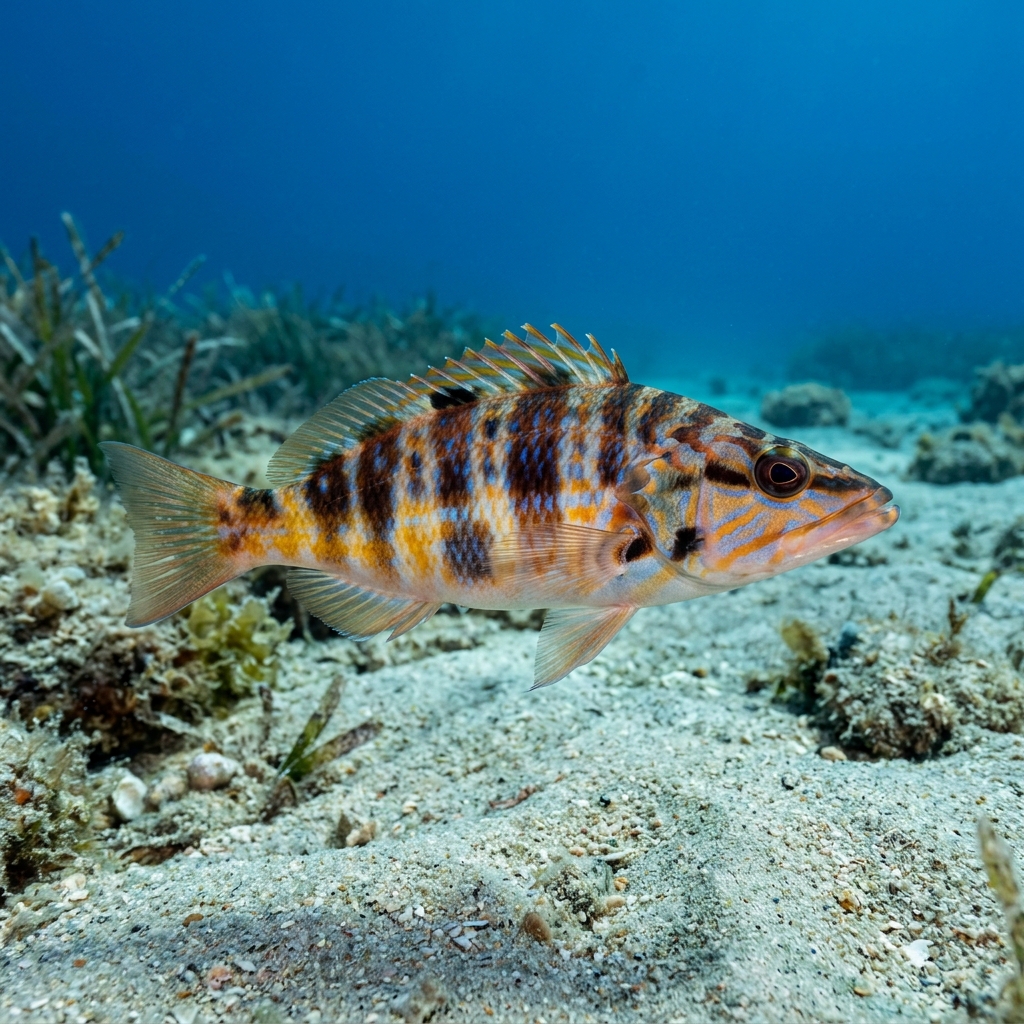
Reef neighbours a diver could mistake it for. Use the identification notes above to tell them apart.
Comb Grouper is most reliably logged in Spain, especially around Murcia and the Balearic Islands, with a strong secondary presence along Turkey's Turquoise Coast and Antalya region. It also turns up on rocky reefs in Malta, Paphos in Cyprus, southern Italy including Sicily, and parts of Greece and southern France, making it a fixture of Mediterranean rock and reef diving rather than a rare specialty sighting.
Mapping where Comb Grouper is logged…
The strongest sightings come from Spain, particularly Murcia and the Balearic Islands, followed by Turkey's Turquoise Coast and Antalya region, Malta, and Paphos in Cyprus. It also appears on rocky reefs in Sicily and mainland Greece, making the Mediterranean the reliable region for this species.
There is no strong seasonal pattern in diver sightings, and its comfortable range of roughly 15 to 27 C means it can be found year-round on Mediterranean reefs. Sightings stay uncommon to rare across the calendar rather than clustering in one season.
Look for a thick-bodied grouper with a mottled brown or olive pattern covered in pale honeycomb-shaped blotches, a squared tail, and a habit of resting motionless near rocky cover. It can reach around a metre long, noticeably bulkier than most reef fish sharing the same ledges.
They can reach up to about 100 cm in length, putting them among the larger groupers found on Mediterranean rocky reefs. Most individuals divers encounter will be somewhat smaller than this maximum.
No, it is not considered dangerous to divers. It is a wary, camouflage-reliant predator that tends to retreat into reef structure rather than confront anyone in the water.
Site and sighting data is aggregated from diver logs, iNaturalist and GBIF. For taxonomy and conservation status:
Blacktip Grouper
2,726 sites