Clibanarius virescens
Green-legged hermit crabs cluster on shallow rock and rubble from Queensland to Bali, spottable year-round in 20-28C water.
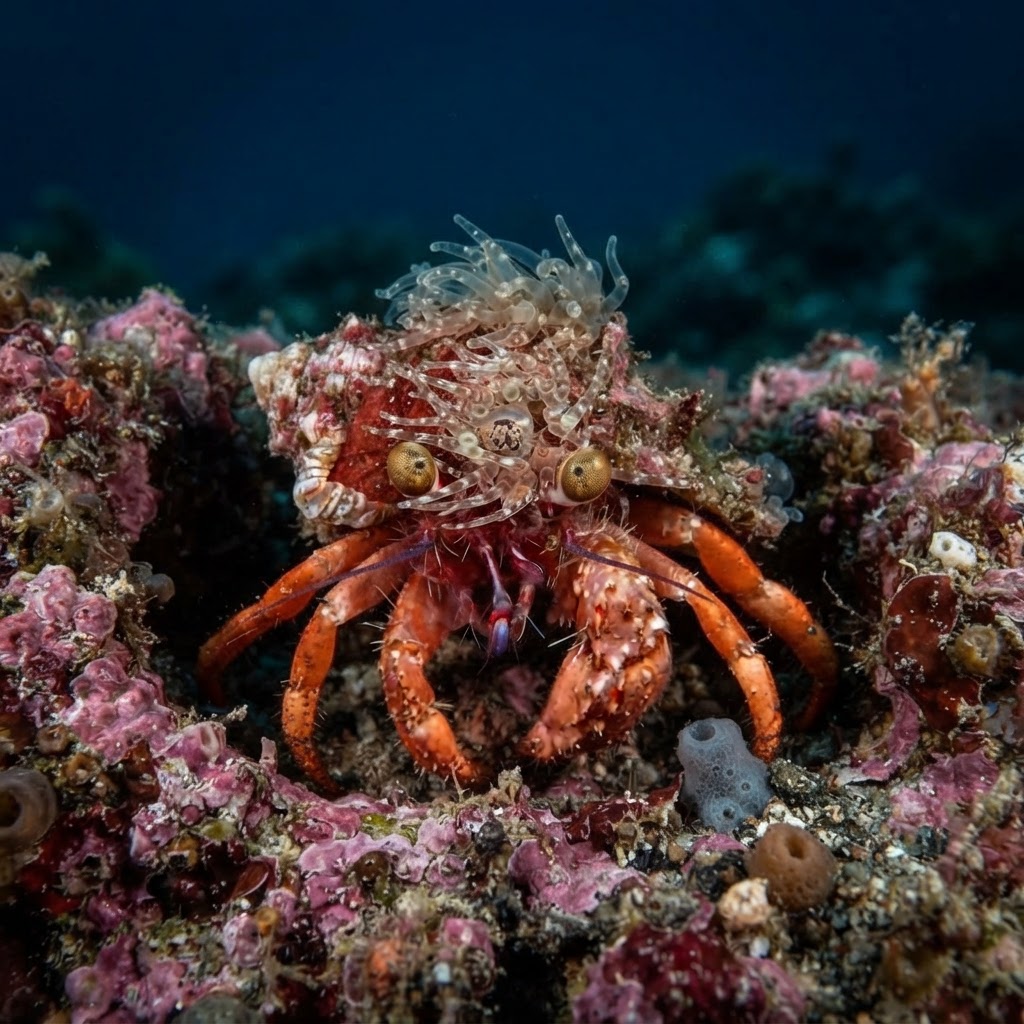
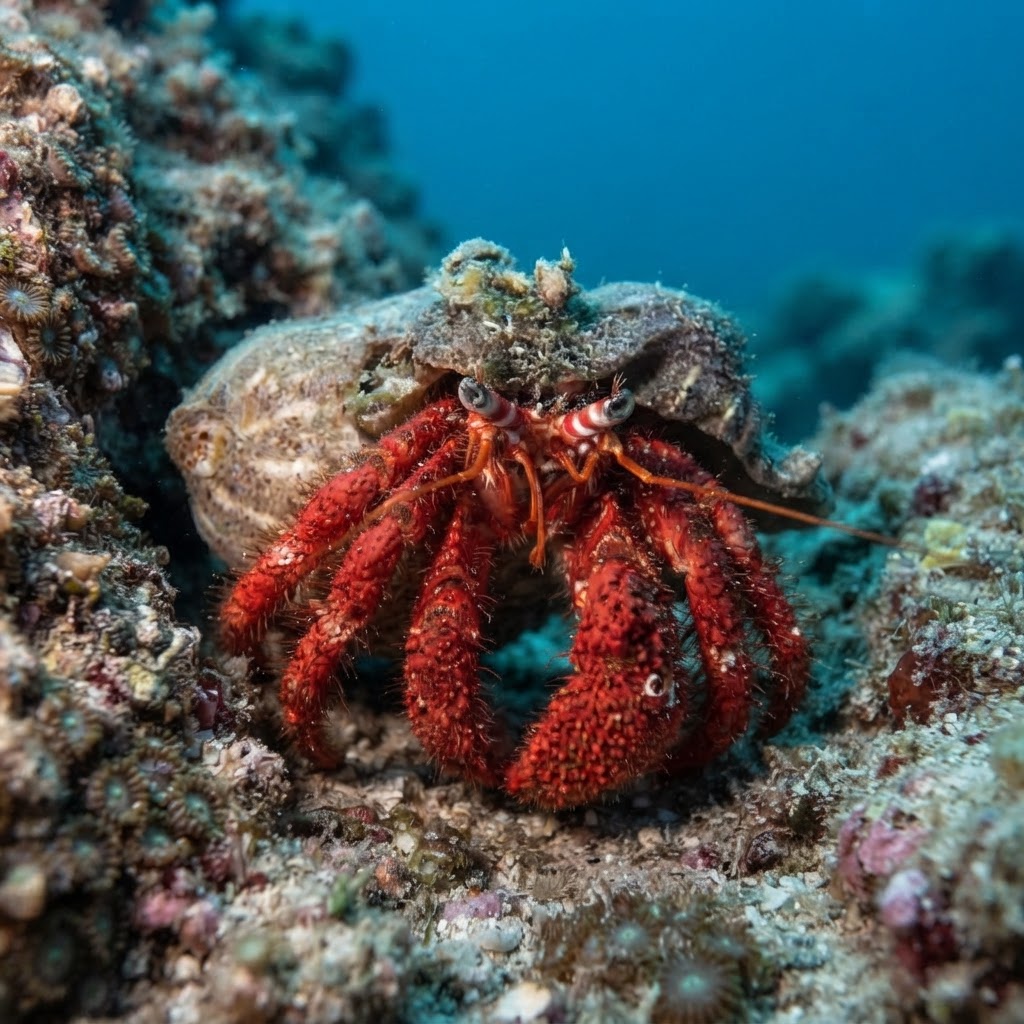
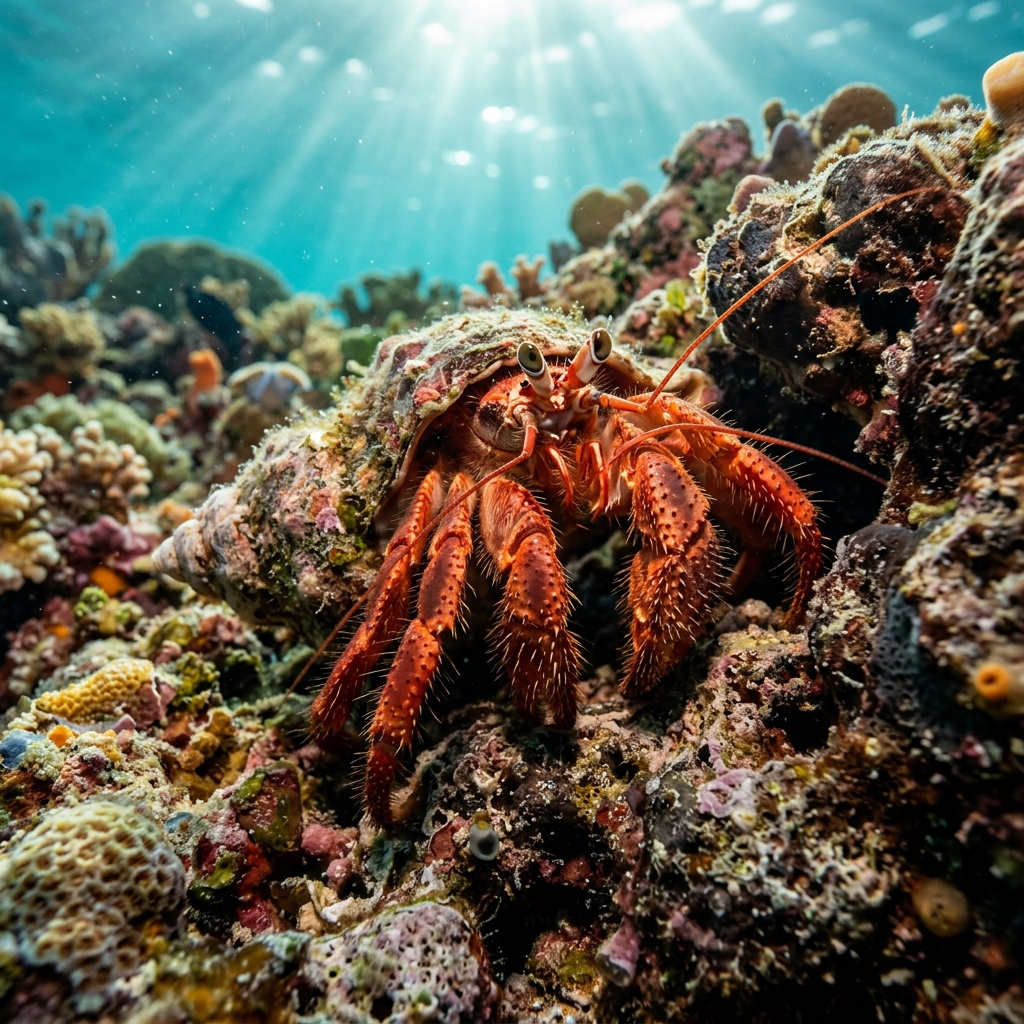
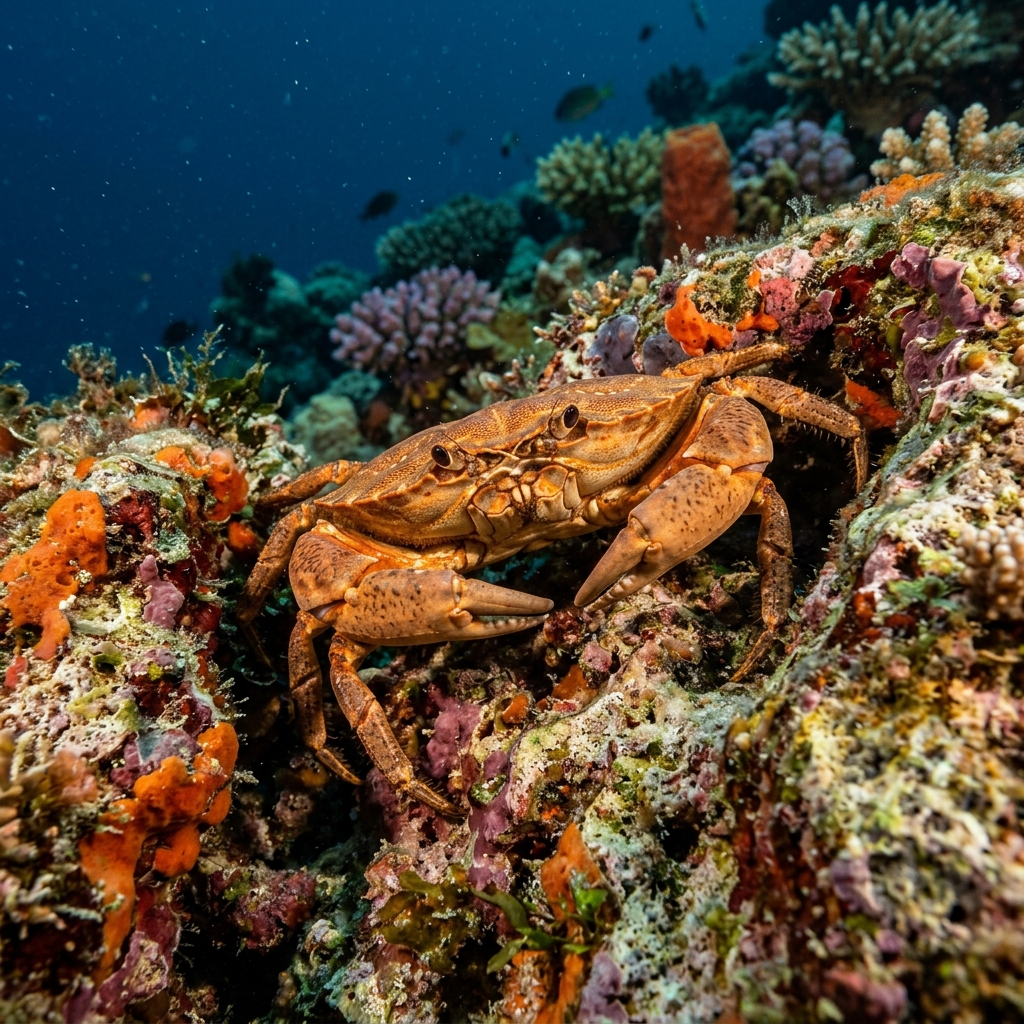
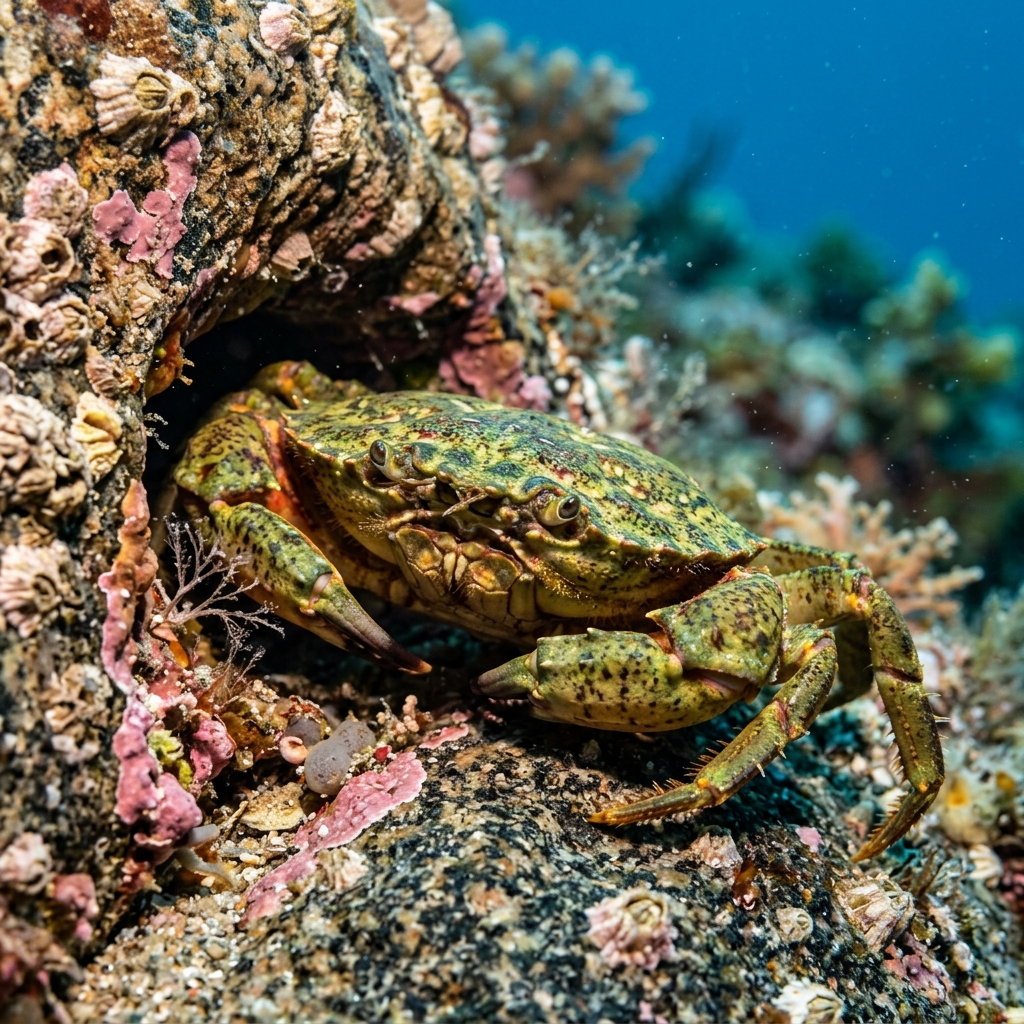
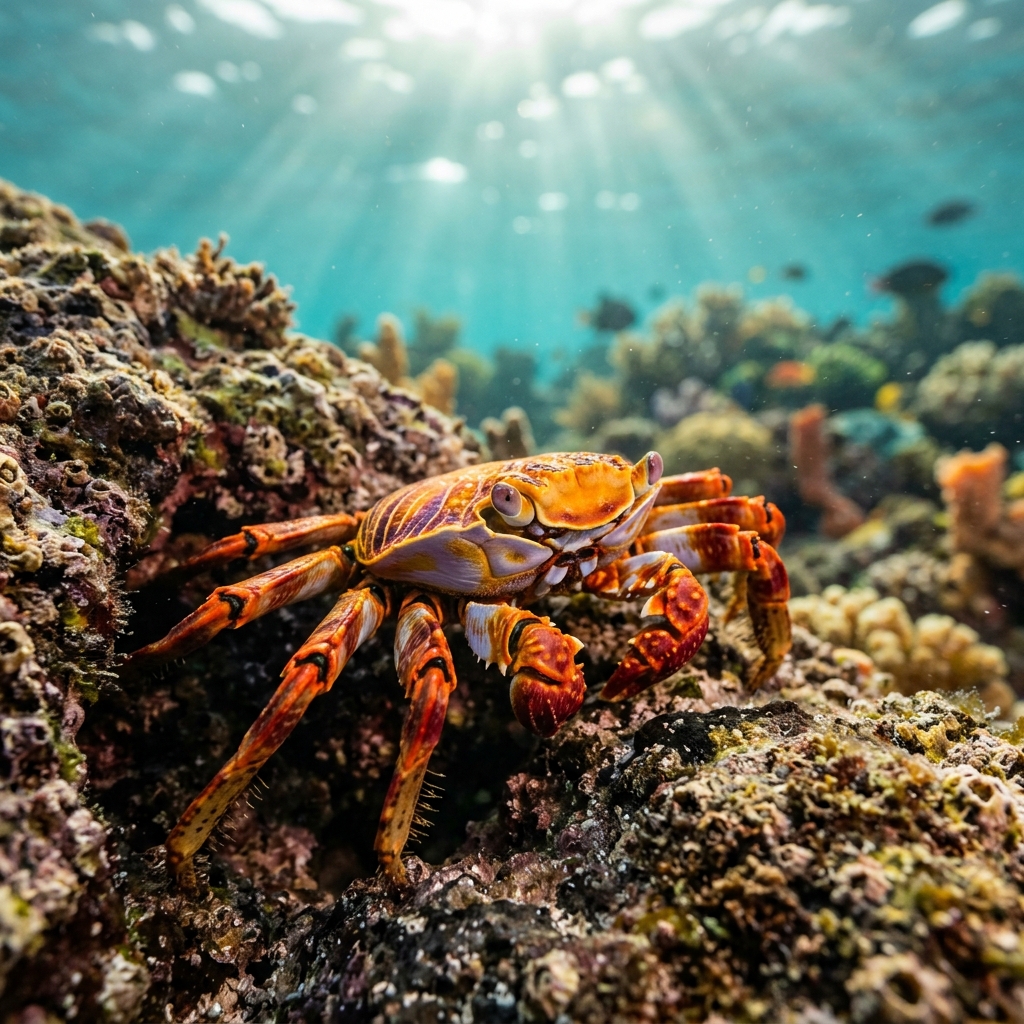
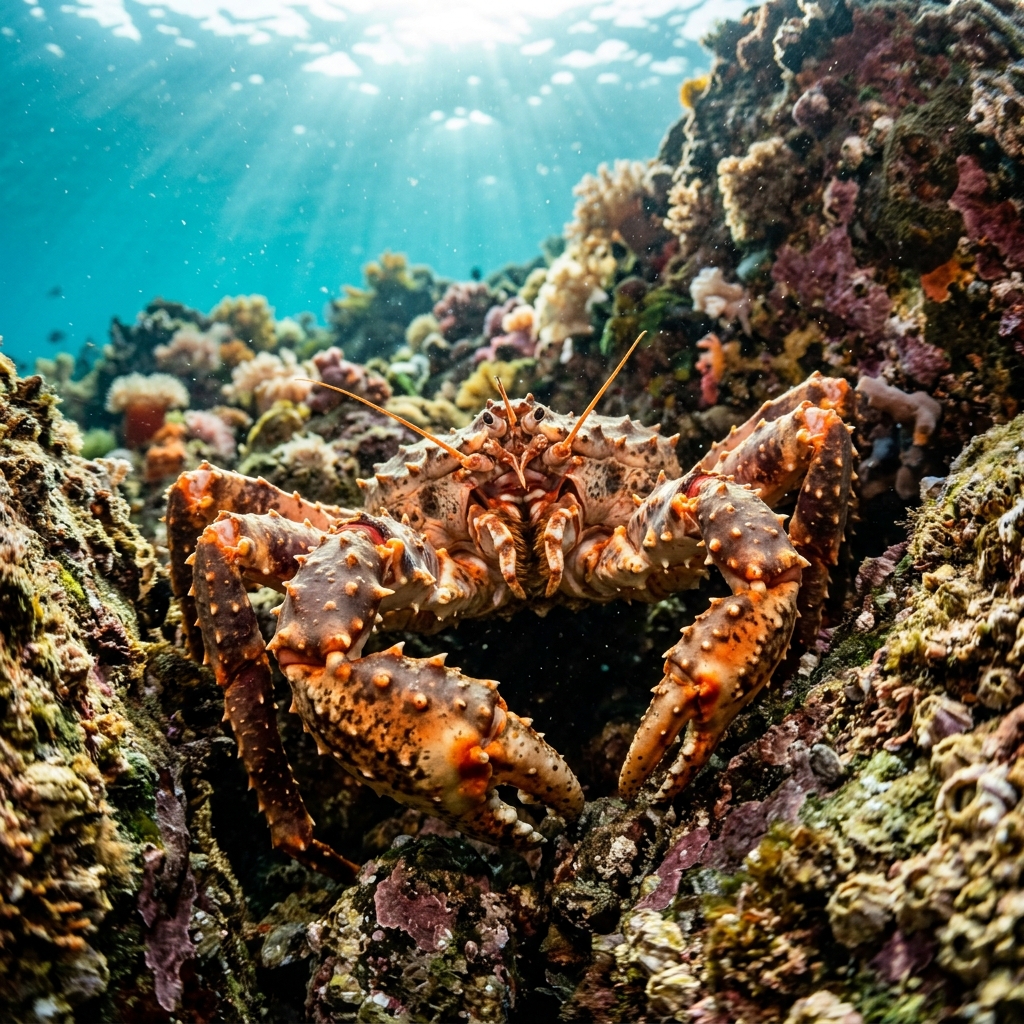
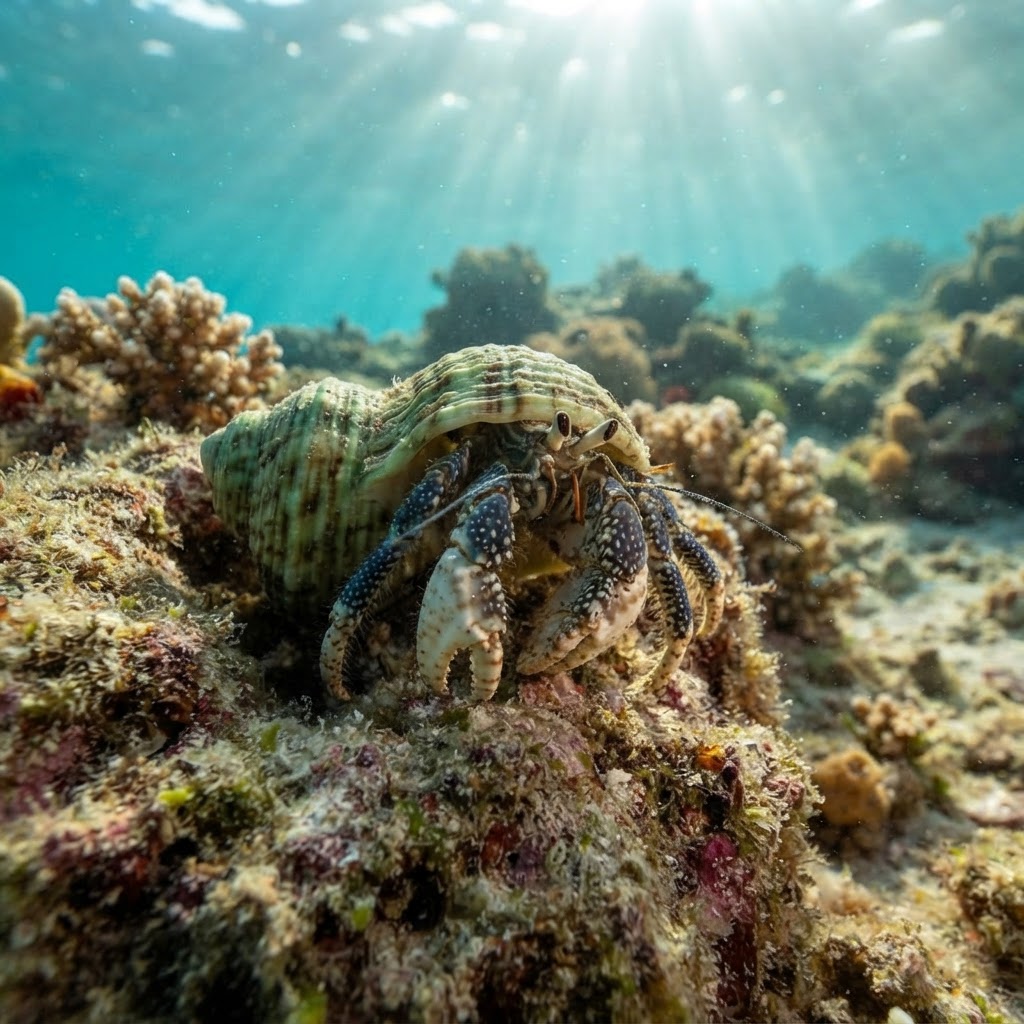
Small hermit crab, usually recognised by olive-green to grey-green legs with faint darker banding, tucked into a scavenged snail shell. Look for the eyestalks and antennae as the main visible clue, since the body itself stays hidden inside the borrowed shell. Often seen in small groups on rock, rubble or sand in shallow water rather than as a lone individual out on open reef.
Found grazing over rock, rubble and sandy shallows, often in loose clusters rather than singly, picking through algae and debris with its claws. Generally unbothered by divers and snorkellers working close by, it just keeps foraging or retreats a little way into its shell if disturbed. Most sightings come from shallow, easy-access spots rather than deep reef, so it is as much a snorkel find as a dive one.
Like all hermit crabs it does not grow its own shell, so as it grows it has to find and move into a bigger empty one, meaning size and shell shape can vary a lot between individuals of the same age.
No clear seasonal pattern shows up in the data, and with a comfortable range of 20 to 28C it turns up on shallow reef and rubble year-round wherever divers log it.
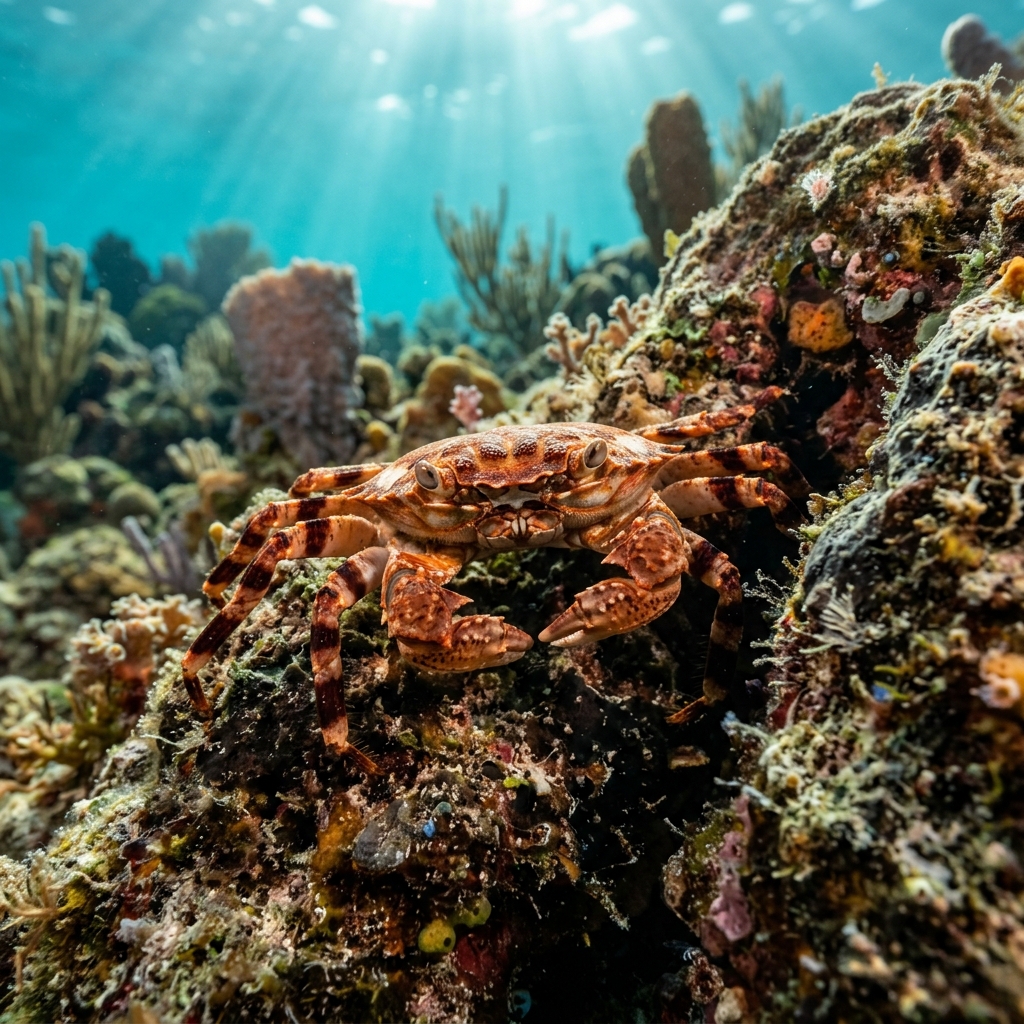
Reef neighbours a diver could mistake it for. Use the identification notes above to tell them apart.
Most commonly logged in Australia, especially Queensland and New South Wales, with strong showings in Bali (Indonesia) and Viti Levu (Fiji). Also a reliable find in KwaZulu-Natal (South Africa), Central Japan, Krabi (Thailand), the Visayas (Philippines) and Sri Lanka.
Mapping where Coastal Hermit Crabs is logged…
They show up widely across the Indo-Pacific, with the strongest logs from Queensland and New South Wales in Australia, plus Bali in Indonesia and Viti Levu in Fiji. KwaZulu-Natal in South Africa and Krabi in Thailand are other solid spots.
There is no strong season in the sighting data, and their temperature range of 20 to 28C covers most reef conditions year-round, so any time you are diving or snorkelling shallow rock and rubble is worth a look.
Look for the greenish, faintly banded legs poking out of a scavenged snail shell, usually seen shuffling over rock or rubble in shallow water. They are easy to miss unless you are scanning close to the substrate.
No, they pose no threat to divers or snorkellers and will simply retreat into their shell if you get too close.
Hermit crabs have a soft, unarmoured abdomen, so they rely on empty snail shells for protection and have to trade up to a bigger shell every time they outgrow the current one.
Site and sighting data is aggregated from diver logs, iNaturalist and GBIF. For taxonomy and conservation status:
European Green Crab
2,469 sites