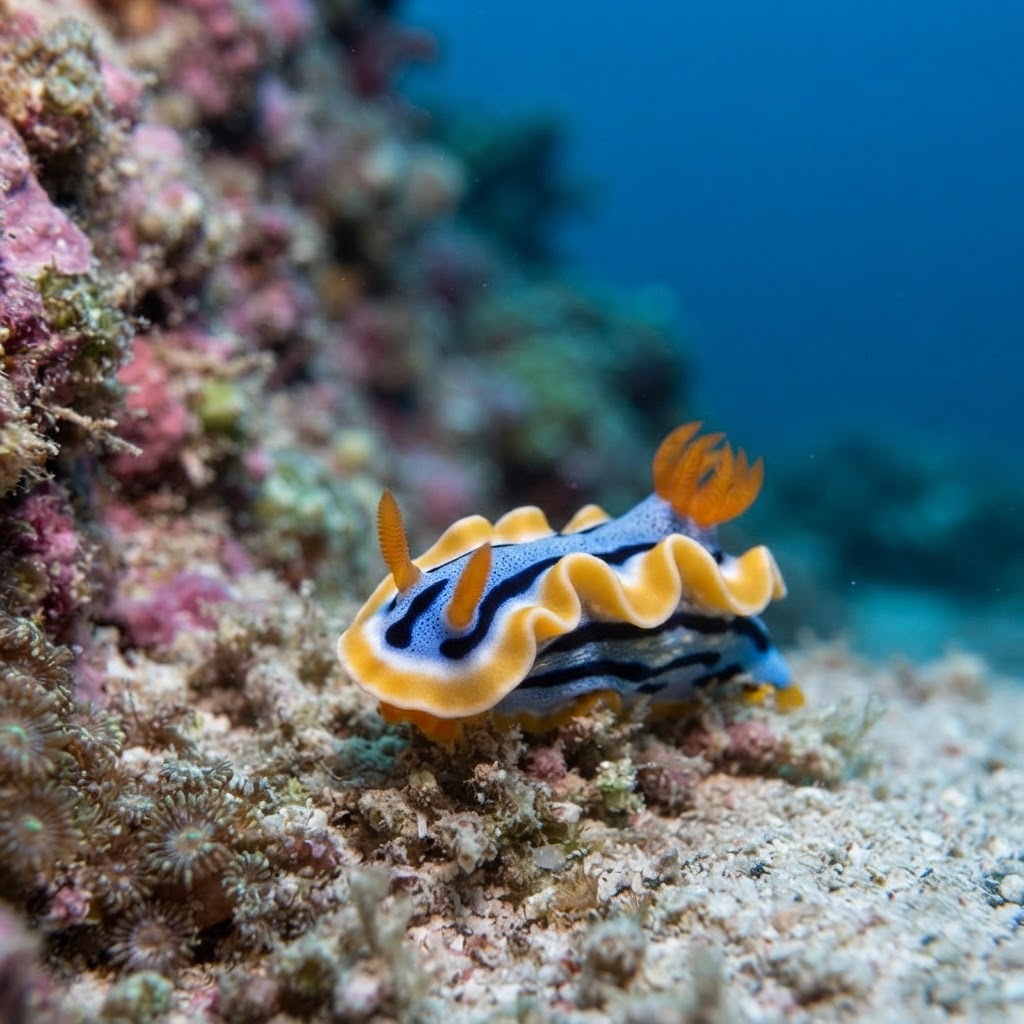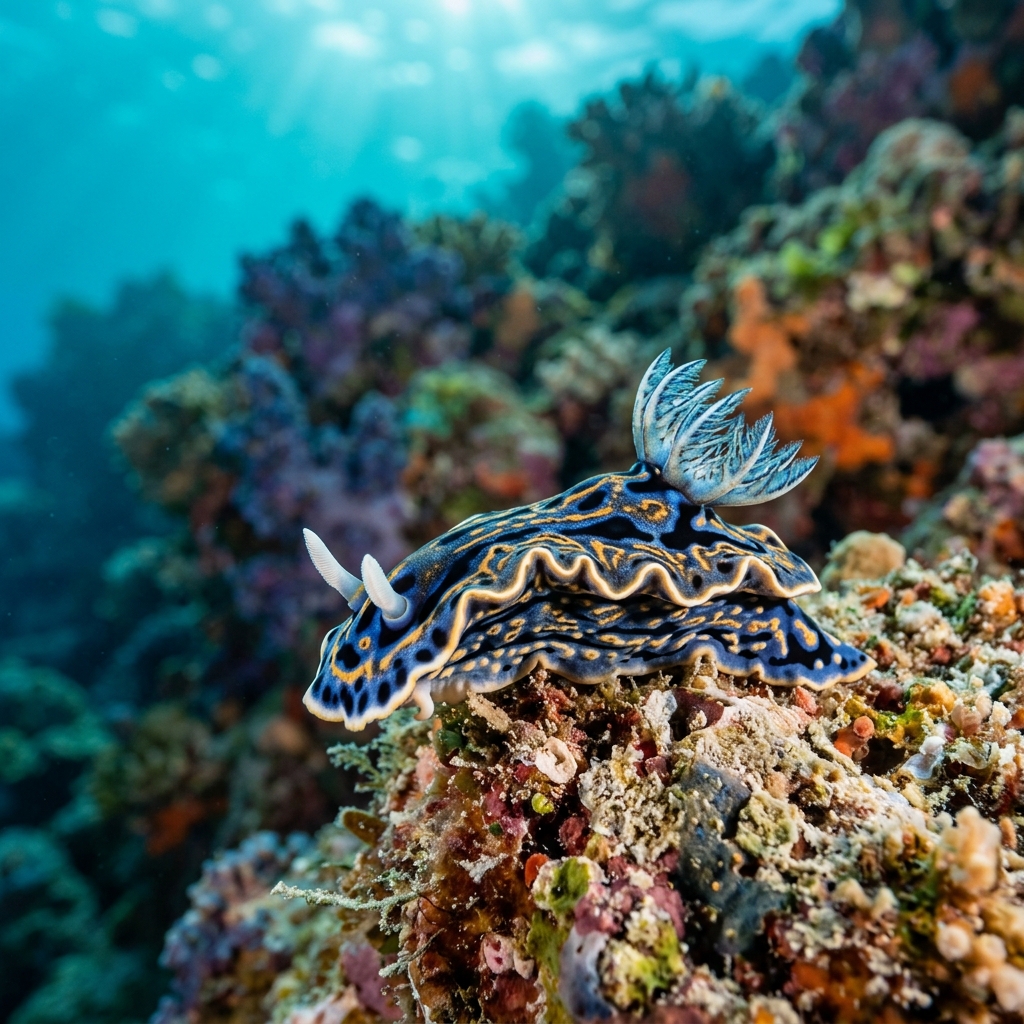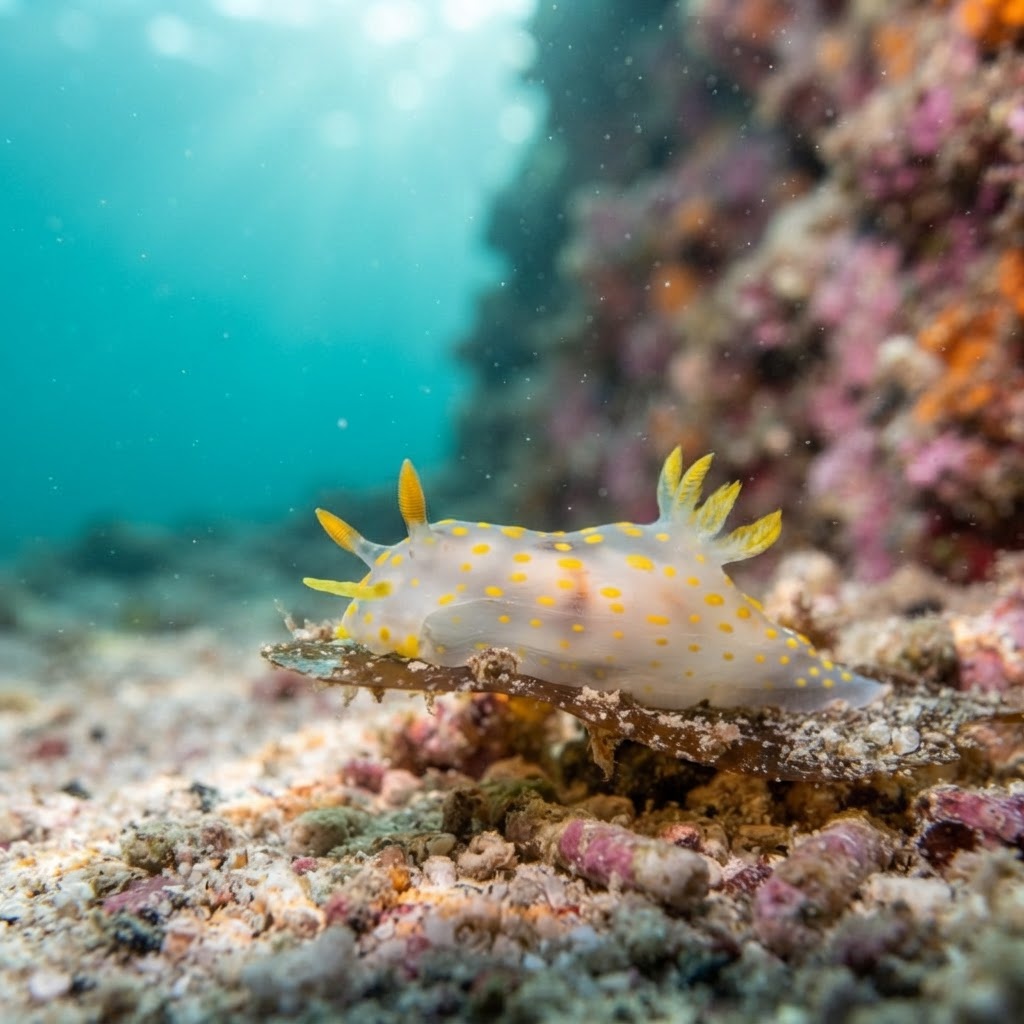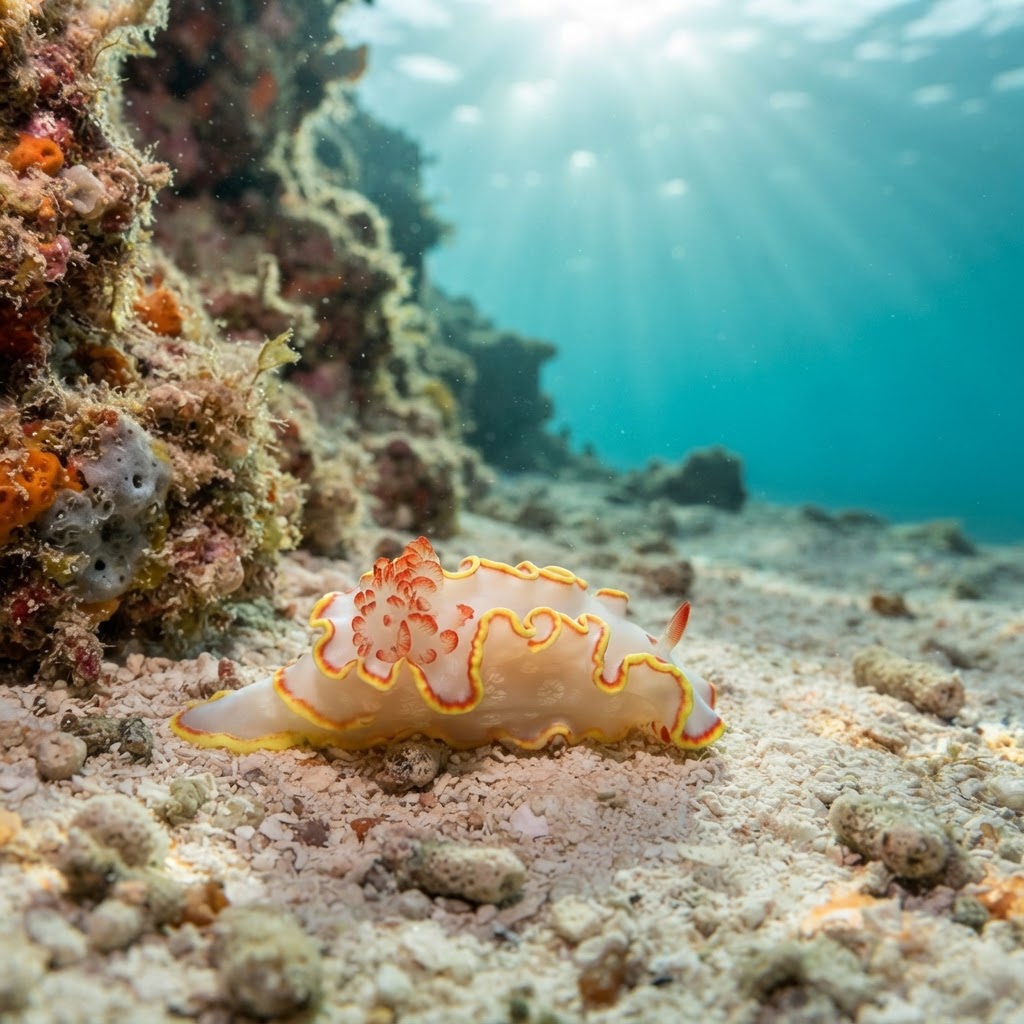
Chromolaichma hemera
Uncommon Caribbean find logged around Grande-Terre, Sosúa and Saba's Tent Reef in water from 24 to 30C, year-round.
A small sea slug (nudibranch) best picked out by scanning reef rubble and sponge patches rather than open water, since it relies on blending into the substrate rather than swimming off. Exact size isn't well documented for this species, so treat any small, slow-moving dorid-shaped slug in this colour range as a candidate and photograph it close for a proper ID later. Look for the smooth, rounded body typical of chromodorid nudibranchs rather than the frillier, more textured look of some other reef slugs.
Expect to find it parked on rubble, sponge or algae-covered substrate rather than out in the open, moving at the unhurried pace typical of chromodorid slugs as it grazes. It shows no reaction to divers beyond retracting slightly if touched, so a slow approach and a steady light are all that's needed for a good look and photo.
Like other chromodorid nudibranchs, it likely gets both its colour and its chemical defences from the sponges it feeds on, borrowing the toxins to make itself unpalatable to reef predators.
Sightings are spread across the year with no clear seasonal spike, which fits its comfort range of roughly 24 to 30C, water temperatures that hold steady on Caribbean reefs for most of the year. Plan around site conditions rather than a calendar month.
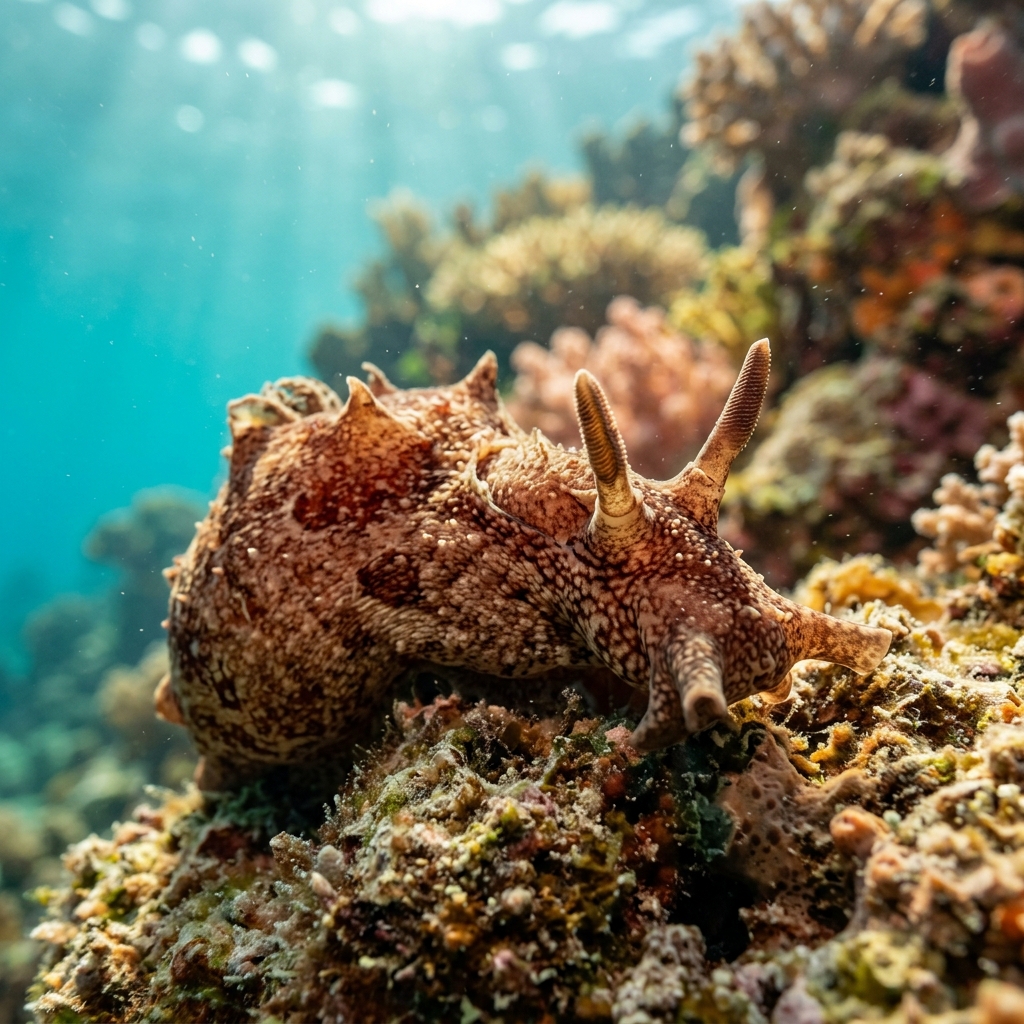
Reef neighbours a diver could mistake it for. Use the identification notes above to tell them apart.
This one turns up most reliably in the Caribbean, with the strongest logs from Grande-Terre in Guadeloupe and Tent Reef and The Pinnacles in Saba, plus a solid showing around Sosúa in the Dominican Republic. Divers in Florida and around Saint John in the US Virgin Islands also report it, making the wider Caribbean basin the safest bet for a sighting.
Mapping where Caribbean Red-tipped Sea Goddess is logged…
It's most often logged in the Caribbean, particularly around Grande-Terre in Guadeloupe, Tent Reef in Saba and Sosúa in the Dominican Republic, with further sightings in Florida and the US Virgin Islands.
There's no strong season in the data, so it's considered a year-round find on Caribbean reefs where water stays in the 24 to 30C range it favours.
Look for a small, smooth-bodied dorid nudibranch resting on rubble or sponge rather than swimming, and get a close photo since it can be confused with several similar chromodorid species.
Size hasn't been well documented for this species yet, so there's no reliable figure to give; treat any small dorid-shaped slug in its typical habitat as a possible sighting.
No, it poses no threat to divers and is safe to observe and photograph at close range without any special precautions.
Site and sighting data is aggregated from diver logs, iNaturalist and GBIF. For taxonomy and conservation status:
Light-spotted Aegires
3,168 sites