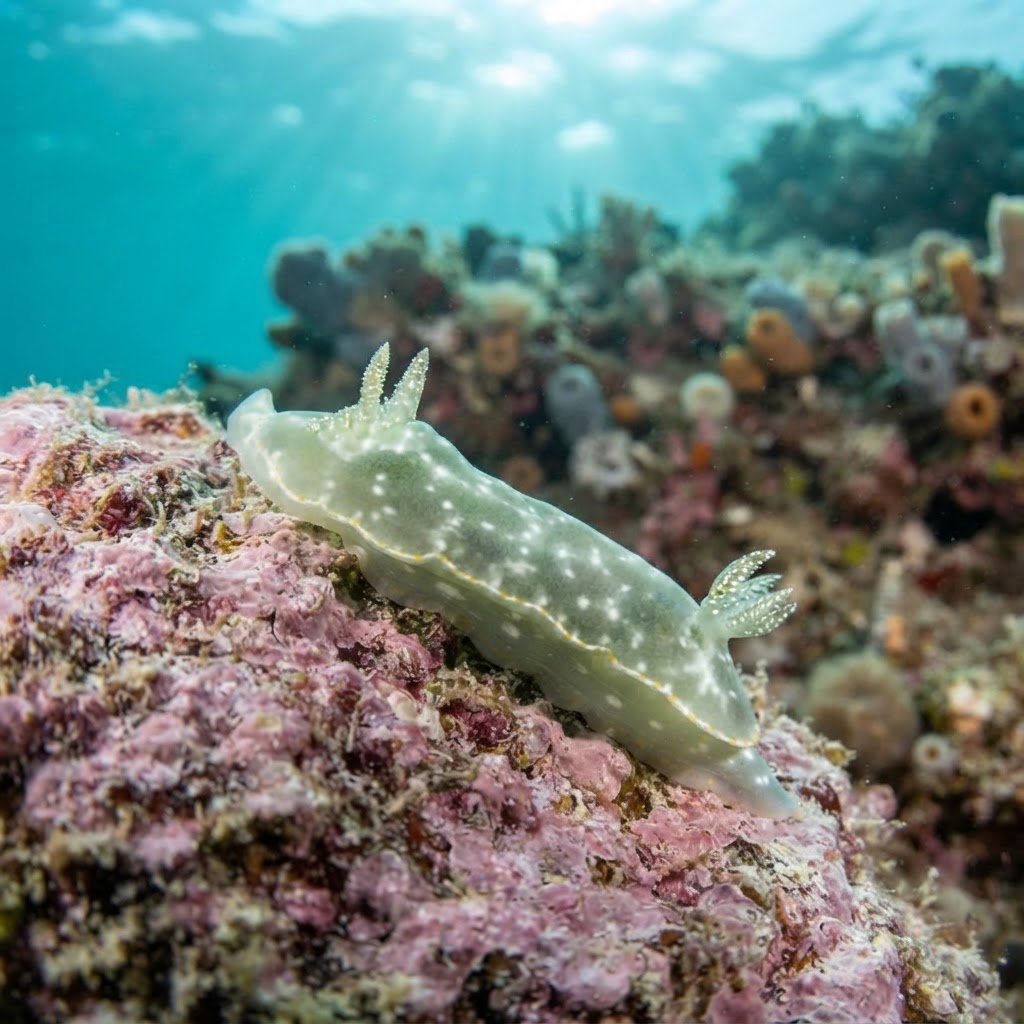
Chromodoris kalawakan
Spot this uncommon nudibranch on Luzon reefs in the Philippines, thriving in warm 25-31C water year-round.
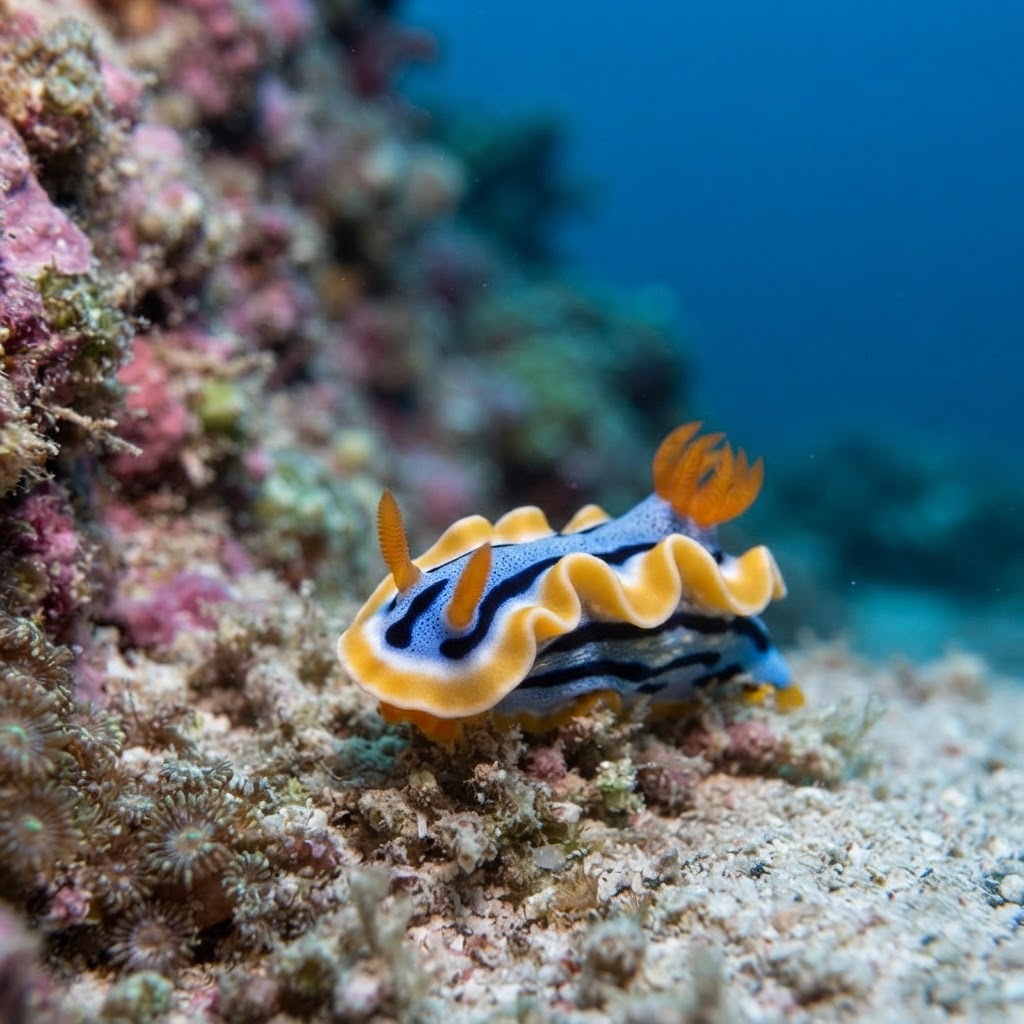
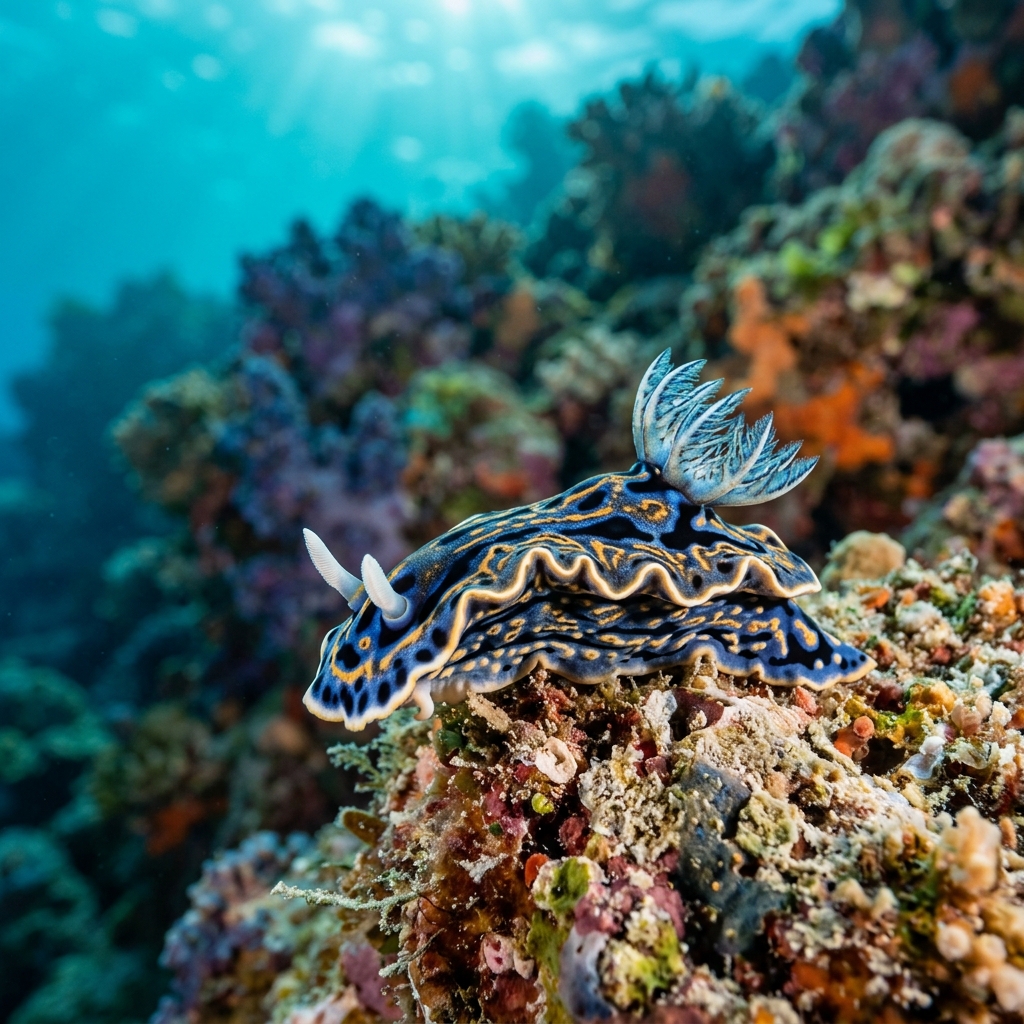
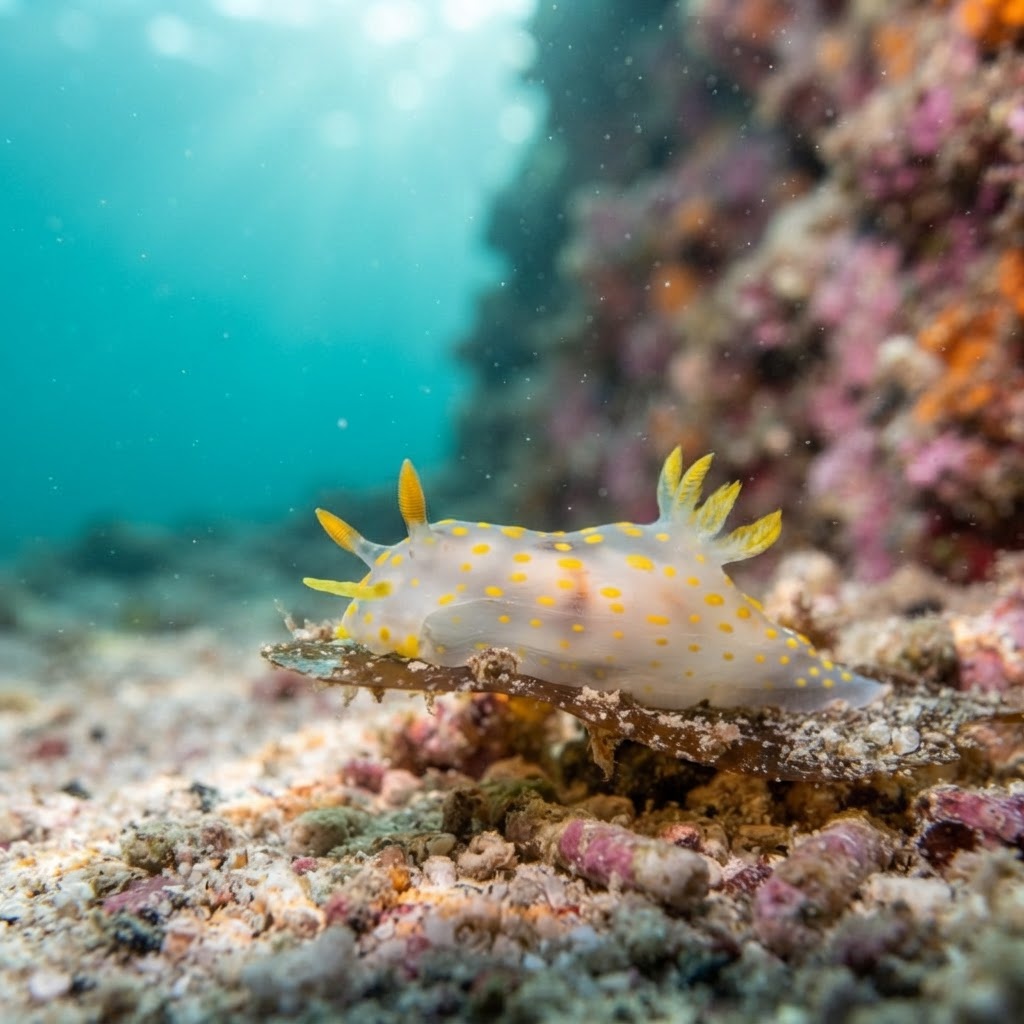
A small, soft-bodied sea slug (nudibranch) with an oval mantle typically patterned in the mottled colours and contrasting edge line seen across the Chromodoris group, usually spotted moving slowly across coral rubble or sponge. Look for the paired rhinophores (sensory horns) on the head end and the feathery gill cluster at the rear, both classic nudibranch tells. Exact size in the water isn't well documented for this species, so treat any small Chromodoris-shaped slug on Luzon reefs as a candidate and photograph the mantle pattern for a confident ID later.
Like most Chromodoris nudibranchs, expect to find it grazing slowly across sponge-encrusted rock or rubble, using its rasping mouthparts to feed while paying no attention to passing divers. It's an uncommon find rather than a given, so macro-focused divers doing slow, methodical scans of the substrate have the best luck. No time-of-day pattern has been reported, so daytime reef dives and night dives are both worth checking.
Like other Chromodoris species, its bright colouration likely signals toxicity absorbed from the sponges it feeds on, warning predators off rather than being purely decorative.
Sightings don't show a clear seasonal pattern, and the observed water temperature range of 25.3 to 31.3C spans the whole year on Luzon's reefs, so it's reasonable to look for it on any dive there regardless of month.
Reef neighbours a diver could mistake it for. Use the identification notes above to tell them apart.
Every logged sighting of this species comes from the Philippines, with Luzon standing out as the region where divers consistently find it. If you're diving Luzon's reefs and slowing down to scan rubble patches and sponge-covered walls, this is where your odds are best.
Mapping where Kalawakan Chromodoris is logged…
All recorded sightings are from the Philippines, with Luzon the standout region for finding it. It's worth a dedicated search on Luzon's rubble and sponge-covered reef areas.
There's no detected seasonal pattern, and the species is found across a wide warm-water range of 25.3 to 31.3C, so it can turn up on Luzon reefs at any time of year.
Look for a small oval-bodied nudibranch with a patterned mantle, paired rhinophores on the head, and a feathery gill tuft at the rear, moving slowly over rubble or sponge. Photograph the mantle markings closely, since several Chromodoris species look similar underwater.
It's logged as uncommon at most sites where divers have found it, so it's not a guaranteed sighting. Slow, careful scanning of rubble patches and sponge growth on Luzon reefs gives you the best chance.
Like other members of its genus, it almost certainly grazes on sponges, using specialised mouthparts to rasp away tissue. This diet is also thought to be the source of the toxins that make brightly coloured nudibranchs unpalatable to predators.
Site and sighting data is aggregated from diver logs, iNaturalist and GBIF. For taxonomy and conservation status:
Light-spotted Aegires
3,168 sites