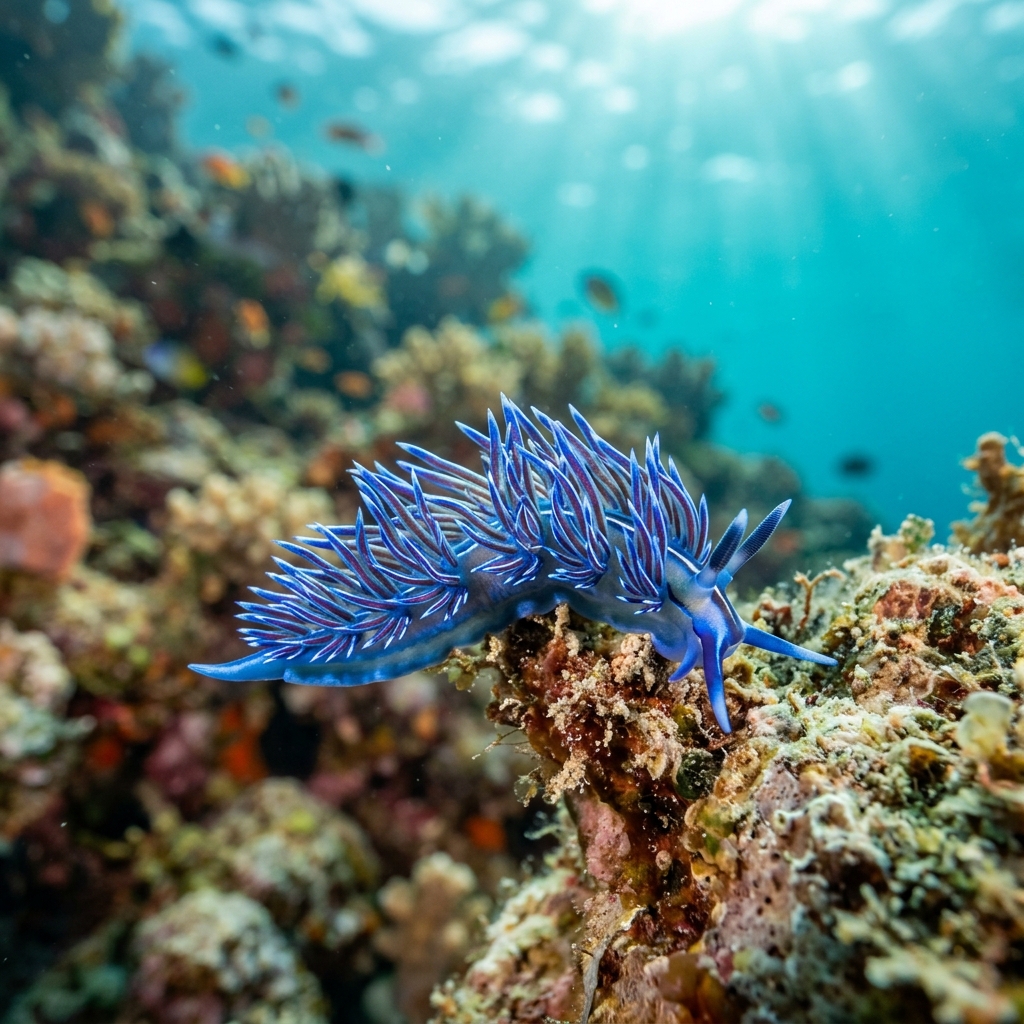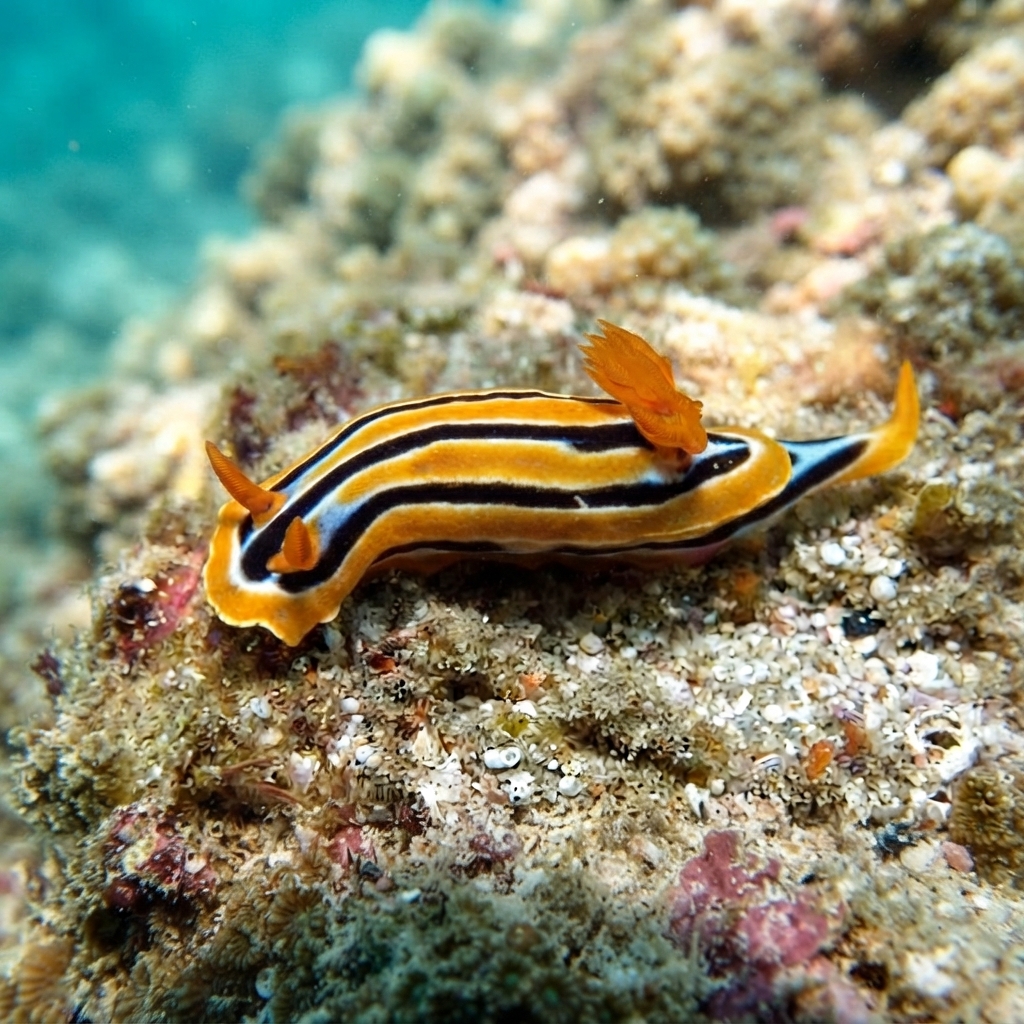
Chromodoris celinae
Uncommon find on KwaZulu-Natal reefs at 21 to 27C: here's how to spot Chromodoris celinae and where South African divers log it.
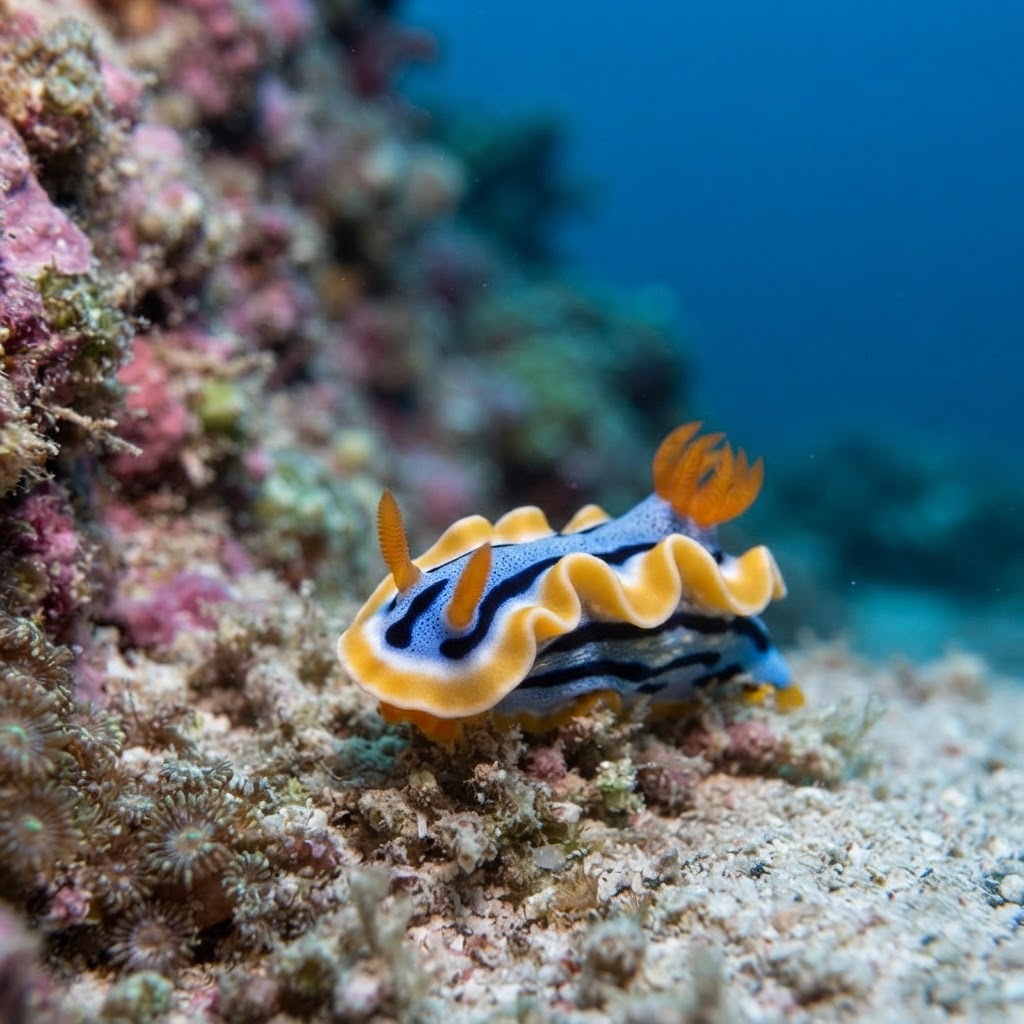
A small, elongated sea slug (nudibranch) with a soft, translucent-white to pale body marked by fine dark longitudinal lines running down the back, often edged with a thin coloured border along the mantle. Like other Chromodoris species, the soft fleshy projections on its back (gills) cluster near the tail, and a pair of sensory horns (rhinophores) sit near the head. Size in the water is small, so divers usually spot it on close reef scans rather than from a distance.
Found slowly grazing across reef surfaces, where it feeds on sponges like other members of its family. It shows no reaction to divers beyond its usual unhurried crawl, making it an easy subject for macro photography once spotted. Best looked for during daylight dives with a careful eye on rock and rubble patches rather than open sand.
Like other Chromodoris nudibranchs, it likely gets its colours and any toxins from the sponges it eats, using borrowed chemical defences rather than a shell for protection.
Sightings show no clear seasonal pattern, so treat this as a year-round possibility. Observed water temperatures range from 21.2 to 27.2C, a span that covers most of the year on KwaZulu-Natal reefs.
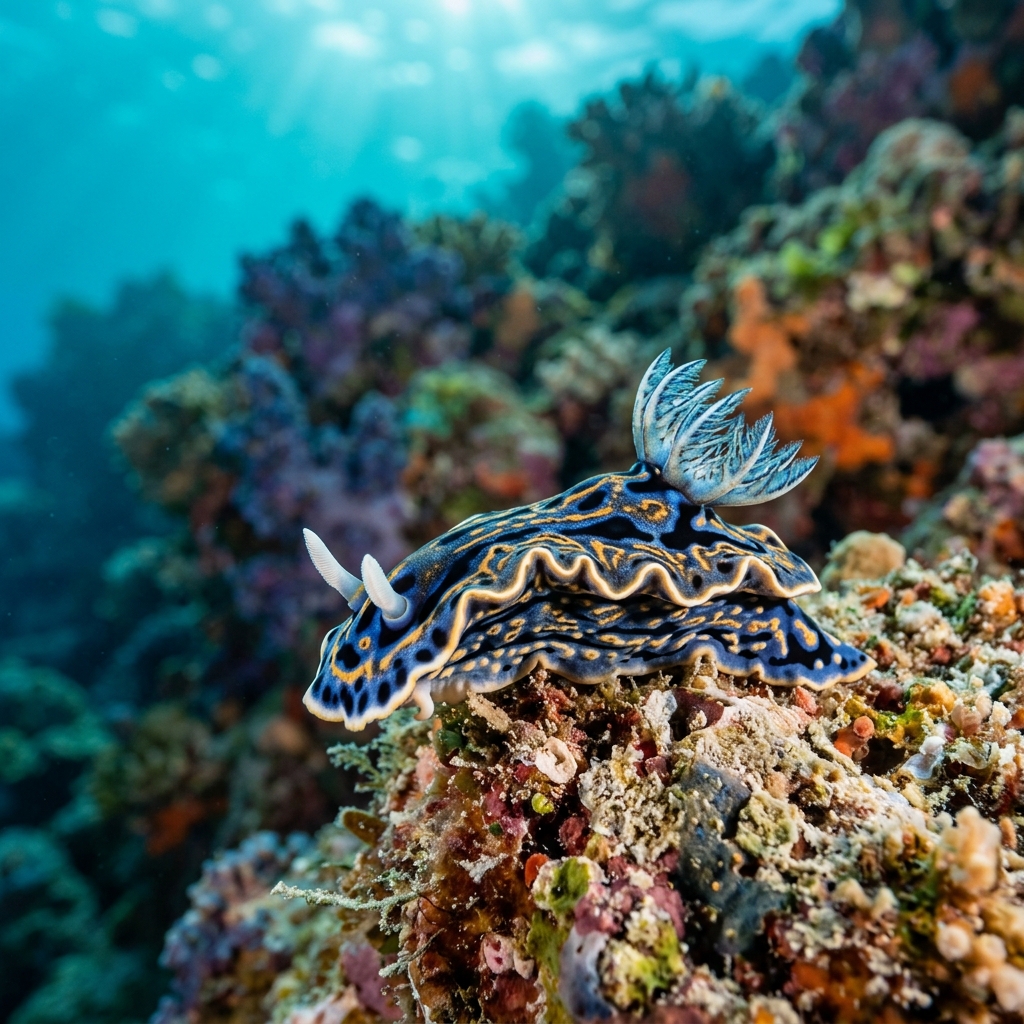
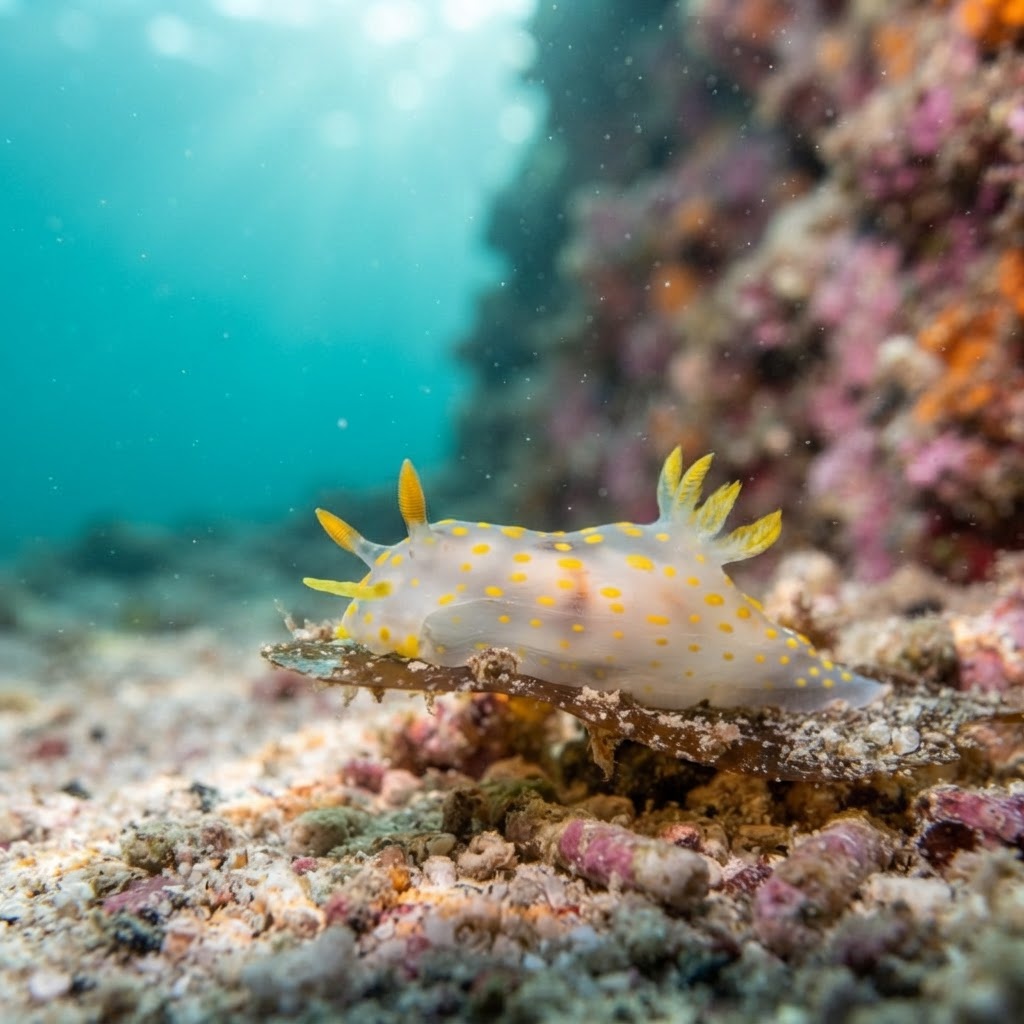
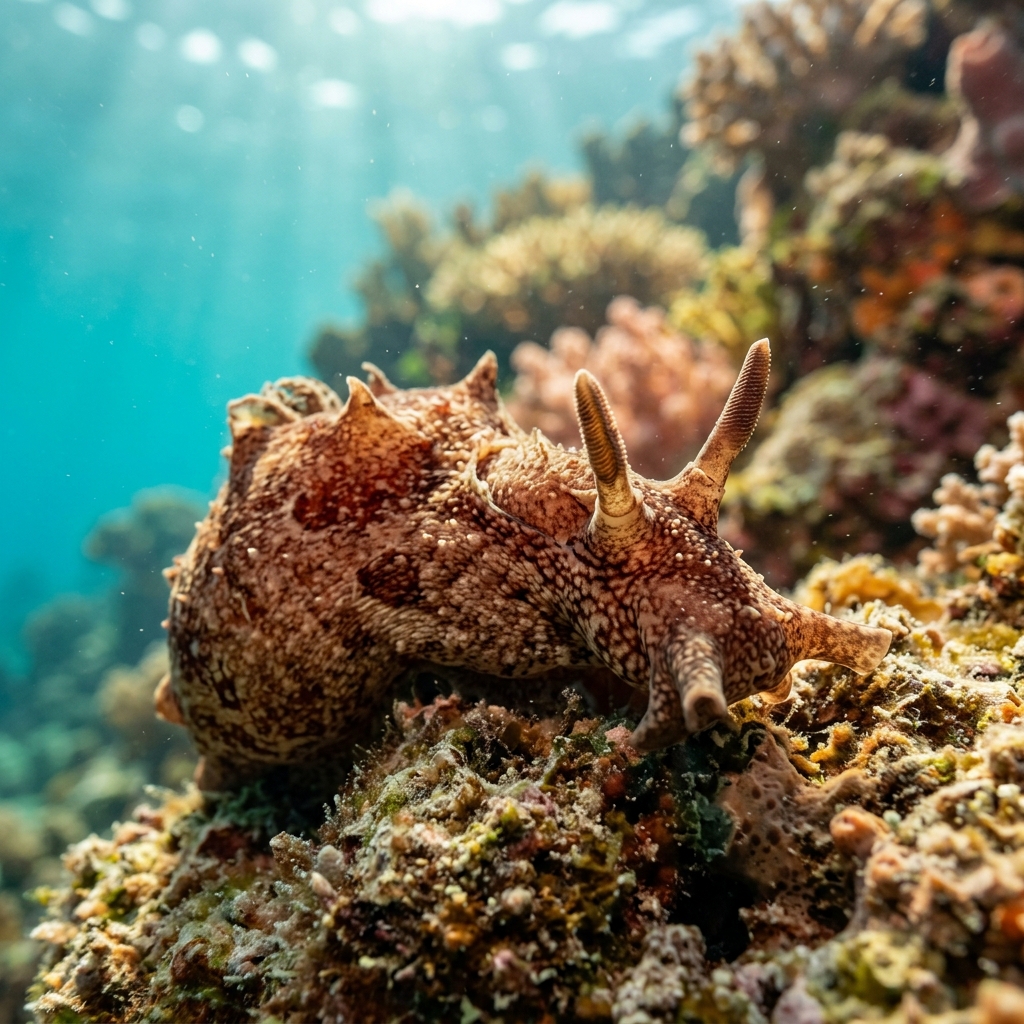
Reef neighbours a diver could mistake it for. Use the identification notes above to tell them apart.
Most consistently logged along KwaZulu-Natal in South Africa, which accounts for the bulk of recorded sightings, with an additional record from Inhambane in Mozambique. Divers working the reefs of this stretch of the southeast African coast have the best documented shot at finding it.
Mapping where Celina's Chromodoris is logged…
KwaZulu-Natal in South Africa is the most reliable region, with a further record from Inhambane, Mozambique. It turns up as an uncommon find on reef dives along this part of the southeast African coast.
There's no detected season, so sightings happen year-round. Water temperatures where it's been logged range from 21.2 to 27.2C, covering most of the diving calendar in KwaZulu-Natal.
Look for a small, pale to translucent body with fine dark lines running lengthwise along the back and a cluster of soft gills near the tail. It moves slowly across reef surfaces, so a close, patient look is key to spotting it.
Exact size data isn't confirmed for this species, but like most Chromodoris nudibranchs it stays small, generally a few centimetres long, making it a macro-photography subject rather than a distance sighting.
No. It poses no risk to divers and simply crawls slowly across the reef feeding on sponges.
Its colouring likely comes from the sponges it feeds on, a trait shared across the Chromodoris genus, where diet supplies both pigment and chemical defences against predators.
Site and sighting data is aggregated from diver logs, iNaturalist and GBIF. For taxonomy and conservation status:
Light-spotted Aegires
3,168 sites