Hydatina amplustre
A small striped bubble snail most often logged around Hawaii, in waters between 22 and 28 C, year-round.
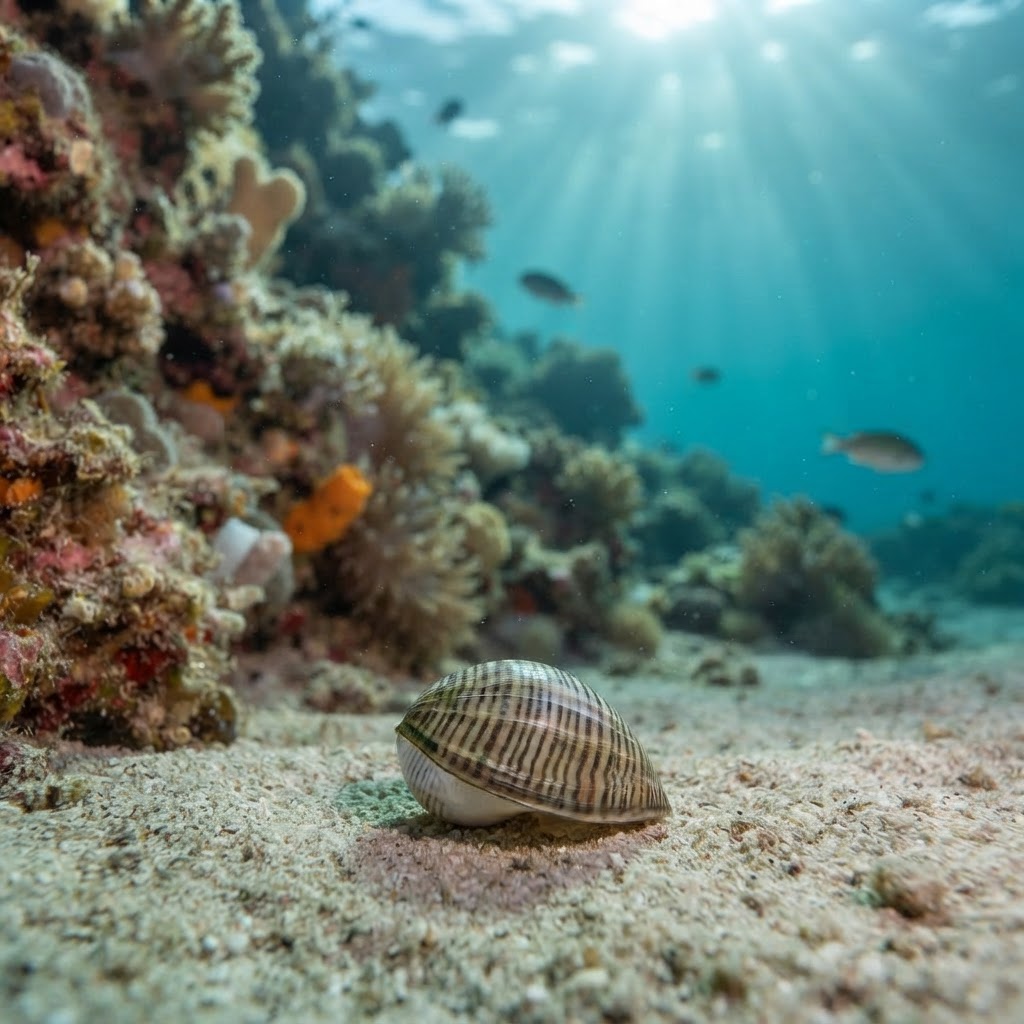
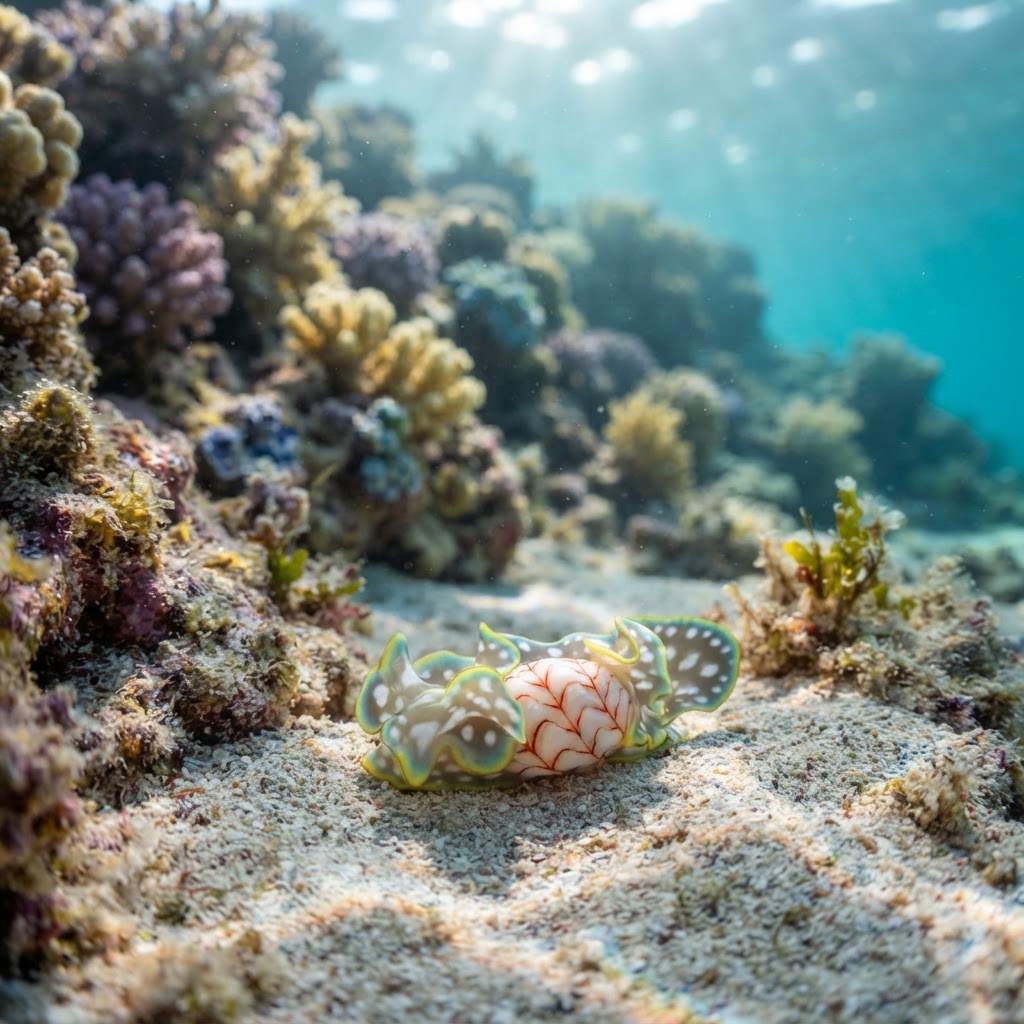
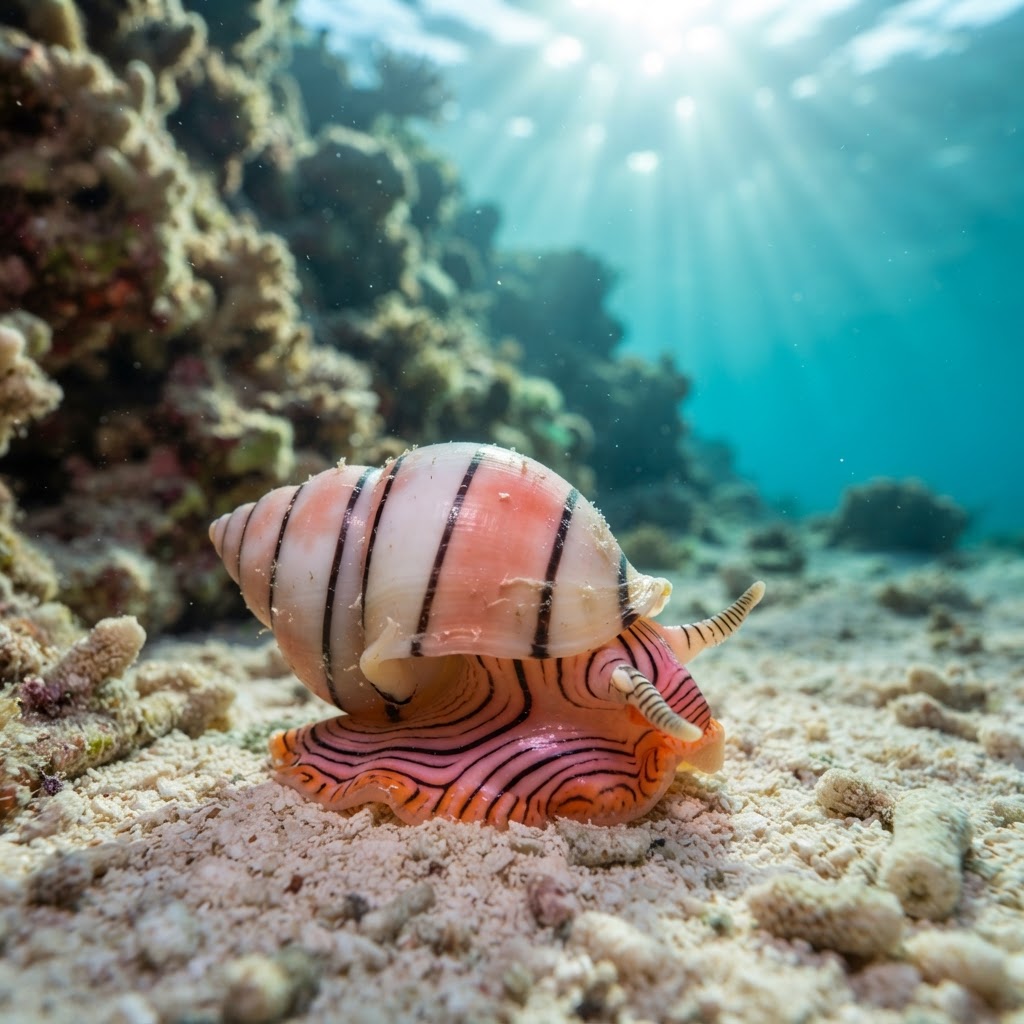
A small, glossy, egg-shaped shell only about 3 cm long, thin enough that the mottled body often shows through it. Look for alternating chocolate-brown and cream to pale bands running across the shell, with a soft, fleshy body that flares out beyond the shell's edges as it crawls. The head end carries broad, rounded flaps (headshield) rather than obvious tentacles, giving it a rounded, almost sluglike silhouette on close inspection.
Divers usually spot it moving slowly across sand or rubble patches, often during the day rather than tucked away like many bubble snails. It shows little reaction to divers, sitting out in the open long enough for a careful look or photo before continuing its slow crawl. Most logs describe it as uncommon rather than easy to find, so it rewards divers who scan the substrate closely instead of just the reef structure.
Like other bubble snails in the Aplustridae family, it carries a thin, uncoiled shell that cannot fully enclose its body, so the fleshy mantle wraps visibly around the outside as a soft defence rather than a hard retreat.
No clear seasonal pattern shows up in the sightings, and it turns up in water from 22.1 to 28.1 C, so it is best treated as a year-round find rather than a seasonal target.
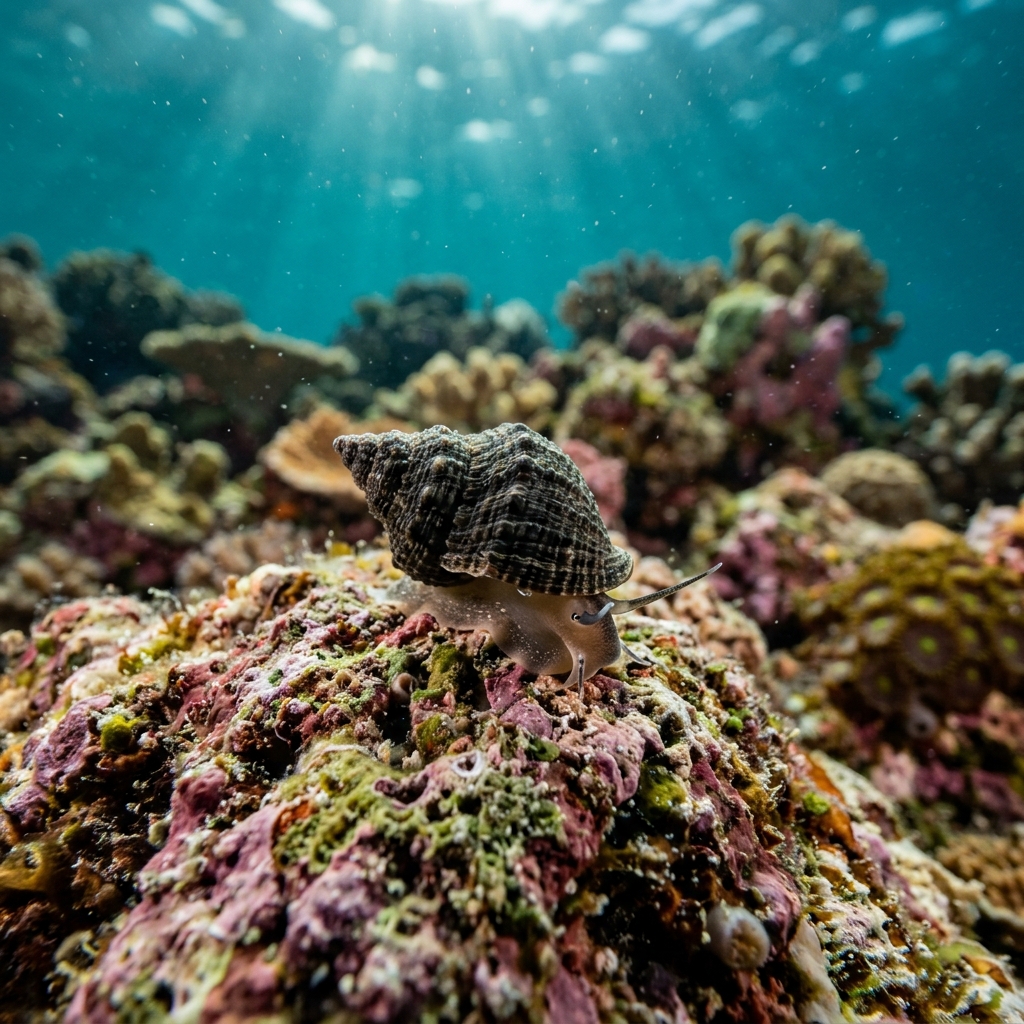
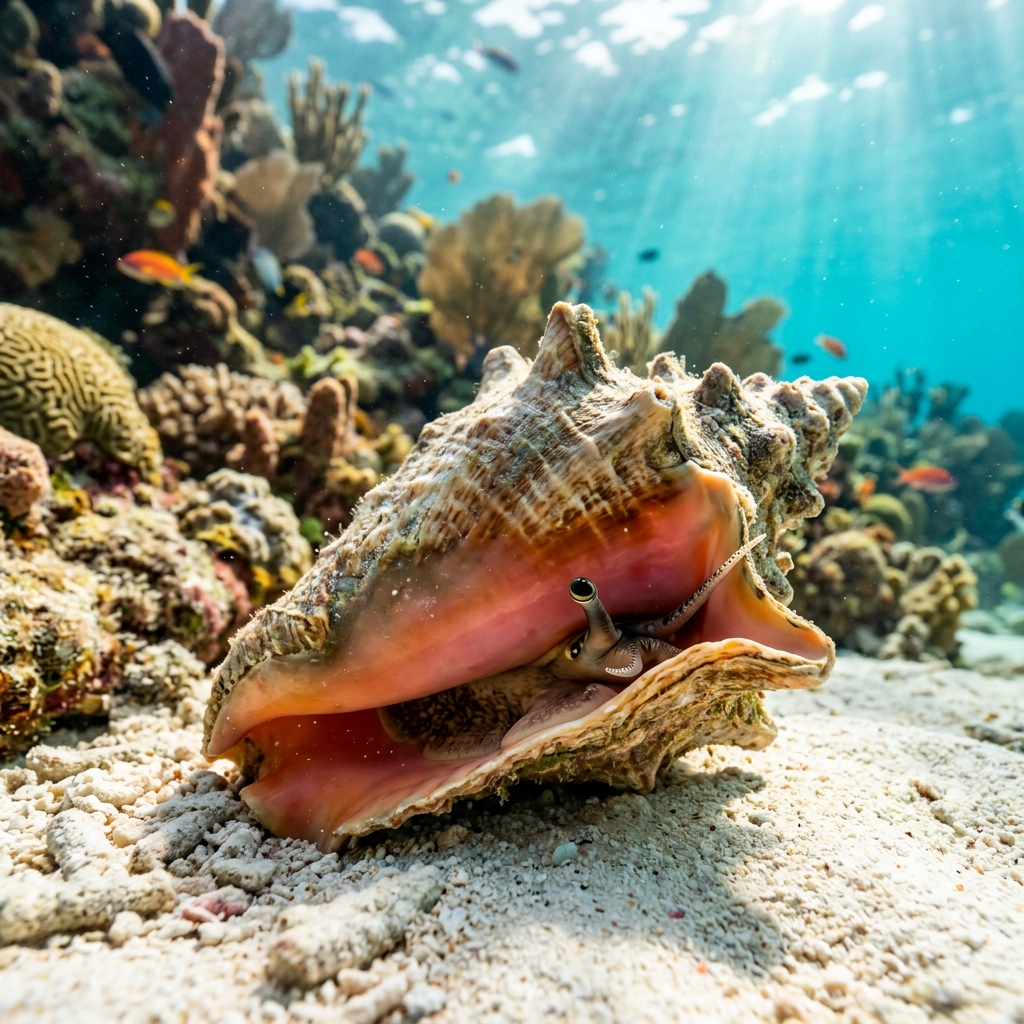
Reef neighbours a diver could mistake it for. Use the identification notes above to tell them apart.
Most consistently logged in Hawaii, which accounts for nearly all recorded sightings, making it the region to target if this snail is on your list. A single confirmed sighting also comes from New South Wales, Australia, so it is worth keeping an eye on sandy patches there too, though it is far less reliable outside Hawaiian sites.
Mapping where Chocolate-banded Bubble Snail is logged…
Hawaii is by far the most reliable region for finding this snail, with sightings concentrated there. A single record also exists from New South Wales, Australia, but Hawaiian sand and rubble patches are the best bet.
There is no detected season, and it has been recorded in water from 22.1 to 28.1 C, so divers log it across the year rather than during a specific window.
Look for a small, thin-shelled snail around 3 cm long with alternating chocolate-brown and pale bands and a fleshy body that bulges out past the shell edges. It has a rounded headshield rather than visible tentacles, giving it a soft, sluglike look.
They stay small, reaching around 3 cm in length, so they are easy to miss unless you are scanning sand and rubble closely.
No, they pose no danger to divers and can be observed and photographed safely at close range.
Site and sighting data is aggregated from diver logs, iNaturalist and GBIF. For taxonomy and conservation status:
Triton Shell
2,297 sites