Symphorus nematophorus
A chunky reef snapper mostly logged off Queensland and Western Australia in 24 to 28C water, uncommon but unmistakable once spotted.
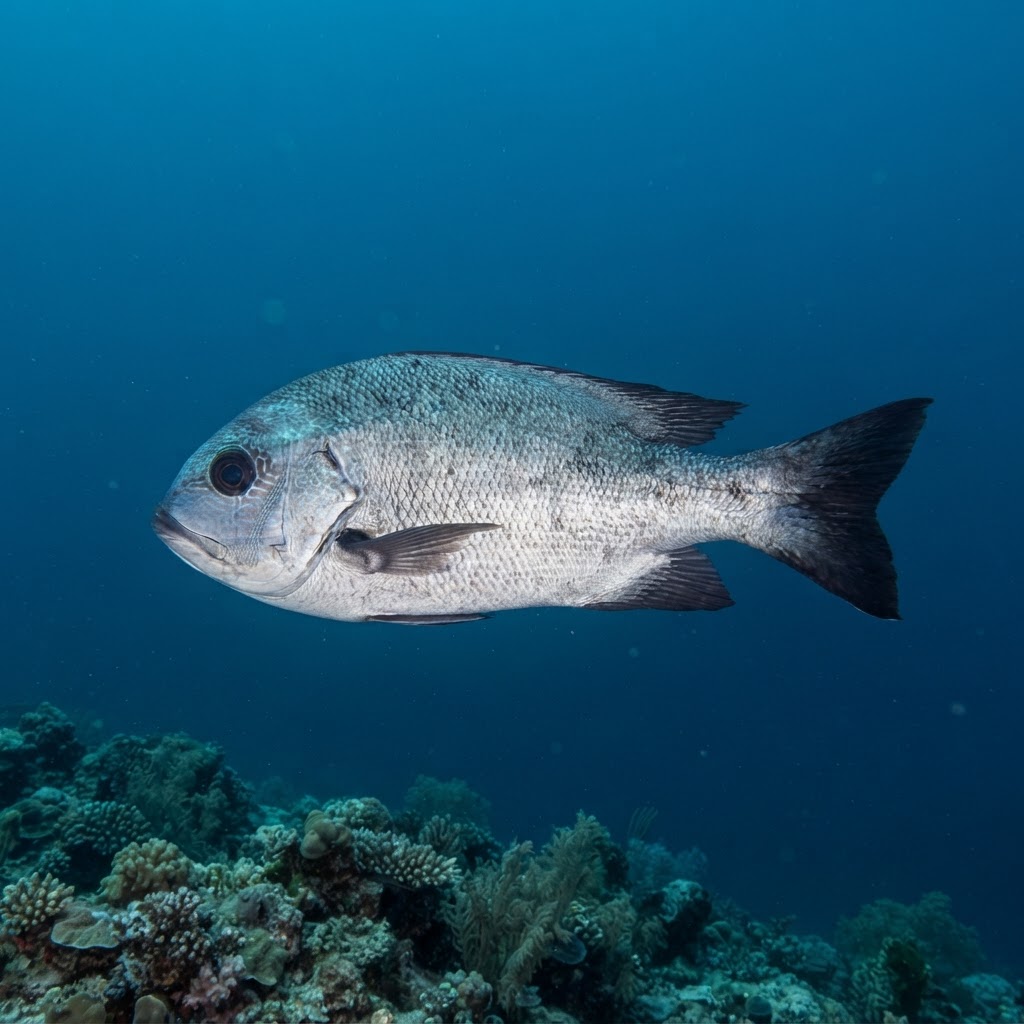
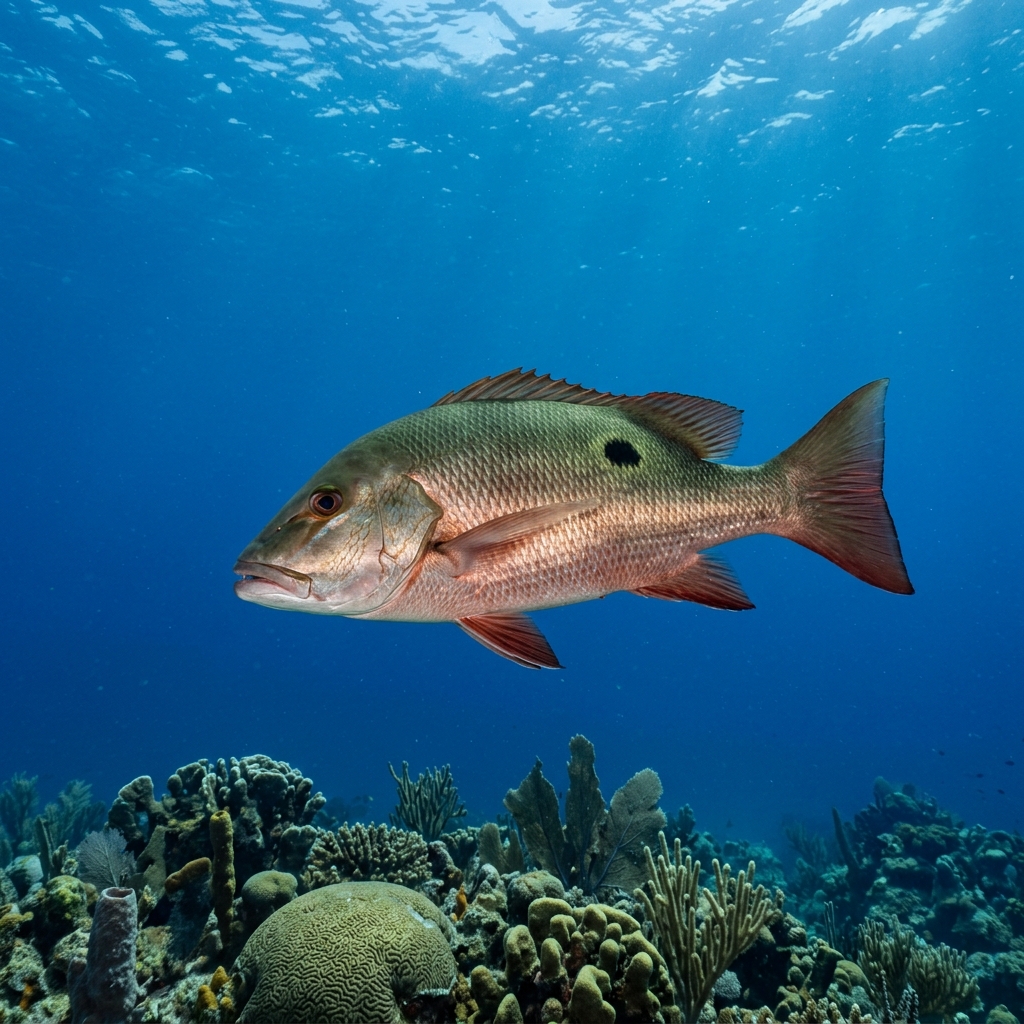
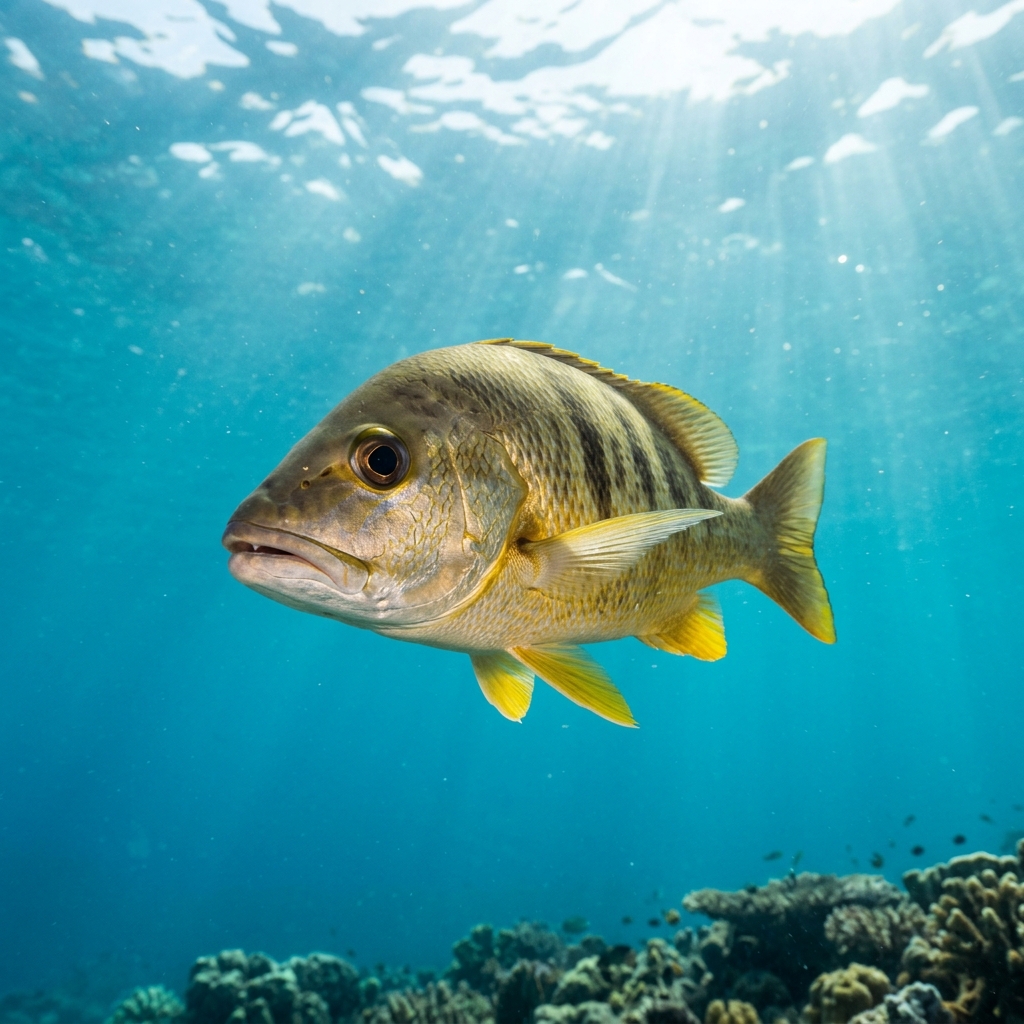
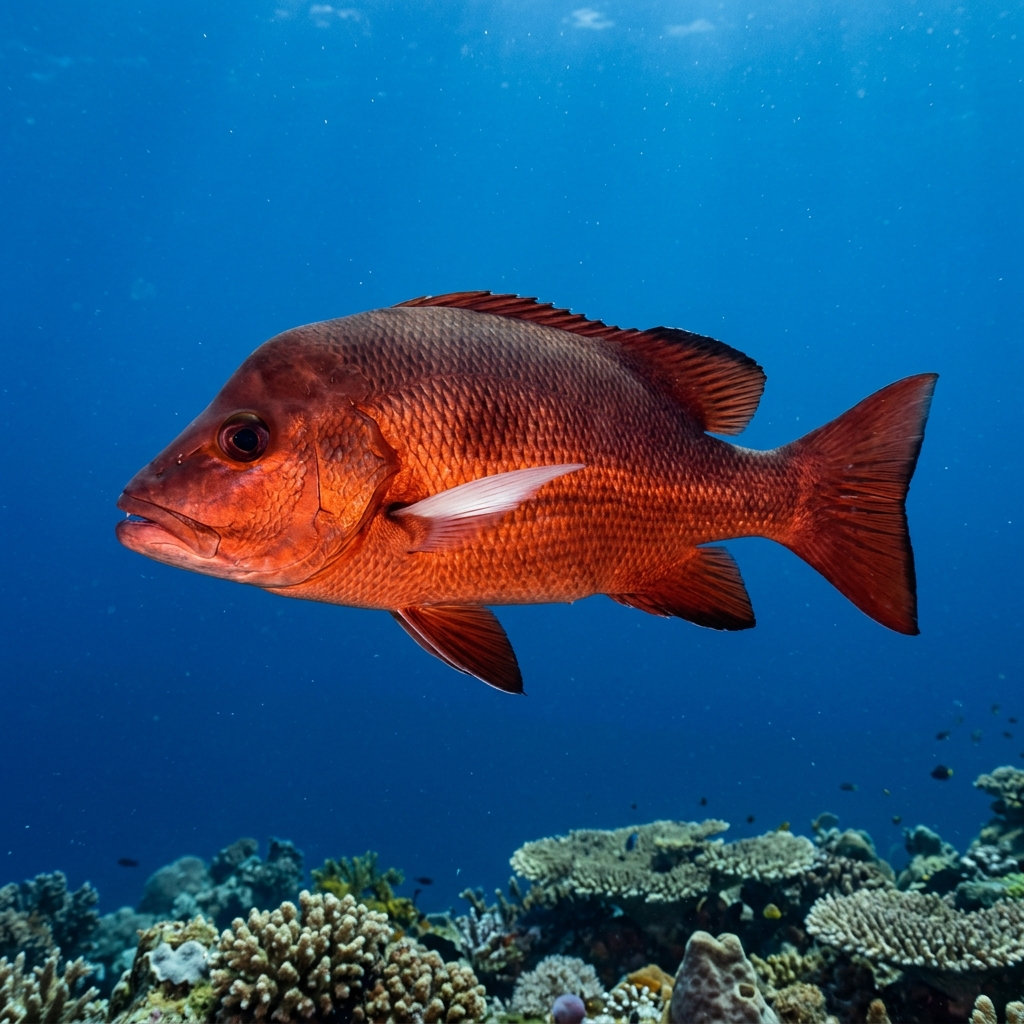
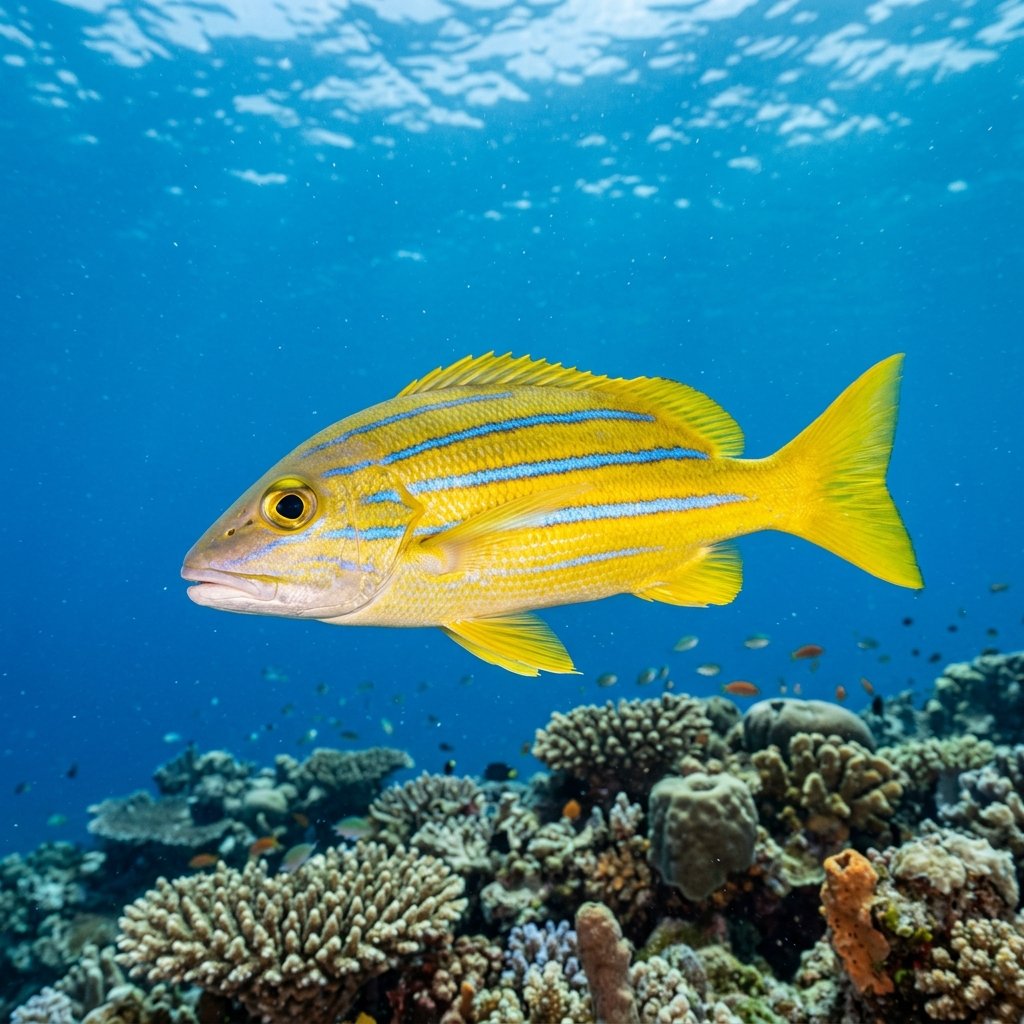
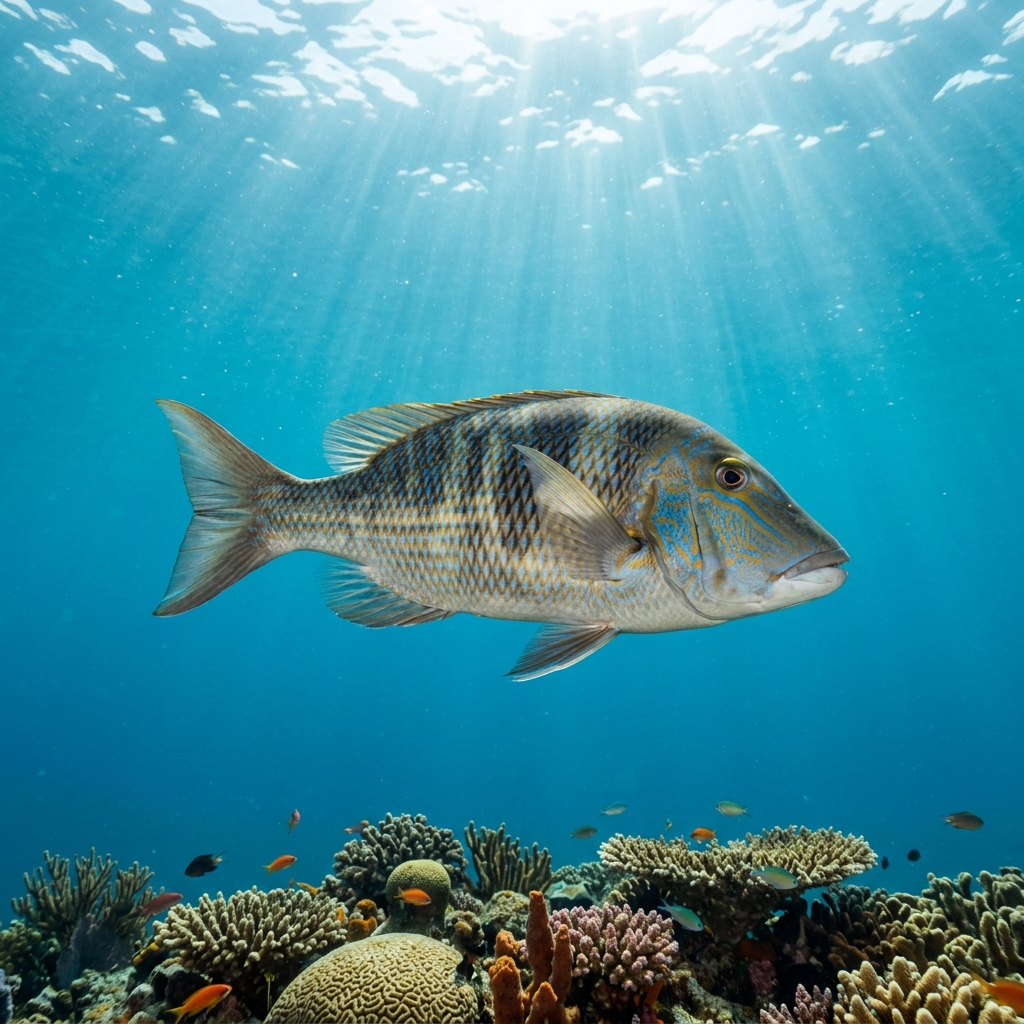
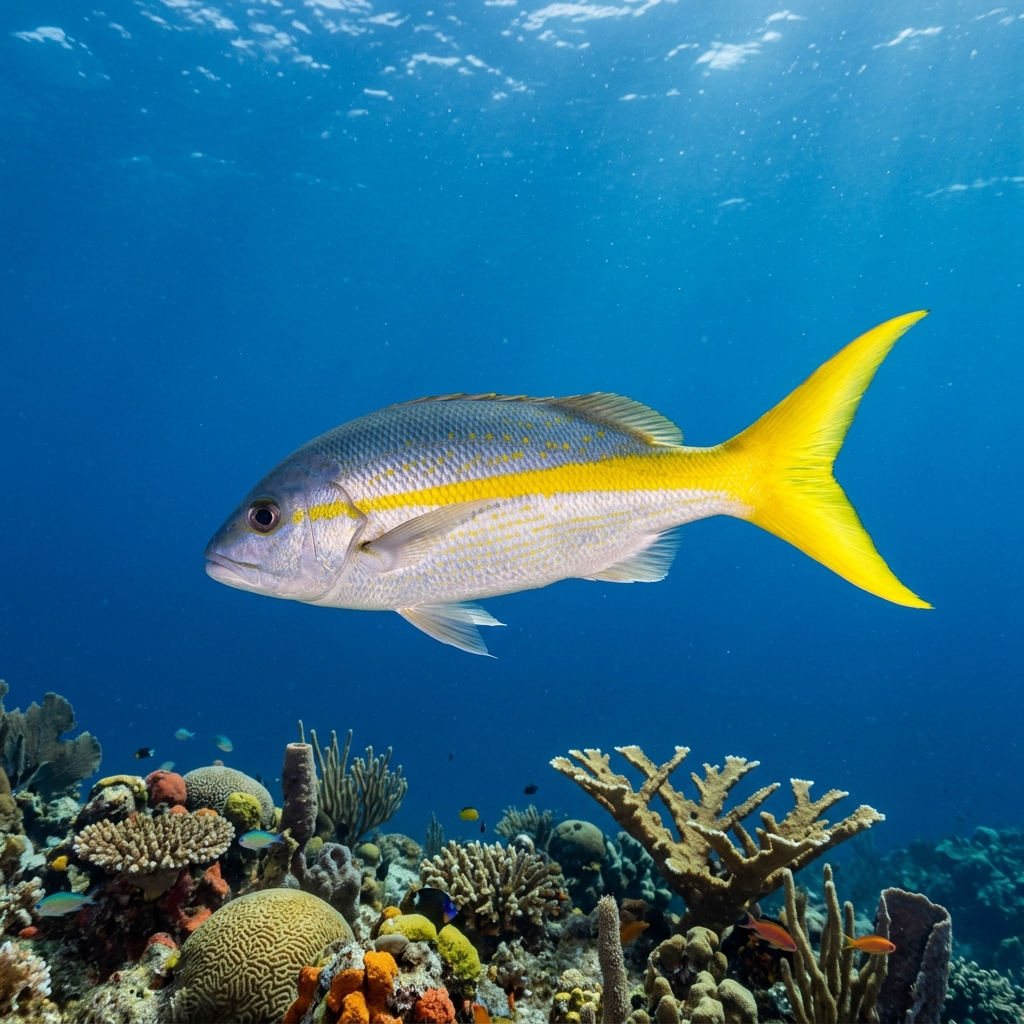
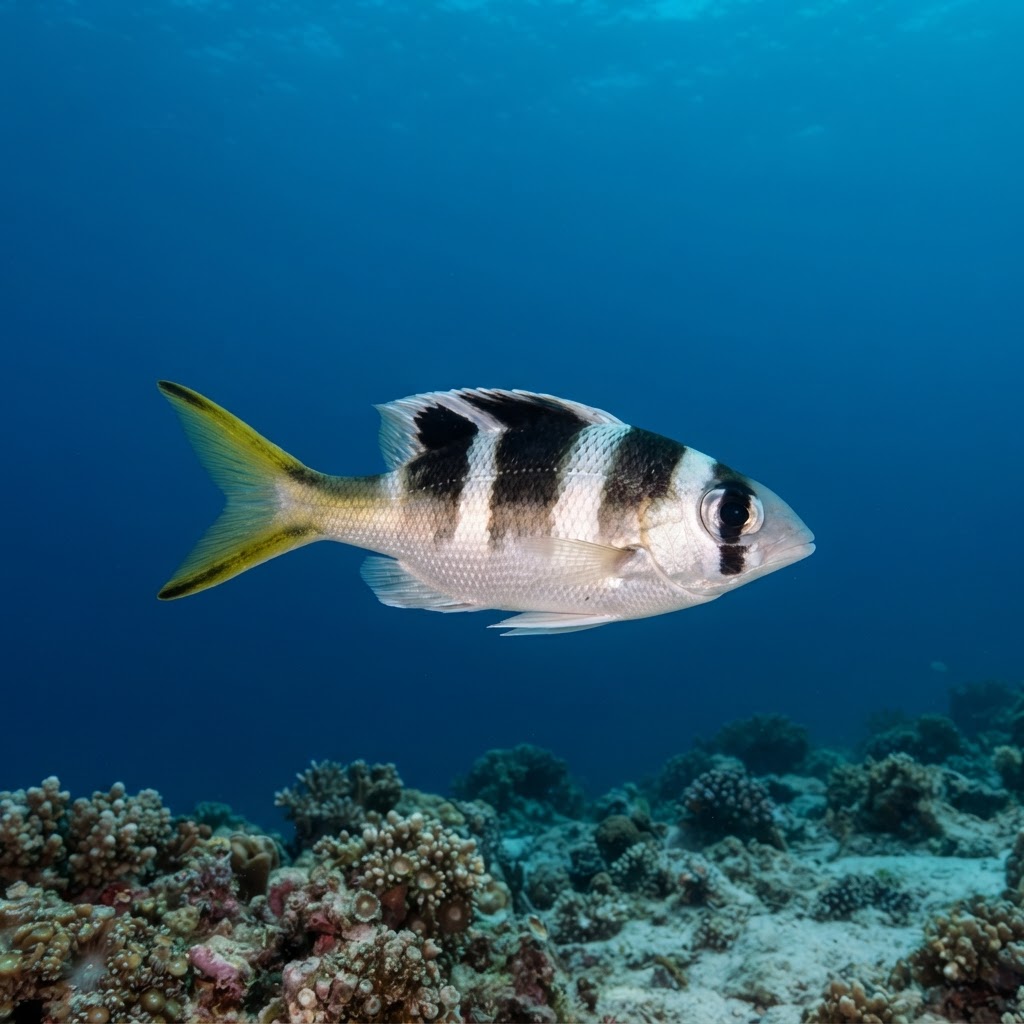
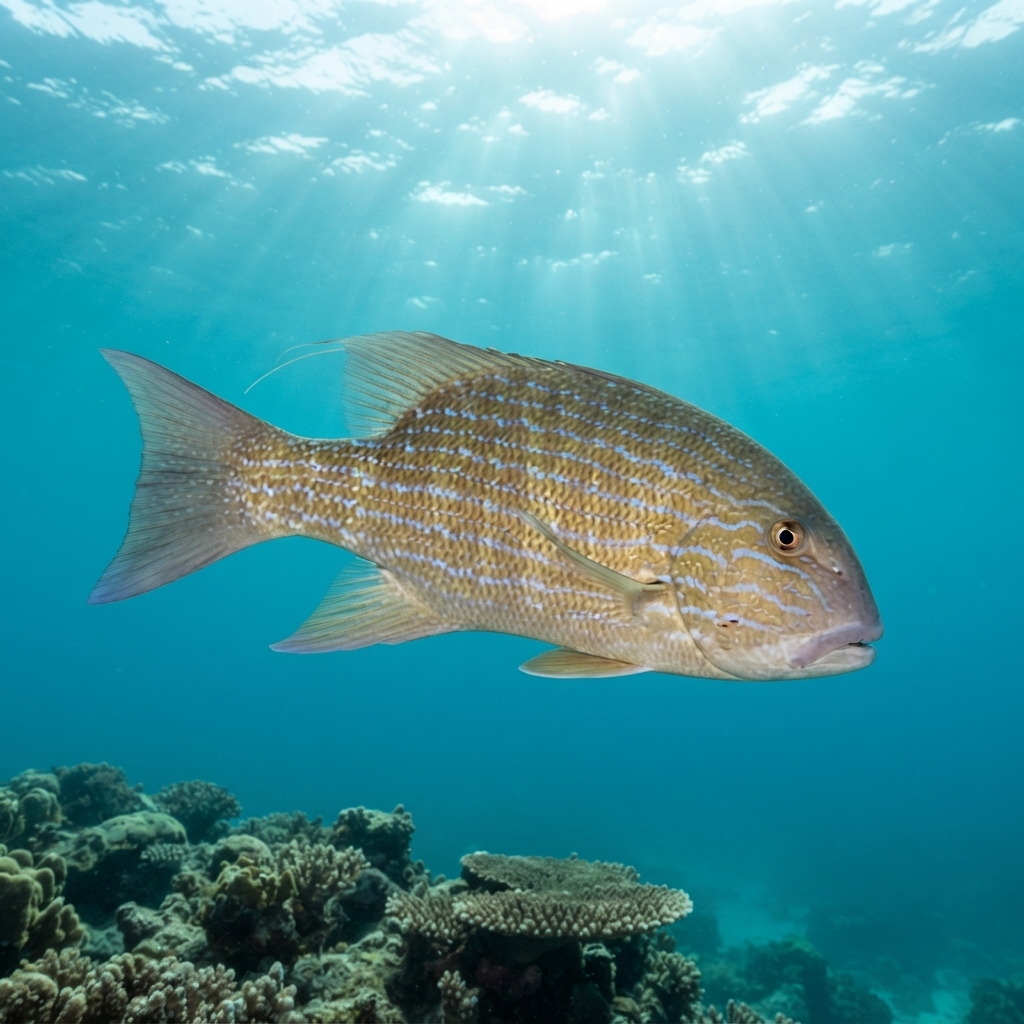
A heavy-bodied snapper reaching around 70cm, with a deep reddish-brown to copper body scattered with pale, indistinct blotches along the flanks. The head is blunt and the dorsal fin runs long and low, giving it a solid, slab-sided profile quite different from the slimmer snappers it shares reefs with. Look for the trailing filament on the tail lobe in larger adults, a useful giveaway when everything else about the fish reads as generically snapper-shaped.
Divers typically find it holding close to reef structure or ledges rather than out in open water, often solitary or in loose pairs. It tends to sit still or move off at an unhurried pace when approached, more wary than aggressive, which combined with its low numbers at any given site makes a sighting feel like a proper find.
It is one of the larger reef-dwelling snappers in Australian waters, and its patchy, low-density distribution across sites means most divers who log it do so only once or twice across many dives on the same reef.
Sightings do not show a concentrated season, and the water-temperature niche of 24.2 to 28.4C spans the tropical Australian reef year, so divers log it in any month.
Reef neighbours a diver could mistake it for. Use the identification notes above to tell them apart.
Logged almost exclusively on Australian reefs, with the strongest run of sightings in Queensland and a solid secondary population off Western Australia. It is not a fish tied to a single famous site so much as a scattered, low-density presence across tropical Australian reef systems.
Mapping where Chinaman Fish is logged…
Sightings are concentrated in Australia, most often in Queensland and Western Australia. It has not been reliably logged outside Australian waters, making it a specifically Australian reef target.
There is no strong seasonal pattern in sightings, and its comfortable range of roughly 24 to 28C covers the tropical Australian reef year, so it can turn up on any dive regardless of month.
Look for a heavy, deep-bodied snapper around 70cm with a reddish-brown body, faint pale blotches along the sides, and a low, long dorsal fin. Larger adults often show a fine filament trailing off the tail, a detail that helps separate it from similarly built snappers.
They typically reach around 70cm in length, putting them among the larger snappers divers encounter on Australian reefs.
No, they are not considered dangerous to divers and are generally wary rather than confrontational when approached.
Site and sighting data is aggregated from diver logs, iNaturalist and GBIF. For taxonomy and conservation status:
Emperor
2,052 sites