Chelidonura hirundinina
Spot the T-bar Swallowtail in the Cayman Islands, Florida, and Guadeloupe. Know what to look for in warm 24-29 °C waters from January through September.
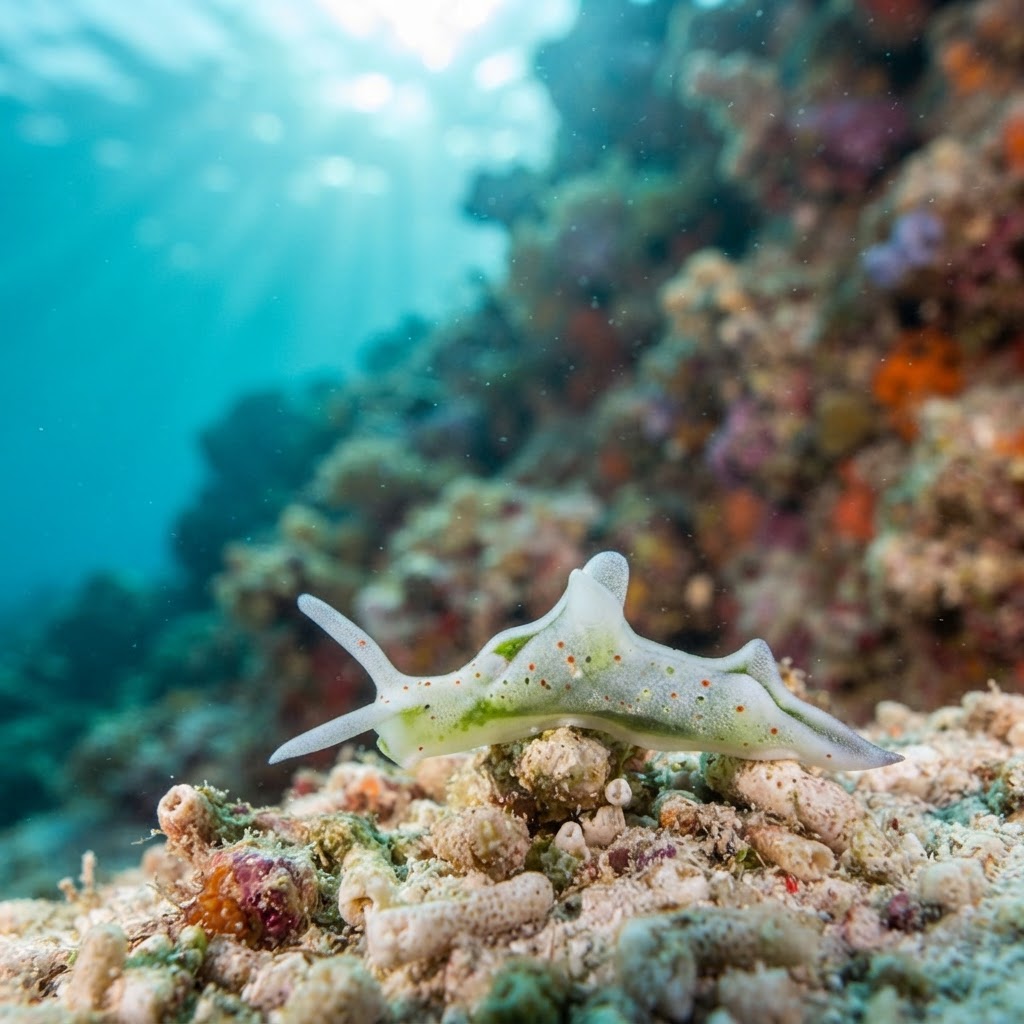
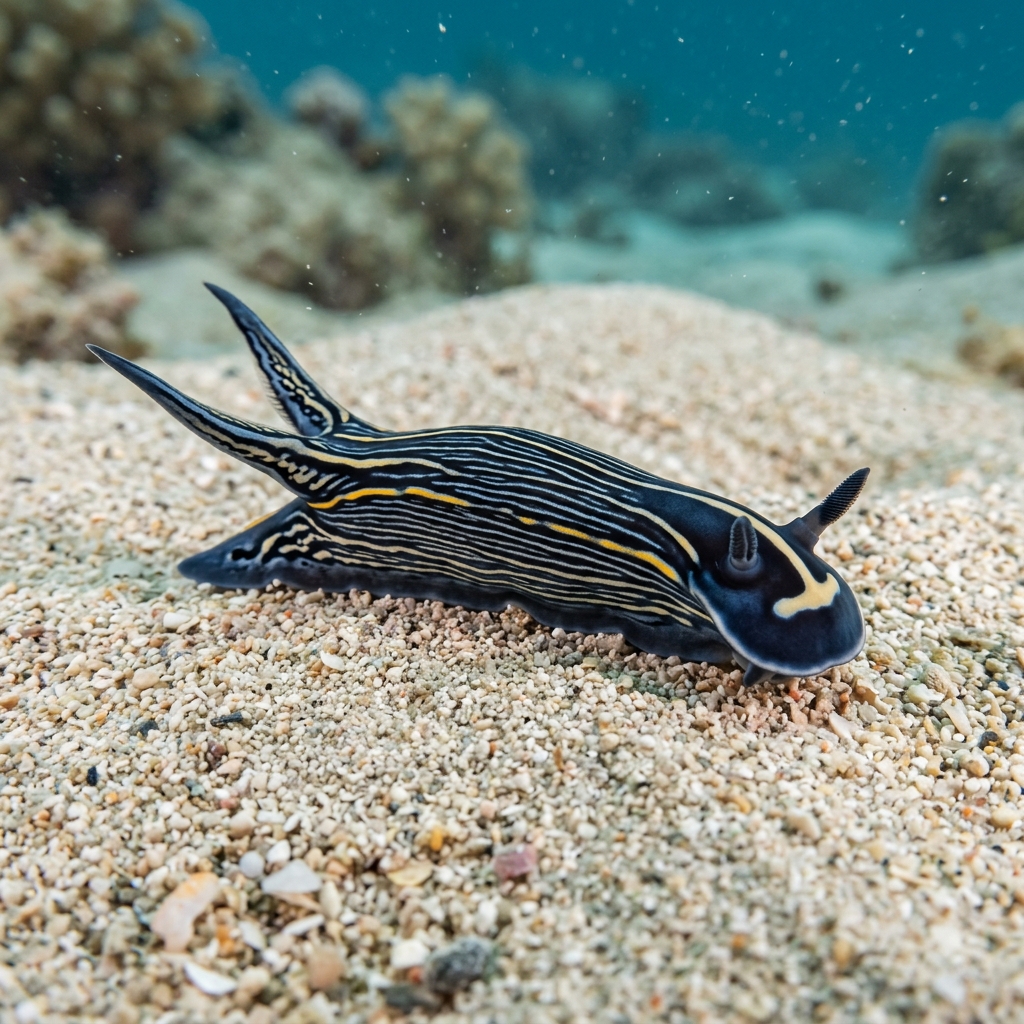
A small, streamlined headshield slug with a distinctively forked tail, the feature that gives it the 'swallowtail' name, and a pale or white T-shaped bar across the head that stands out sharply against its dark, nearly black body. Look for the white or pale blue marginal lines tracing the body edge and that split tail; no other small dark slug in its range combines those two marks together. It tends to move purposefully across sand or rubble rather than sitting still, which helps catch the eye.
You'll most often spot one gliding steadily across sand patches, rubble, or low reef in search of its flatworm prey, it rarely pauses long. It tends to ignore divers unless disturbed, continuing its purposeful crawl even when a torch (flashlight) is pointed at it. Night dives and shallow reef margins are productive hunting grounds, as it becomes more active when small flatworms are on the move.
Like other members of its family, the T-bar Swallowtail is a specialist predator that hunts and swallows small polyclad flatworms whole, using a relatively large oral tube to engulf prey quickly.
Northern Hemisphere sightings concentrate between January and September, so the first three quarters of the year are your best window. It occupies warm reef water between 24 and 29 °C, meaning tropical and subtropical sites hold it for extended seasons.
Reef neighbours a diver could mistake it for. Use the identification notes above to tell them apart.
Most commonly logged across the Caribbean and western Atlantic, with the strongest records coming from Grand Cayman, Florida and the Southeast United States, and Guadeloupe. Hawaii rounds out the top regions for Pacific sightings, while the Philippines, Saba Marine Park, and Taiwan also contribute solid records. If you're targeting this species, the Cayman Islands and Florida offer the best-documented hotspots.
Mapping where T-bar Swallowtail is logged…
The best-documented sites are in the Cayman Islands (particularly Grand Cayman and Little Cayman), Florida and the wider Southeast United States, and Guadeloupe in the Caribbean. Hawaii offers reliable Pacific sightings, and the Philippines, Saba Marine Park, and Taiwan all contribute records too.
Northern Hemisphere sightings cluster from January through September, so that window gives you the best odds. It favours warm water between 24 and 29 °C, so tropical sites with stable temperatures can hold it across much of the year.
Look for a small, dark-bodied slug with a pale T-shaped bar across its head and a distinctively forked tail with white-tipped lobes. The combination of that T-bar head marking and the split swallowtail is unique among similar species in its range.
It's most often rated uncommon at the sites where it appears, occasionally tipping into rare. A small proportion of sites do record it as common, so local knowledge matters. Slow, attentive dives on sandy rubble or low reef, especially at night, improve your chances considerably.
Site and sighting data is aggregated from diver logs, iNaturalist and GBIF. For taxonomy and conservation status:
Elysia Timida
573 sites