Sagaminopteron psychedelicum
Spot the Psychedelic Batwing in the Philippines or Malaysia's Perhentian & Redang reefs in warm 25-29°C waters. Tips on ID and when to look.
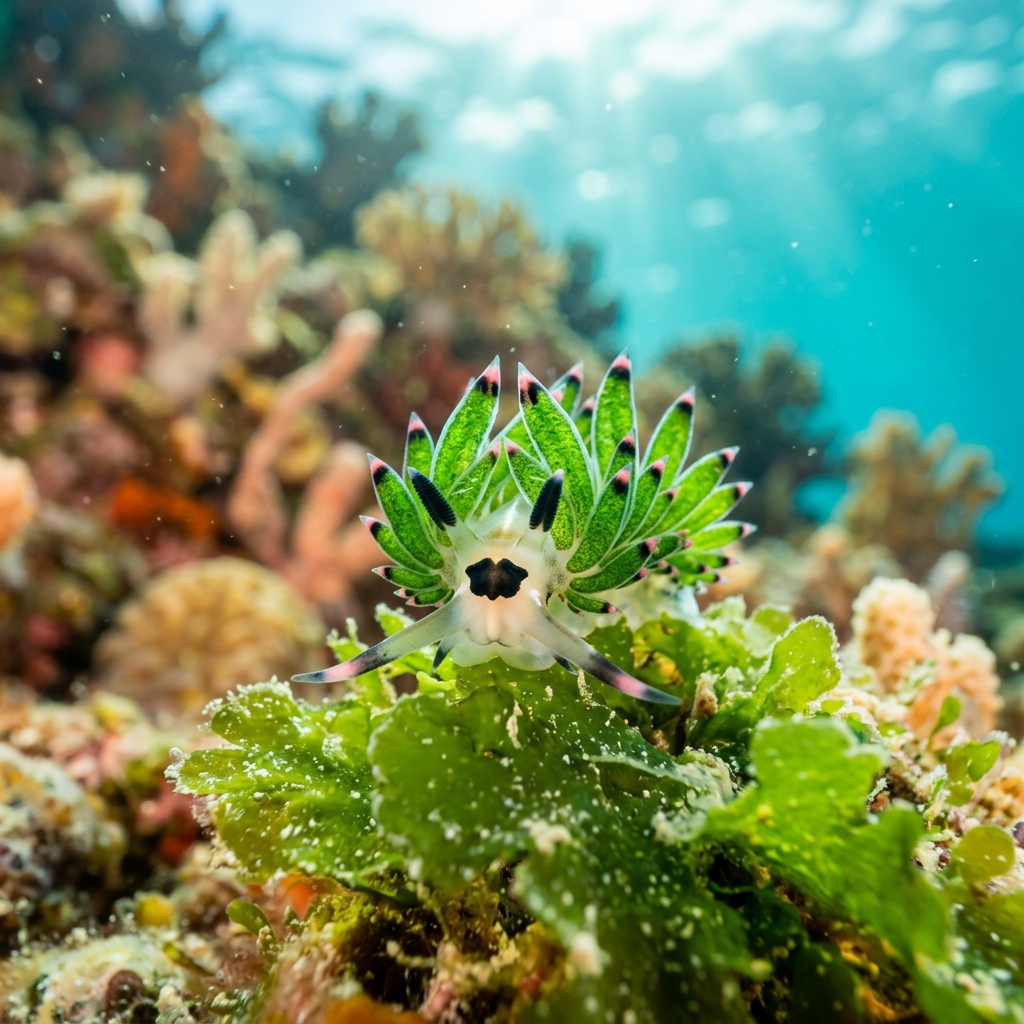
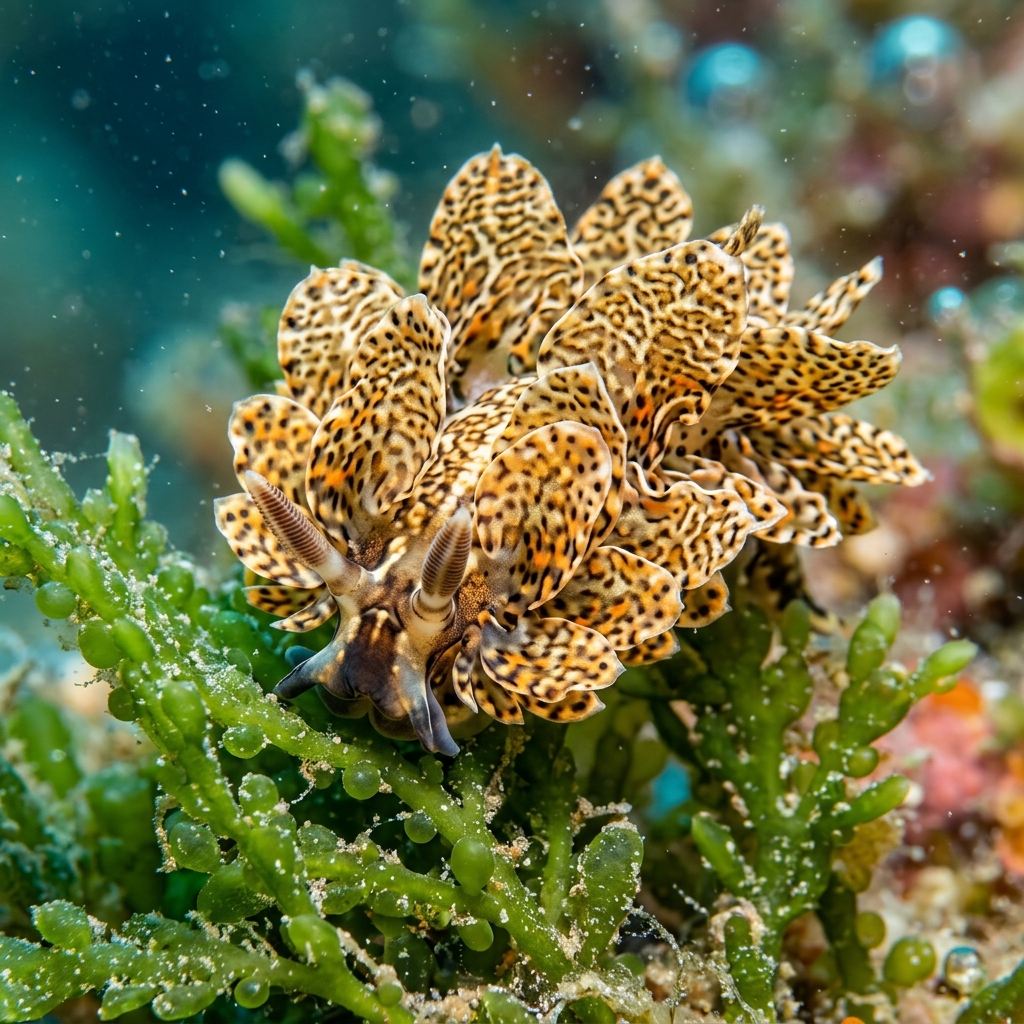
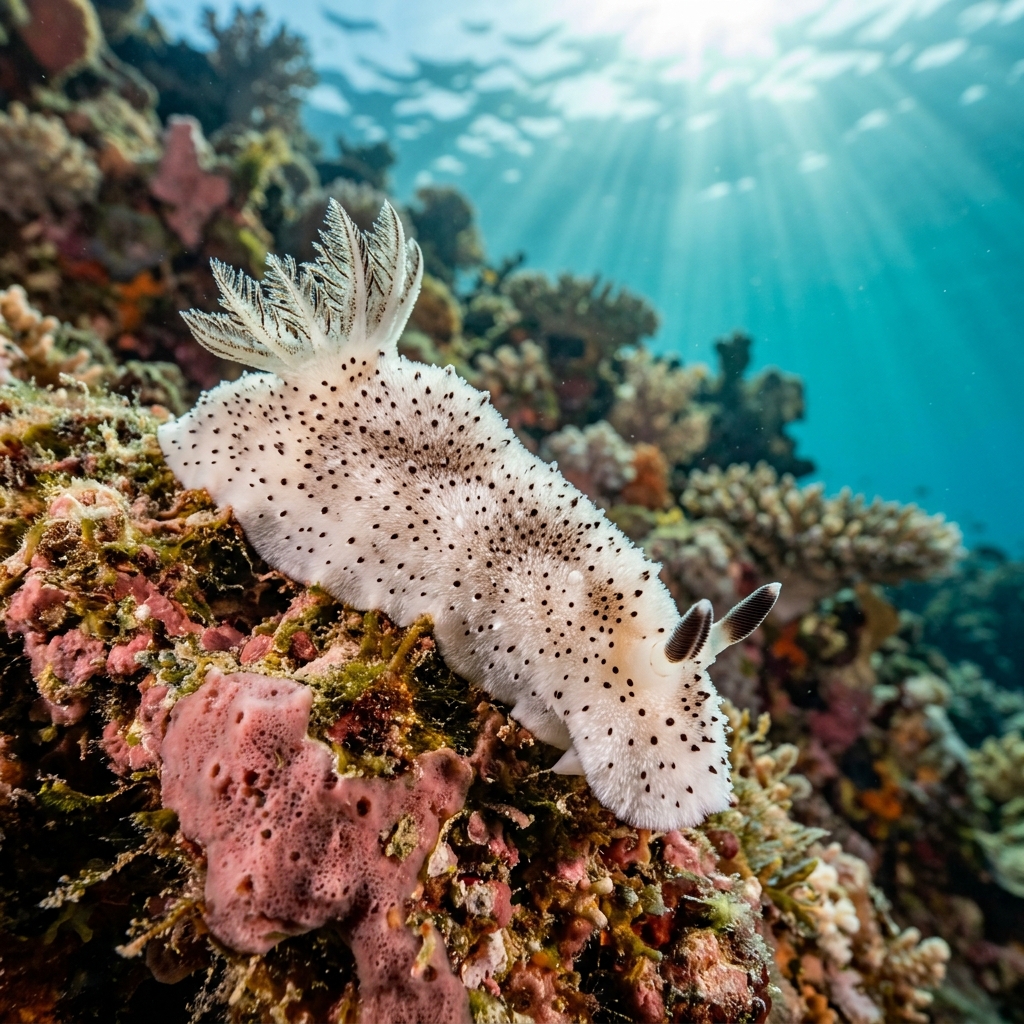
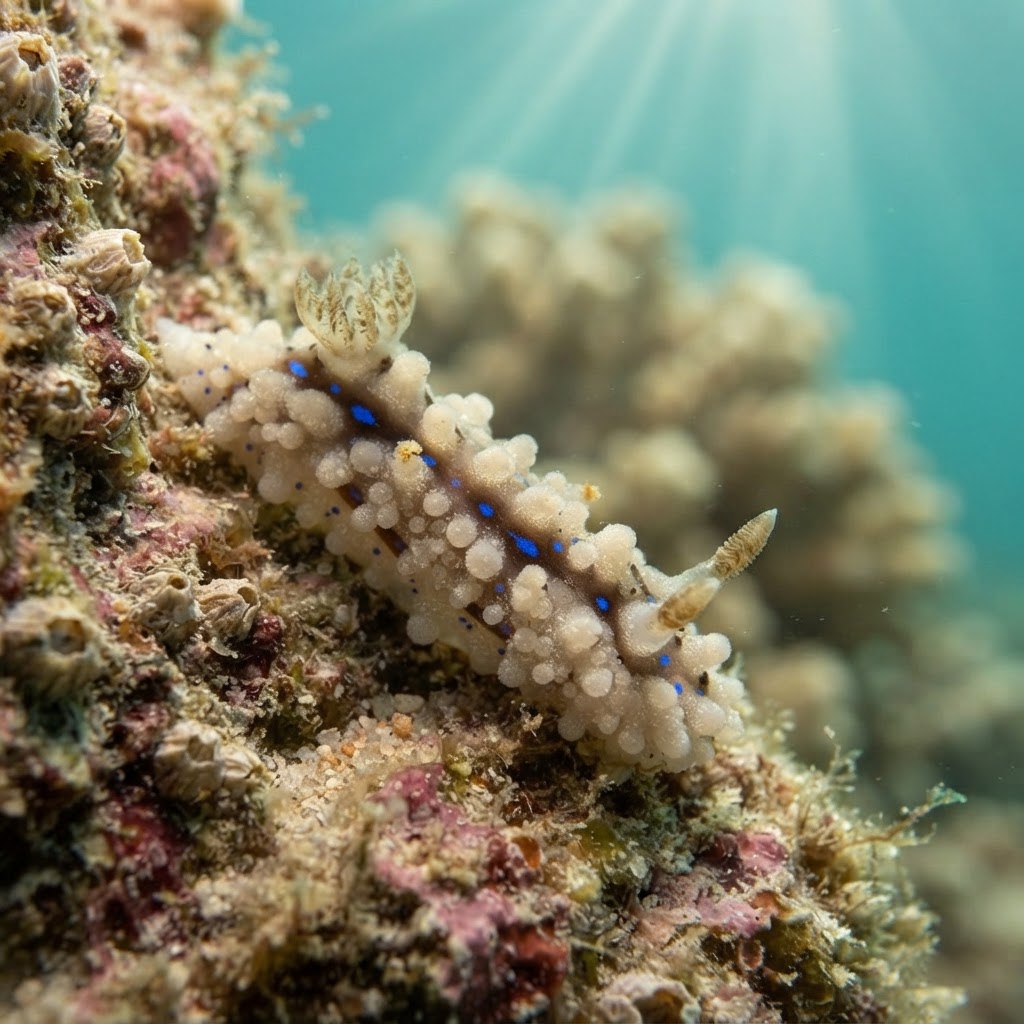
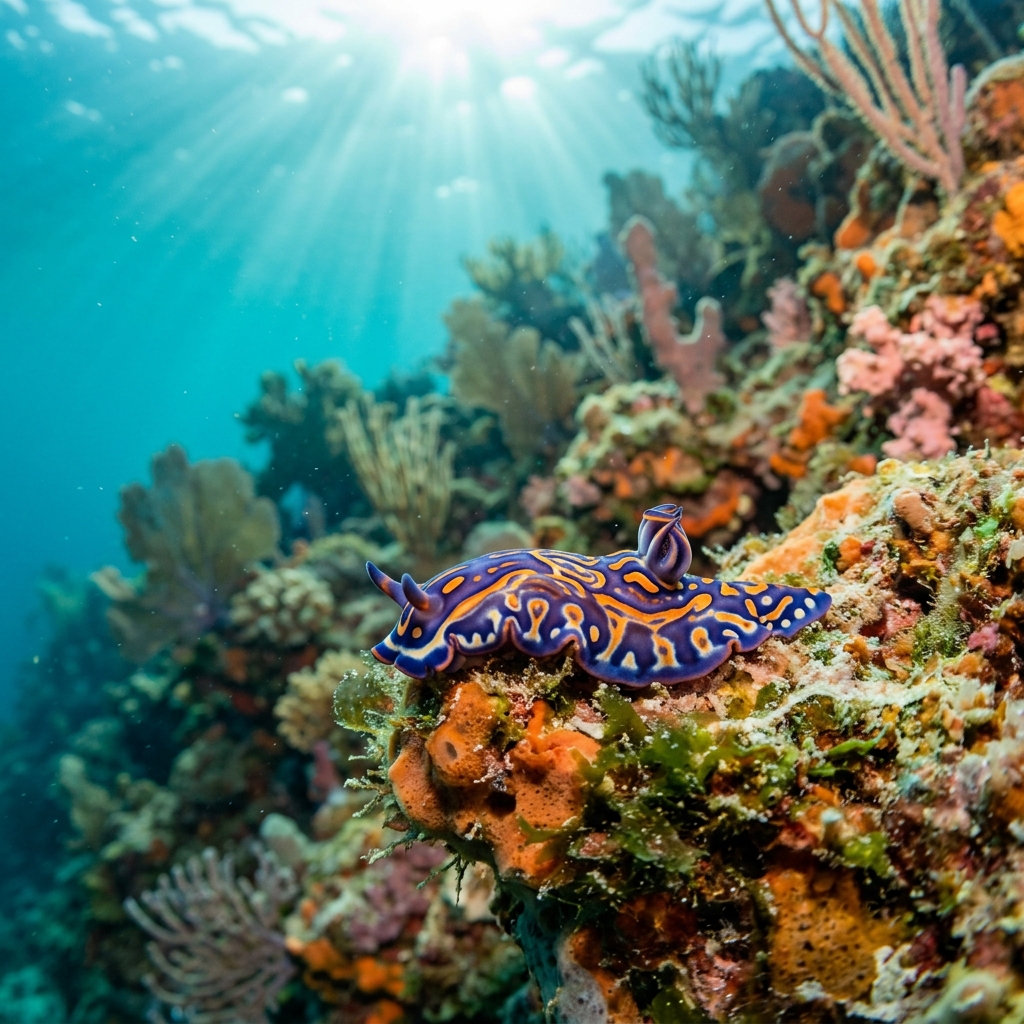
This tiny headshield slug is named for a reason: its enlarged, wing-like parapodia (fleshy lobes that fold over the body) are boldly patterned in contrasting colours, typically bright orange or yellow with dark spots and reticulated lines that make it look almost painted. It is a very small animal, likely just a few millimetres long, so you are looking for something jewel-like on bare rubble or algae rather than a conspicuous reef creature. The flared parapodia are the single best field mark; when they are spread, the slug resembles a tiny batwing in flight.
Divers typically spot the Psychedelic Batwing crawling slowly across rubble patches, algae mats, or silty reef flats, often in sheltered, shallower areas. Like other headshield slugs it is a deliberate mover and will not flee, but its tiny size means it is far easier to photograph once found than it is to actually locate. It is most often encountered during dedicated nudibranch searches by slow, close-focus divers rather than by accident.
As a sapsucking slug in the family Gastropteridae, it feeds by piercing algal cells and extracting the contents, the same photosynthetic pigments it ingests likely contribute to its vivid colouration.
In the Northern Hemisphere, where the Philippines, Malaysia, and Taiwan hold most records, sightings concentrate between January and May. Southern Hemisphere data, including Réunion, points to November as the peak month.
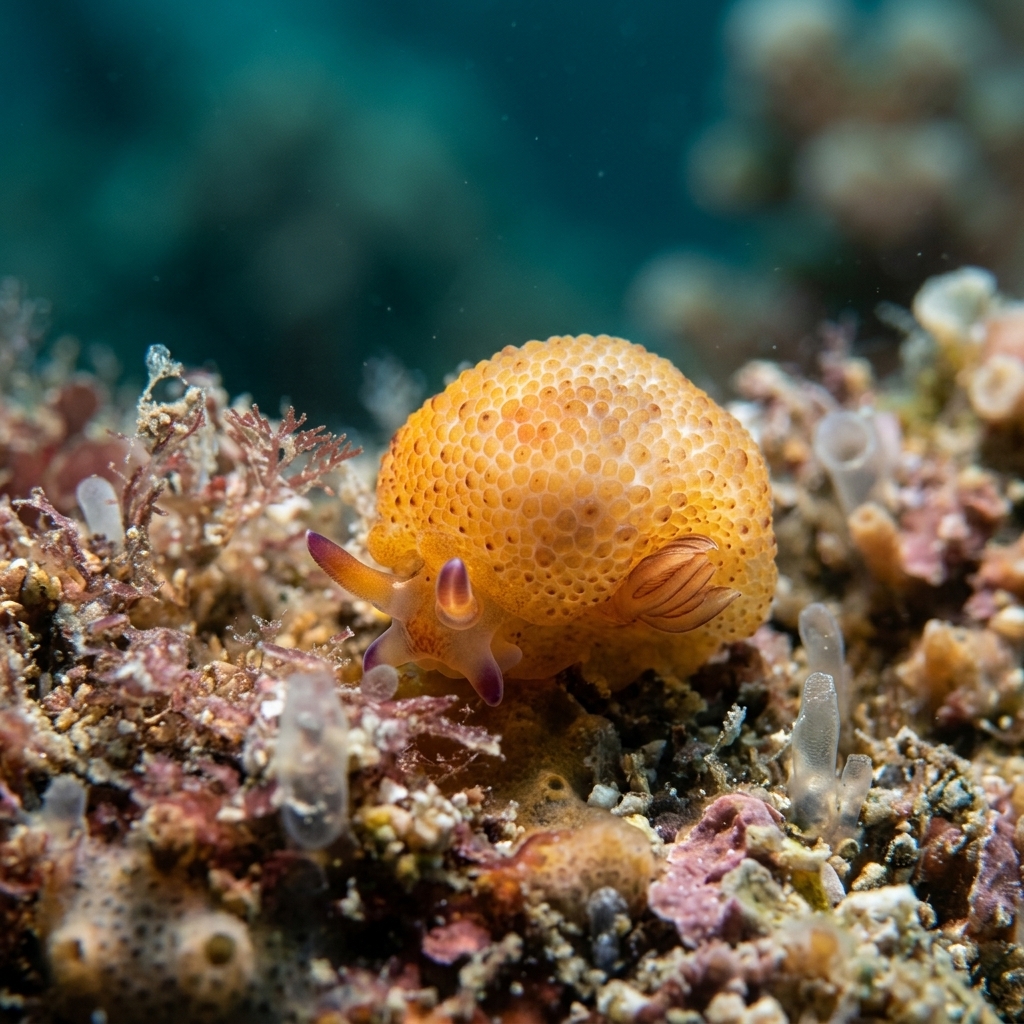
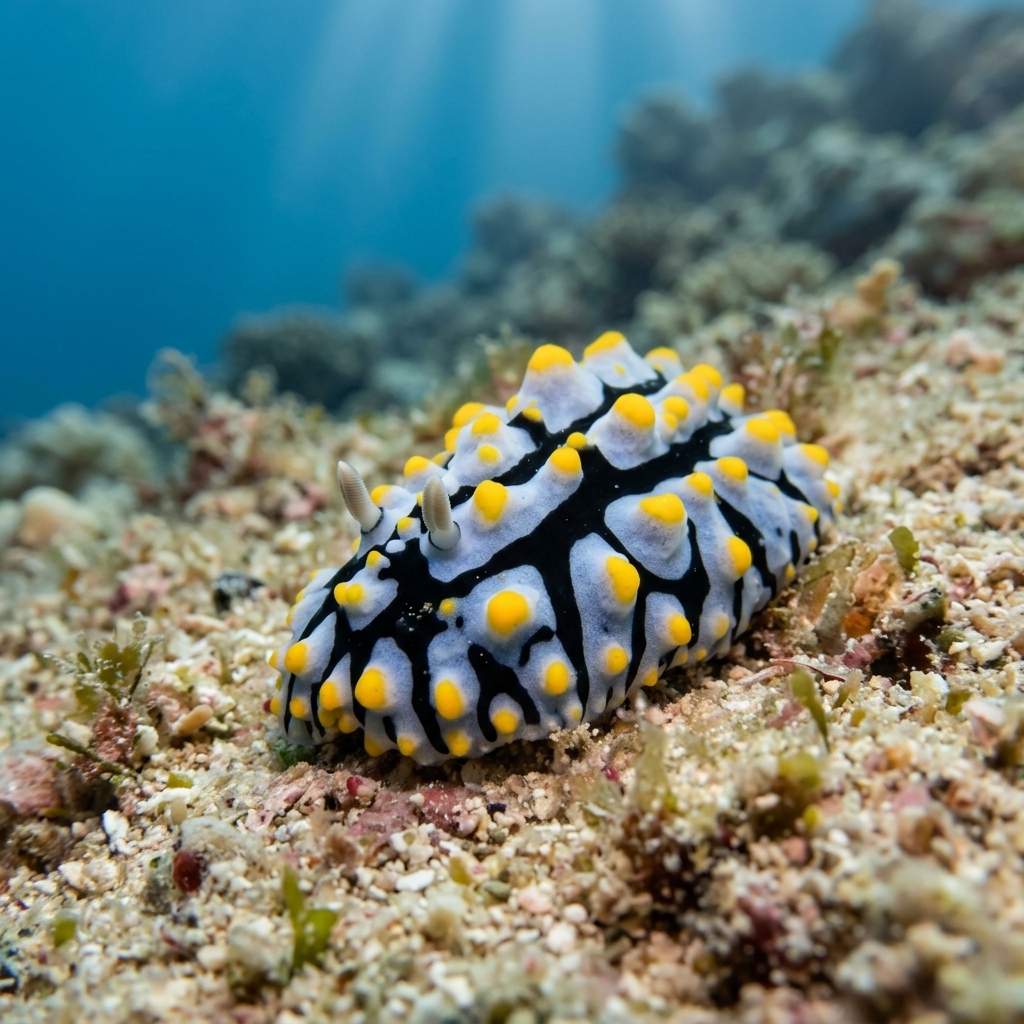
Reef neighbours a diver could mistake it for. Use the identification notes above to tell them apart.
Most sightings come from the Philippines, especially Western Visayas, Visayas East and North, and Luzon, which together account for the majority of logged encounters worldwide. Malaysia's Perhentian and Redang Islands and the reefs around Réunion's Saint-Gilles-les-Bains are the next strongest concentrations, with additional records from Bali and Lombok in Indonesia and Liuqiu Island in Taiwan.
Mapping where Psychedelic Batwing is logged…
The Philippines is by far the top destination, with Western Visayas and Visayas East and North leading the records. Malaysia's Perhentian and Redang Islands, Réunion's Saint-Gilles-les-Bains area, Bali and Lombok in Indonesia, and Liuqiu Island in Taiwan all have confirmed sightings. Expect to find it on sheltered, muck-style or rubble reef habitats.
In the Philippines, Malaysia, and Taiwan, sightings peak between January and May. For Réunion in the Southern Hemisphere, November appears to be the prime month. Water temperatures across all sites sit in the warm 25-29°C range, so conditions outside these windows are not necessarily bad, just less frequently productive.
Look for the distinctive spread parapodia, wing-like fleshy lobes that extend from the body and display bold, intricate patterning in orange, yellow, and dark tones. It is a very small slug, so this is a millimetre-scale search on rubble or algae. The 'batwing' shape when the lobes are open is unlike most other small slugs you will encounter.
Very rare. Across the majority of sites where it has been recorded, it is logged as rare, with only a handful of sites classing it as uncommon and very few as common. Its tiny size and cryptic habits mean it is almost exclusively found by divers actively searching rubble and algae patches at close range.
Exact size data for this species is not well documented, but headshield slugs in the Gastropteridae family are generally just a few millimetres in length. Underwater, expect to be searching for something very small, roughly the size of a fingernail at most, which is a big part of why it is so rarely spotted.
Site and sighting data is aggregated from diver logs, iNaturalist and GBIF. For taxonomy and conservation status:
Light-spotted Aegires
3,168 sites