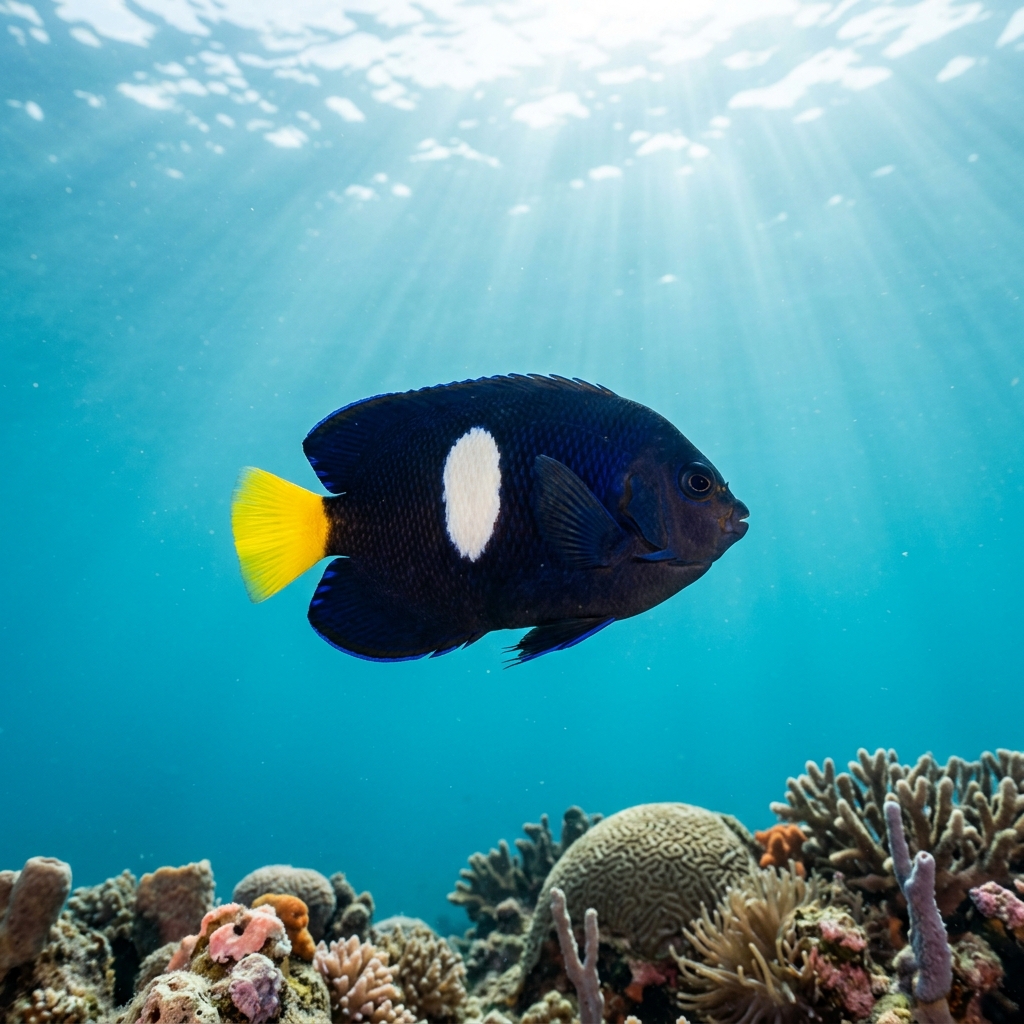
Centropyge tibicen
Spot the Keyhole Angelfish across Indonesian and Malaysian reefs. Learn its white-patch ID trick, best regions like Pulau Tioman, and when to look.
A dark, deep-bodied angelfish that is mostly black-blue with a striking white oval or keyhole-shaped patch on the upper flank, which is the single most reliable ID mark underwater. The tail and rear portions of the dorsal and anal fins are bright yellow, giving the fish a strong two-tone contrast. Adults typically appear medium-sized on the reef, with the rounded body shape common to dwarf angels (Centropyge). Juveniles share the same basic pattern but with more blue iridescence on the body and less yellow.
Usually spotted moving slowly along coral-rich reef walls and rubble slopes, foraging for algae and detritus close to shelter. It tends to be shy and will retreat into coral crevices when approached, so slow, patient movement gives divers the best chance of a prolonged look. Most encounters happen in the shallower reef zones, where coral growth is dense enough to provide quick cover.
Like most members of the Centropyge genus, the keyhole angelfish is a protogynous hermaphrodite, meaning dominant females can change sex to become males when the social situation calls for it.
There are no strong year-round seasonality data for the Northern Hemisphere sites where most sightings occur, so visits across tropical Indonesia, Malaysia, and the Philippines are worthwhile at any time of year. For Southern Hemisphere locations such as eastern Australia, sightings concentrate between December and April.
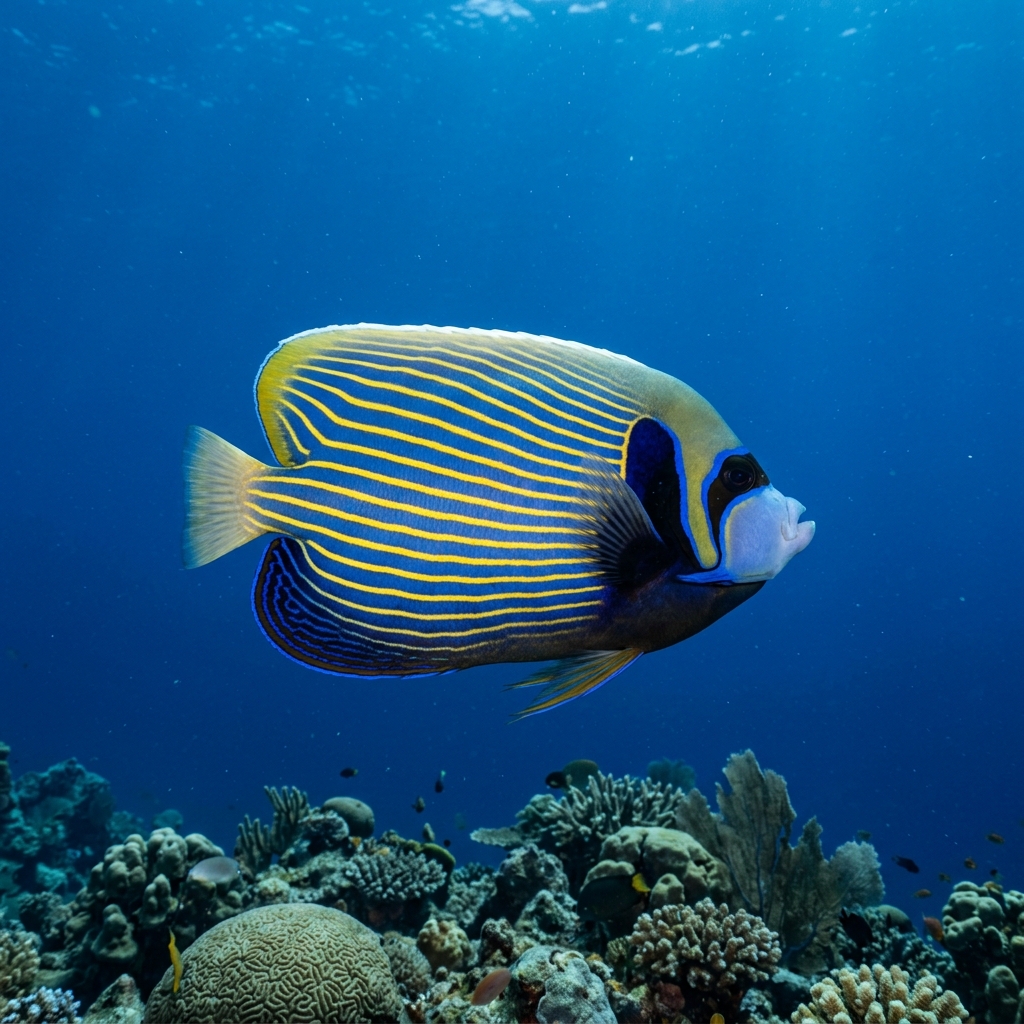
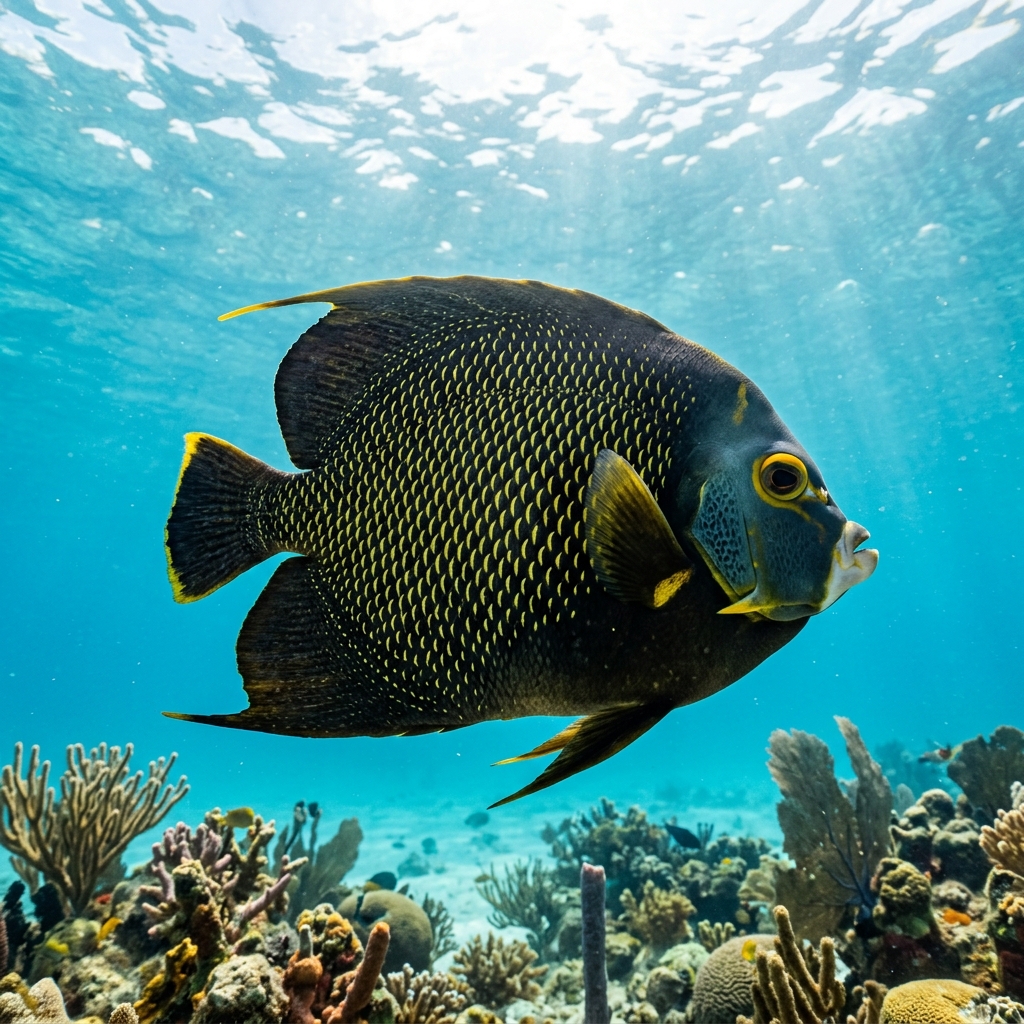
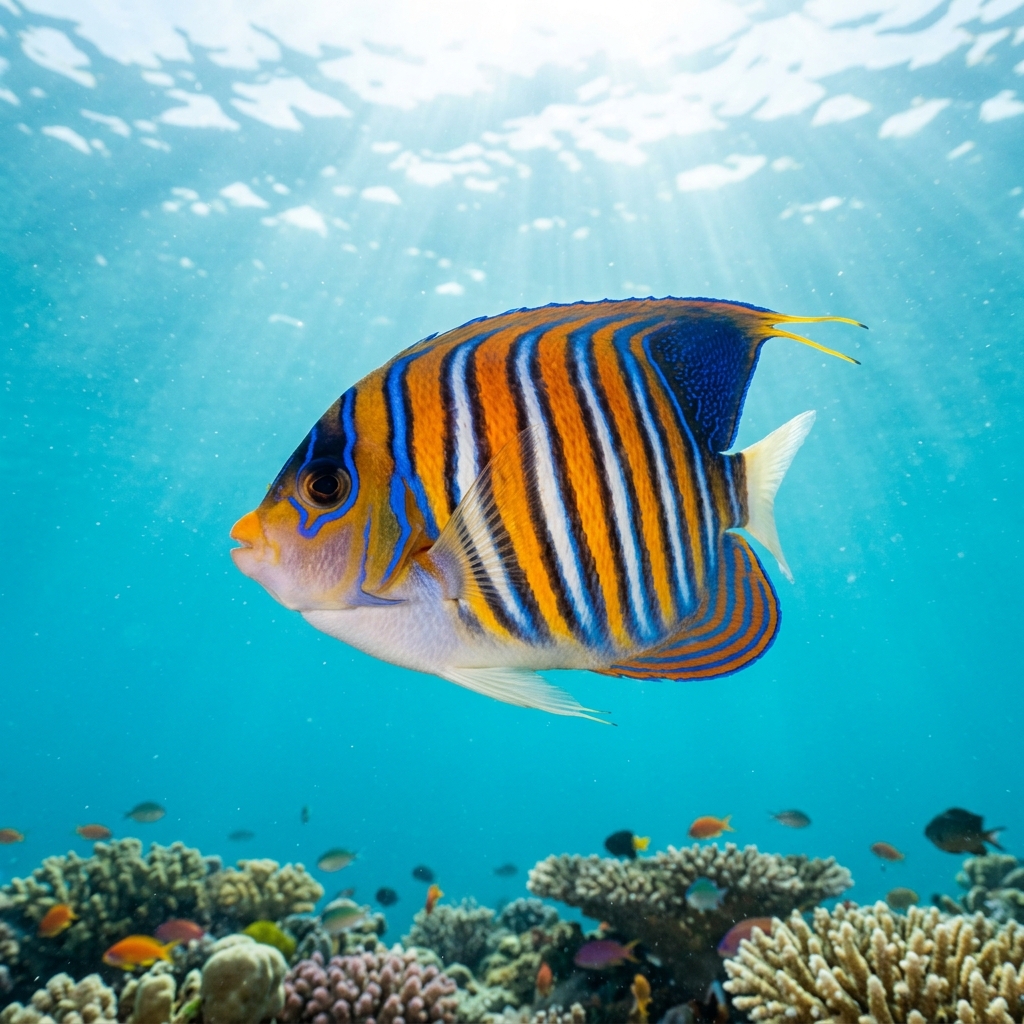
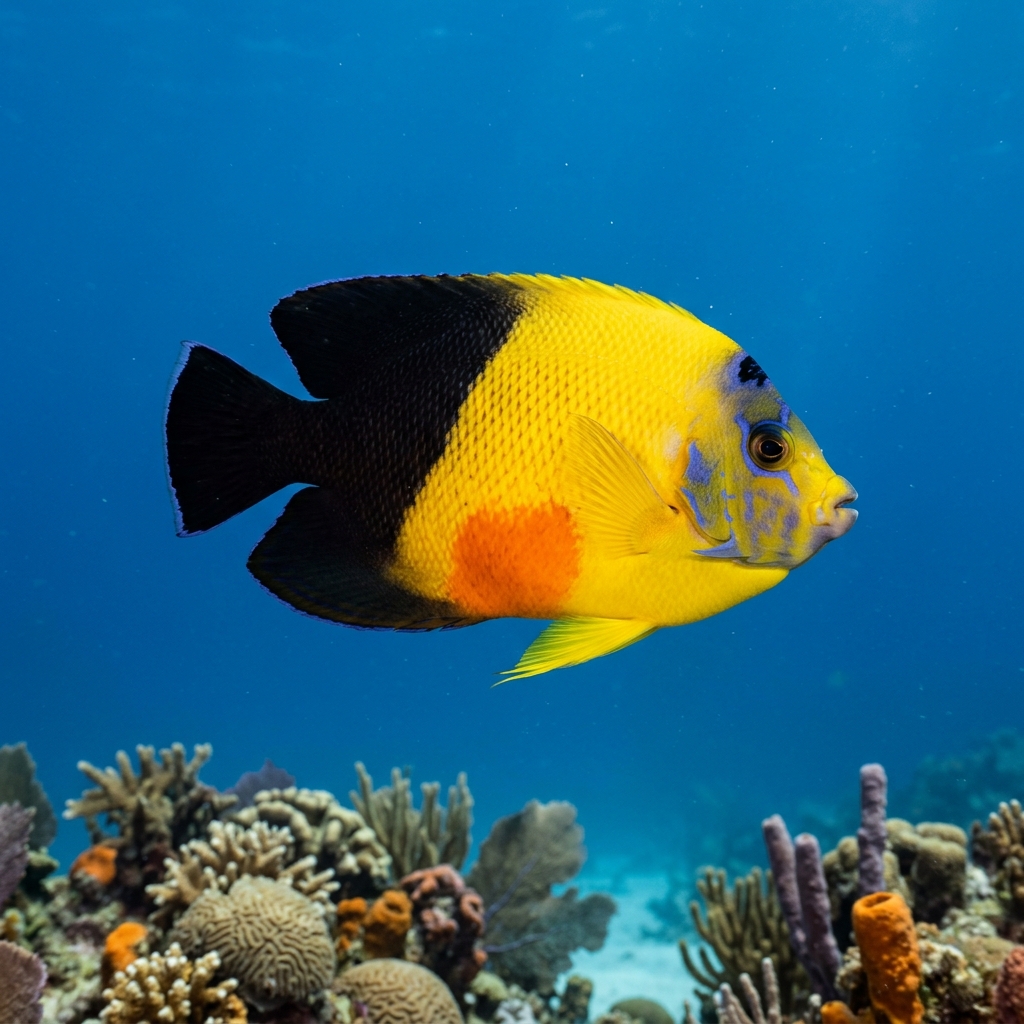
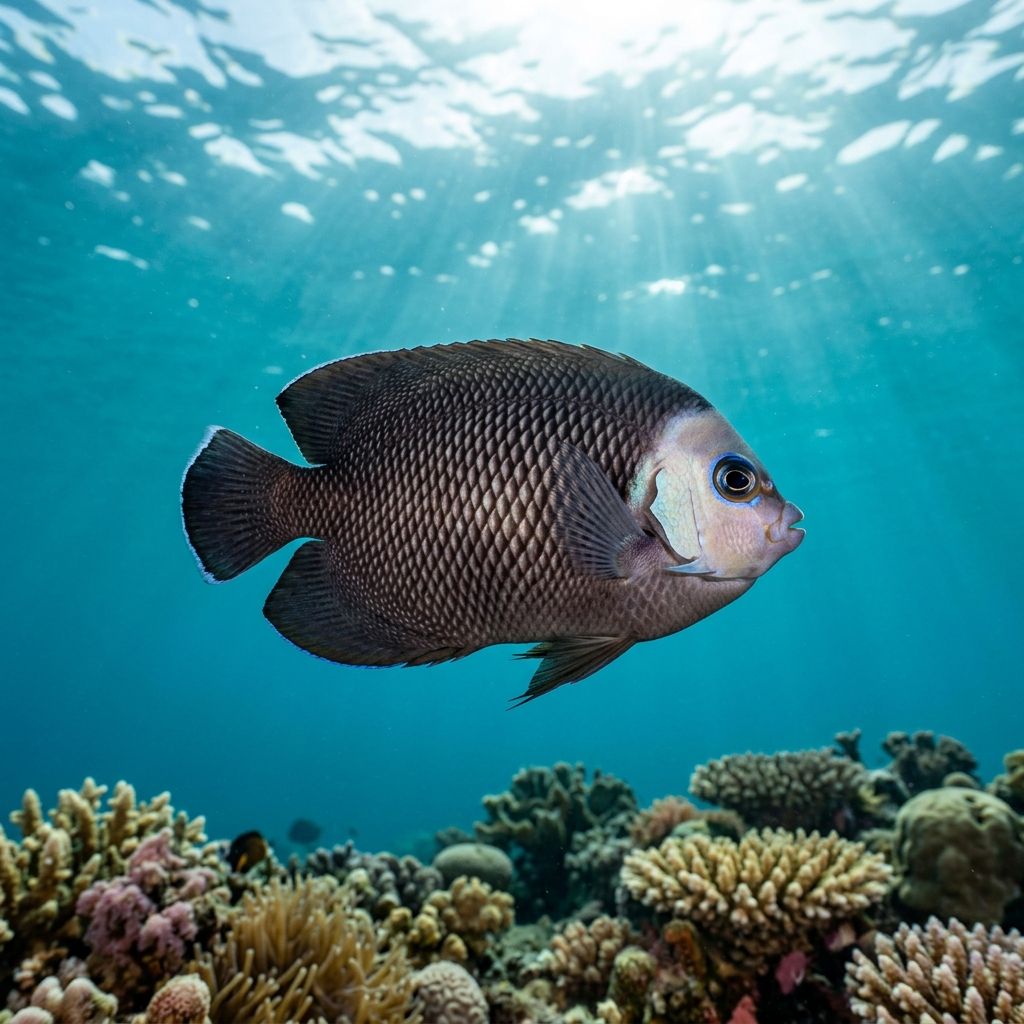
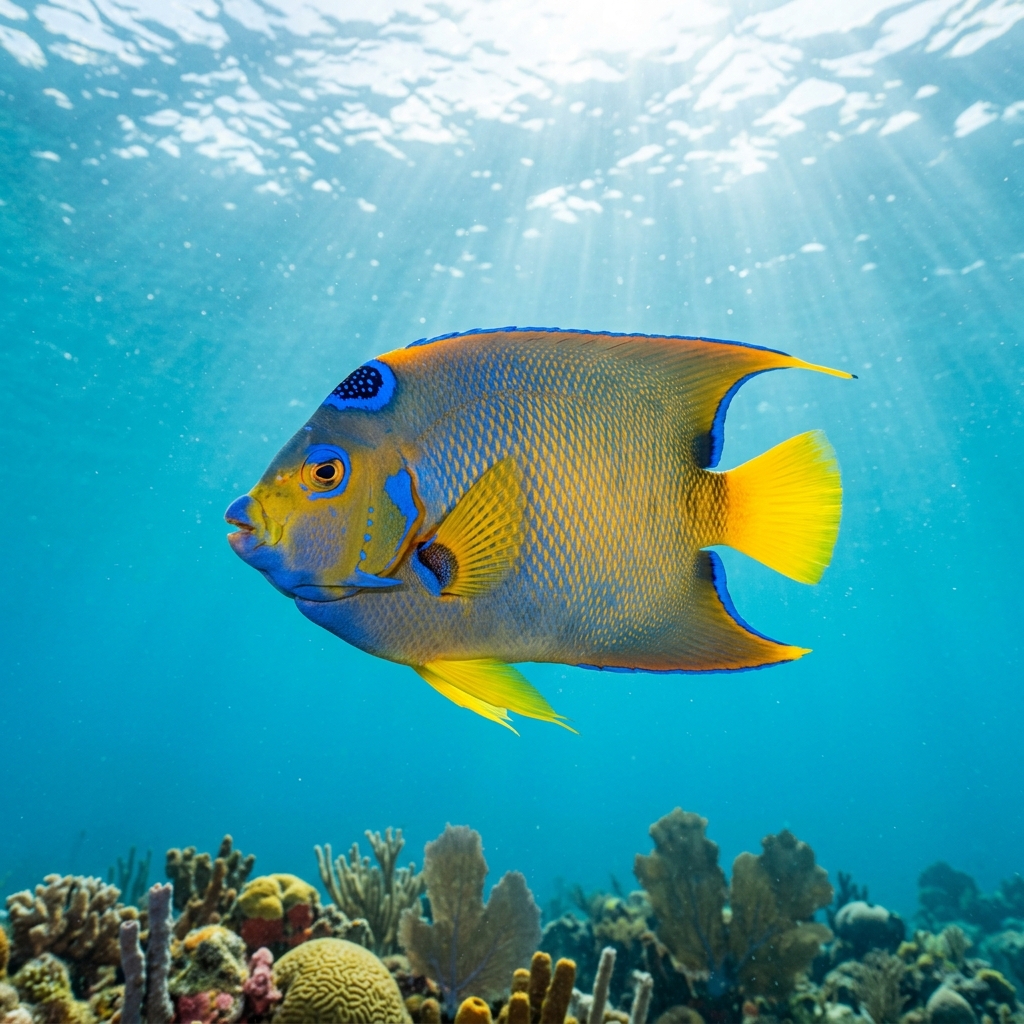
Reef neighbours a diver could mistake it for. Use the identification notes above to tell them apart.
Most frequently logged in Indonesia and Malaysia, with particularly strong records across Bali, Lombok and Java, and the reefs around Pulau Tioman. The Philippines, specifically the Visayas, and New Caledonia's Nouméa region are also reliable areas, while smaller numbers of sightings come from Australia's New South Wales and Queensland coasts.
Mapping where Keyhole Angelfish is logged…
The strongest concentration of sightings is in Indonesia and Malaysia, particularly around Bali, Lombok, and the reefs of Pulau Tioman. The Visayas in the Philippines, Nouméa in New Caledonia, and the east coast of Australia are also well-documented spots.
Across tropical sites in Indonesia, Malaysia, and the Philippines, there is no dominant season, so year-round visits are reasonable. If you are diving in Australia, the December to April window produces the most consistent sightings.
Look for the distinctive white oval or keyhole-shaped patch on the upper flank of an otherwise dark, deep-bodied fish. Combined with a yellow tail and yellow-edged fins, this pattern is unlike any other angelfish you are likely to encounter on Indo-Pacific reefs.
Keyhole angelfish are a dwarf angelfish in the Centropyge genus and typically reach around 18 to 20 cm in length, though exact size data from diver observations vary. On the reef they appear noticeably smaller than the large angelfish species such as emperor or bluefaced angelfish.
Diver records put it firmly in the rare-to-uncommon bracket at the sites where it occurs. Its shy nature and tendency to dart into crevices means even experienced divers on suitable reefs often miss it. Slow, unhurried dives along coral-rich walls give the best odds.
Site and sighting data is aggregated from diver logs, iNaturalist and GBIF. For taxonomy and conservation status:
Rock Beauty
1,573 sites