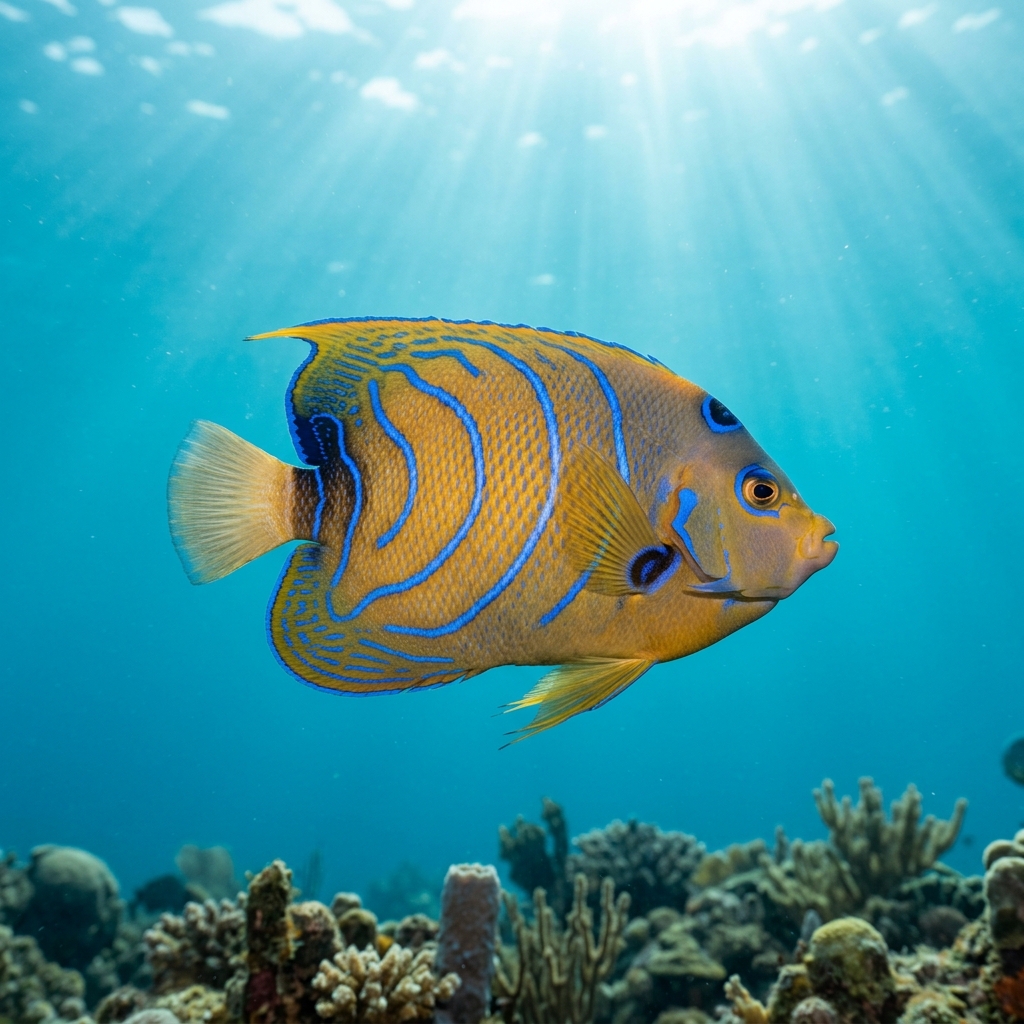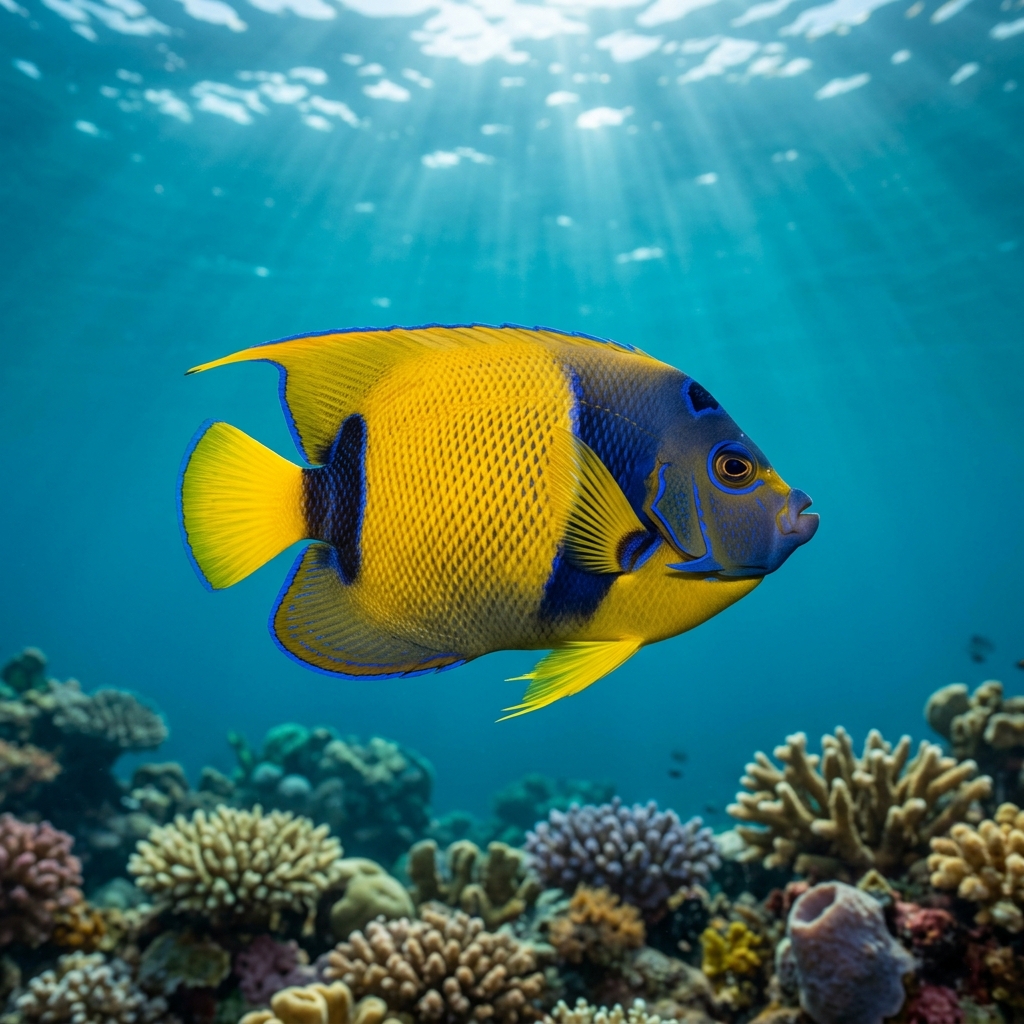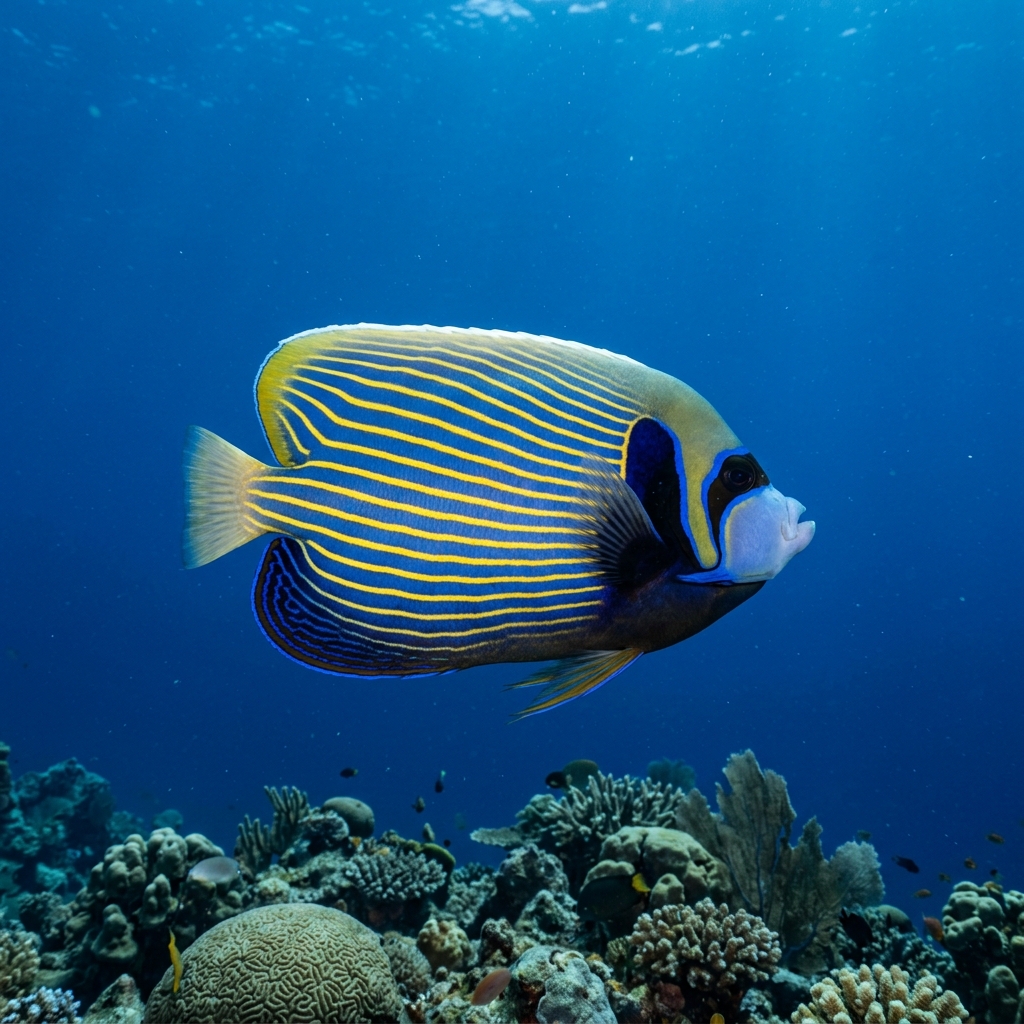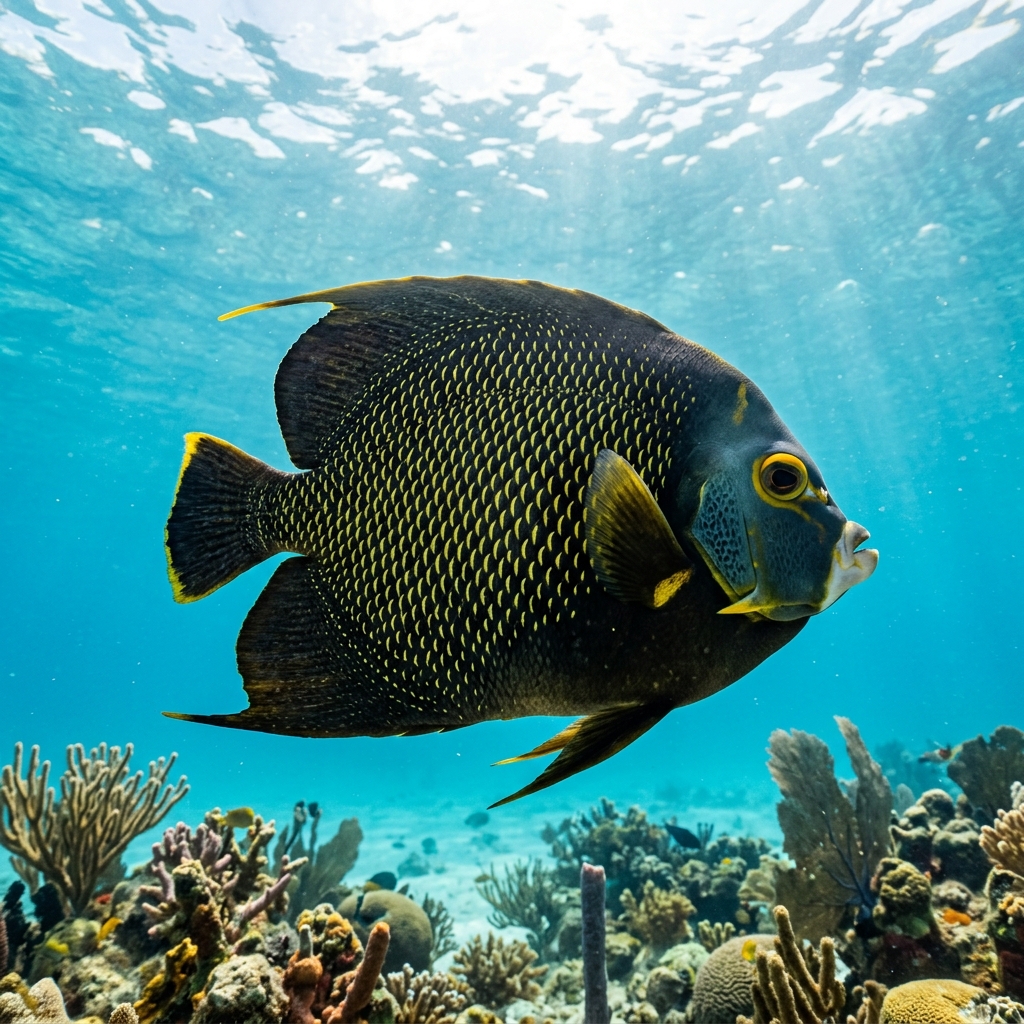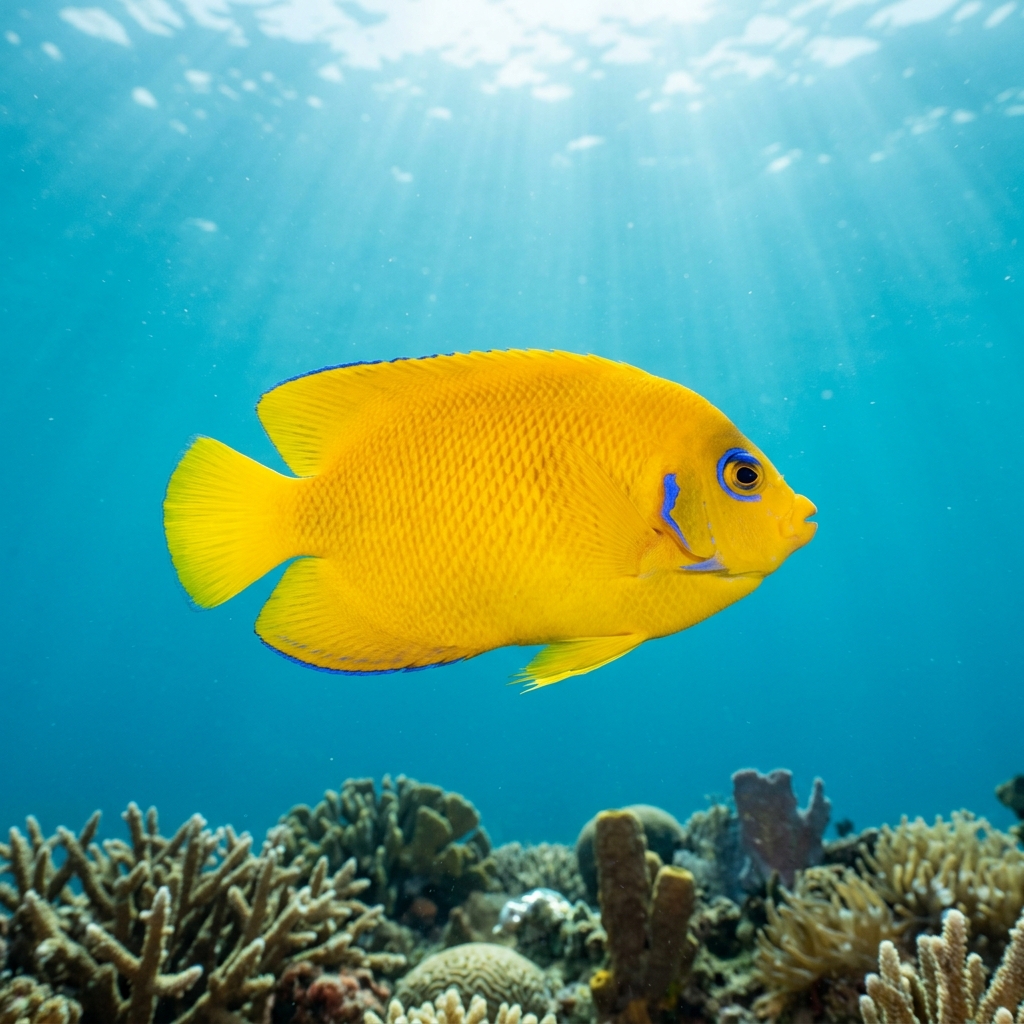
Centropyge flavissima
Spot lemonpeel angelfish in Tahiti, Okinawa and the Cook Islands. All-yellow body with vivid blue eye rings makes this reef gem unmistakable at 25-29 °C.
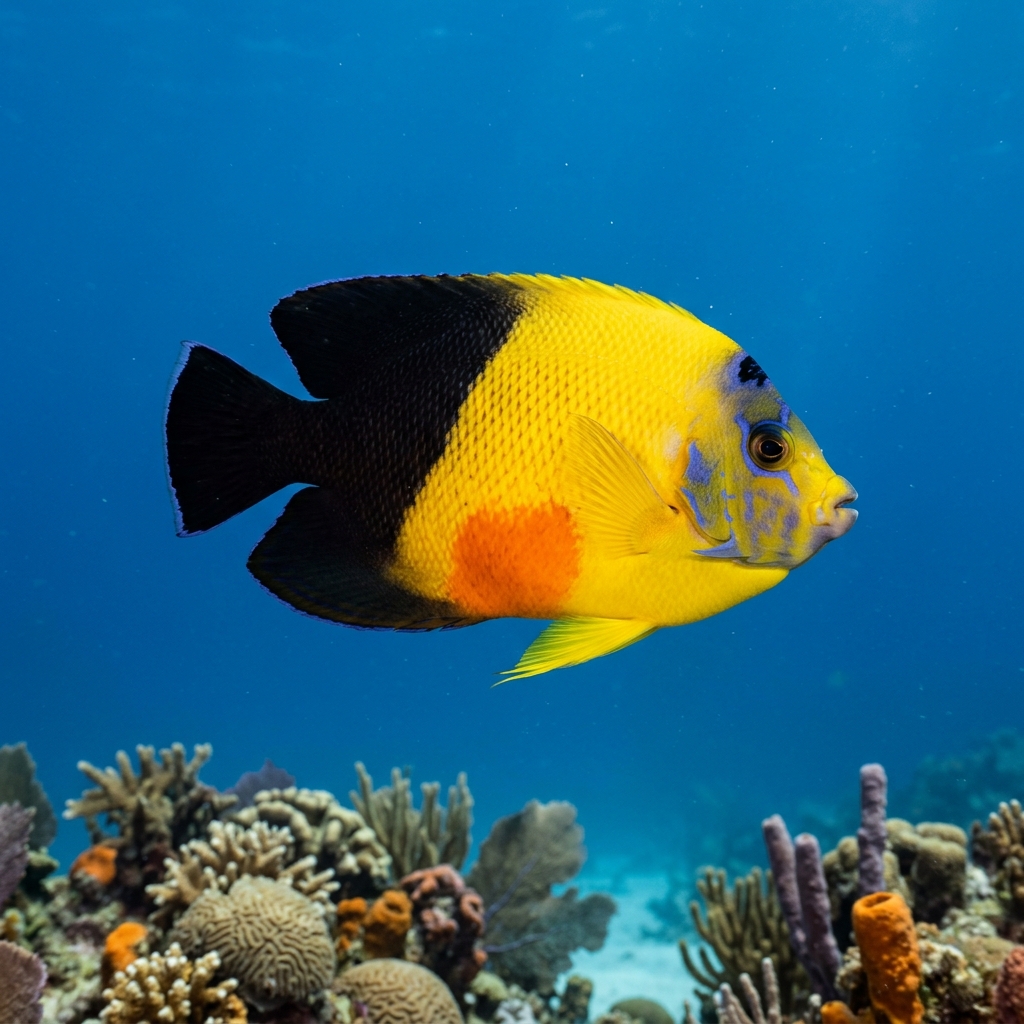
Few reef fish are as uniformly bold as this one: the entire body is a rich, saturated yellow with no contrasting stripes or patches. The feature that clinches the ID is a vivid electric-blue ring around each eye, matched by thin blue outlines on the gill cover and fins. It is a small fish, typically tucked close to the reef rather than free-swimming in open water. Juveniles carry a prominent dark spot ringed in blue on their flanks, which fades as they mature.
Lemonpeel angelfish keep close to the reef structure, picking at algae and encrusting organisms on coral rubble and rocky surfaces. They are shy and dart quickly into crevices when approached, so slow and patient movements give the best views. Solitary individuals are the norm, though they are sometimes encountered as a single dominant male with a small group of females on established home patches of reef.
Like many dwarf angelfish in the Centropyge genus, lemonpeel angelfish are protogynous hermaphrodites: they begin life as female and the dominant individual in a social group can change sex to become male if the resident male disappears.
In the Southern Hemisphere, sightings concentrate from August through November, making that the most productive window for French Polynesia, New Caledonia, and Fiji. In the Northern Hemisphere sites such as Okinawa, January through April is the peak period.
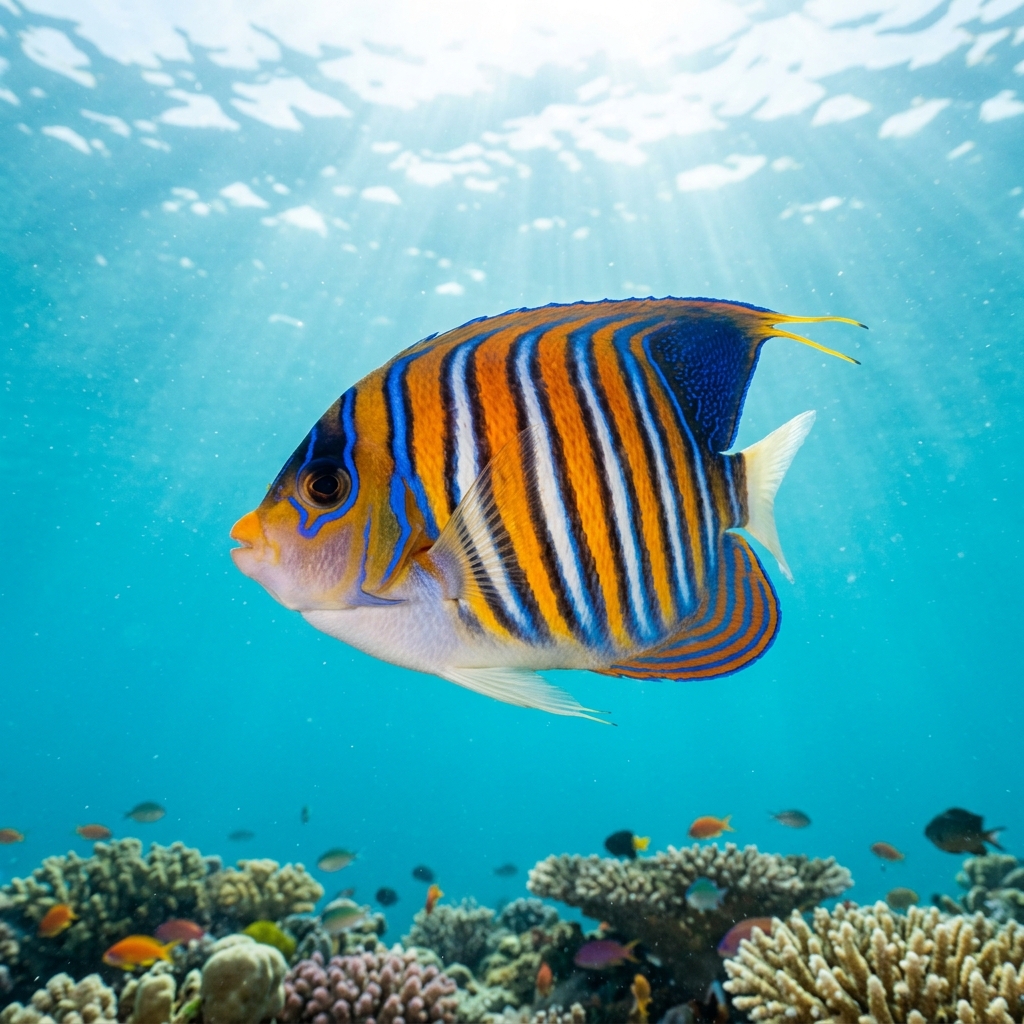
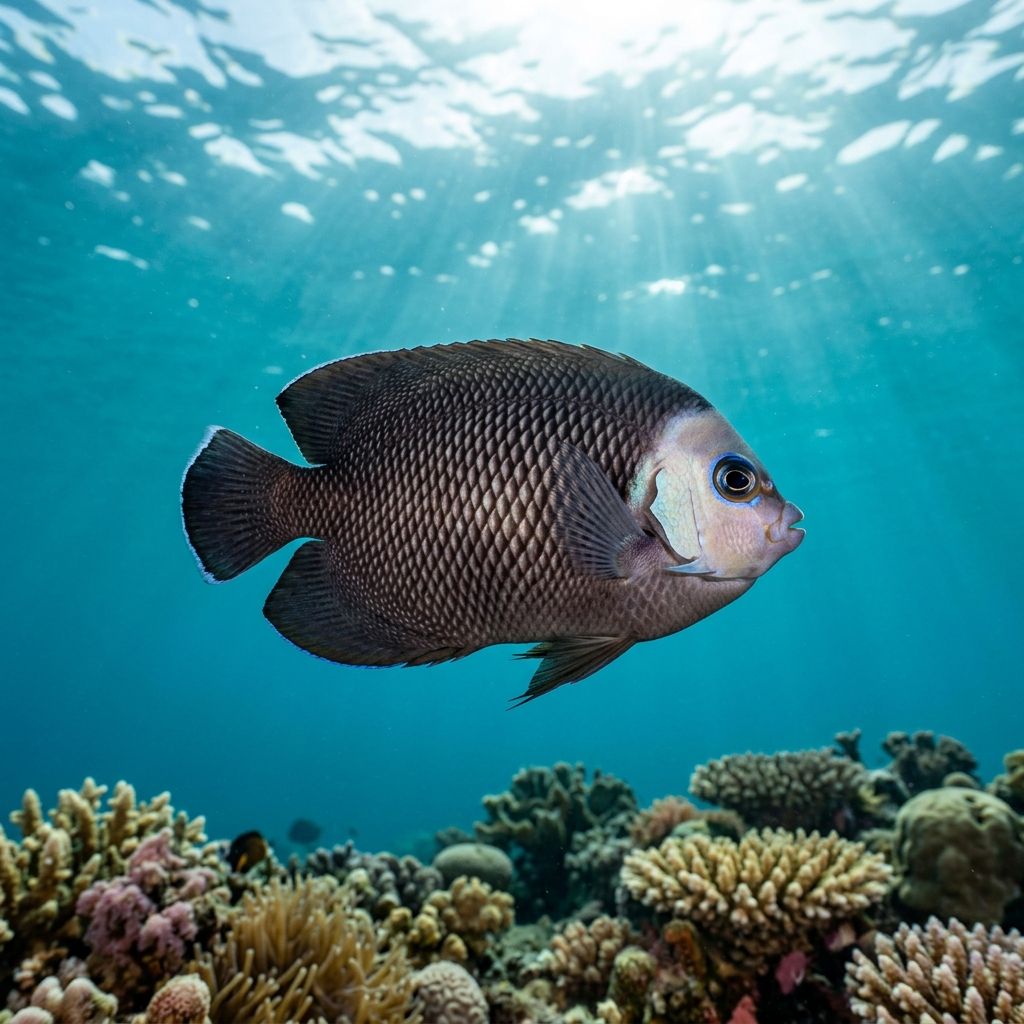
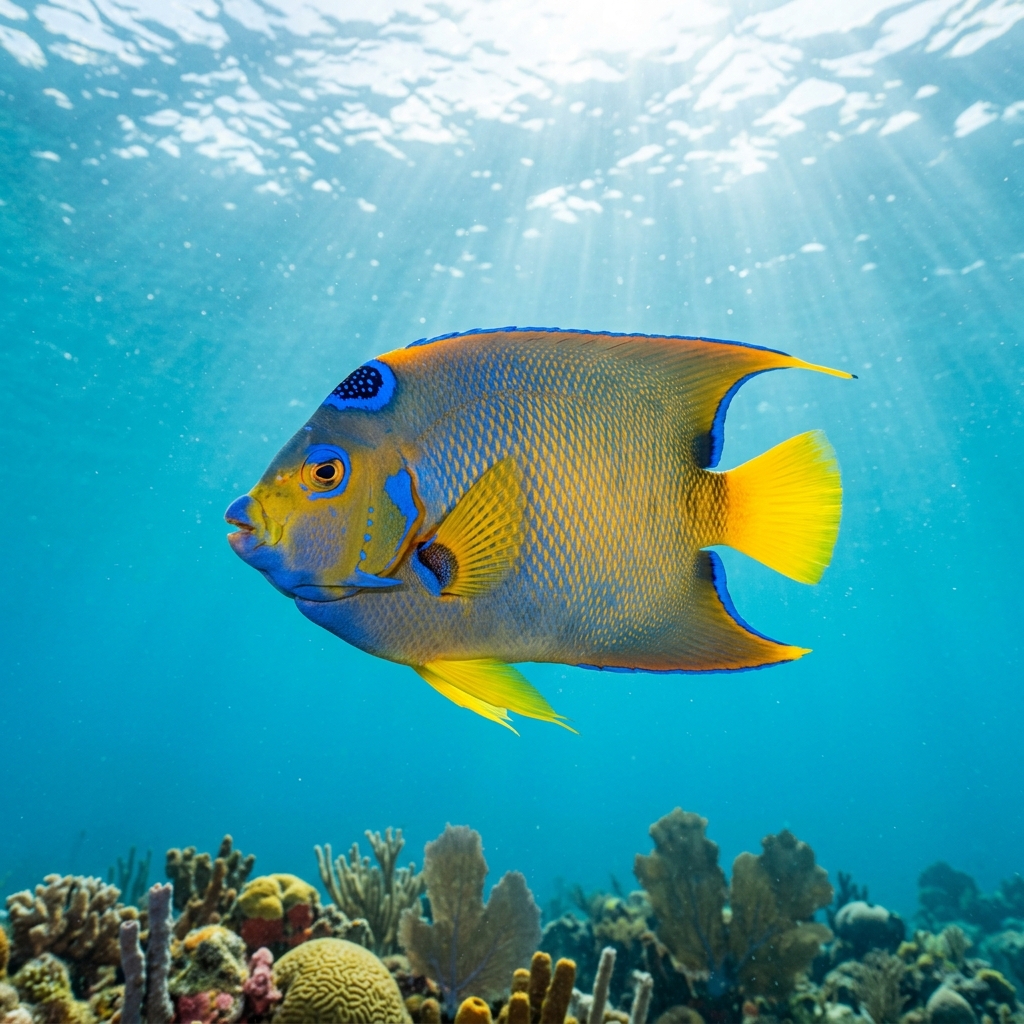
Reef neighbours a diver could mistake it for. Use the identification notes above to tell them apart.
French Polynesia dominates the records, with Tahiti and the Society Islands topping the list as the most logged locations globally, followed by Rangiroa and Tikehau. Outside of French Polynesia, the Okinawa Islands in Japan hold strong populations, and meaningful numbers are also recorded across Rarotonga in the Cook Islands, Efate in Vanuatu, and Apra Harbor in Guam. Australia and New Caledonia round out a central Pacific and Indo-Pacific range.
Mapping where Lemonpeel Angelfish is logged…
French Polynesia is far and away the top destination, particularly around Tahiti, the Society Islands, and Rangiroa. Strong records also come from the Okinawa Islands in Japan, Rarotonga in the Cook Islands, Efate in Vanuatu, and Apra Harbor in Guam.
In Southern Hemisphere destinations like French Polynesia and New Caledonia, August to November is the peak window. For Northern Hemisphere sites such as Okinawa, Japan, sightings concentrate between January and April.
Look for a small, entirely bright-yellow fish hugging the reef with a clear blue ring around each eye and thin blue trim on the gill cover and fins. No other common reef angelfish in its range pairs a fully yellow body with those distinctive blue eye rings.
Yes. They are protogynous hermaphrodites, meaning individuals start out female. When a dominant male is removed from a social group, the largest female can transition to become the new male. This is common among dwarf angelfish in the Centropyge genus.
Site and sighting data is aggregated from diver logs, iNaturalist and GBIF. For taxonomy and conservation status:
Rock Beauty
1,573 sites