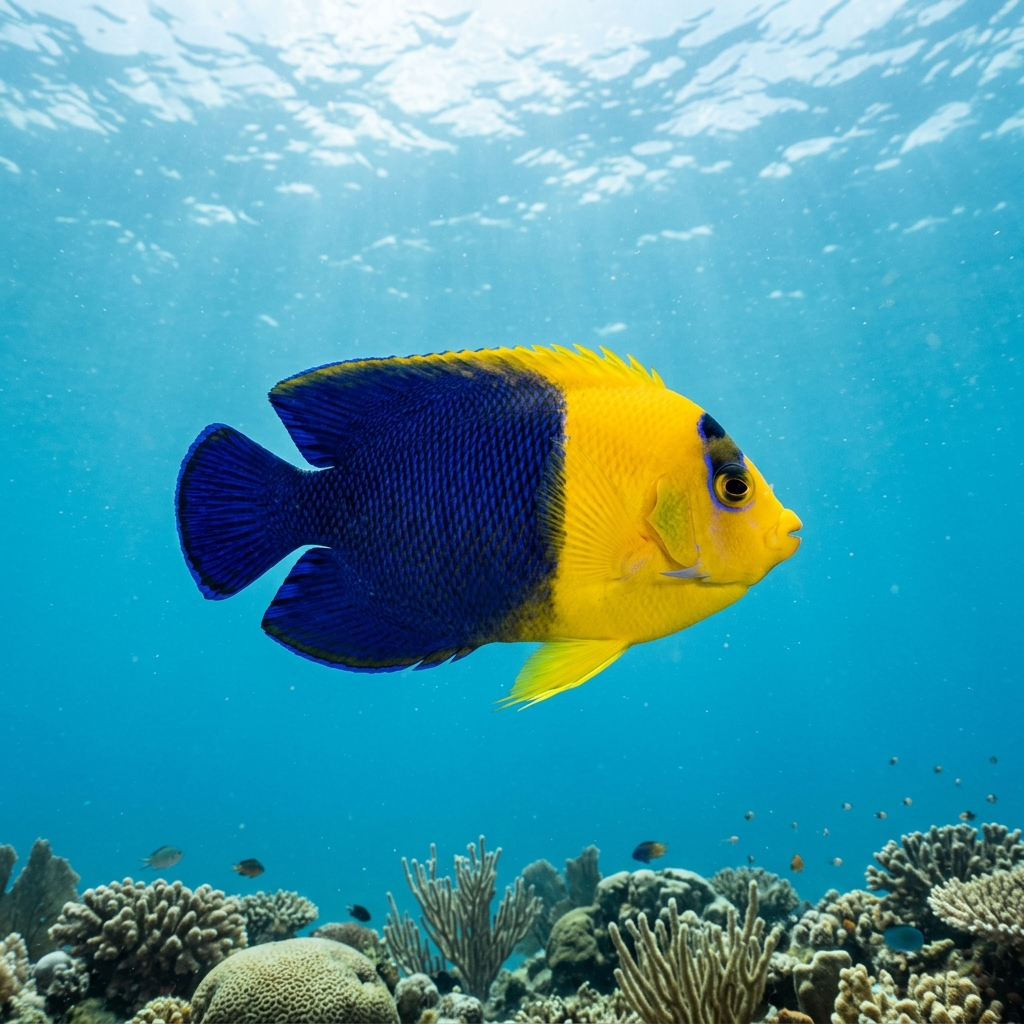
Centropyge bicolor
Split yellow and blue, the bicolor angelfish shows up across Bali, the Philippines and Fiji in warm water between 25-29 °C. Here's where and when to find one.
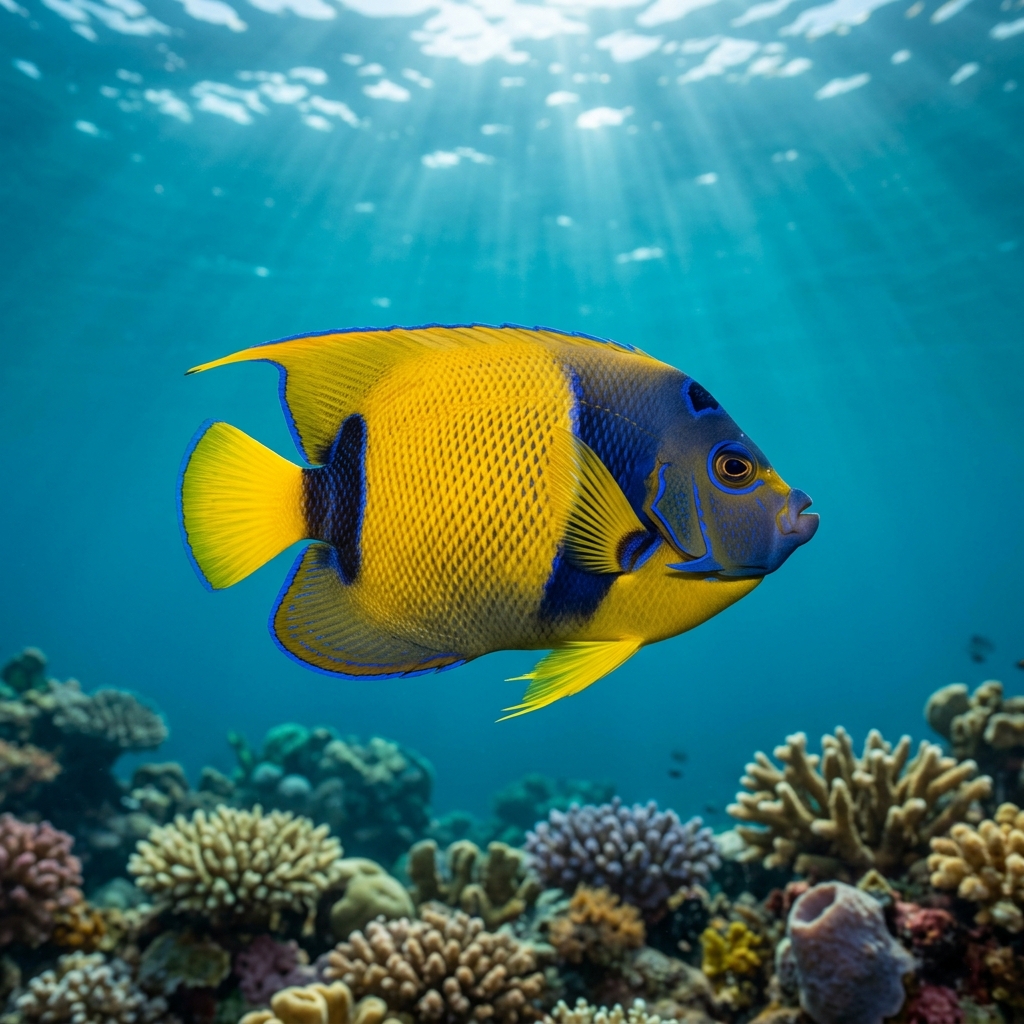
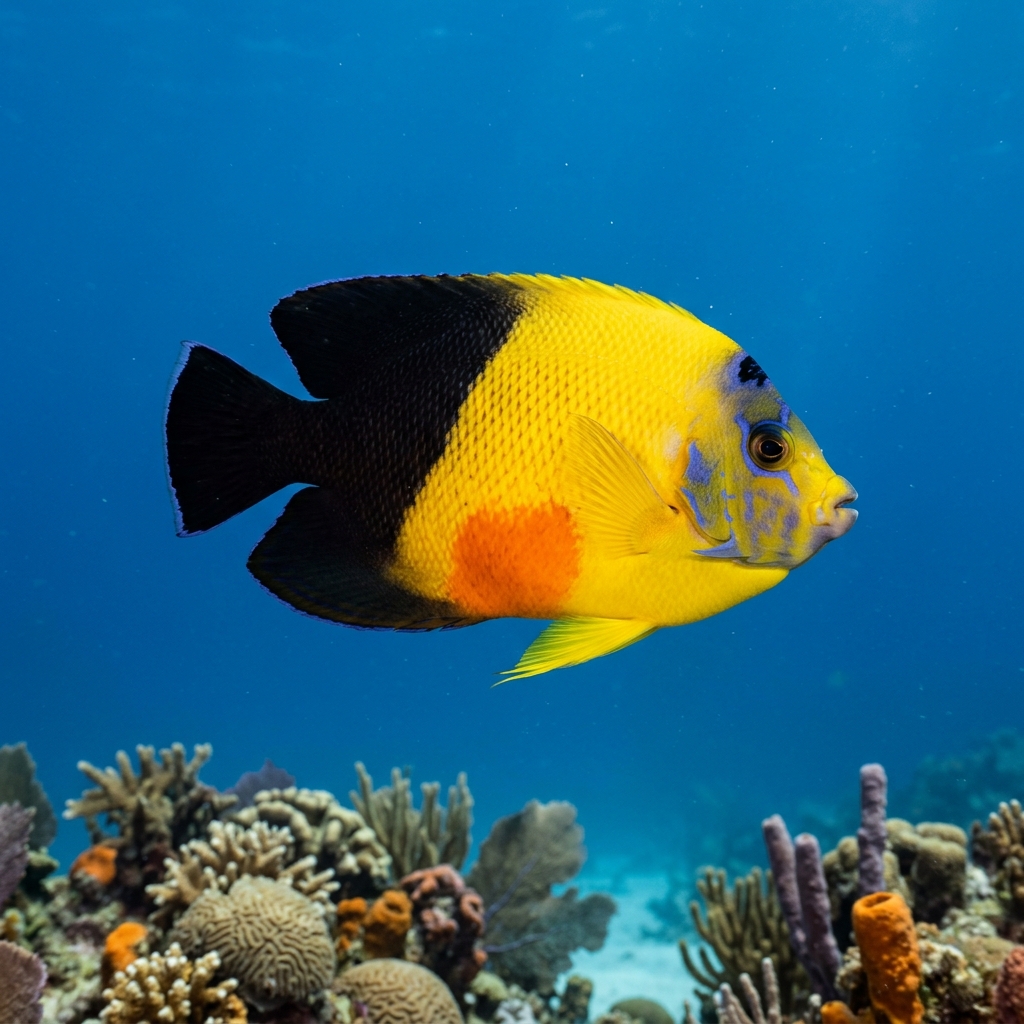
Two bold halves make this one of the easier angelfish to name underwater: the front half of the body, head, and pectoral fins are bright yellow, while the rear half, dorsal fin, and tail shift abruptly to deep blue-violet. A yellow tail anchors the blue section at the back. It is a small, disc-shaped fish that tends to hug the reef closely, so you are usually looking down into crevices rather than out into the water column to spot it.
Bicolor angelfish are shy, solitary fish that spend most of their time picking at algae and sponges on rubble patches and the lower slopes of coral reefs. When a diver approaches, they retreat into crevices quickly, so slow, low-profile swimming and patience near sheltered reef sections give you the best chance of a prolonged look. They are most active during the day, and a close approach rarely works; better to hover at a respectful distance and let the fish settle.
Like most dwarf angelfish (Centropyge), the bicolor is a protogynous hermaphrodite: in a social group, the dominant female can transition to a functional male if the resident male disappears. This means the lone fish you spot near a coral head may have changed sex more than once during its lifetime.
In the Southern Hemisphere, where the bulk of sightings occur, records concentrate from April through January, broadly covering the Australian and Indonesian dive seasons. The species sits in warm water between about 25 and 29 °C, so timing your dive to the region's warmest months gives you the best odds.
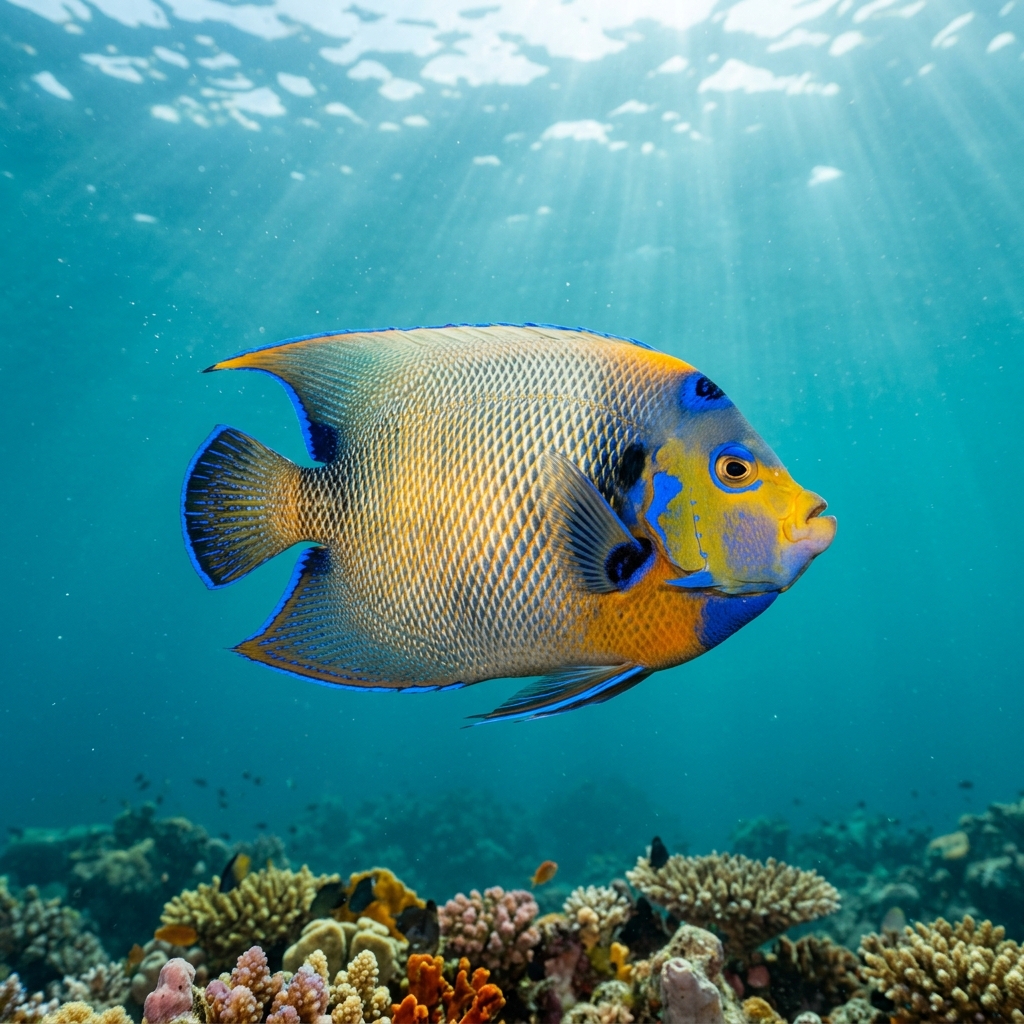
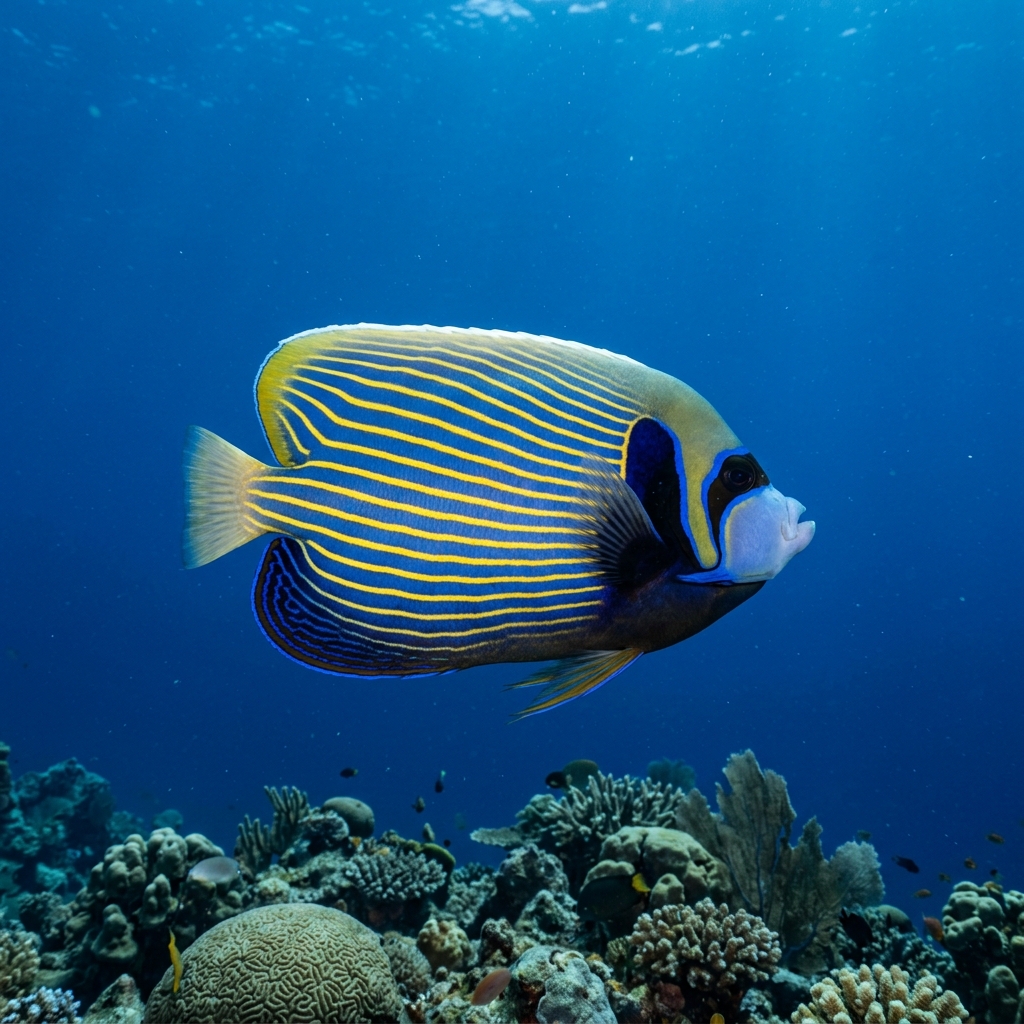
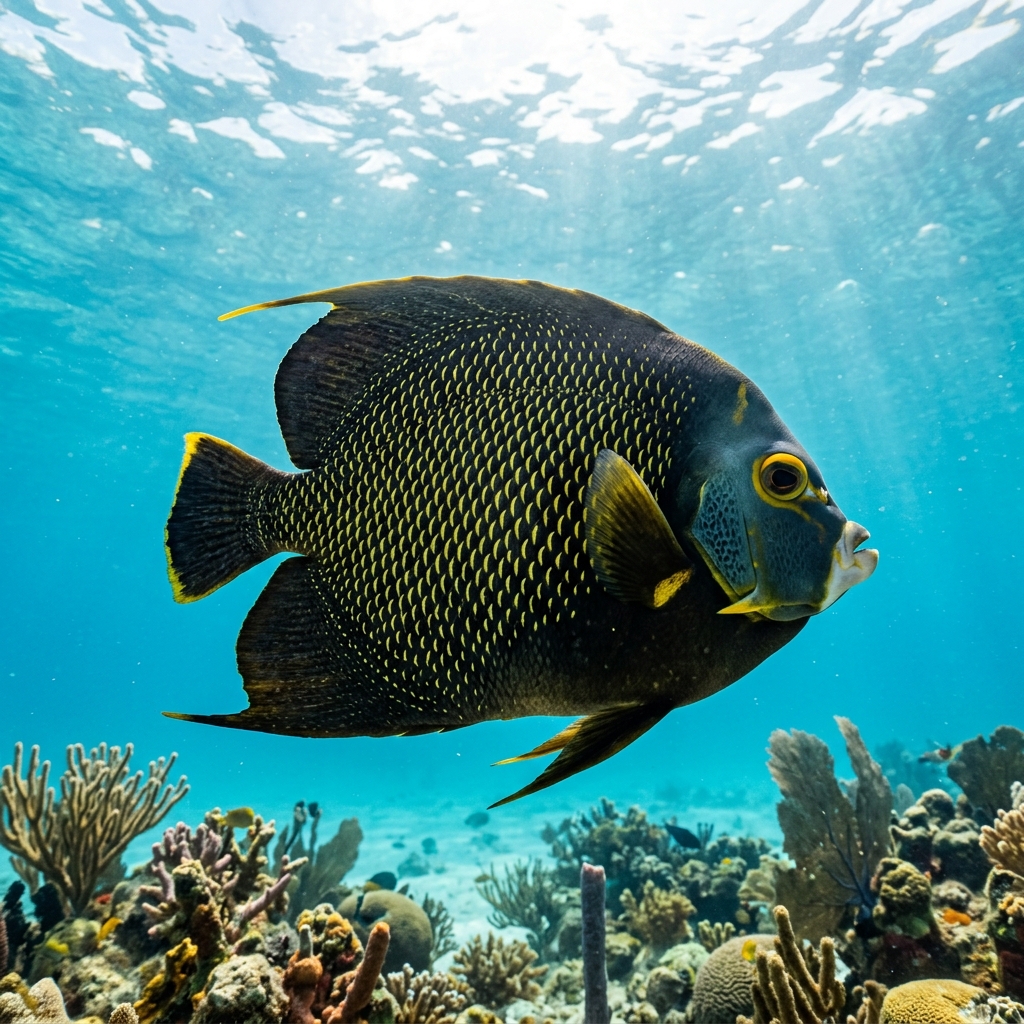
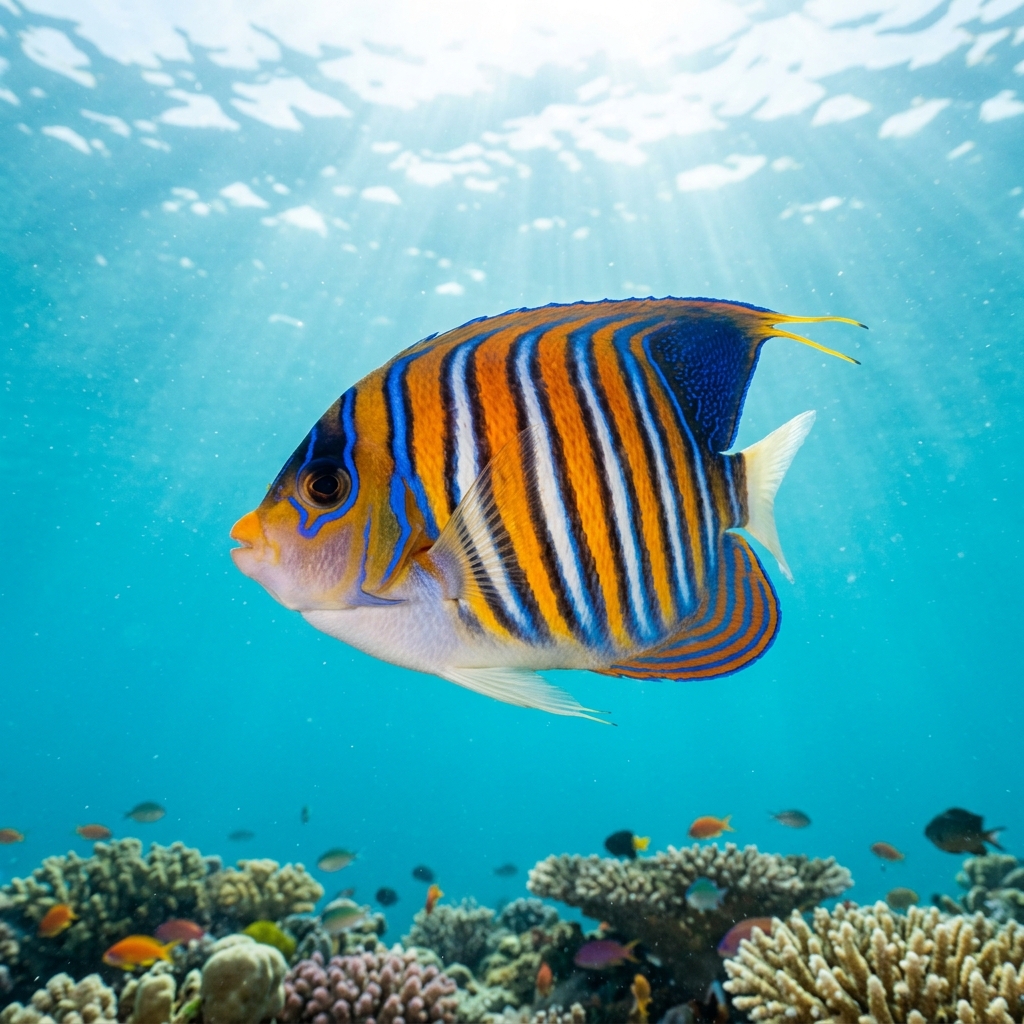
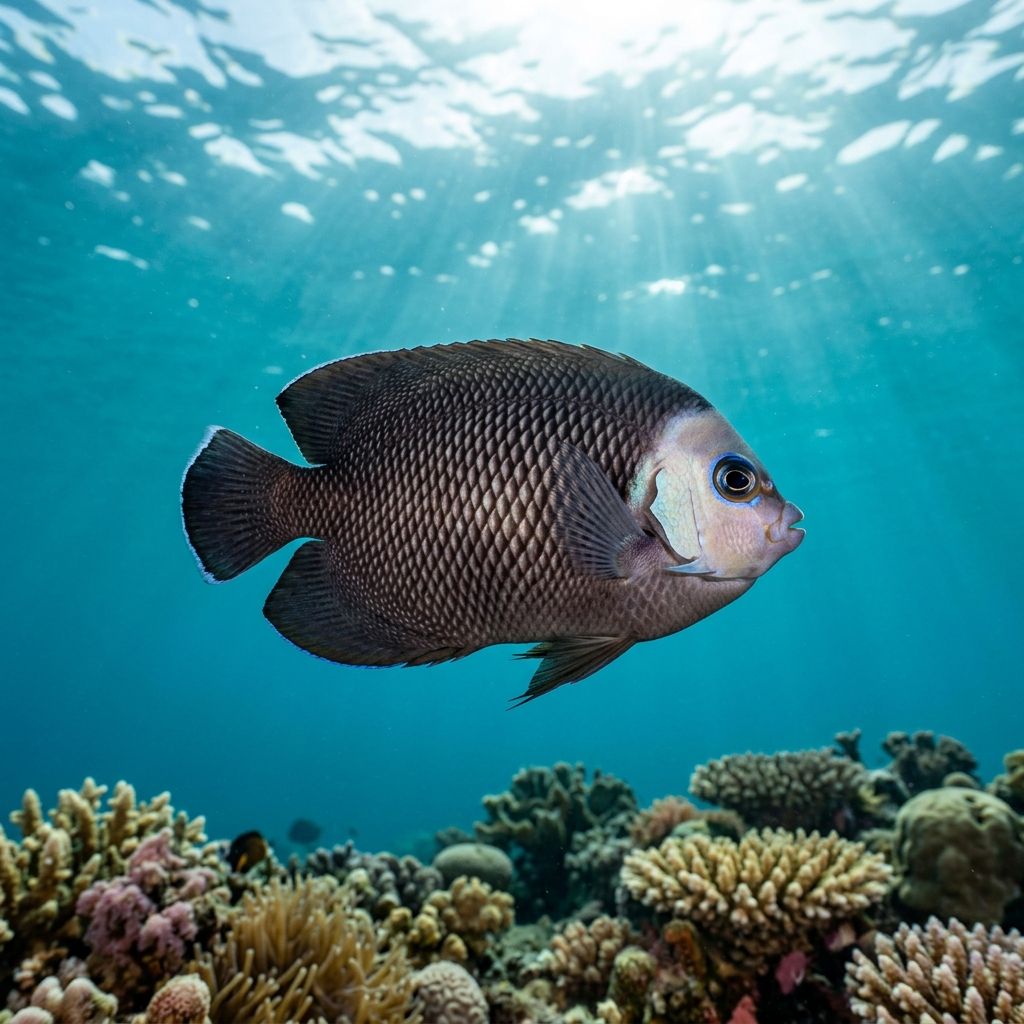
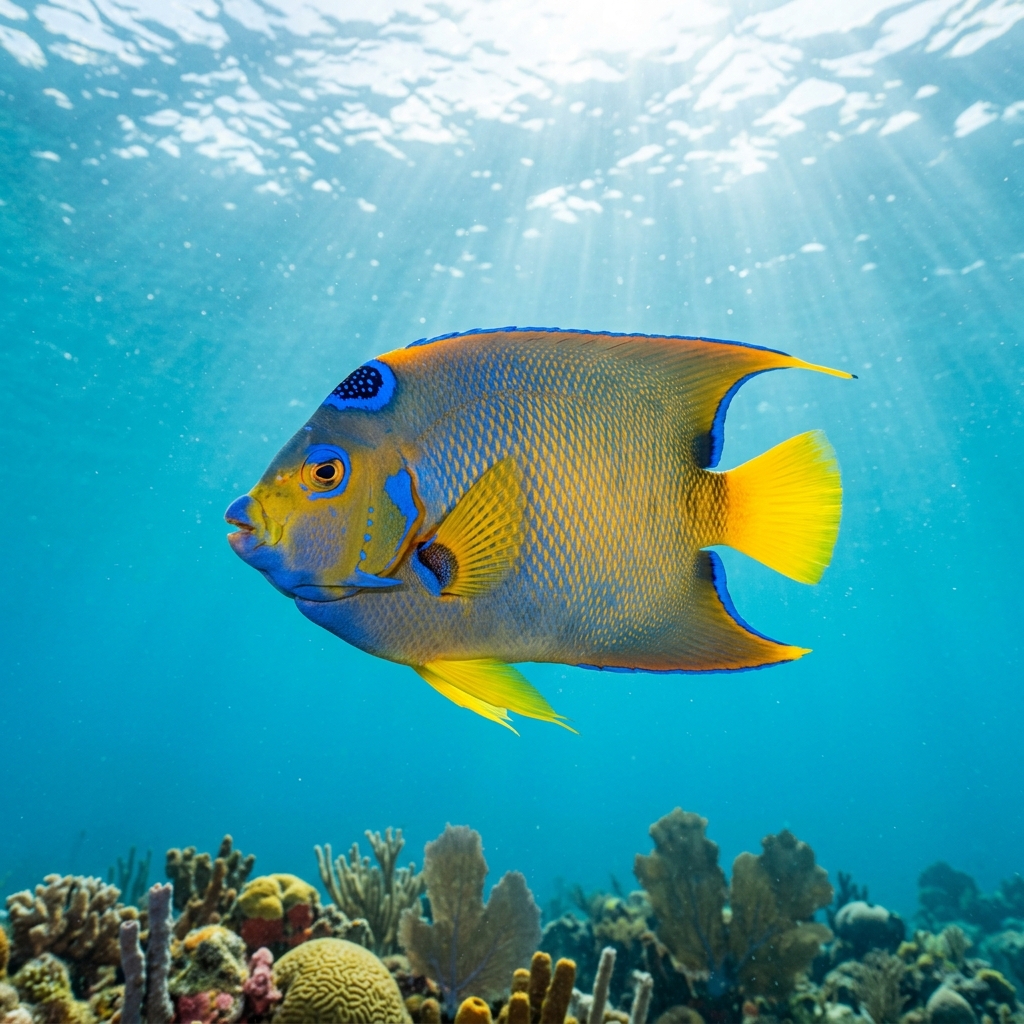
Reef neighbours a diver could mistake it for. Use the identification notes above to tell them apart.
Indonesia leads by a wide margin, with the strongest records coming from Bali, Lombok and Java, Maluku, and the Papua region. The Philippines, particularly the Central and Western Visayas, and Queensland, Australia are the next most productive areas. Solid sightings also come from Sipadan and East Sabah in Malaysia, Fiji, and Vanuatu, making the Coral Triangle and southwest Pacific the core territory.
Mapping where Bicolor Angelfish is logged…
The bicolor angelfish is most commonly logged across the Coral Triangle and southwest Pacific. Indonesia, particularly Bali, Maluku, and Papua, leads the records, followed by the Philippines (Central and Western Visayas), Queensland in Australia, Sipadan in Malaysia, Fiji, and Vanuatu. It is uncommon rather than abundant at most sites, so managing expectations helps.
In the Southern Hemisphere, where most sightings are logged, records concentrate from April through January. The species favours water temperatures of roughly 25 to 29 °C, so planning your dive during the warm season at any given destination puts you in the right conditions.
Look for the sharp two-tone split: bright yellow on the front half of the body, head, and pectoral fins, with a clean break into deep blue-violet on the rear body and dorsal fin, and a yellow tail. The contrast is bold enough to stand out even in shadowed reef crevices. Few fish in its range share this exact pattern.
Bicolor angelfish are a dwarf species in the Centropyge genus. They typically reach around 15 cm in length, making them noticeably smaller than the large angelfish like emperor or bluefaced angels you might encounter on the same reef.
Yes. Bicolor angelfish are protogynous hermaphrodites, meaning individuals begin life capable of functioning as females and the dominant fish in a group can transition to become a male. If the male disappears, the largest female typically makes the switch.
Site and sighting data is aggregated from diver logs, iNaturalist and GBIF. For taxonomy and conservation status:
Rock Beauty
1,573 sites