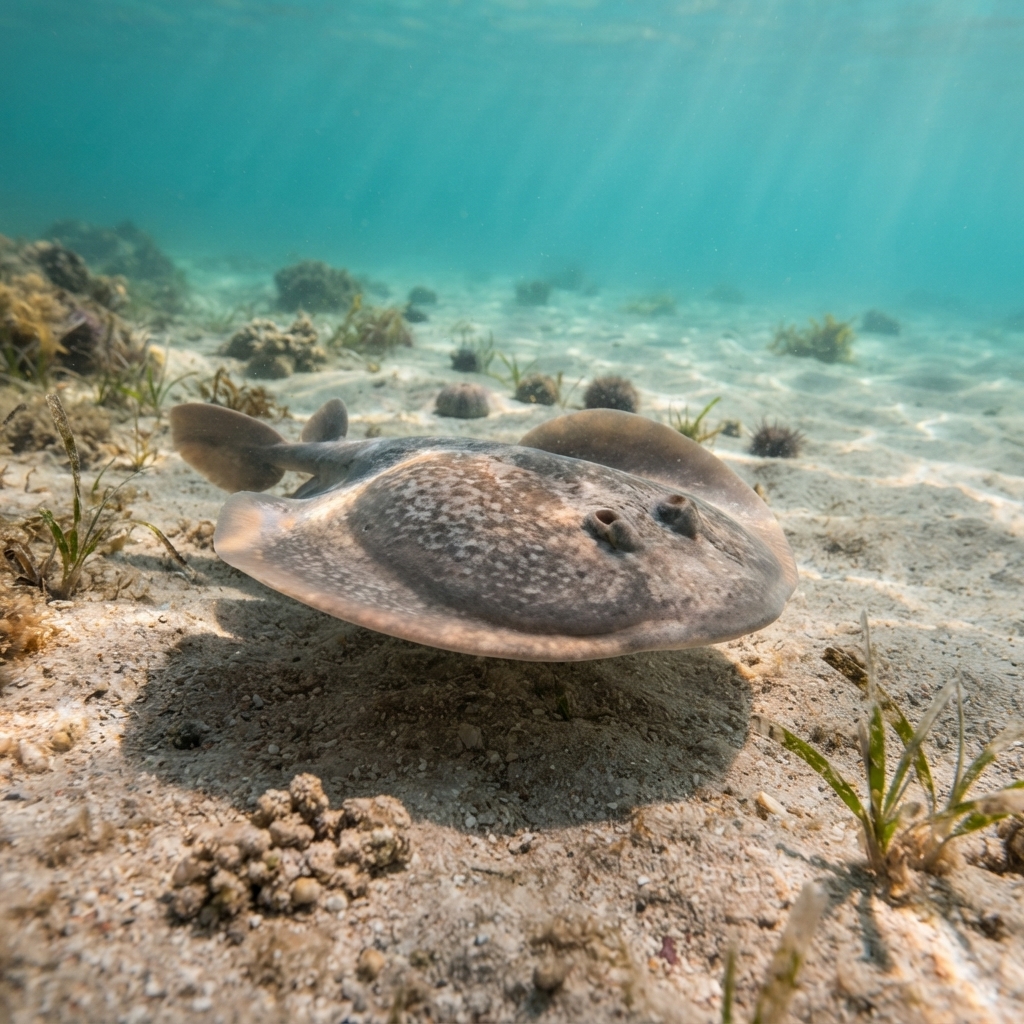
Narke capensis
Small electric ray found off South Africa's Western Cape in 12.7-20.6°C water. Rare, low-profile, and easy to miss on the sand.
Safety warning
It can deliver an electric shock if handled or accidentally touched, which is startling but not seriously harmful. The safest approach is simple: don't touch or provoke any ray lying on the sand, and give it room to be left alone.
If you're shocked
Electric shockGeneral first-aid guidance, not a substitute for professional medical care. In an emergency, call your local emergency number.
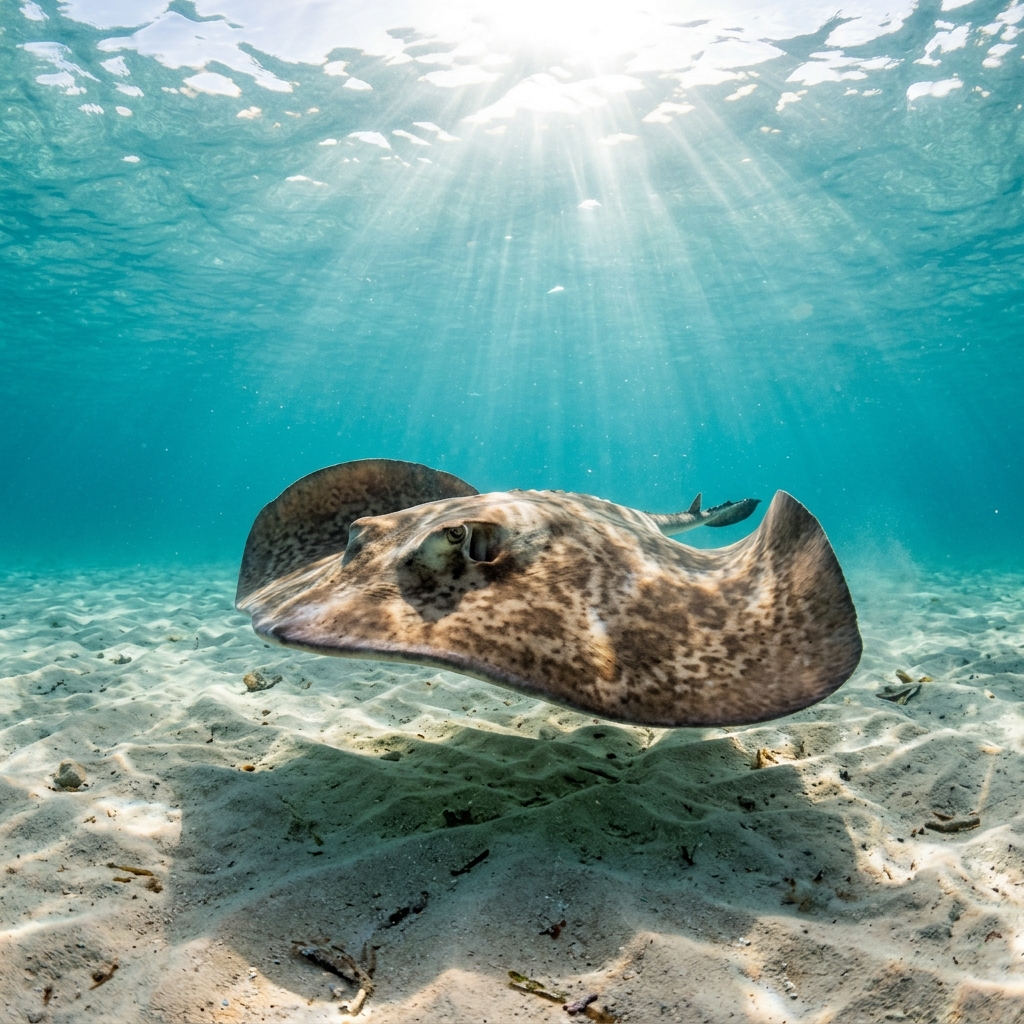
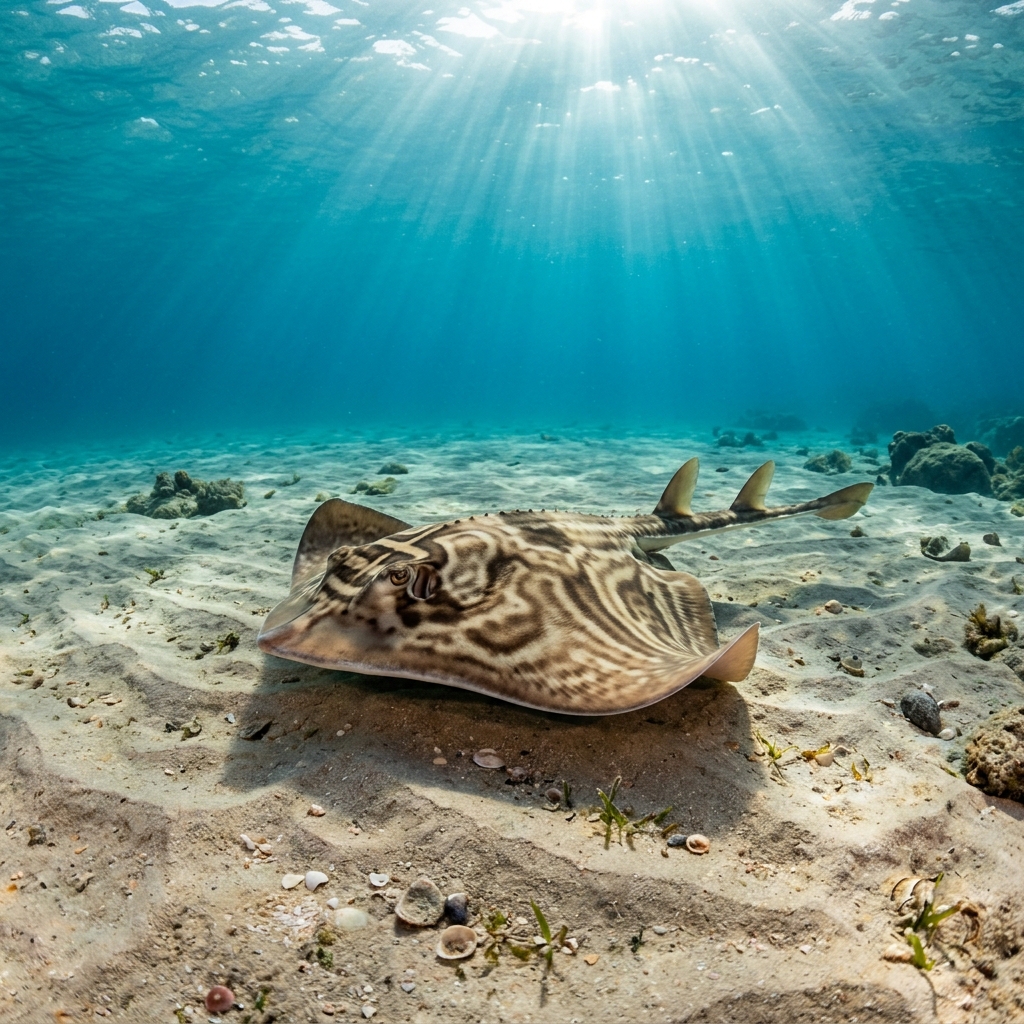
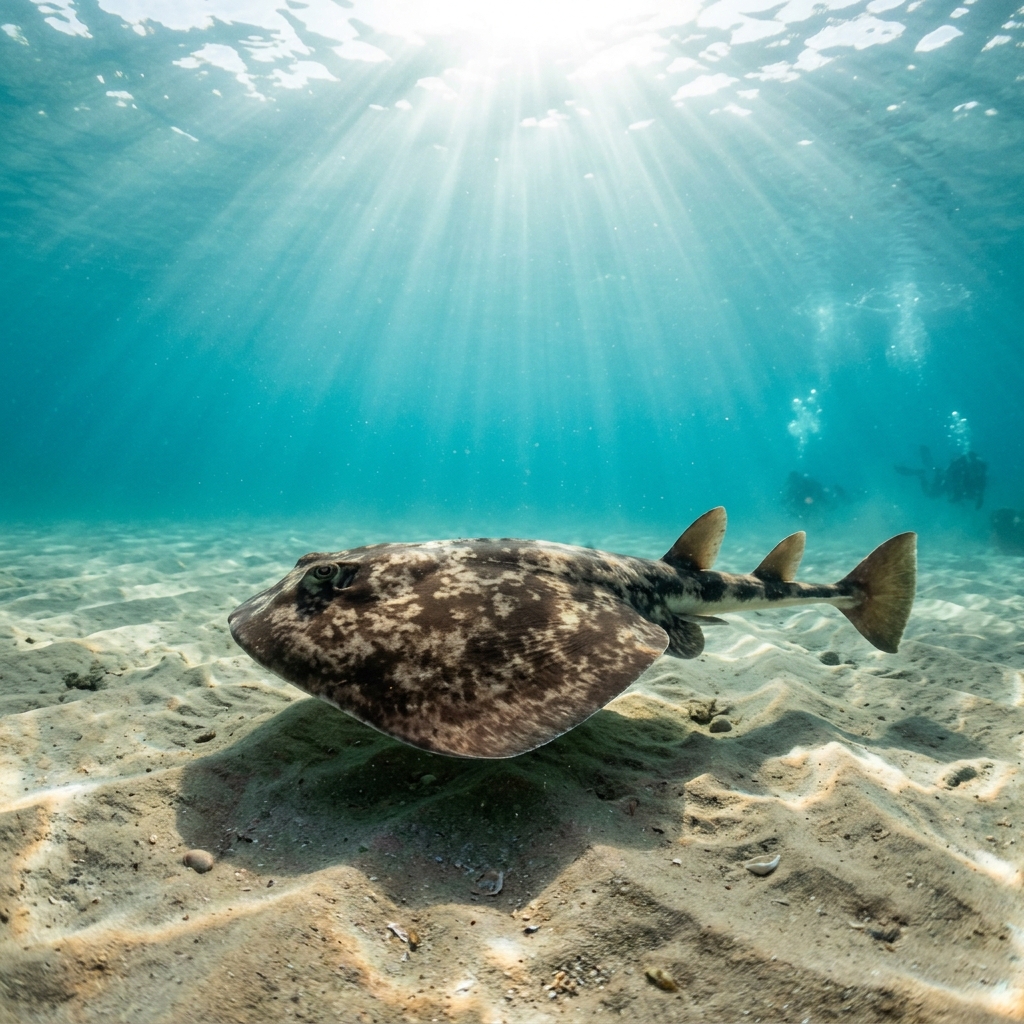
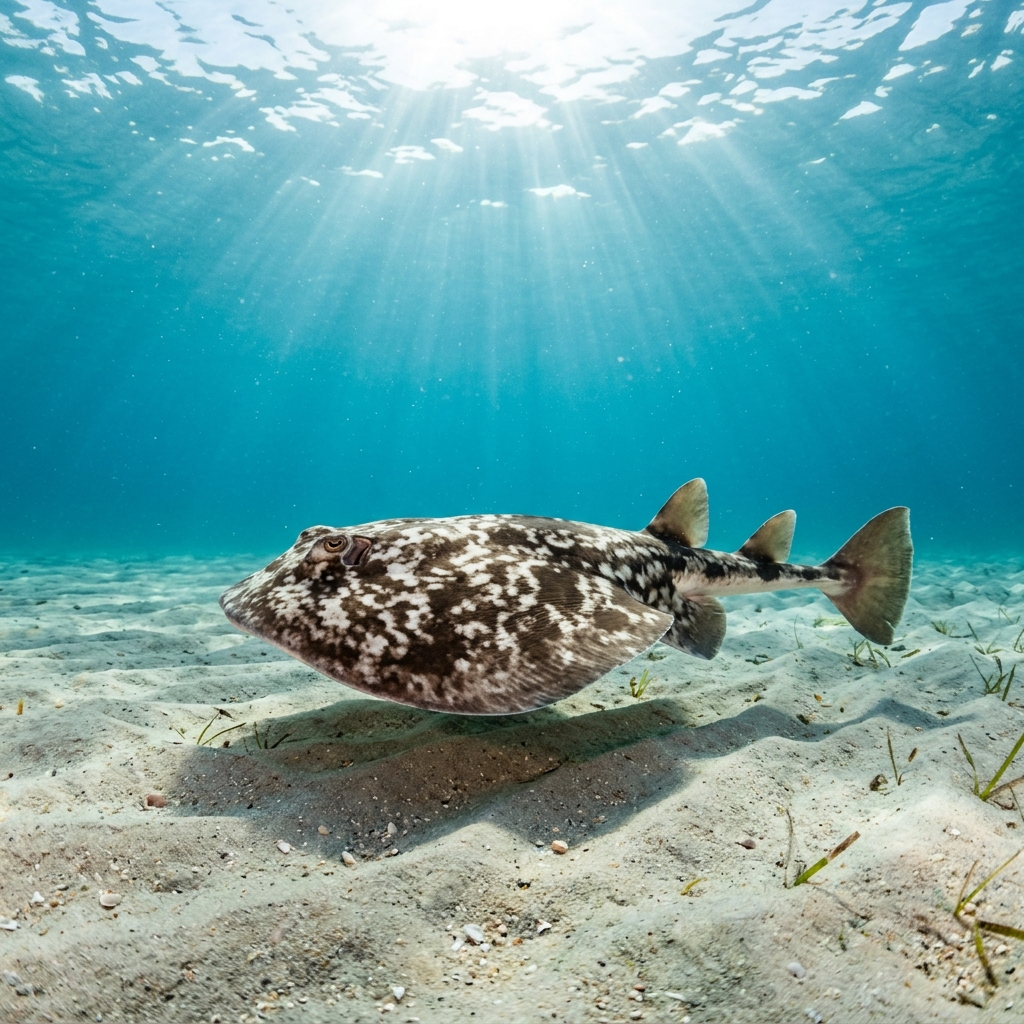
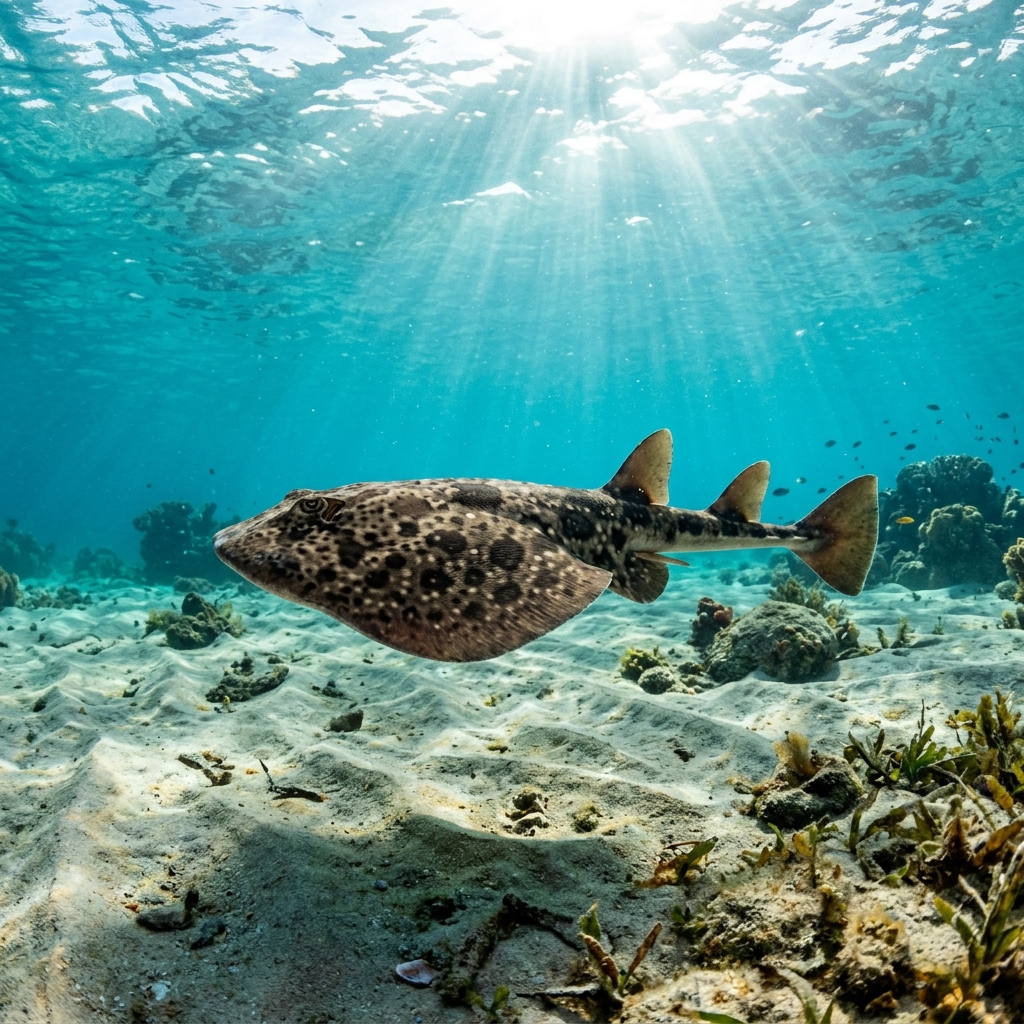
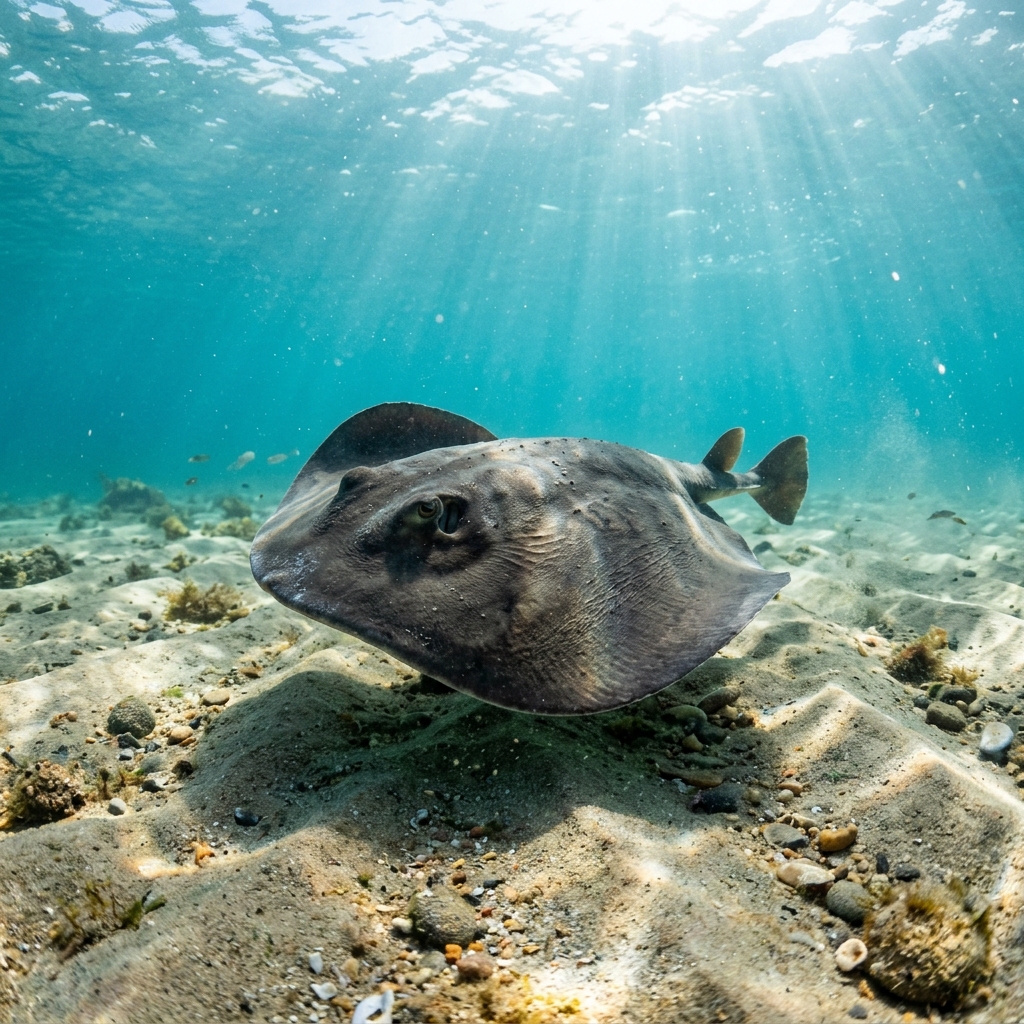
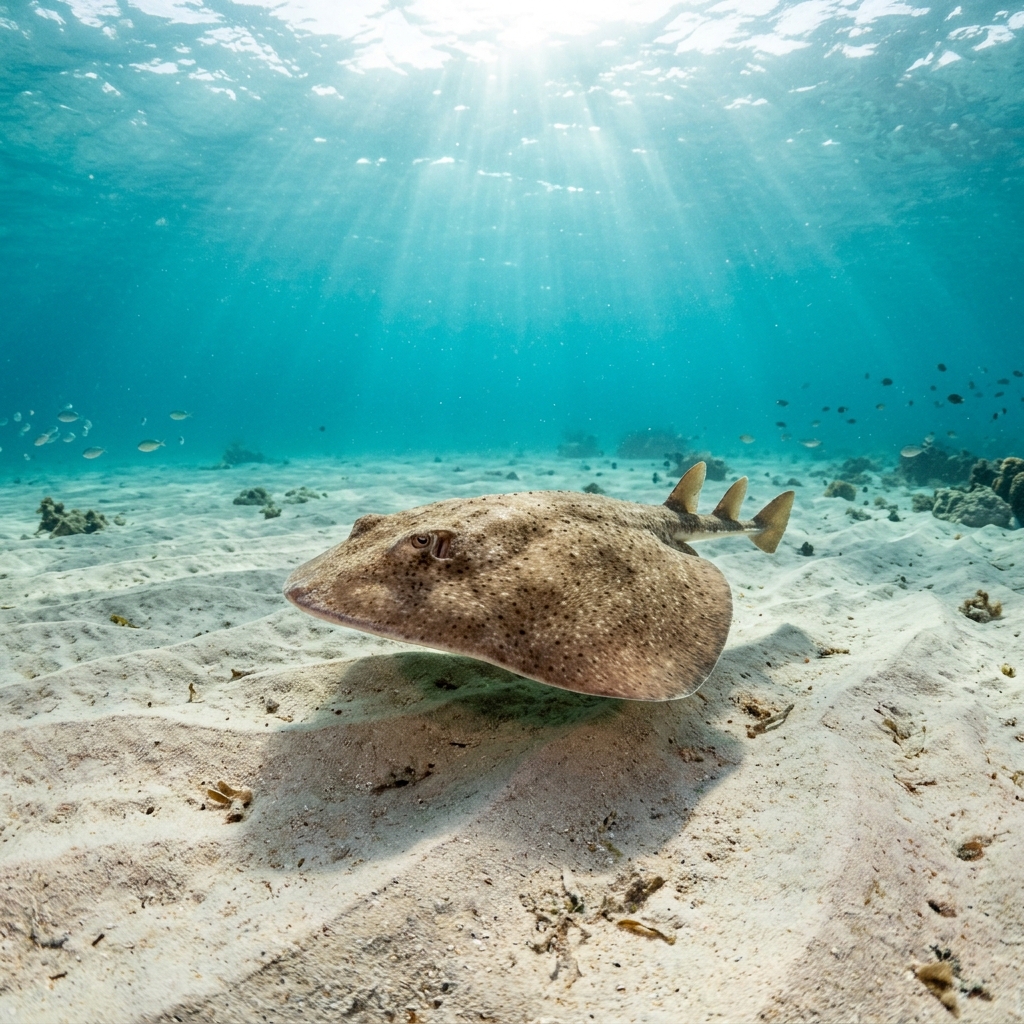
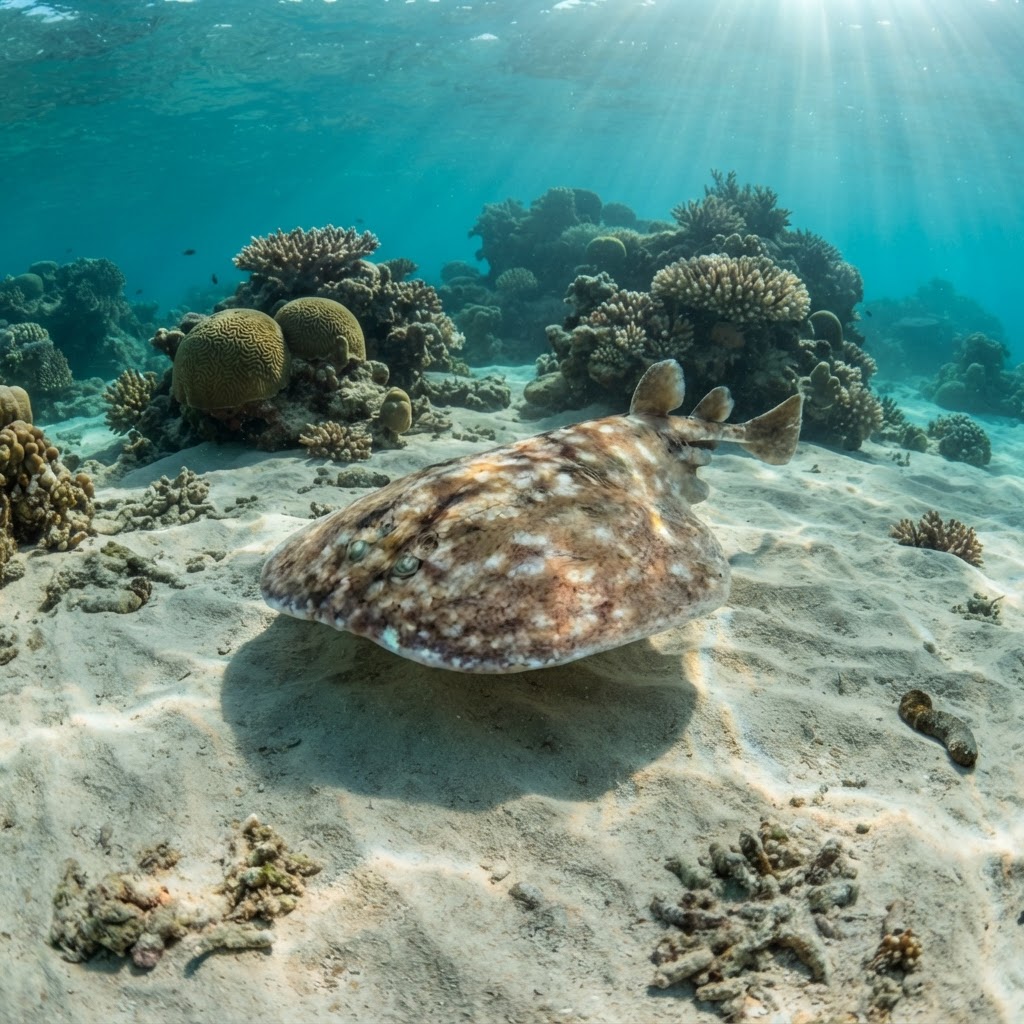
A small, disc-shaped ray around 27cm long, with a rounded pectoral disc that gives it a smooth, almost featureless outline compared to sharks and guitarfish. Colour is typically a mottled grey-brown that blends into sand, with no strong pattern to key on. The tail is short and thick rather than whip-like, and the whole animal sits flush against the bottom rather than swimming in open water.
Spends most of its time lying still on sand or in amongst weed, often partially covered, which is exactly why it's logged as rare even where it's known to occur. Divers typically find it by chance rather than by seeking it out, and it tends not to move much when approached. Most sightings come from divers scanning the sand carefully rather than swimming past open water.
It's an electric ray, capable of generating a shock from specialised organs in its disc, a defence most divers never notice until they get too close.
Sightings show no detectable seasonal pattern, so it's logged year-round wherever the Western Cape's cool water (roughly 12.7 to 20.6°C) is being dived. There's no particular month to target; it comes down to spending time on the right sandy habitat.
Reef neighbours a diver could mistake it for. Use the identification notes above to tell them apart.
Every logged sighting comes from South Africa, and specifically the Western Cape, making it the only region with a real track record for this species. If you're diving cold, sandy sites along that coast, this is where to keep an eye on the bottom.
Mapping where Cape Sleeper Ray is logged…
All confirmed sightings are from South Africa, concentrated in the Western Cape. It's the only region with an established diver record for this species.
There's no clear season in the data, so sightings happen year-round in the Western Cape's cool coastal water. Success depends more on careful sand-scanning than on timing.
They can deliver an electric shock if touched or handled, which is uncomfortable but not seriously dangerous. Simply avoid touching any ray resting on the sand and it will pose no issue.
Look for a small, rounded ray around 27cm long lying flat on sand, with mottled grey-brown skin and no strong markings. Its disc is smooth-edged and its tail is short and thick rather than whip-like.
They're small rays, typically around 27cm in length, making them easy to overlook against a sandy bottom.
It's an electric ray, using specialised organs in its disc to generate a shock, likely for defence and possibly to help subdue prey.
Site and sighting data is aggregated from diver logs, iNaturalist and GBIF. For taxonomy and conservation status:
Pacific Electric Ray
73 sites