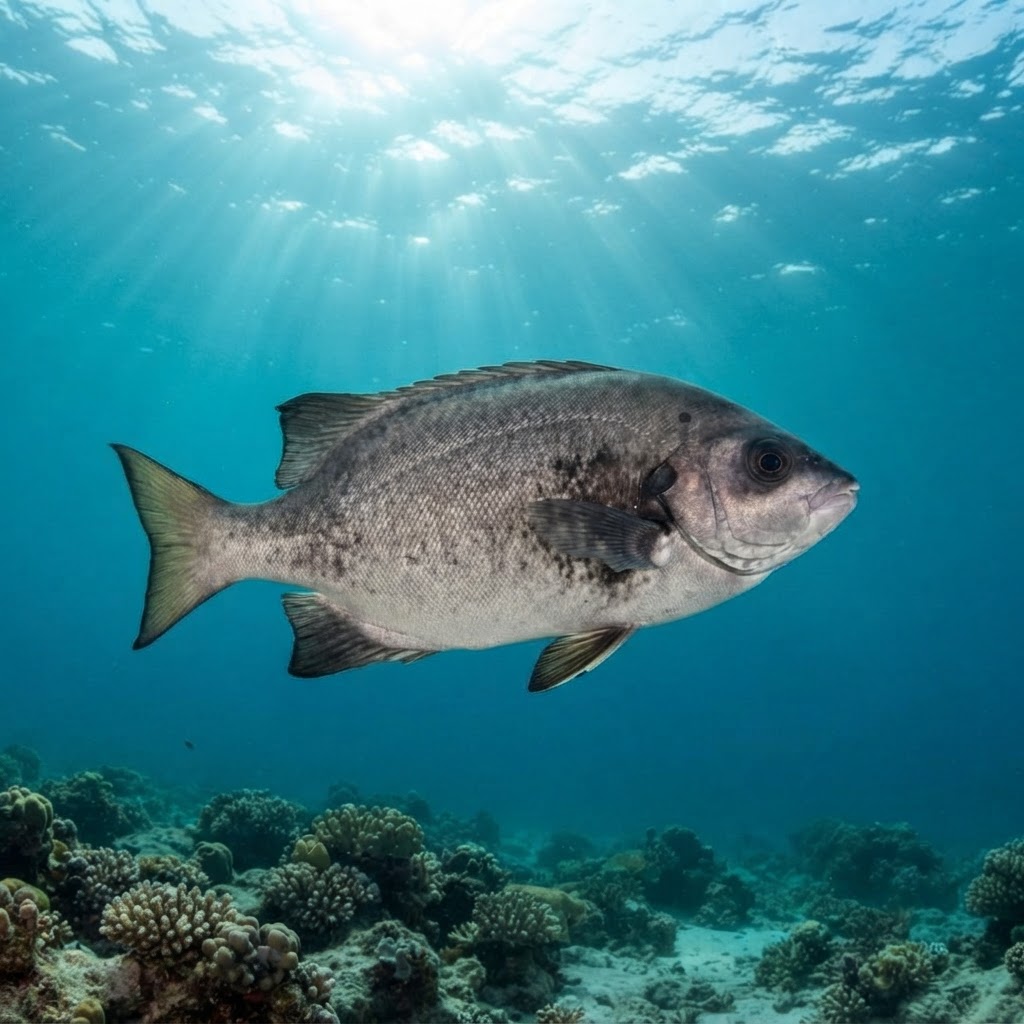
Oplegnathus conwayi
Chunky black-barred reef fish found almost exclusively off the Western Cape, in cool 14-20C water, year-round.
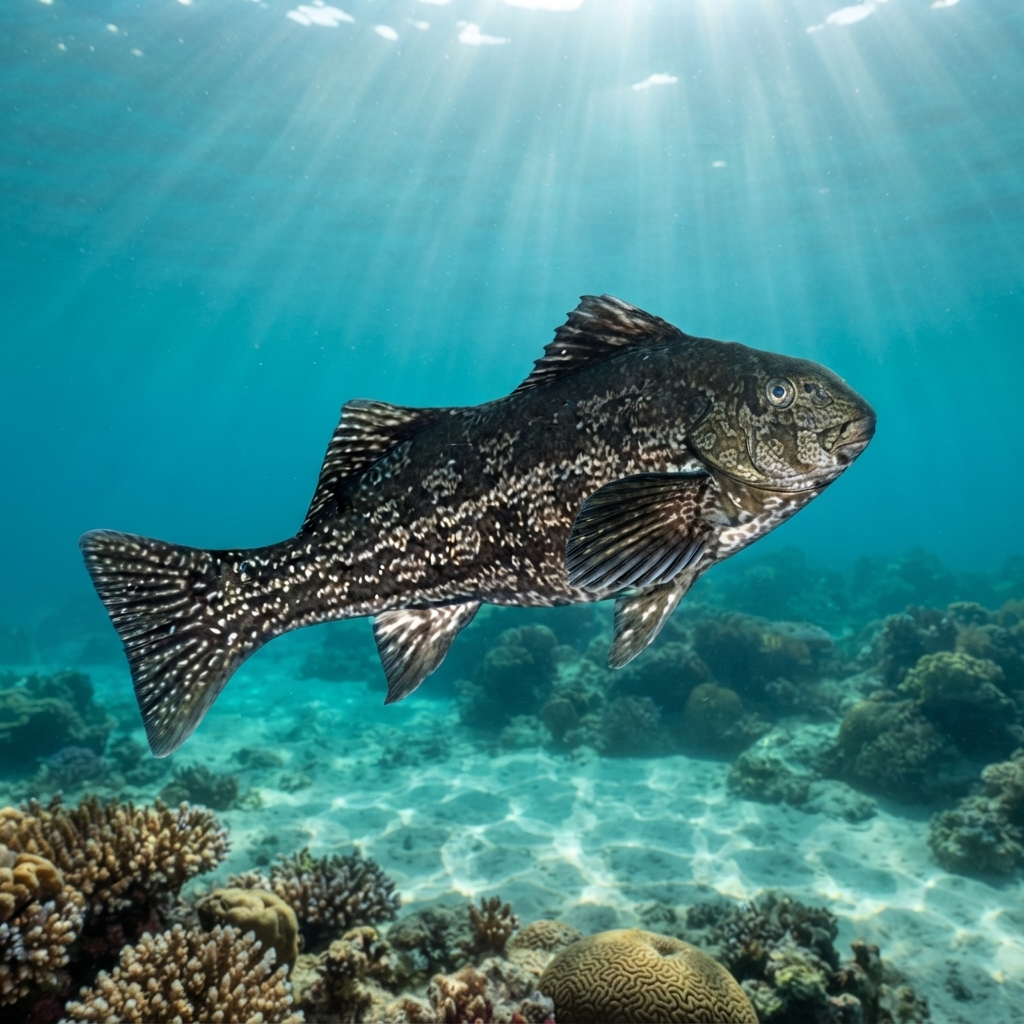
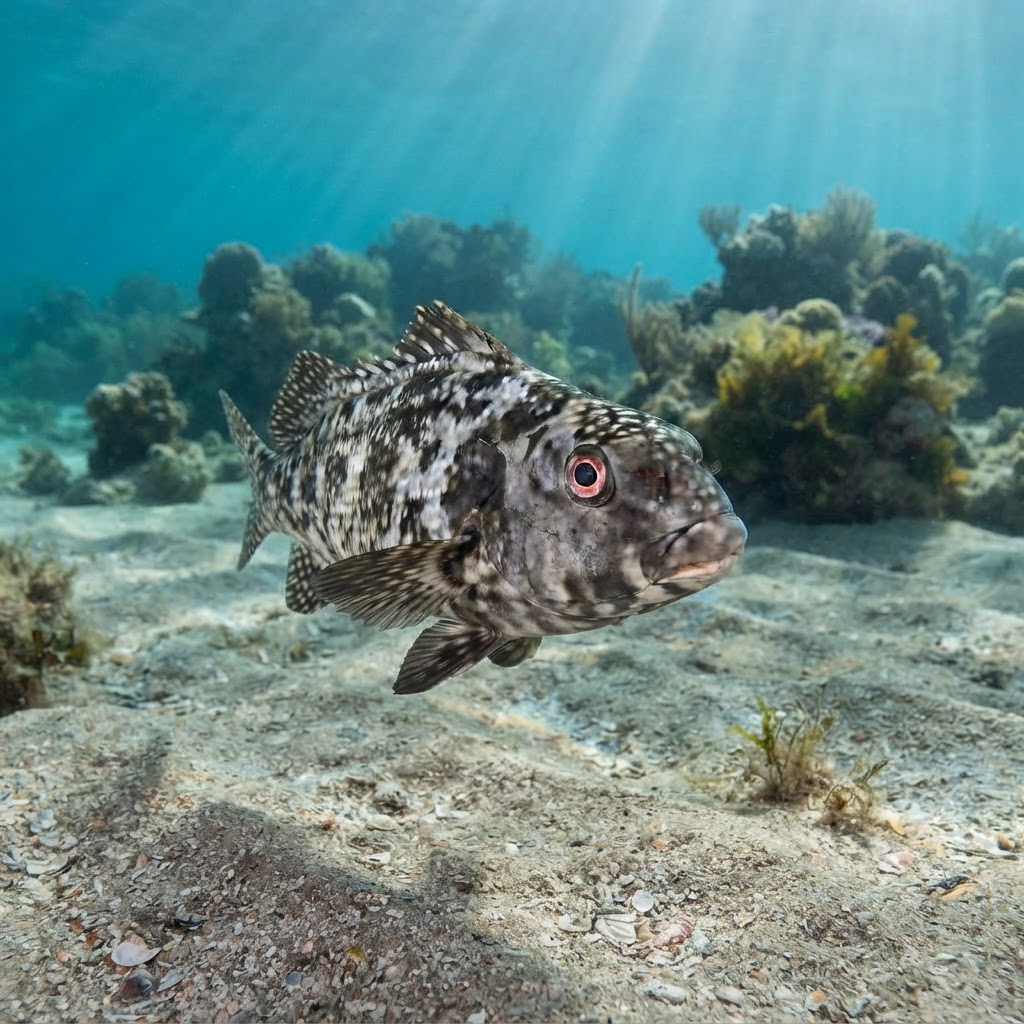
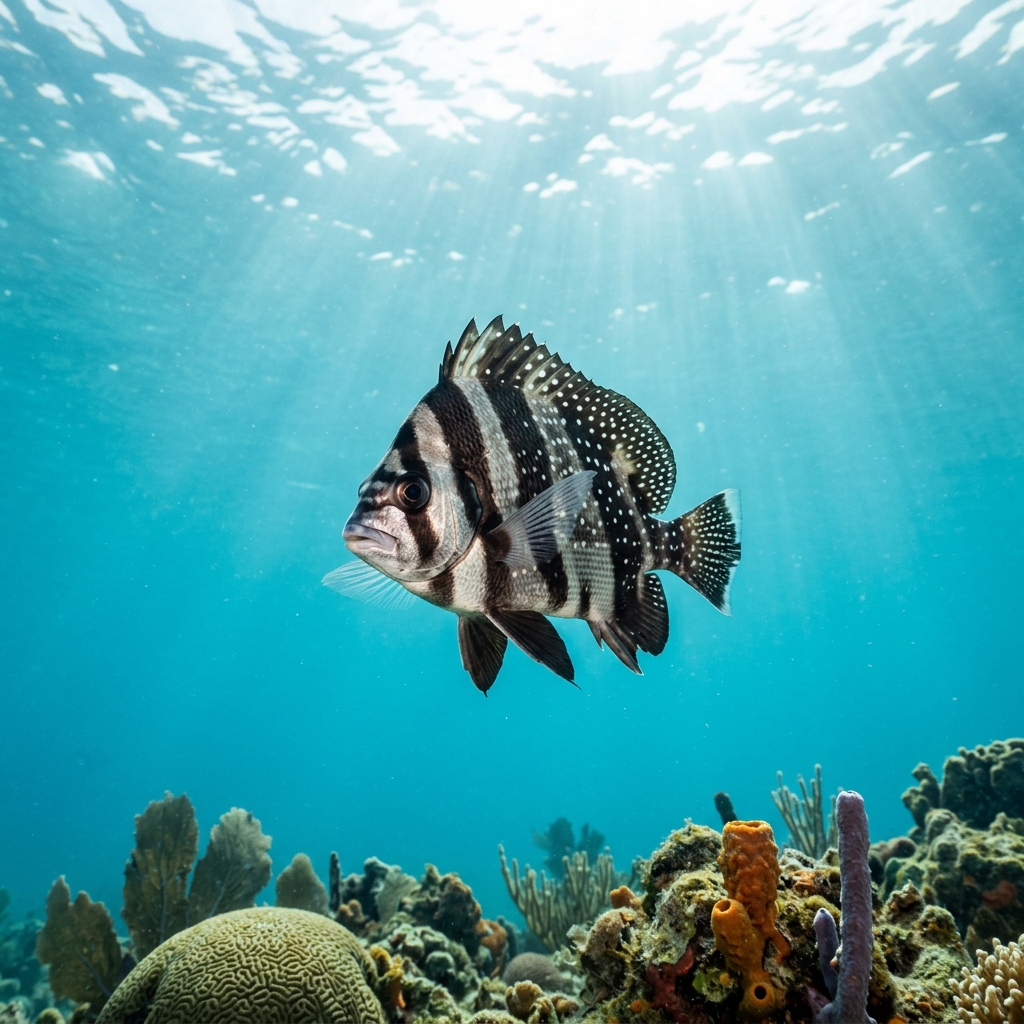
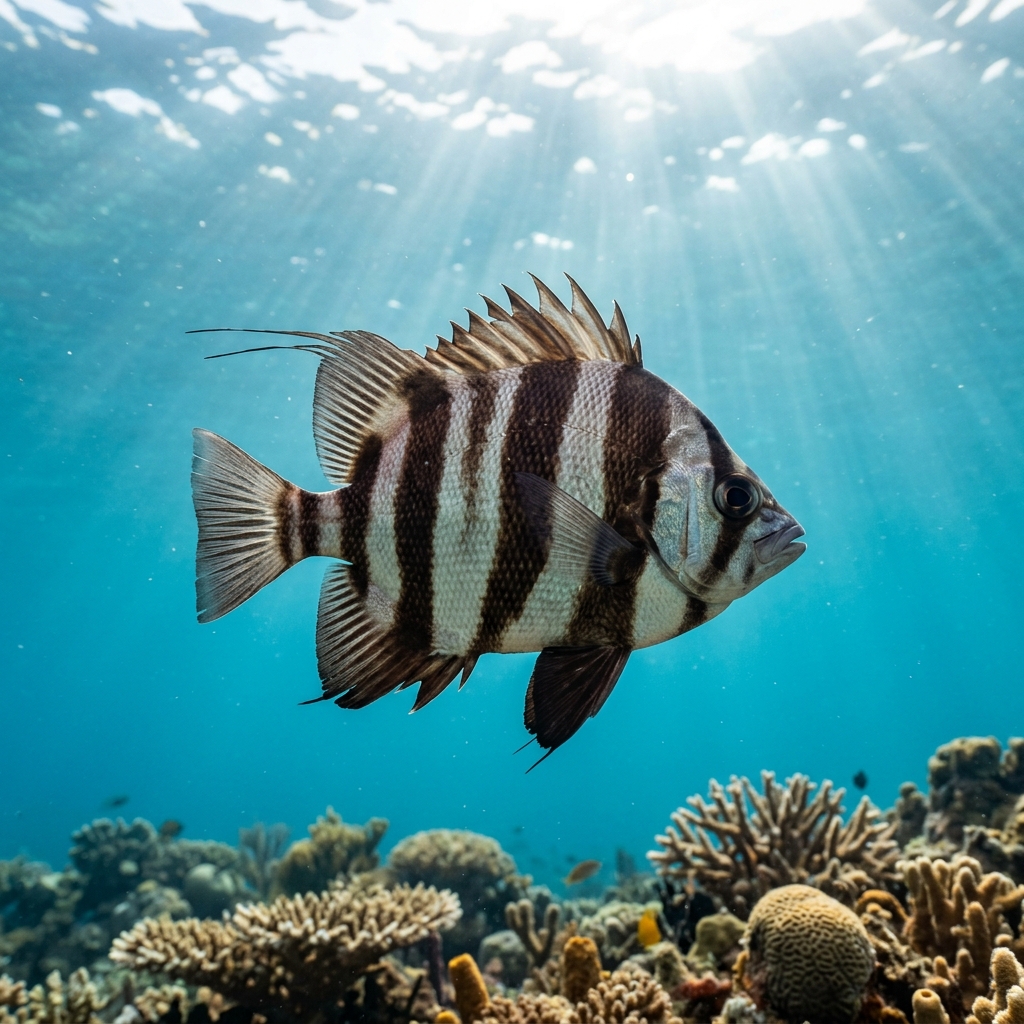
A deep-bodied, almost oval fish with a blunt head and a set of fused, beak-like teeth built for crunching rather than biting. Adults run a heavy grey to charcoal colour, often with faint darker vertical banding that can look washed out depending on light and depth. At 63cm this is a solidly built fish, not a slender darter, and it tends to hang close to structure rather than out in open water.
Divers most often find it working rocky reef and kelp-edge structure, picking at encrusted growth with those fused teeth rather than chasing anything down. It is generally logged as uncommon to rare at most sites, with only a handful of spots turning up regular sightings, so it tends to sit low and unhurried near cover rather than patrol open water. Encounters read as calm, with the fish holding its ground or easing off into rock crevices rather than bolting.
Those fused beak-like teeth are the giveaway for the whole knifejaw family, letting them graze hard-shelled prey like mussels and barnacles off rock faces that most reef fish cannot touch.
No clear seasonal pattern shows up in the sightings, and the 14.3 to 20.3C temperature range it is logged in matches the Western Cape's cool water year-round, so any month is fair game.
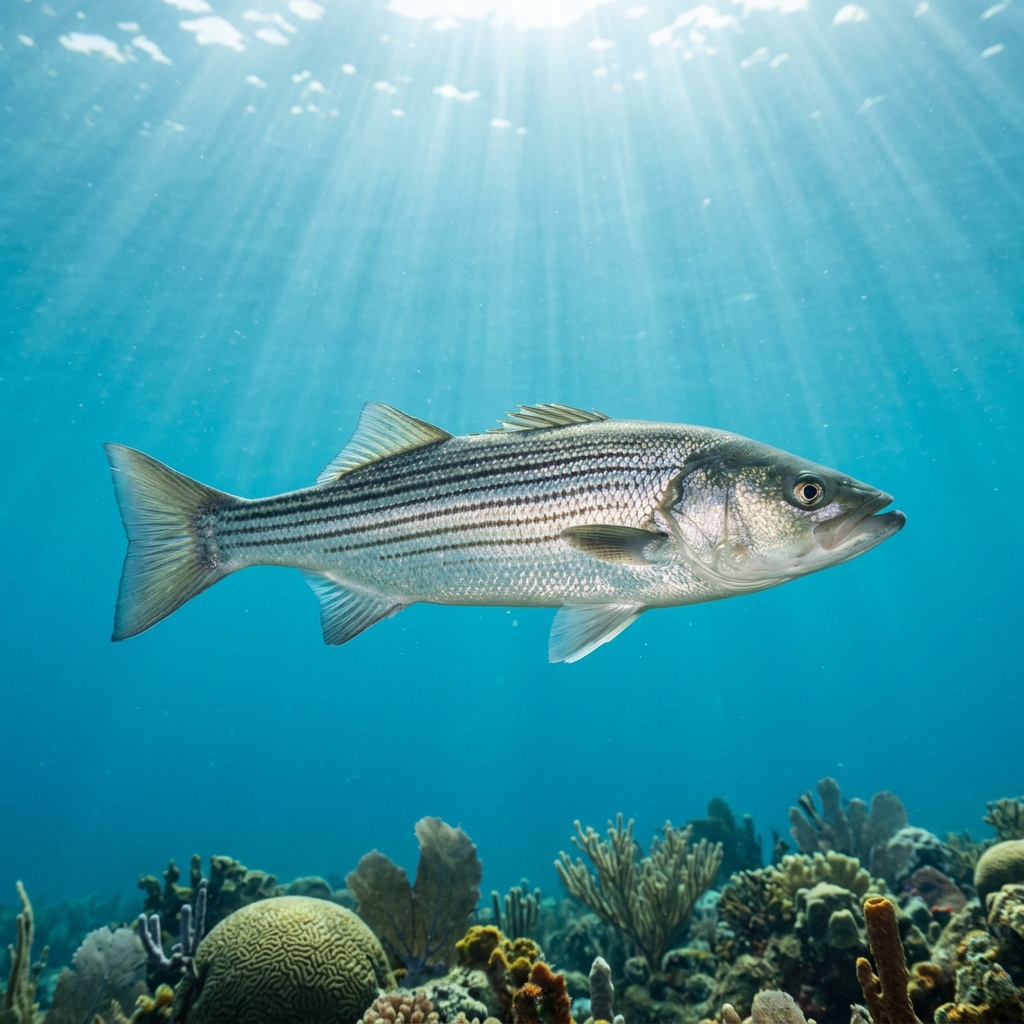
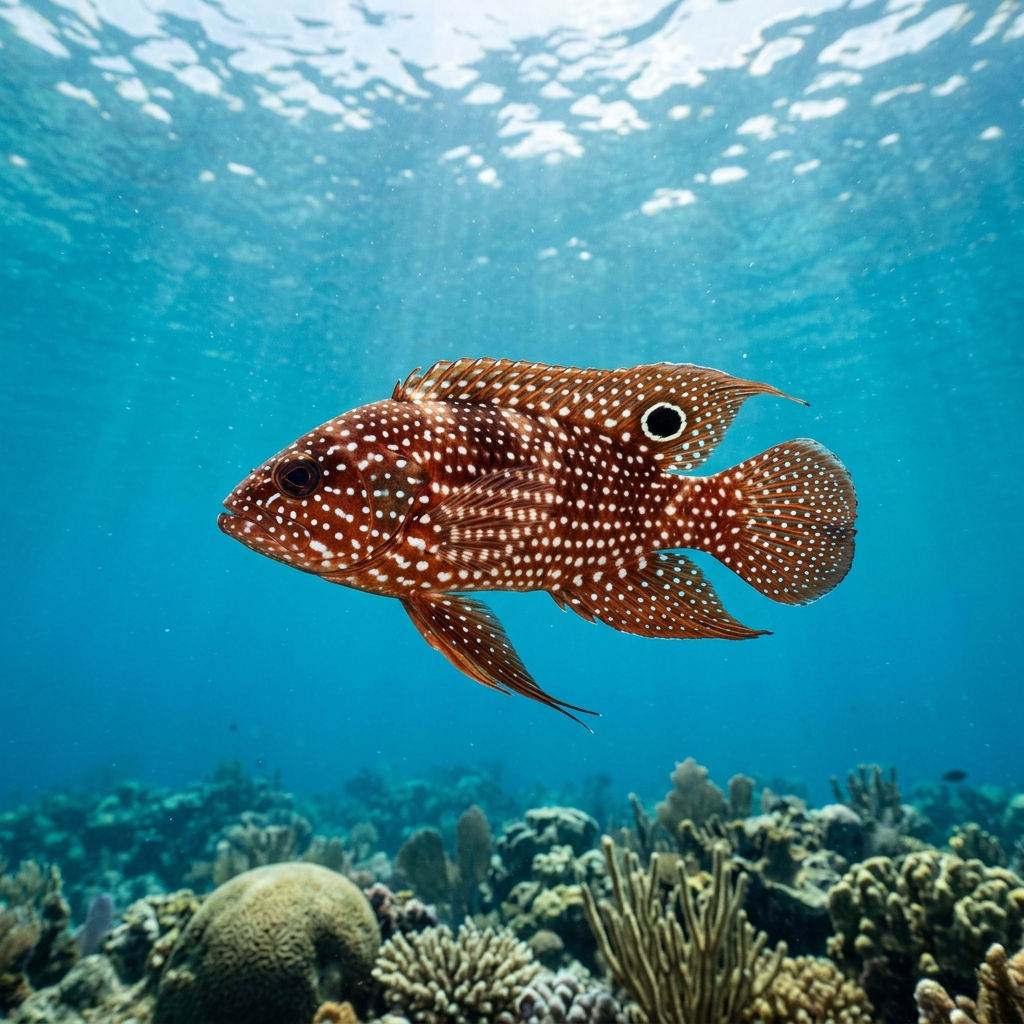
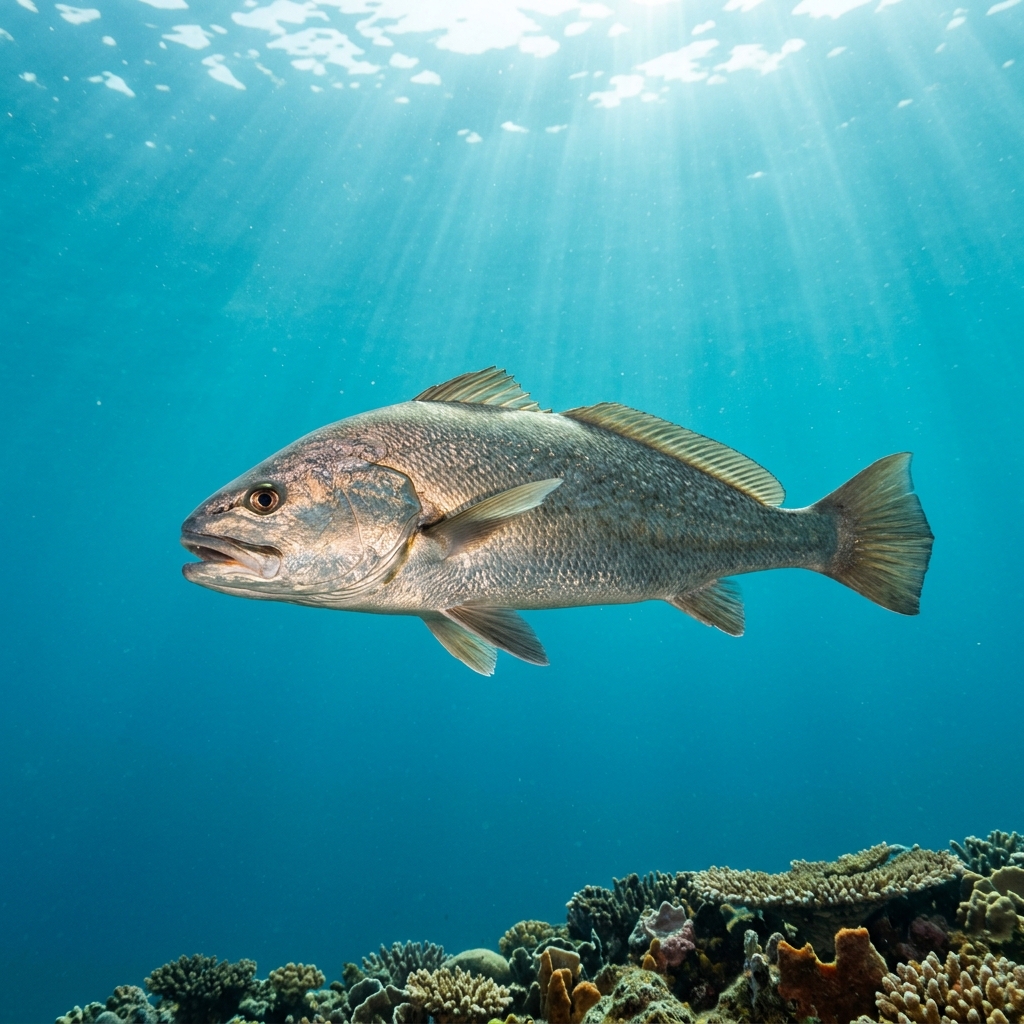
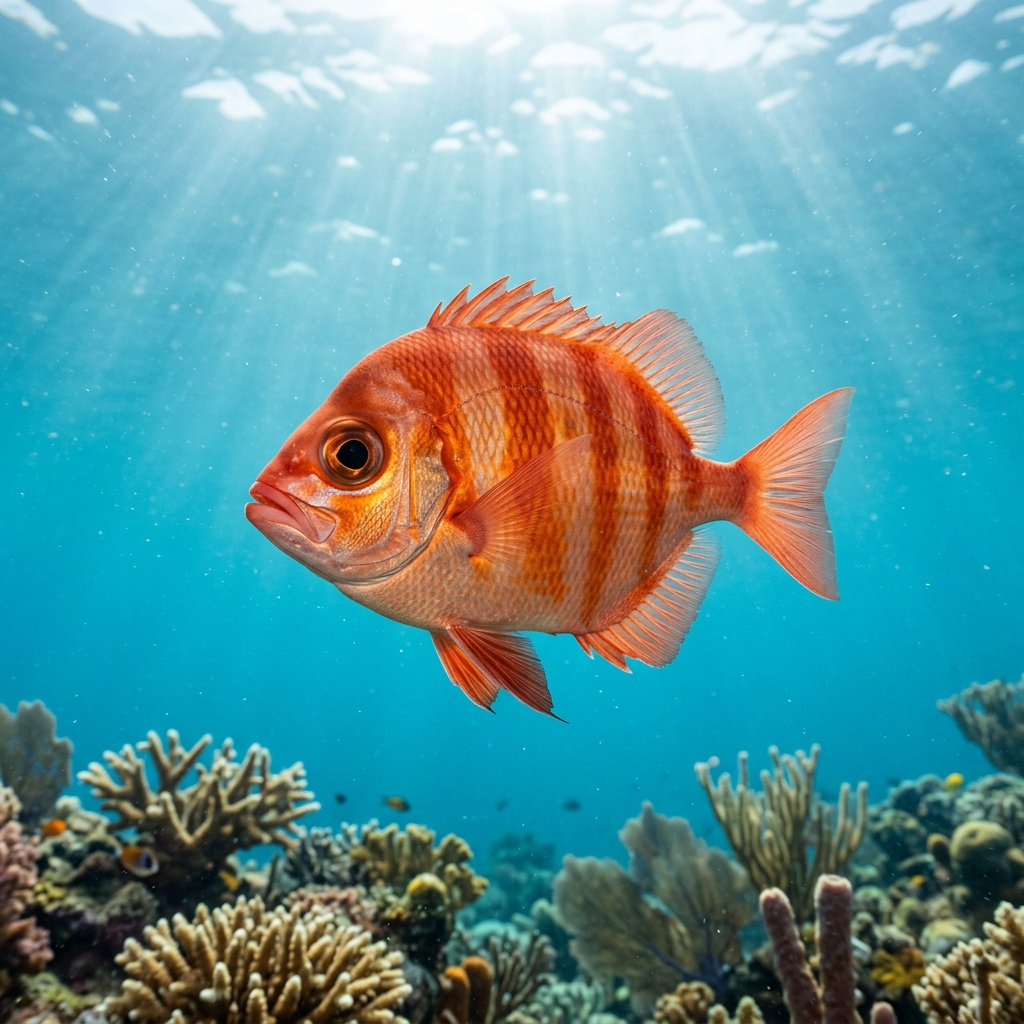
Reef neighbours a diver could mistake it for. Use the identification notes above to tell them apart.
This one is essentially a Western Cape speciality: every logged sighting in the data comes from South Africa, concentrated on reefs in that region. If you are diving elsewhere in the world, do not expect to tick this species off your list.
Mapping where Cape Knifejaw is logged…
It is very much a Western Cape, South Africa fish, with sightings logged across reef sites in that region and nowhere else in the current data. If you want a realistic shot at one, plan your dive around the Western Cape rather than further afield.
There is no strong seasonal signal in the sightings, so it is treated as a year-round resident of the Western Cape's cool water. It has been logged in temperatures from about 14 to 20C, which covers most of the region's typical range.
Look for a deep, oval-bodied fish around 60cm with a blunt head, heavy grey colouring, and faint vertical banding. Its fused beak-like teeth and preference for hugging rocky structure help separate it from open-water look-alikes.
They typically reach around 63cm, making them a solidly sized, deep-bodied reef fish rather than a small darter.
Its teeth are fused into a hard beak, similar to a parrotfish's, which lets it crunch mussels and other hard-shelled prey directly off rock faces rather than picking at soft algae.
Site and sighting data is aggregated from diver logs, iNaturalist and GBIF. For taxonomy and conservation status:
Meagre
1,159 sites