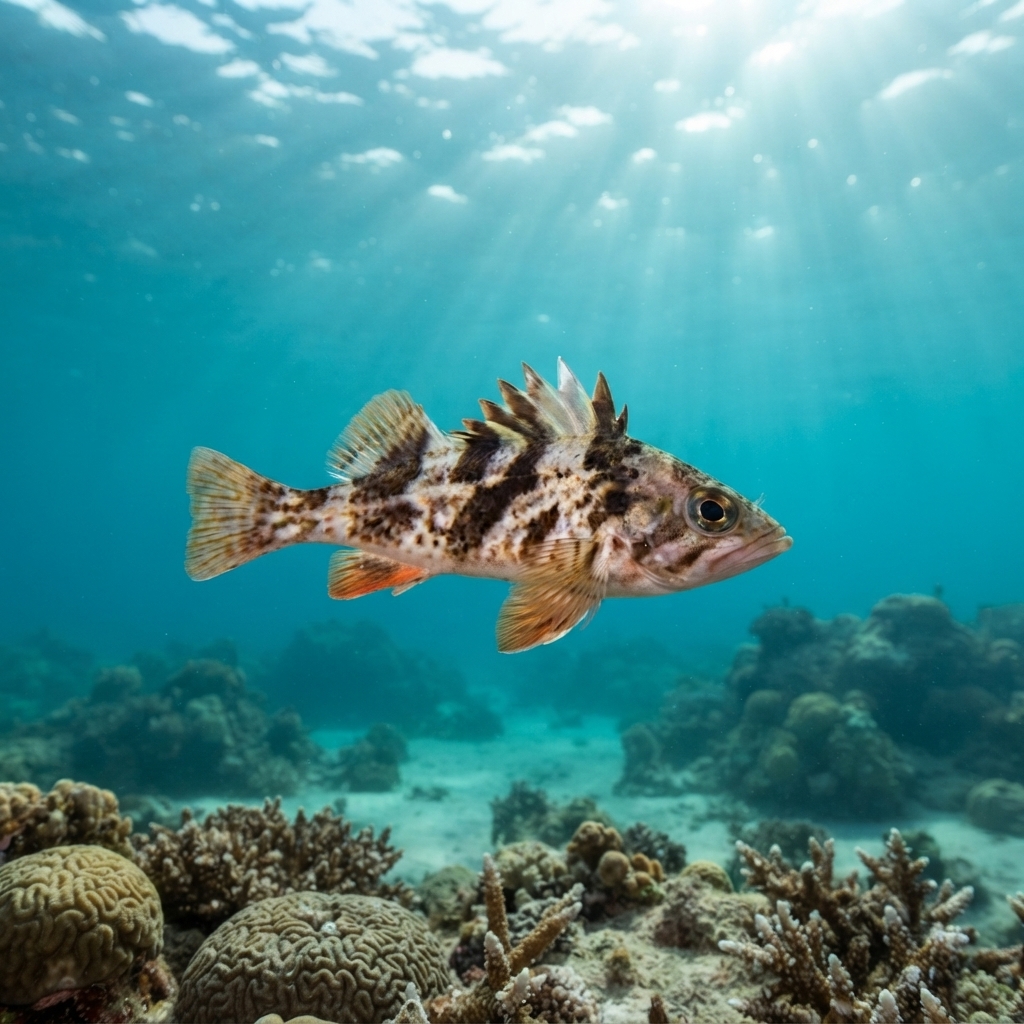
Sebastes dallii
A small, mottled rockfish rarely logged along California's coast, found in cool water between 9.7 and 14.8 C year-round.
Safety warning
Carries venomous spines in its dorsal fin, standard for scorpionfish, and a sting is painful though rarely serious. Avoid resting hands on rock ledges or cobble you have not looked at closely, since its camouflage makes it easy to miss until you are right on top of it.
If you're stung
Venomous spinesGeneral first-aid guidance, not a substitute for professional medical care. In an emergency, call your local emergency number.
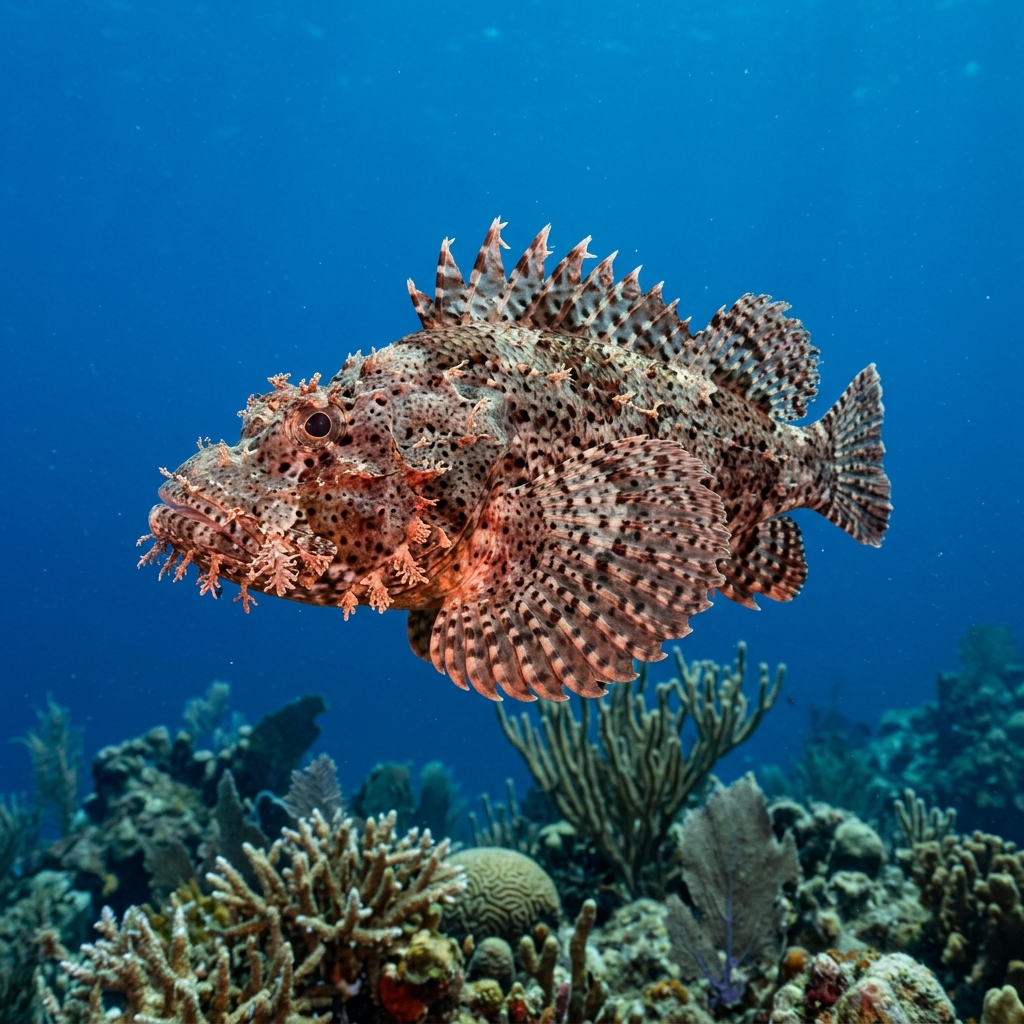
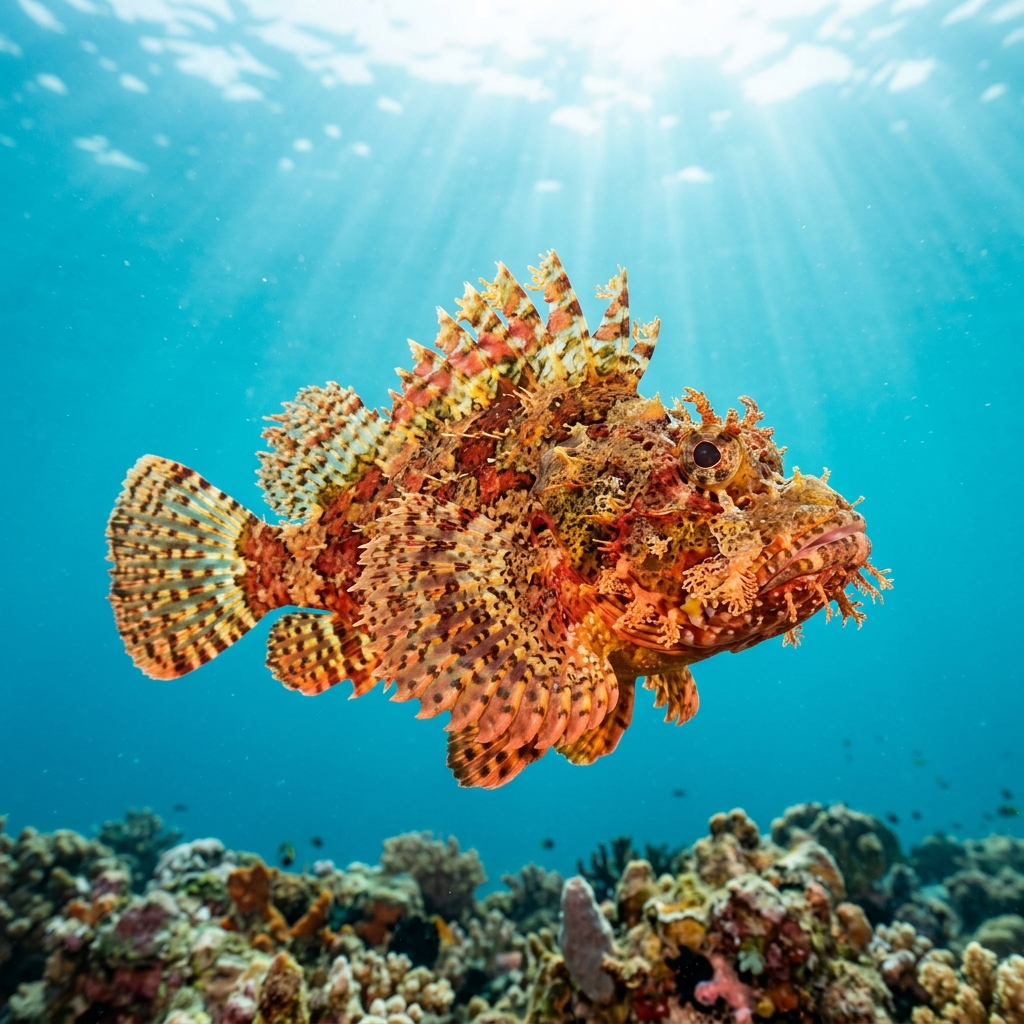
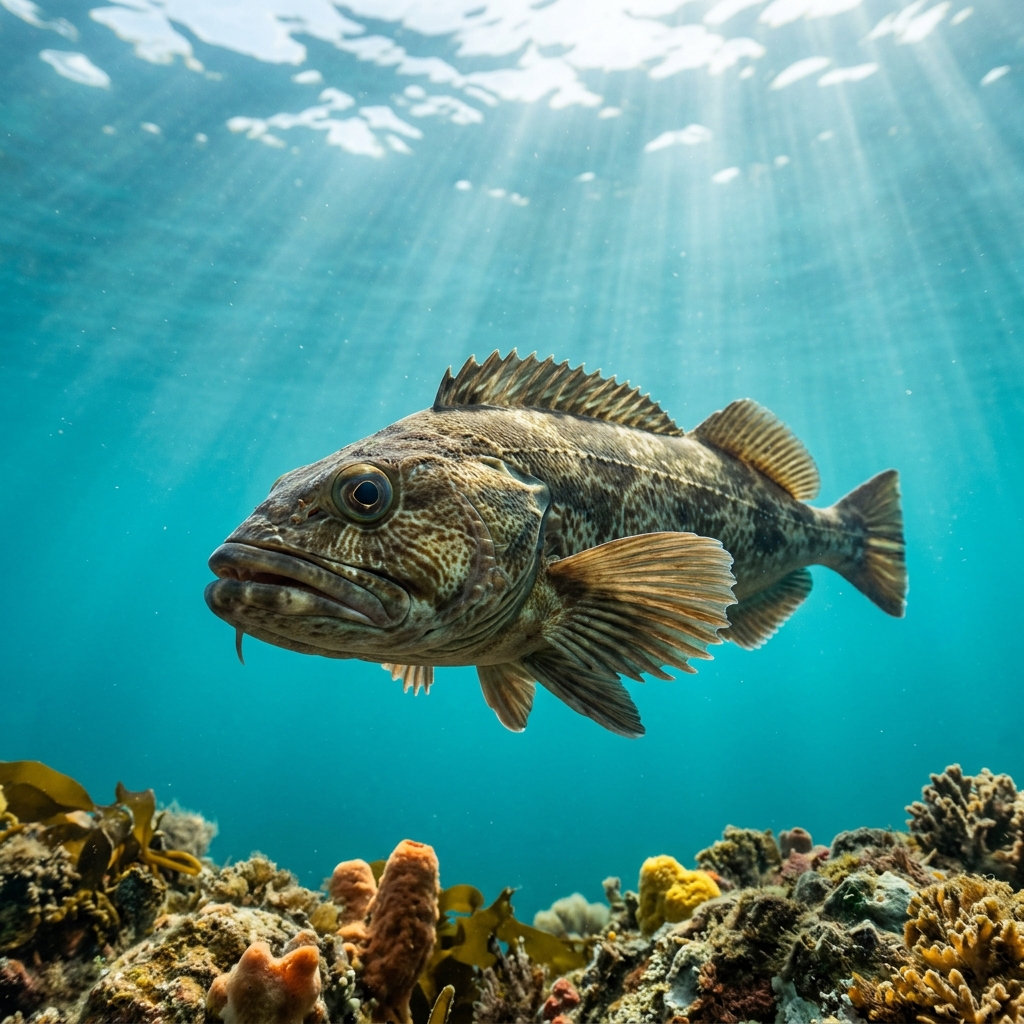
Small, stocky rockfish reaching about 18 cm, with a mottled pattern of brown, tan and cream blotches that breaks up its outline against rock and cobble. Look for the blunt head, large eyes, and spiny dorsal fin typical of scorpionfish, held close to the substrate rather than swimming in open water. The camouflage pattern is the main giveaway: it looks more like a patch of algae-covered rock than a fish until it moves.
Sits motionless on rock or cobble bottoms, relying on its blotched camouflage to disappear rather than fleeing when divers approach. Most sightings are incidental, spotted by divers scanning ledges and crevices closely rather than swimming past in open water. It tends to hold its position even at close range, which makes for good photos once you have actually found one.
Like other rockfish, it likely gives birth to live larvae rather than laying eggs, a trait shared across the Sebastes genus that sets rockfish apart from most reef fish.
No clear seasonal pattern shows up in the sighting data, and its cool-water niche of 9.7 to 14.8 C matches California's coastal temperatures for most of the year, so it is best treated as a year-round possibility rather than a seasonal target.
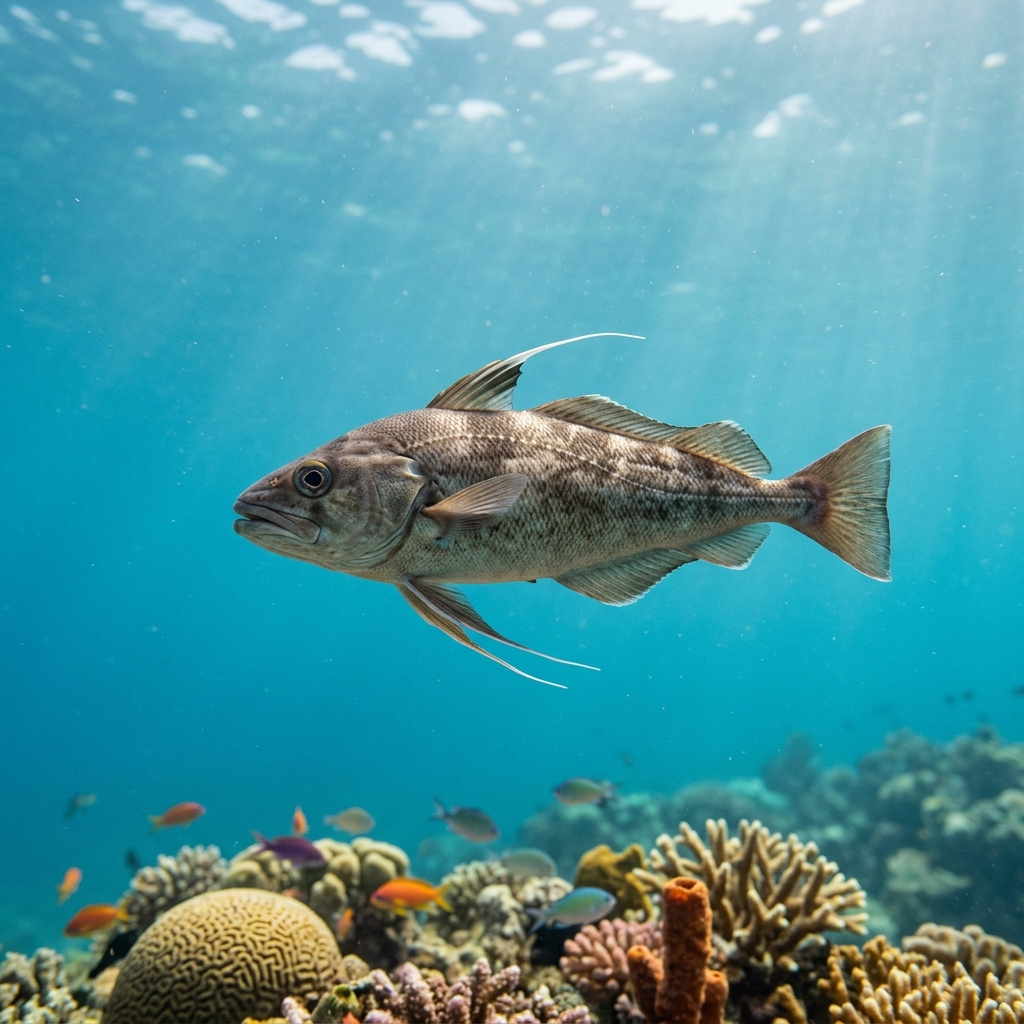
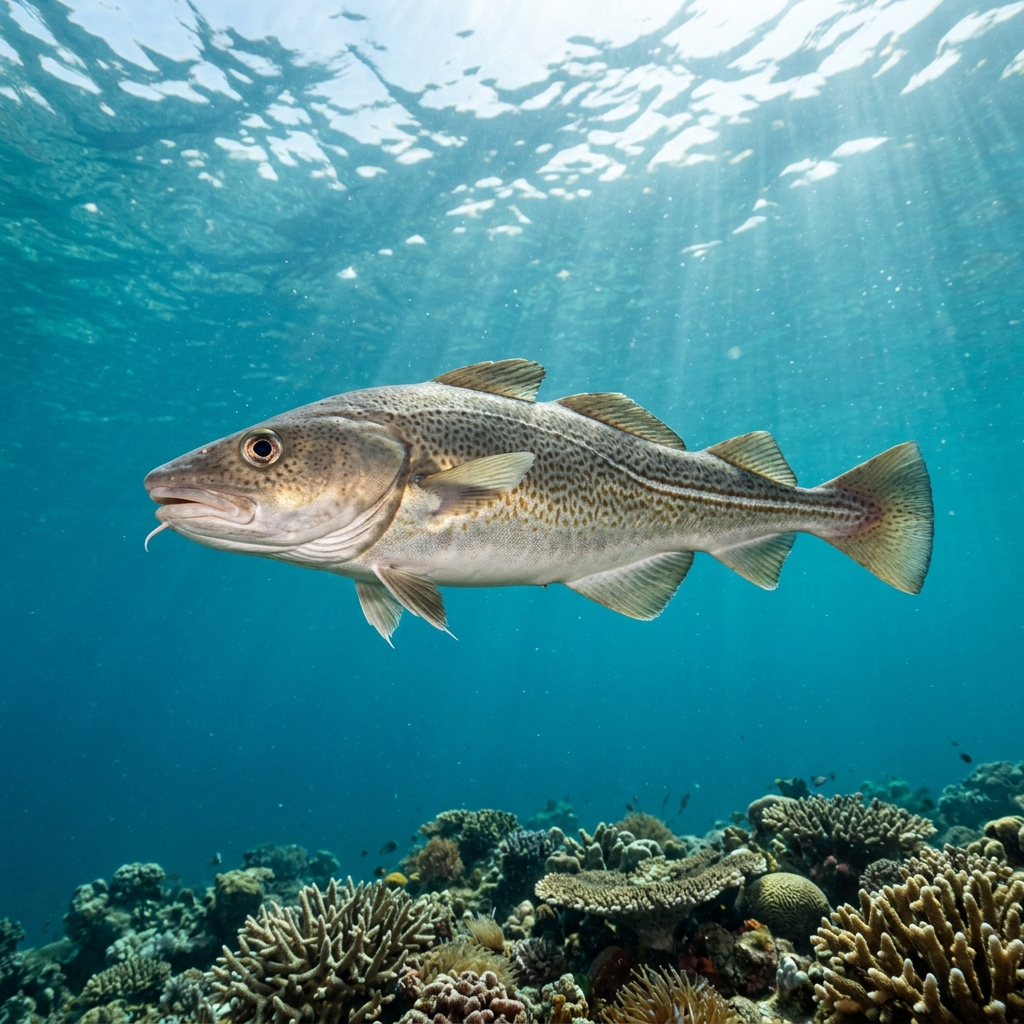
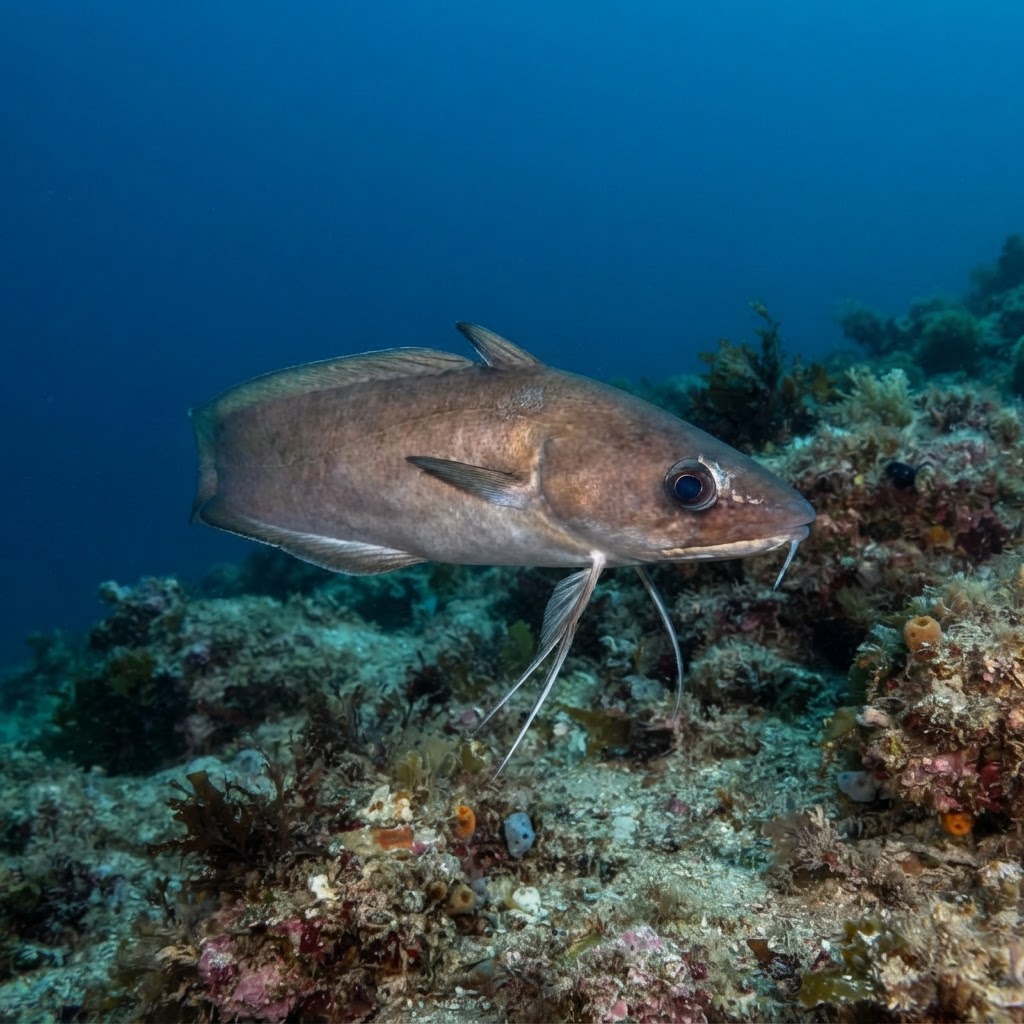
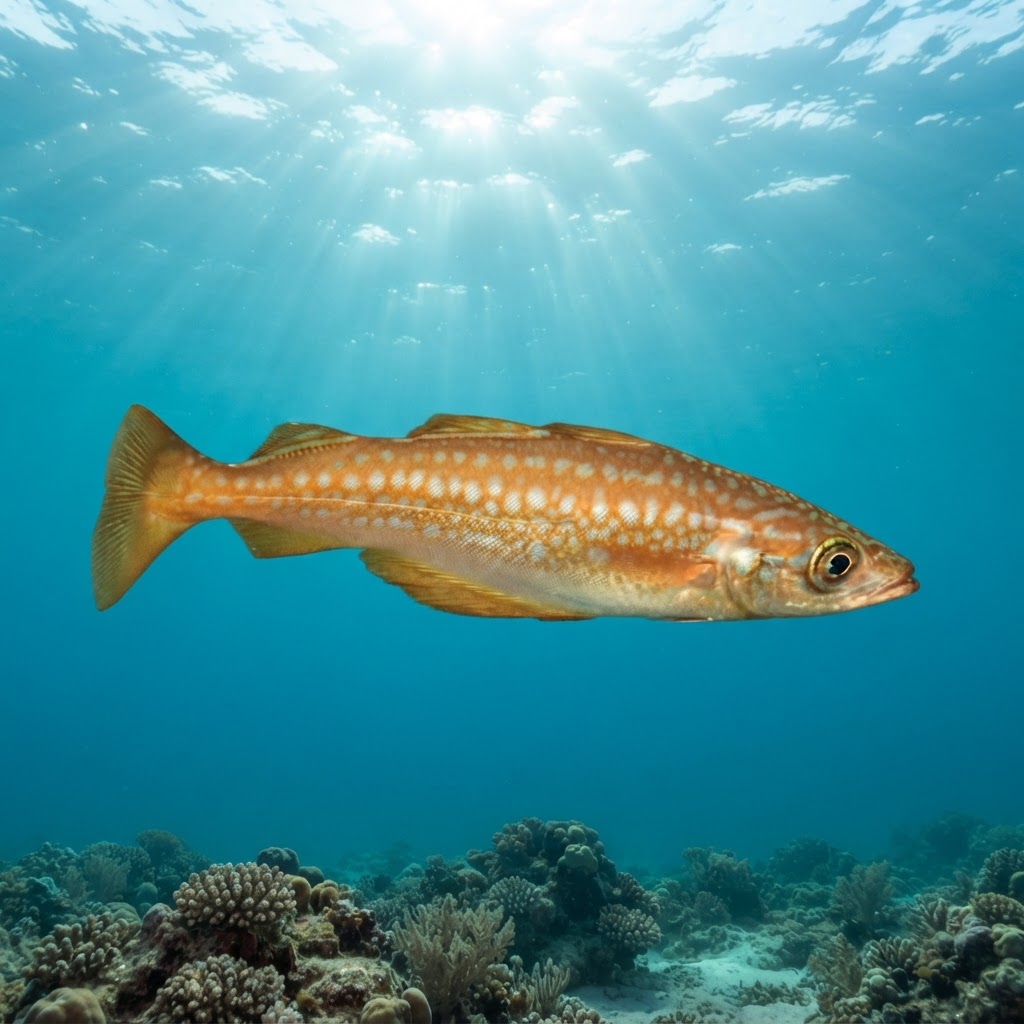
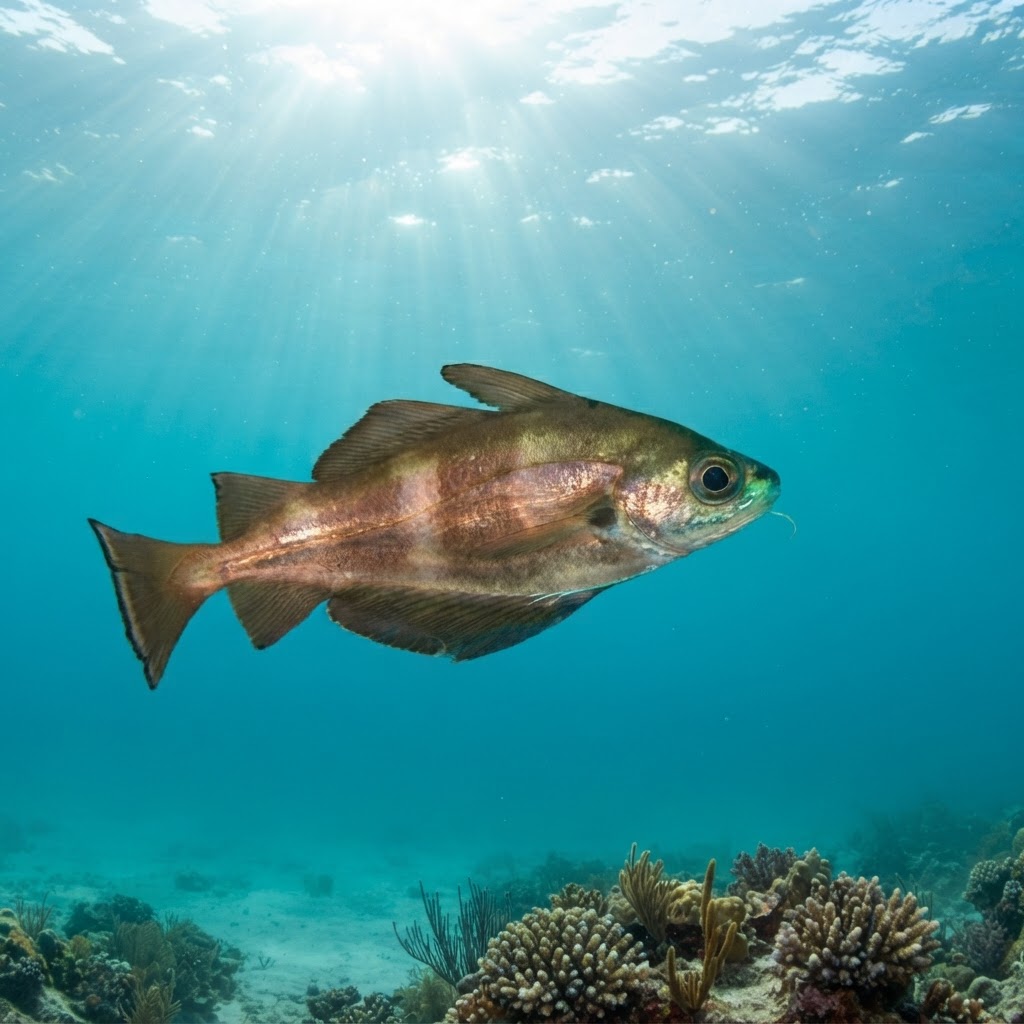
Reef neighbours a diver could mistake it for. Use the identification notes above to tell them apart.
Logged sites for this species sit entirely on the California coast, making it a United States speciality rather than a widespread find. It is not a species you plan a trip abroad for; divers encounter it as a bonus sighting on California reef and kelp dives rather than a targeted attraction.
Mapping where Calico Rockfish is logged…
Sightings come exclusively from California, United States, where divers find them resting on rocky reef and cobble bottoms. It is not reported elsewhere in the current sighting data.
There is no detected season, and the species sits comfortably in California's typical coastal water temperature range year-round, so any time of year is worth a look.
They carry venomous dorsal spines like other scorpionfish, capable of a painful sting if touched. They are not aggressive, so the main risk is accidentally placing a hand on one while it sits camouflaged against rock.
Look for a small, stocky fish around 18 cm with mottled brown, tan and cream blotches, sitting still on rock or cobble. Its camouflage and motionless habit are the biggest clues, more than any single bold marking.
They typically reach about 18 cm, making them one of the smaller rockfish species divers encounter on the California coast.
As members of the Sebastes genus, they are presumed to bear live larvae rather than laying eggs, a reproductive strategy shared across most rockfish species.
Site and sighting data is aggregated from diver logs, iNaturalist and GBIF. For taxonomy and conservation status:
Pollack
282 sites