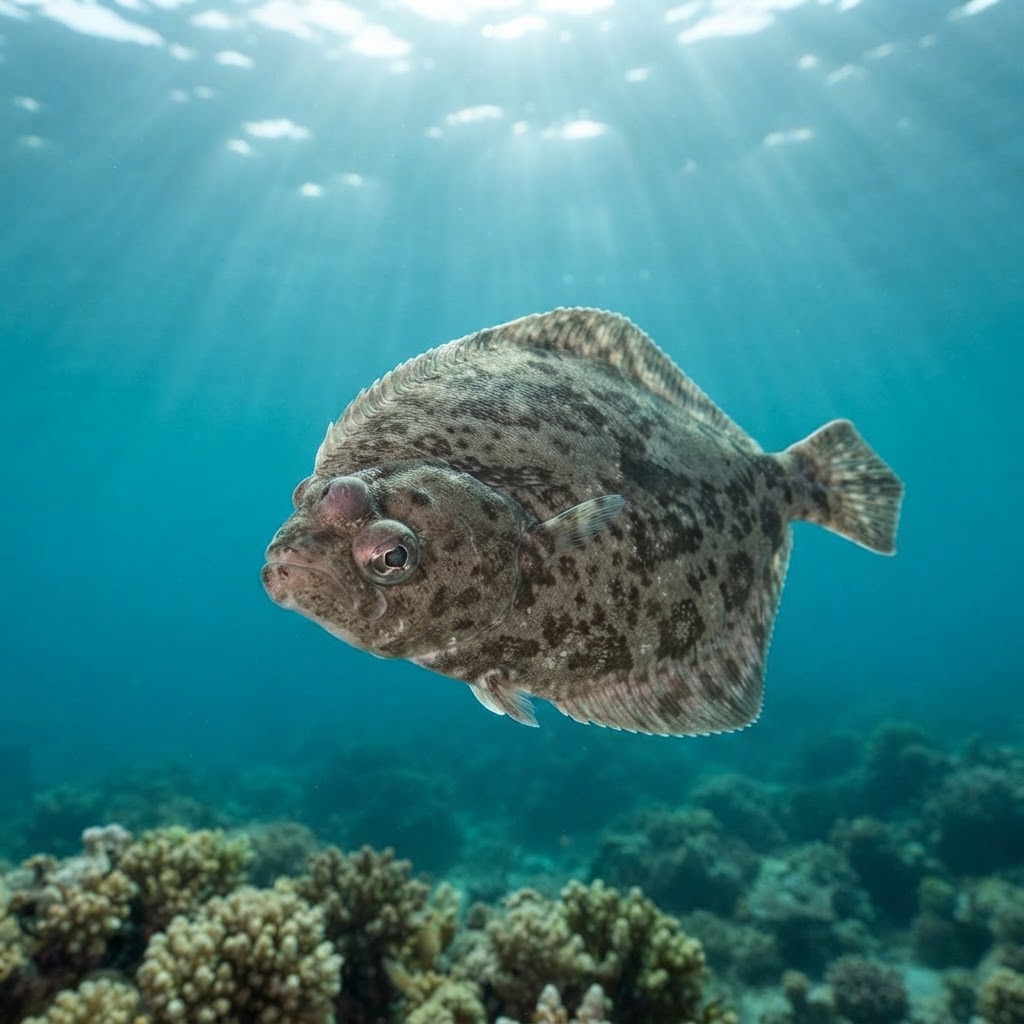
Pleuronichthys coenosus
Rarely logged flatfish found on the seabed in California and British Columbia, camouflaged in cold water between 4.7 and 10.8 C.
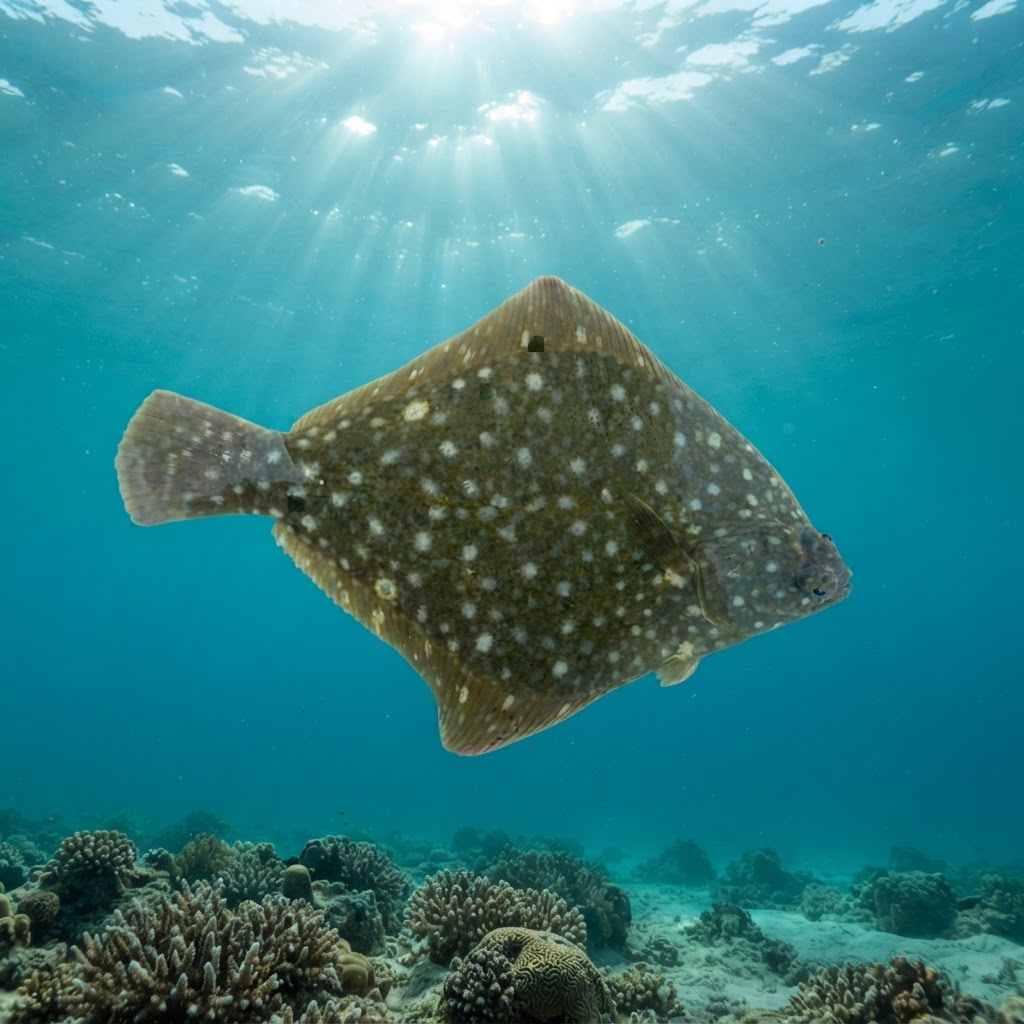
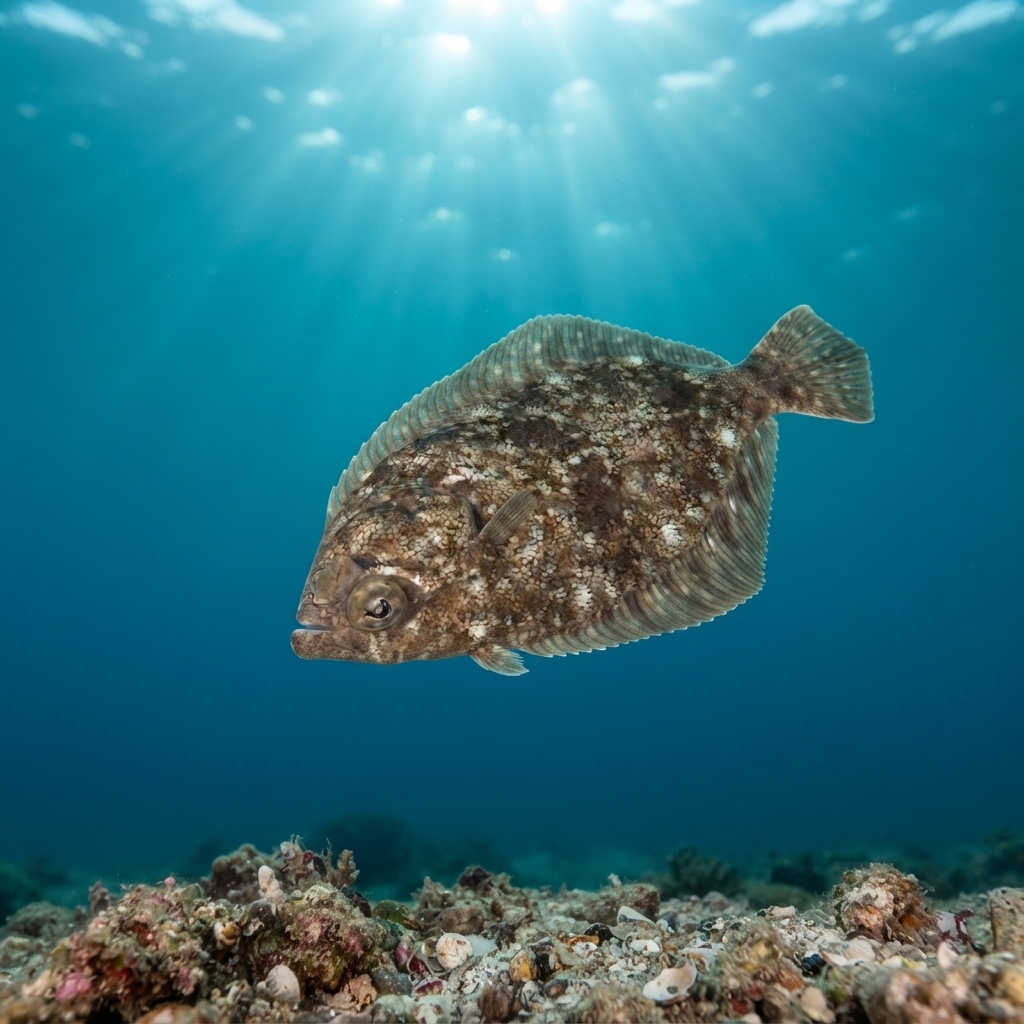
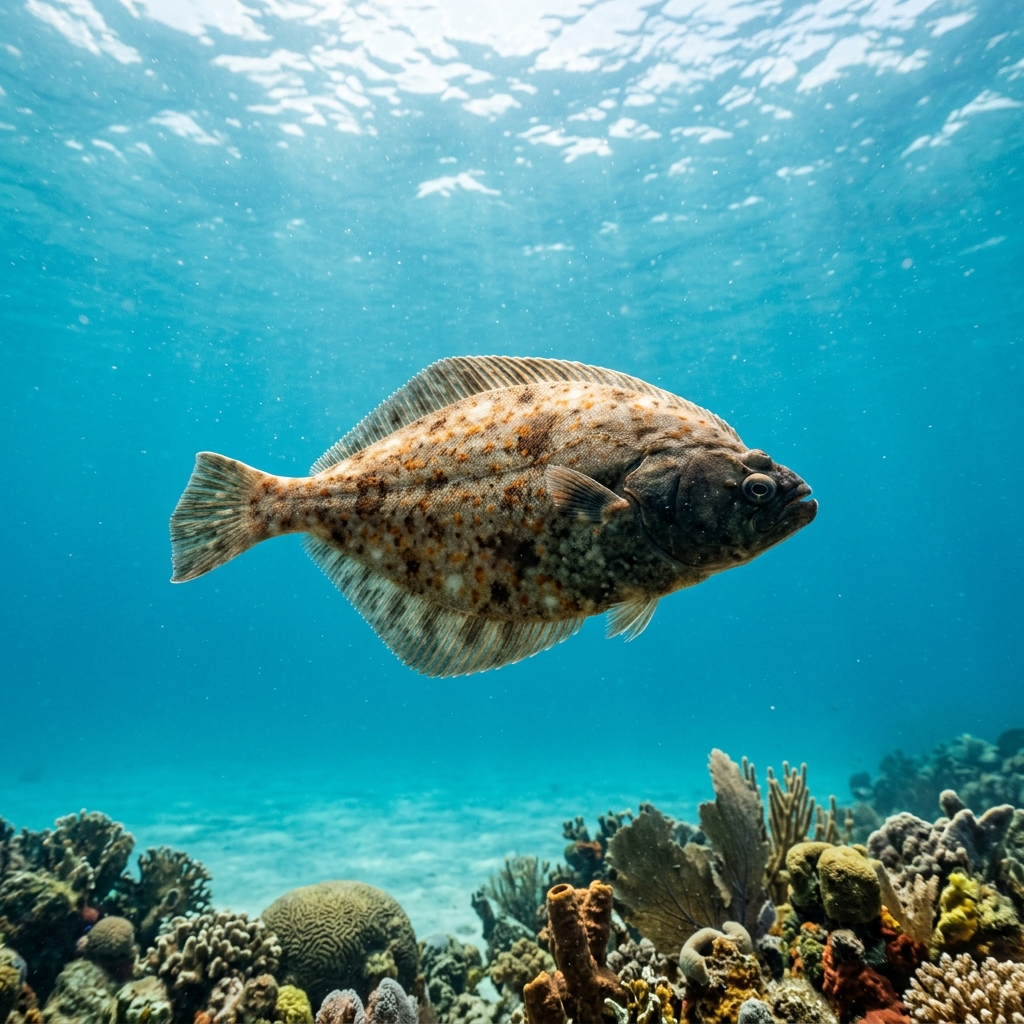
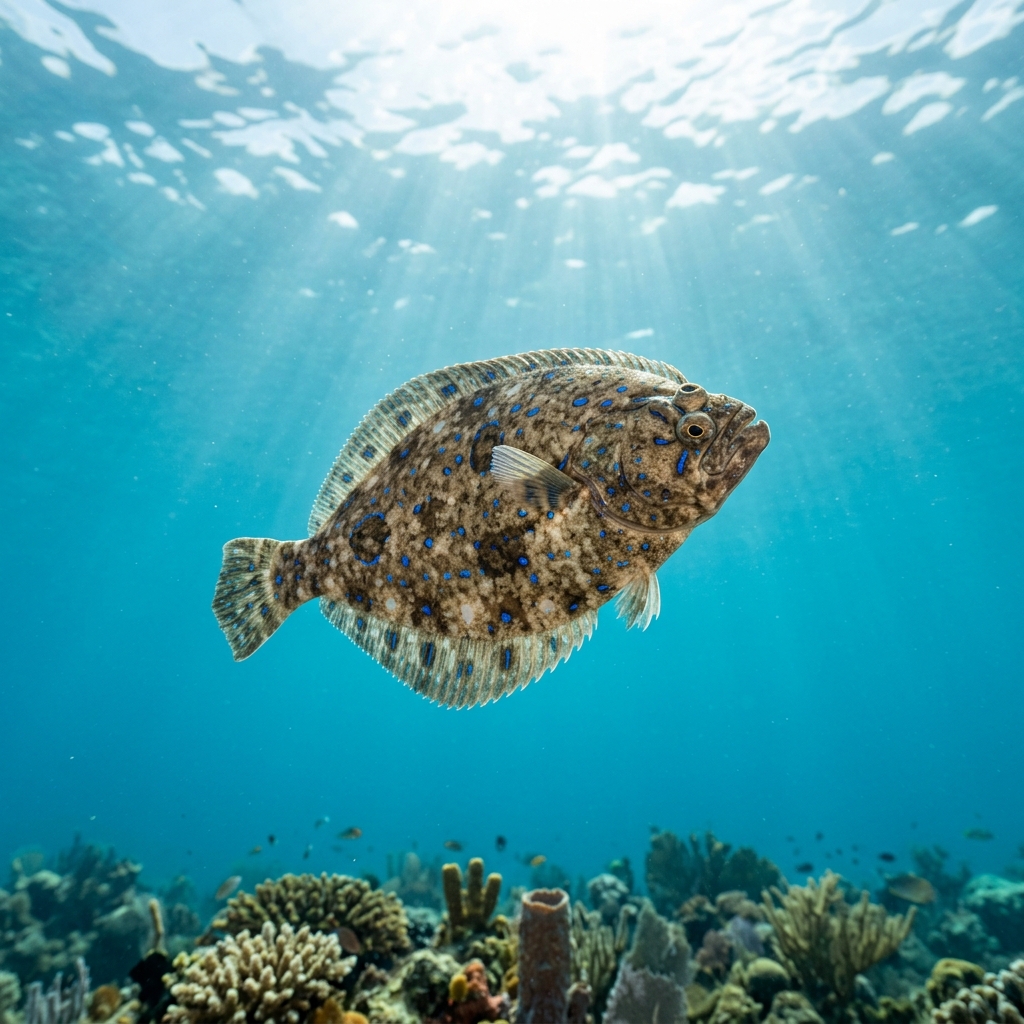
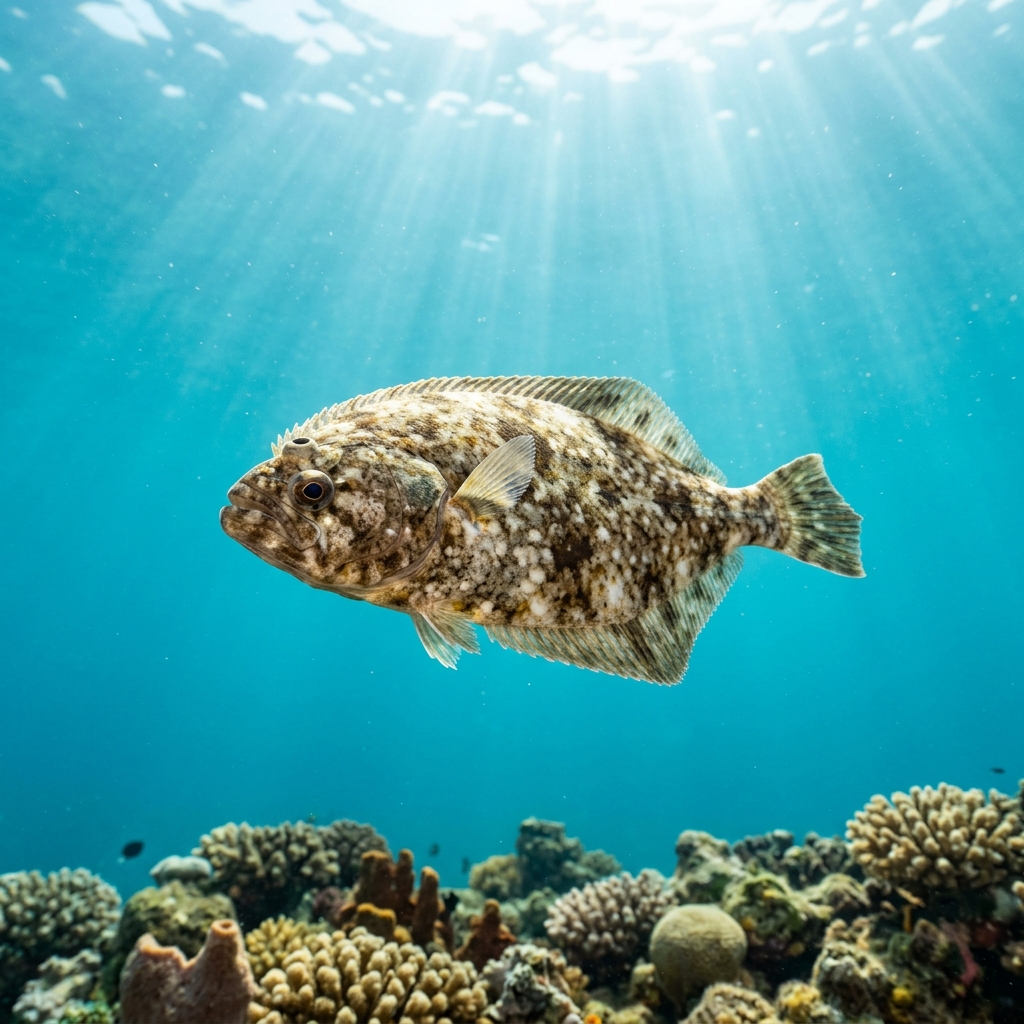
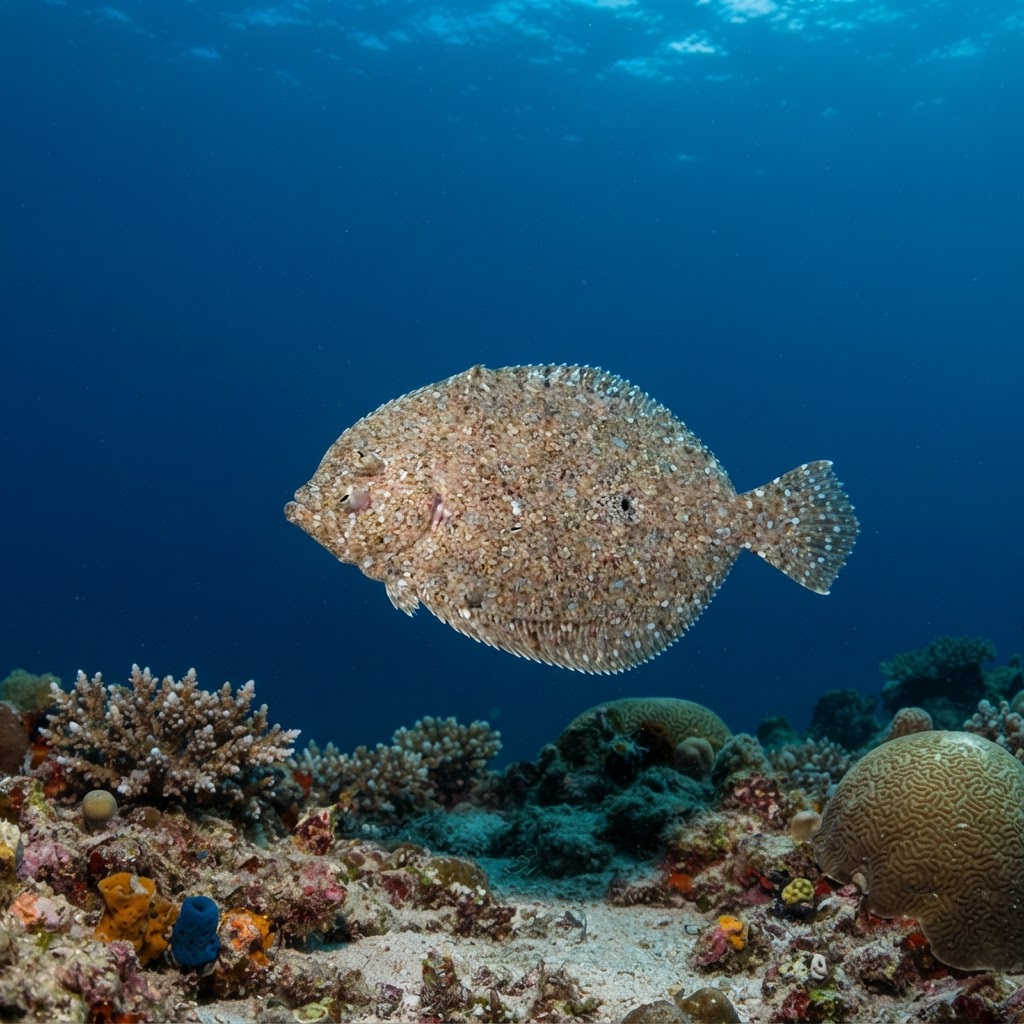
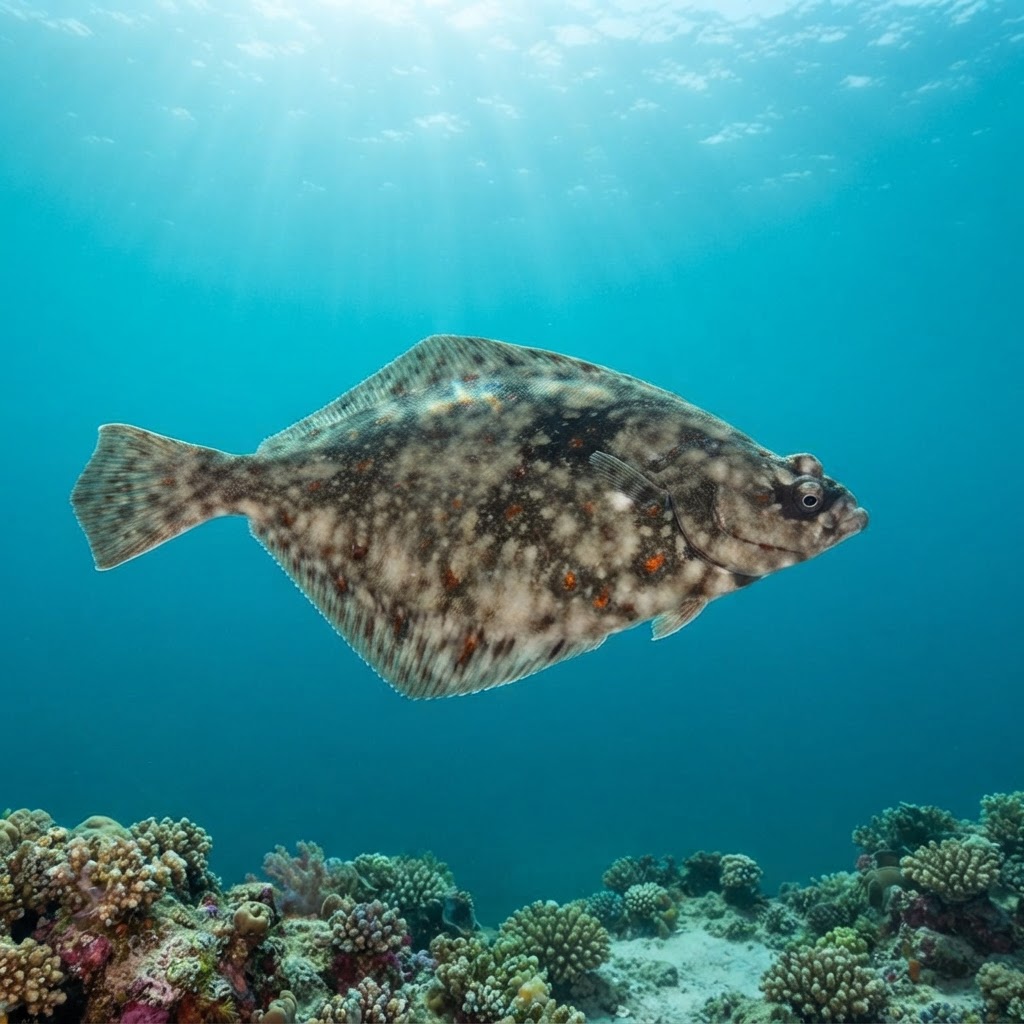
Look for a flattened, oval body lying directly on the seabed, mottled brown and grey to match sand or rubble. The giveaway mark is a dark blotch near the tail base that forms a rough C and O shape, which is where the common name comes from. Both eyes sit on the right side of the head, typical of this flatfish family, and the whole animal rarely exceeds about 25 cm. It often lies half buried, so only the eyes and outline break the surface of the sand.
Expect to find it motionless on sand, mud, or fine rubble, often partially covered and blending in so well that divers swim past without noticing. It relies on stillness and camouflage rather than fleeing, so a slow approach along the bottom is the best way to spot one. Most logs describe it as a rare find even at sites where it does occur, so patience and a careful eye on the substrate pay off more than searching open water.
Like other right-eyed flatfish, it starts life swimming upright with an eye on each side, then one eye migrates across the head as it settles onto the seabed and adopts its flattened, bottom-dwelling life.
Sightings show no detectable seasonal pattern, so treat it as a year-round possibility wherever it is found. Observed water temperatures run cold, between 4.7 and 10.8 C, consistent with the cool coastal waters off California and British Columbia at any time of year.
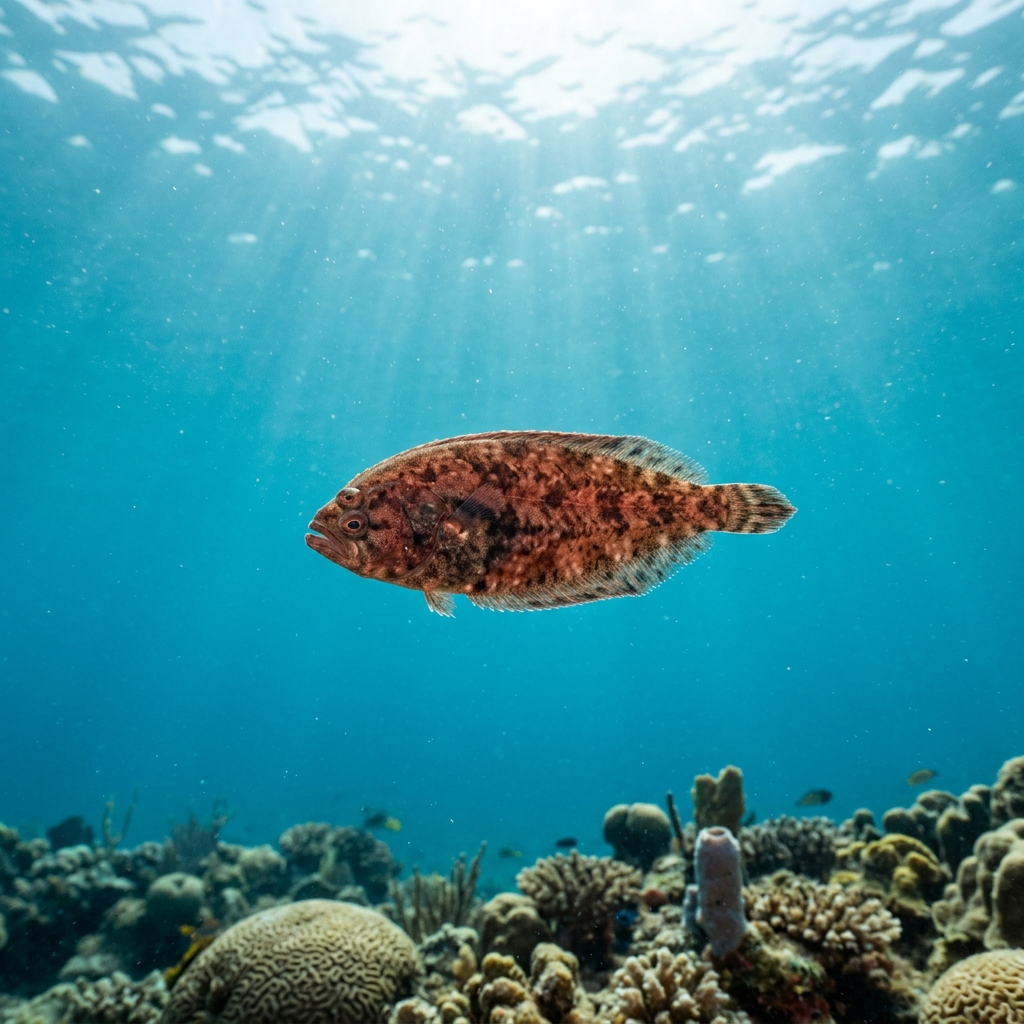
Reef neighbours a diver could mistake it for. Use the identification notes above to tell them apart.
Almost every logged sighting comes from California, particularly along the coast, with a smaller but reliable presence in British Columbia. A handful of sightings extend into the Pacific Northwest further north, but California remains the most consistent place to find it.
Mapping where C-O Sole is logged…
California is by far the most consistent place divers log it, with additional sightings in British Columbia, Canada. It turns up occasionally further north in the Pacific Northwest as well.
There is no clear seasonal pattern in the sighting data, so it can turn up year-round. It is consistently found in cold water, between roughly 4.7 and 10.8 C.
Check for a flattened, mottled brown body lying on sand or rubble with both eyes on one side of its head. The key mark is a dark C and O shaped blotch near the base of the tail.
They typically reach around 25 cm in length, making them a modest-sized flatfish easy to overlook against a sandy seabed.
Like other flatfish, it hatches with an eye on each side of its head and swims upright as a larva. As it matures, one eye migrates across the skull so both eyes end up on the same side, ready for a life spent lying on the seabed.
Site and sighting data is aggregated from diver logs, iNaturalist and GBIF. For taxonomy and conservation status:
Wide Eyed Flounder
1,624 sites