Pleuronichthys guttulatus
Common on sandy dive sites across California, this diamond-shaped flounder blends into the seafloor in 13 to 23 C water year-round.
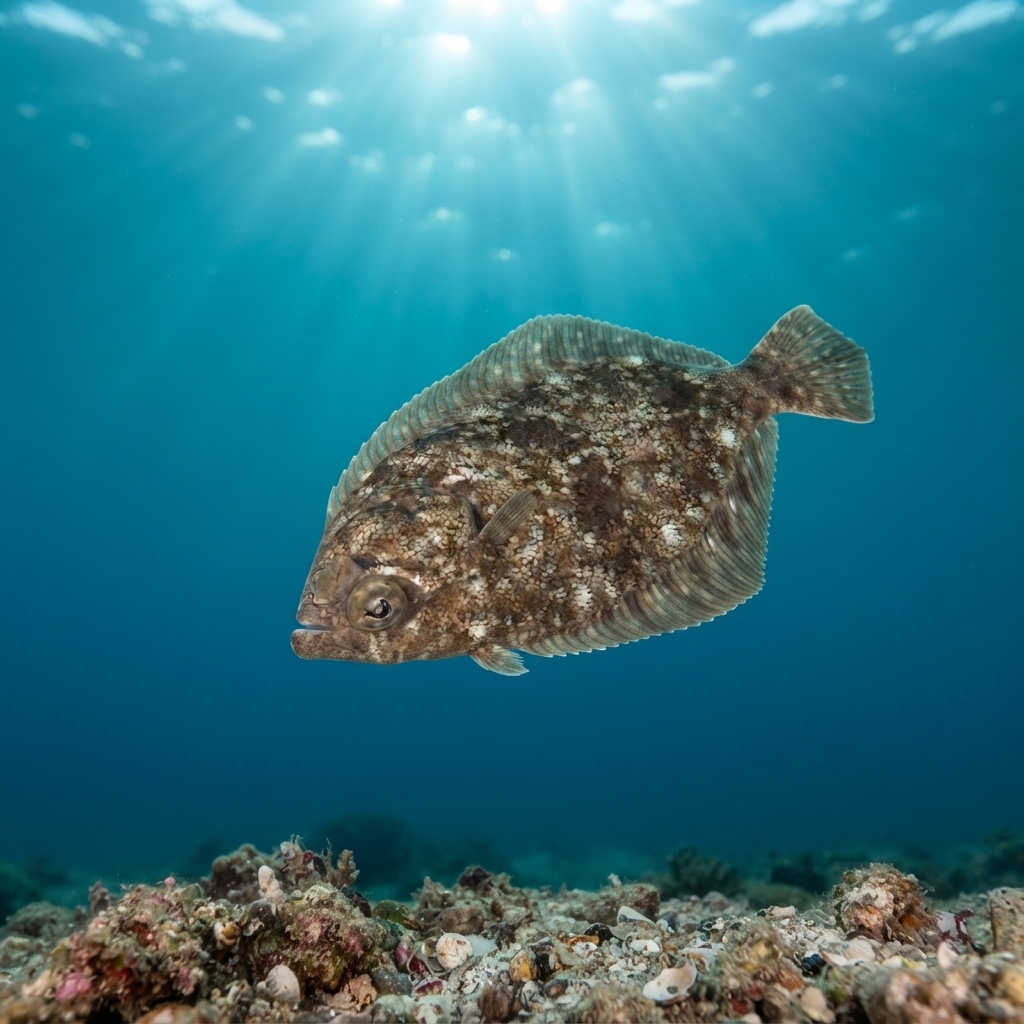
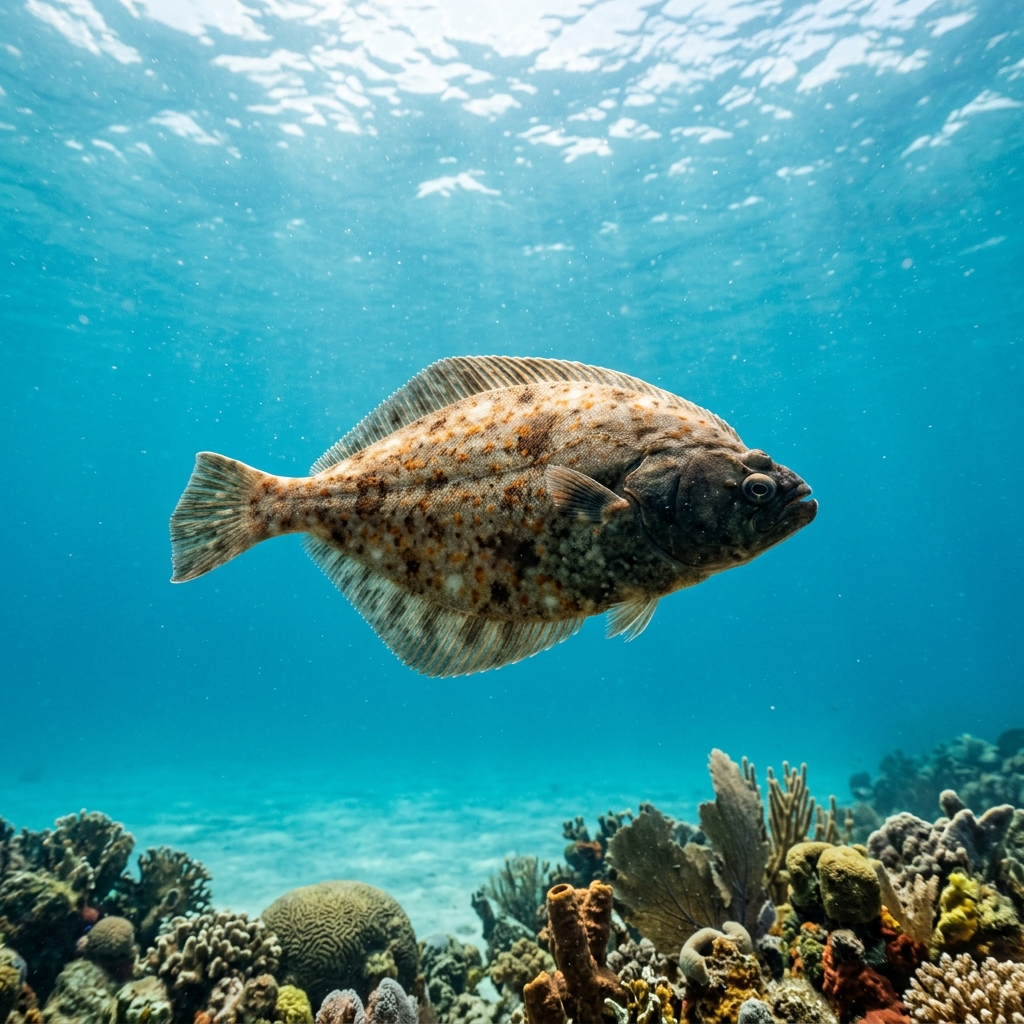
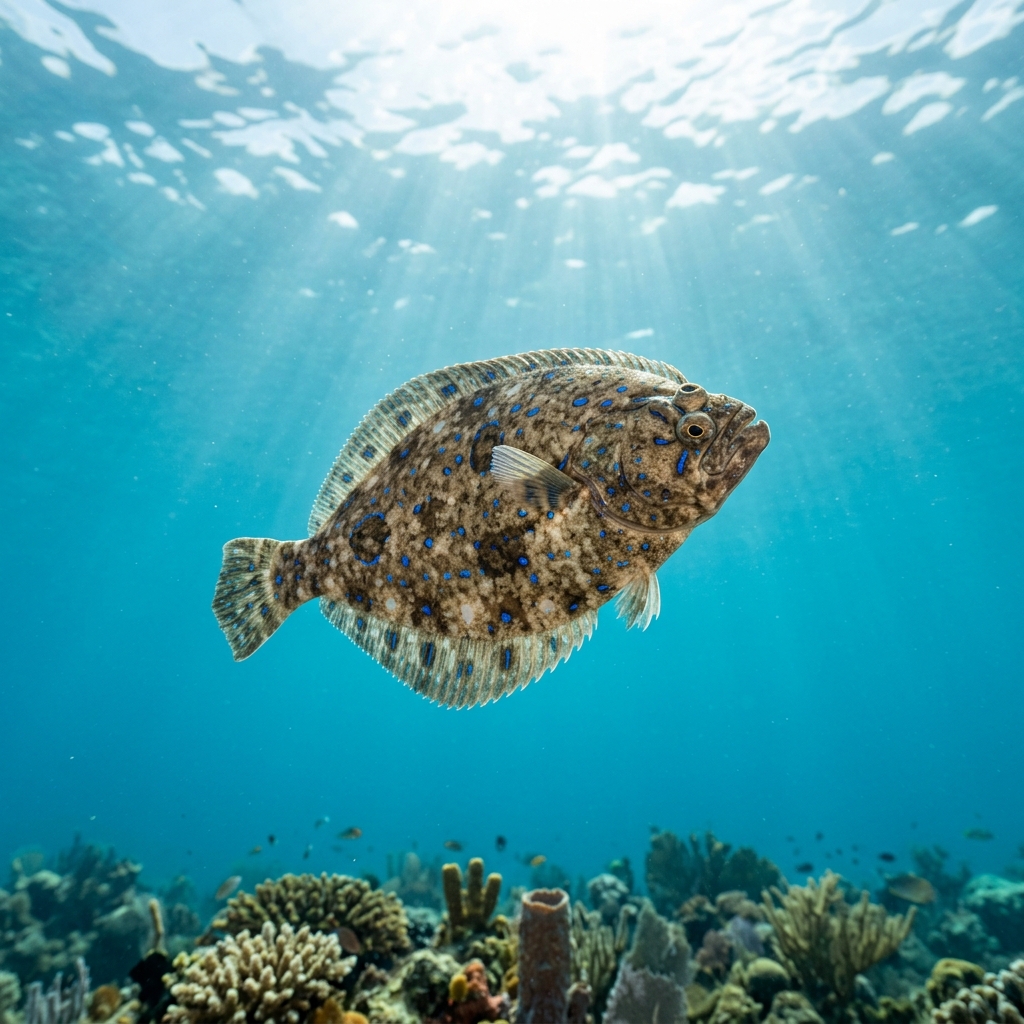
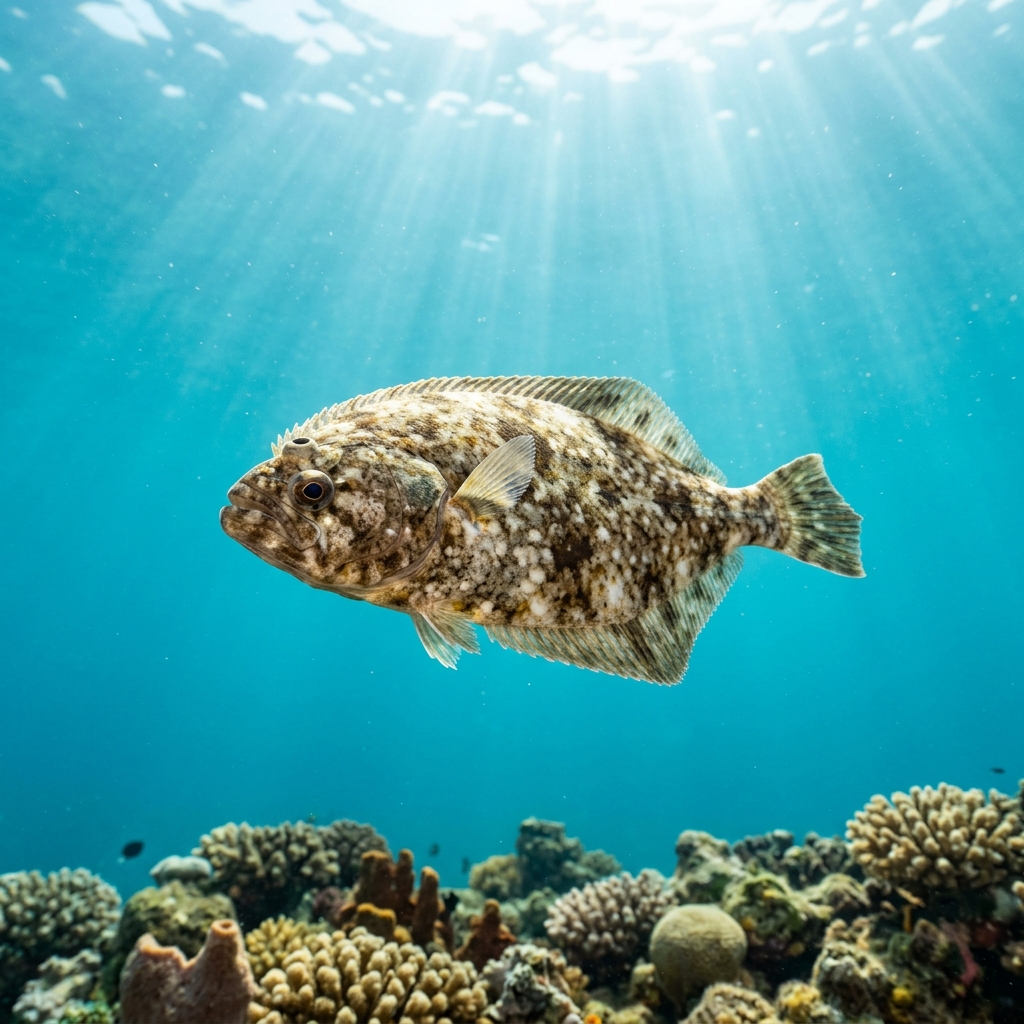
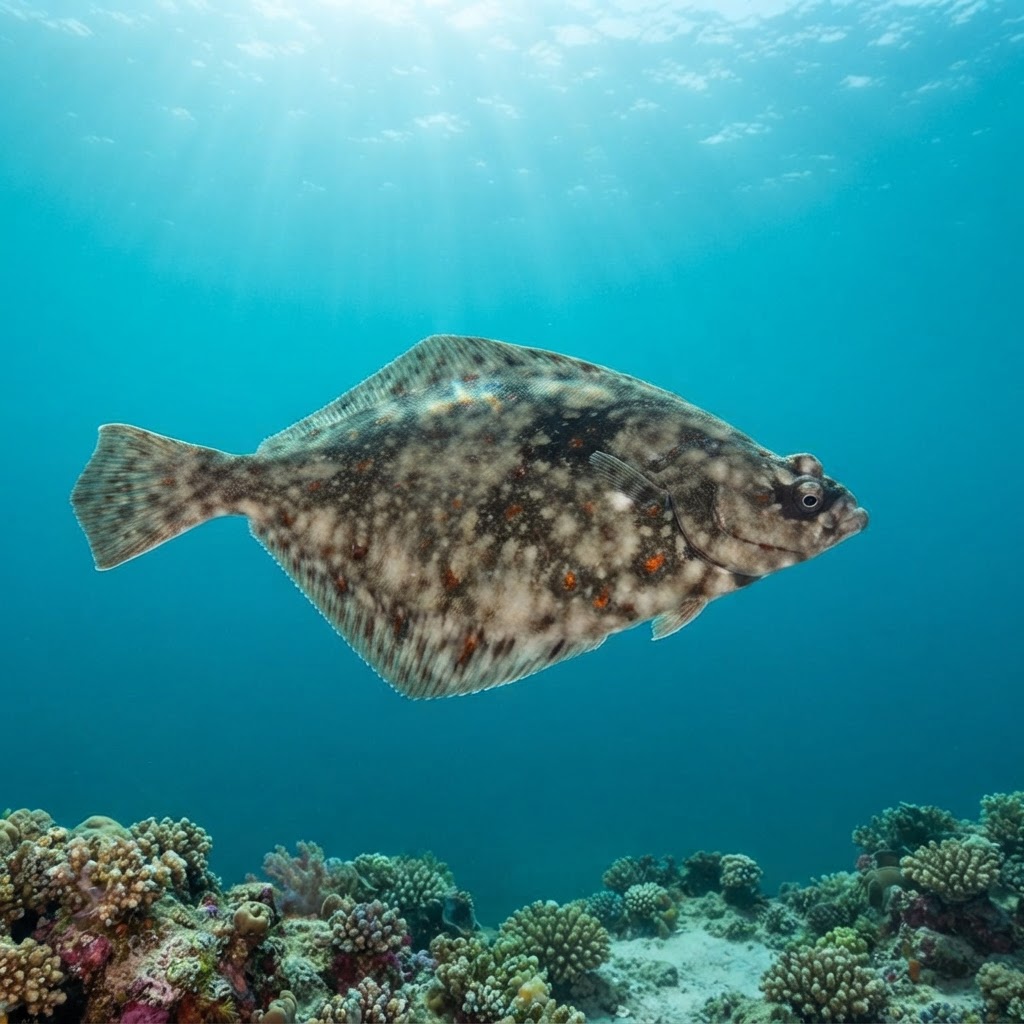
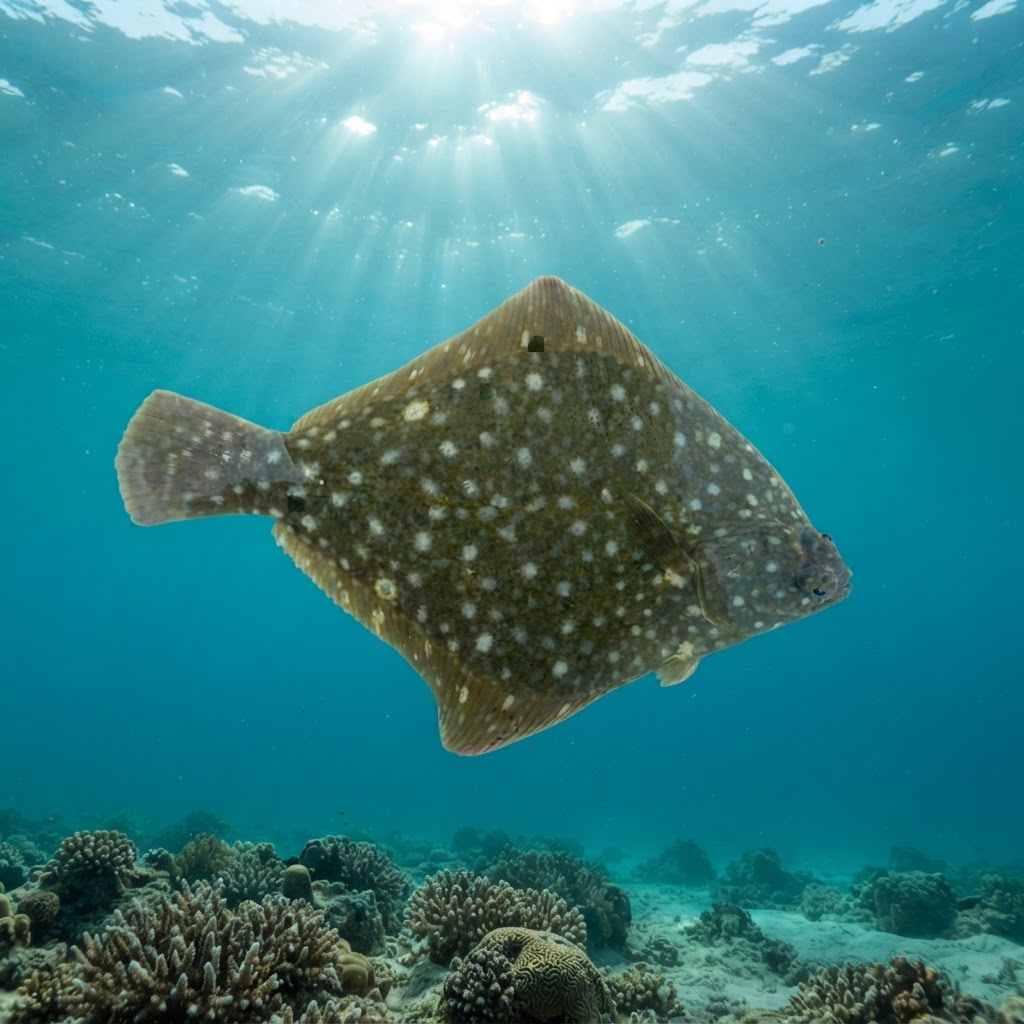
A diamond-shaped, flattened body sets this fish apart from the more oval or elongated flatfish you might find nearby, with a mottled grey-brown to olive pattern broken by pale blue spots scattered across the back. Both eyes sit on the same side of the head, staring up from a body that lies flush against sand or mud, and it rarely tops 32 cm. The high, rounded profile of the body (steeper than most flounders) is the quickest tell once you know to look for it.
Look for it lying still on open sand or mud, often partially buried with just the eyes and outline visible, using its colouring to disappear against the bottom. It tends to hold position rather than bolt when a diver approaches, only flicking off in a short burst if you get too close or hover directly overhead. Most sightings happen on flat, sediment-covered ground rather than reef structure, so slow down and scan the substrate rather than the rocks.
Like other flatfish, it starts life swimming upright and symmetrical, then one eye migrates across the skull as it matures into the flattened, bottom-hugging adult shape divers actually encounter.
No clear seasonal pattern shows up in the sightings, and with a comfortable range of roughly 13 to 23 C, this fish seems to stay put on the sand through the year. Treat it as a year-round find on Californian dives rather than something tied to a particular month.
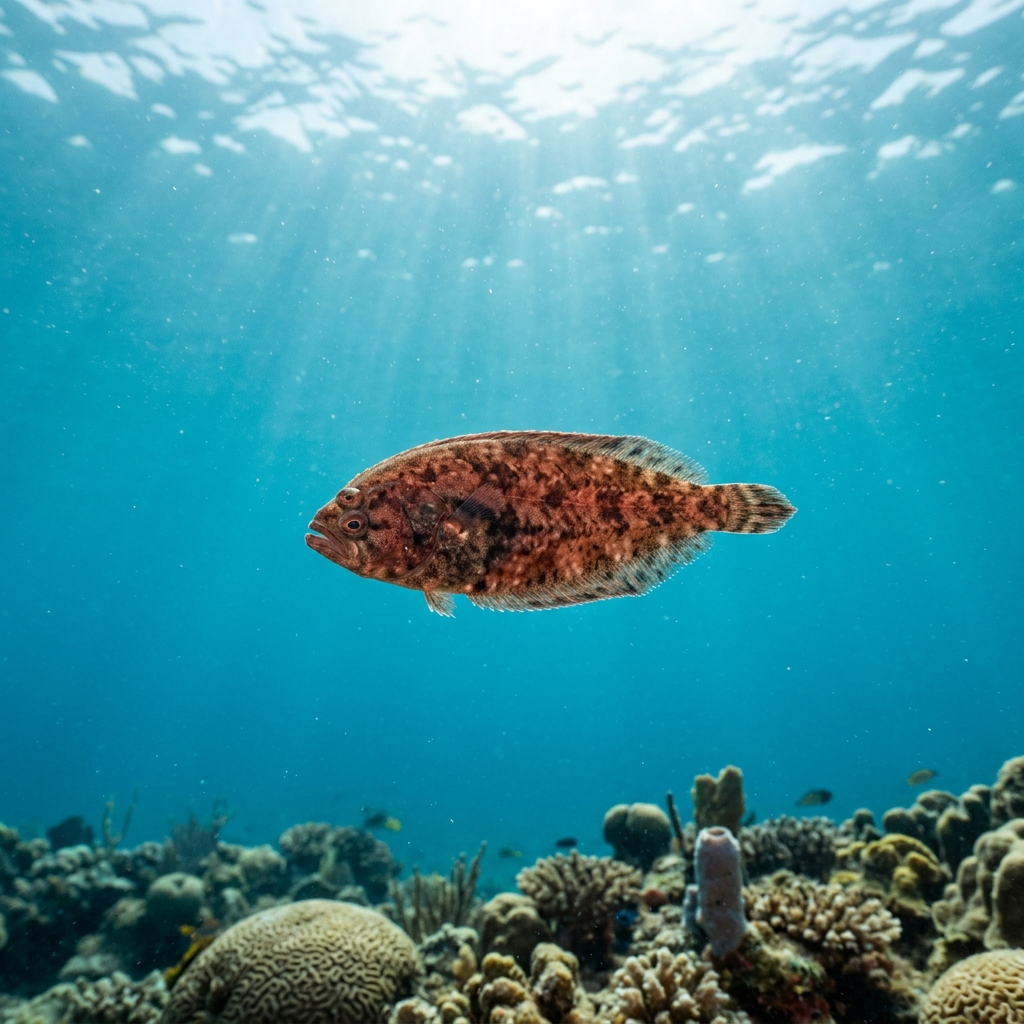
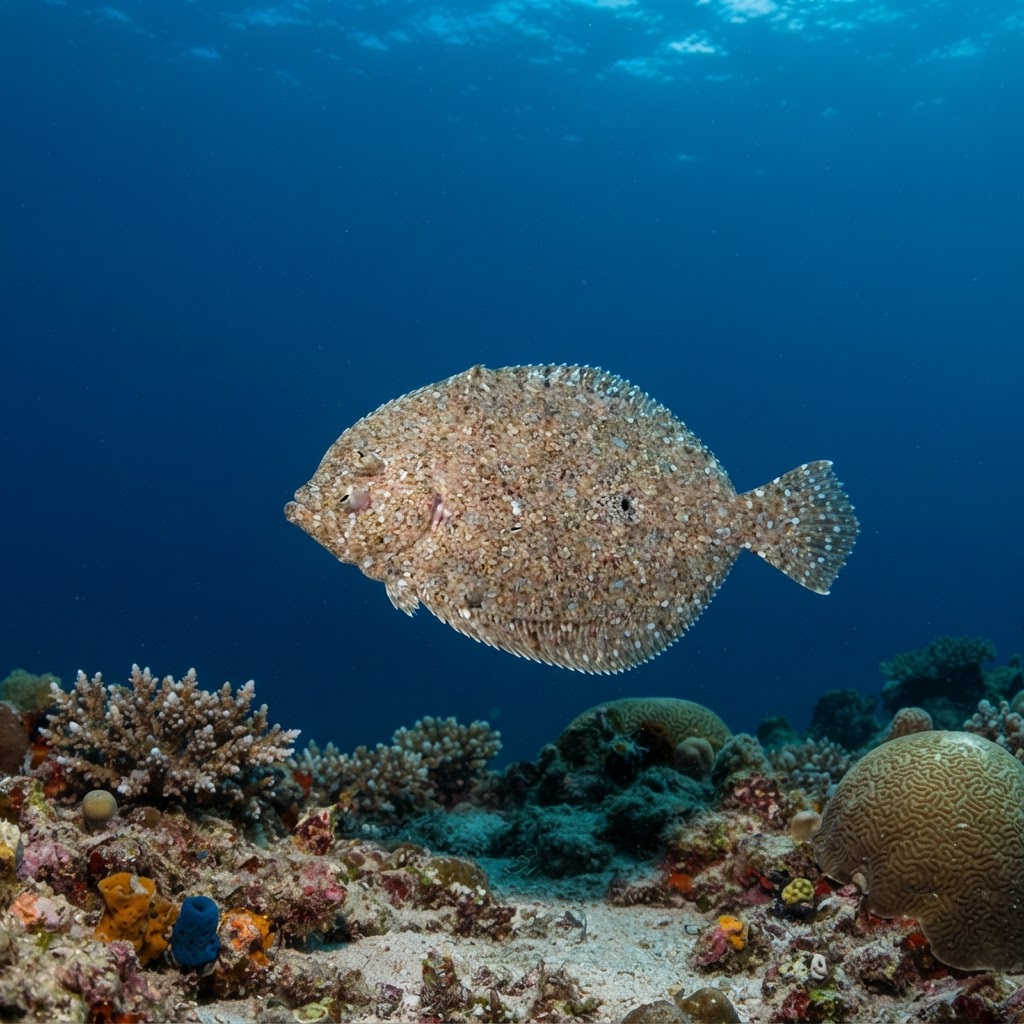
Reef neighbours a diver could mistake it for. Use the identification notes above to tell them apart.
Every logged sighting in the data comes from California, making it a firmly West Coast US species for divers to target. Within that, the coastline of California is the reliable spot, with most sites reporting the fish as a common find rather than a rare treat.
Mapping where Diamond Turbot is logged…
California is the place for it, with sightings concentrated along the state's coastline. It shows up reliably on sandy dive sites there rather than turning up as an occasional stray elsewhere.
There's no strong seasonal pattern in the sightings, and it tolerates a fairly wide temperature range of about 13 to 23 C, so divers report it across the year rather than during one particular window.
Look for a flattened, diamond-shaped body lying on sand, with a mottled brown-grey pattern and scattered pale blue spots. Both eyes sit on top of the head, and the body has a noticeably higher, rounder profile than most other flatfish nearby.
They typically reach around 32 cm in length, making them a modest-sized flatfish that's easy to overlook against a sandy bottom if you're not scanning closely.
They don't start that way. Juveniles swim upright with one eye on each side like a normal fish, then one eye migrates across the head as they settle onto the seafloor and flatten into the adult body shape.
Site and sighting data is aggregated from diver logs, iNaturalist and GBIF. For taxonomy and conservation status:
Wide Eyed Flounder
1,624 sites