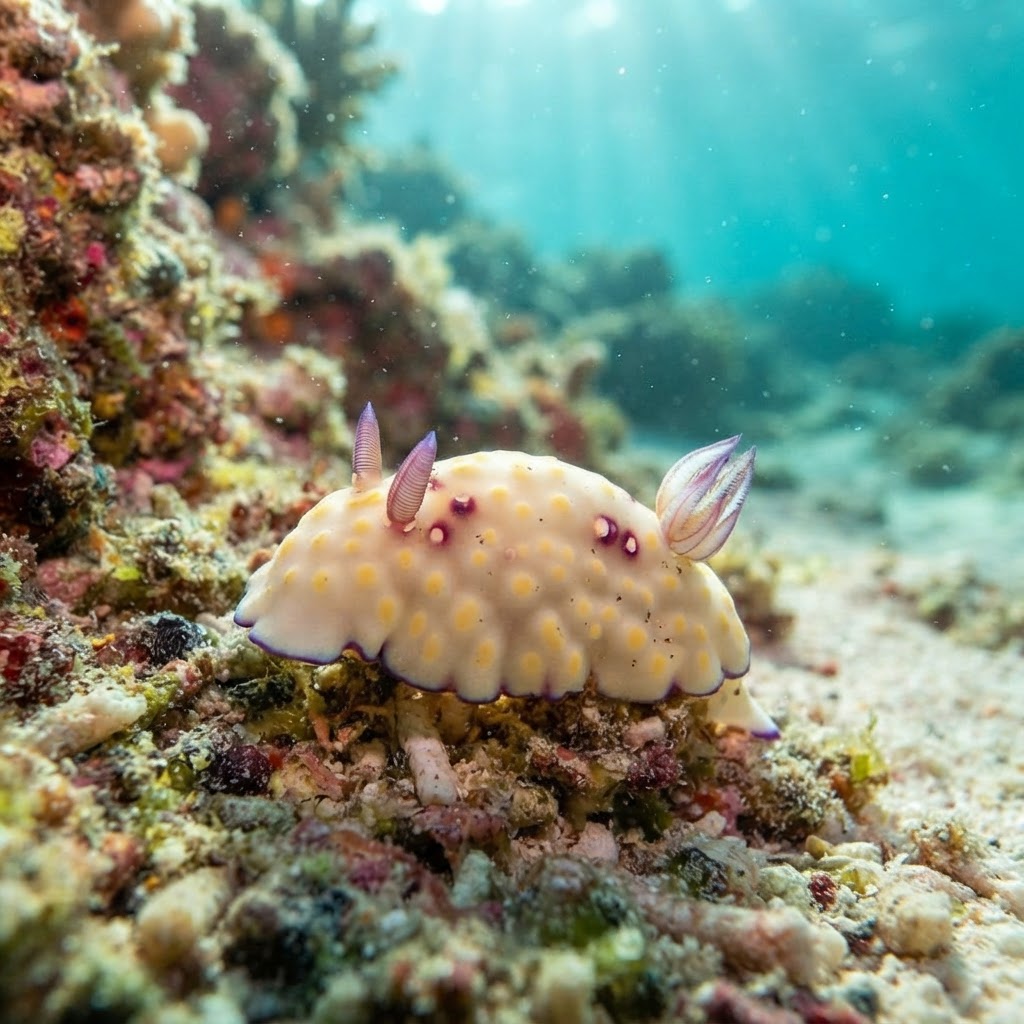
Goniobranchus hintuanensis
A reliable Indo-Pacific find in Bali and Luzon, this small chromodorid turns up on reef rubble year-round in 25 to 31C water.
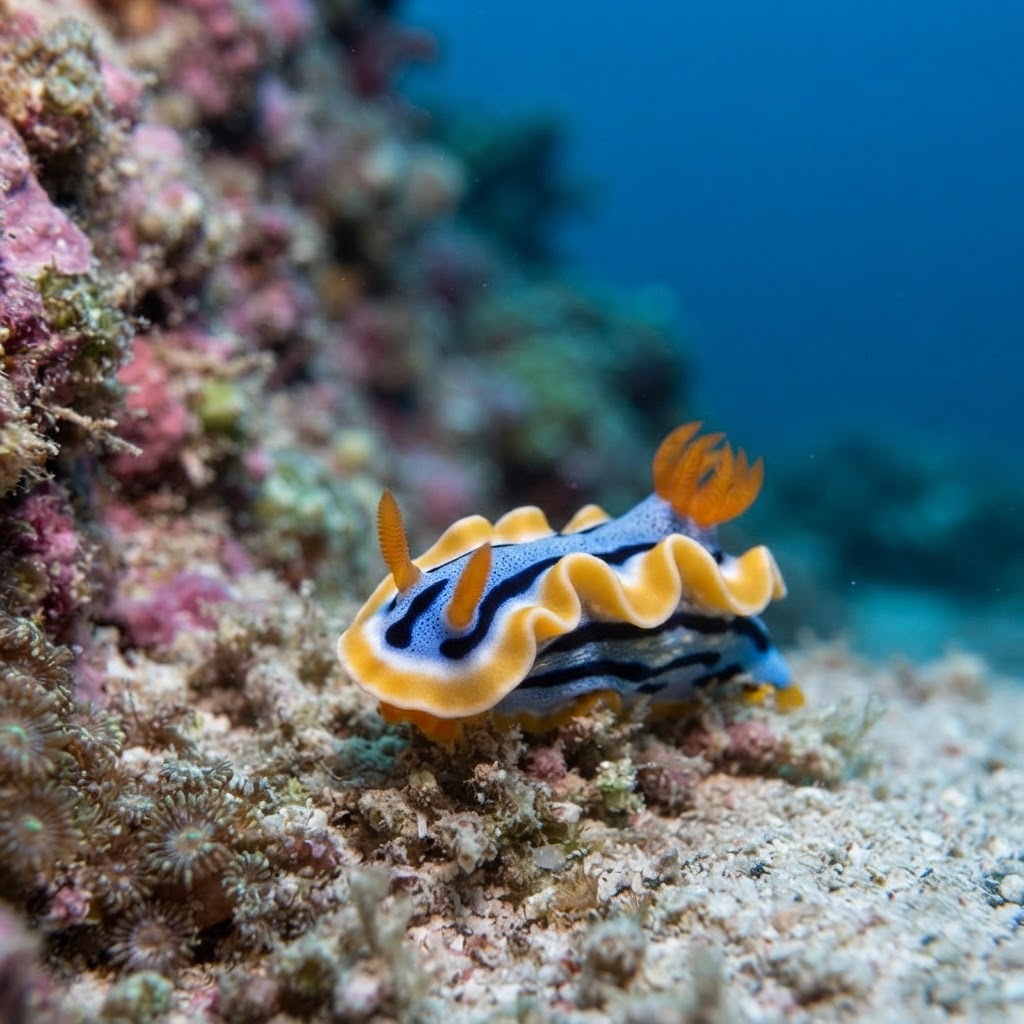
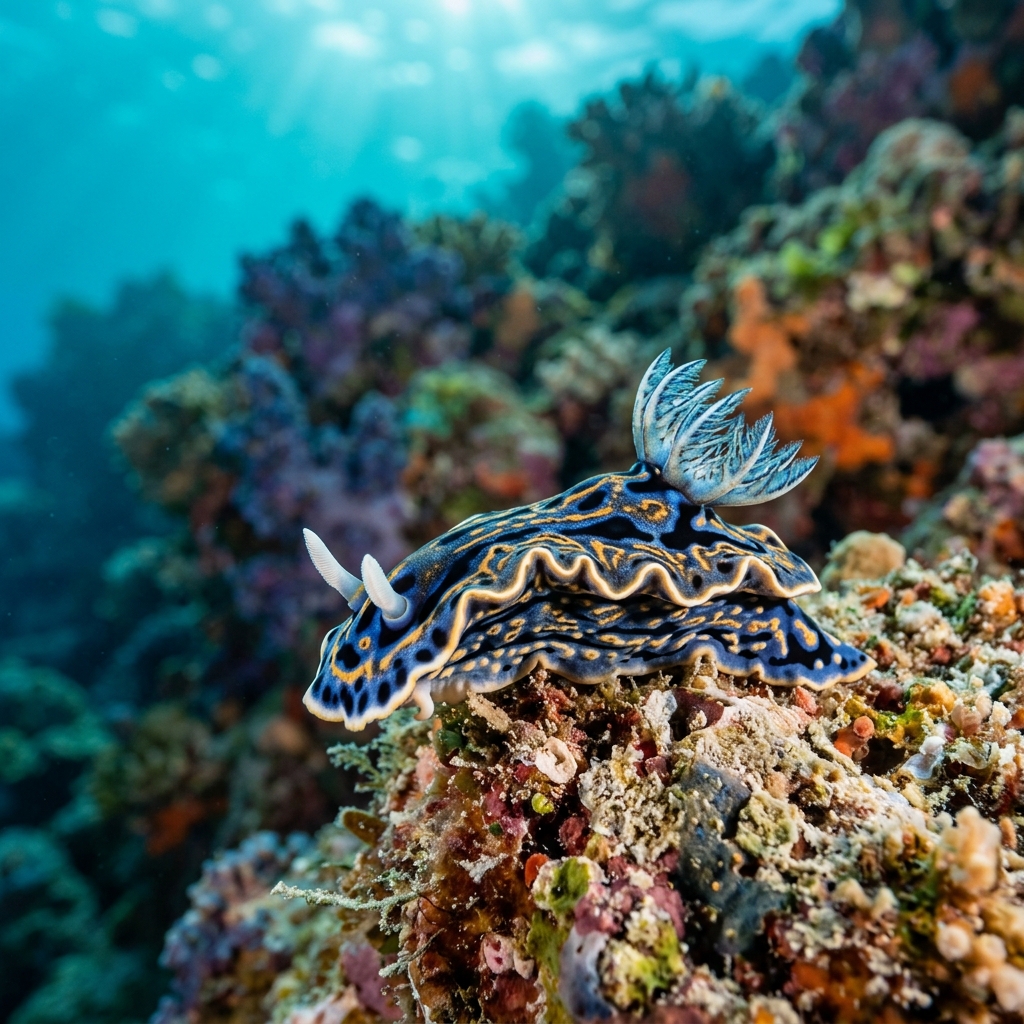
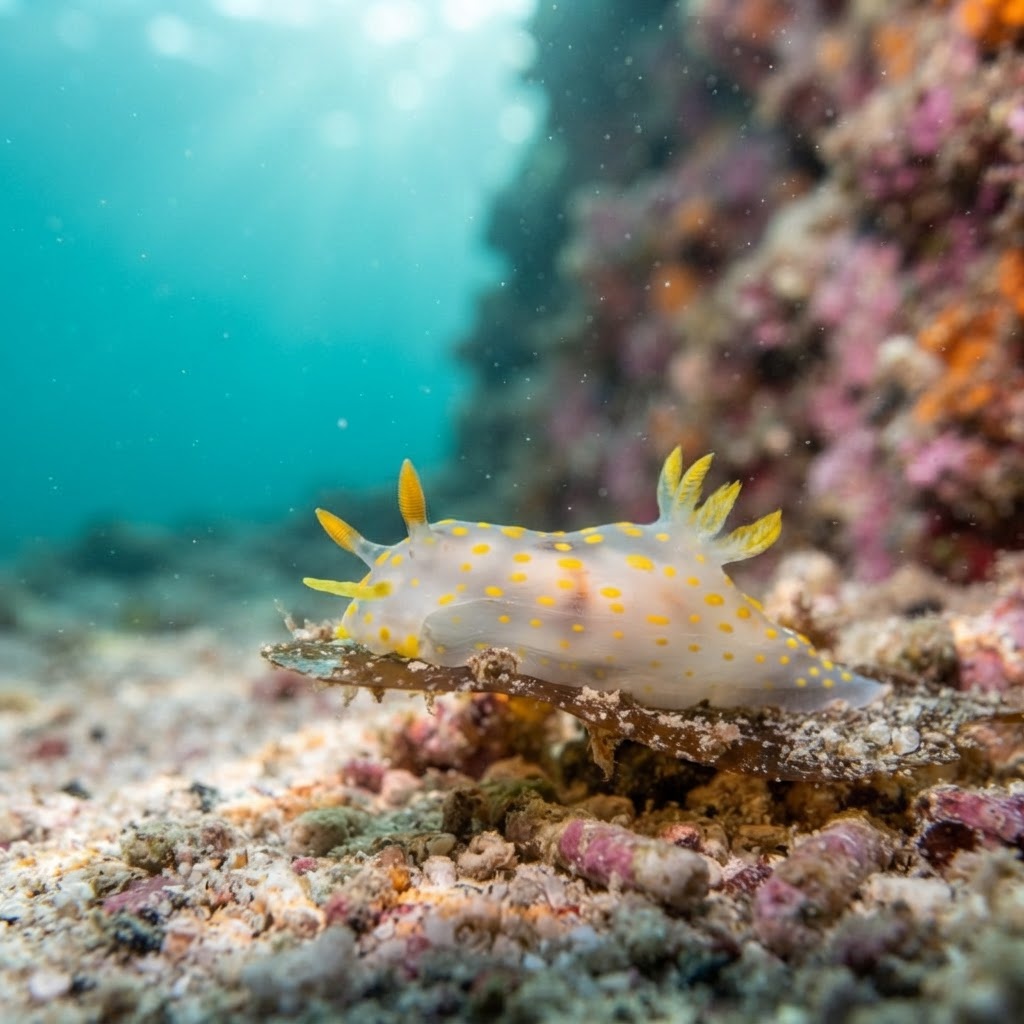
A small, oval-bodied nudibranch with a mantle pattern typical of the chromodorid family: a distinct border colour running around the edge that contrasts with the central body tone. Look for the pair of rhinophores (sensory tentacles) at the front and the gill cluster at the rear, both usually tipped in a darker shade. Size in the water is modest, easy to swim past on rubble or dead coral if you're not scanning close.
Divers find it parked on the seabed or crawling slowly over rubble and low reef structure, going about its business without any reaction to a torch or a close look. It's logged as uncommon at most sites where it appears, so it rewards divers who slow down and check the substrate rather than those cruising past at depth. No time-of-day pattern stands out, consistent with a slow-moving bottom dweller active whenever it's out feeding.
Like other members of the Chromodorididae family, it almost certainly feeds on sponges and repurposes chemical compounds from that diet into its own skin as a defence against predators, which is part of why chromodorid nudibranchs can afford such bold colour patterns in the open.
No clear seasonal pattern shows up in the sighting data, so treat this as a year-round find on tropical reefs sitting between 25.4 and 31.4C. Any month diving Bali, Luzon, or Sulawesi gives a fair shot at spotting one.
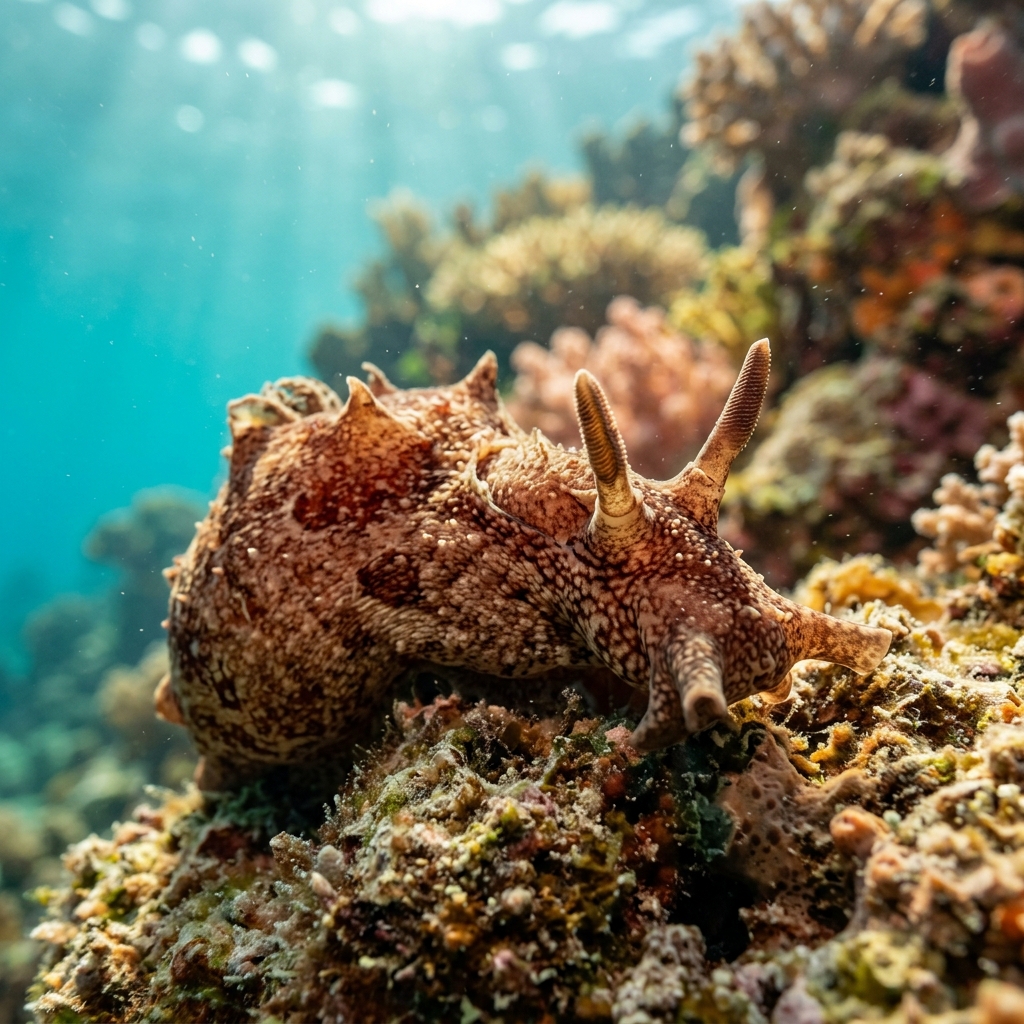
Reef neighbours a diver could mistake it for. Use the identification notes above to tell them apart.
This is a solidly Indo-Pacific species, most commonly logged in Bali, Indonesia and across Luzon in the Philippines, with a further strong showing in Sulawesi and Maluku. Vietnam's Nha Trang region turns up steady sightings too, and it has been recorded as far east as Kwajalein Atoll in the Marshall Islands. Indonesia and the Philippines between them account for the large majority of logged sites.
Mapping where Bus Stop Nudibranch is logged…
Bali and Sulawesi in Indonesia and Luzon in the Philippines are the strongest regions, with additional sightings around Maluku and Nha Trang in Vietnam. It has also been recorded once as far out as Kwajalein Atoll in the Marshall Islands.
There's no strong seasonal signal in the sighting data, so it's a year-round target on Indo-Pacific reefs holding between roughly 25 and 31C.
Look for a small, oval nudibranch with a contrasting mantle border, dark-tipped rhinophores, and a rear gill cluster, typically seen crawling slowly over rubble or dead coral.
No, they pose no risk to divers and can be observed and photographed up close without any need for caution.
Chromodorid nudibranchs, this species included, typically graze on sponges and can store chemical compounds from that diet in their own skin as a defence against being eaten.
Site and sighting data is aggregated from diver logs, iNaturalist and GBIF. For taxonomy and conservation status:
Light-spotted Aegires
3,168 sites