Bulla occidentalis
A small mottled bubble snail turning up on Caribbean reef sand, most often logged around Saint Croix and Grande-Terre, Guadeloupe.
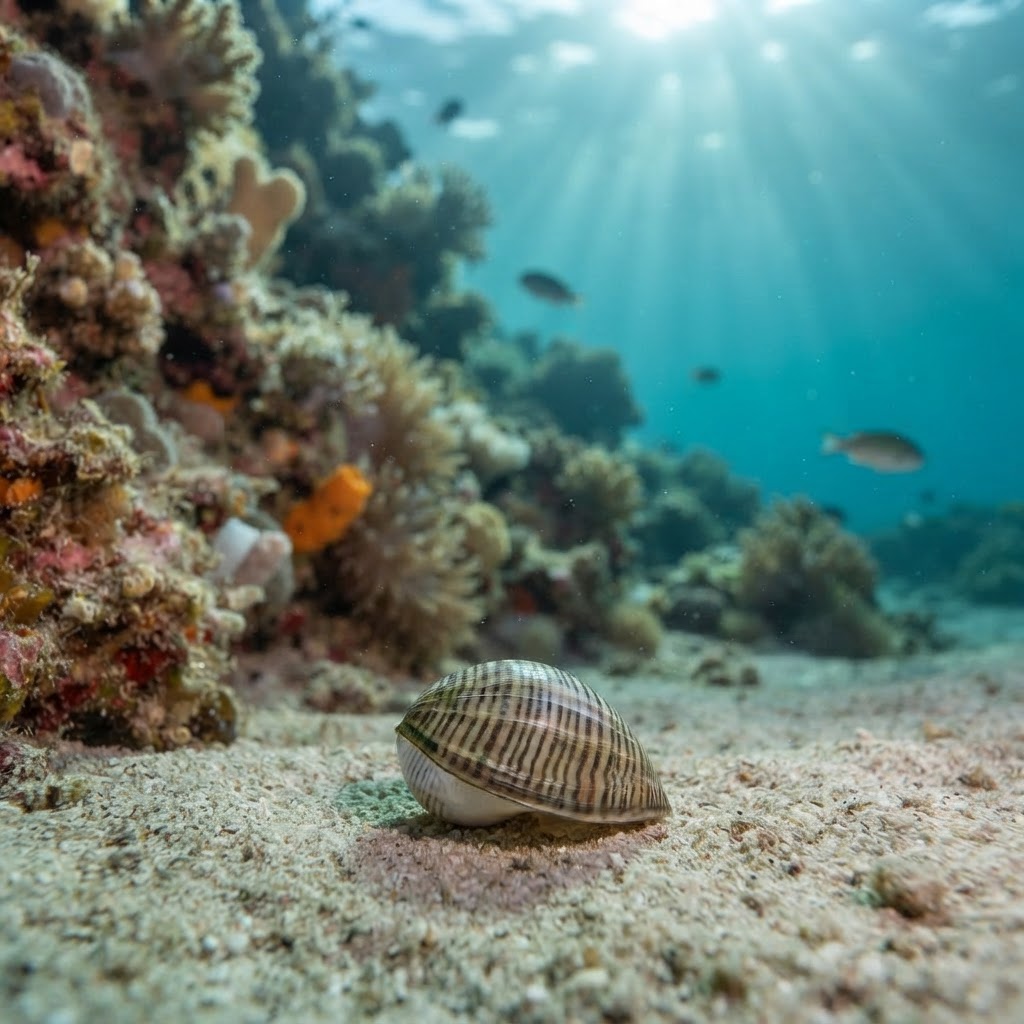
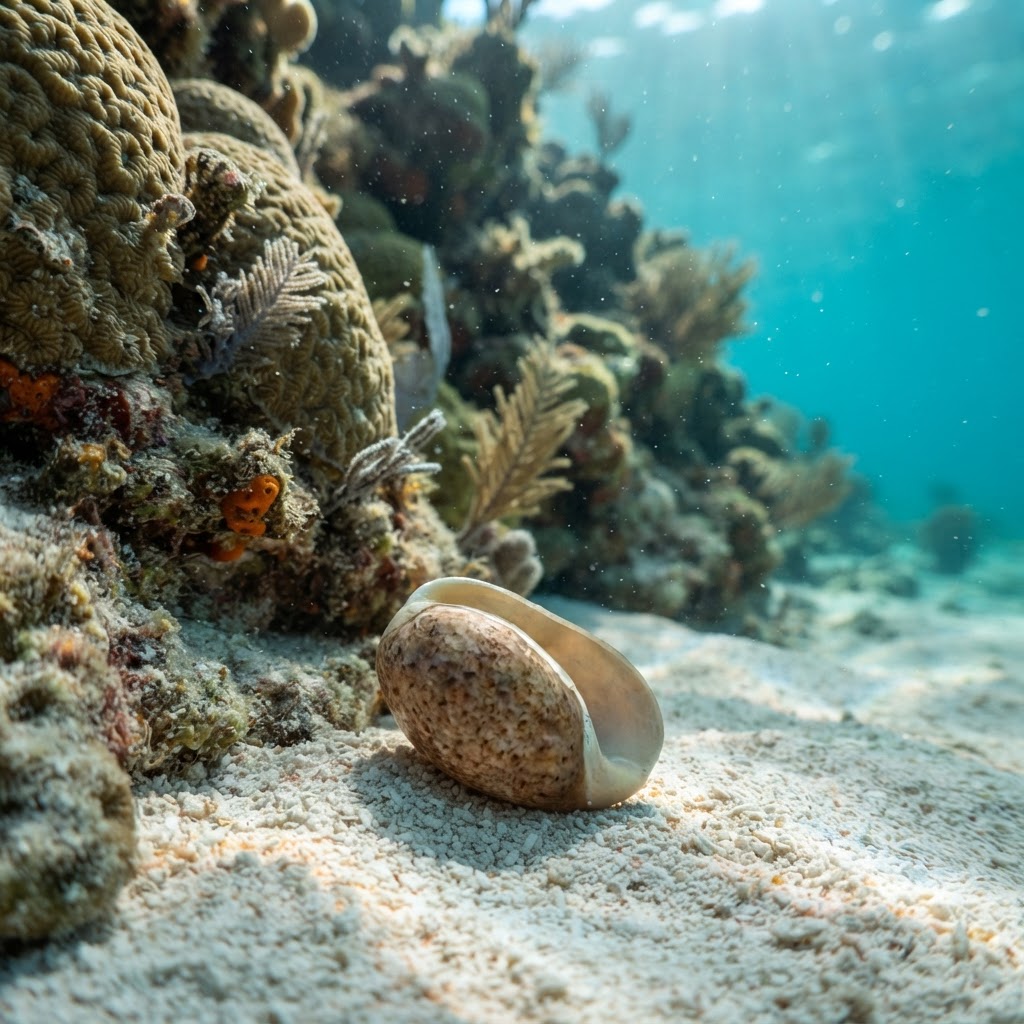
Look for a smooth, oval, inflated shell mottled in browns, tans and greys, more egg-shaped than spiralled, which is the quickest tell that you are looking at a bubble snail rather than a true slug. It sits low and rounded on the substrate, usually no bigger than a large thumbnail, with a soft fleshy foot that can partly wrap around the shell. There is no obvious external head shield extending far past the shell margin, which helps separate it from some of the sea slugs it gets lumped in with on dive logs.
Divers mostly find it parked on or just under a thin layer of sand or fine rubble near reef edges, moving slowly and paying no attention to a diver hovering close by. It is an easy one to swim straight past, which is likely why it logs as uncommon to rare at most sites rather than absent, look for a slow-moving oval shell rather than expecting it to flee. Night dives and slow macro-focused passes over sandy patches turn it up more often than a quick reef swim.
Like other bubble snails, it is a grazer that browses on algae and detritus over sand and rubble, using its shell mainly as body armour rather than a retreat it can fully seal itself into.
Sightings show no detectable seasonal pattern, and with a comfortable range of roughly 24.4 to 30.4 C it stays active on Caribbean and Gulf reefs year-round. Plan around good sand and rubble visibility rather than a particular month.
Reef neighbours a diver could mistake it for. Use the identification notes above to tell them apart.
Most reliably logged around Saint Croix in the US Virgin Islands and Grande-Terre in Guadeloupe, with a further strong showing on Mexico's Yucatán Peninsula and around Florida. Smaller but consistent counts come from Antigua and Barbuda, Carlisle Bay in Barbados, and the Bahamas' Exumas, so it is a wider Caribbean and western Atlantic find rather than a one-spot specialty.
Mapping where Common West Indian Bubble is logged…
Best chances are around Saint Croix in the US Virgin Islands and Grande-Terre in Guadeloupe, with reliable sightings also in Mexico's Yucatán Peninsula, Florida, Antigua and Barbuda, and Barbados' Carlisle Bay.
There is no clear season in the sighting data, and its comfortable water temperature range of about 24 to 30 C means it can turn up on Caribbean reefs any month of the year.
Look for a smooth, oval, inflated shell in mottled browns and tans sitting on sand or rubble, without the long trailing head shield seen on some similar slugs. It moves slowly and stays low to the bottom.
Exact size data is not confirmed, but like most bubble snails in this family it stays small, generally within the range of a fingernail to a thumbnail across the shell.
No. It has no sting, bite or venom of concern to divers and simply grazes over sand and rubble, safe to observe up close without any special caution.
Site and sighting data is aggregated from diver logs, iNaturalist and GBIF. For taxonomy and conservation status:
Triton Shell
2,297 sites