Lamprohaminoea cymbalum
A 1cm sea snail most reliably found on night dives around Saint-Paul, Reunion, in warm water between 18 and 27 C.
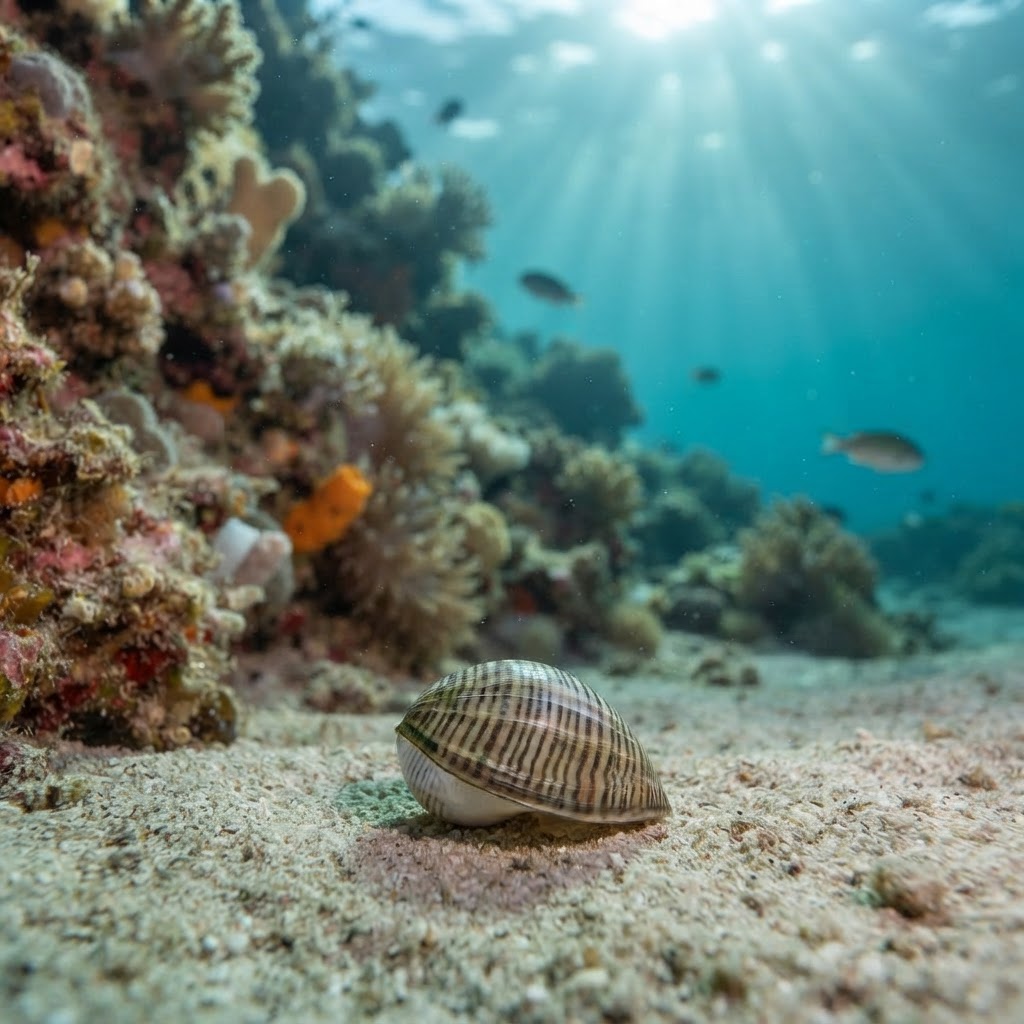
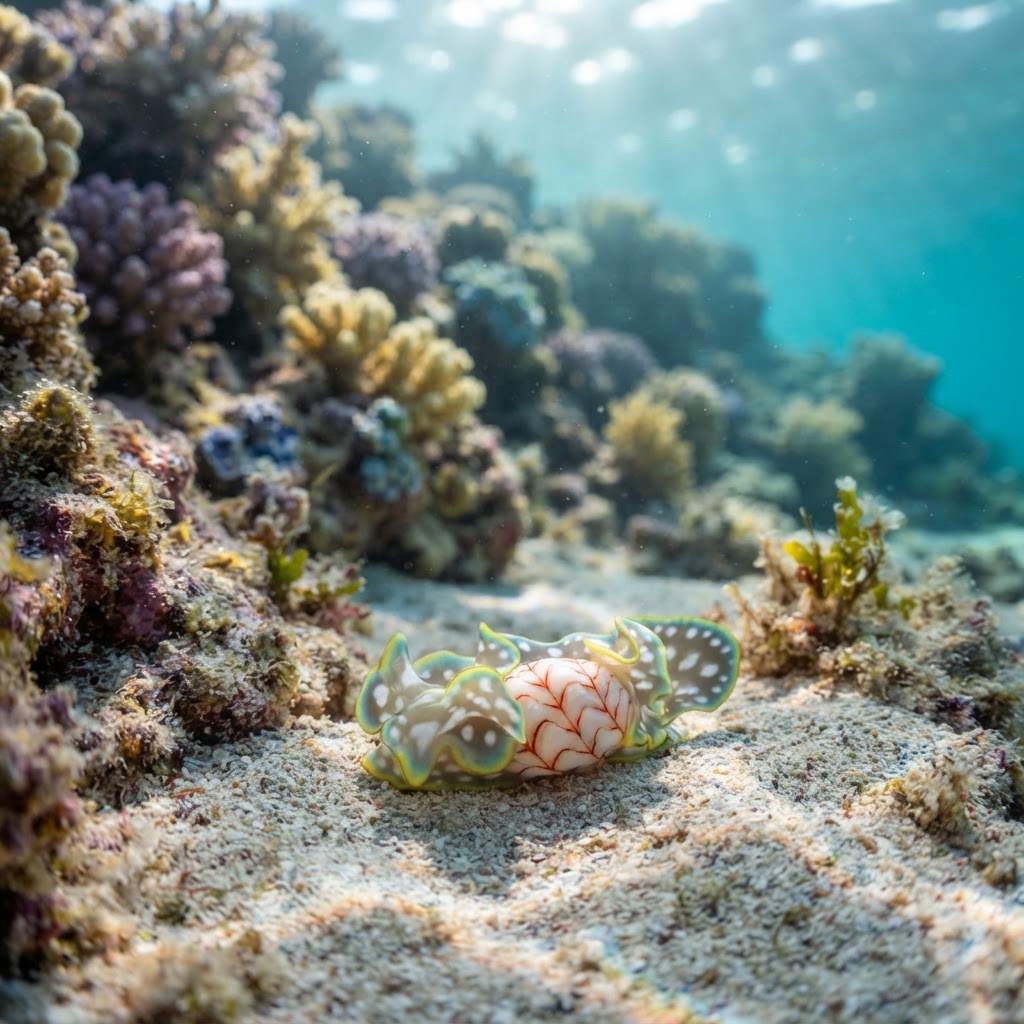
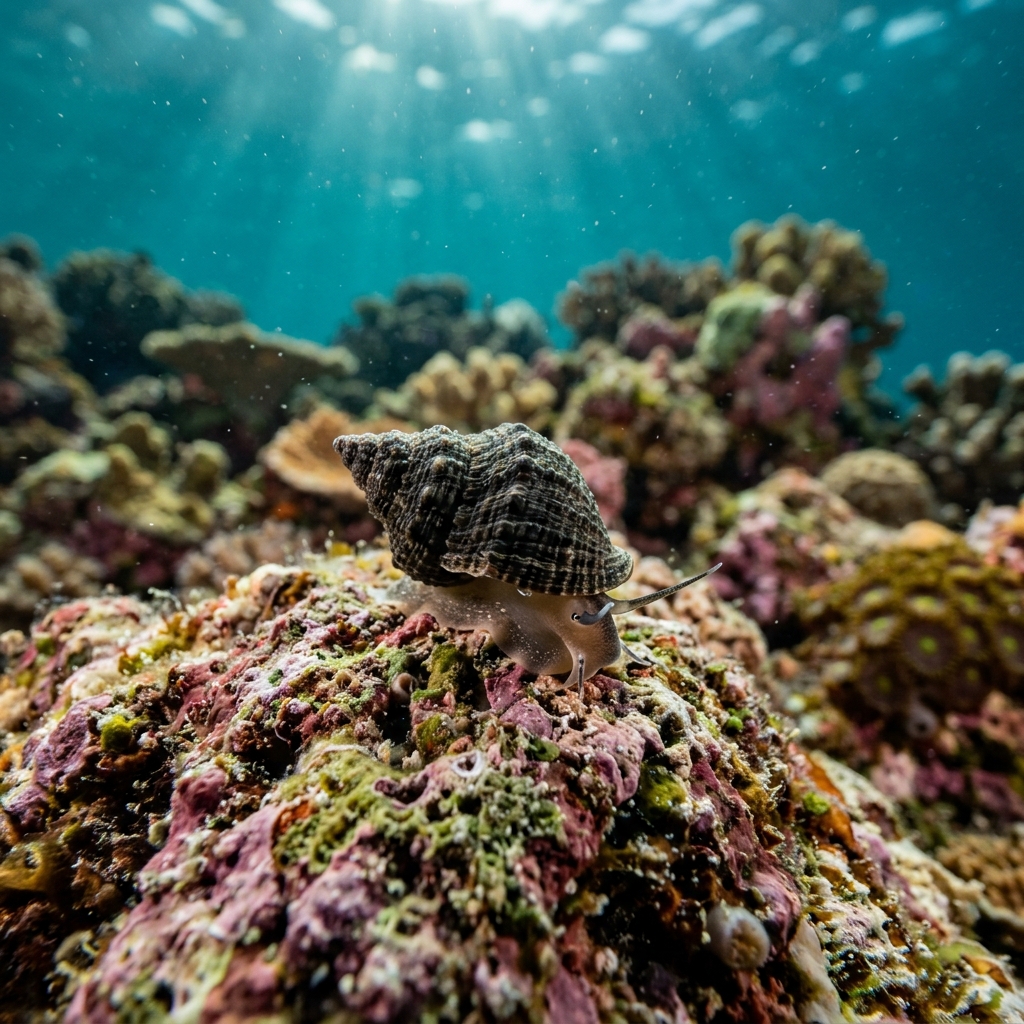
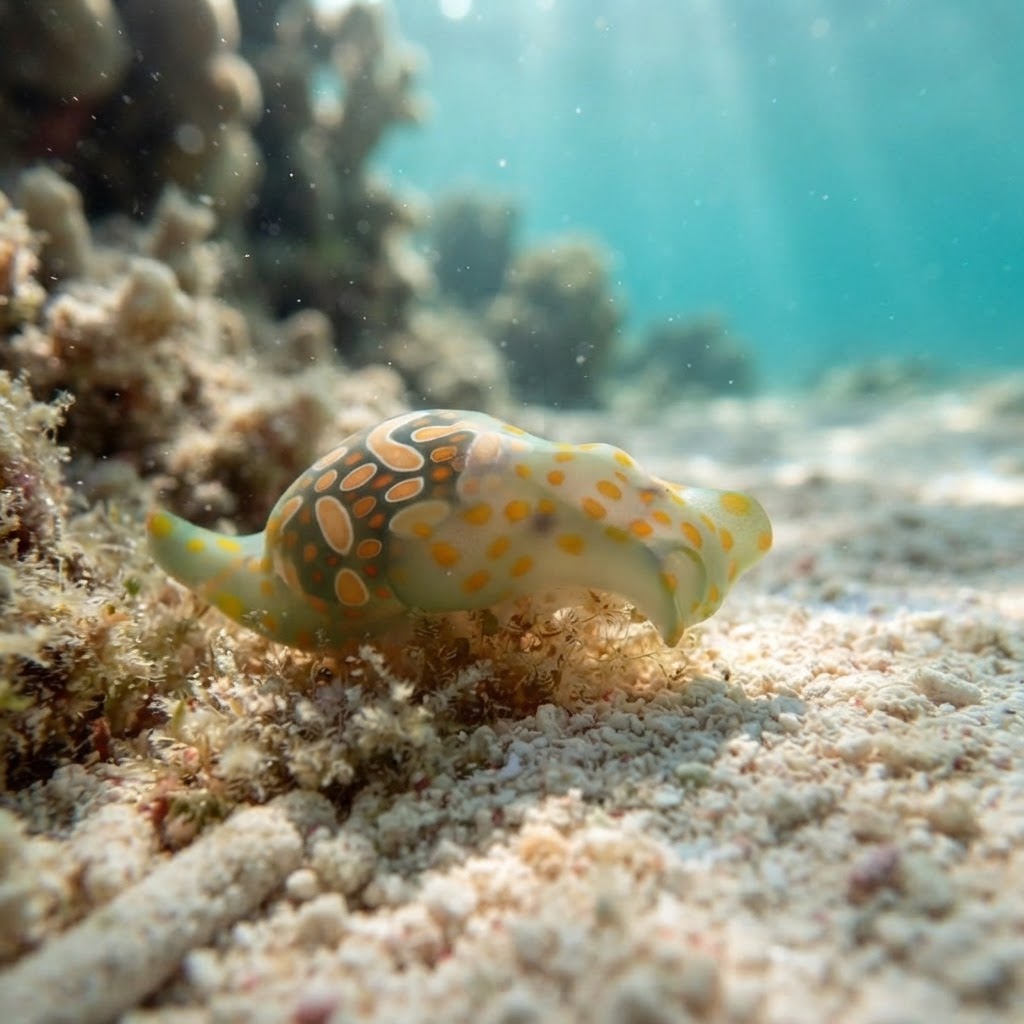
Barely a centimetre long, this sea snail carries a thin, rounded, almost see-through shell that looks inflated like a bubble, usually mottled brown, cream or olive so it blends into sand and rubble. The soft body often bulges out around the edges of the shell rather than staying tucked inside. Look close to the substrate rather than up on the reef structure, since it rarely climbs.
Divers usually find this one crawling slowly over sand, rubble or algae patches close to the bottom, often on night dives when it is more active and easier to pick out with a torch. It shows no reaction to divers beyond retracting slightly if touched, and spends most of its time grazing rather than moving with any urgency.
Like other sea slugs and snails in this group, it is hermaphroditic and can both give and receive sperm when mating, which helps a slow-moving, thinly spread animal like this find a partner.
Sightings show no clear seasonal pattern, and with a comfortable range of 18.1 to 26.9 C it turns up on dives year-round rather than in a specific window.
Reef neighbours a diver could mistake it for. Use the identification notes above to tell them apart.
Most reliably logged around Saint-Paul in Reunion, which accounts for the bulk of recorded sightings, with occasional finds around Saipan in the Northern Mariana Islands, Xiaoliuqiu in Taiwan, and sites in New South Wales, Australia.
Mapping where Bubble Snail is logged…
The strongest and most consistent sightings come from Saint-Paul in Reunion. Smaller numbers have also been logged in Saipan (Northern Mariana Islands), Xiaoliuqiu (Taiwan) and New South Wales (Australia).
There is no detected season, so it can be found across the year. It's recorded in water from 18.1 to 26.9 C, which covers most tropical and warm-temperate diving conditions.
Look for a tiny, thin, rounded shell around 1cm long that looks slightly inflated, usually mottled brown or cream, sitting low on sand or rubble. The soft body often spills out past the shell edges rather than fully retracting.
They stay small, typically around 1cm, so you need to look closely at sandy or rubbly patches near the reef base to spot one.
It is hermaphroditic, meaning each individual can act as both male and female during mating, an advantage for a small, slow-moving animal that doesn't cross paths with others often.
Site and sighting data is aggregated from diver logs, iNaturalist and GBIF. For taxonomy and conservation status:
Triton Shell
2,297 sites