Corythoichthys amplexus
A tiny reef pipefish logged around Nouméa and Dili, best spotted at 25-29C on close-focus reef scans year-round.
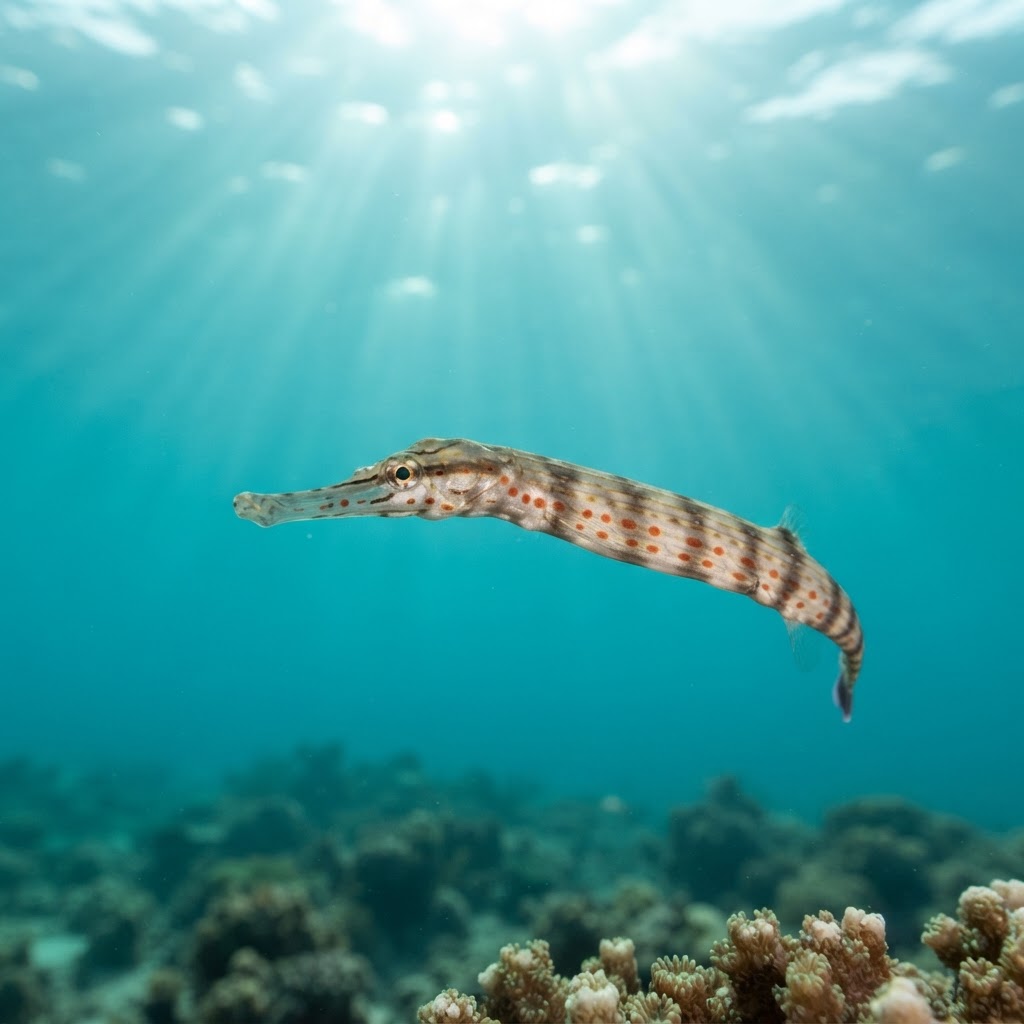
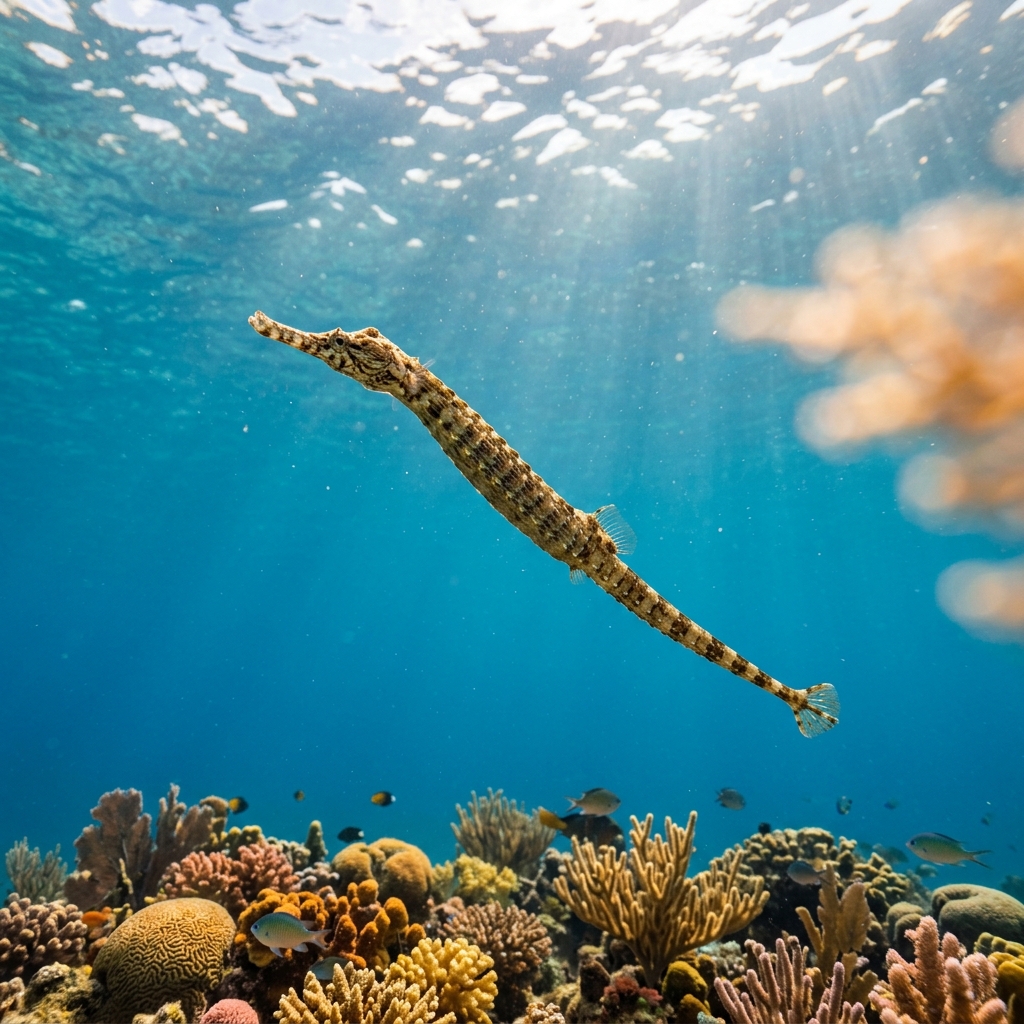
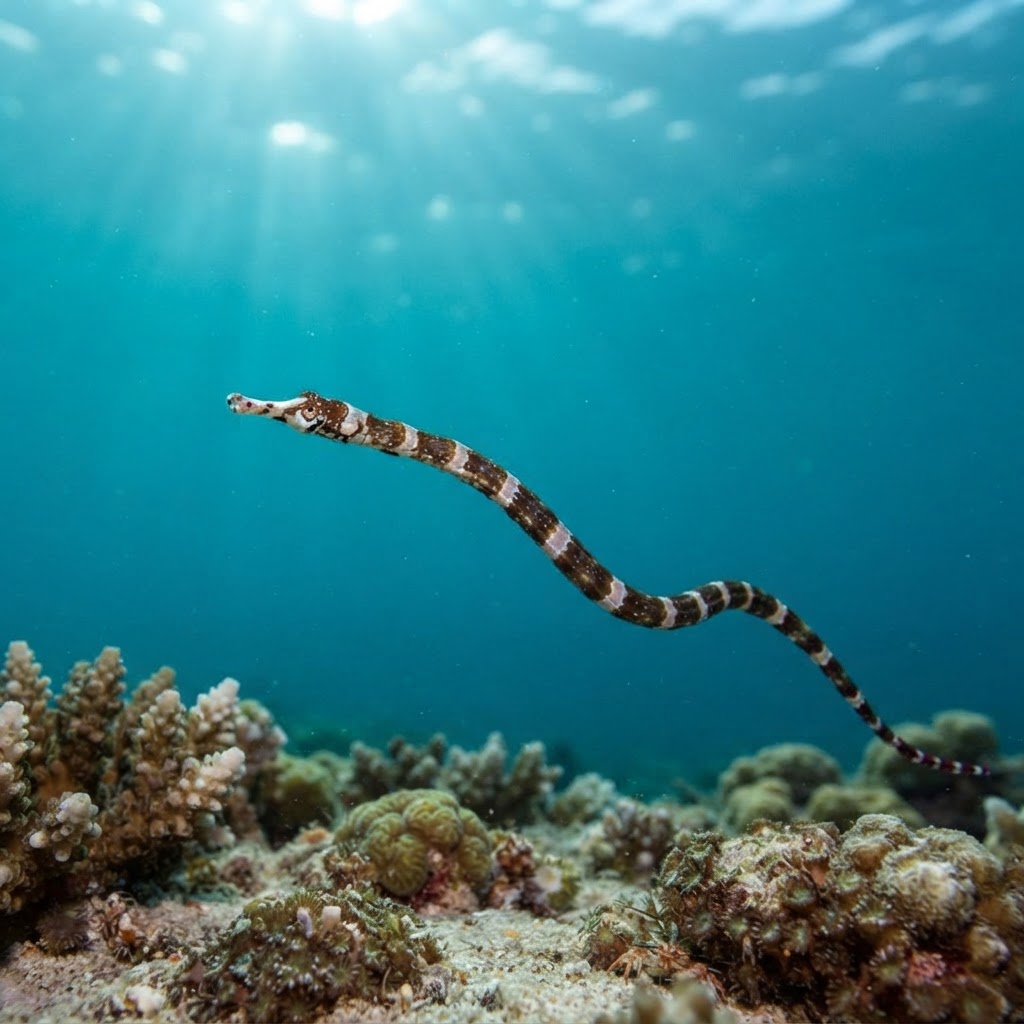
A slim, straight-bodied pipefish reaching around 7 cm, patterned with alternating brown and pale bands running the length of its body. It has the stiff, armour-plated look typical of pipefish, a long tubular snout, and holds itself close to the substrate rather than swimming in open water. At this size and with its banding, it blends easily into rubble and coral debris, so it takes a slow, close look to pick it out.
Divers log it as an uncommon find, usually hovering low over rubble, coral bases or dead coral where its banding breaks up its outline. It tends to stay put or move in short, deliberate hops rather than darting away, and it is generally unbothered by a diver who keeps still and lets it come into focus. Look for it on slow drifts or macro-focused dives rather than mid-water swims, since it rarely strays from the reef surface.
Like all pipefish, males of this family carry the fertilised eggs on their body rather than the female, brooding them until the young are ready to disperse.
No clear seasonal pattern shows up in the data, and with a comfortable range of 25.2 to 29.3C it is likely present on these reefs year-round rather than tied to a particular month.
Reef neighbours a diver could mistake it for. Use the identification notes above to tell them apart.
Most reliably logged around Nouméa in New Caledonia, which accounts for the bulk of recorded sightings, with further records from Dili in Timor-Leste, Lomaiviti in Fiji, and sites in Queensland, Australia. It is not a fish tied to one famous dive site so much as one you find by working reef rubble and coral bases carefully wherever these regions are dived.
Mapping where Brown-banded Pipefish is logged…
The strongest records come from around Nouméa in New Caledonia, with additional sightings near Dili in Timor-Leste, in Fiji's Lomaiviti region, and off Queensland, Australia.
There is no strong seasonal signal in the sightings, and its comfortable temperature range of roughly 25 to 29C suggests it can be found on these reefs at any time of year.
Look for a slender, straight pipefish around 7 cm long with alternating brown and pale bands, a long thin snout, and a habit of resting close to rubble or coral rather than swimming freely.
They are small, typically reaching about 7 cm in length, so spotting one takes a slow, close scan of the reef surface rather than a wide-angle look.
As with other pipefish, the males brood the fertilised eggs on their body until the young are ready to leave, reversing the usual parental role seen in most fish.
Site and sighting data is aggregated from diver logs, iNaturalist and GBIF. For taxonomy and conservation status:
Seahorse
1,346 sites