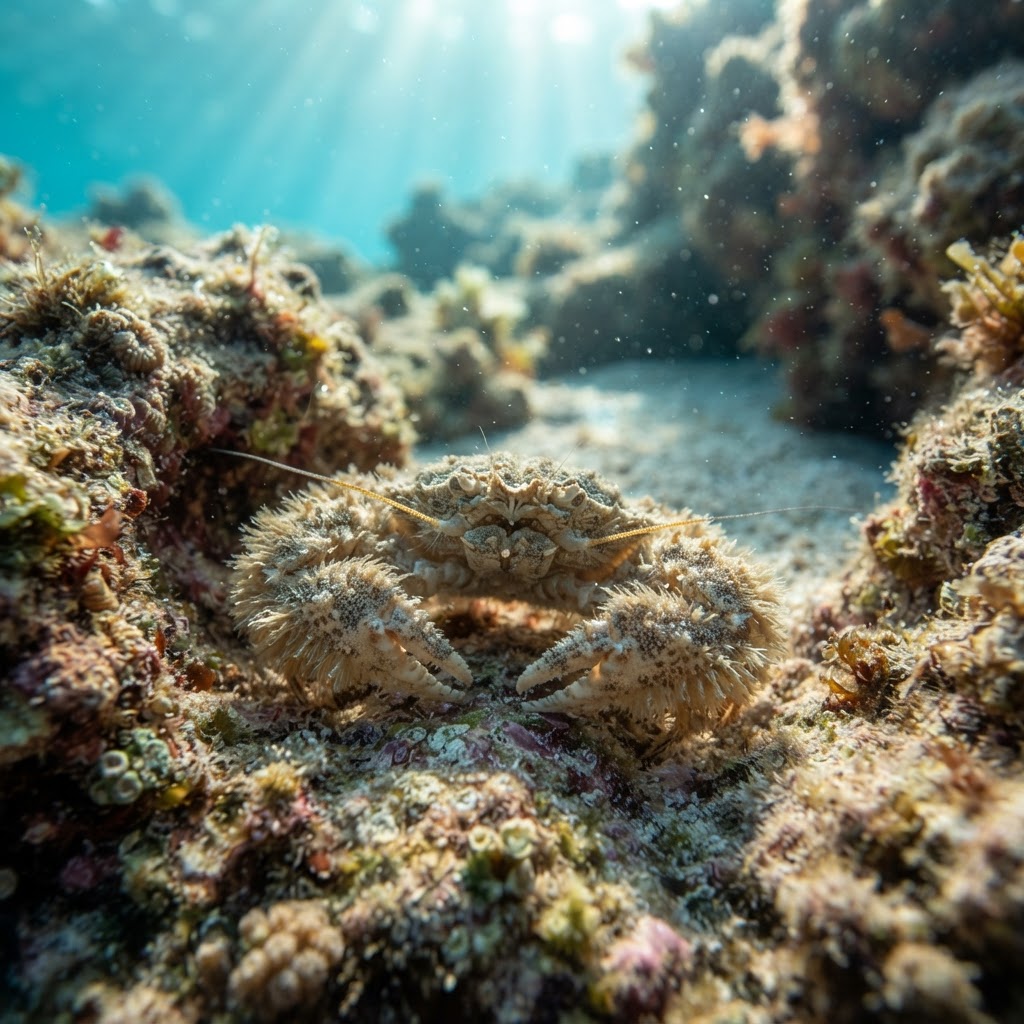
Porcellana platycheles
Flattened, hairy-clawed crab hiding under rocks in Brittany and Zeeland, in cool water from 9 to 18C, year-round.
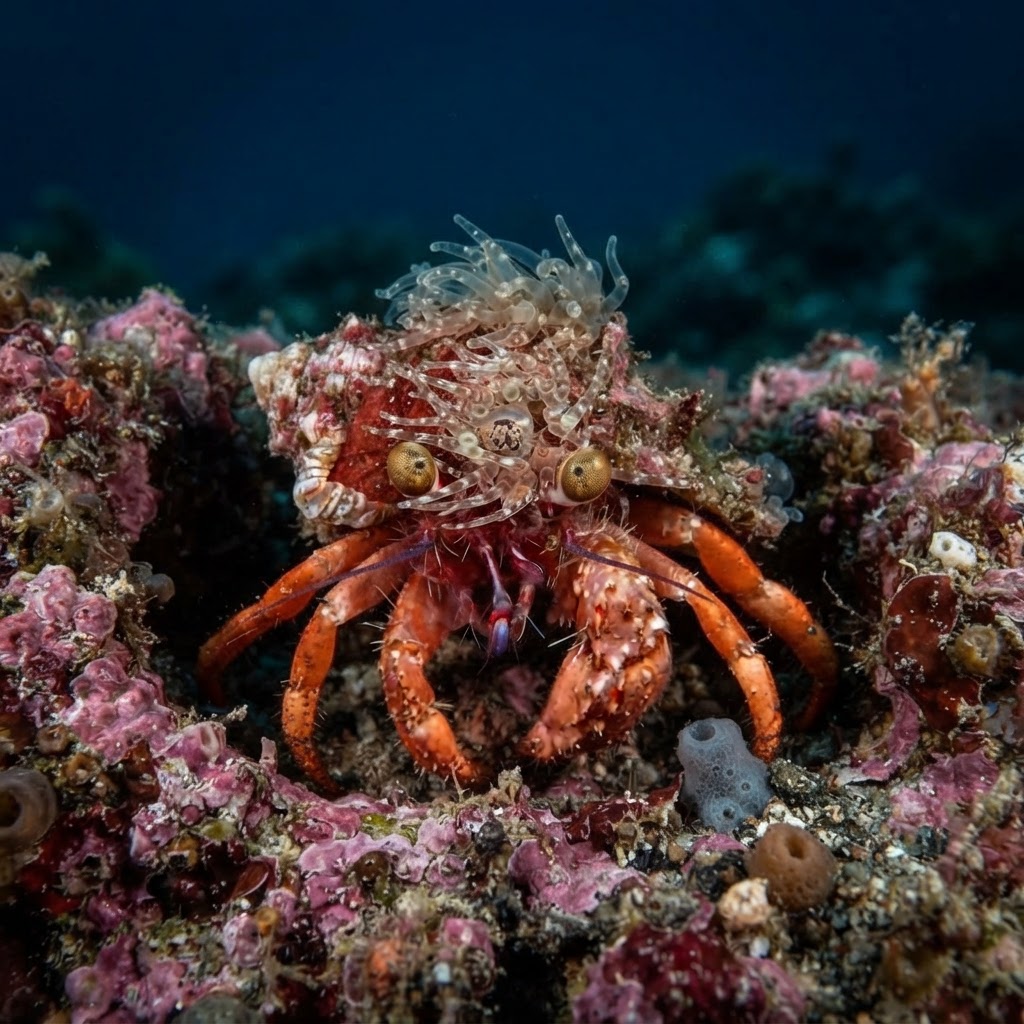
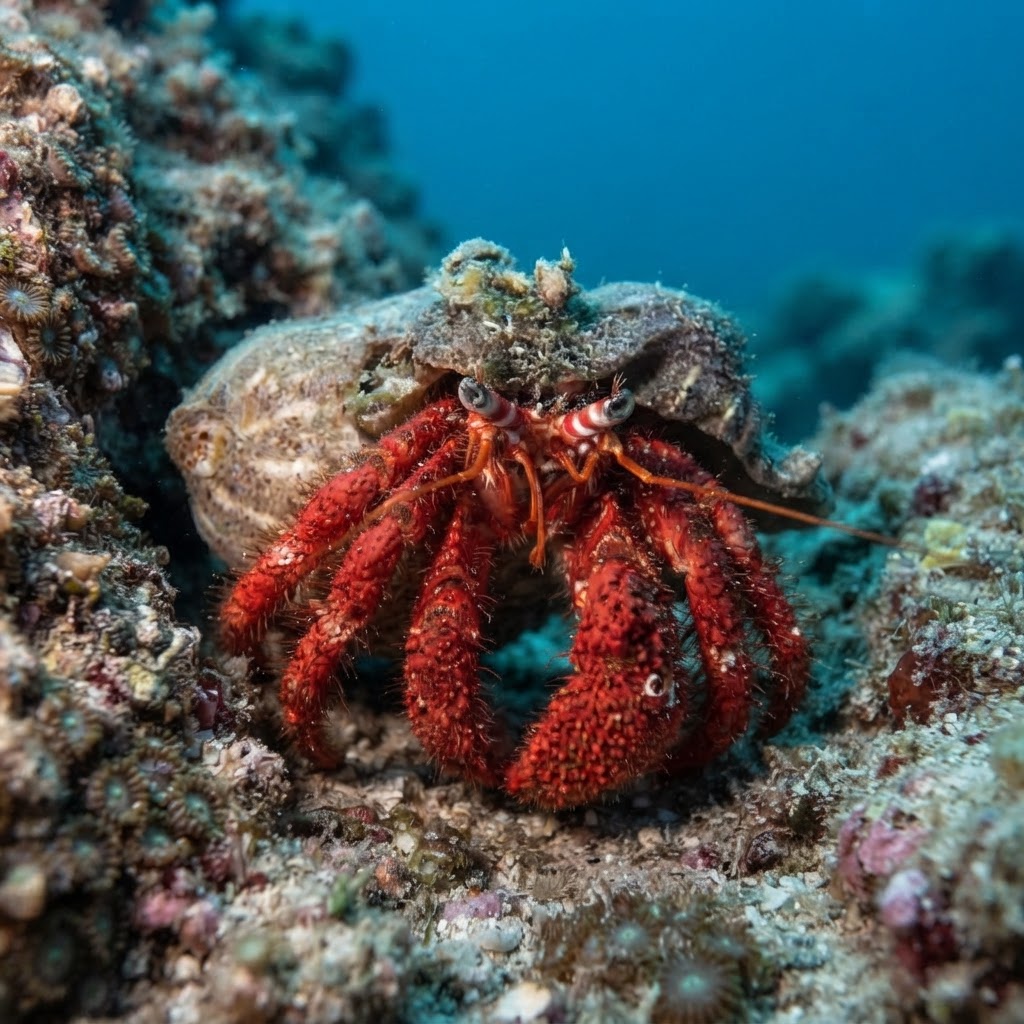
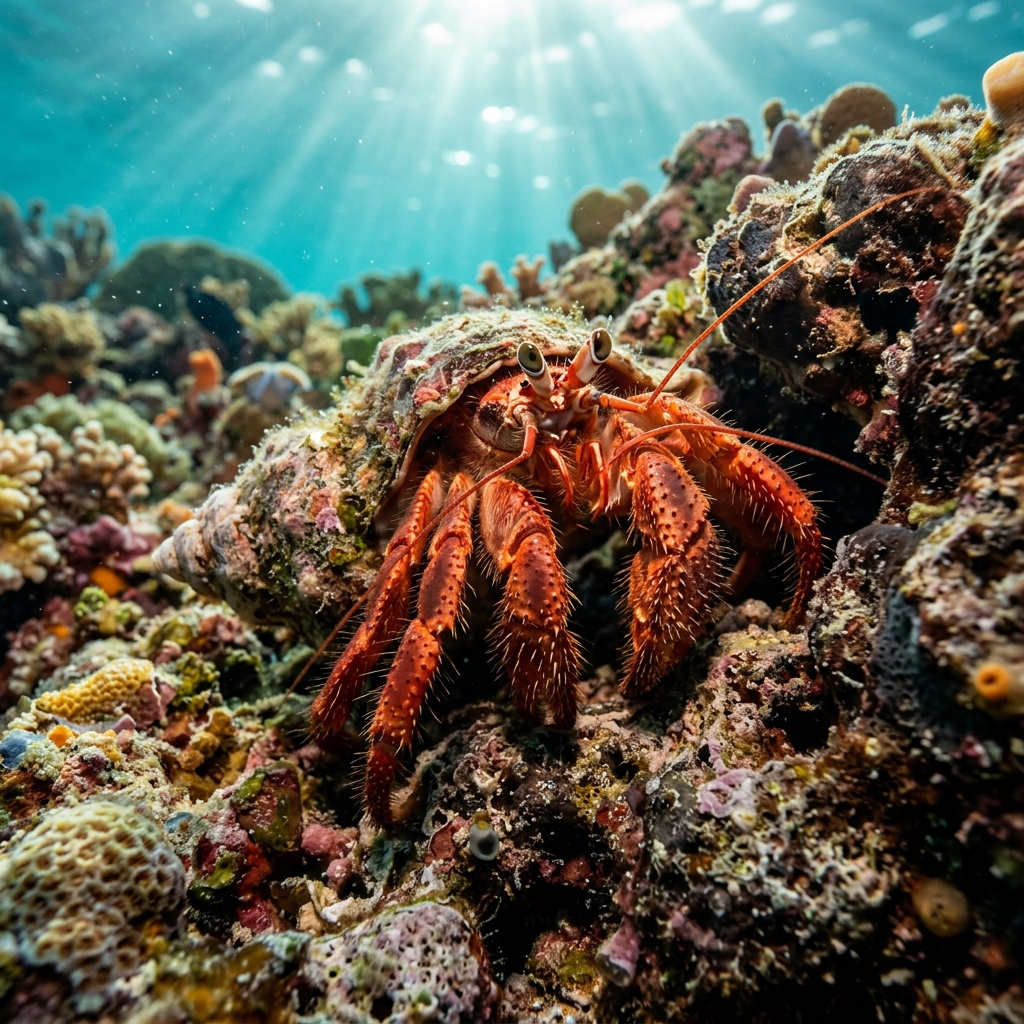
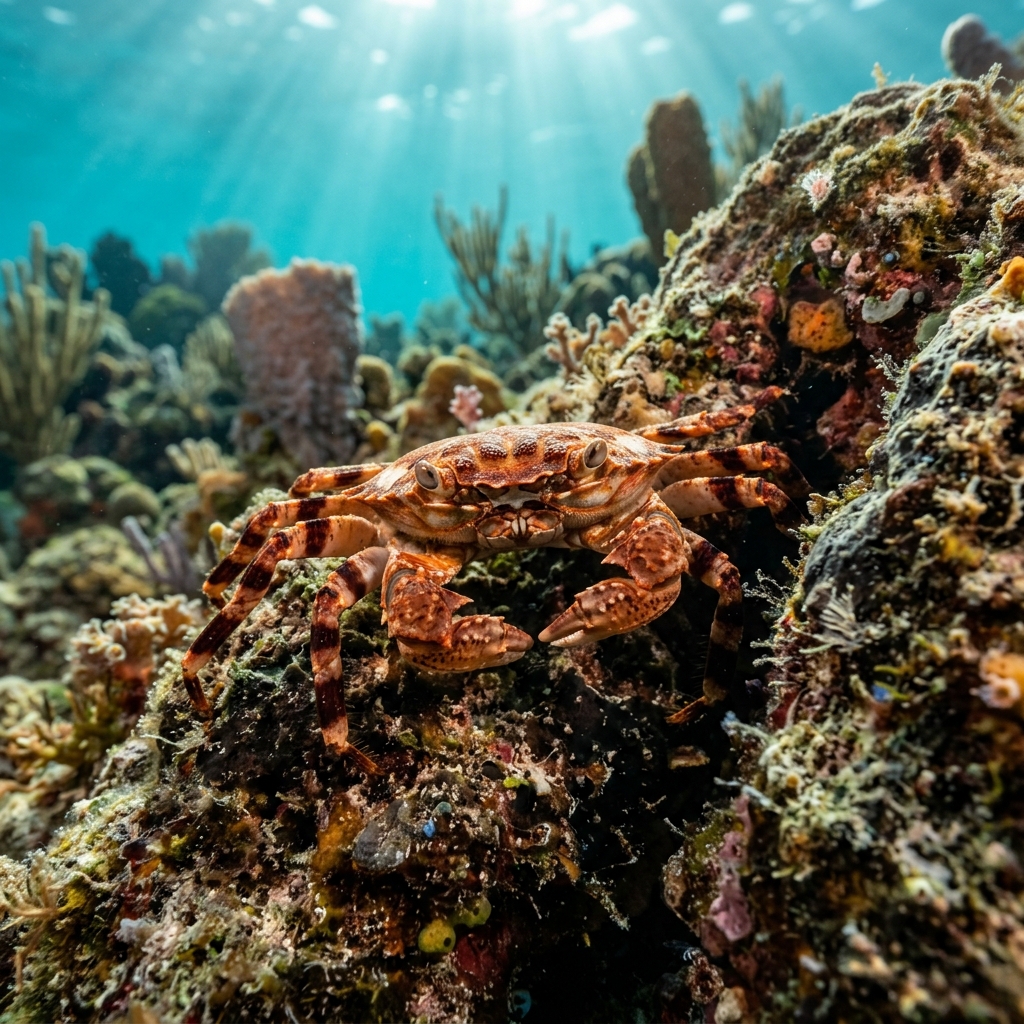
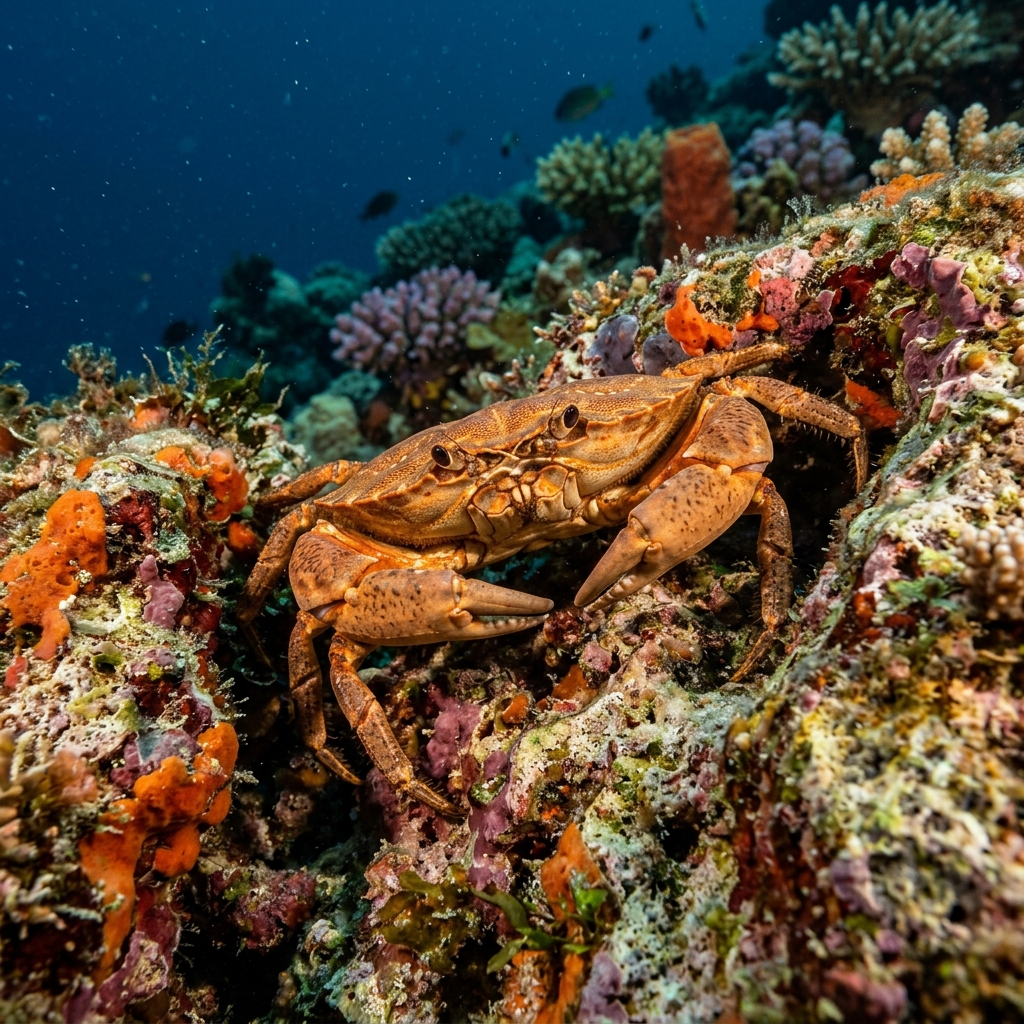
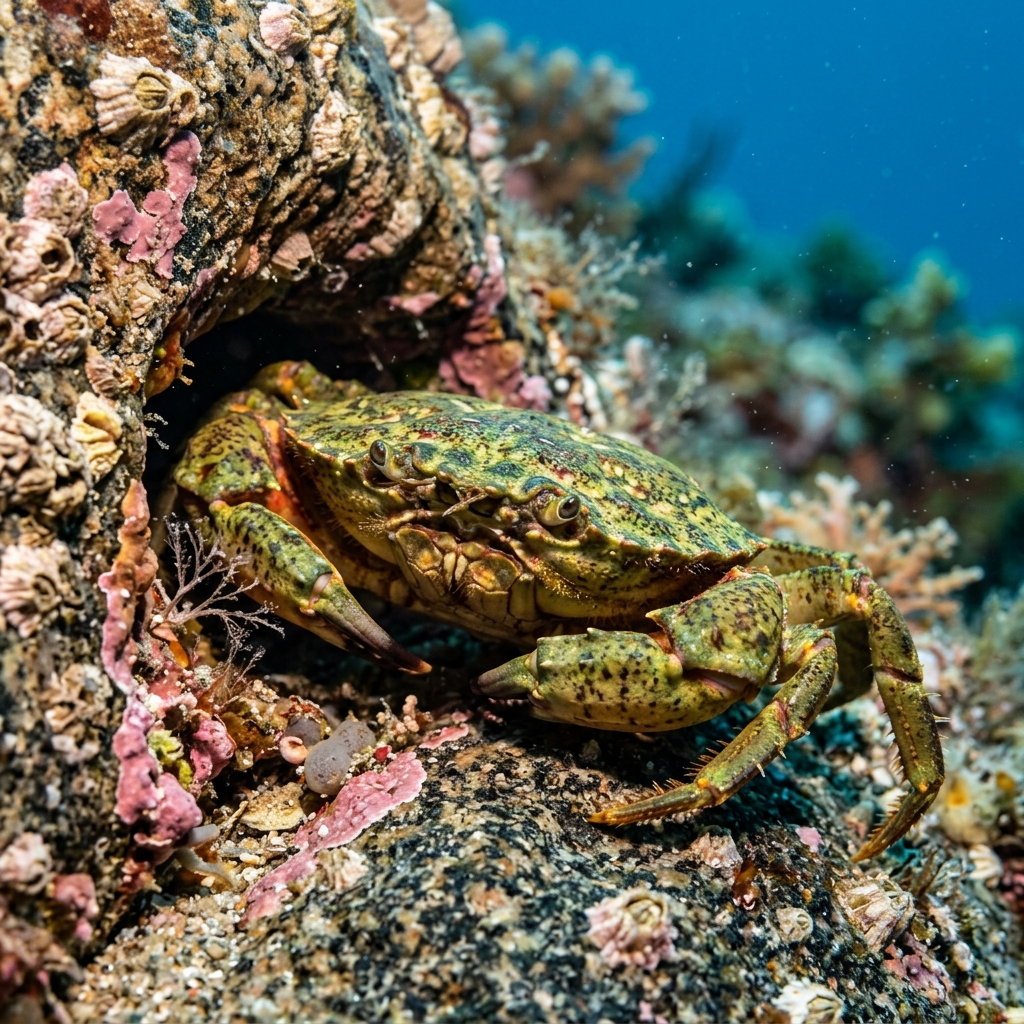
Look for a small, flattened oval crab tucked tight under a rock or in a crevice, rarely more than a couple of centimetres across the carapace. The claws are broad, flattened and fringed with fine hairs, giving the crab a slightly fuzzy outline compared to true crabs. Colour runs mottled grey-brown to match the rock it lives under, and the body sits pressed flat against the surface rather than standing up on its legs. If disturbed it tends to shuffle sideways deeper into the gap rather than swim off.
Divers find it wedged under loose rocks, in cobble crevices or beneath boulders on shallow rocky reef, usually staying put rather than bolting when a torch beam hits it. It uses those feathery claws to filter plankton and detritus from the water rather than actively hunting, so watch for a slow fanning motion if you get close without disturbing the rock. Turning stones gently on a shore dive or shallow reef is the usual way divers and snorkellers stumble onto one.
Despite the name, it isn't a true crab at all: porcelain crabs are more closely related to squat lobsters, and that flattened body and those feathery claws are built for filter-feeding tucked under a rock rather than for the scavenging lifestyle of typical shore crabs.
Sightings sit at uncommon to rare year-round with no detected seasonal peak, which fits its cool-water niche of roughly 9 to 18C. Any month works, though the milder end of that range in spring and summer shore dives tends to give easier access to the shallow rocky ground it favours.
Reef neighbours a diver could mistake it for. Use the identification notes above to tell them apart.
This is a rock-and-cobble species, and the data shows it most reliably logged around Brittany and the Bay of Biscay in France, across England and Northern Ireland in the UK, and in Zeeland in the Netherlands. Further south it turns up with good consistency in Kvarner and Istria in Croatia and in Galicia, Spain, so it's a realistic find on rocky shore dives and shallow shore entries right across western Europe.
Mapping where Broad-clawed Porcelain Crab is logged…
It's most consistently found on rocky shore dives in Brittany and the Bay of Biscay in France, across England and Northern Ireland, and in Zeeland in the Netherlands. Croatia's Kvarner and Istria regions and Galicia in Spain also produce regular sightings.
There's no strong season in the data, so it's a year-round find given its cool-water comfort zone of roughly 9 to 18C. Any month is worth checking rocky crevices and cobble on a shallow shore dive.
Look for a small, flat, mottled grey-brown crab pressed tight against the underside of a rock, with broad, hairy-fringed claws rather than smooth pincers. It stays still or shuffles sideways rather than swimming away.
They're small, typically only a centimetre or two across the carapace, easy to miss unless you're deliberately checking under rocks and in crevices.
It isn't a true crab but a relative of squat lobsters, and it feeds by filtering plankton and detritus from the water with its feathery claws rather than scavenging like typical shore crabs.
No, it poses no risk to divers. It's a small, retreating rock-dweller with no defensive behaviour worth noting beyond hiding deeper into its crevice.
Site and sighting data is aggregated from diver logs, iNaturalist and GBIF. For taxonomy and conservation status:
European Green Crab
2,469 sites