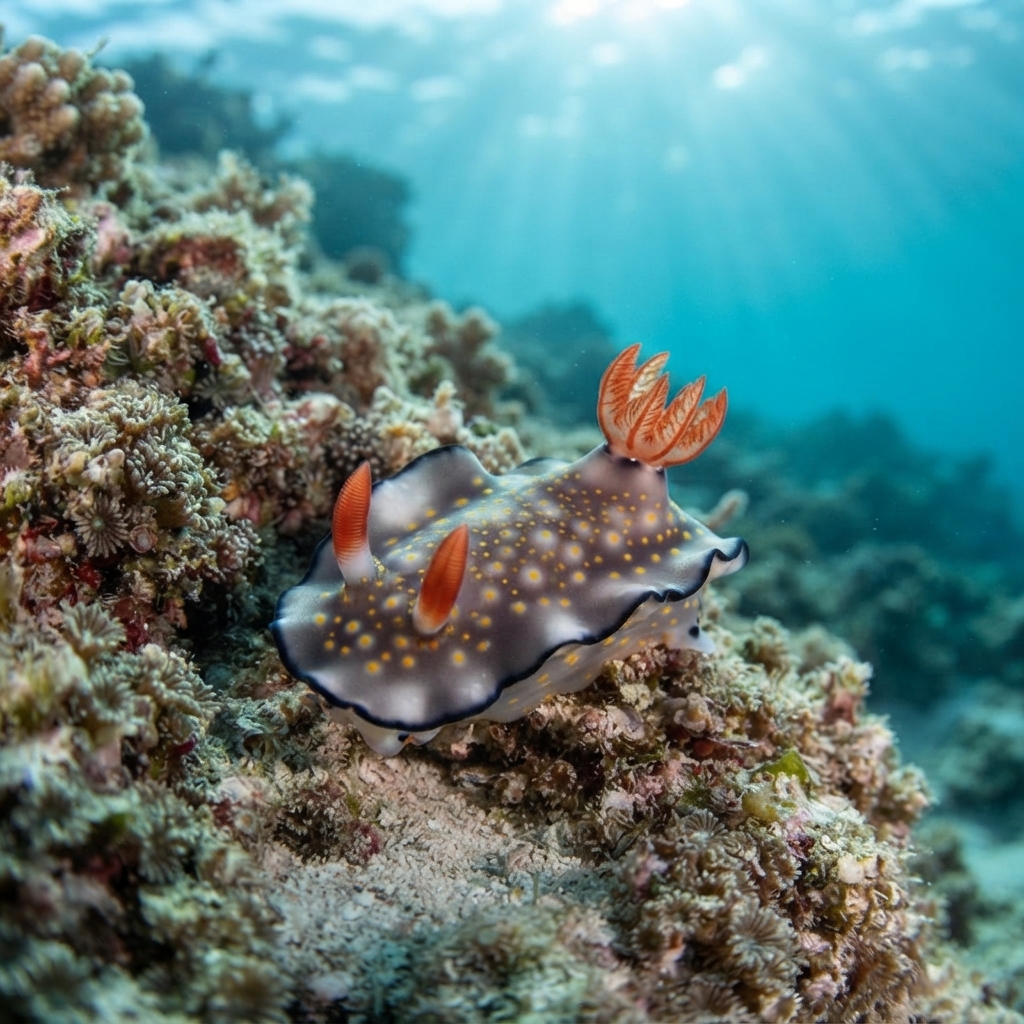
Hypselodoris bollandi
A rare nudibranch find logged in Luzon, Philippines, in warm 25-31C water. Here's what to look for on the reef.
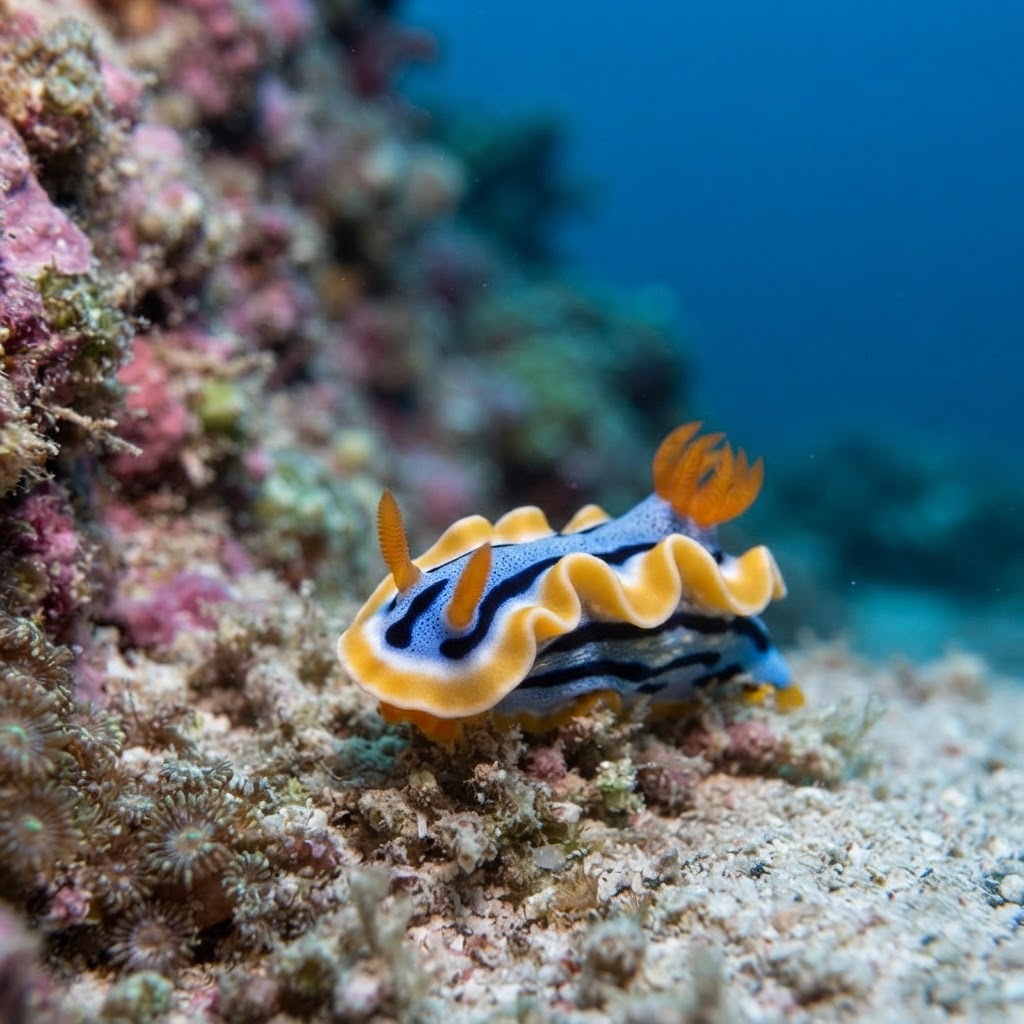
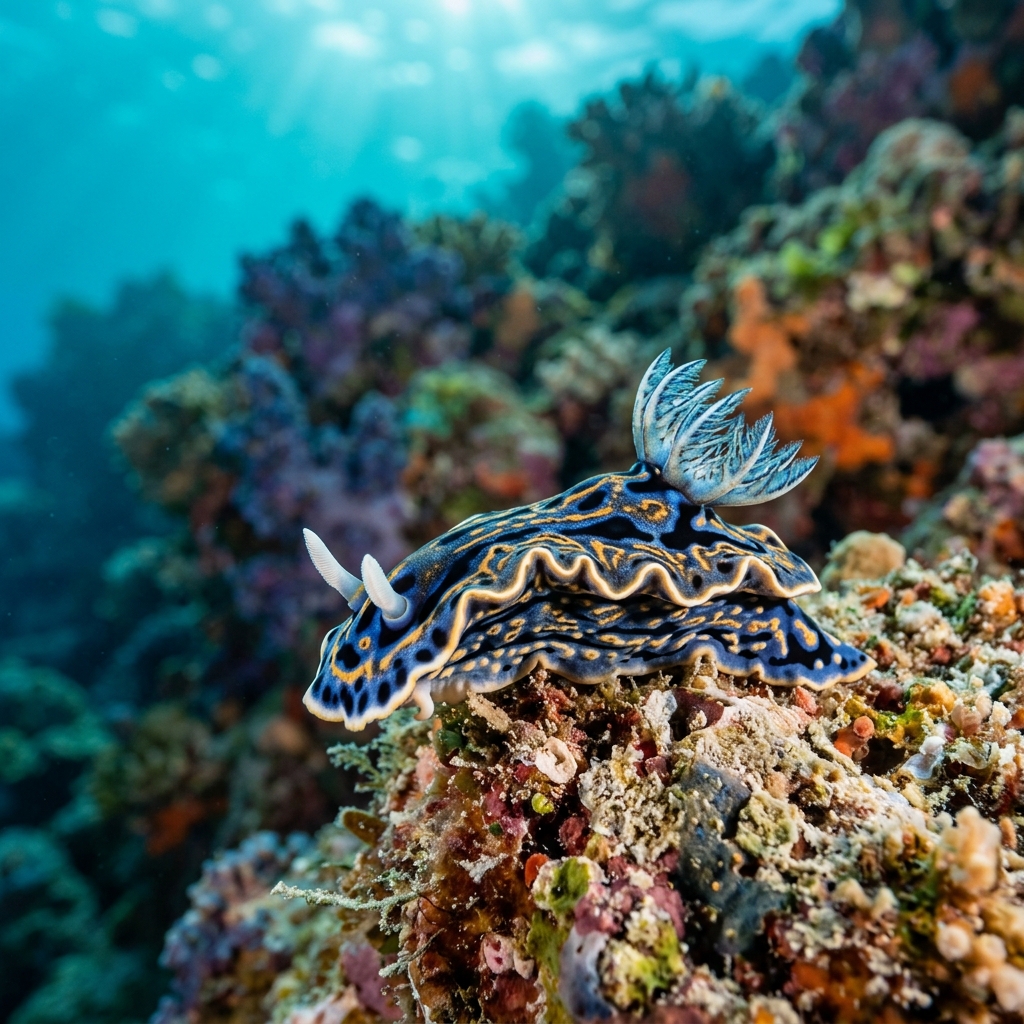
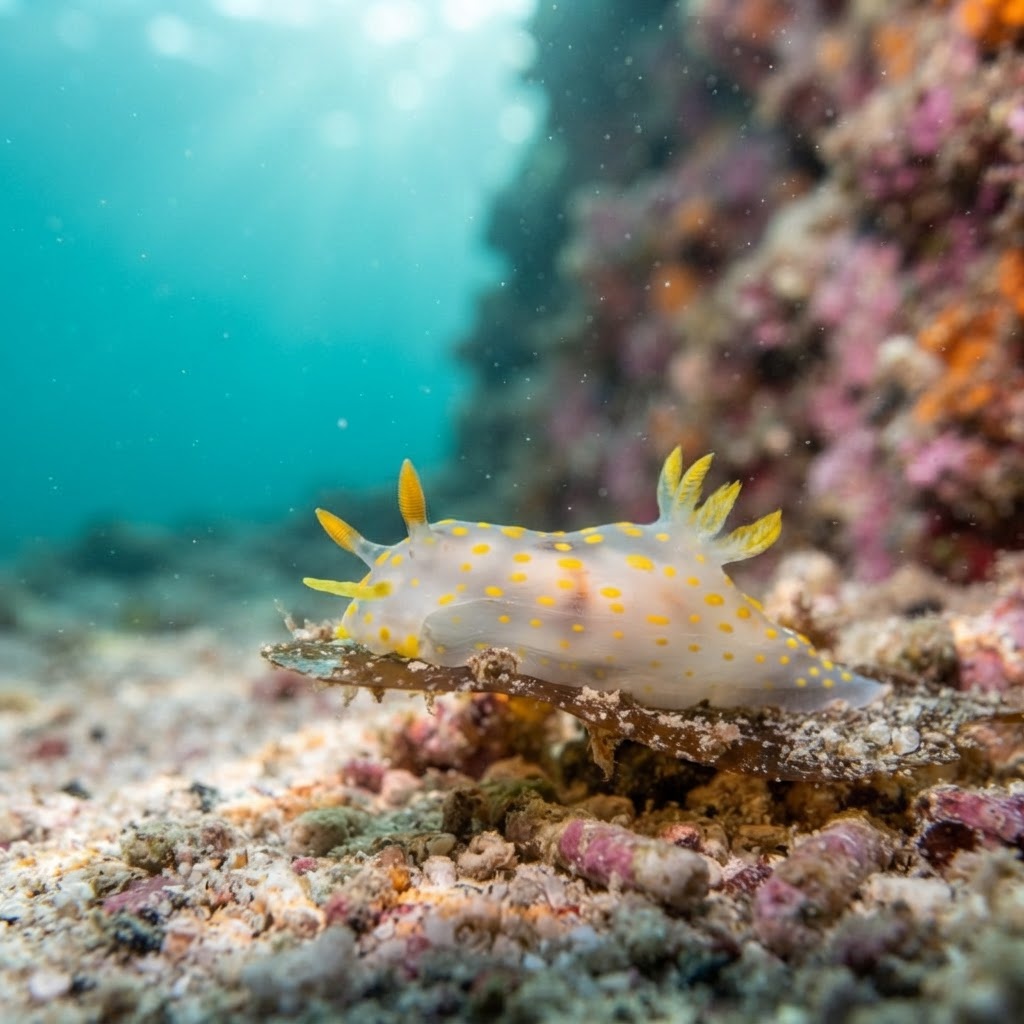
A small sea slug (nudibranch) with the smooth, soft-bodied look typical of the Hypselodoris group: an elongate, flattened body with a ruffled mantle edge and a pair of feathery gills near the tail. Look for a pair of rhinophores (the sensory stalks on the head) as the clearest cue that you are looking at a nudibranch and not a flatworm. Exact size and colour pattern are not well documented for this species, so confirm sightings against a photo reference before logging.
Like other Hypselodoris nudibranchs, it moves slowly across the reef substrate grazing on sponges, and it takes an unhurried, methodical approach to searching a patch of coral rubble or rock to spot one. It shows no reaction to divers beyond continuing its crawl, so a slow, close look with a torch or macro lens is the way to find it. Logged as uncommon at its known site, so it rewards divers doing a dedicated muck or macro dive rather than a casual reef cruise.
Nudibranchs in this family get their colour and any toxins from the sponges they eat, so their patterning is a direct readout of their diet rather than a fixed inherited trait.
Sightings don't show a clear seasonal pattern, and the observed water temperature range of 25.2 to 31.2C fits Luzon's reefs year-round, so there's no strong reason to time a trip around a particular month.
Reef neighbours a diver could mistake it for. Use the identification notes above to tell them apart.
The only confirmed sightings so far come from Luzon in the Philippines, making it the one region divers can currently count on for this species. It has not yet been logged elsewhere, so treat any Philippines trip to Luzon as your best shot at finding it.
Mapping where Bolland's Hypselodoris is logged…
The only logged sightings are from Luzon in the Philippines. It hasn't been recorded elsewhere yet, so a Luzon macro dive is currently the best-known way to find one.
There's no detected season for this species. It has been recorded in water between 25.2 and 31.2C, a range typical of Philippine reefs all year, so any month is worth a look.
Look for a small, soft-bodied sea slug with a ruffled mantle edge, a pair of head rhinophores, and feathery gills near the tail, the classic Hypselodoris build. Detailed colour pattern data is limited, so cross-check against a reference photo when you spot one.
Exact size isn't well documented for this species. Most Hypselodoris nudibranchs are small, typically a few centimetres long, so expect a similar scale underwater.
No. It poses no threat to divers and can be observed and photographed safely at close range without disturbing it.
It's logged as uncommon even at the one site where divers have recorded it, in Luzon, Philippines. Finding one takes a dedicated, slow macro search rather than a casual reef swim.
Site and sighting data is aggregated from diver logs, iNaturalist and GBIF. For taxonomy and conservation status:
Light-spotted Aegires
3,168 sites