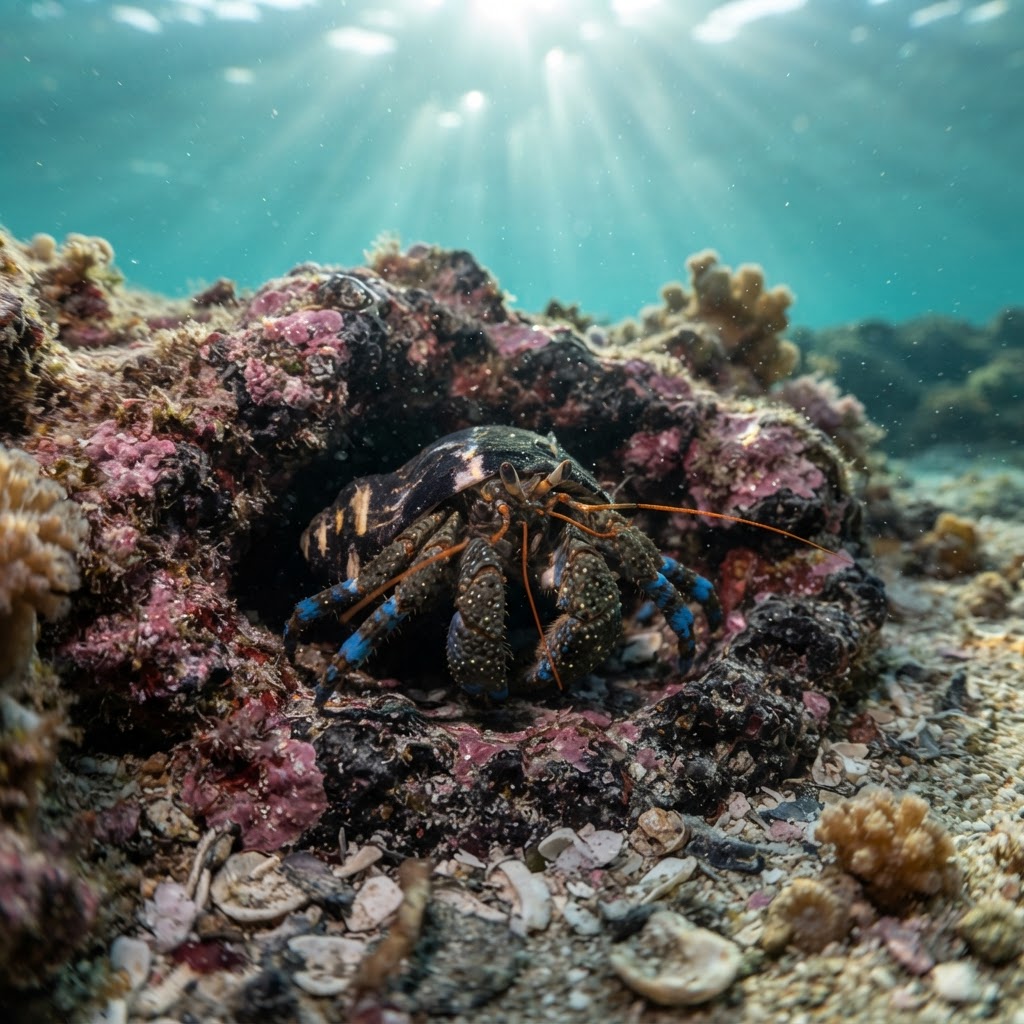
Pagurus samuelis
Blue-banded legs and a rusty red shell: this hermit crab turns up year-round in California tide pools and shallow reefs, most reliably logged in the state.
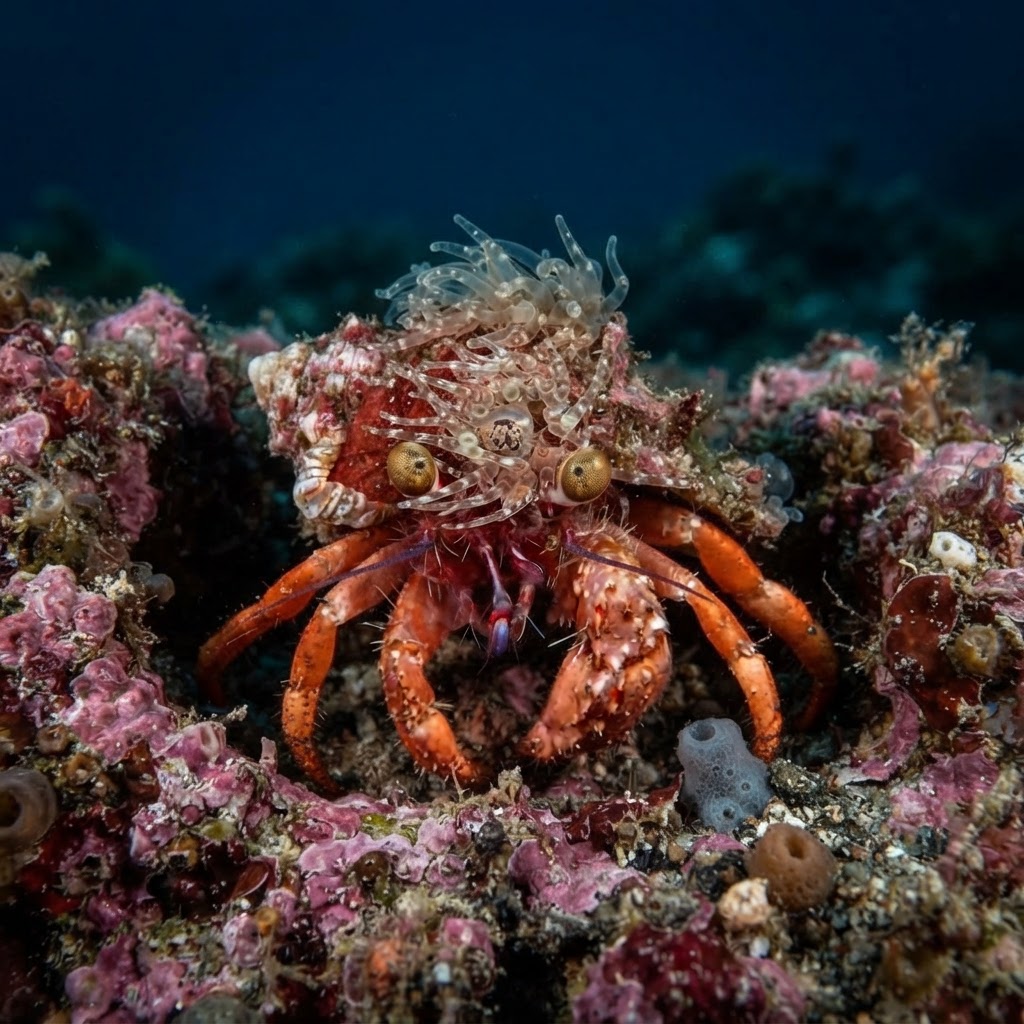
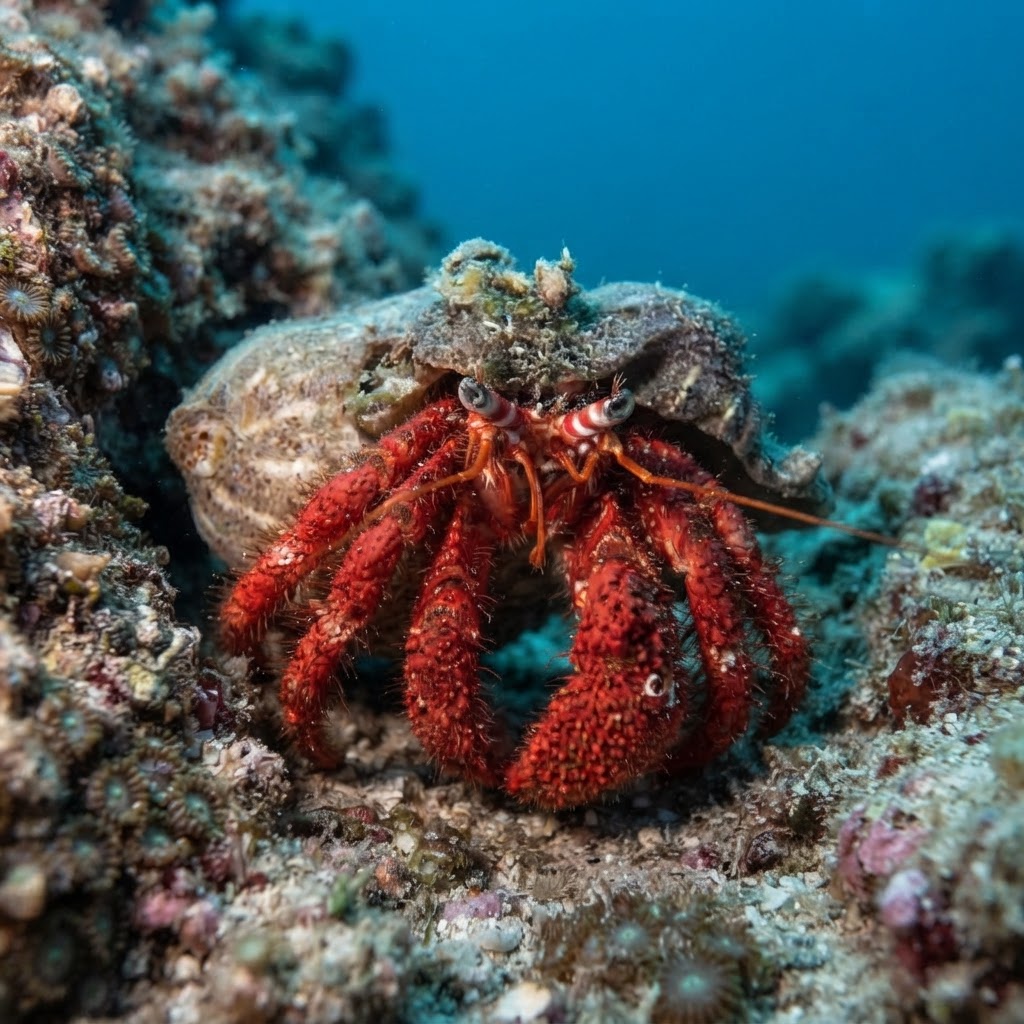
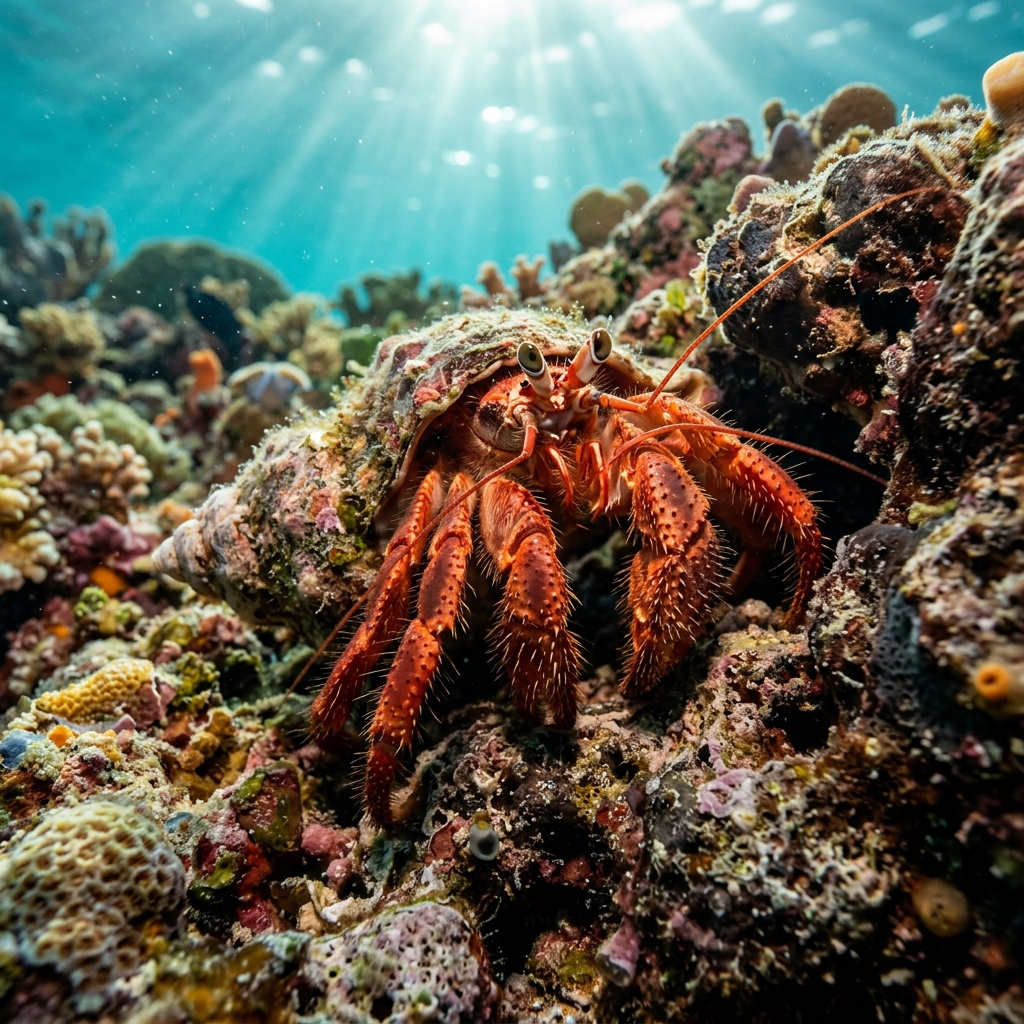
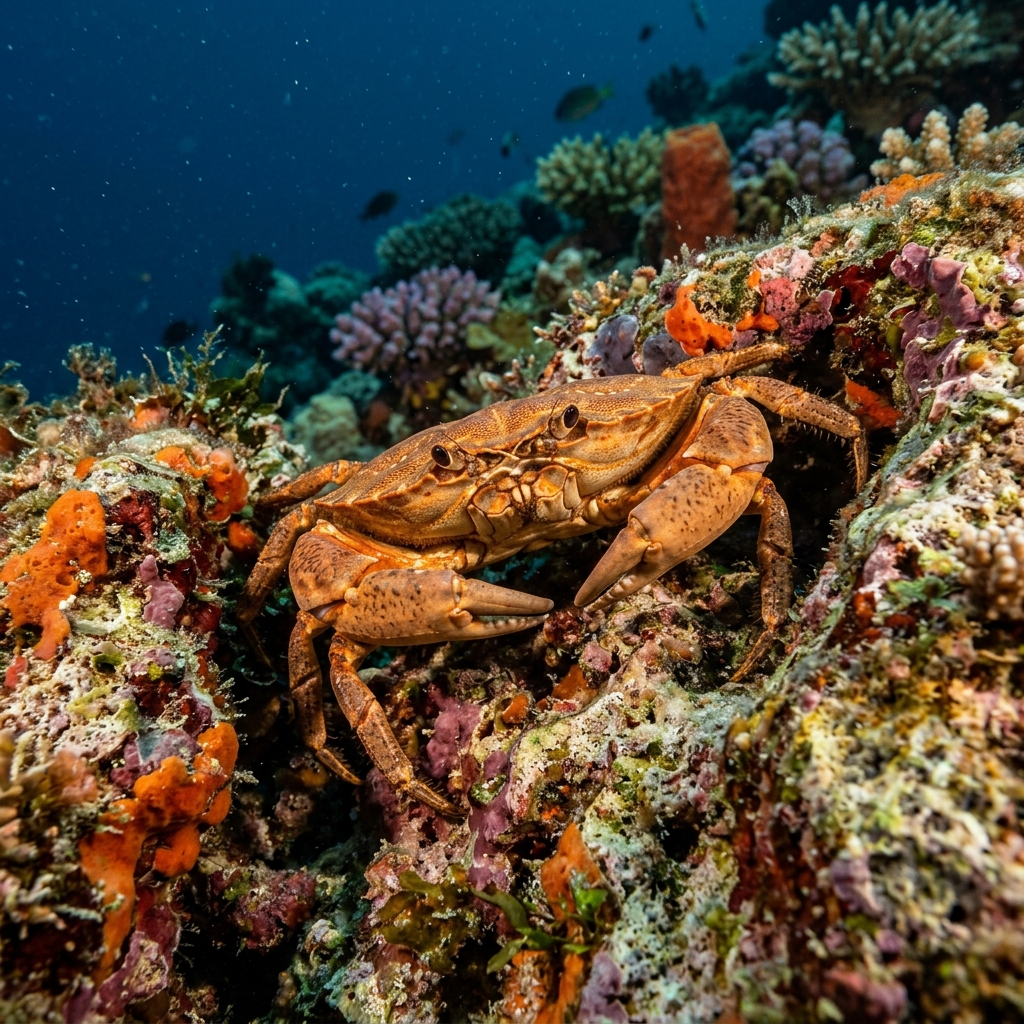
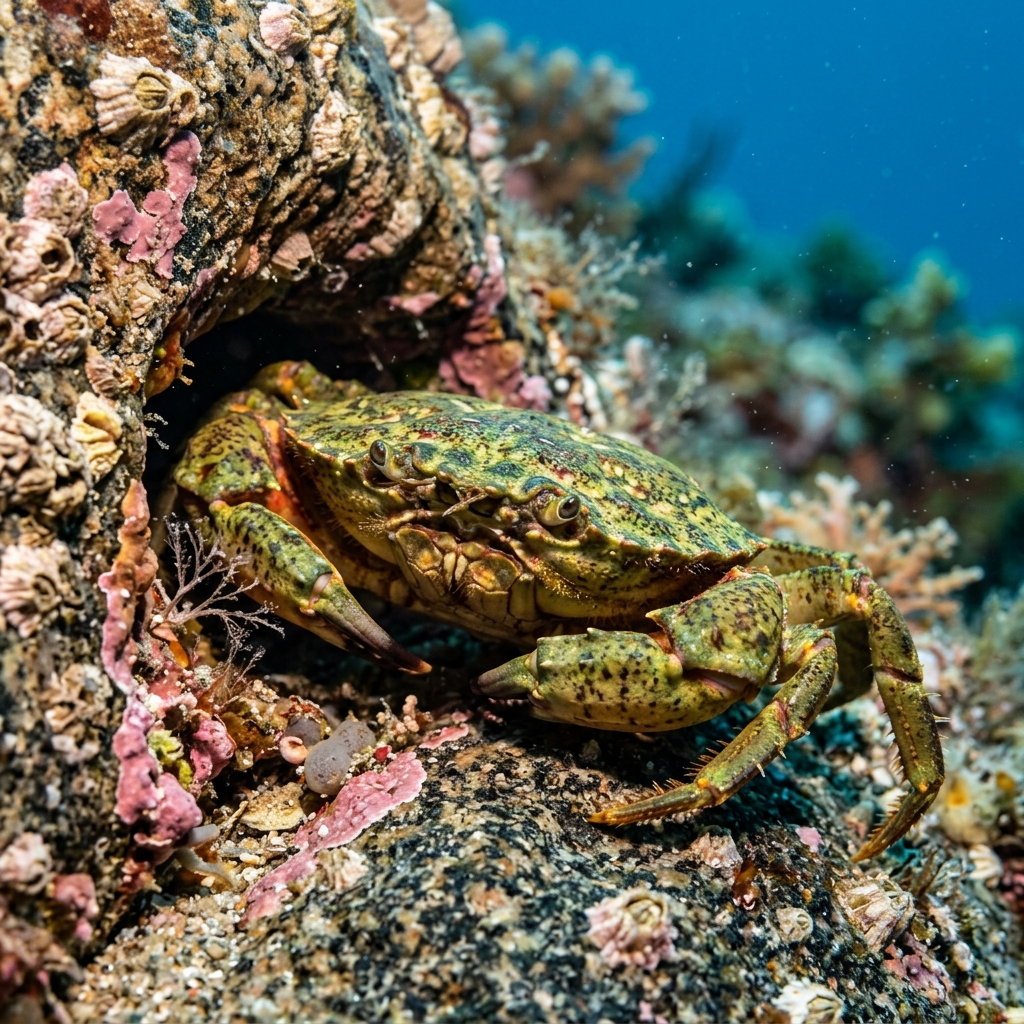
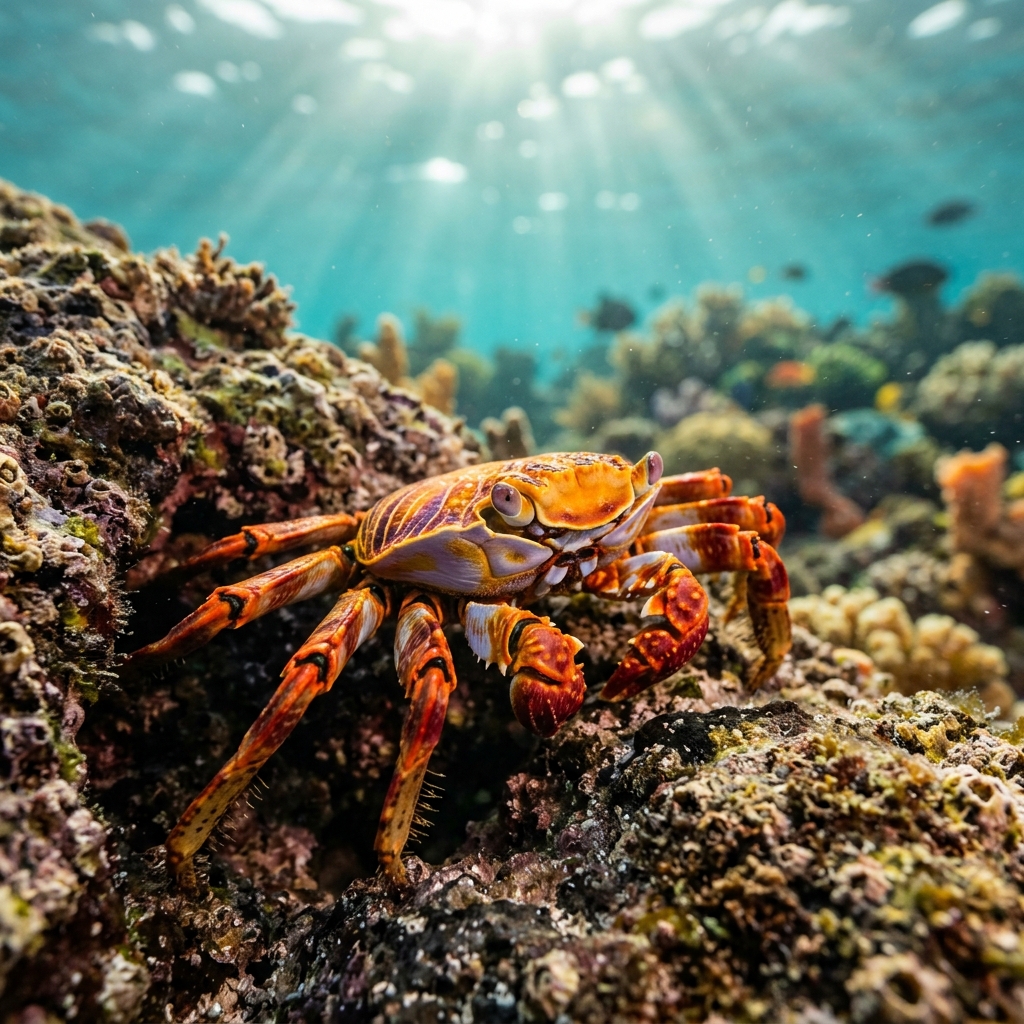
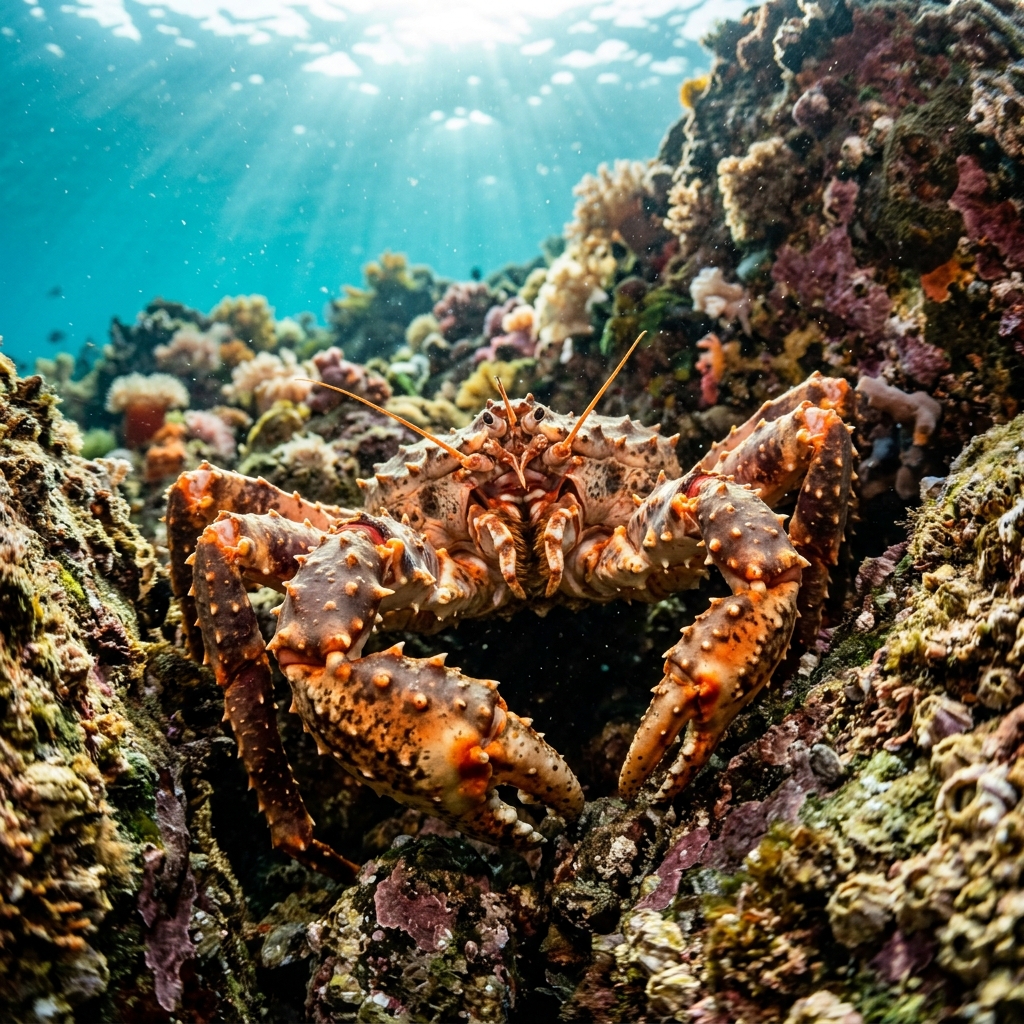
Small hermit crab living in a scavenged snail shell, with legs banded in a distinctive electric blue that stands out even in low light. The claws are reddish orange, and the body is otherwise easy to overlook against rock and algae until that blue leg-banding catches your torch beam. Size varies with the shell it has claimed, but it stays small enough to miss unless you are looking closely at rocky crevices and pilings.
Look for it tucked into rocky crevices, tide-pool margins, and low-relief cobble where it forages over algae-covered rock rather than swimming or drifting. It is unbothered by divers at a normal distance and will keep picking over the substrate, only retreating into its shell if you get right up on it. Most logged sightings describe it as uncommon rather than abundant, so it rewards divers who slow down and scan the small stuff instead of cruising past.
Like all hermit crabs it does not grow its own shell, it recycles empty snail shells and trades up to a bigger one as it grows, so the shell you see on any individual says more about local snail populations than about the crab itself.
Sightings run year-round with no clear seasonal gap in the data, which fits its comfort range of roughly 10.7 to 18.8 C, a temperature band California's coast holds through most of the year.
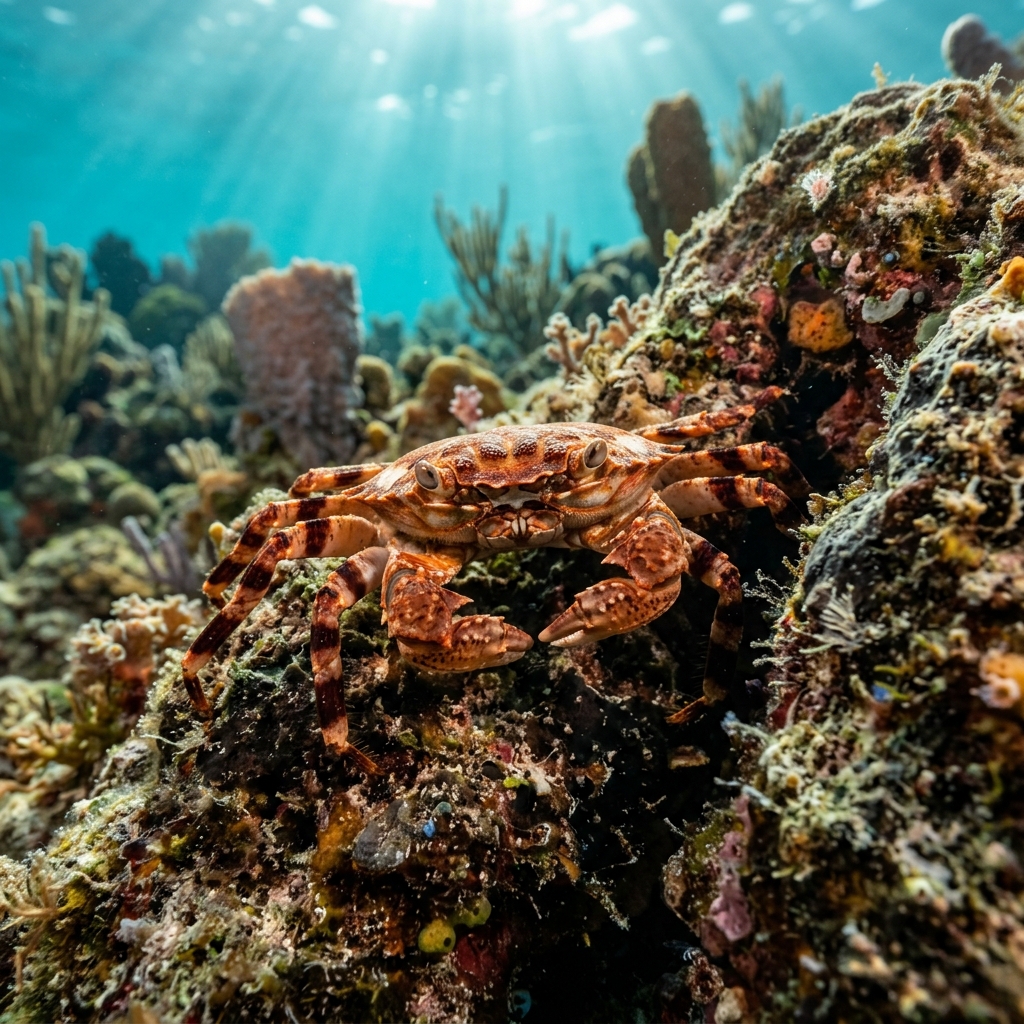
Reef neighbours a diver could mistake it for. Use the identification notes above to tell them apart.
This is a California speciality, most consistently logged along the state's coast from shallow rocky reefs to harbour pilings, with a smaller but steady presence in the Pacific Northwest and up into British Columbia. Outside the United States it shows up in Canadian waters, but the vast majority of logged sightings sit in California.
Mapping where Blueband Hermit Crab is logged…
California is by far the strongest area for sightings, particularly along its rocky shallow reefs and tide pools. Smaller numbers turn up in the Pacific Northwest and in British Columbia, Canada.
There is no strong seasonal pattern in the sightings, so it is a year-round find. Its comfort range of about 10.7 to 18.8 C covers most of the year along the California coast.
Check the legs for bands of bright blue, paired with reddish-orange claws, on a small crab riding in a scavenged snail shell. It sticks to rocky crevices and cobble rather than open sand.
No, they pose no threat to divers. They are small, retreat into their shell if disturbed, and are best enjoyed by observing without handling.
Exact size data is not available, but like other Pagurus hermit crabs they stay small, generally sized to fit within a snail shell no larger than a couple of centimetres across.
Site and sighting data is aggregated from diver logs, iNaturalist and GBIF. For taxonomy and conservation status:
European Green Crab
2,469 sites