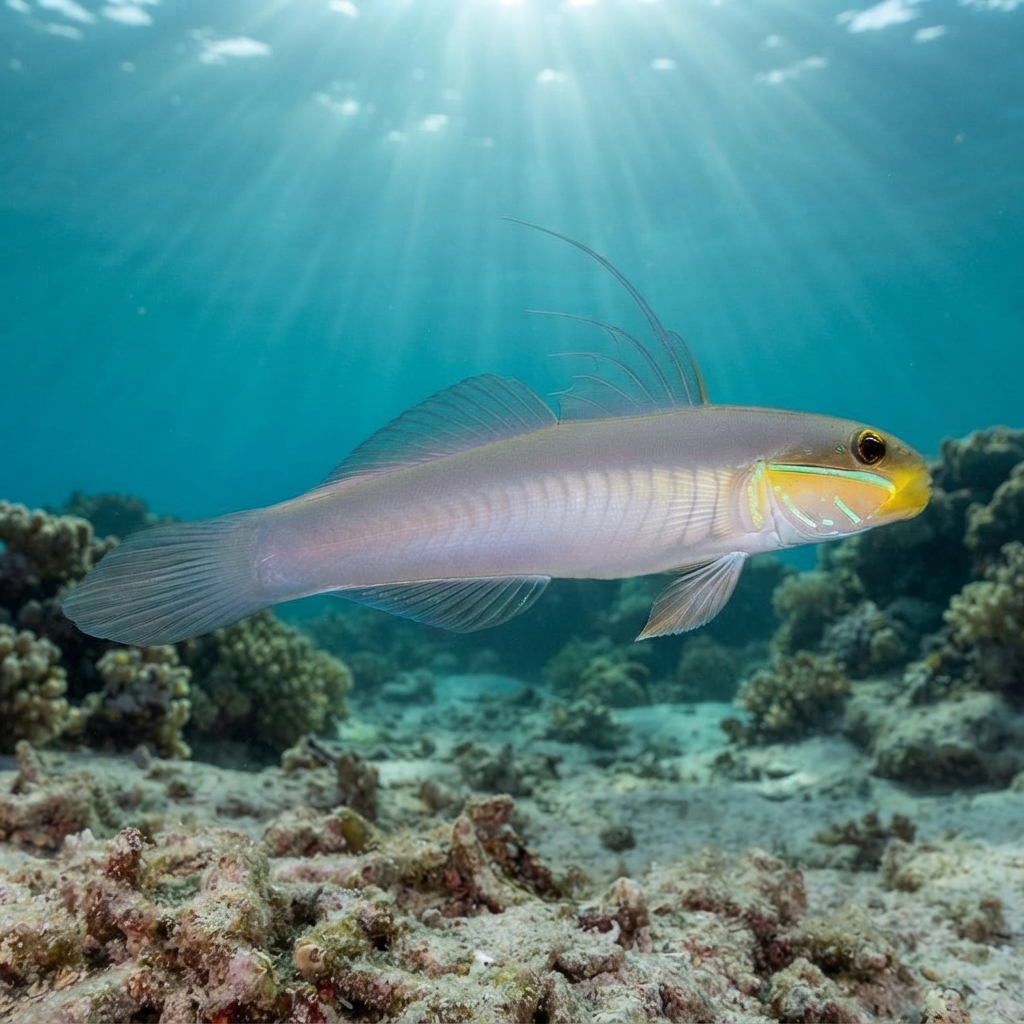
Valenciennea strigata
A sandy-bottom regular of the Society Islands and Rarotonga, hovering in pairs over reef flats at 25-29 C year-round.
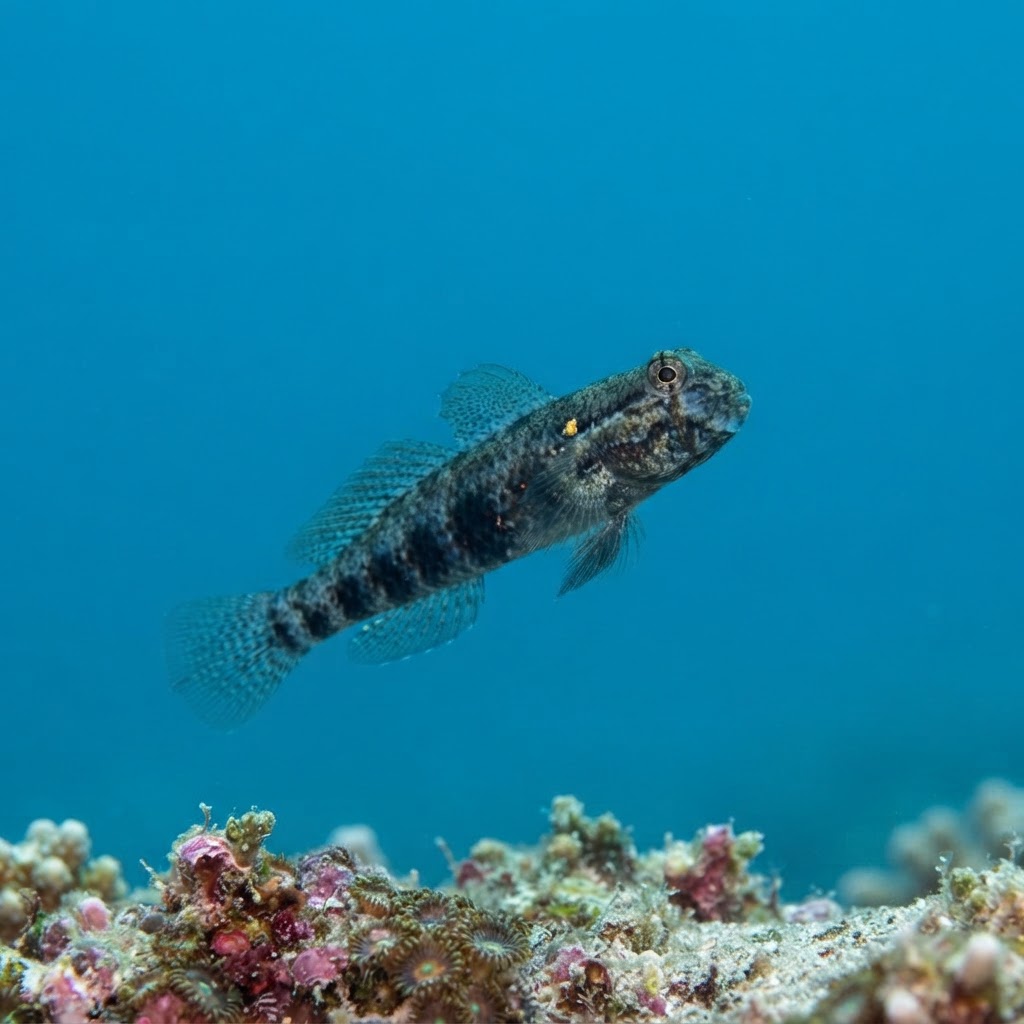
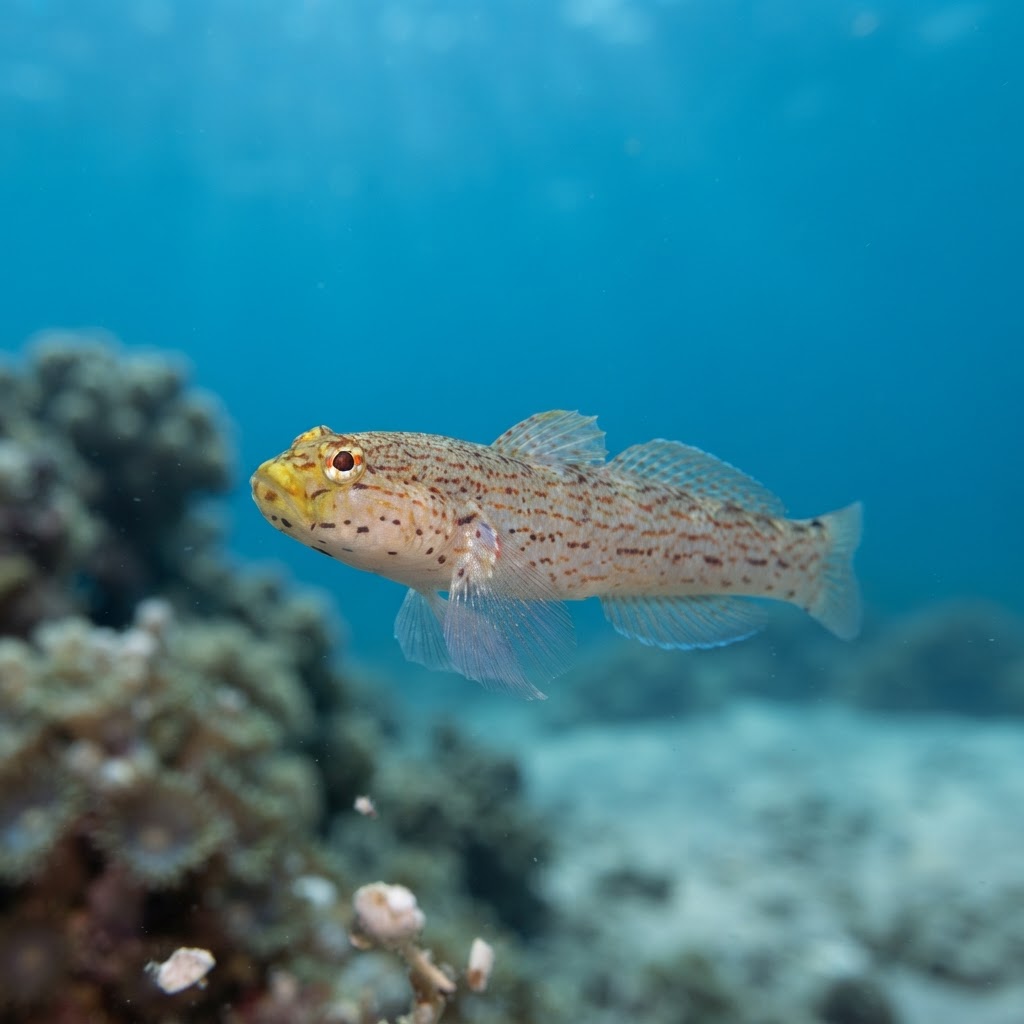
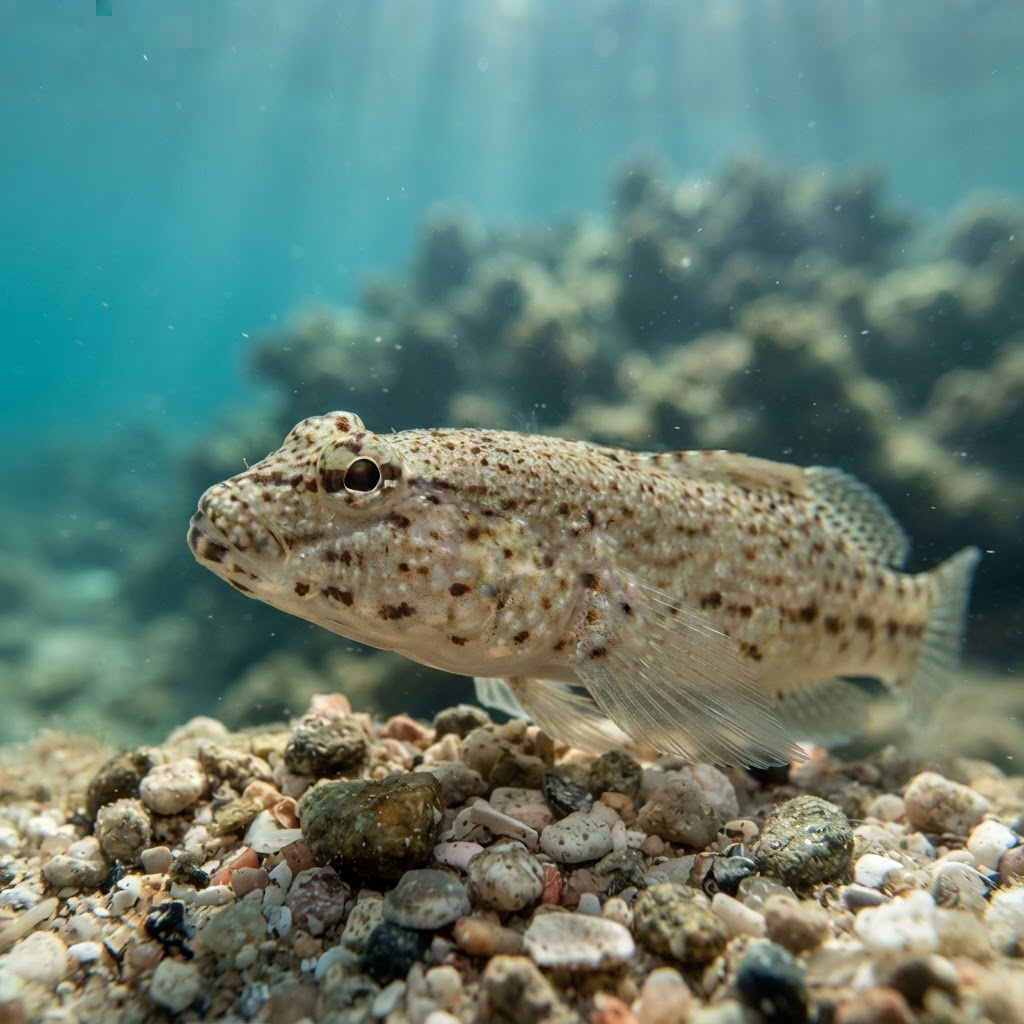
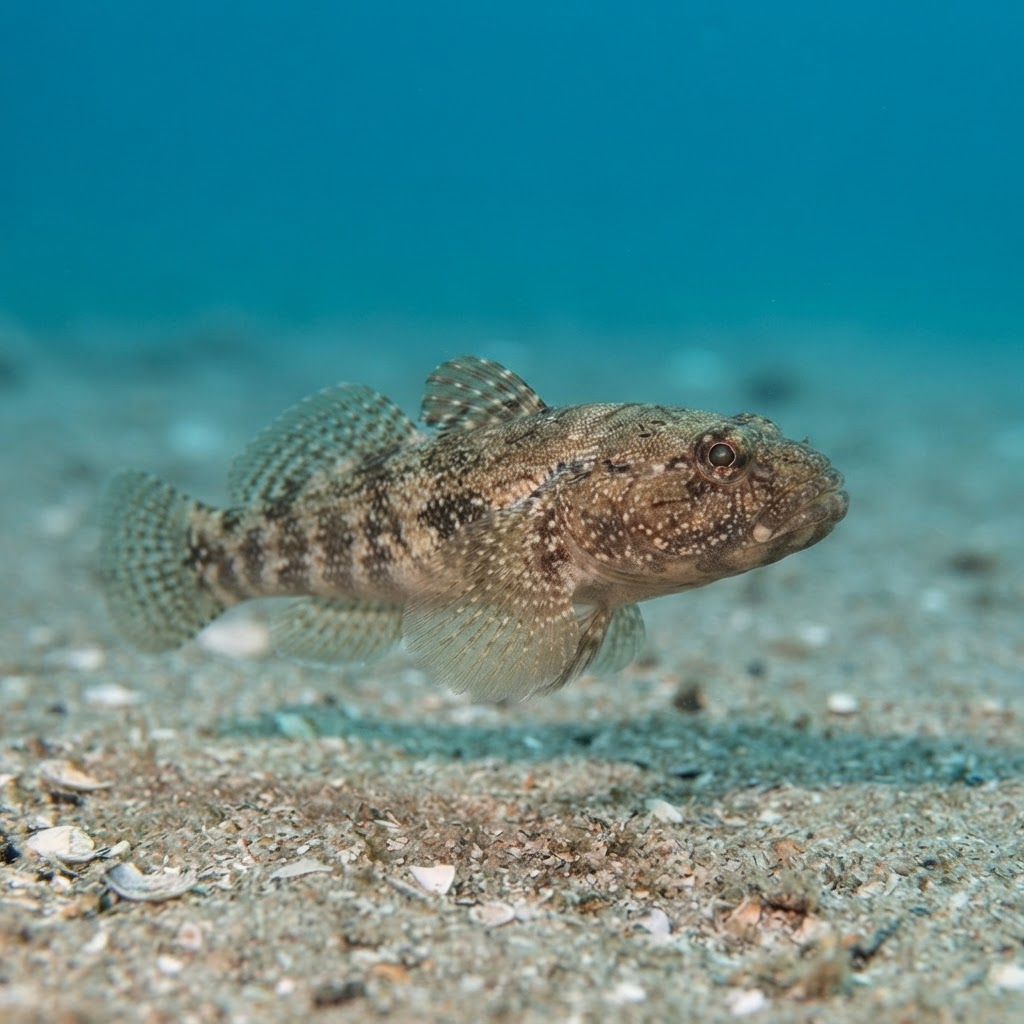
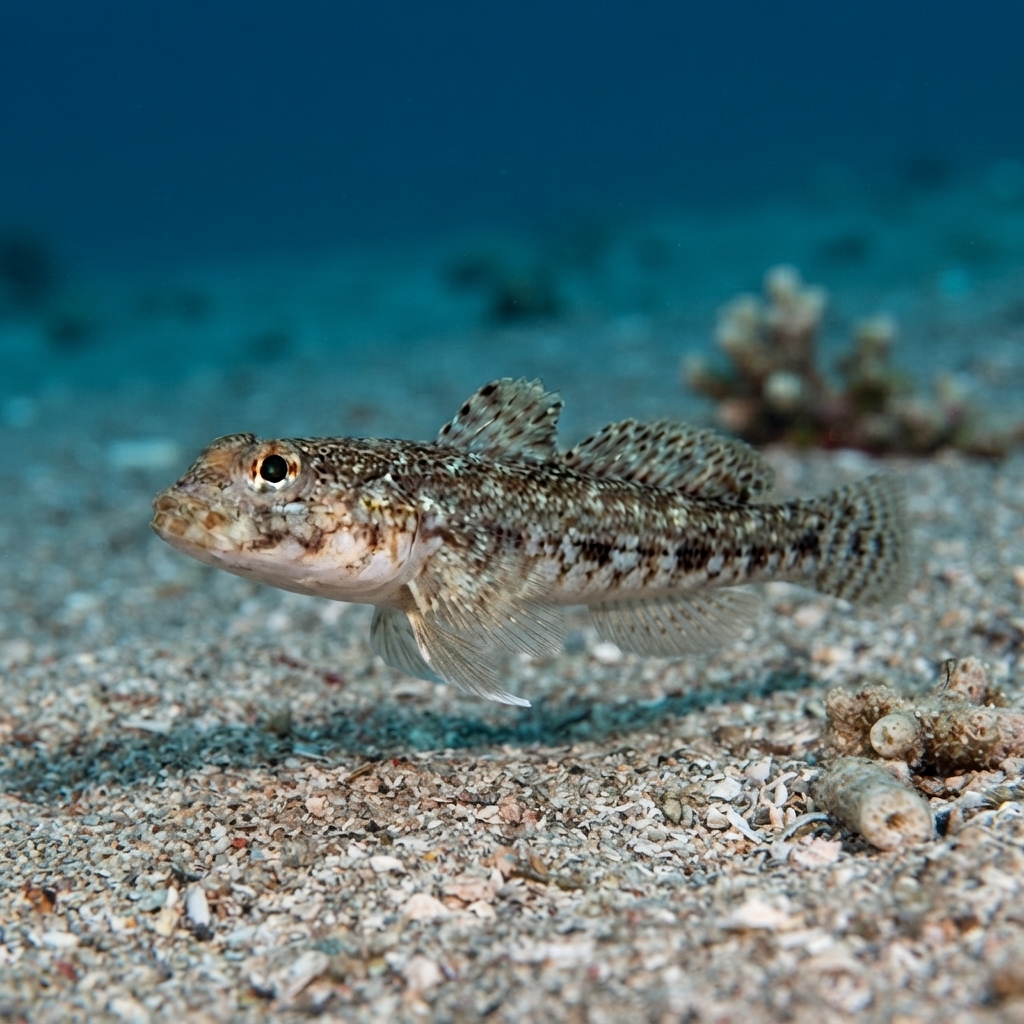
Small, pale-bodied goby around 12 cm with a yellow-tinged head and a distinctive iridescent blue stripe running across the face below the eye. Body is elongated and tapers to a slender tail, typically seen hovering just above the sand rather than resting flat on it. Often spotted working in pairs, hanging nose-down at a burrow entrance before darting back in.
Look for it hovering in a pair a few centimetres above sand or rubble patches on the reef flat, sifting mouthfuls of sediment and spitting out the useless bits while picking through the rest for food. It stays close to a shared burrow and retreats into it the moment a diver gets too close or moves too fast, so a slow approach and a bit of patience gets you the best look. Most sightings are on shallow to mid-depth sand-fringed reef, well within recreational depths.
Pairs dig and maintain a shared burrow together, taking turns sifting sand at the entrance while the other keeps watch, a real partnership rather than a solitary sand-sifting habit.
No clear seasonal pattern shows up in sightings, and with a comfortable range of 25 to 29.3 C, sandy reef flats stay within its niche all year, so it is a fair bet on any tropical trip through its range.
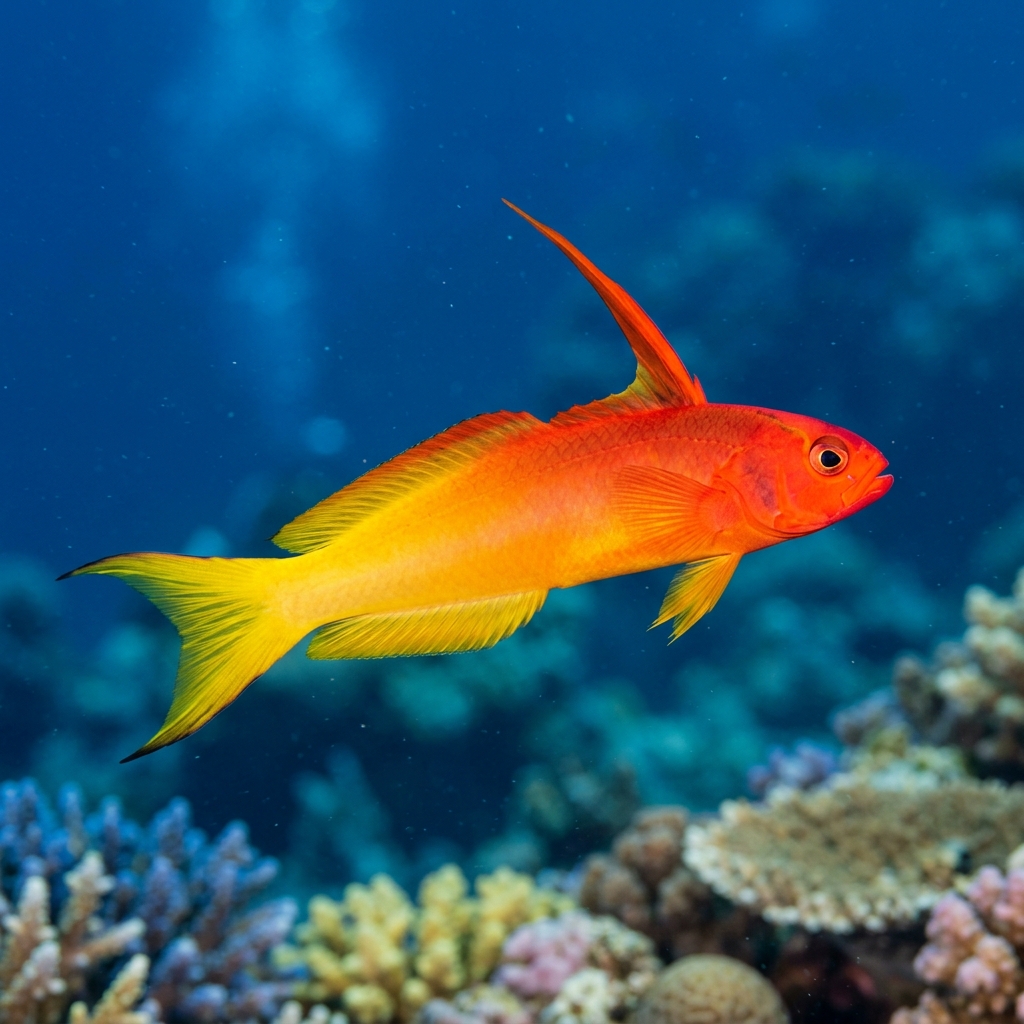
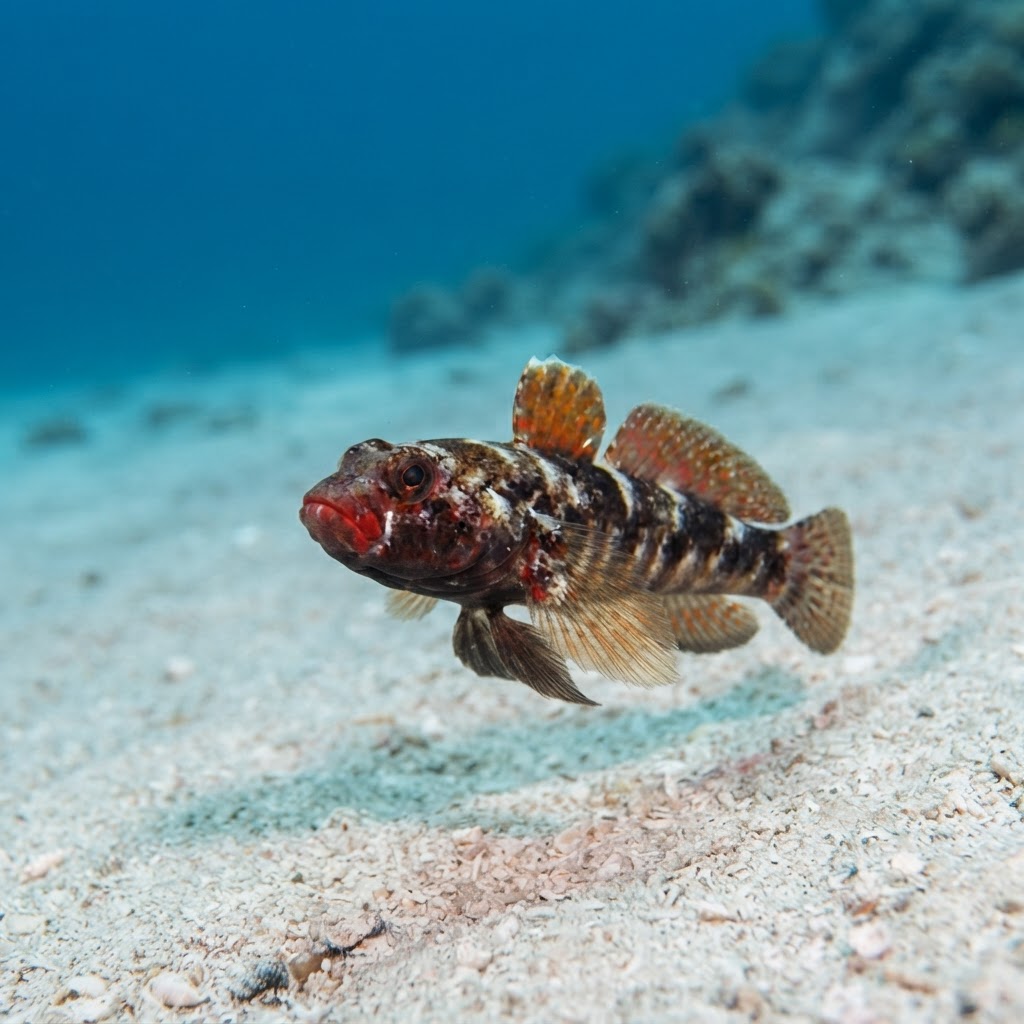
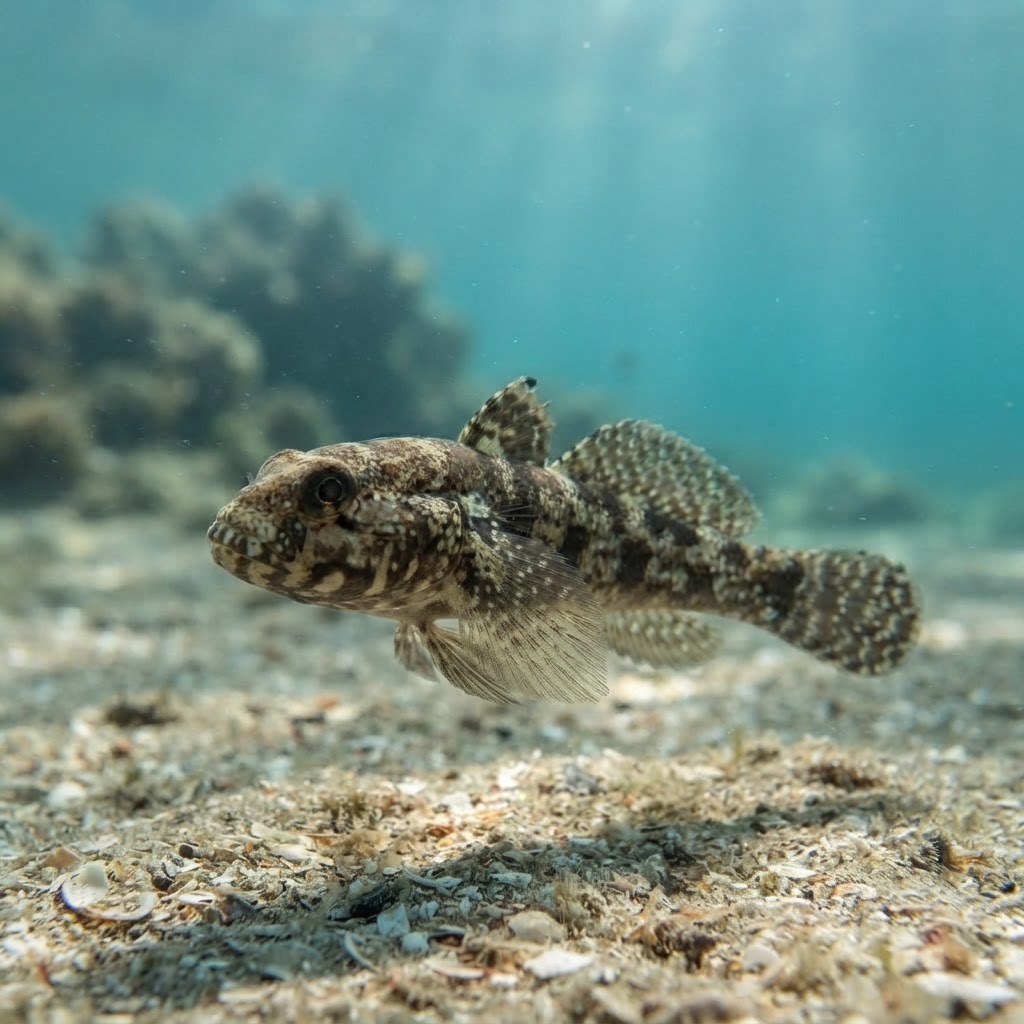
Reef neighbours a diver could mistake it for. Use the identification notes above to tell them apart.
Most reliably found across French Polynesia, especially the Society Islands, and a strong presence around Rarotonga in the Cook Islands. Also logged consistently on reefs in Taveuni (Fiji), Sabah (Malaysia), Peleliu (Palau), and Saipan (Northern Mariana Islands), plus sites in Indonesia, Japan's Ryukyu Islands, and Queensland.
Mapping where Blue-streak Goby is logged…
It turns up most often in French Polynesia's Society Islands and around Rarotonga in the Cook Islands, with solid numbers also logged in Taveuni (Fiji), Sabah (Malaysia), and Palau's Peleliu. Look for it on sandy patches within reef flats rather than on hard coral structure.
There is no strong seasonal pattern in sightings, and it favours warm reef water between roughly 25 and 29 C, so it is present on tropical reefs across its range throughout the year.
Look for a small, pale, elongated goby around 12 cm long with a yellowish head marked by an iridescent blue stripe below the eye. It typically hovers just above sand rather than sitting on the bottom, often paired up near a burrow entrance.
They reach about 12 cm in length, a small reef fish best spotted by watching sandy patches closely rather than scanning open water.
Pairs share a burrow and take turns sifting sand at the entrance for food while the other stands guard, a cooperative habit that is easy to watch once you find one hovering near its hole.
No, they pose no danger to divers. They are small, retreat into their burrow if approached too fast, and have no venom or aggressive behaviour to worry about.
Site and sighting data is aggregated from diver logs, iNaturalist and GBIF. For taxonomy and conservation status:
Slender Goby
806 sites