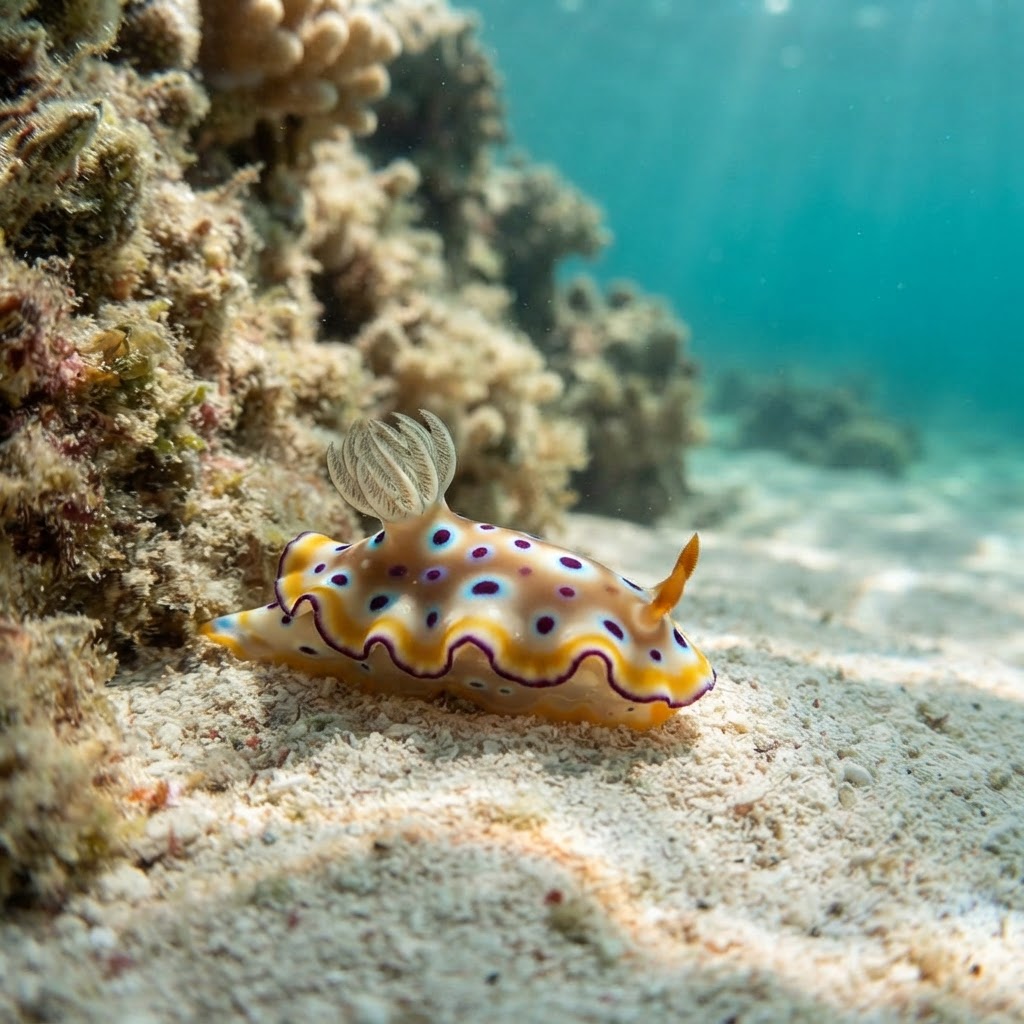
Goniobranchus geminus
A tiny reef nudibranch most reliably logged around Sumatra, Indonesia, in warm 24-30C water year-round.
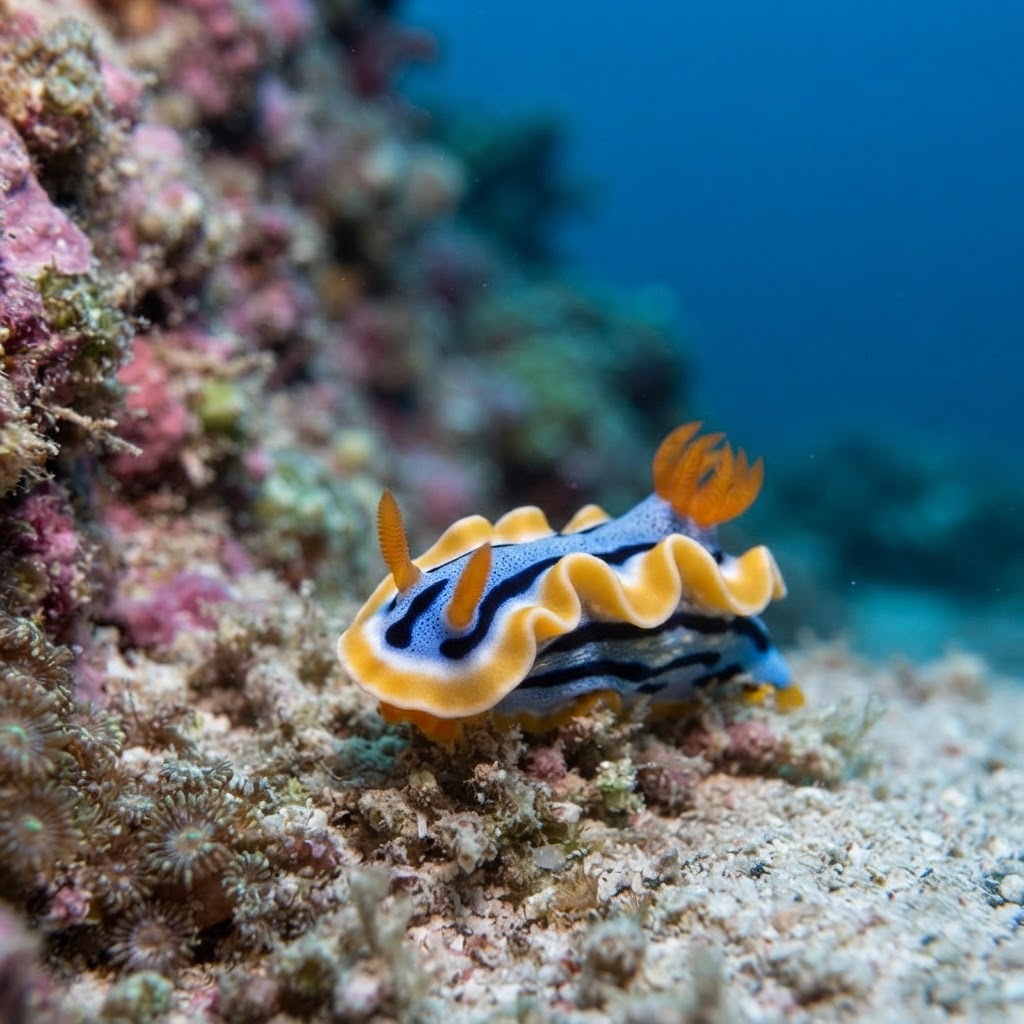
A small dorid, around 4 cm, with a pale to cream body marked by distinct blue rings across its back that give it its name. Like other Goniobranchus species it has a soft, oval, slightly ruffled mantle edge and two feather-like gills (rhinophores) at the head end used to sense the reef. Look for it moving slowly across sponge-covered rubble or coral rock rather than swimming, since it stays glued to the substrate.
Divers typically spot it grazing slowly across sponge-encrusted rubble or coral rock, usually on a slow-paced macro dive rather than anything requiring a specific time of day. It shows no reaction to divers beyond continuing its unhurried crawl, since like most dorids it has no fast escape response and relies on chemical defences instead. Uncommon status at the sites where it does turn up means most sightings come from divers deliberately scanning the substrate rather than spotting it in open water.
Like other chromodorid nudibranchs, it likely absorbs chemical compounds from the sponges it feeds on and repurposes them as a defence against predators, which is why its bright pattern can serve as a warning rather than camouflage.
No clear seasonal pattern shows up in the sightings, and its comfort range of roughly 24 to 30C covers tropical reef conditions all year, so it is best treated as a year-round find rather than a seasonal target.
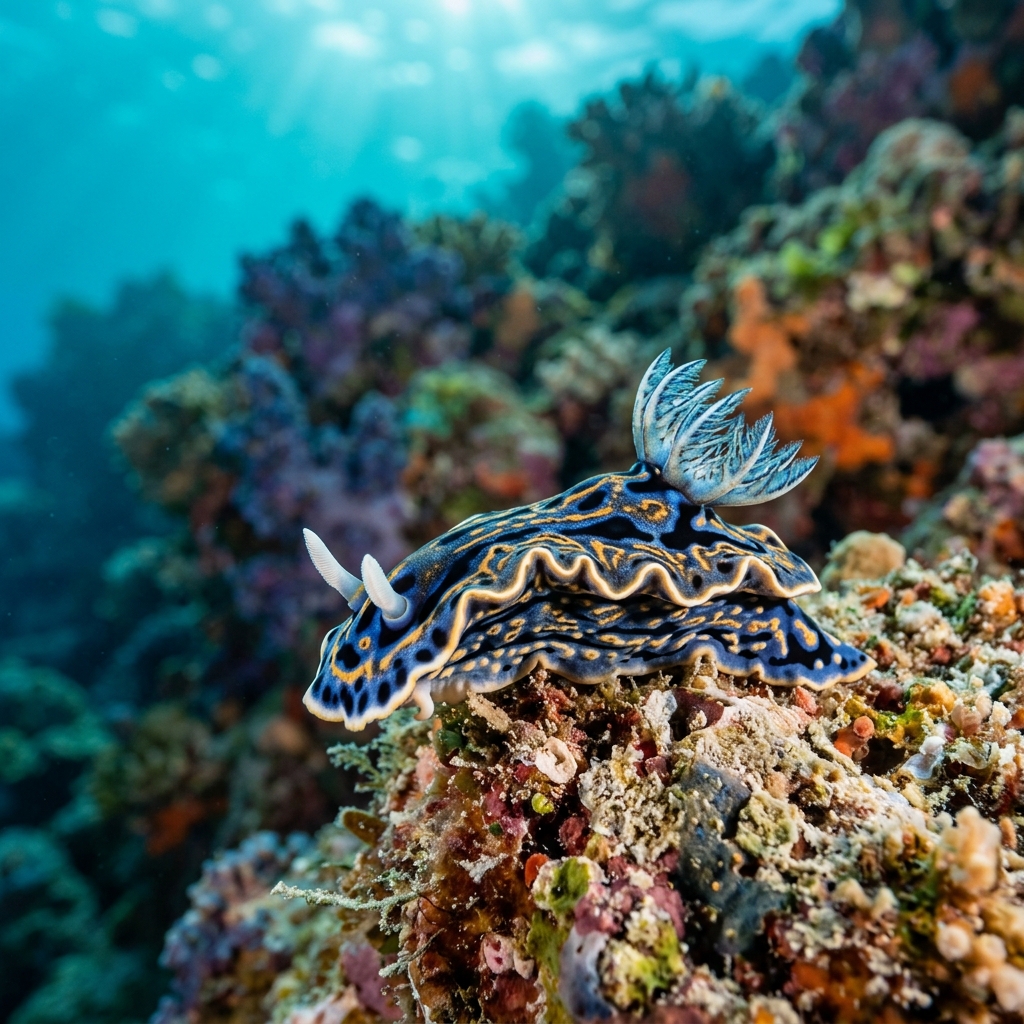
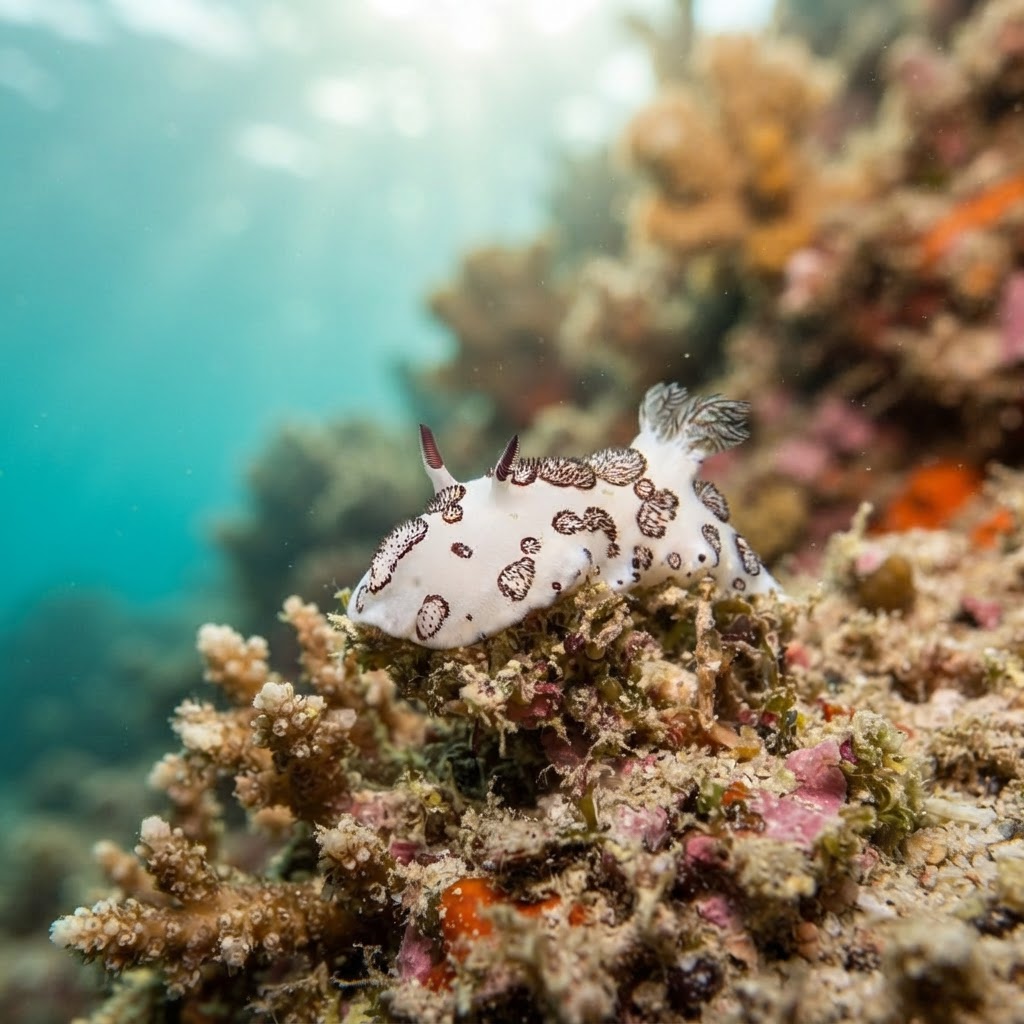
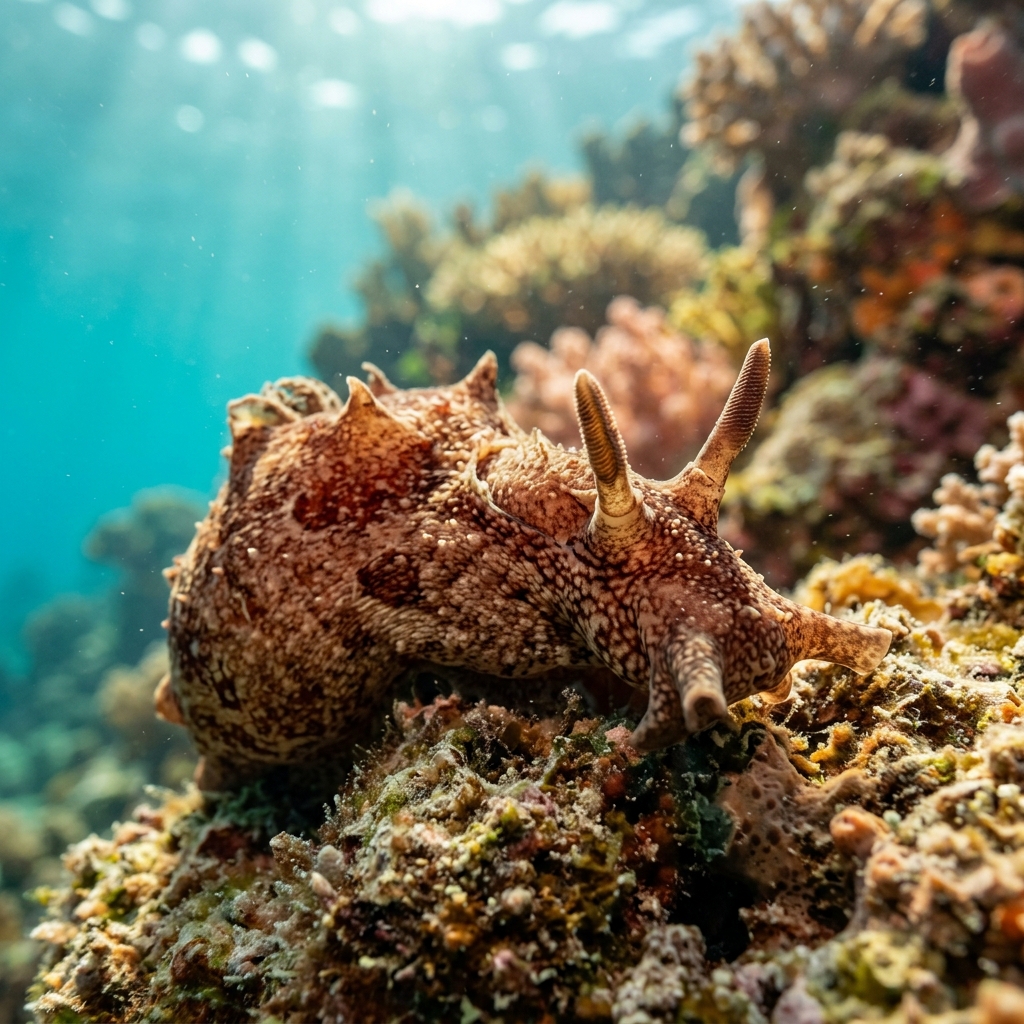
Reef neighbours a diver could mistake it for. Use the identification notes above to tell them apart.
Most consistently logged around Sumatra, Indonesia, which accounts for the bulk of recorded sightings, with additional records from Mafia Island and Zanzibar in Tanzania. Smaller numbers turn up at Shimoni in Kenya, the Central Atolls of the Maldives, and the Inner Islands of Seychelles, making it a species worth checking macro-focused reefs across the wider Indo-Pacific and western Indian Ocean.
Mapping where Blue-ringed Rainbow Dorid is logged…
It shows up most reliably around Sumatra, Indonesia, with further sightings on Mafia Island and Zanzibar in Tanzania. Smaller numbers have been logged in Kenya, the Maldives, and Seychelles, so it spans a wide stretch of the Indo-Pacific and western Indian Ocean.
There is no detectable seasonal pattern in the sightings, and it is found in water between 24 and 30C, so it is present on tropical reefs throughout the year.
Look for a small, pale-bodied nudibranch around 4 cm long with blue rings scattered across its back. It moves slowly across rubble or sponge-covered rock, with a soft ruffled mantle edge and a pair of feathery gills at one end.
It is a small nudibranch, typically reaching around 4 cm in length, so divers usually need to look closely at the substrate to spot one.
No, it poses no danger to divers. It has no venomous sting or bite; its bright colouring is a warning to predators, not a threat to people.
Site and sighting data is aggregated from diver logs, iNaturalist and GBIF. For taxonomy and conservation status:
Light-spotted Aegires
3,168 sites