Scomber australasicus
A slim, silver-blue schooling fish found in waters from 10.8 to 24.3 C, more often spotted than sought out on temperate dives.
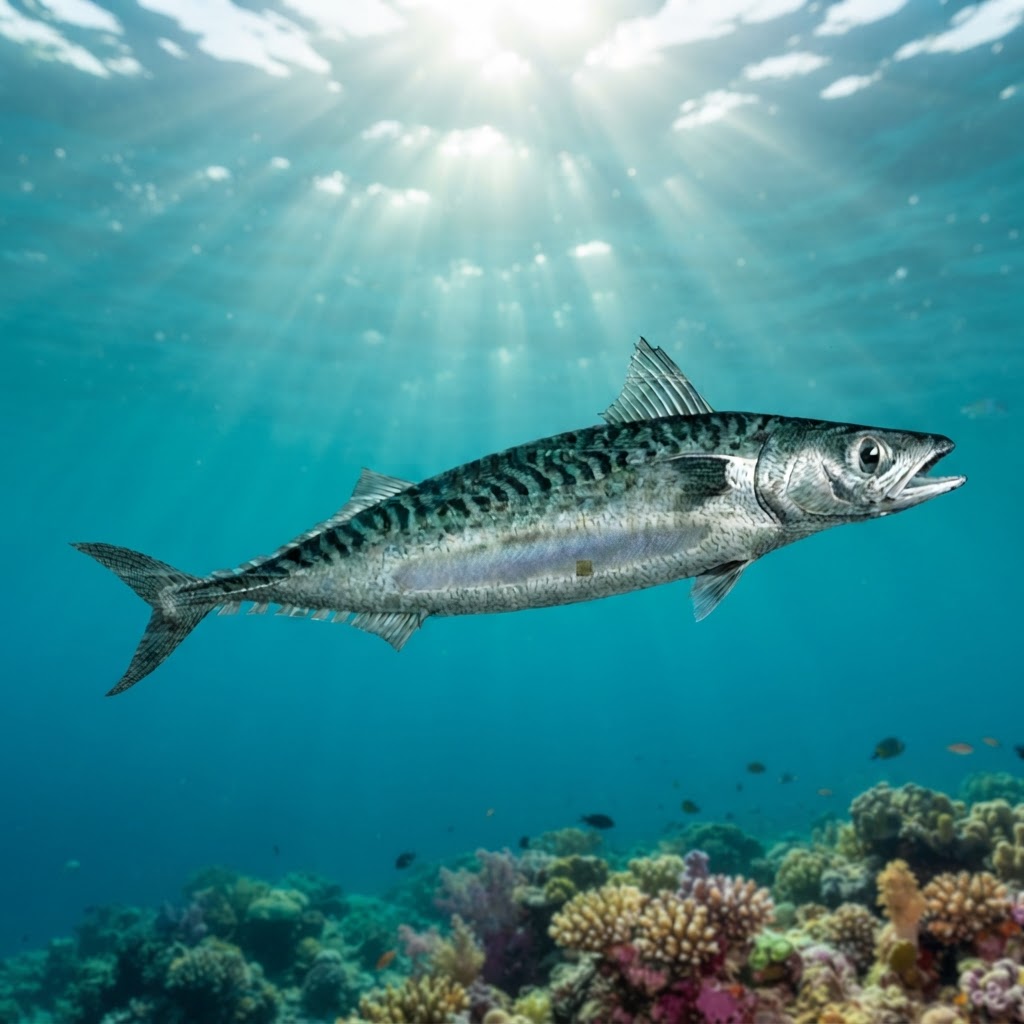
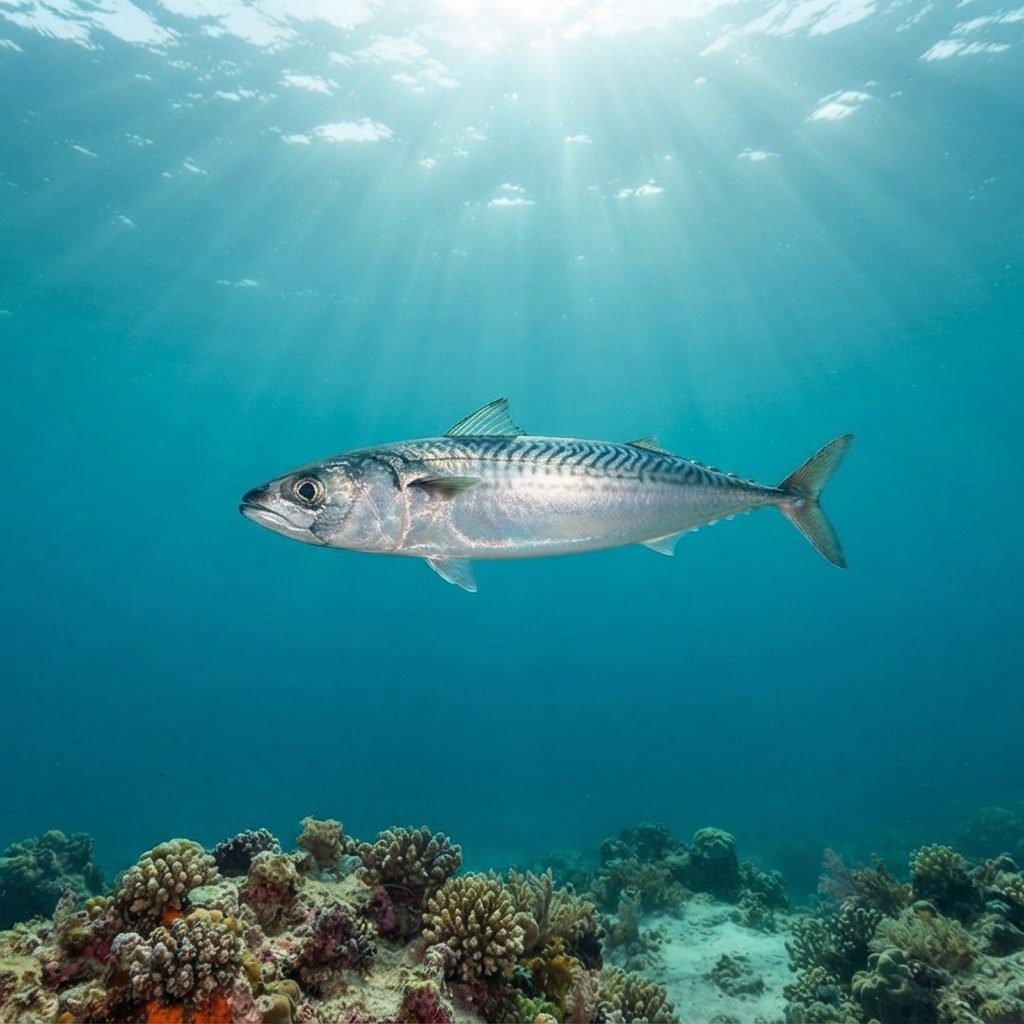
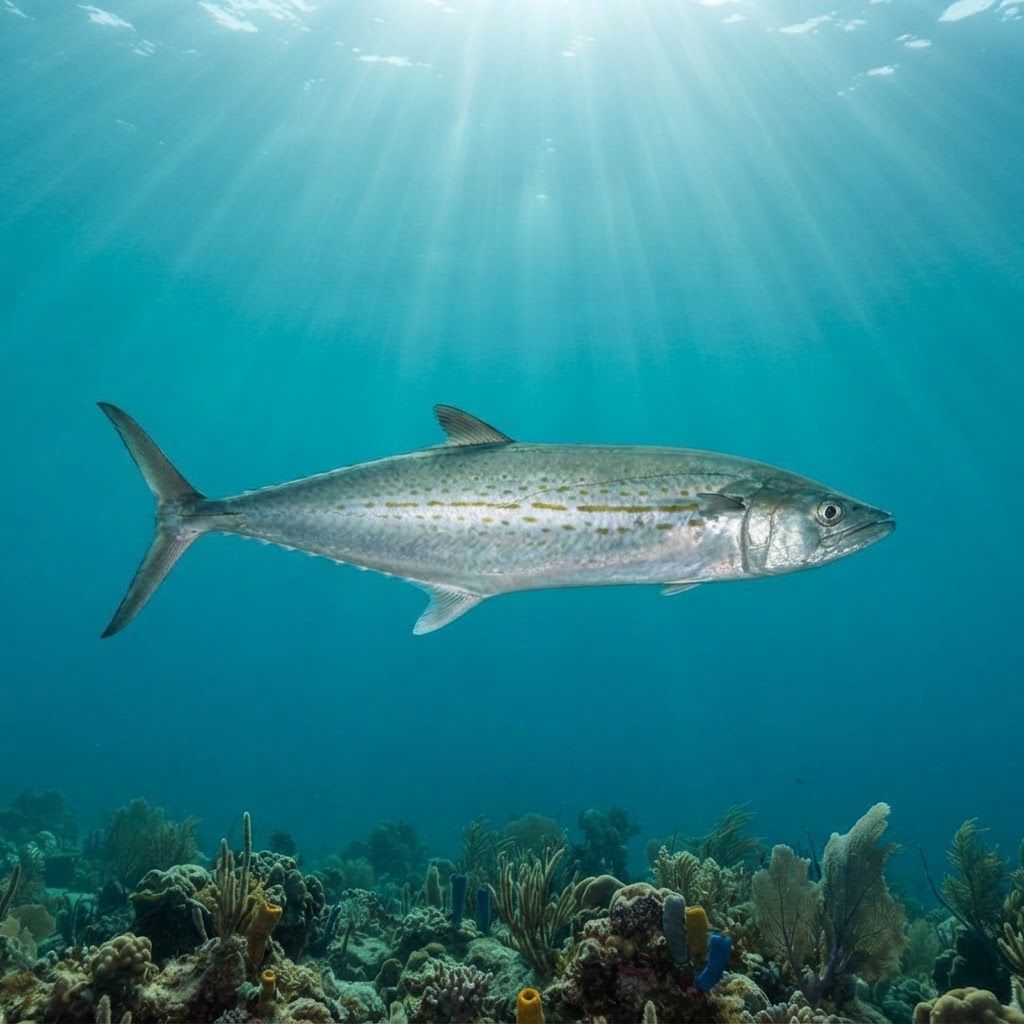
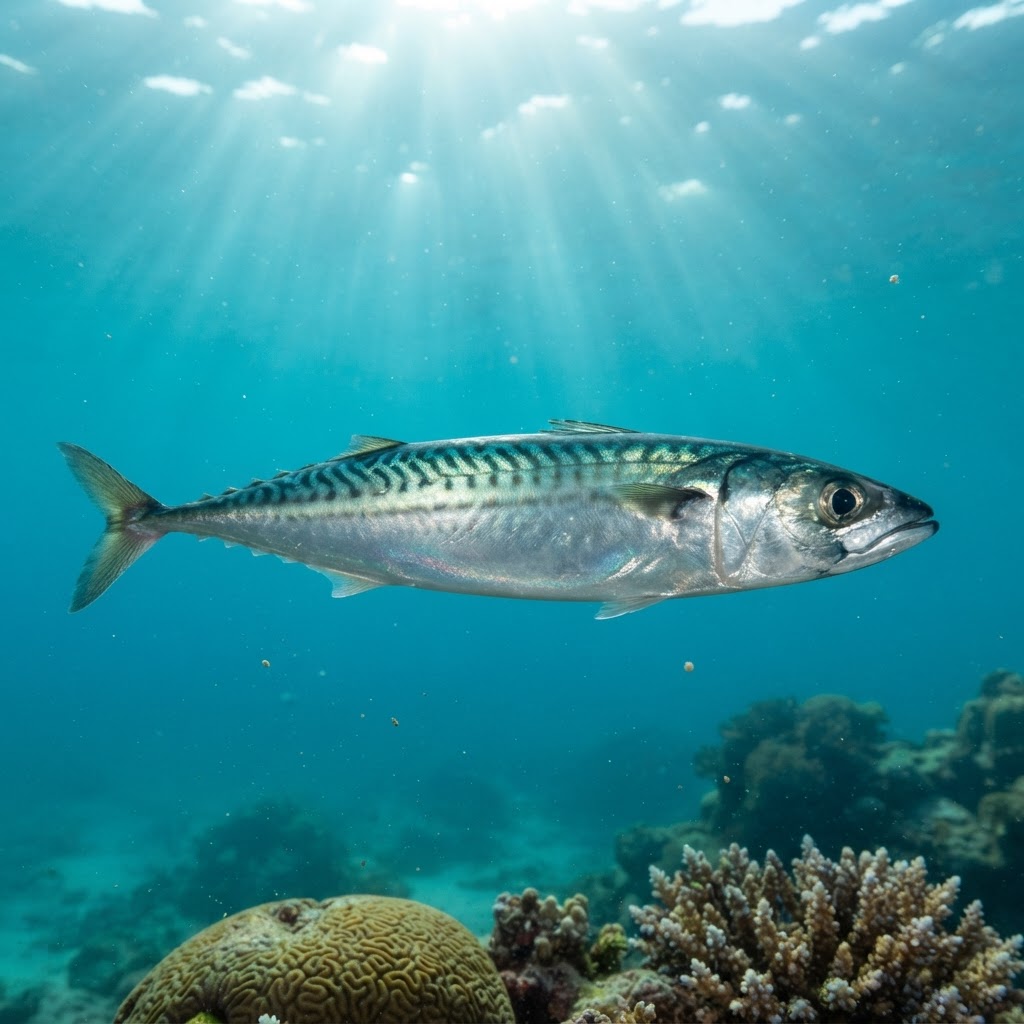
A slender, torpedo-shaped fish around 31 cm long, with a metallic blue-green back marked by irregular dark wavy lines and a silver-white belly. There is no single bold spot to key on, so look at the overall shape: a small mouth, a deeply forked tail, and a row of small finlets running along the back toward the tail. It usually shows up as a tight, fast-moving school rather than a lone fish, which is often the biggest identification clue.
Divers who cross paths with this species usually see it mid-water in loose to tight schools, moving quickly and with purpose rather than hanging around a reef feature. It tends to keep its distance from divers, showing typical baitfish wariness, and is more often glimpsed passing by in open water than found resting near the bottom.
It is a fast, continuous swimmer built for covering open water, which is why divers tend to see it streak past in schools rather than find it holding station on a reef.
There isn't enough logged data yet to pin down a season, and the wide observed temperature range (10.8 to 24.3 C) suggests it can show up across a broad chunk of the year rather than in one short window.
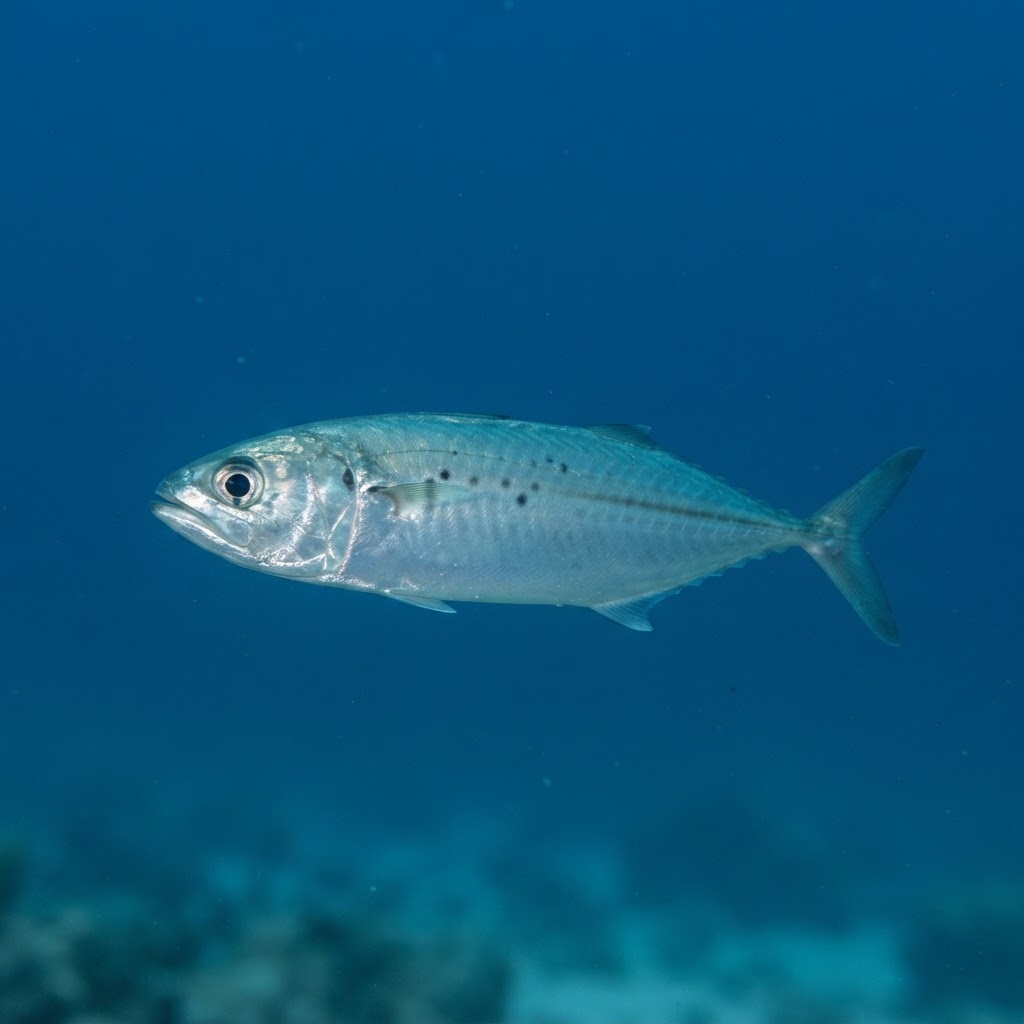
Reef neighbours a diver could mistake it for. Use the identification notes above to tell them apart.
Sighting data for this species is currently too thin to name specific dive sites or regions with confidence. It is a wide-ranging schooling fish of temperate and subtropical coastal waters, so where it does turn up, it tends to appear over open reef edges and mid-water rather than tucked into structure.
Mapping where Blue Mackerel is logged…
Look for a slim, silver-blue fish around 31 cm with dark wavy lines along its back and a deeply forked tail, usually moving fast in a school rather than alone.
They average around 31 cm, a size that keeps them fast and manoeuvrable as school-forming baitfish.
There isn't enough logged sighting data yet to identify a clear season, and its wide temperature tolerance (10.8 to 24.3 C) means it likely turns up across much of the year rather than in one narrow window.
No, they pose no danger to divers. They're a fast-swimming schooling fish that typically keeps its distance rather than approaching.
Site and sighting data is aggregated from diver logs, iNaturalist and GBIF. For taxonomy and conservation status:
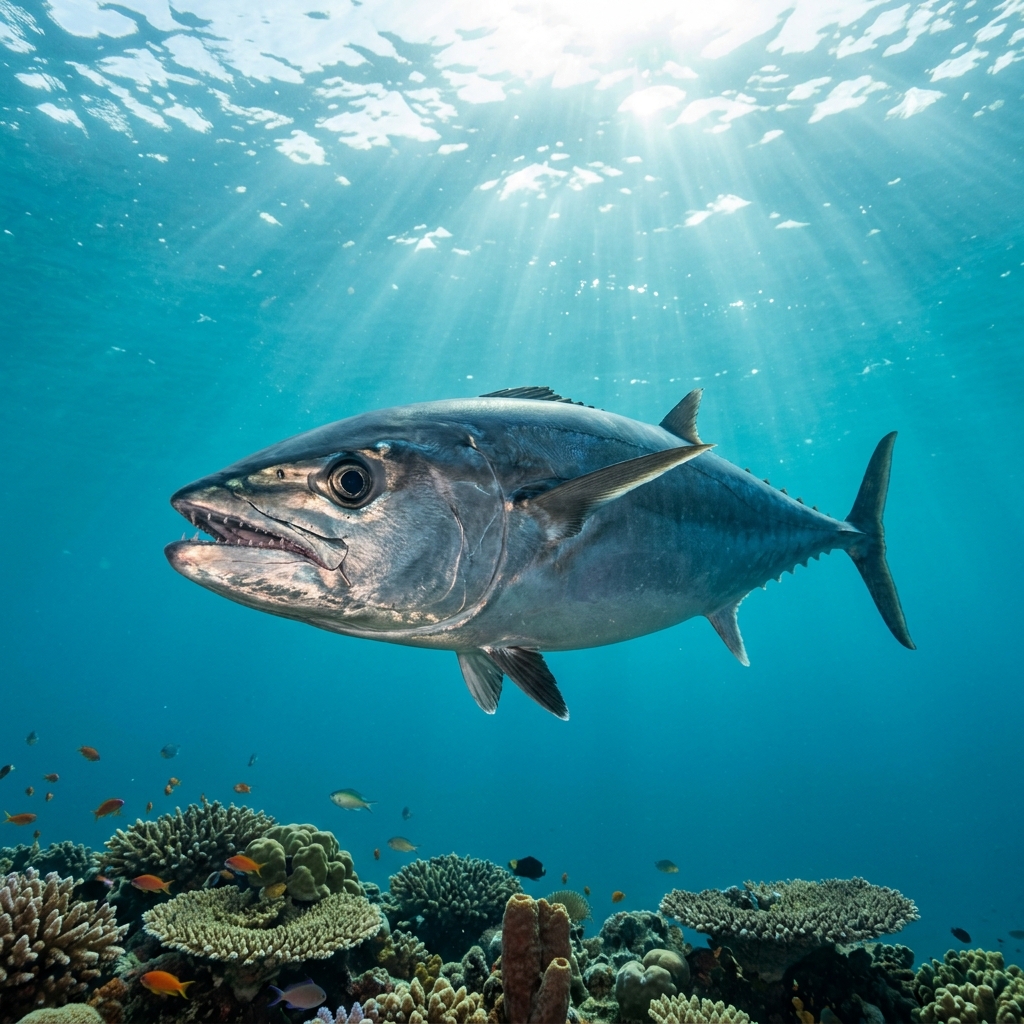
Dogtooth Tuna
629 sites