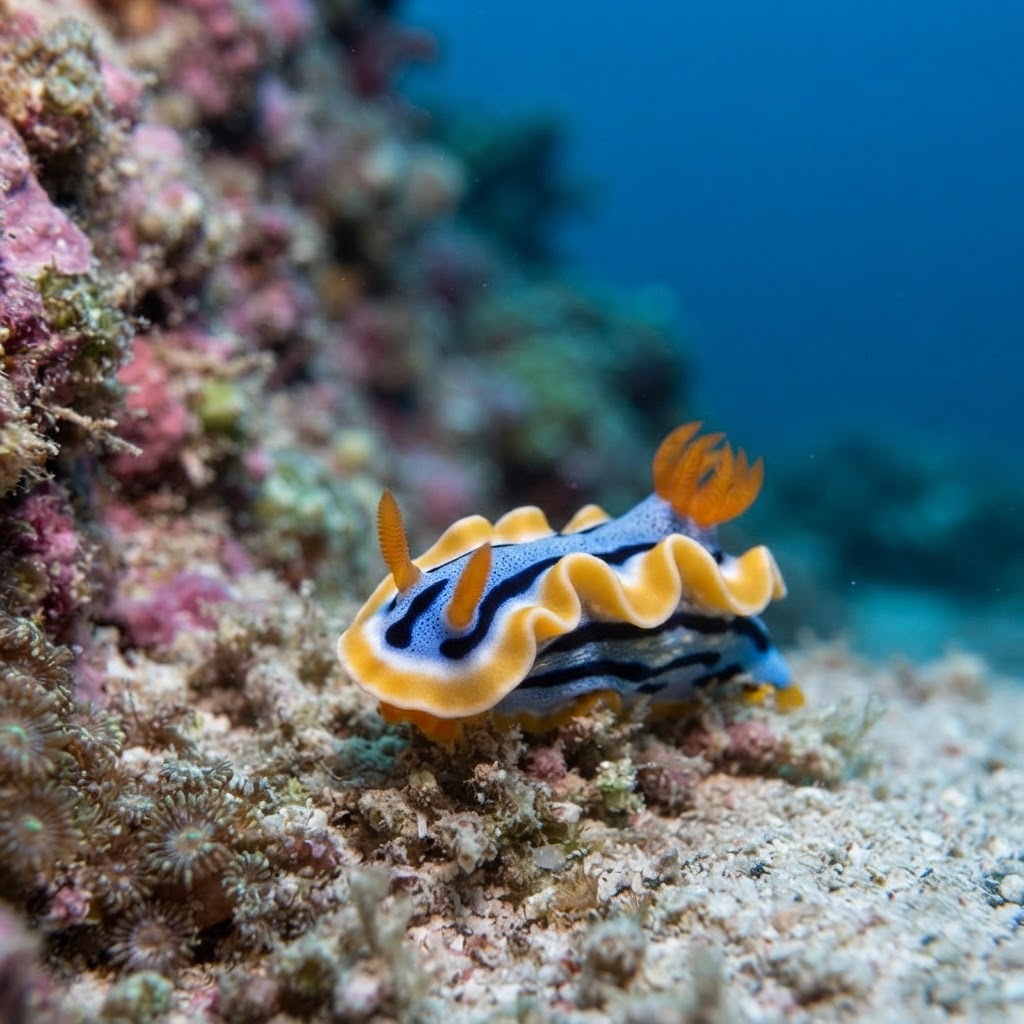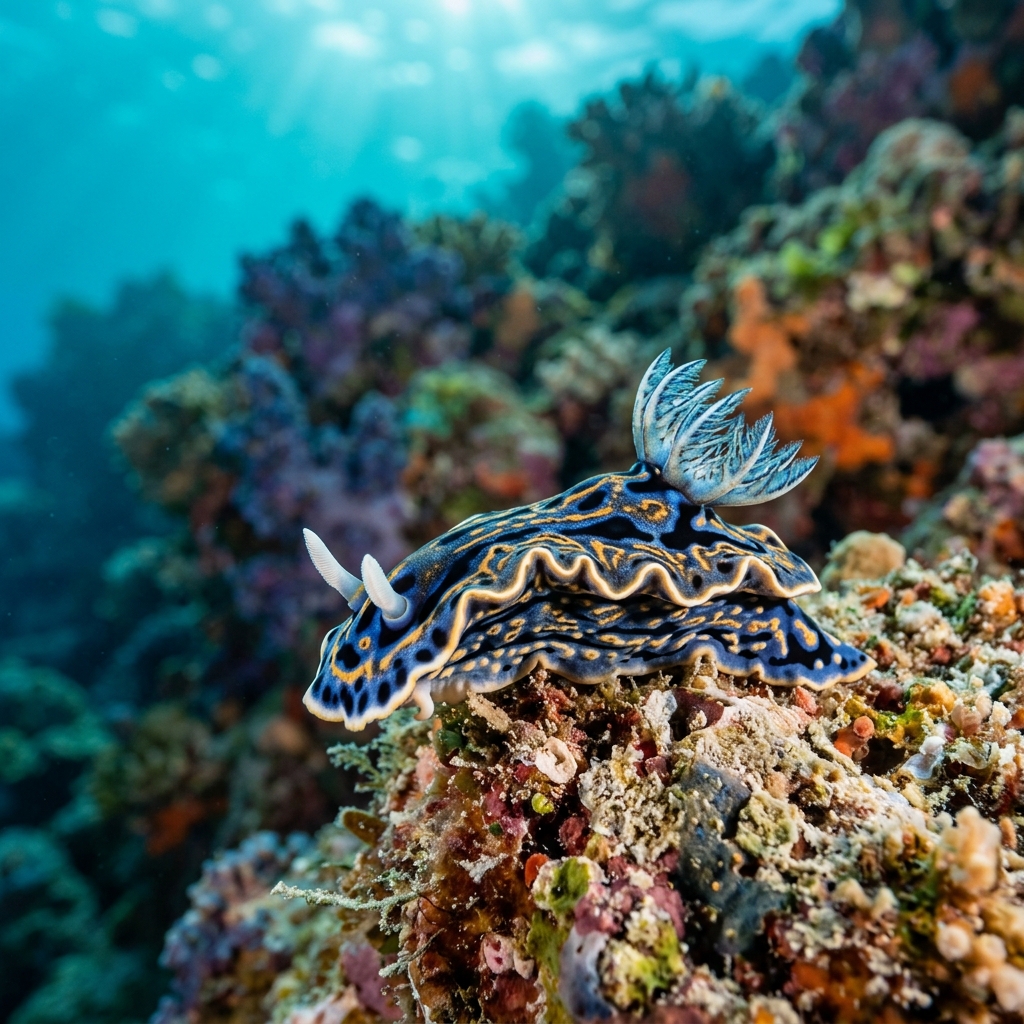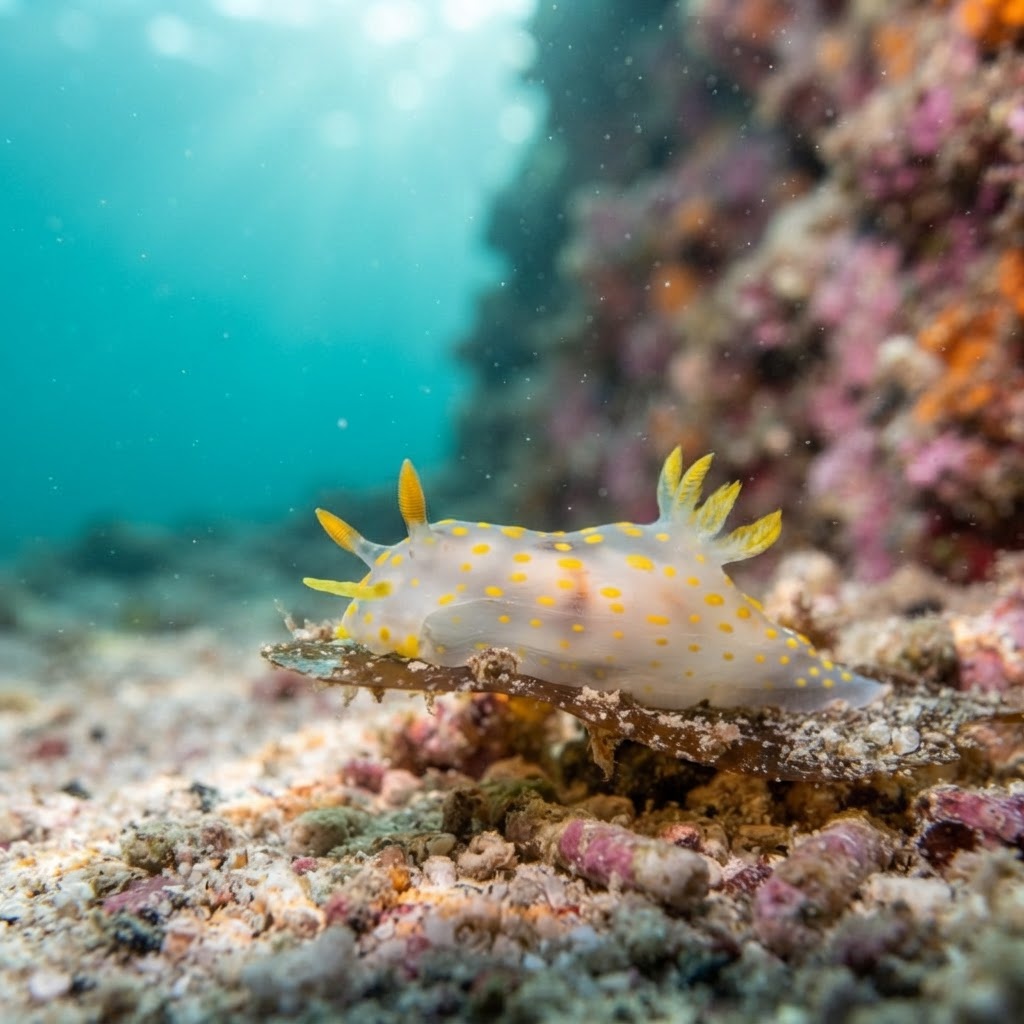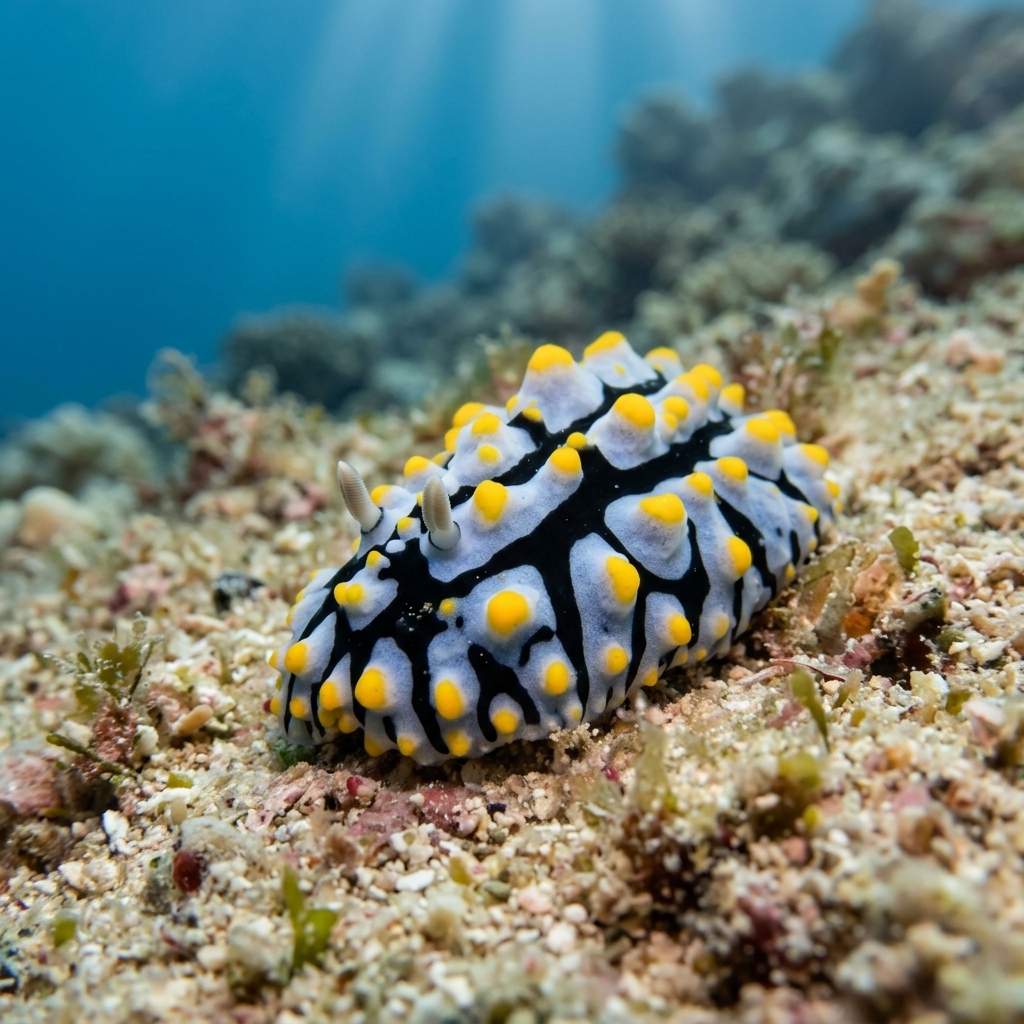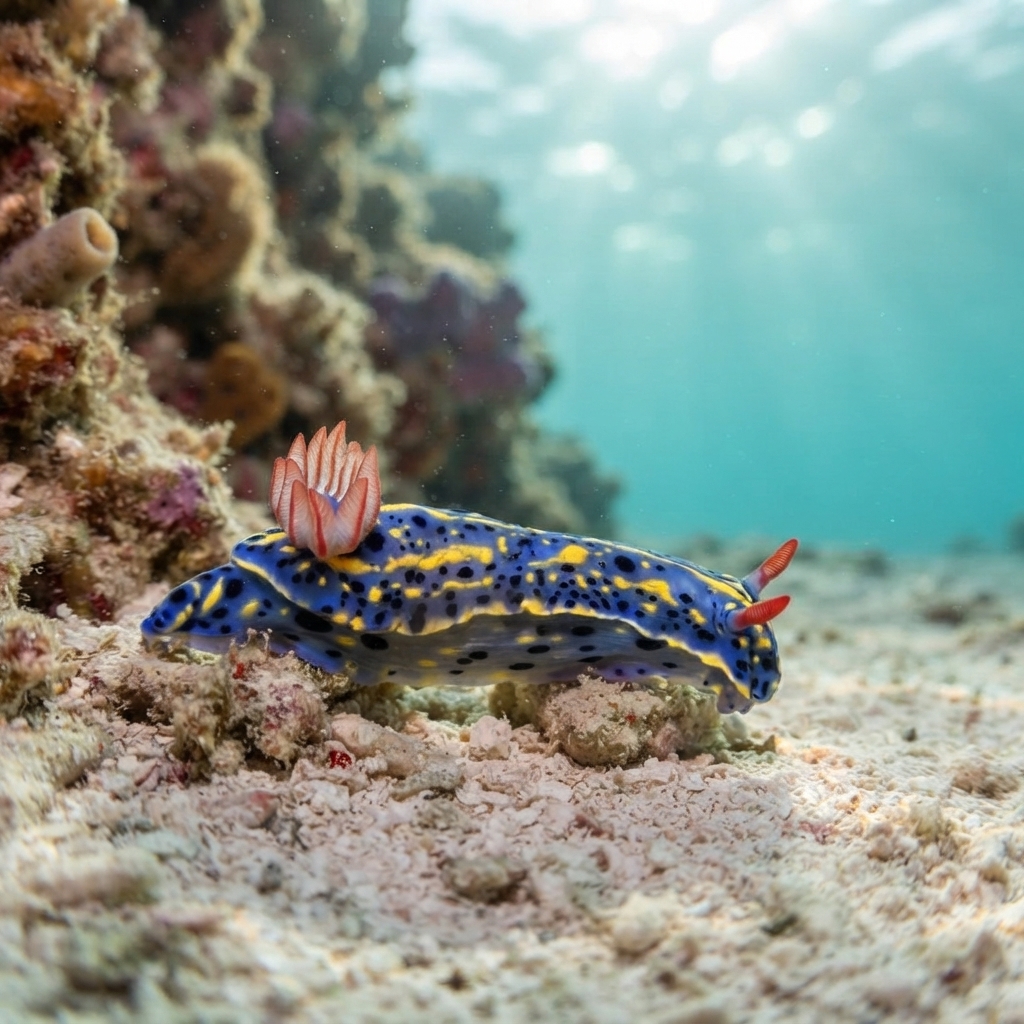
Hypselodoris festiva
Look for this violet-blue nudibranch on rocky reefs around Sai Kung, Hong Kong and Central Japan, in mild 20-26C water year-round.
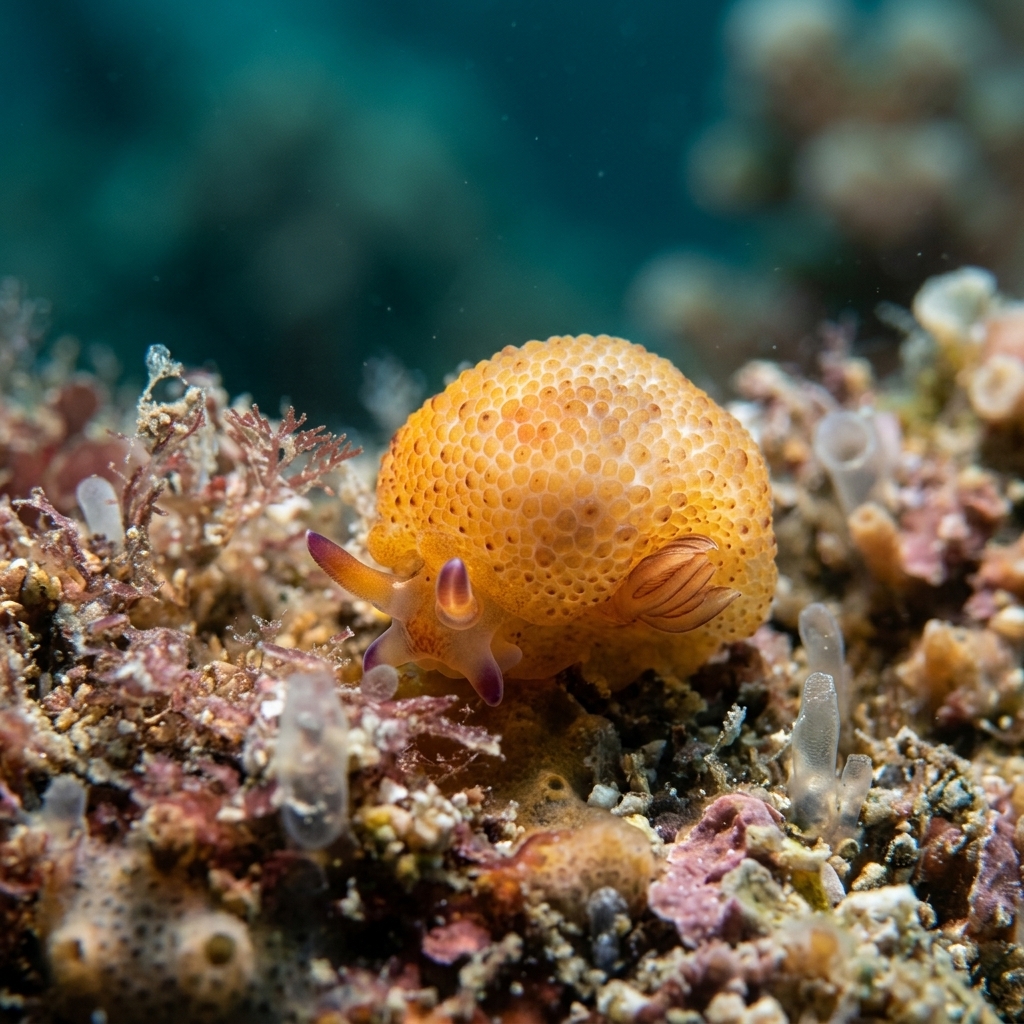
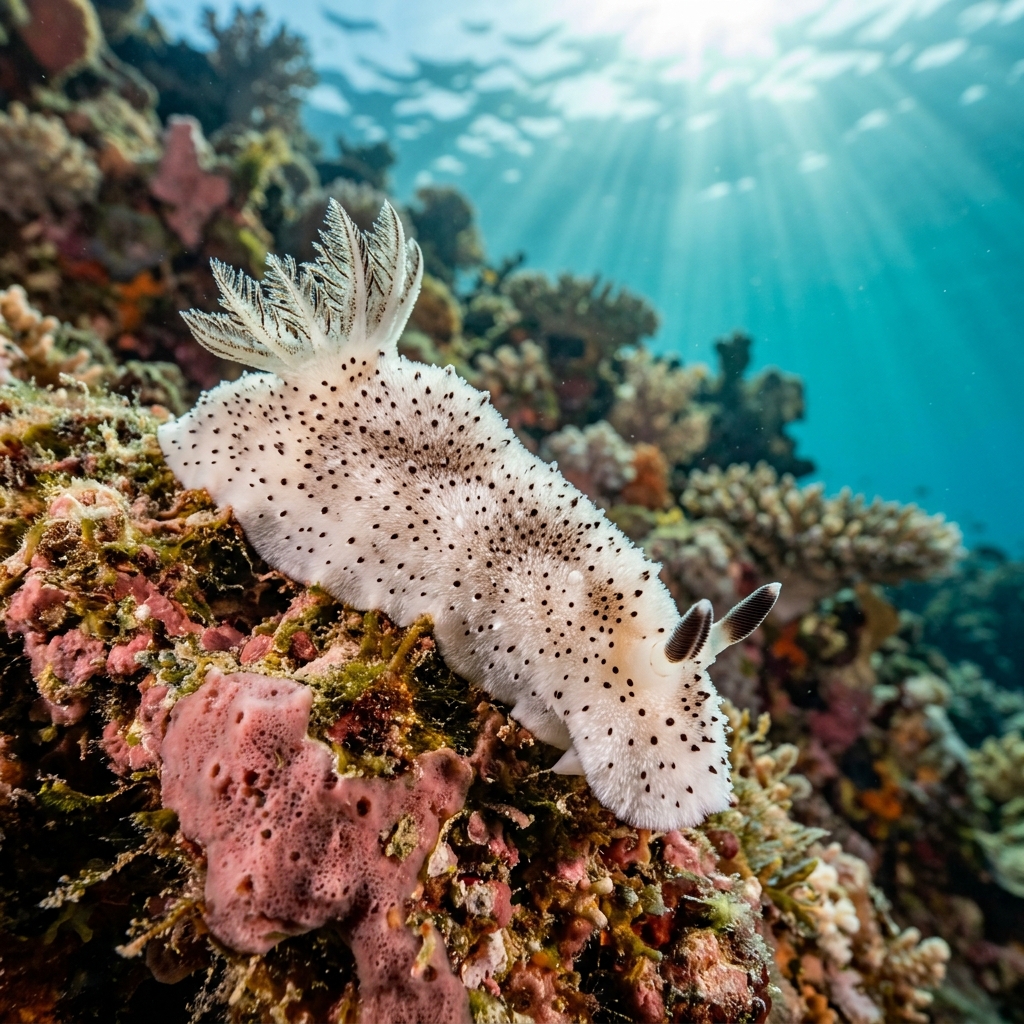
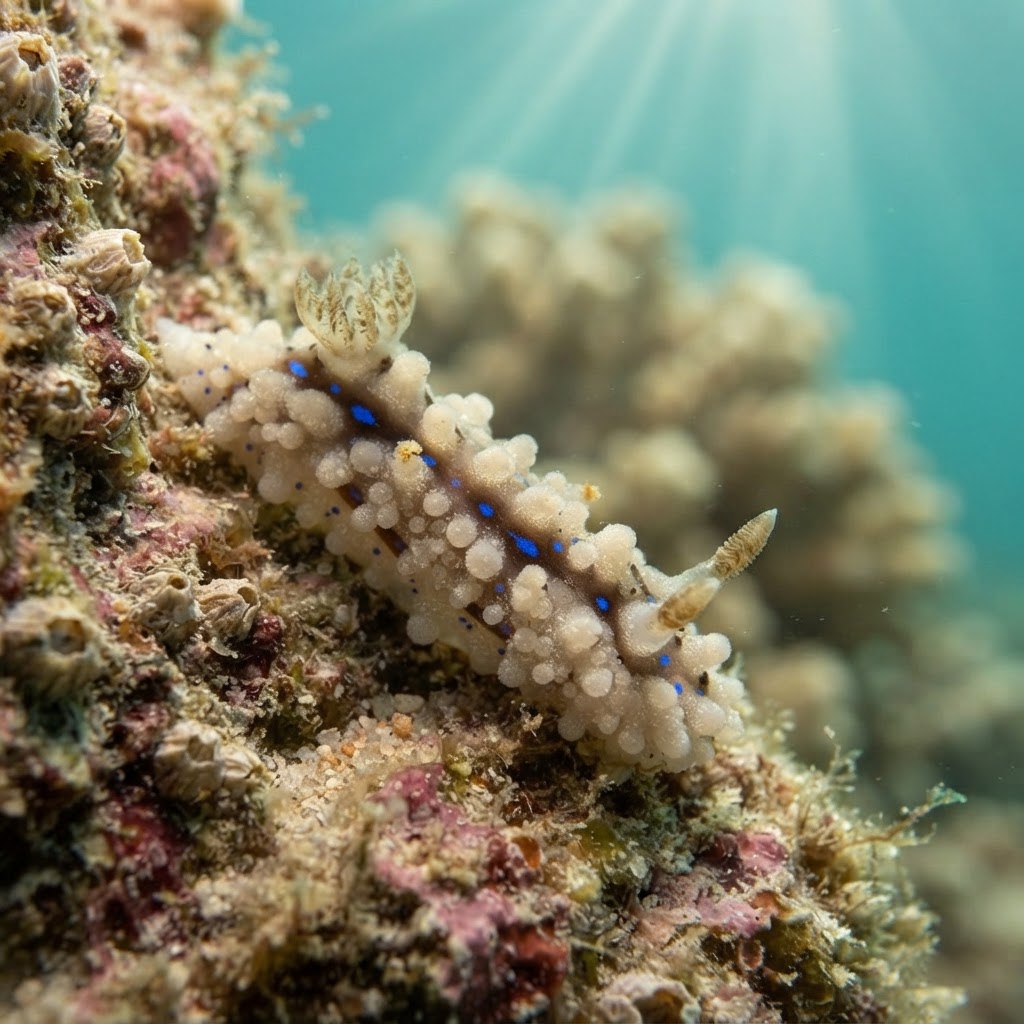
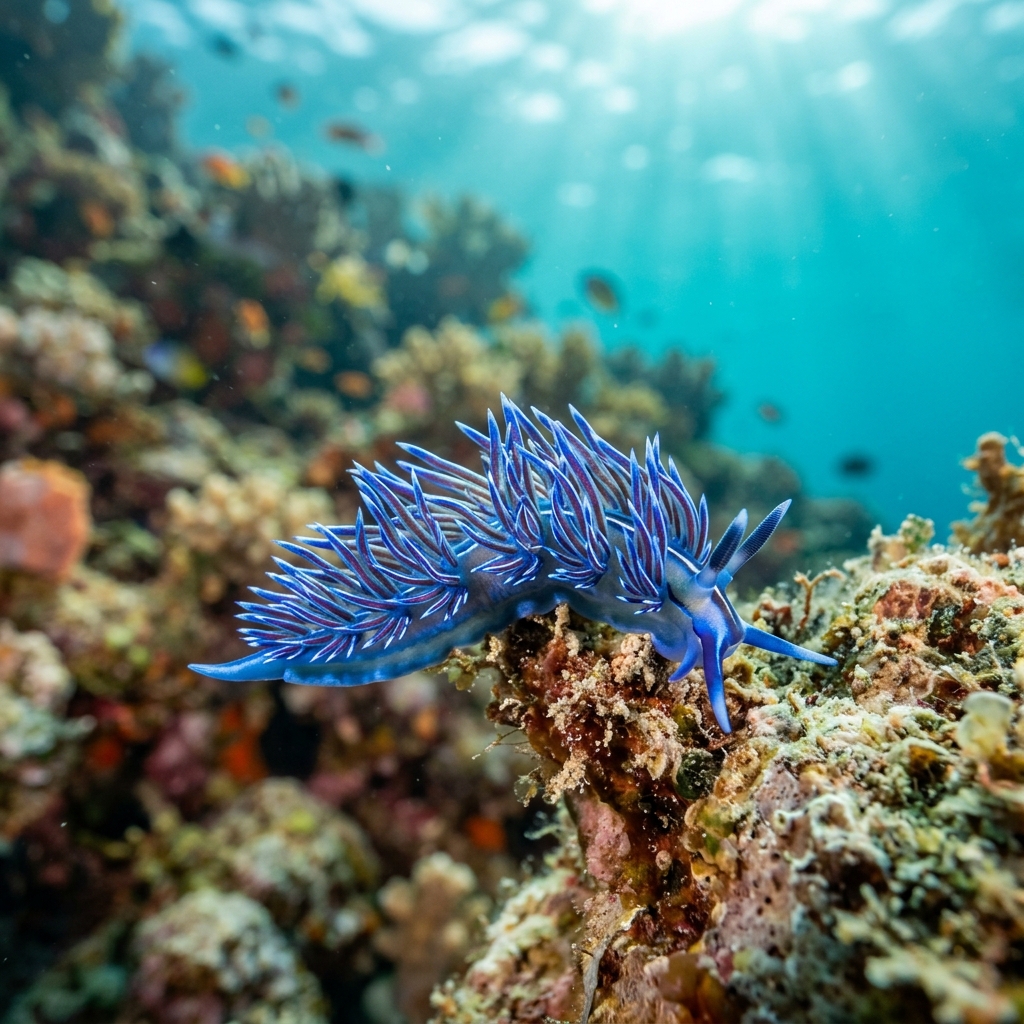
A small, slug-shaped nudibranch with a smooth violet-to-blue mantle running lengthwise with darker blue or purplish lines and specks along its back. It moves slowly across rock and rubble, rarely more than a few centimetres long, with a pair of ridged rhinophores (sensory horns) up front and a cluster of feathery gills near the tail. There's no strong colour break between juveniles and adults reported, so size and the lined blue mantle are your main cues.
Divers typically spot it grazing slowly over rock, rubble and encrusting growth, often tucked into cracks or low-light corners of the reef rather than out in the open. It shows no reaction to divers beyond its usual unhurried pace, since it has no eyes for detecting you and relies on chemical defences rather than fleeing. Most logs describe single individuals rather than groups, so a sighting tends to be a one-off spot-the-slug moment rather than a gathering.
Like other dorid nudibranchs, it likely feeds on sponges and stores or modifies the sponge's chemical compounds in its own tissue as a defence, which is part of why its bright colour advertises rather than hides it.
No clear seasonal pattern shows up in the sighting data, so treat it as a year-round find. Its comfort range of roughly 20 to 26C spans the warmer months at these temperate sites, which likely explains the steady, if uncommon, sightings across the calendar.
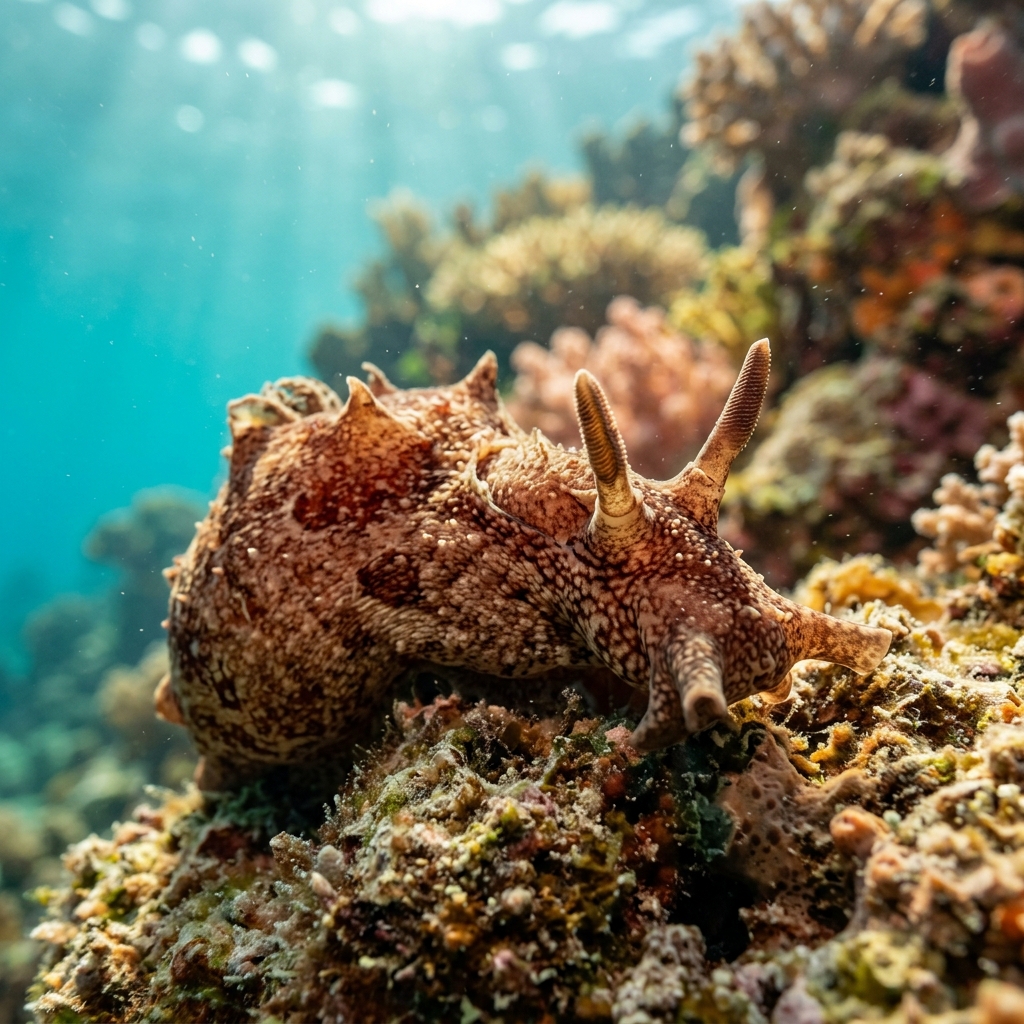
Reef neighbours a diver could mistake it for. Use the identification notes above to tell them apart.
Most reliably found on temperate reef sites in Central Japan, where it turns up across a wide spread of dive sites, and it's also a steady find around Sai Kung in Hong Kong. Western Japan sites add a smaller but consistent presence, making Japan overall the strongest bet for a sighting.
Mapping where Blue Dorid Nudibranch is logged…
Central Japan is the strongest region for sightings, with Sai Kung in Hong Kong also a reliable spot. Western Japan turns up occasional finds too, making Japan overall the best bet.
There's no detected season, so it's logged year-round. Water temperatures at its sites run from about 20 to 26C, comfortably within its observed range across the seasons.
Look for a small, smooth-bodied slug with a violet-blue mantle marked by darker longitudinal lines, moving slowly over rock or rubble. Check for the paired rhinophores at the front and gill tuft at the rear, typical of dorid nudibranchs.
Exact size data isn't confirmed for this species, but like most Hypselodoris nudibranchs it stays small, generally a few centimetres in length when seen on the reef.
No. It poses no threat to divers and can be safely observed and photographed without disturbing it, though you should still avoid touching any nudibranch.
Most divers who find one describe it as uncommon rather than common, with a smaller number of sites reporting it as rare. A couple of sites do log it more consistently, so patience and slow, careful reef scanning pay off.
Site and sighting data is aggregated from diver logs, iNaturalist and GBIF. For taxonomy and conservation status:
Light-spotted Aegires
3,168 sites