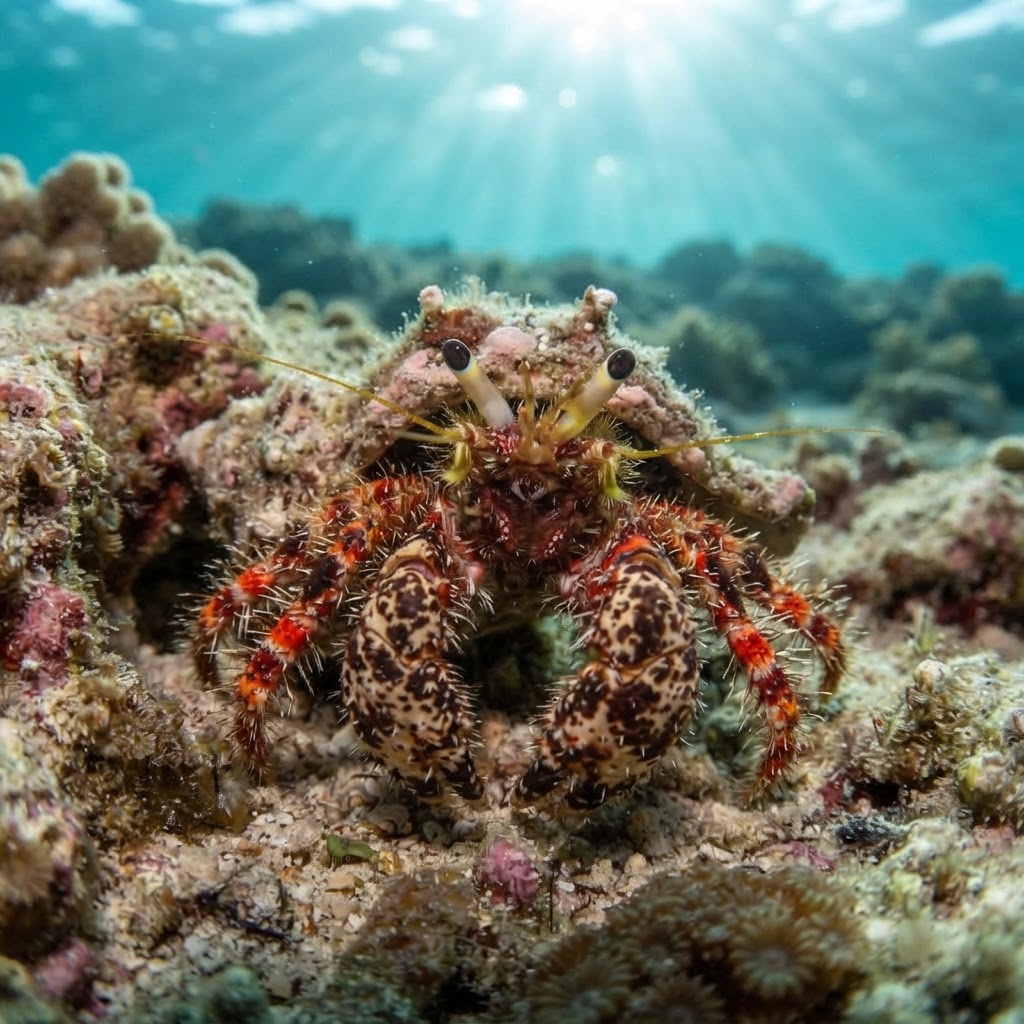
Dardanus sanguinocarpus
Find the deep-red claws of the Bloody Hermit Crab tucked in Hawaii's reefs, an uncommon find in water around 22 to 28 C.
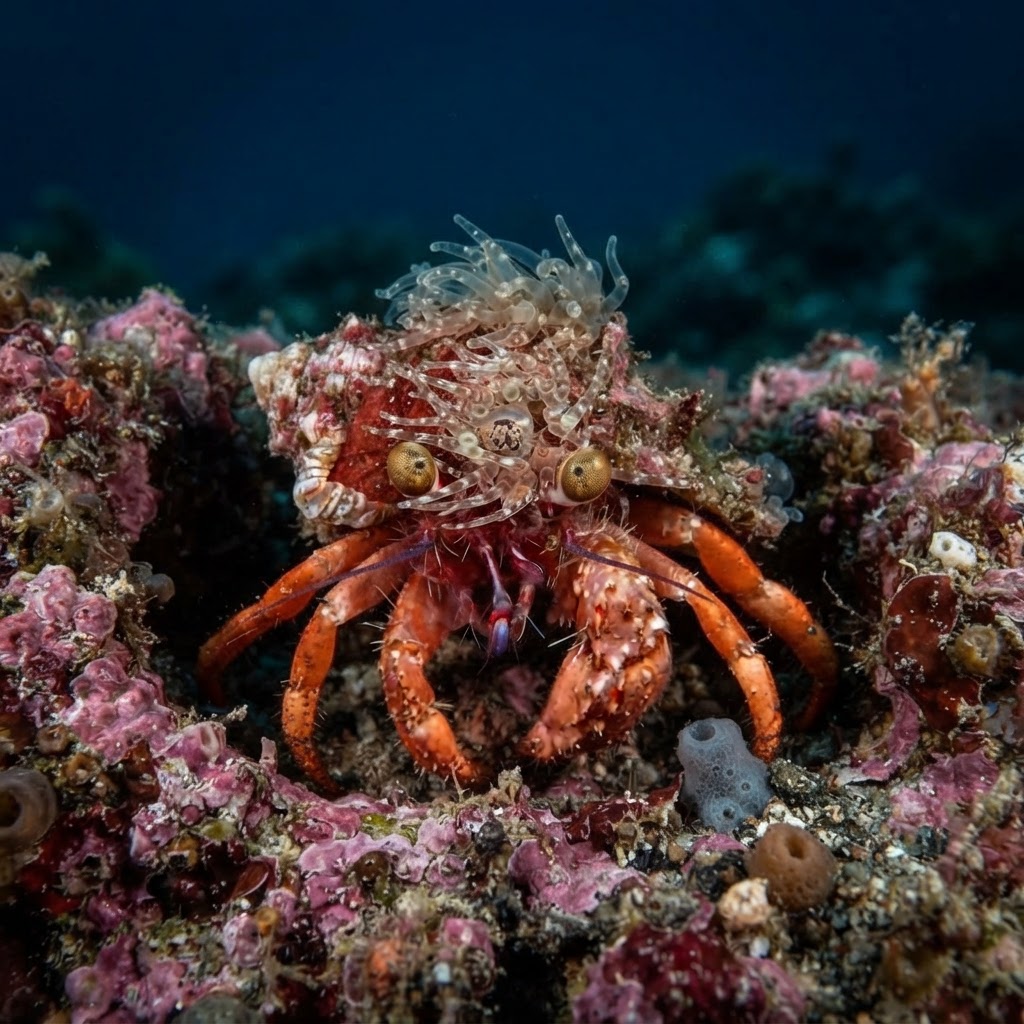
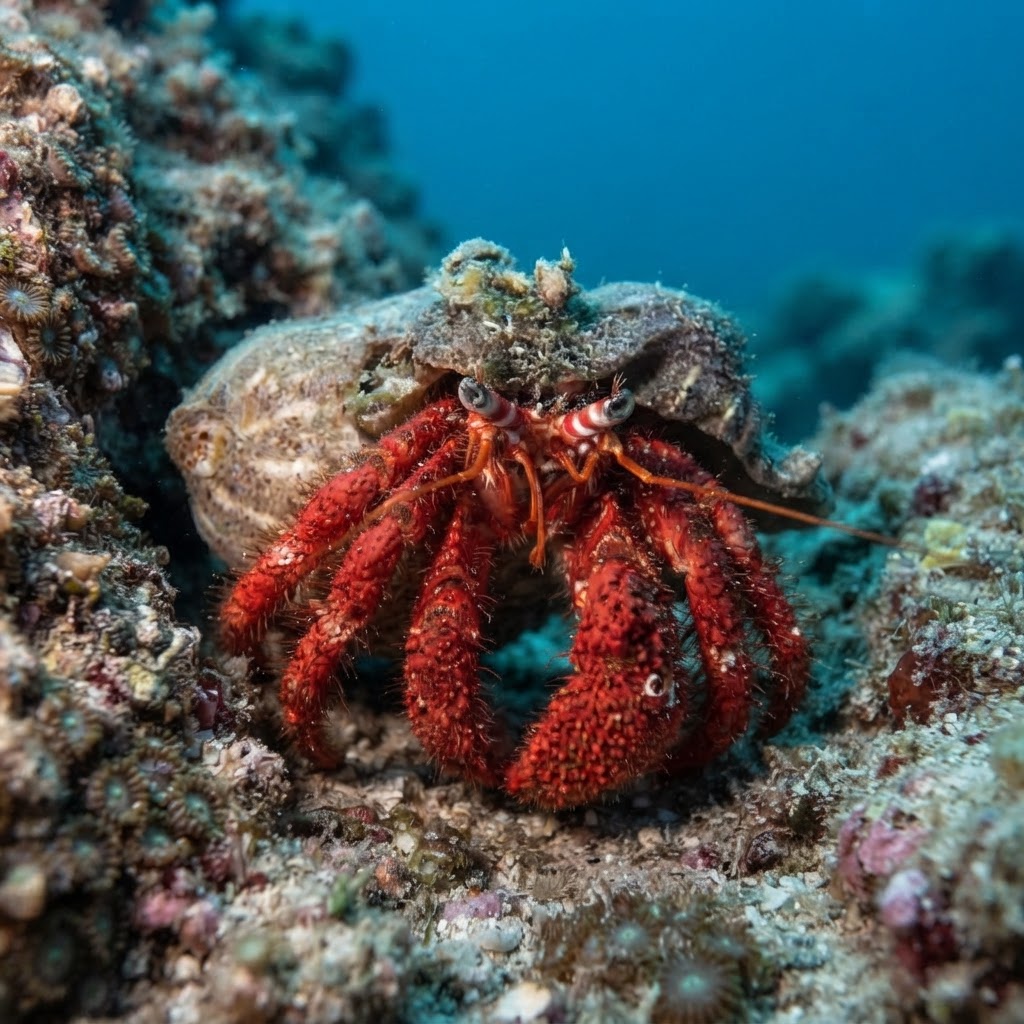
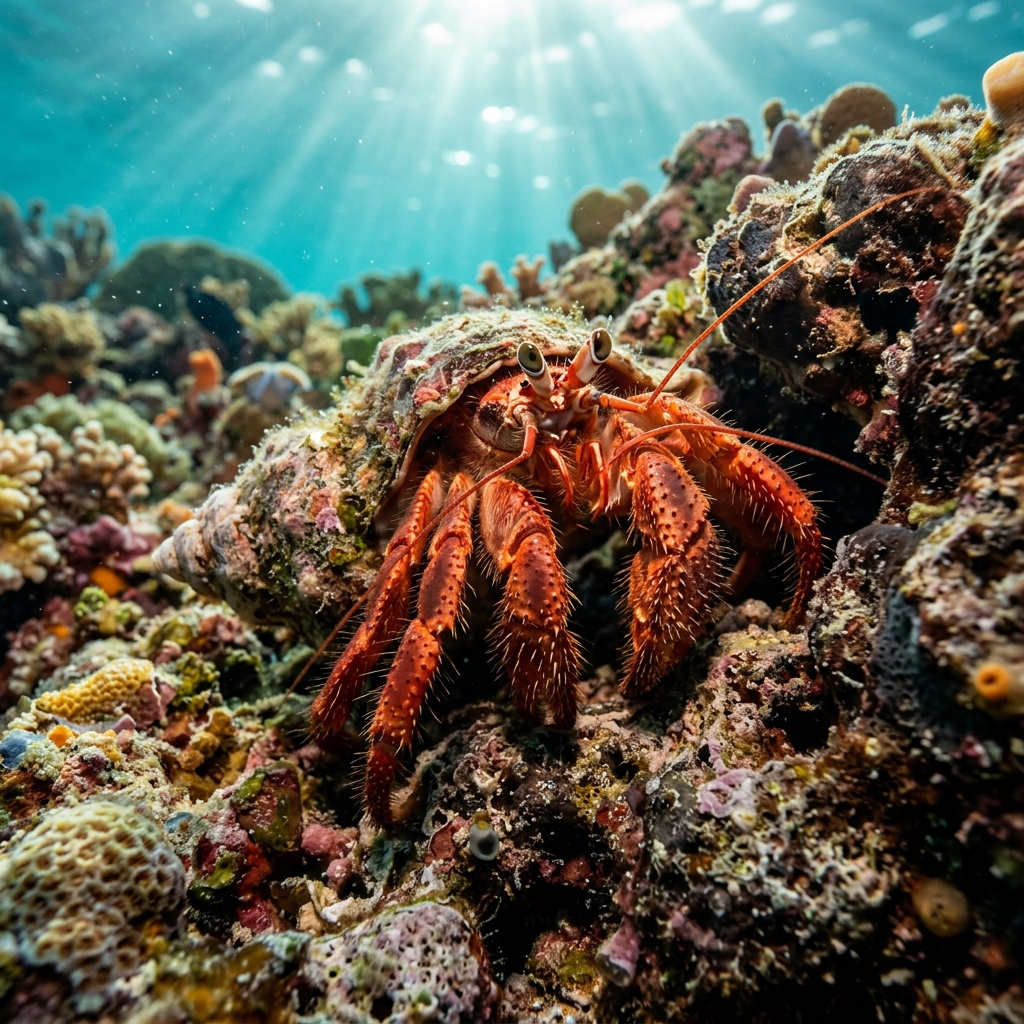
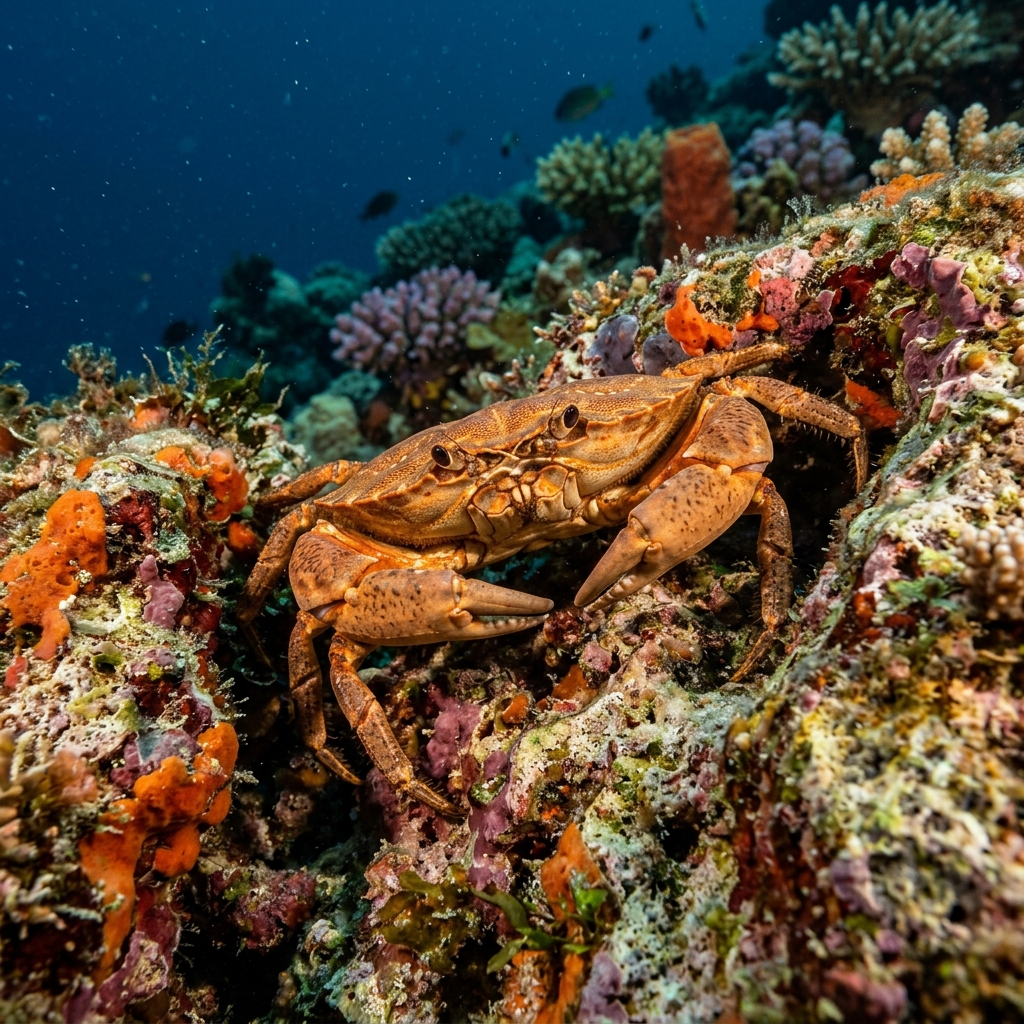
Look for a hermit crab hauling a borrowed snail shell, with legs and claws showing deep red to blood-coloured mottling that gives this species its name against a paler body. The claws are noticeably asymmetric, one larger than the other, typical of hermit crabs, and the walking legs often carry faint banding. Size in the water reads small to medium, easy to miss unless you are scanning rubble and crevices closely.
Divers find it moving slowly over rubble and reef crevices, doing the usual hermit crab business of scavenging along the bottom rather than swimming or darting for cover. It tends to retreat into its shell if a diver gets too close or casts a shadow over it, so a slow approach and a bit of patience pays off. Expect to find it low on the reef structure rather than out in open water.
Like other hermit crabs, it does not grow its own shell but instead squats in an empty gastropod shell and moves house to a bigger one as it grows, so the shell you see is a recycled home rather than part of the animal itself.
No clear seasonal pattern shows up in the sighting data, and the observed temperature range of 22.4 to 28.4 C matches Hawaii's reefs year-round, so there is no strong reason to time a trip around a particular month.
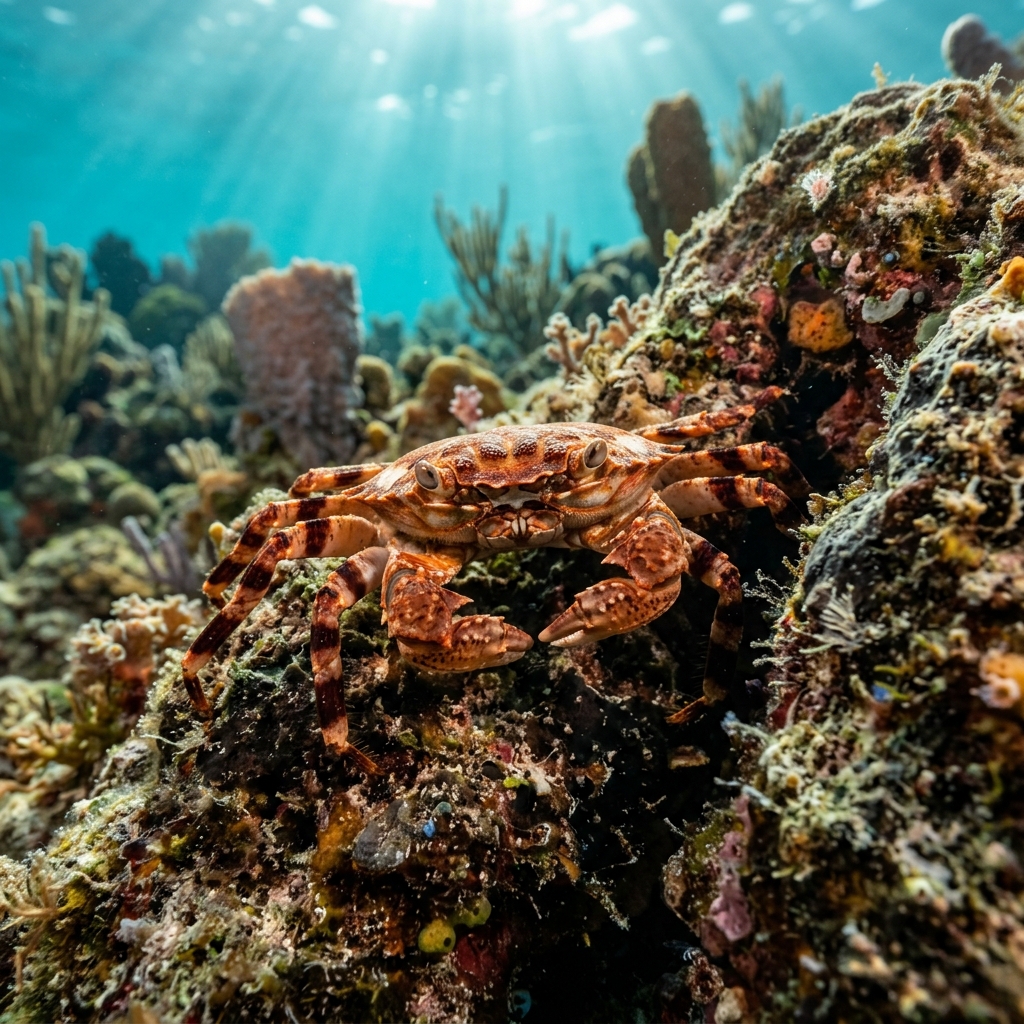
Reef neighbours a diver could mistake it for. Use the identification notes above to tell them apart.
Currently logged only from Hawaii in the United States, making it a Hawaii speciality for divers chasing this species specifically. With just a couple of confirmed sites so far, it is worth treating any sighting there as a real find rather than an expected reef fixture.
Mapping where Bloody Hermit Crab is logged…
The only confirmed sightings so far come from Hawaii in the United States, so it is currently a Hawaii-specific find for divers looking to tick this species off.
There is no detected seasonal pattern, and the water temperature it is found in, roughly 22 to 28 C, holds steady on Hawaiian reefs most of the year, so sightings are essentially a year-round possibility.
Check for red to blood-mottled claws and legs on a hermit crab carrying a borrowed shell, with one claw distinctly larger than the other. It is small to medium in size and usually tucked into rubble or crevices rather than out in the open.
Sighting frequency is logged as uncommon at the sites where it has been recorded, so spotting one is a bit of a bonus rather than a given on any single dive.
No, they pose no danger to divers. Like most hermit crabs, the worst you will get is a quick retreat into the shell if you get too close.
Site and sighting data is aggregated from diver logs, iNaturalist and GBIF. For taxonomy and conservation status:
European Green Crab
2,469 sites