Haminoea vesicula
A rare, pea-sized bubble snail logged in British Columbia's cold, kelpy shallows year-round, easy to miss if you don't look closely.
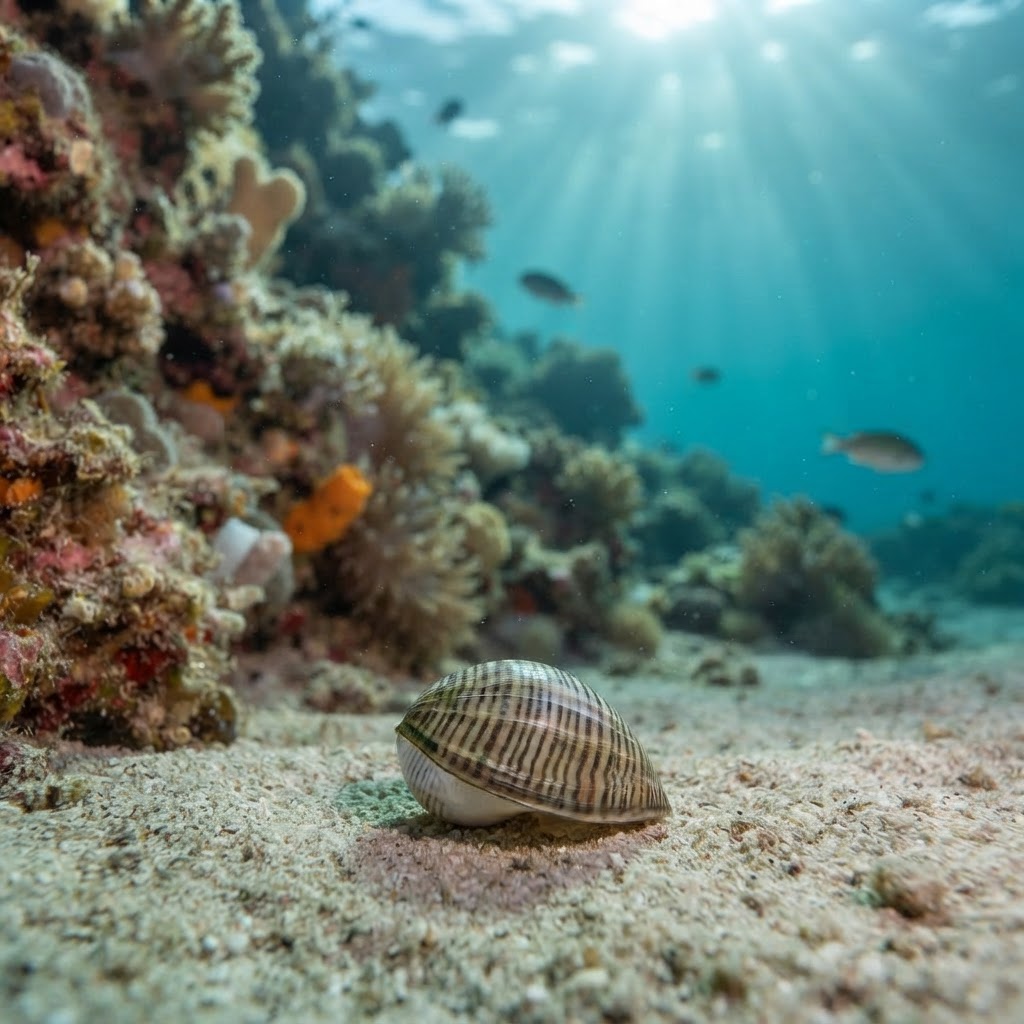
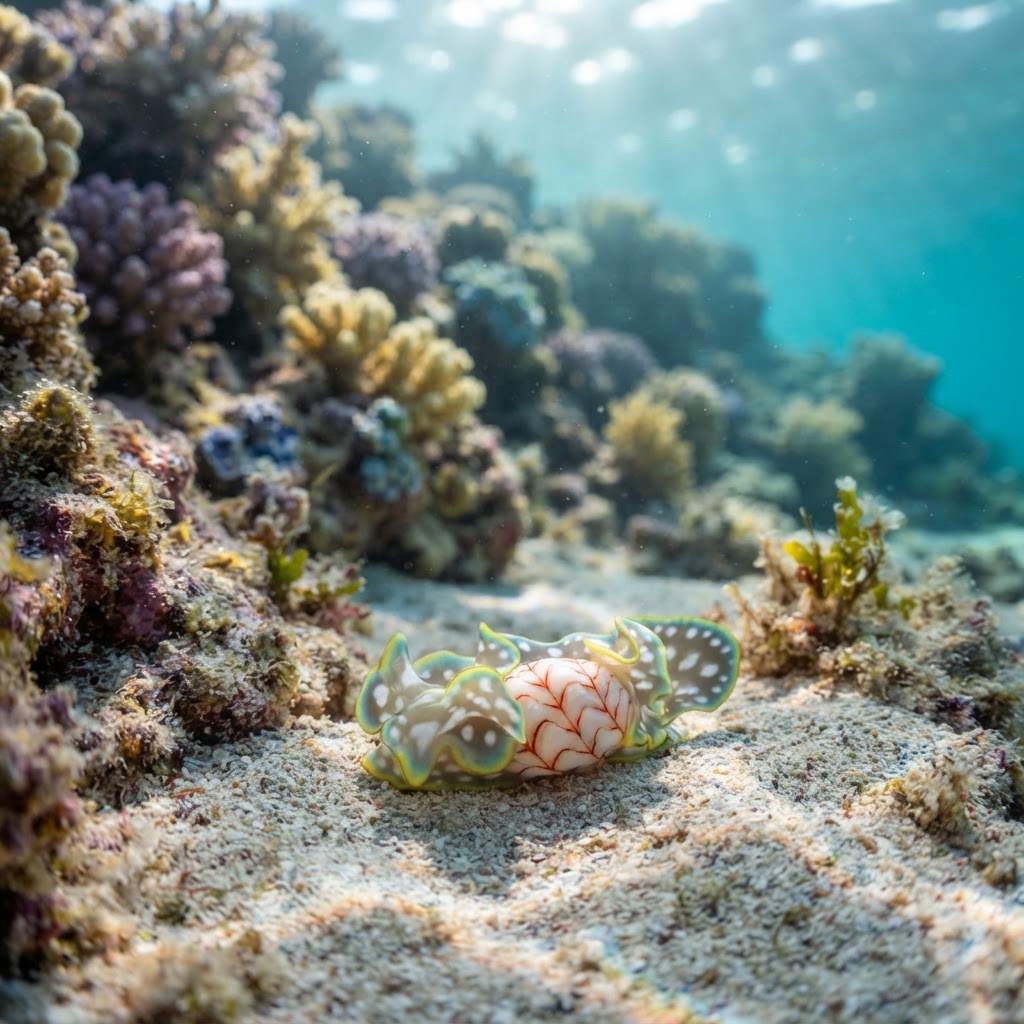
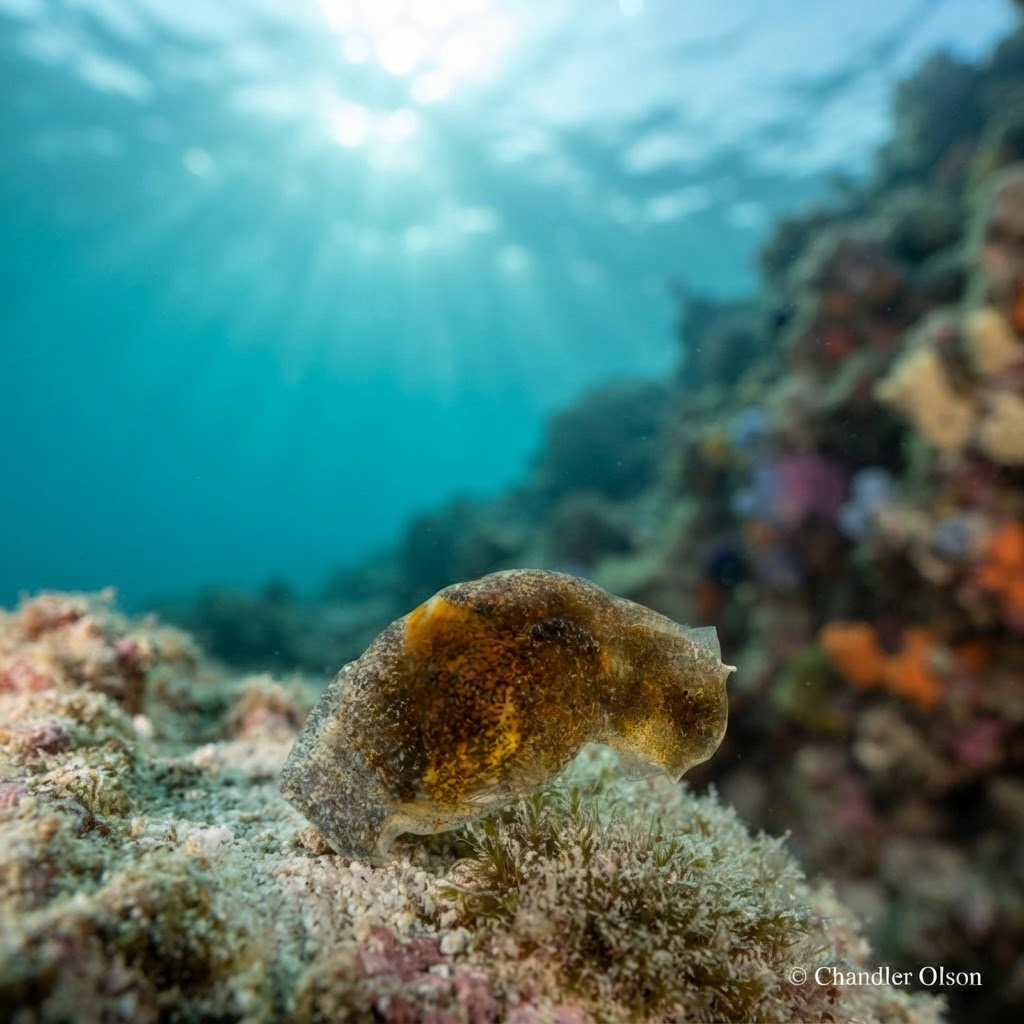
A tiny, thin-shelled sea slug barely a centimetre long, easy to overlook against sand or algae. The shell is translucent and inflated, almost bubble-like, with a mottled brownish or olive body often visible through it. Look for the smooth, glassy, balloon-shaped shell rather than a coiled snail shape, and check silty patches or eelgrass edges where it tends to sit still.
Divers find it sitting quietly on sand, silt, or low algae, moving slowly if at all, and showing no reaction to a diver's presence or light. It's the kind of animal you spot only by scanning the substrate closely rather than swimming past, often near eelgrass beds or sheltered bottom in shallow, cool water. Most logs describe single individuals rather than groups.
Like other bubble shells, it uses that thin, glassy shell more as a soft shield than armour, relying on being small, slow, and easily overlooked rather than defence.
There isn't enough data to show a clear season, so treat sightings as possible year-round. Observed water temperatures span 8.9 to 18.9C, matching the Pacific Northwest's cool water conditions across most of the year.
Reef neighbours a diver could mistake it for. Use the identification notes above to tell them apart.
Most records come from British Columbia, Canada, with additional sightings from Alaska, United States, making the cold-water Pacific Northwest the reliable place to look. Sites in British Columbia account for the bulk of logged encounters, so divers focused on this region have the best odds.
Mapping where Blister Glassy-bubble is logged…
It's most reliably logged in British Columbia, Canada, with further sightings from Alaska, United States. Both are cold-water Pacific Northwest destinations rather than tropical reef sites.
There's no detected seasonal pattern, so sightings are treated as possible year-round. It's been observed in water from about 8.9 to 18.9C, typical of Pacific Northwest conditions most months.
Look for a tiny, thin, glassy shell under a centimetre long with an inflated, bubble-like shape rather than a tight spiral. The body inside is mottled brownish or olive and often visible through the translucent shell, usually found sitting still on sand or low algae.
They're small, reaching around 1cm, so you need to look closely at sand and algae patches to spot one at all.
No, they pose no risk to divers. They're small, slow-moving, and have no means of harming a diver.
Yes, it's logged as rare at most sites where divers have recorded it, with only one site reporting it as uncommon. Finding one is a matter of careful looking rather than a guaranteed sighting.
Site and sighting data is aggregated from diver logs, iNaturalist and GBIF. For taxonomy and conservation status:
Triton Shell
2,297 sites