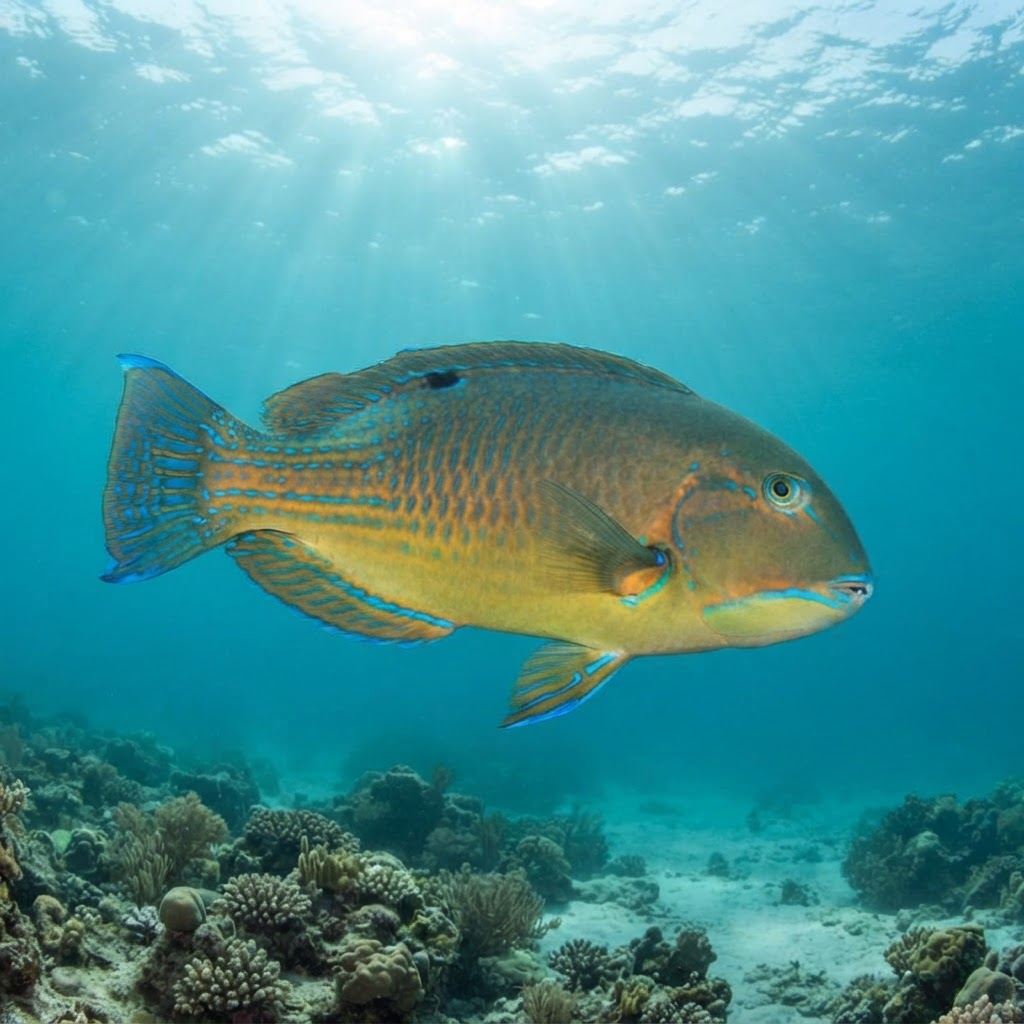
Choerodon schoenleinii
Chunky reef wrasse with a blue-spotted tail, most reliably logged on Queensland reefs in 24.5-29C water, year-round.
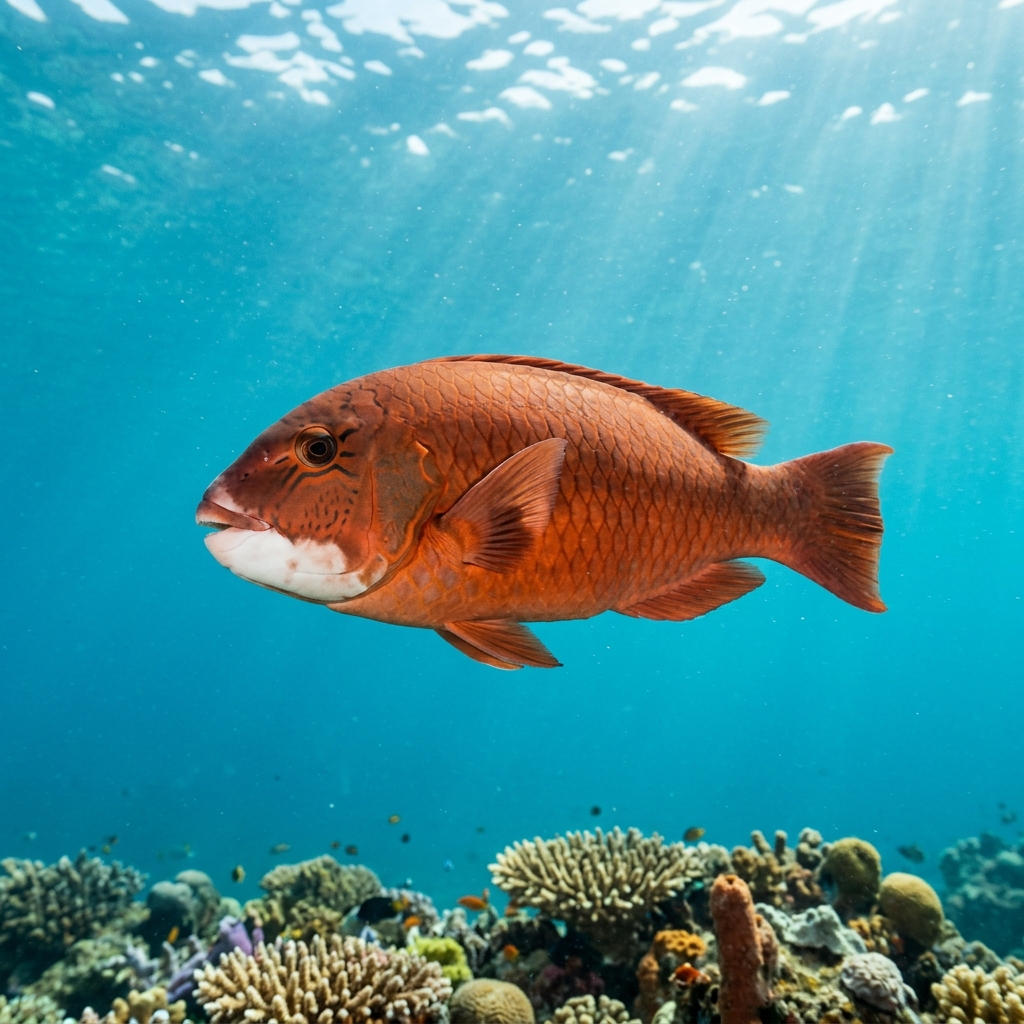
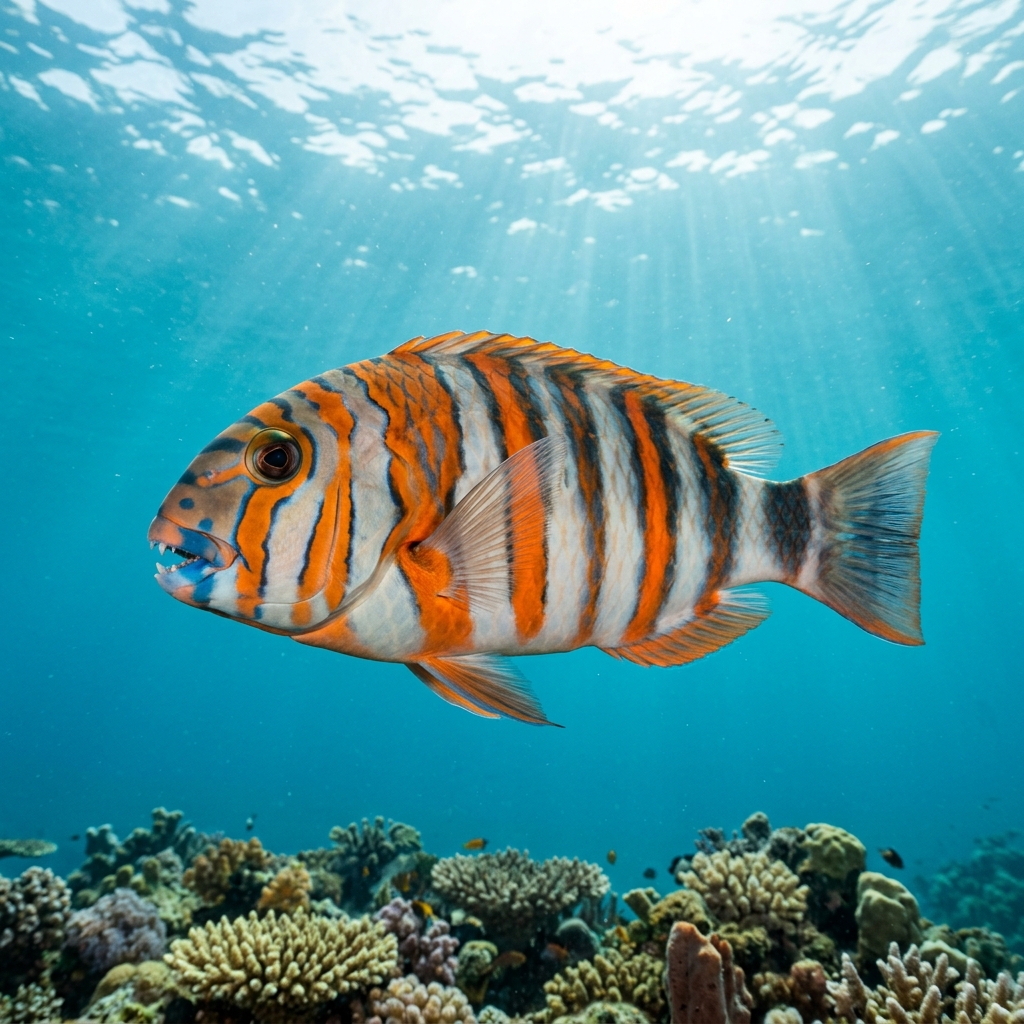
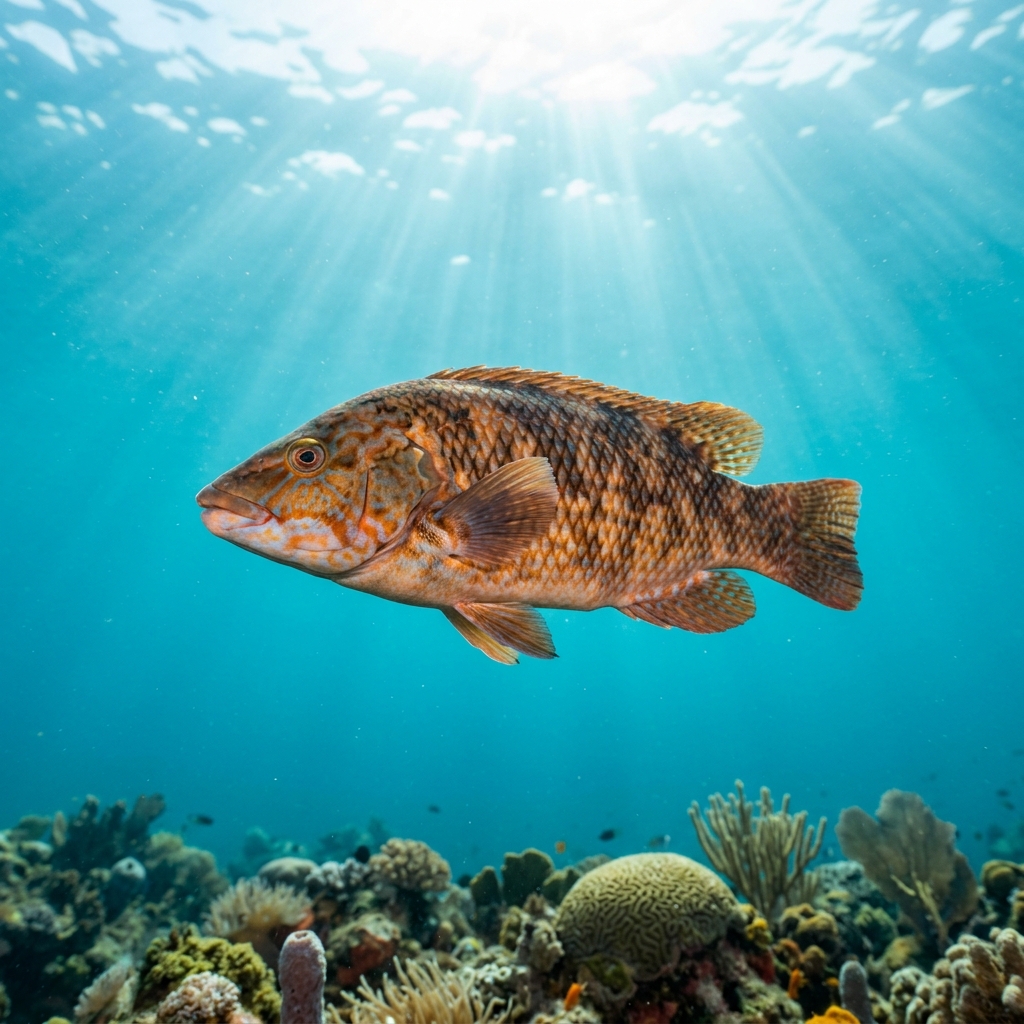
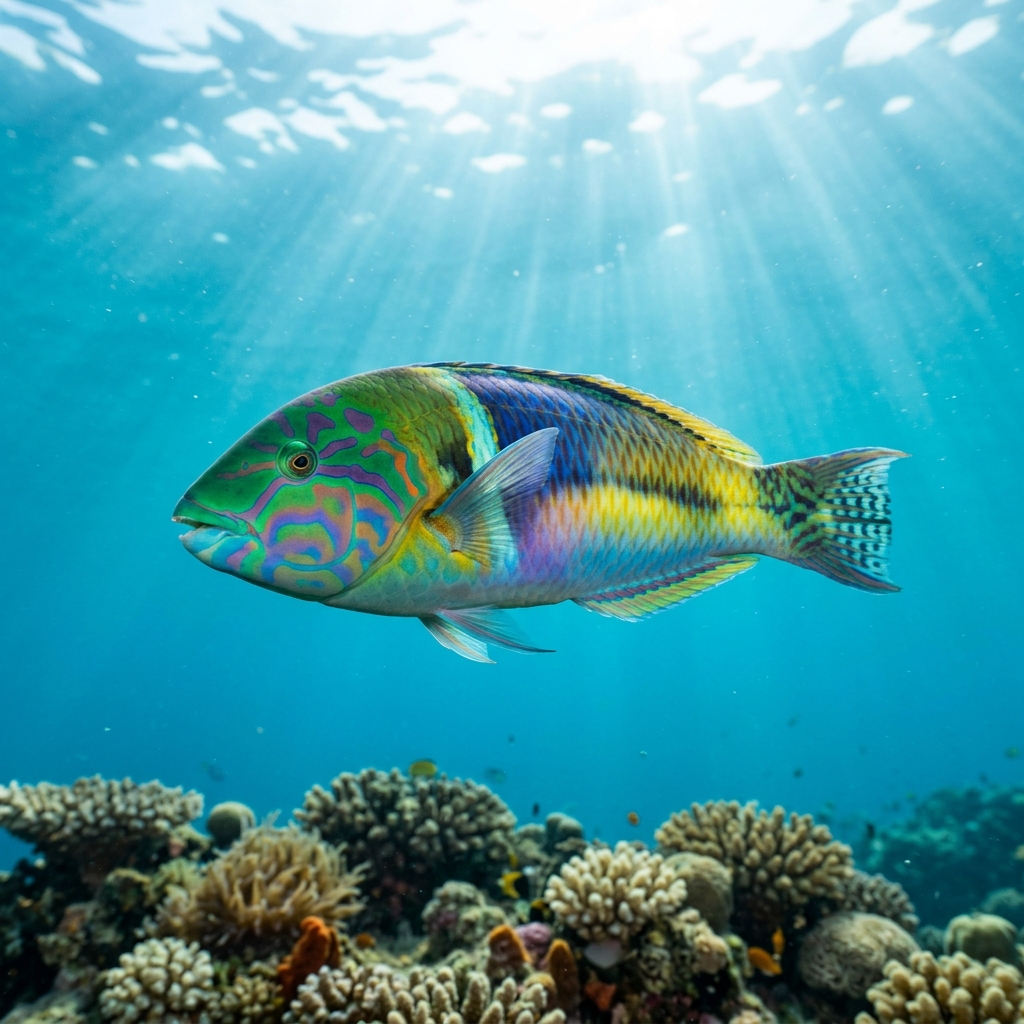
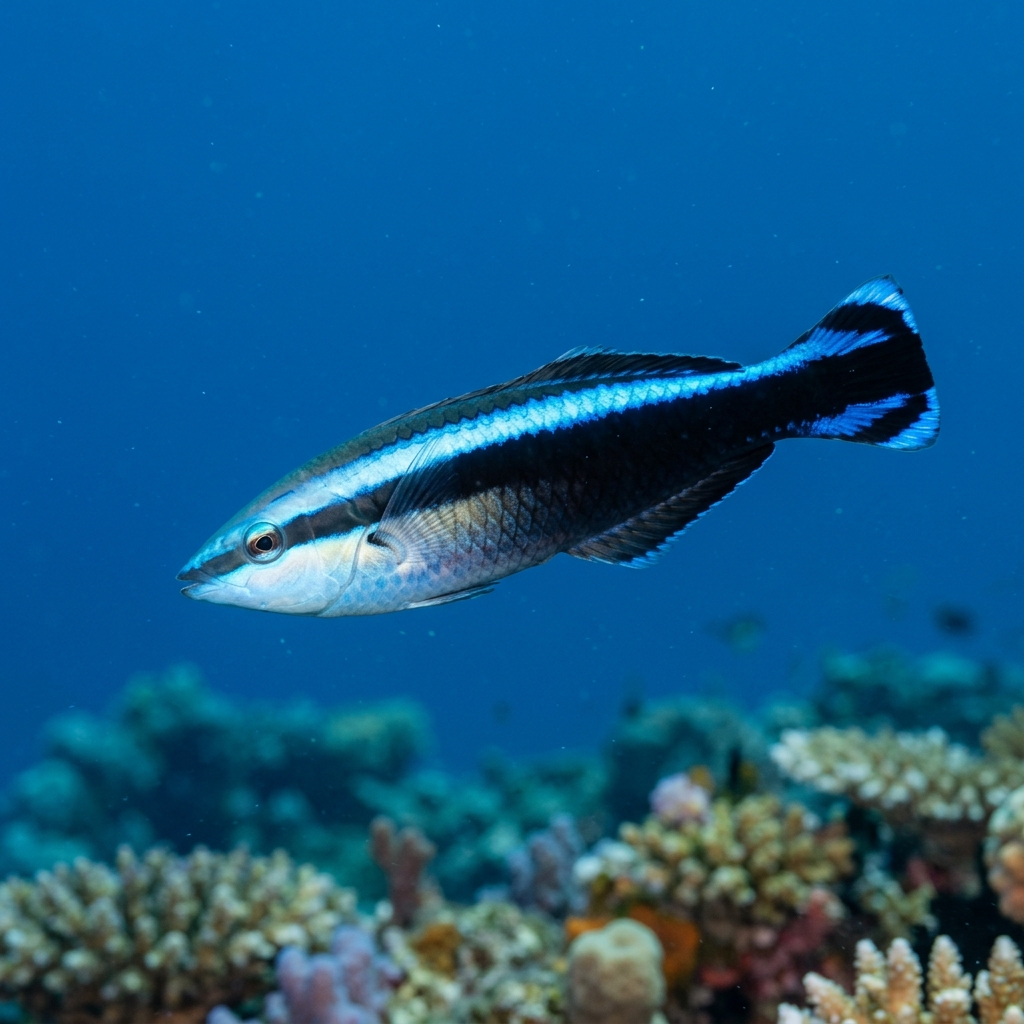
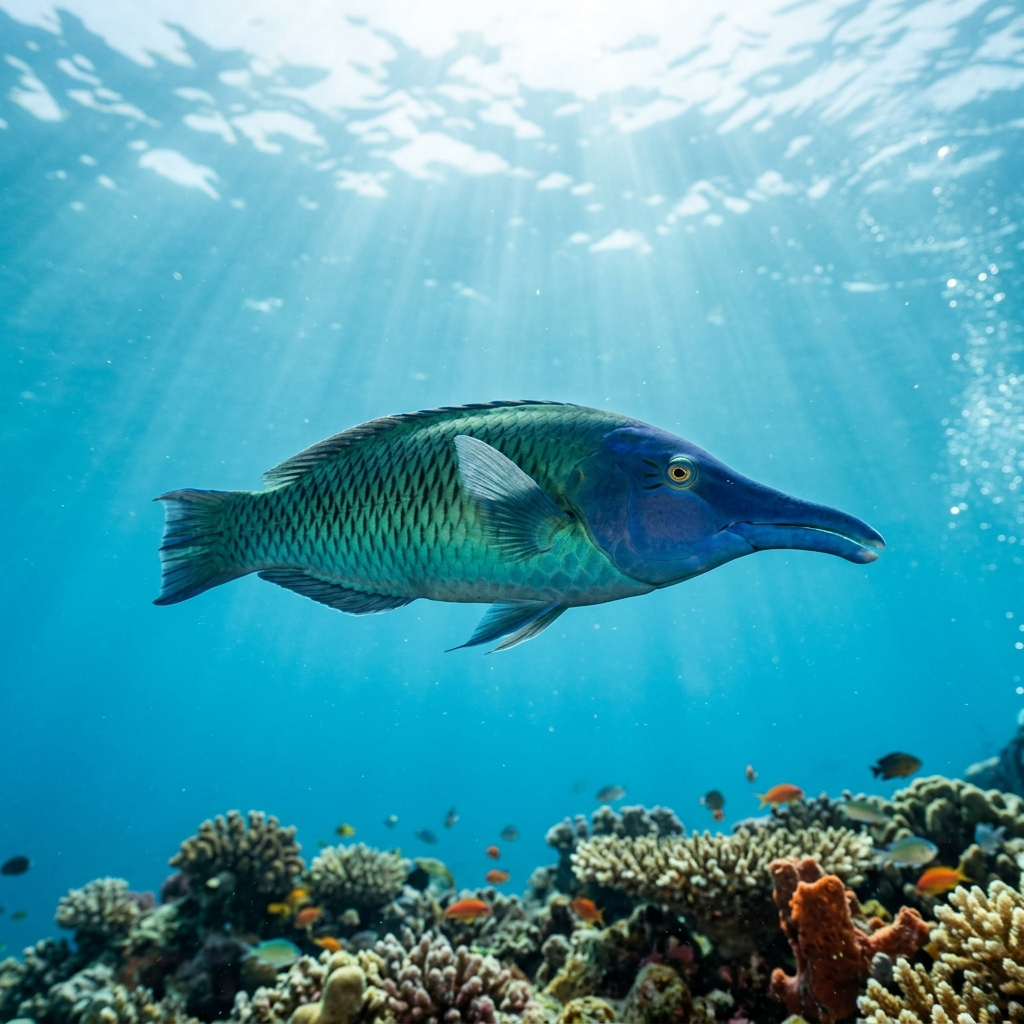
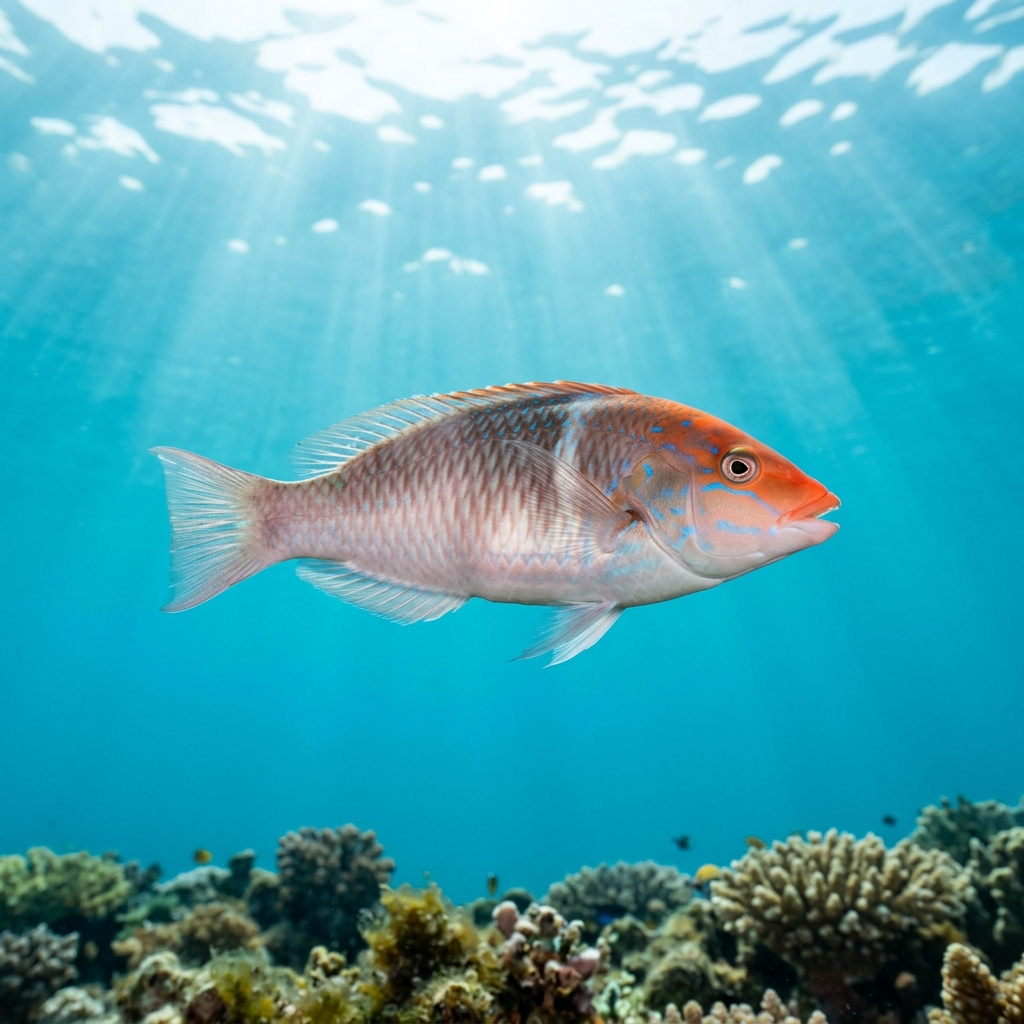
A thickset, heavy-bodied wrasse reaching around 70cm, with a blunt head and prominent, almost human-like front teeth used for crunching shelled prey. Body colour runs from olive-green to blue-grey, with orange-yellow highlights around the gill area and fins, and the dark blotch near the tail base that gives it the name is the mark most divers key on. It swims with slow, deliberate strokes low over the reef rather than darting like smaller wrasses.
Most divers find them working the reef base or rubble patches alone, using those strong front teeth to crack open molluscs and other hard-shelled prey wedged in the coral. They're generally unbothered by divers at a respectful distance, continuing to forage rather than bolting, though most sightings are logged as uncommon rather than a given on any single dive. Look for them over broken coral and sandy patches adjacent to reef structure rather than out in open water.
Those protruding front teeth aren't for show, they let this fish crush open hard-shelled invertebrates like molluscs and crustaceans that most reef fish can't get into, making it one of the reef's more capable shell-crackers.
No clear seasonal pattern shows up in the sightings, and with a comfortable range of 24.5 to 29C it's present on these reefs year-round rather than tied to a particular month.
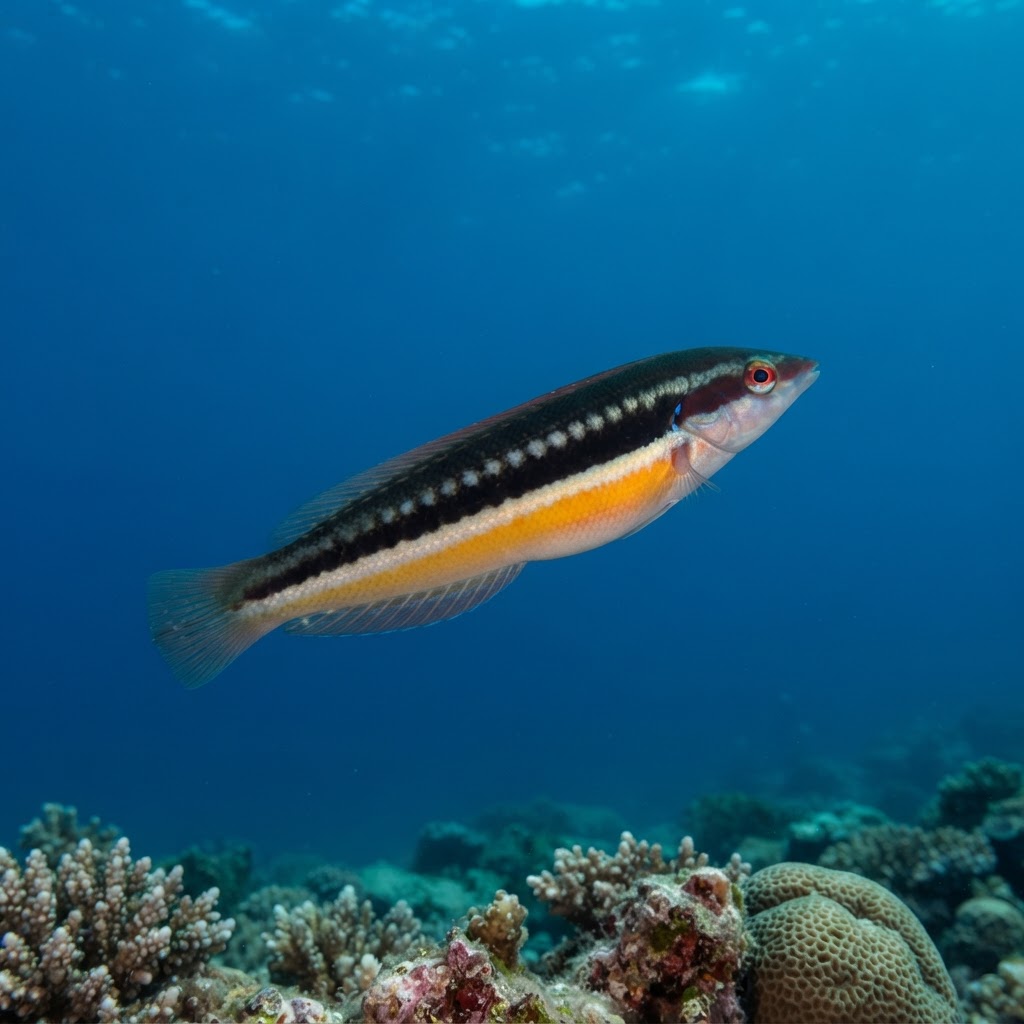
Reef neighbours a diver could mistake it for. Use the identification notes above to tell them apart.
This is very much an Australian speciality, with sightings concentrated on Queensland reefs, almost certainly the Great Barrier Reef system, and a smaller scatter of records from Western Australia. Queensland is by far the more reliable region if you're planning a trip around this species.
Mapping where Blackspot Tuskfish is logged…
Queensland, Australia is the standout region, with the Great Barrier Reef area producing the bulk of logged sightings. A smaller number of records also come from Western Australia.
There's no strong seasonal signal in the data, and given its comfortable range of roughly 24.5 to 29C, it's a year-round presence on Queensland reefs rather than a seasonal visitor.
Look for a stocky, olive-to-blue-grey wrasse around 70cm with orange highlights near the gills and fins, prominent front teeth, and a dark blotch near the base of the tail. It moves slowly and deliberately over the reef floor rather than darting about.
They typically reach around 70cm, making them one of the larger wrasses divers encounter on Indo-Pacific reefs.
No, they pose no danger to divers and typically continue foraging rather than reacting defensively when approached calmly.
Site and sighting data is aggregated from diver logs, iNaturalist and GBIF. For taxonomy and conservation status:
Bird Wrasses
3,632 sites