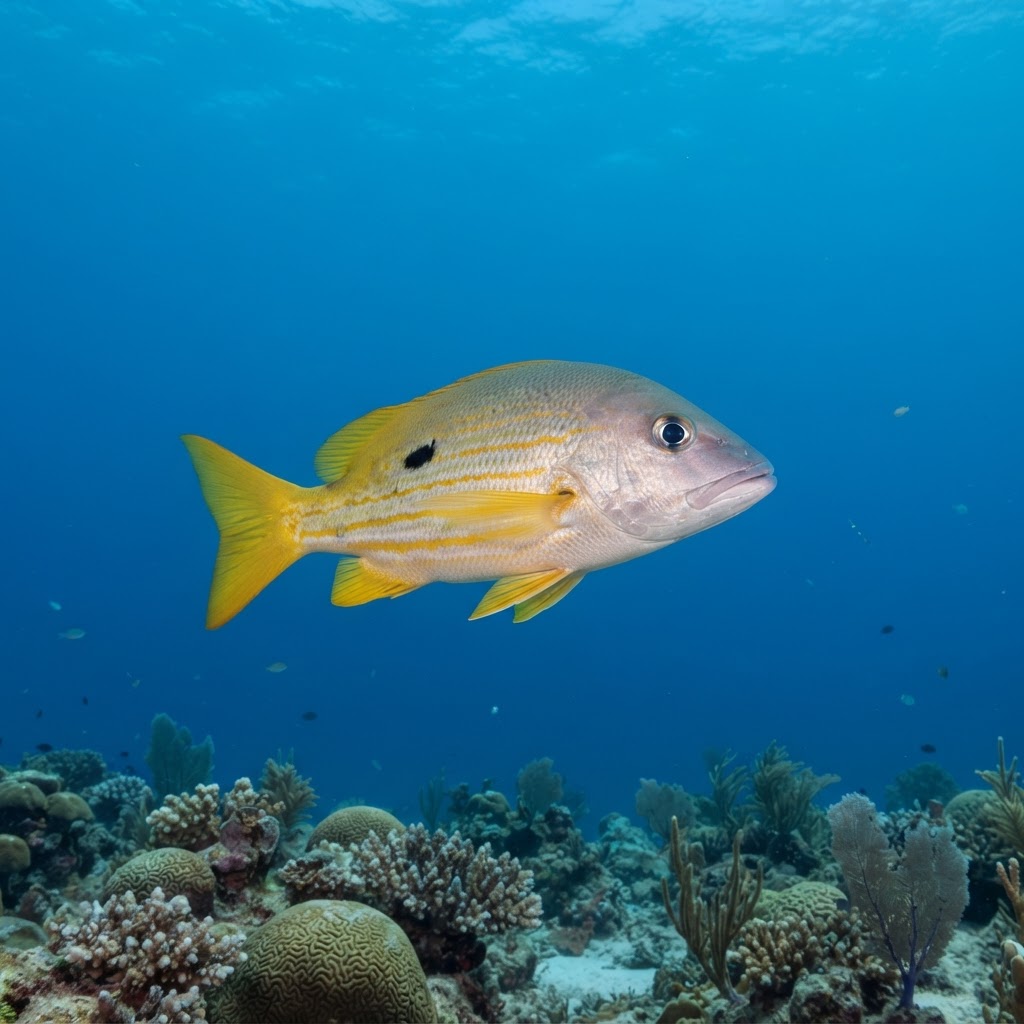
Lutjanus fulviflamma
Silvery reef snapper with a black side-spot, logged year-round on reefs in Queensland and KwaZulu-Natal in 25-29C water.
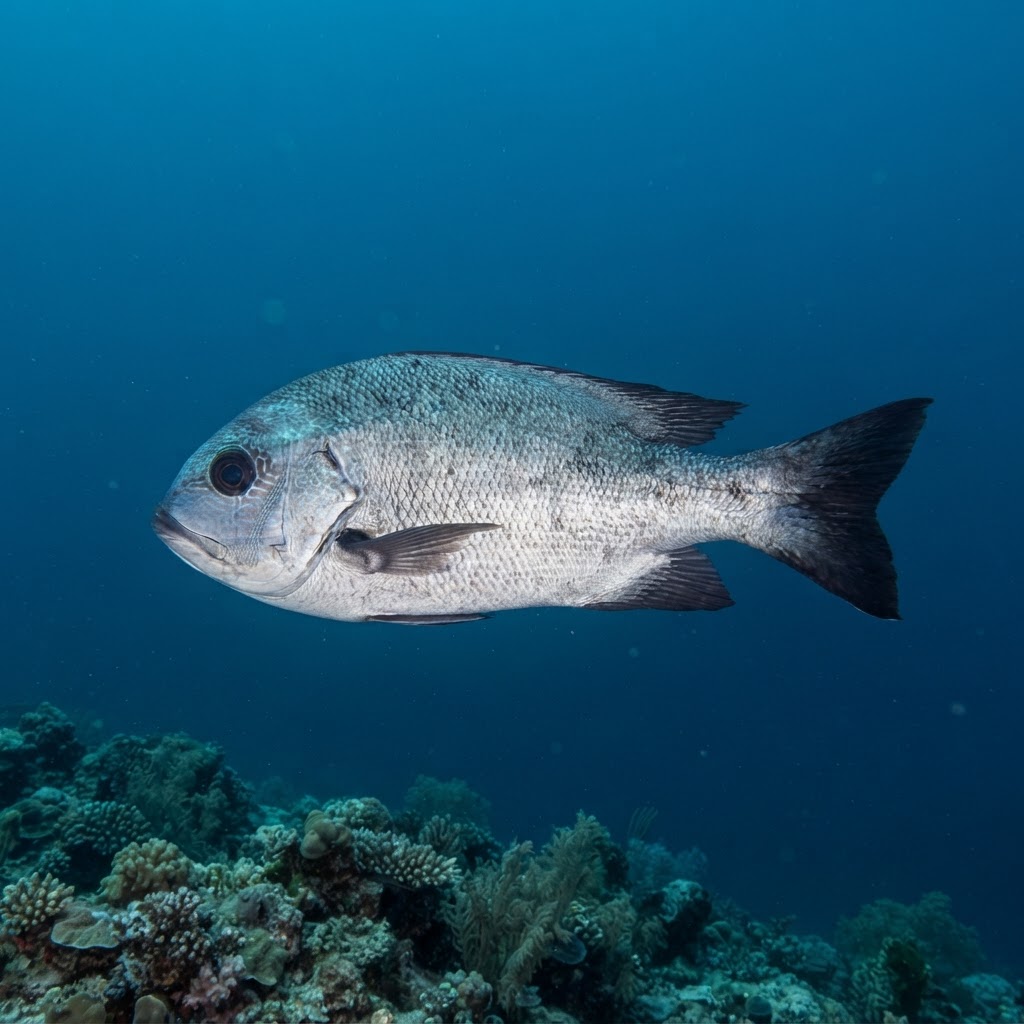
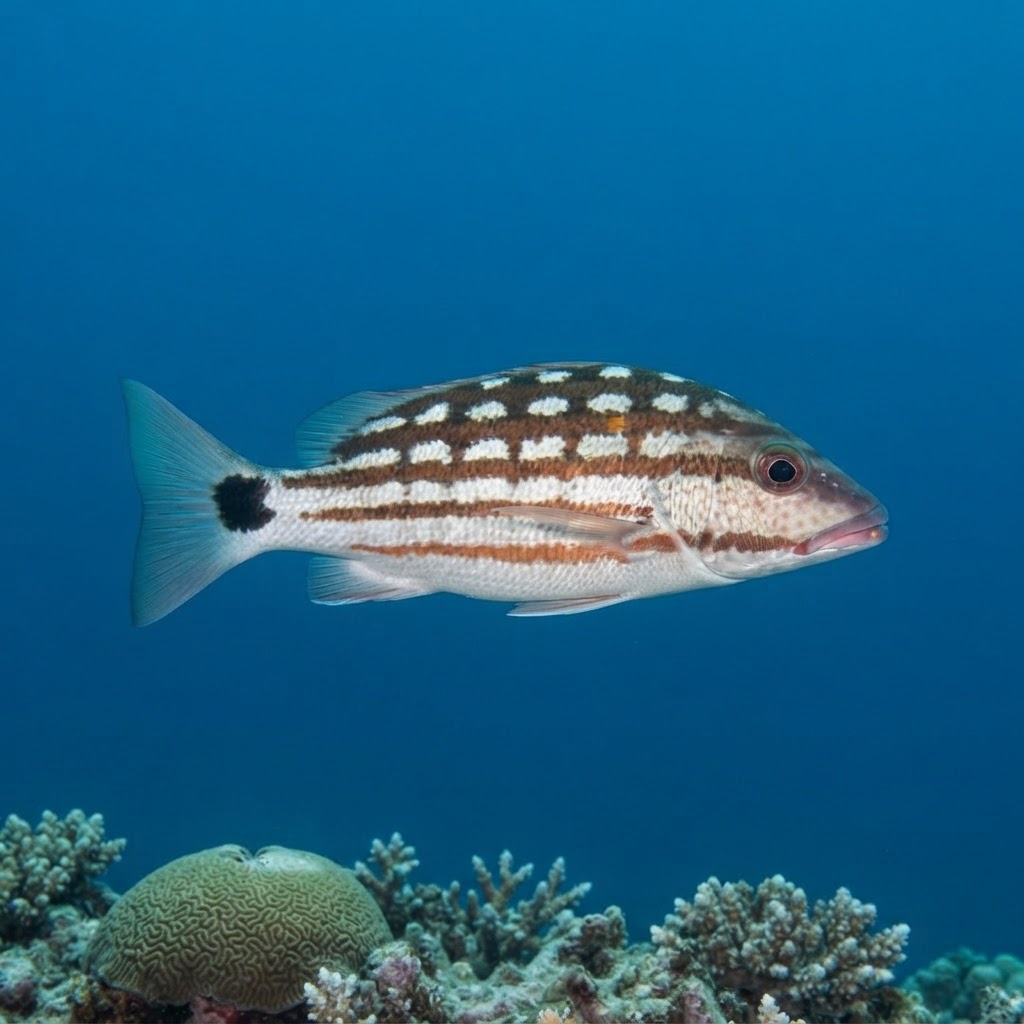
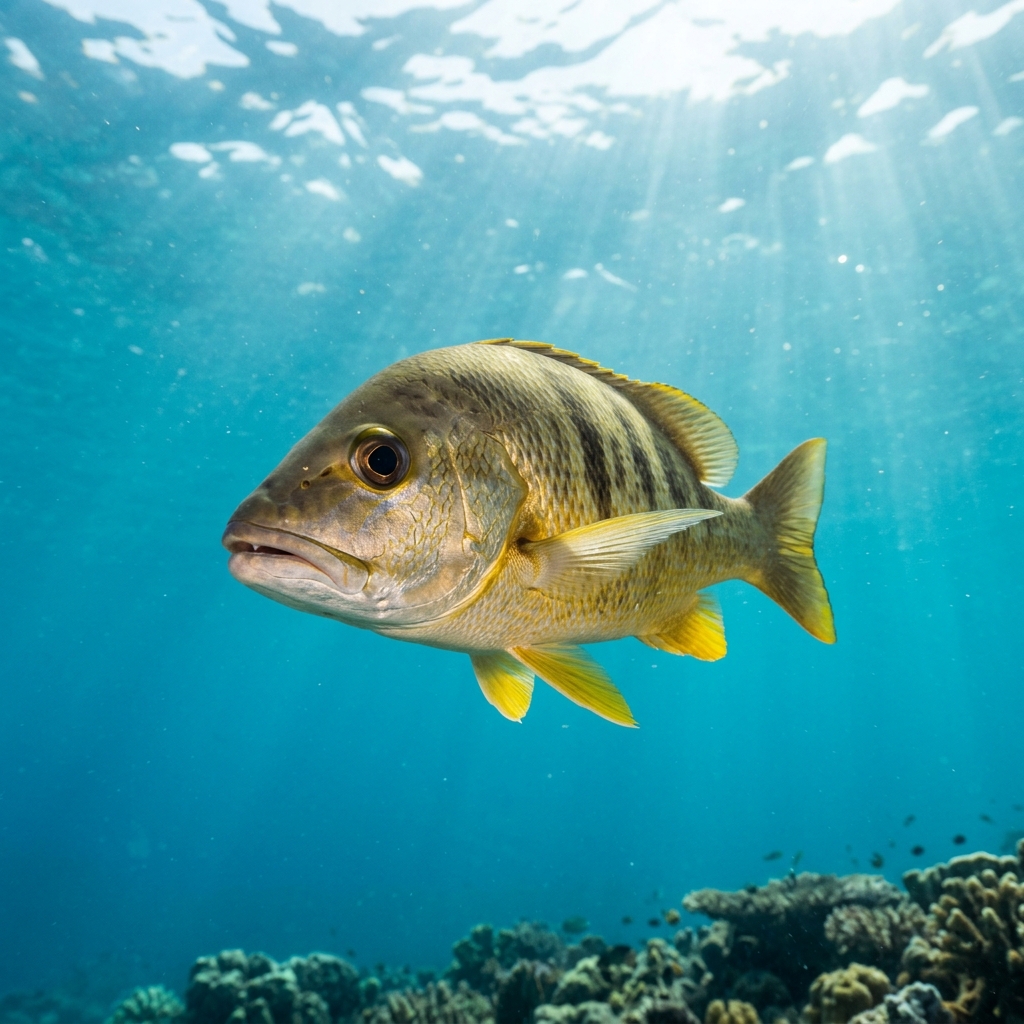
Silvery-grey body with a faint yellow stripe running along the upper side and a distinctive black blotch straddling the lateral line near the tail. Grows to around 35 cm, with a moderately deep, compressed body typical of snappers and a blunt, slightly downturned mouth. The black spot is the giveaway mark divers key on, visible even at a glance as the fish hovers over the reef.
Usually seen hovering alone or in small loose groups just off the reef structure, often near ledges, coral heads or wrecks where it can dart back to cover. It tends to hold its distance from divers rather than approach, and is most often spotted cruising mid-water during the day rather than tucked away at night.
That black tail-spot is a form of misdirection: predators aiming for what looks like an eye or a vital spot end up striking the wrong end of the fish, buying it a split second to escape.
No strong seasonal pattern shows up in sightings, and its comfort range of roughly 25 to 29 C spans most tropical reef conditions year-round, so any month is a reasonable bet at these sites.
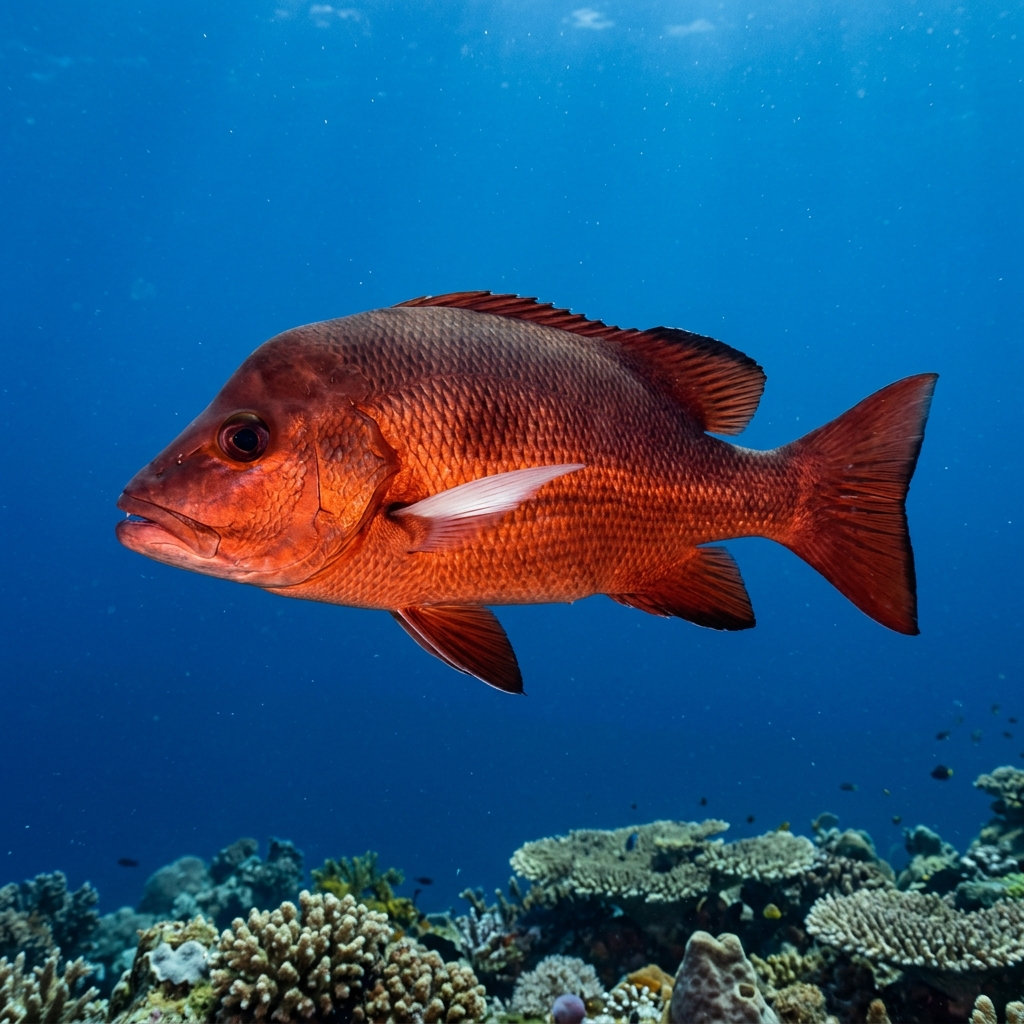
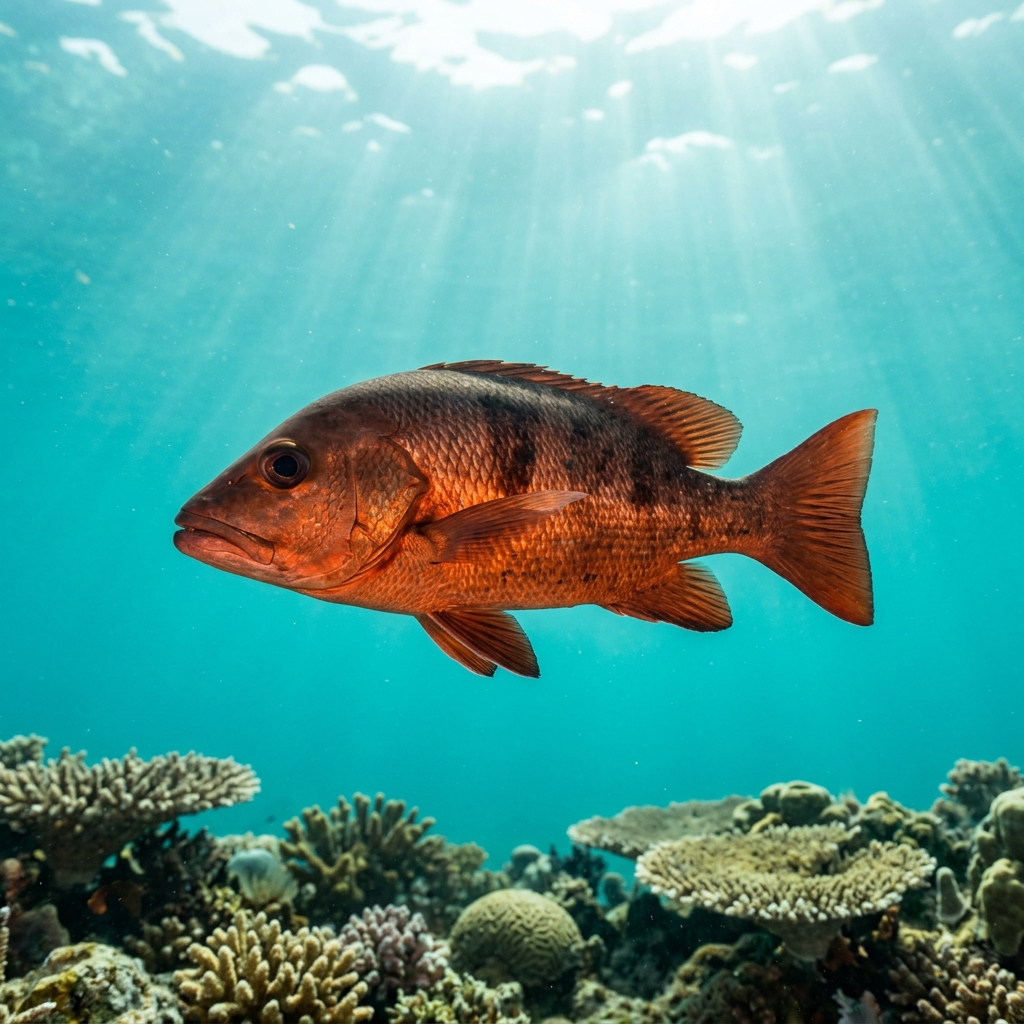
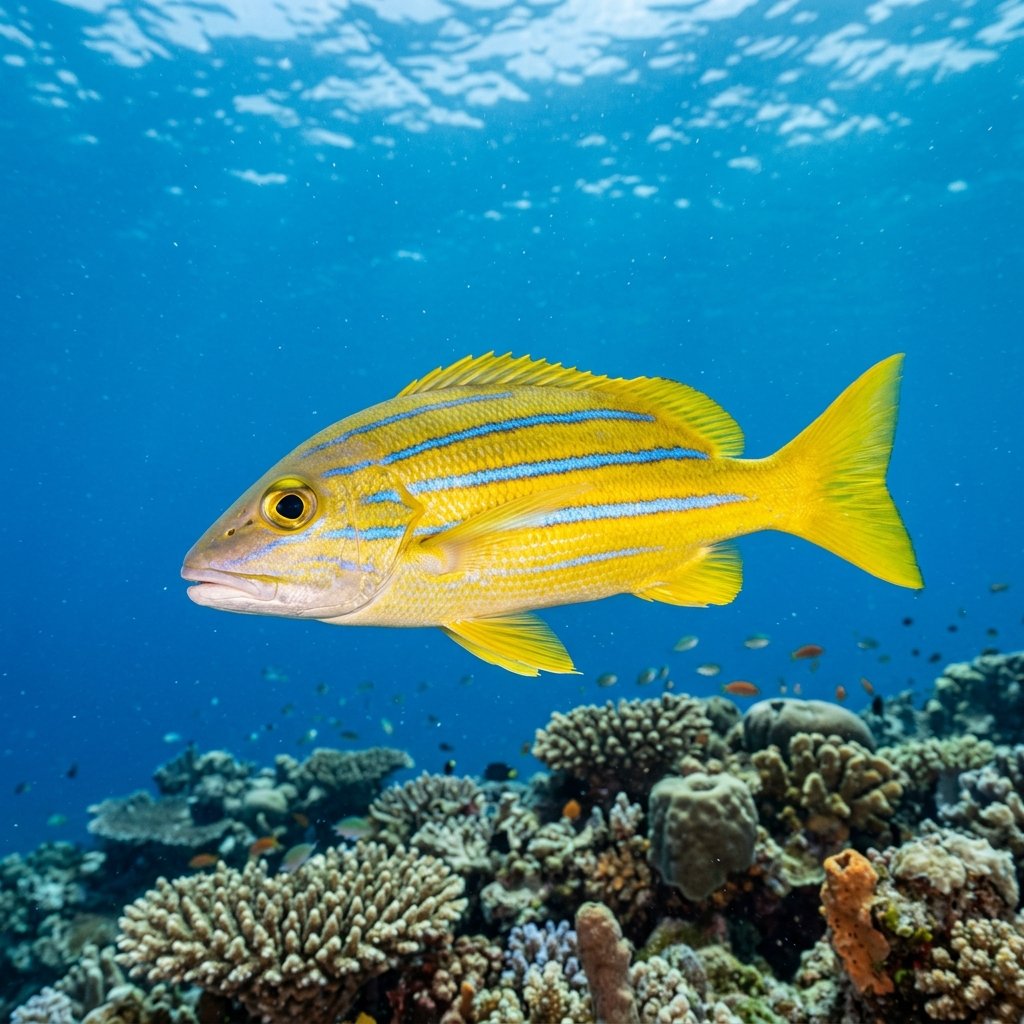
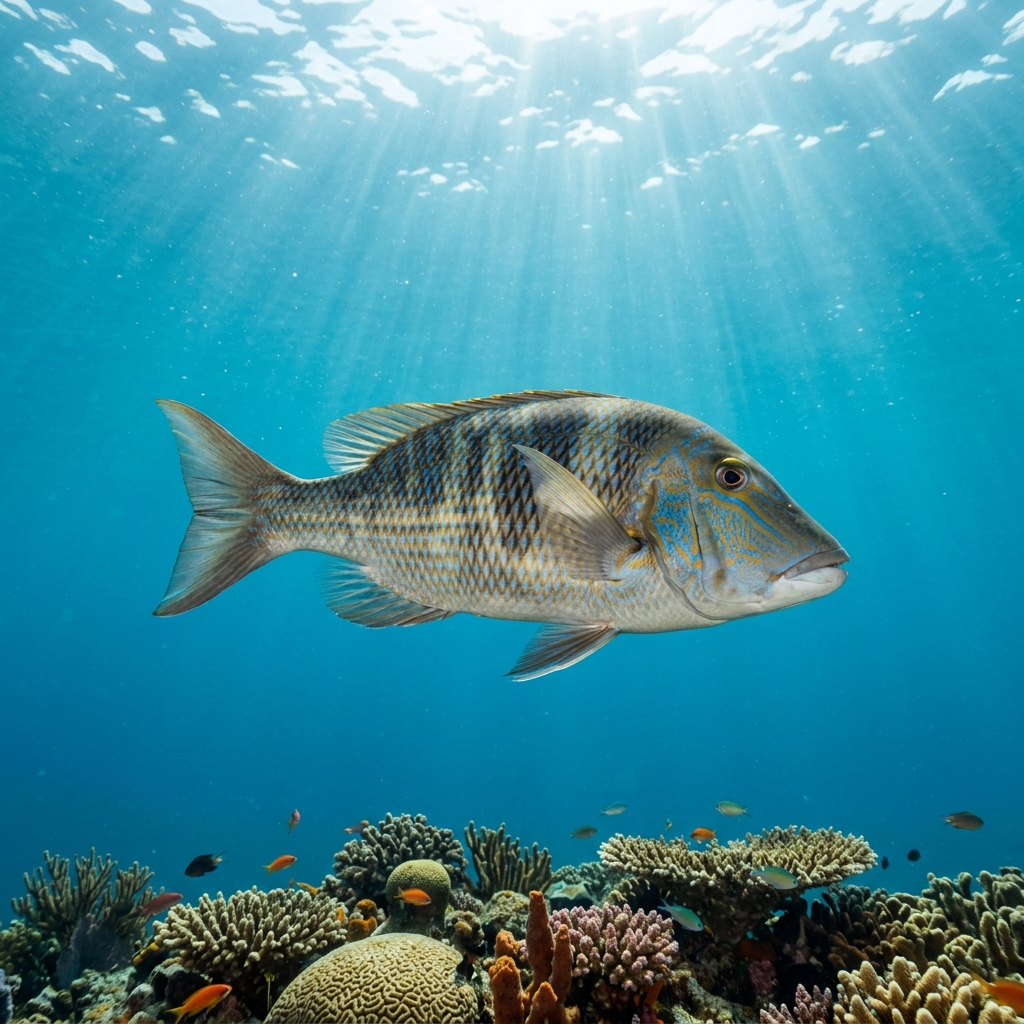
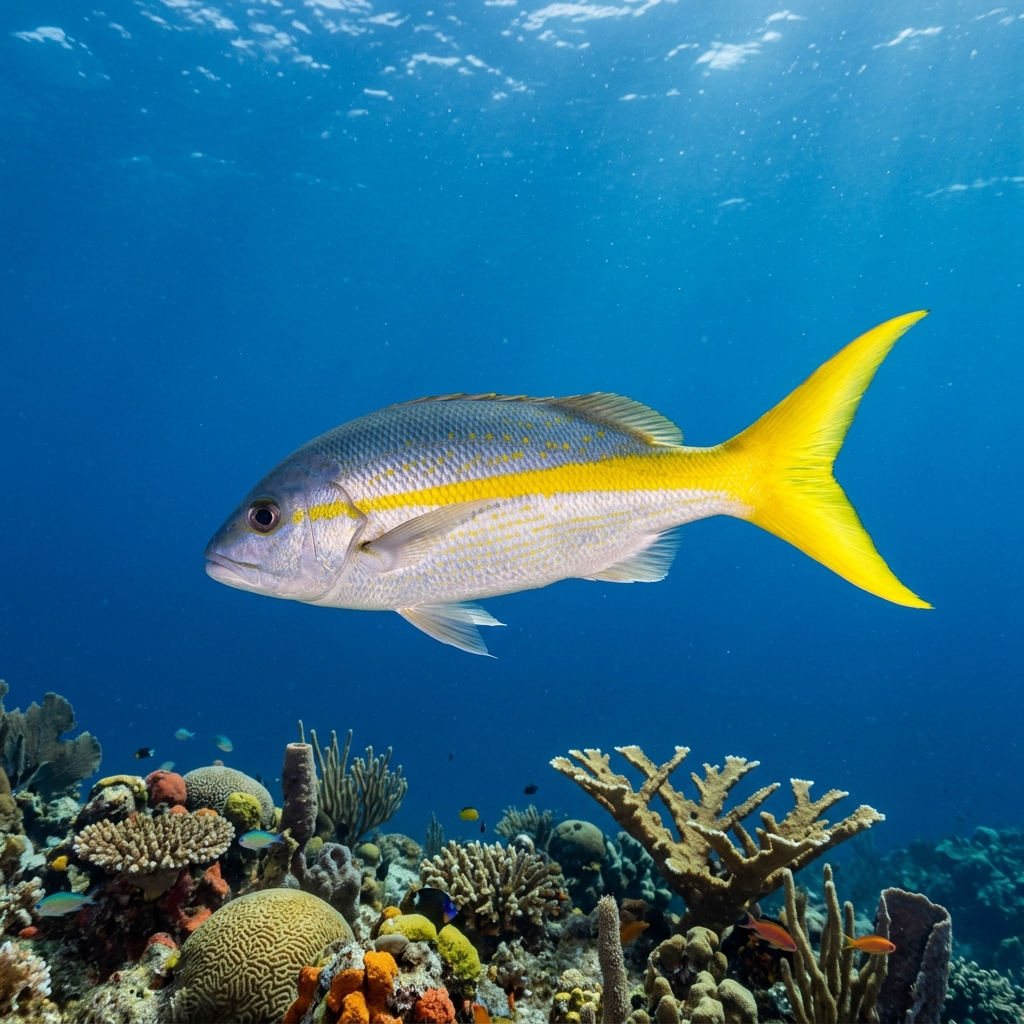
Reef neighbours a diver could mistake it for. Use the identification notes above to tell them apart.
Most reliably logged on reefs in Queensland, Australia and KwaZulu-Natal, South Africa, with strong numbers also around Khao Lak in Thailand. Divers also find it consistently at Ponta do Ouro in Mozambique, Nosy Be in Madagascar, and scattered sites across Indonesia, Goa in India, and the Seychelles' Inner Islands.
Mapping where Blackspot Snapper is logged…
Queensland in Australia and KwaZulu-Natal in South Africa are the most consistent regions, with Khao Lak in Thailand and Ponta do Ouro in Mozambique also strong bets. It also turns up at reef sites in Madagascar, Indonesia, India and the Seychelles.
There's no clear seasonal spike in sightings, and it sits comfortably in water from about 25 to 29 C, so it's a year-round find on the tropical reefs where it lives.
Look for a silvery fish around 35 cm with a soft yellow stripe along its upper flank and a clear black spot sitting on the lateral line near the tail. That tail-spot is the fastest way to separate it from similar-looking snappers.
They typically reach around 35 cm in length, a modest, easy-to-approach size that makes the tail-spot pattern simple to spot from a few metres away.
No, they're not considered dangerous to divers. They tend to keep their distance and go about their business over the reef rather than showing any interest in people.
Site and sighting data is aggregated from diver logs, iNaturalist and GBIF. For taxonomy and conservation status:
Bluestriped Snapper
2,054 sites